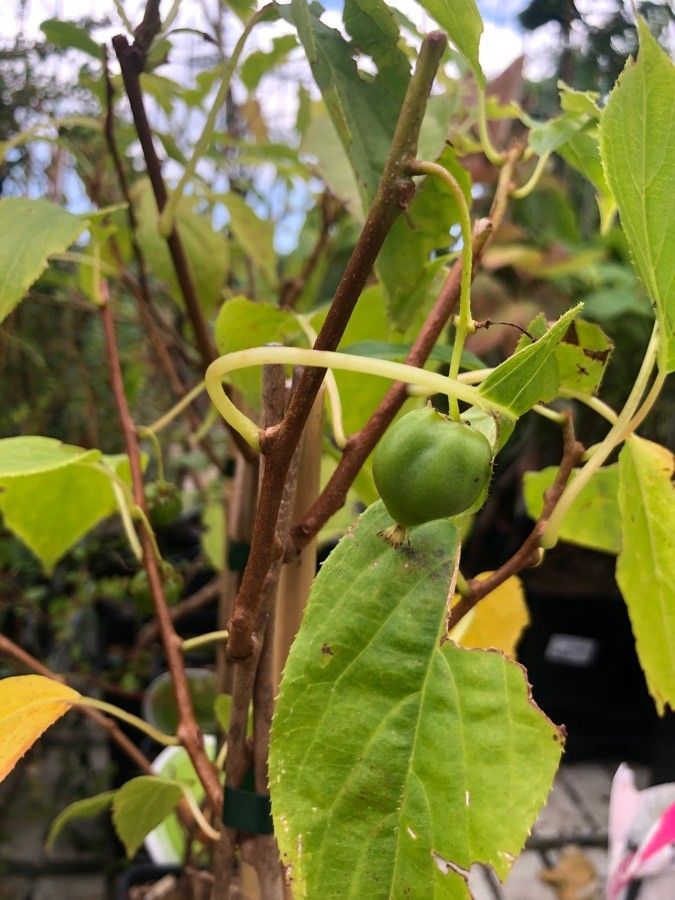
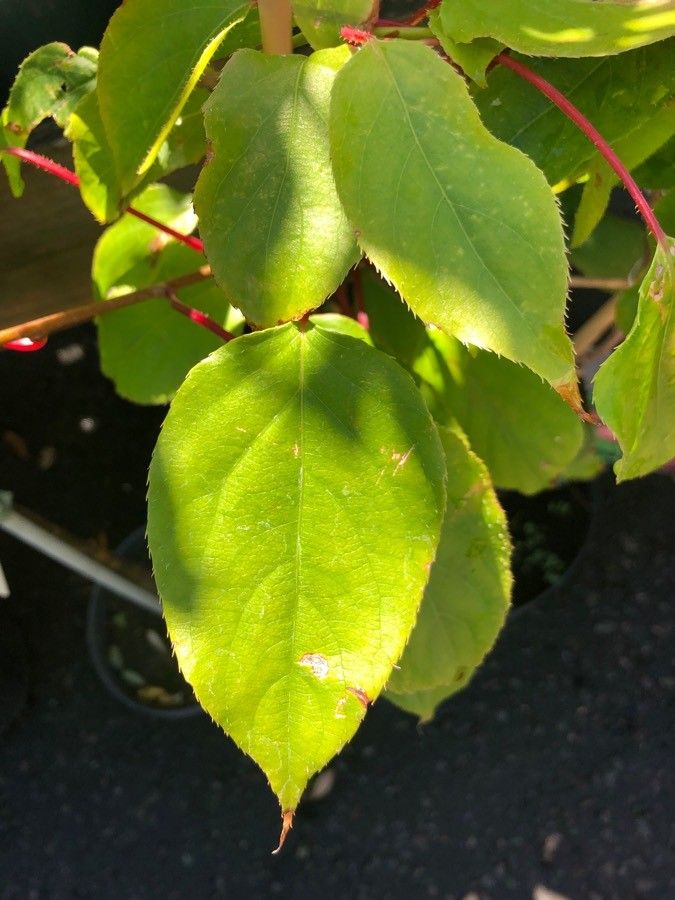
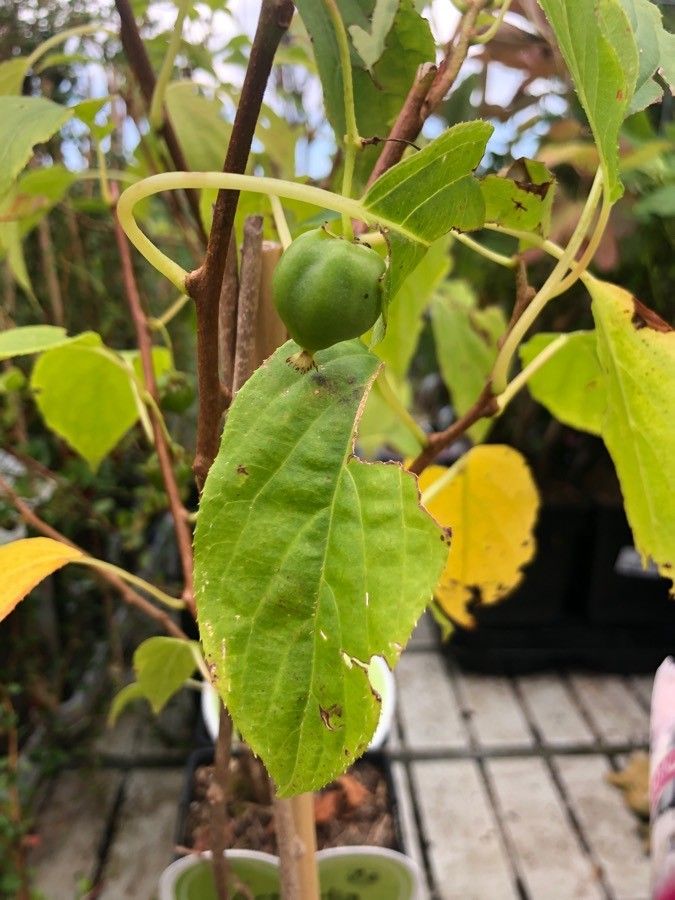
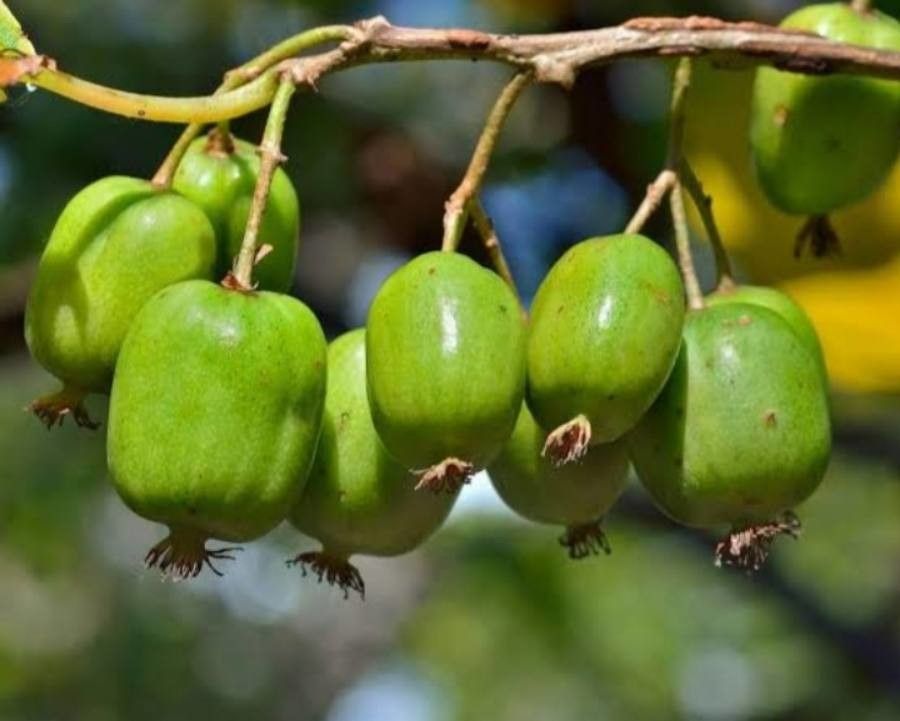
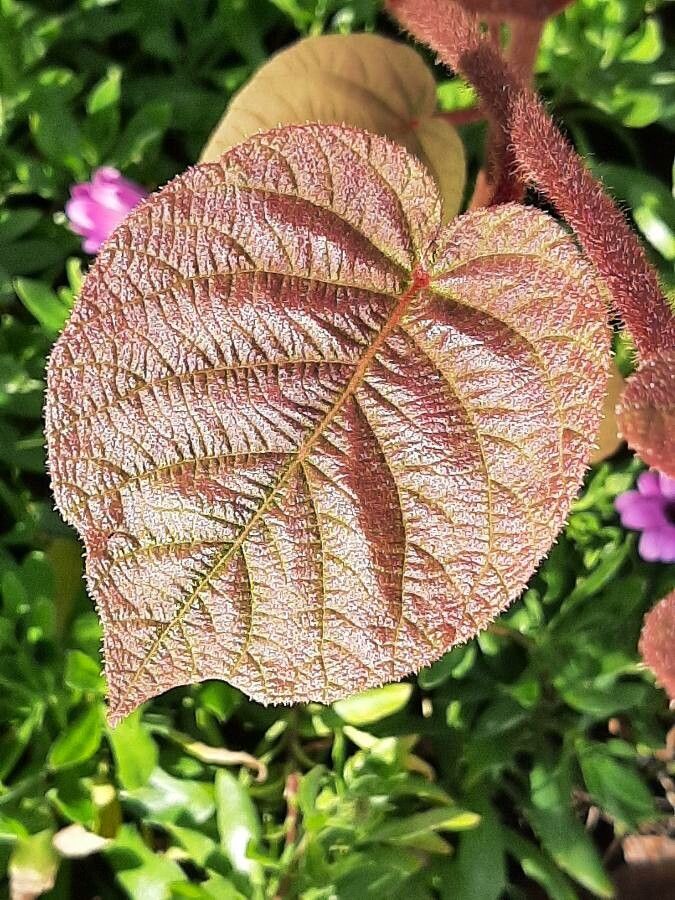
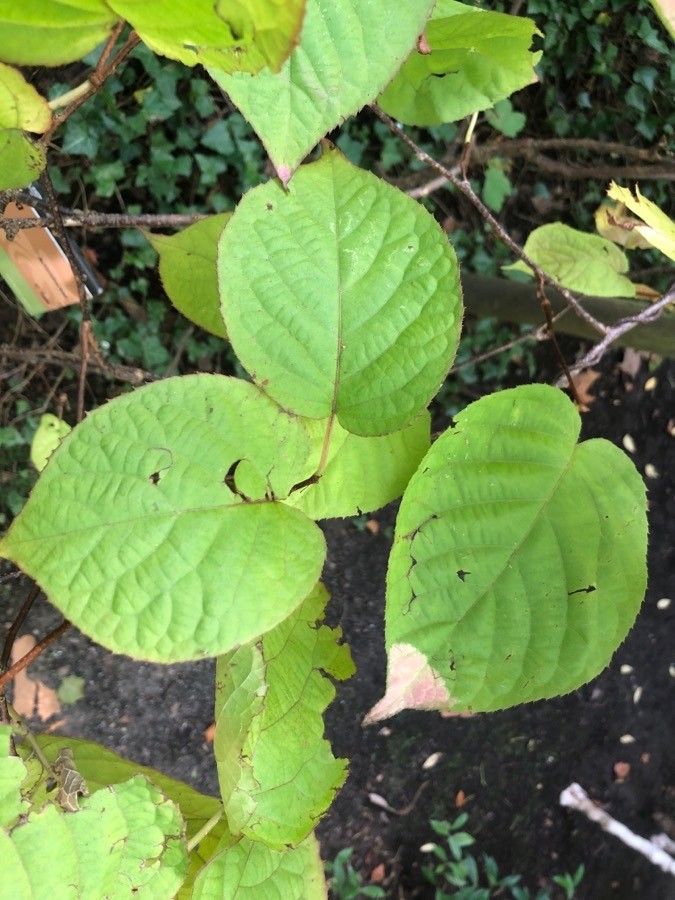
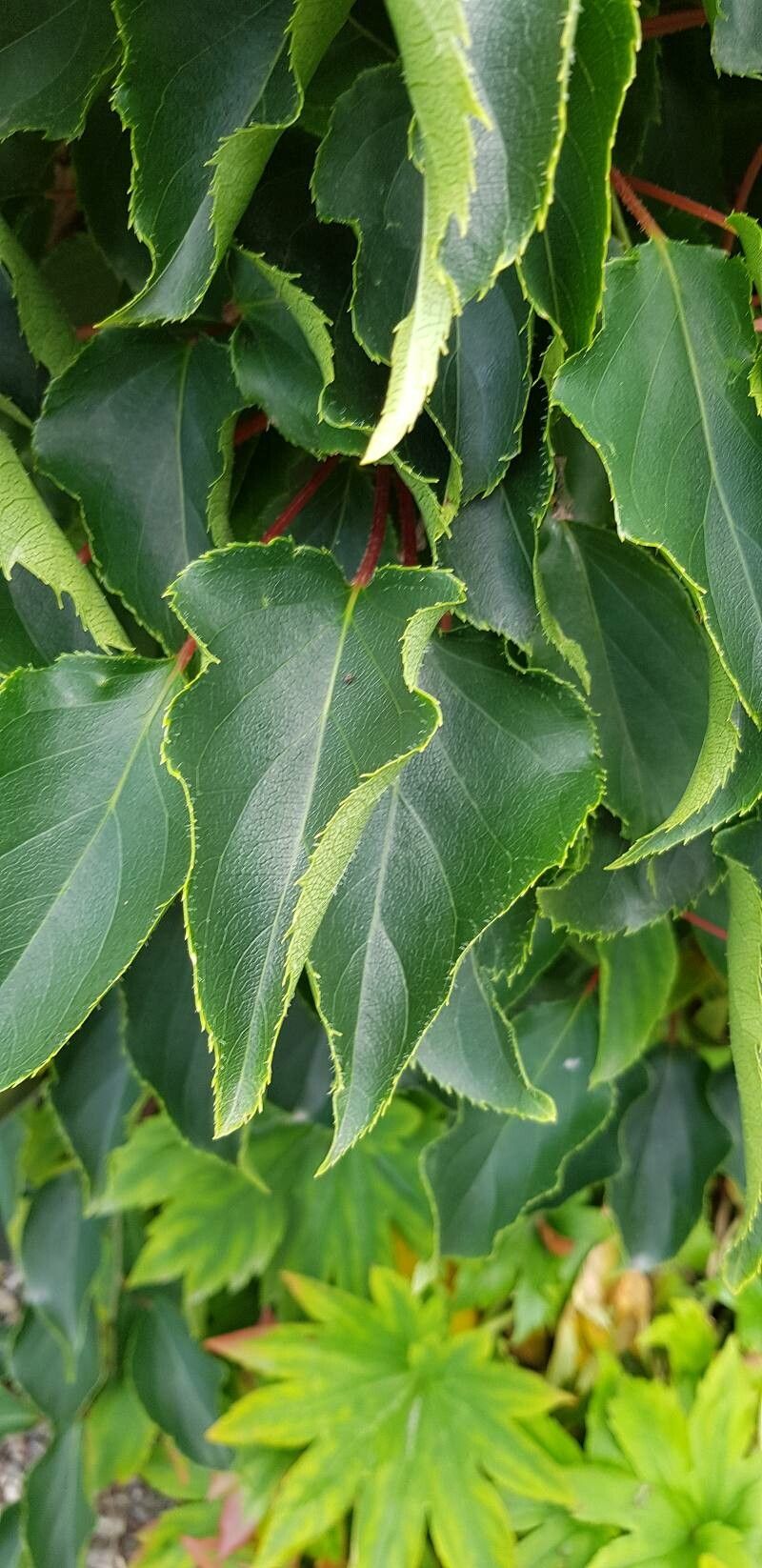
Actinidia arguta, commonly known as the hardy kiwi or kiwi berry, is a deciduous climbing vine belonging to the Actinidiaceae family. Native to eastern Asia, it has been cultivated for its edible fruit for centuries. The plant can grow up to 20 feet long and features a woody stem with heart-shaped green leaves.
The fruit of Actinidia arguta is small, roughly the size of a grape, and has smooth, edible skin. Its flesh is greenish-yellow and offers a sweet-tart flavor similar to its larger cousin, the kiwifruit.
Actinidia arguta thrives in well-drained soil and full sun but can tolerate partial shade. It requires support, such as trellises or fences, for climbing as it lacks tendrils like other vines.
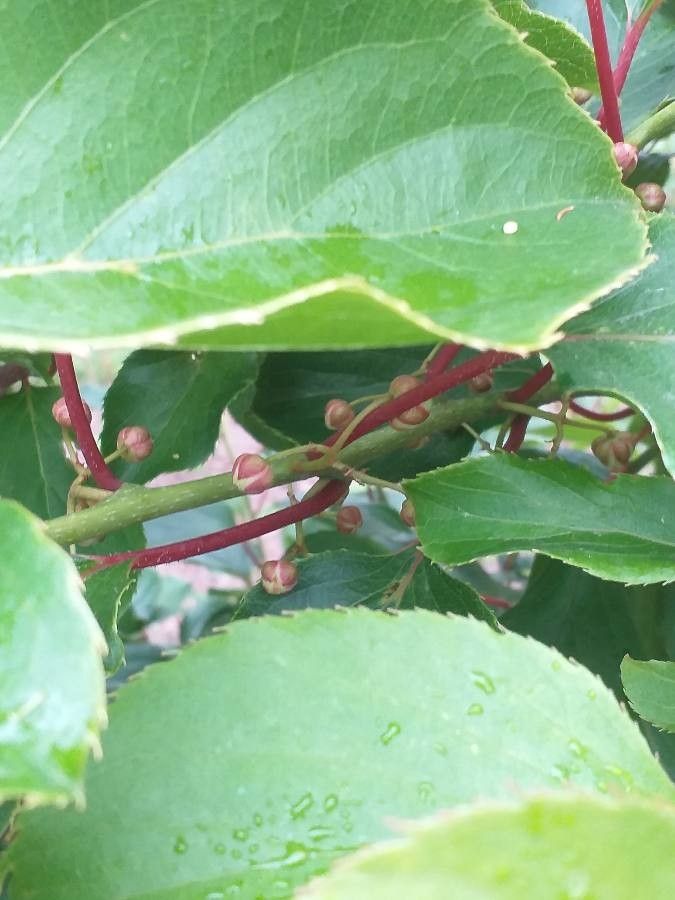
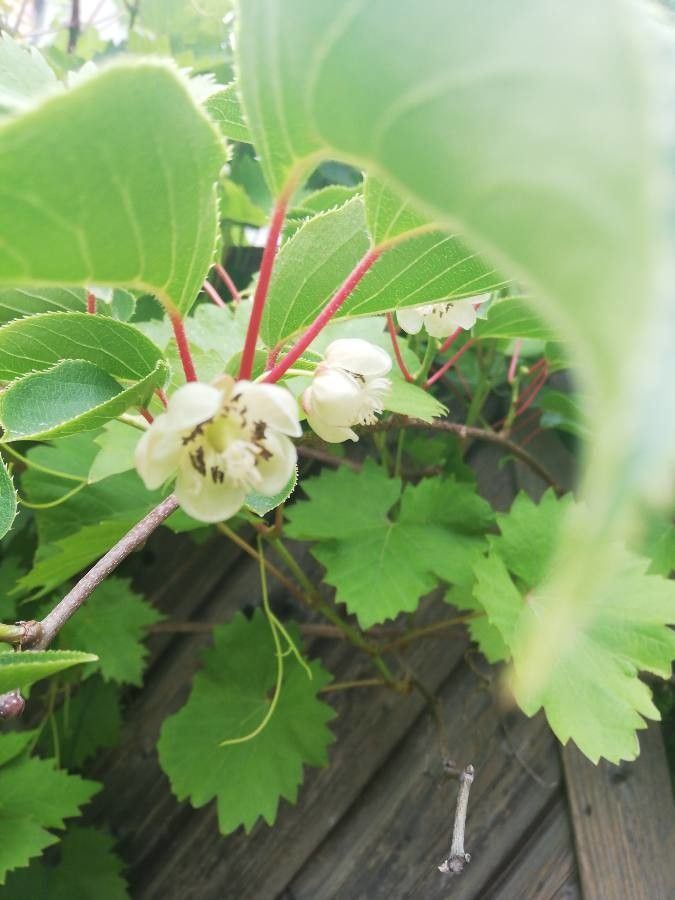
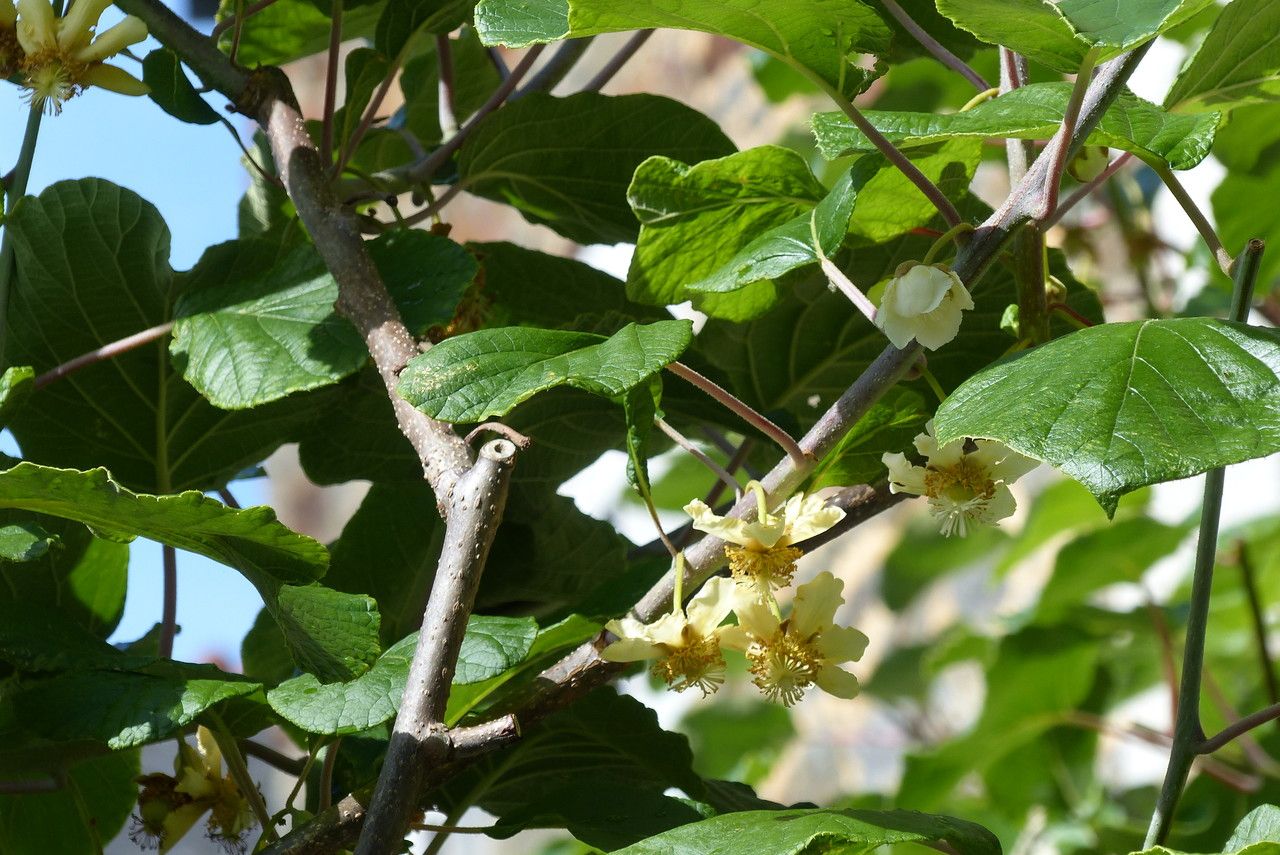
In addition to its edible fruit, Actinidia arguta is valued for its ornamental appeal, boasting attractive foliage and early summer blooms. The plant also attracts pollinators like bees, which aid in fertilization.
Overall, Actinidia arguta is an easy-to-grow vine that yields delicious, nutrient-rich fruits packed with vitamin C and fiber. It makes a wonderful addition to any garden or orchard.
Hardy kiwi is highly resistant to disease and is generally not susceptible to illnesses. In terms of care, this plant is fairly low-maintenance. When grown outdoors it needs little watering, and larger plants typically do not require pruning. Smaller plants, however, should be pruned after they finish blooming. Hardy kiwi is suitable for anyone with outdoor space, such as a garden or a deck, and does not demand extensive gardening experience.
How to keep Actinidia Arguta.
Light
Hardy kiwi does best in places that receive steady, ample sunlight, though it can tolerate somewhat shadier spots. Coming from environments with abundant sun, it has evolved to make efficient use of strong light for optimal growth. Too much or too little light can cause health problems, including leaf scorching or slowed growth.
Water
The hardy kiwi thrives in consistently moist and humid environments, although it can handle brief dry periods. For optimal health, it should be watered every three weeks. While it's usually grown outdoors, it's important to adjust its care based on different rainfall patterns.
Humidity
This plant will thrive in moderate humidity, which is probably the level in your home. However, misting it a few times a week can be very beneficial. Make sure the room has good ventilation.
Temperature
Hardy kiwi is native to habitats where temperatures range from 32 to 90°F (0 to 32 ℃). It grows best in these moderate conditions. To promote optimal growth, modify the temperature to match these preferences, particularly during seasonal shifts.
Fertilizer
The Hardy kiwi plant needs adequate nutrients to achieve optimal fruit production. Apply fertilizer in early spring to promote new growth and bloom development. Regular feeding keeps the plant healthy, produces more flavorful fruit, and prevents nutrient deficiency issues such as yellow leaves and poor fruit production.
Pruning
It's best to prune hardy kiwi vines in winter to promote fruit production. In the first year after planting, select the most vigorous and straight shoot, designating it as the permanent trunk. Cut back the other shoots to encourage vigor in the trunk. Prune as needed during the summer to remove excessively long shoots or overgrown sections. Before the winter, cut back the stems, leaving only 8 to 10 nodes on each.
Toxicity
The leaves and fruit are both edible. The flavorful fruits which are rich with vitamin C contain small seeds that are typically eaten with the fruit. When slightly soft under pressure, they are ready to eat. so it isn't considered toxic.
Further reading →
The toxicity and danger assessments provided are for reference only. We do not assure their accuracy, so it's crucial not to depend on them. Seek professional advice when necessary for accurate guidance.
Botanical profile.
- Plant Type
- Vine
- Life Cycle
- Perennial
- Genus
- Actinidia
- Family
- Actinidiaceae
- Hardiness Zone
- 3-8
- Mature Height
- 3.96 m
- Mature Spread
- 91 cm
- Leaf Color
- Green
- Leaf Type
- Deciduous
- Flower Color
- White
- Flower Size
- 1.02 cm to 2.03 cm
- Bloom Time
- Late spring, Early summer
- Planting Time
- Spring, Autumn
- Harvest Time
- Mid summer
- Native Area
- Russia, Japan, Koppen, South Korea, China
Other names.
Reader questions.
How should I water my Hardy kiwi plant?
To ensure excellent root development, it is recommended to place a garden hose at the base of the plant. It is important to avoid spraying the leaves directly and note that outdoor plants exposed to direct sunlight may require more watering for the leaves. To moisten the roots, bubblers can be used for each plant. Soaker hoses are also effective in covering the entire garden or bed when adding or removing plants, helping push the roots deeper. After watering, it is important to drain any excess water and allow the soil to dry before watering again. Watering at ground level can help prevent diseases. On a sunny day, spraying the entire bush with water is recommended. Whether in a pot or planted in the ground, it is important to remember that the Hardy kiwi prefers deep watering rather than light sprinkling.
Why is it important to fertilize my Hardy kiwi?
Regular fertilization is crucial for the health and productivity of plants, especially fast-growing ones like the Hardy kiwi. The growth of plants tends to deplete the soil of nutrients, so providing an extra supply of nutrients through fertilization is beneficial. By keeping the plants healthy and well-nourished, they will be able to produce more delicious fruit. Neglecting to fertilize plants for an extended period can lead to various issues. One common problem is nutrient deficiency, which manifests as yellow leaves, reddish leaves, deformed shapes, withered tips, or extensive dieback. Additionally, certain nutrient deficiencies can affect the bark, hinder growth, prevent shoot development, and reduce fruit production.
What are the sunlight requirements for Hardy Kiwi?
Hardy Kiwi requires full sun exposure of more than 6 hours of sunlight daily for optimal growth but can also thrive in partial sun, with about 3-6 hours of sunlight. It's recommended to observe your garden's sun patterns to find spots that provide a balance of light and shade suitable for your plants. Ensuring that your Hardy Kiwi gets sufficient sunlight is crucial for its health and productivity.
What is the native temperature range for Hardy kiwi?
Hardy kiwi is native to environments where temperatures vary between 32 to 90°F (0 to 32°C). It prefers moderate temperatures for its best growth. Adaptations to temperature, especially during seasonal transitions, are crucial to meet these preferences. The plant has a notable cold resistance, which generally eliminates the need for frost protection measures in winter. However, if temperatures are forecasted to drop below -35°C, cold protection by wrapping the trunk and branches with materials like non-woven fabric or cloth is recommended. Additionally, abundant watering before the first autumn freeze is advised to ensure the soil remains moist and enters a frozen state, which helps in preventing drought and water scarcity during the winter and early spring.
What should I do if I give too much or too little water to the Hardy kiwi?
An overwatered Hardy kiwi can exhibit various signs of stress, such as yellowing, wilting, and dropping leaves. The plant may also look unhealthy, with mushy stems. In these cases, adjusting your watering schedule is important. On the other hand, wilting can also indicate under watering, characterized by crispy and dry leaves. To determine if watering is needed, check the soil moisture level. If it is dry, a thorough watering is necessary. However, even with enough water, the kiwi may still appear dry and have yellow leaves due to damage to its root system. Once the plant returns to normal, the yellowing of leaves will cease. When growing the Hardy kiwi indoors, regularly monitor moisture levels, ensuring not to overwater. If black spots appear, allow the soil to dry out by withholding watering for a few days. Overwatering can result in root rot, which may require repotting the plant if discolored and slimy roots are observed. To prevent root rot, it is crucial to avoid soggy soil. When planting the Hardy kiwi outdoors, check the soil's moisture content by digging a little deeper with your fingers. If the soil feels too dry, it indicates underwatering, and the plant will benefit from adequate watering to promote recovery.
When should I fertilize my Hardy kiwi plant?
The ideal time to fertilize Hardy kiwi is early spring, before the buds start to grow. During this time, the plant uses the stored reserves from winter to grow new branches. Since it requires a lot of energy to support blooming, it's recommended to fertilize around 2 to 4 weeks before the expected bloom time. This allows enough time for the nutrients to be absorbed by the soil and distributed throughout the plant. While it's possible to continue feeding Hardy kiwi during spring, it's best to avoid fertilizing in autumn. This is because late foliage development can lead to damage during winter.
What are the essential considerations for growing Hardy Kiwi?
Growing Hardy Kiwi successfully hinges on providing consistent, abundant sunlight, although it can tolerate slightly less sunny conditions. Originating from sunny habitats, this plant has adapted to efficiently process light for growth. Both excessive and insufficient sunlight can be detrimental, leading to issues such as leaf burn or stunted growth. For indoor plants, artificial lighting is a viable alternative when natural sunlight is insufficient, especially in winter. LED lights are recommended for indoor plants, requiring 30-50W/sq ft for full sun plants, 20-30W/sq ft for partial sun plants, and 10-20W/sq ft for full shade plants. The lights should be placed 12-36 inches above the plant and kept on for 8-12 hours daily to mimic natural sunlight conditions.
How does Hardy kiwi react to low temperatures?
Hardy kiwi showcases remarkable cold tolerance, thriving best in temperatures above 0°C and ideally kept above -30°C during winter months. Exposure to temperatures below -35°C might not show immediate damage during winter; however, it can result in branches becoming brittle and dry by spring, with no new shoots emerging. The recommended solution for this is to prune away any dead branches that did not produce new leaves in spring, facilitating healthier growth.
How frequently should I water my Hardy kiwi?
The Hardy kiwi prefers deep and infrequent watering, especially when planted in pots. Since pots have limited water storage, the soil tends to dry out faster. If living in a cold region, water the plant every 3 to 5 days, preferably in the morning when the soil is dry. You can determine if watering is needed by checking the soil – if the top 2-3 inches are dry, it's time to water thoroughly. In hot weather, check the moisture daily as heat can quickly dry out the soil in the pot. For garden plants, watering once a week in hot climates is recommended. Only water when you notice that about 2 to 3 inches of soil has become dry, and take into account any rainfall to prevent root rot. Hardy kiwi plants generally grow in spring and fall. If outdoors, adding mulch about 3 to 4 inches deep will help conserve water. Water sandy soil more frequently due to its quick drainage, whereas clay soil requires less frequent watering to avoid root rot. Keep track of watering dates on a calendar and pay attention to any drooping leaves, as it could indicate that watering is needed.
When is it not a good idea to add fertilizer to my Hardy kiwi plant?
Here are some guidelines to follow when fertilizing Hardy kiwi plants: 1. Avoid fertilizing in the first year of growth. If fertilizer is not necessary, be cautious about providing it. 2. Do not fertilize if you pruned 20% or more of the plant the previous year. 3. Avoid fertilizing plants that are diseased or damaged, as this can cause more harm than good. Find the root cause of the issue before considering fertilization. 4. Do not fertilize after the peak of summer, as this can promote excessive growth just before winter. 5. Avoid fertilizing during hot and dry times of the year, as dry soil is not as effective at delivering fertilizer. Fertilizing during this time can also stimulate growth that requires more water, which may not be available. 6. It is best to fertilize earlier in the season when temperatures are cooler. 7. Be cautious about inadvertently giving nearby plants or lawns a double-dose of fertilizer, as Hardy kiwi plants can absorb fertilizer applied to other areas.
What symptoms indicate insufficient or excessive sunlight in Hardy Kiwi?
Hardy Kiwi may exhibit several symptoms when exposed to suboptimal lighting conditions. Insufficient sunlight can lead to smaller new leaves, leggy or sparse growth, faster leaf drop, slower or no growth, and lighter-colored new leaves. Excessive sunlight, on the other hand, can cause chlorosis (leaves turning yellow due to chlorophyll breakdown), sunscald (pale, bleached areas on leaves or stems), leaf curling (to reduce surface area exposed to sunlight), wilting (due to increased water loss), and leaf scorching (brown, crispy leaf edges). These symptoms suggest the need to adjust the plant's exposure to light for better health and growth.
What are the effects of high temperatures on Hardy kiwi and how can it be managed?
During the summer, it's crucial to maintain Hardy kiwi's environment below 32°C as exposure to temperatures exceeding 35°C can cause the leaves to lighten in color, with tips becoming dry and withered, thus increasing susceptibility to sunburn. To combat these effects, trimming away the sunburned and dried-up parts is advised. Relocating the plant to a shaded area during the midday and afternoon sun, or using a shade cloth, can provide necessary protection. Additionally, watering the plant in the morning and evening will help keep the soil moist and support the plant's overall health.