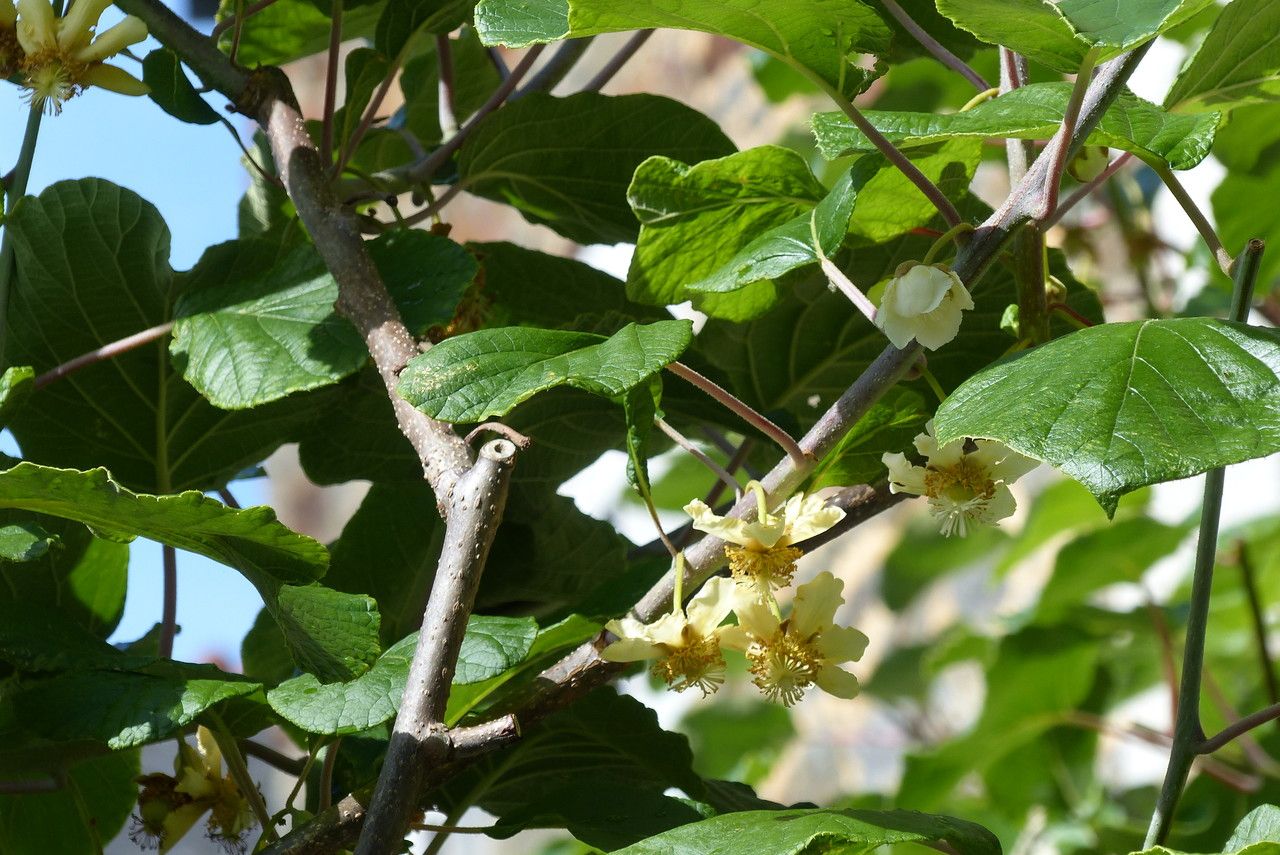
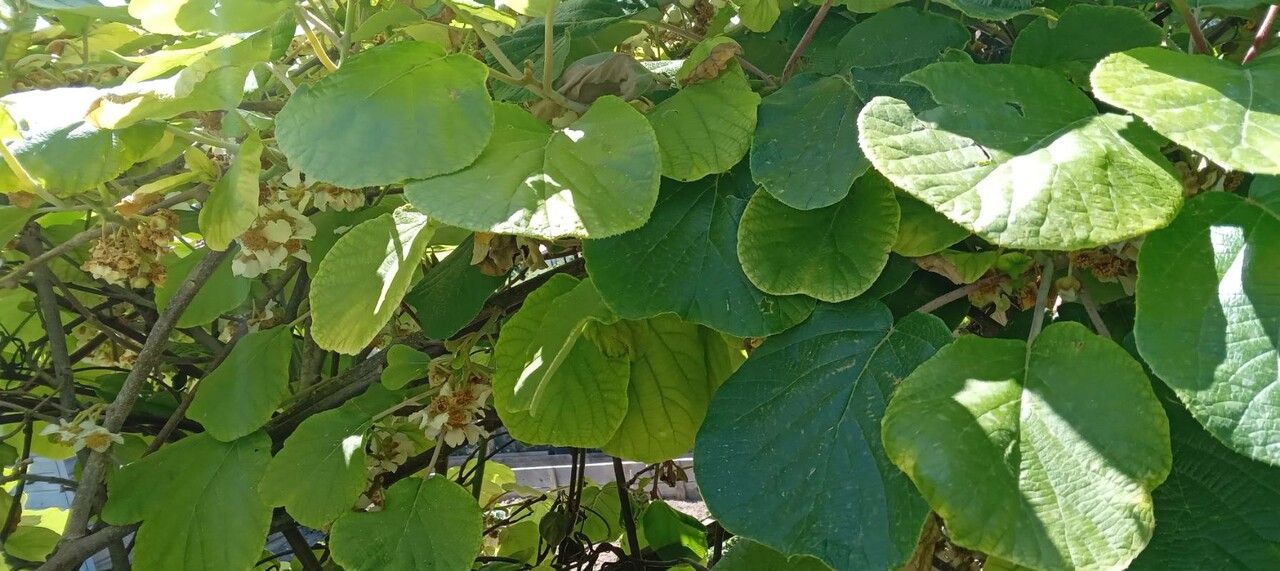
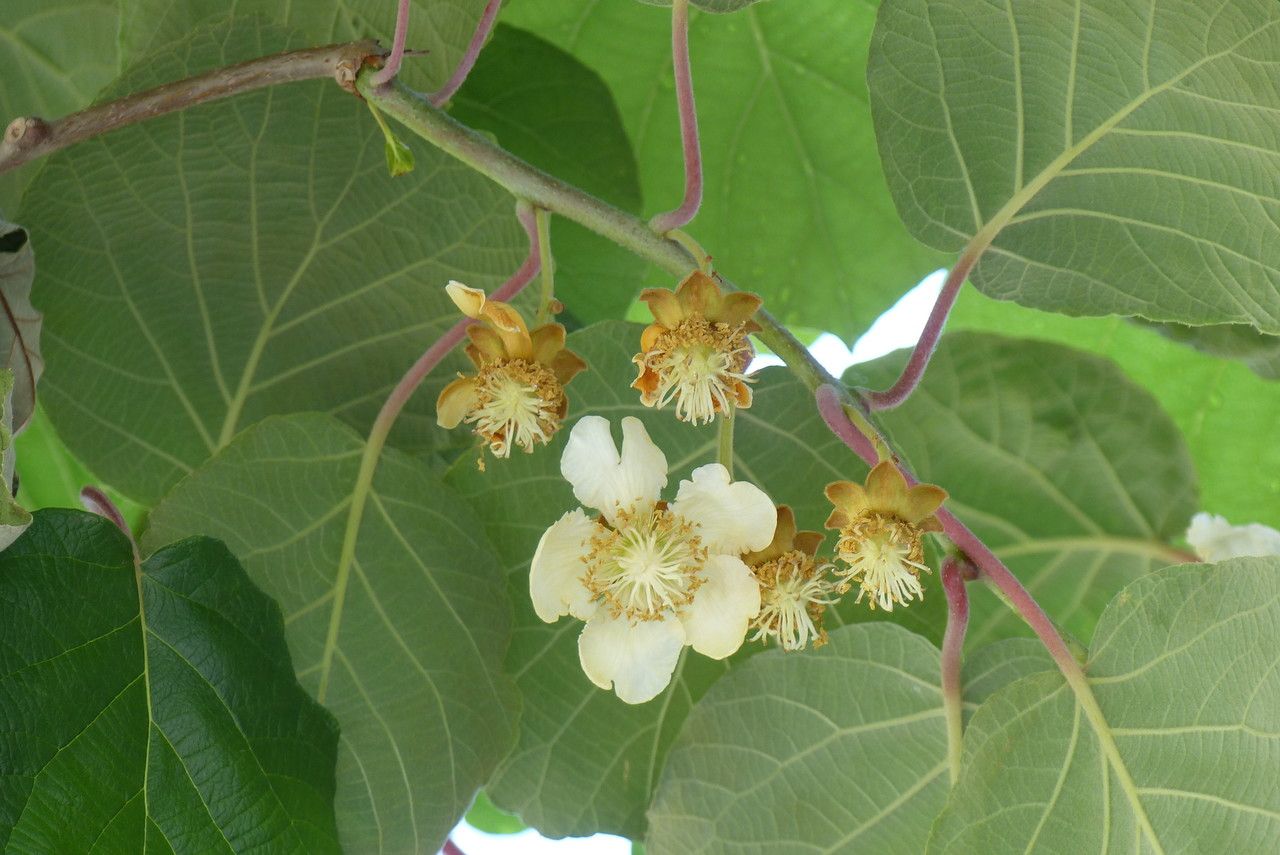
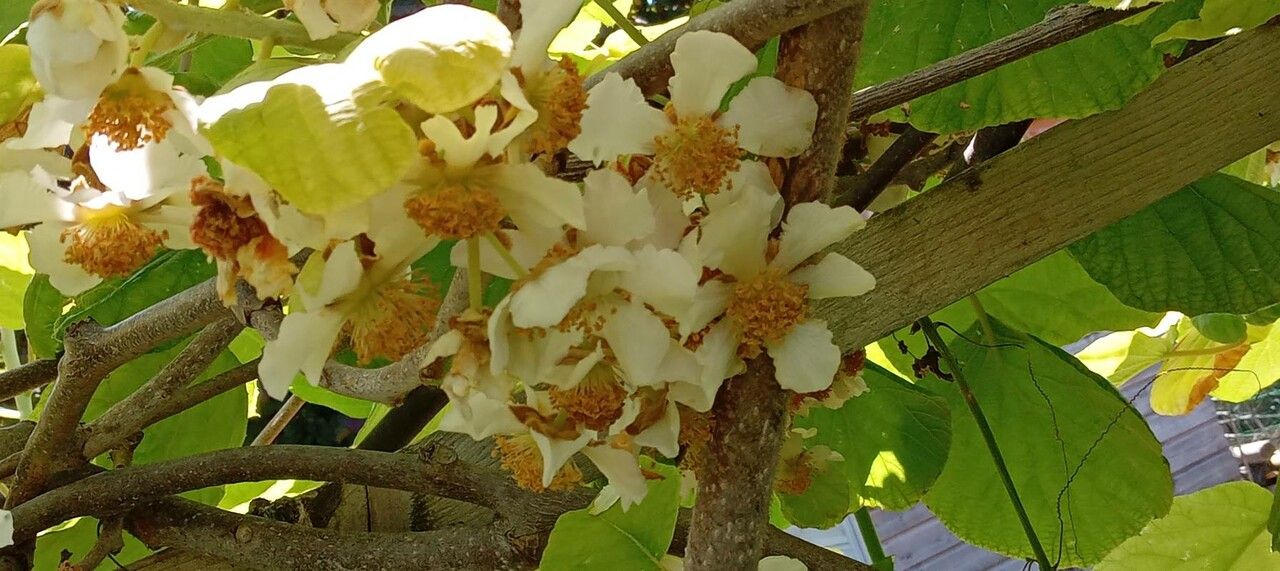
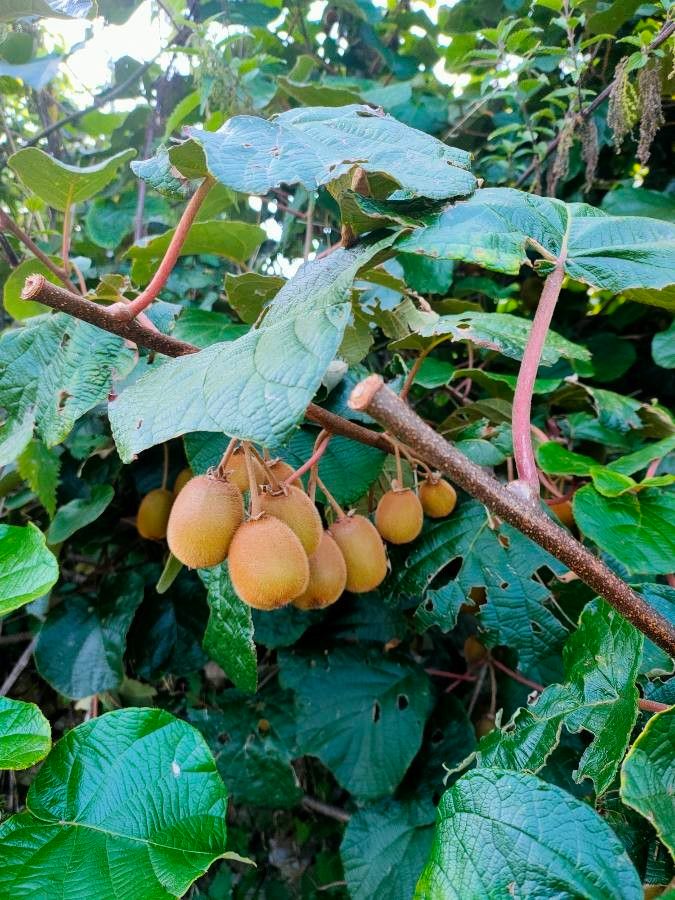
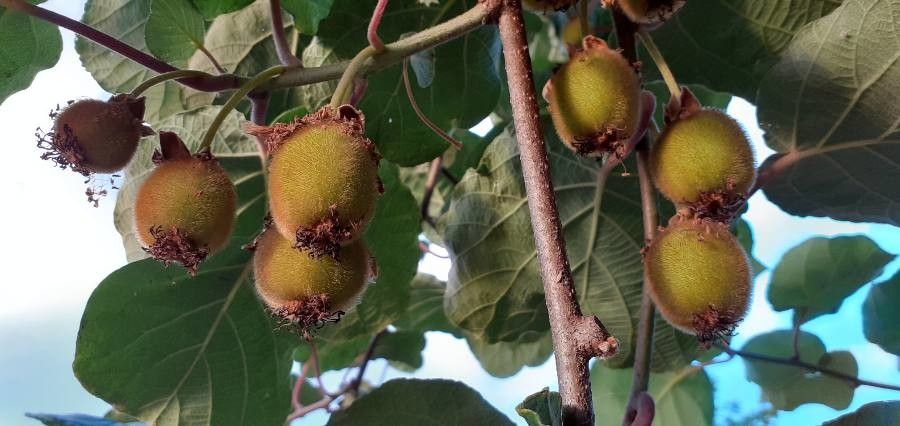
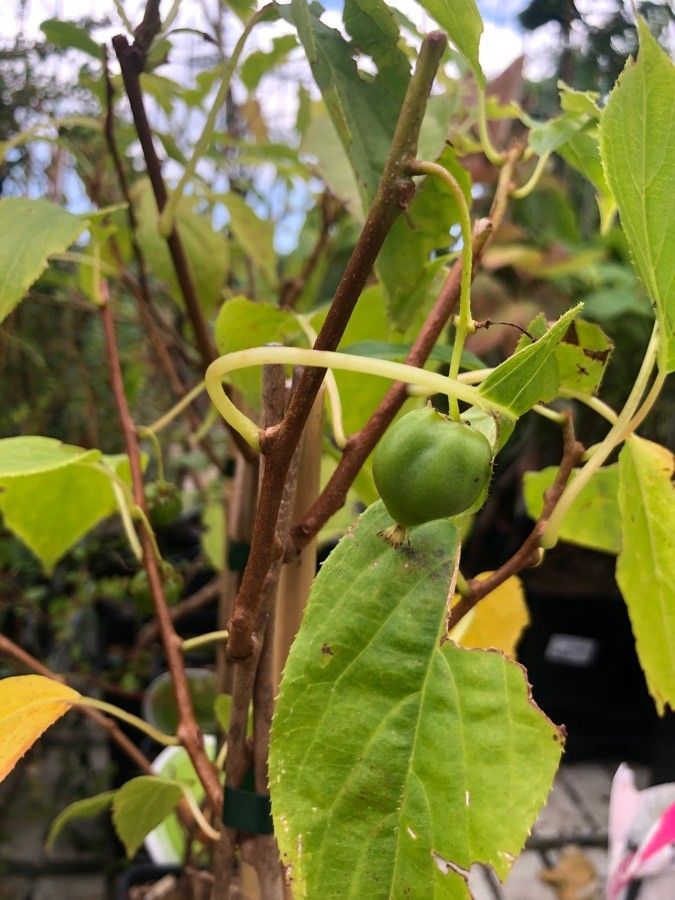
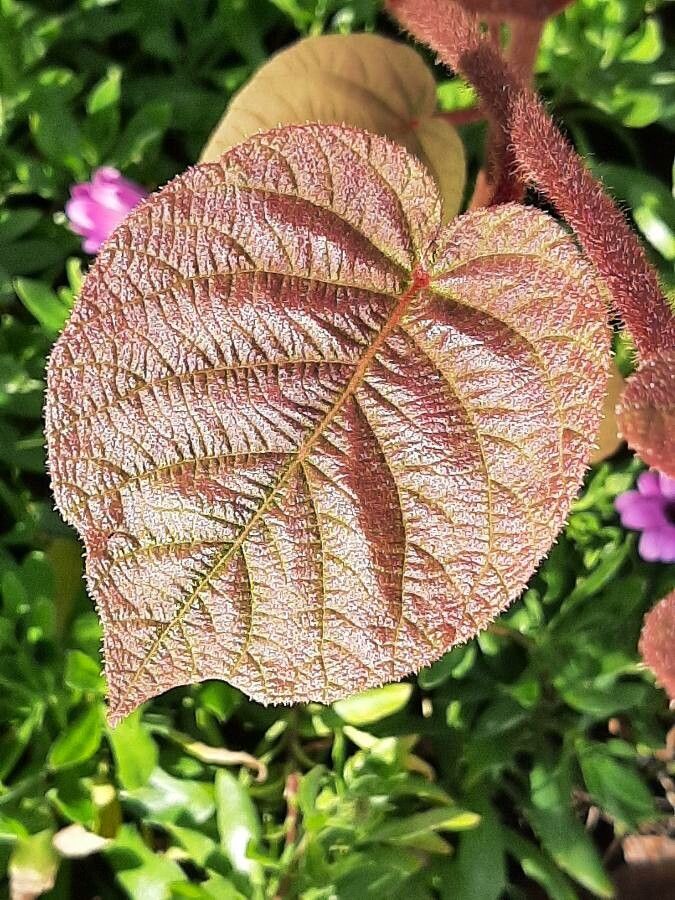
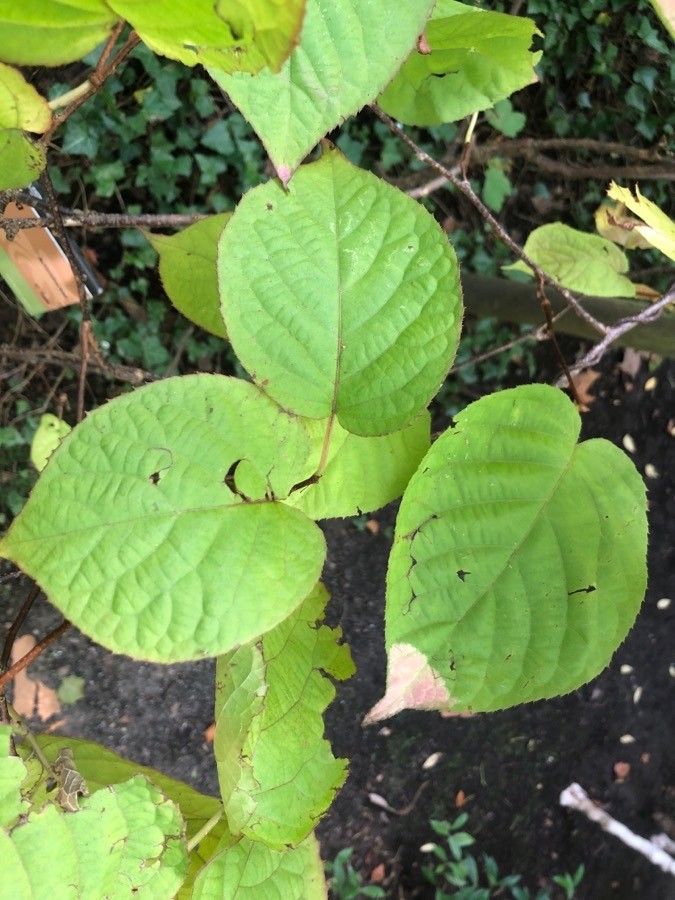
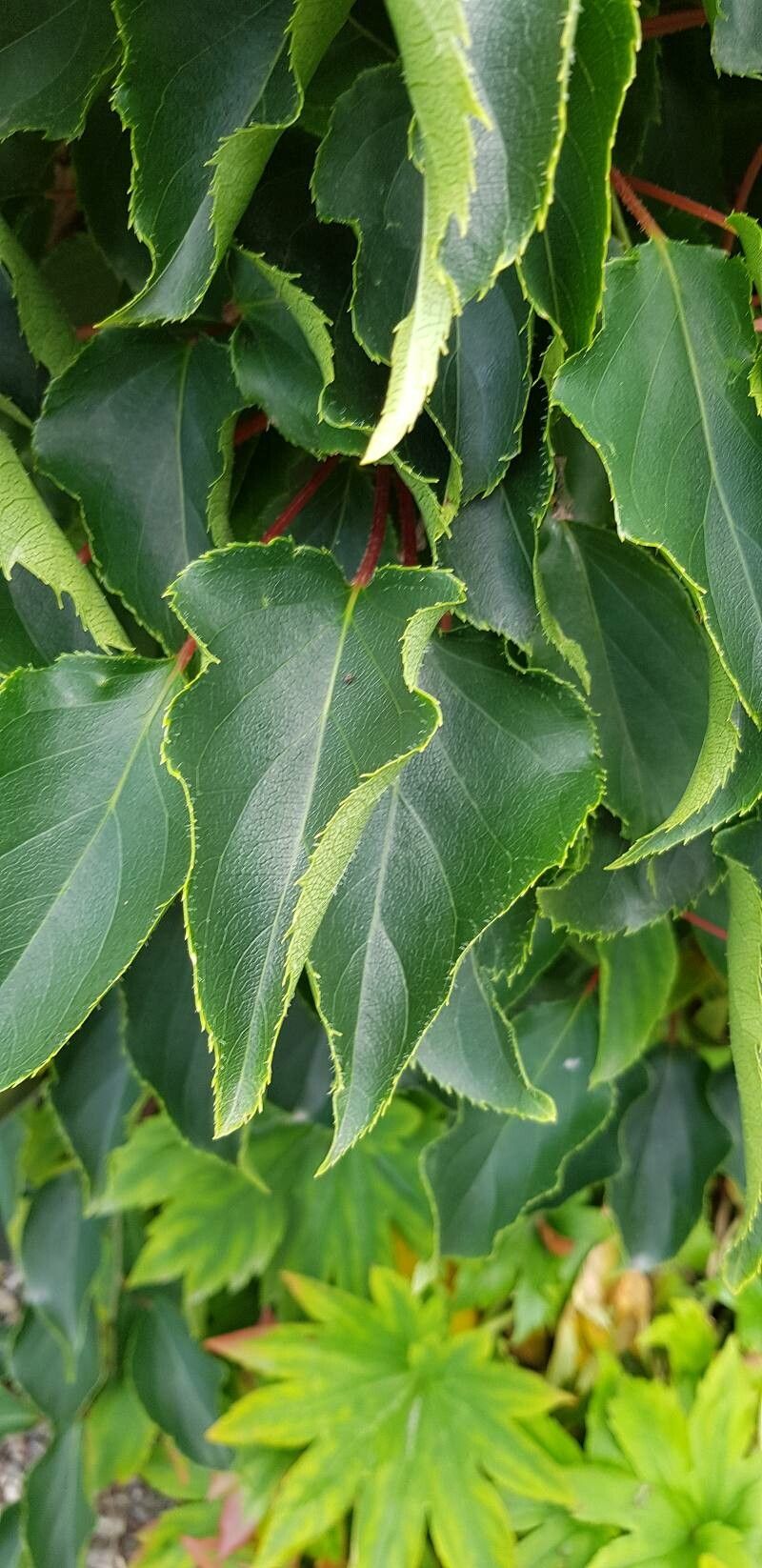
Actinidia deliciosa, commonly known as kiwifruit, is a woody vine native to China. This fast-growing plant can extend up to 10 meters in length and bears large, oval-shaped fruits with fuzzy brown skin and vibrant green flesh. Rich in vitamin C and other nutrients, kiwifruit is a popular addition to many diets.
Kiwifruit plants are dioecious, meaning they have separate male and female plants. The female plants produce the fruit, while the male plants provide pollen for fertilization.
The plant thrives in well-drained soil rich in organic matter and requires regular watering during the growing season. It can be grown in full sun or partial shade but needs protection from strong winds.
Kiwifruit has become an important crop worldwide due to its high nutritional value and unique flavor profile. It is commonly used in salads or as a garnish for desserts but can also be enjoyed on its own as a healthy snack.
Overall, Actinidia deliciosa is an attractive vine that not only produces delicious fruits but also adds ornamental value to gardens and landscapes.
The 'solo' kiwi variety has strong disease resistance and is generally unlikely to suffer from illnesses. As for care, this plant is fairly low-maintenance. When grown outdoors it needs little watering, and larger plants typically do not require pruning. Smaller plants, however, should be pruned after they finish blooming. The 'solo' kiwi is appropriate for anyone with outdoor space, such as a garden or deck, and does not demand extensive gardening experience.
How to keep Actinidia Deliciosa.
Light
The 'solo' kiwi fruit benefits from prolonged sunlight, which encourages healthier growth. It can tolerate lower light levels, but insufficient sunlight can stunt its development. Having originated in well-lit environments, it grows best under those conditions. Both excessive shade and too much light can harm the plant.
Water
Your kiwifruit plants will require continuous irrigation and are not drought-resistant. As a result, you should never let their soil dry up. However, they dislike damp feet, so well-drained soil is very important. Browning or drooping leaves on the vine are typically an indication that your plant needs more water.
Humidity
This plant will thrive in moderate humidity, which is probably the level in your home. However, misting it a few times a week can be very beneficial. Make sure the room has good ventilation.
Temperature
The kiwi variety 'solo' originates from regions with temperatures between 59 and 95°F (15 to 35°C). It favors this moderate climate and may require temperature adjustments in different seasons depending on your region. Regular monitoring and intervention are necessary to maintain its optimal growth environment.
Fertilizer
The Kiwi fruit 'solo' plant needs adequate nutrients to produce fruit at its best. Apply fertilizer in early spring to encourage new growth and flower development. Regular feeding keeps the plant healthy, yields tastier fruit, and prevents nutrient-deficiency problems such as yellowing leaves and weak fruit production.
Pruning
Pruning your kiwifruit plants properly not only encourages more fruit growth but also keeps the vines from becoming wild. Starting with a sturdy framework (through a trellis or other structure) is critical; from there, trim around the main stem often until it grows tall enough to produce an overhead canopy. The winter season is the optimum time to trim your kiwifruit vine since the plant is dormant.
Botanical profile.
- Plant Type
- Vine
- Life Cycle
- Perennial
- Genus
- Actinidia
- Family
- Actinidiaceae
- Hardiness Zone
- 8-10
- Mature Height
- 4.57 m to 9.14 m
- Mature Spread
- 1.83 m to 3.05 m
- Leaf Color
- Green
- Leaf Type
- Deciduous
- Flower Color
- White
- Flower Size
- 2.54 cm
- Bloom Time
- Mid spring, Late spring
- Planting Time
- Spring
- Harvest Time
- Late summer, Early fall, Mid fall
- Native Area
- China
Other names.