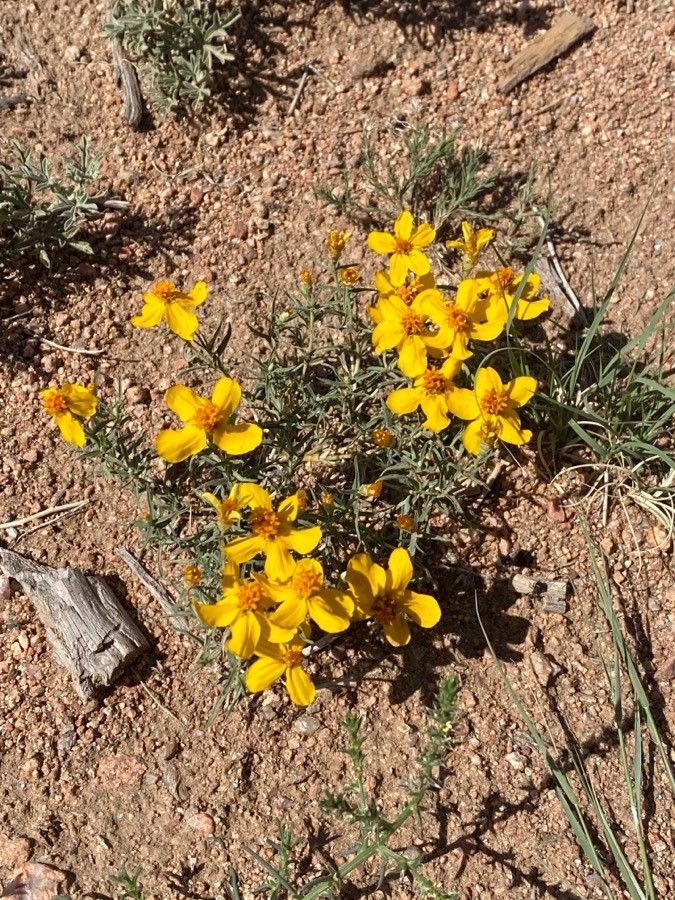
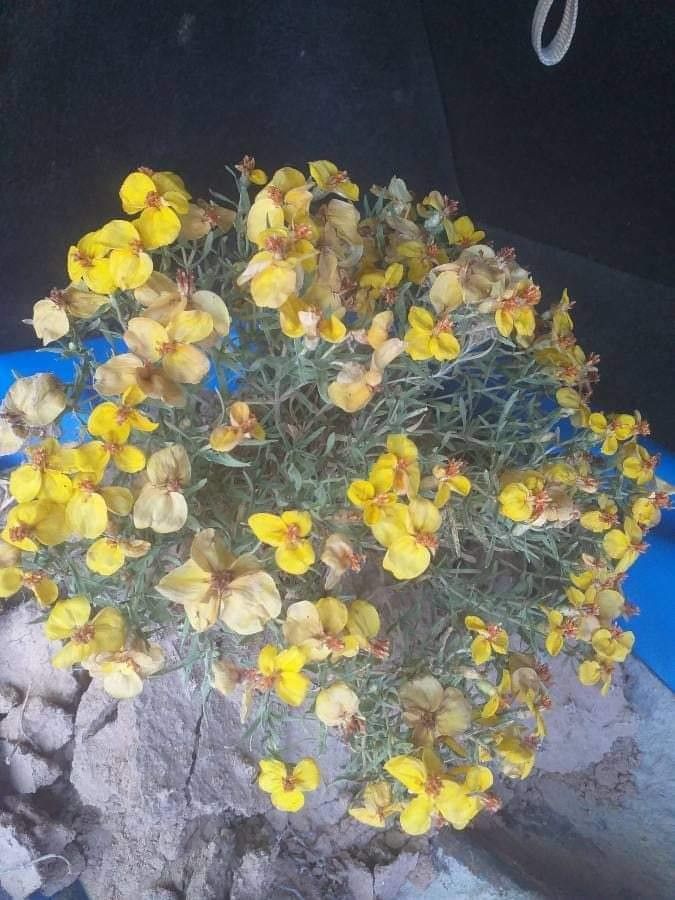
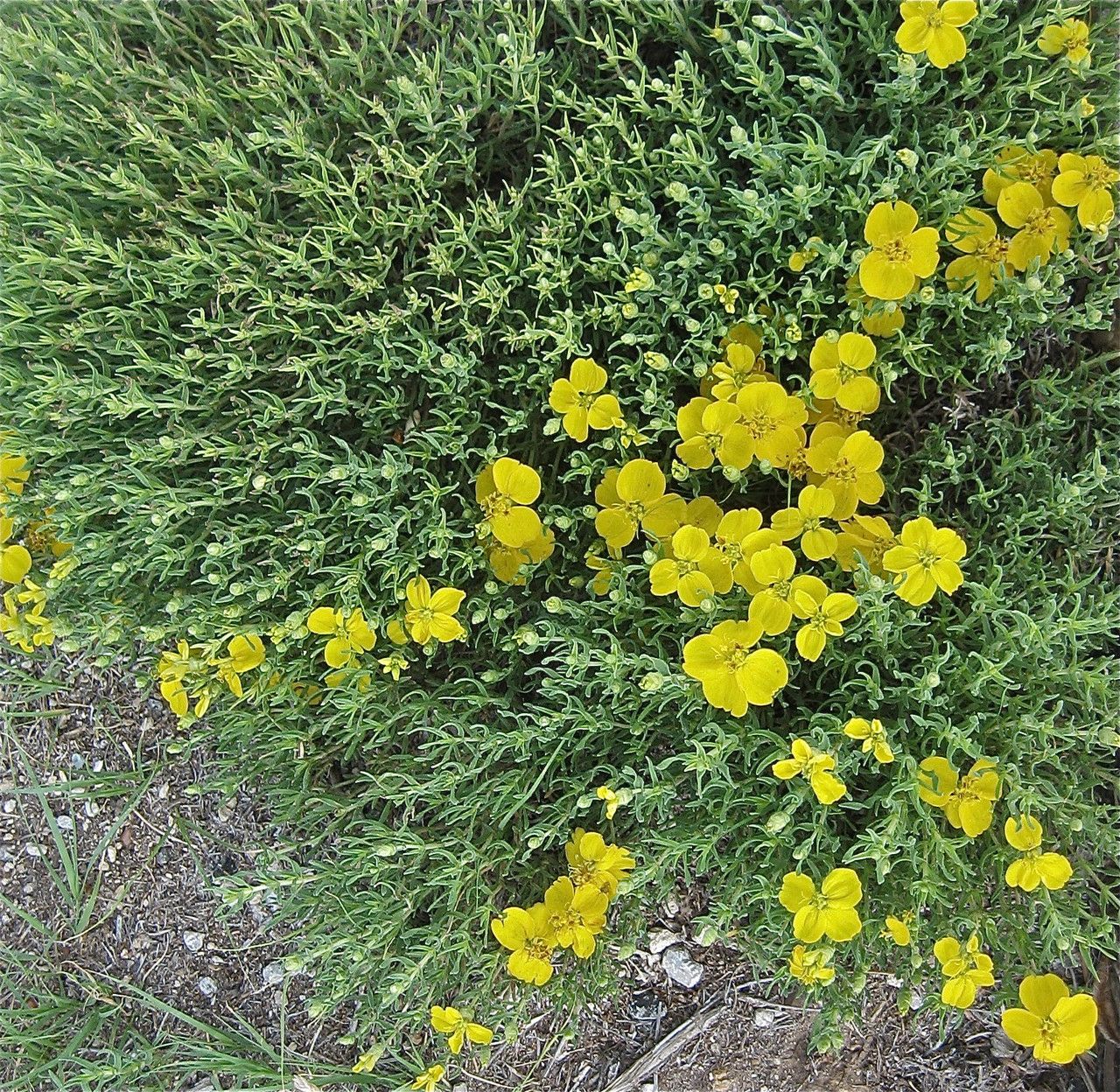
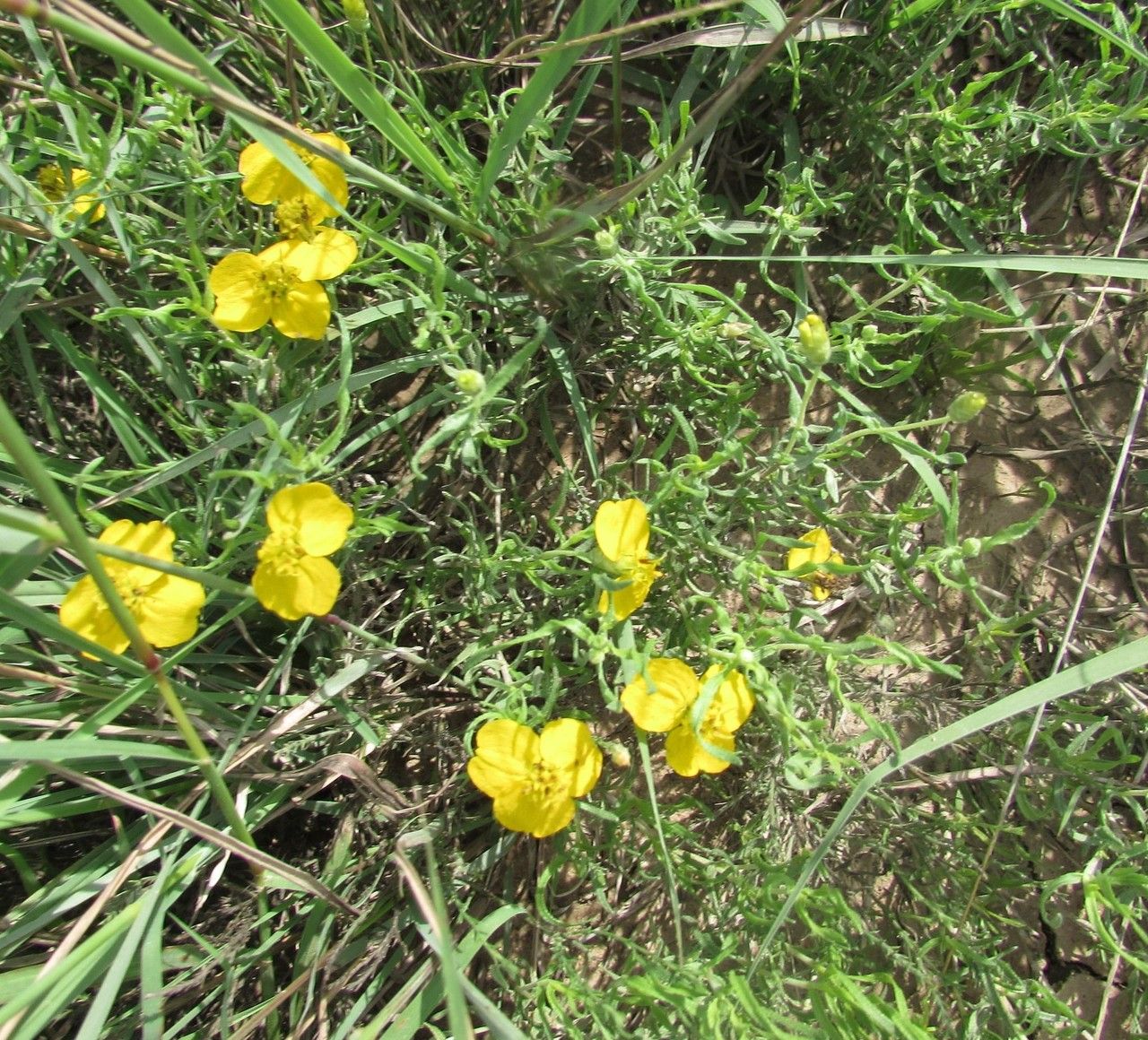
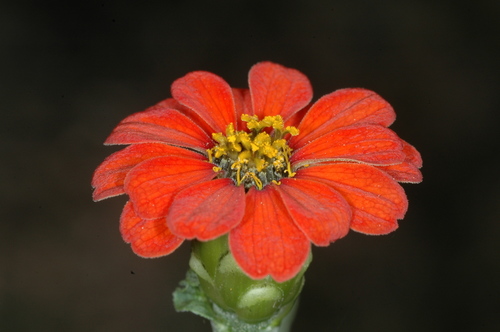
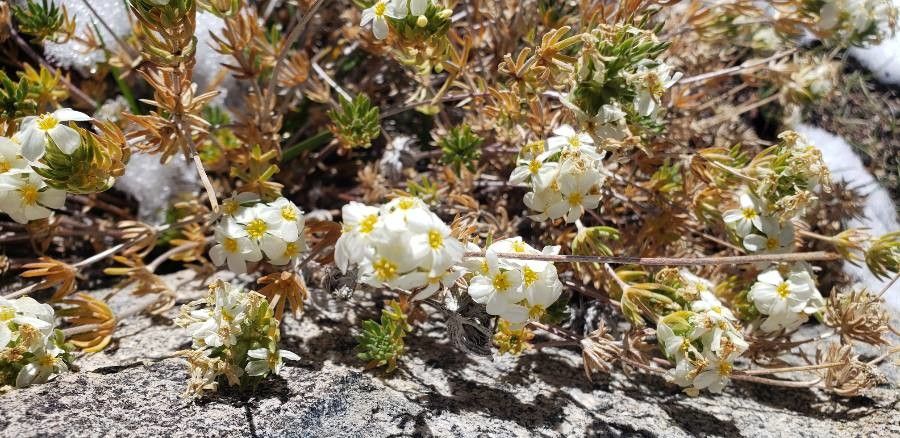
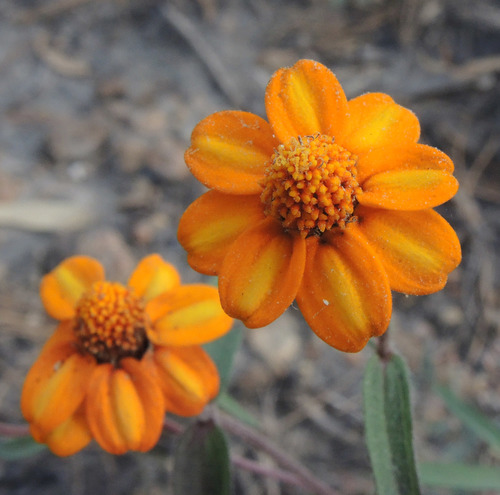
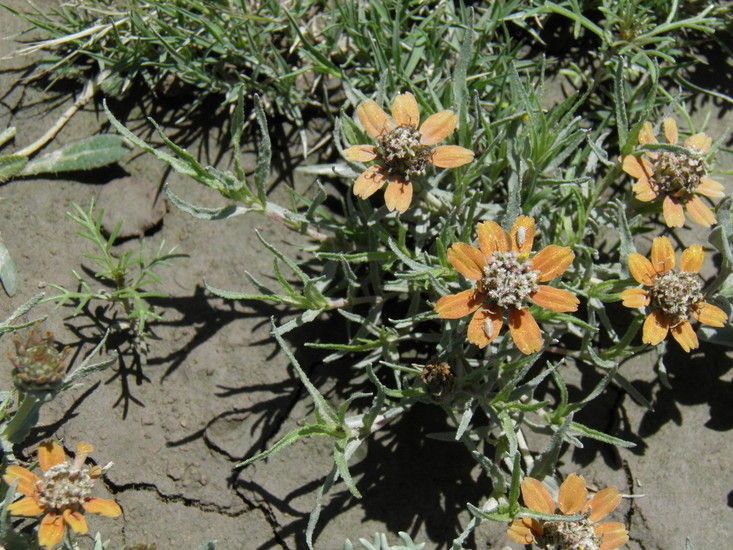
Zinnia grandiflora is a species of flowering plant in the family Asteraceae known by the common names Rocky Mountains zinnia and plains zinnia. It is native to the southwestern and south-central United States (Kansas, Oklahoma, Texas, Colorado, New Mexico, Arizona) and northern Mexico (Chihuahua, Coahuila, Sonora, Tamaulipas, Nuevo León, Zacatecas).Zinnia grandiflora is a small flat-topped or rounded subshrub growing up to 22 cm (8+1⁄2 in) tall with many slender, branching stems. The oppositely arranged leaves are linear and 1–3 cm (1⁄2–1+1⁄4 in) long. The herbage is covered in short, rough hairs. The flower head has 3 to 6 bright yellow ray florets each between 1–2 cm (1⁄2–3⁄4 in) in length. At the center is a cluster of several tubular disc florets. It grows on plains and foothills and other dry habitat.
Rocky mountain zinnia is fairly disease-resistant and is usually not prone to illnesses. Still, it can be affected by pests and diseases present in its surroundings. These issues are generally not severe. Regarding care, this plant requires moderate maintenance. It should be pruned regularly to maintain a neat appearance and support healthy growth. Fertilizing can also help promote flowering. Rocky mountain zinnia is suitable for anyone with outdoor space, such as a garden or patio, and does not demand extensive plant-care experience. It may require more attention when grown indoors.
How to keep Zinnia Grandiflora.
Light
Rocky mountain zinnia needs steady exposure to sunlight for healthy growth, though it does not require constant full sun. At every stage of development it does well in abundant sunlight but can also tolerate milder sun. Excessively prolonged or insufficient sunlight may stunt the plant's growth.
Water
The Rocky Mountain zinnia is perfectly adapted to arid conditions, as it requires minimal water and has a high tolerance for drought. It thrives in dry climates where there's occasional rain, which usually provides enough moisture without much human intervention. Ideally, you should water it only once a week.
Temperature
Rocky mountain zinnia is native to areas with temperatures ranging from 68 to 95 °F (20 to 35 ℃). It flourishes under these conditions but can adapt if necessary. Seasonal changes should be introduced gradually to imitate its natural environment.
Fertilizer
Proper timing is essential for fertilizing Rocky mountain zinnia. Apply fertilizer in early spring and repeat monthly through early summer. Fertilizer encourages attractive blooms and supplies energy during both dormant and active growth phases.
Pruning
To promote healthy growth and continuous blooming, prune Rocky Mountain zinnias from early to late spring. Start by removing dead stems and spent flowers. Trim any excessively long stems to maintain a compact shape. This essential practice not only enhances flowering but also boosts overall plant health and vigor throughout the growing season.
Botanical profile.
- Plant Type
- Herb
- Life Cycle
- Perennial, Annual
- Genus
- Zinnia
- Family
- Asteraceae
- Hardiness Zone
- 4-8
- Mature Height
- 10 cm to 20 cm
- Mature Spread
- 10 cm to 20 cm
- Leaf Color
- Green
- Leaf Type
- Semi-evergreen
- Flower Color
- Yellow, Orange
- Flower Size
- 2.54 cm to 7.62 cm
- Bloom Time
- Summer, Fall
- Planting Time
- Summer, Autumn
- Harvest Time
- Late summer, Fall, Early winter
- Native Area
- Mexico
Other names.
Reader questions.
What is the native temperature range for Rocky Mountain Zinnia?
Rocky Mountain Zinnia is native to regions with a temperature range of 68 to 95 °F (20 to 35 °C). It thrives in these conditions but can adjust if necessary. To ensure the plant's health, seasonal changes should be made gradually, in order to mimic its natural environment. This approach helps the Rocky Mountain Zinnia acclimate without stress.
What are the cold protection measures for Rocky Mountain Zinnia?
Rocky Mountain Zinnia has strong cold resistance, making special frost protection measures generally unnecessary. However, in conditions where winter temperatures are expected to drop below -30°C, it becomes essential to protect the plant from the cold. This can be done by wrapping the trunk and branches with non-woven fabric or cloth. Additionally, before the first freeze in autumn, it is advised to water the plant thoroughly, ensuring the soil is moist as it freezes. This practice helps prevent drought and water scarcity for the plant during the winter and early spring.
How does Rocky Mountain Zinnia react to low temperatures?
Rocky Mountain Zinnia is known for its cold-tolerance and prefers temperatures above 20°C. In the winter, it is important to keep the temperature above 0°C to maintain its health. Exposure to temperatures below -30°C might not show immediate changes during the winter, but come spring, the branches may become brittle and dry, with no new shoots emerging. To manage this, it is recommended to prune away any dead branches that have failed to produce new leaves in the spring.
What should be done if the Rocky Mountain Zinnia experiences high temperatures?
During the summer, it's crucial to ensure that the temperature surrounding the Rocky Mountain Zinnia does not exceed 35°C. Temperatures above 38°C can cause the plant's leaves to lighten in color, tips to become dry and withered, and increase susceptibility to sunburn. The solution involves trimming away sunburned and dried-up parts, moving the plant to a shaded location away from the midday and afternoon sun, or using a shade cloth. Additionally, watering the plant in the morning and evening can help keep the soil adequately moist.