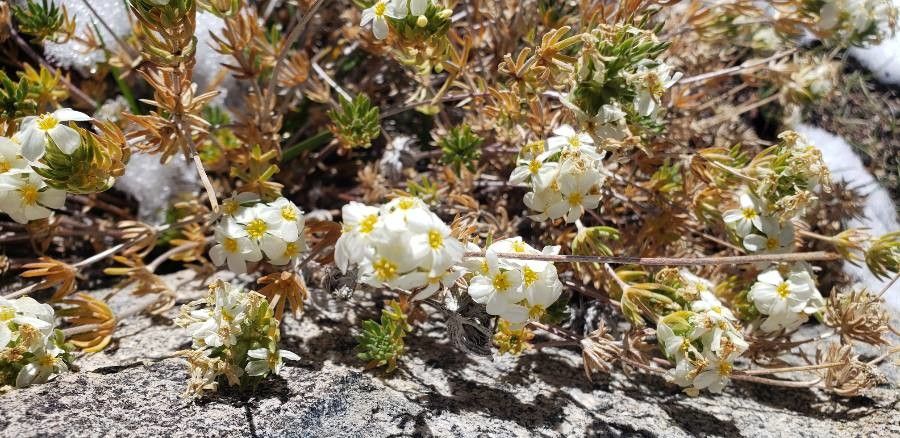
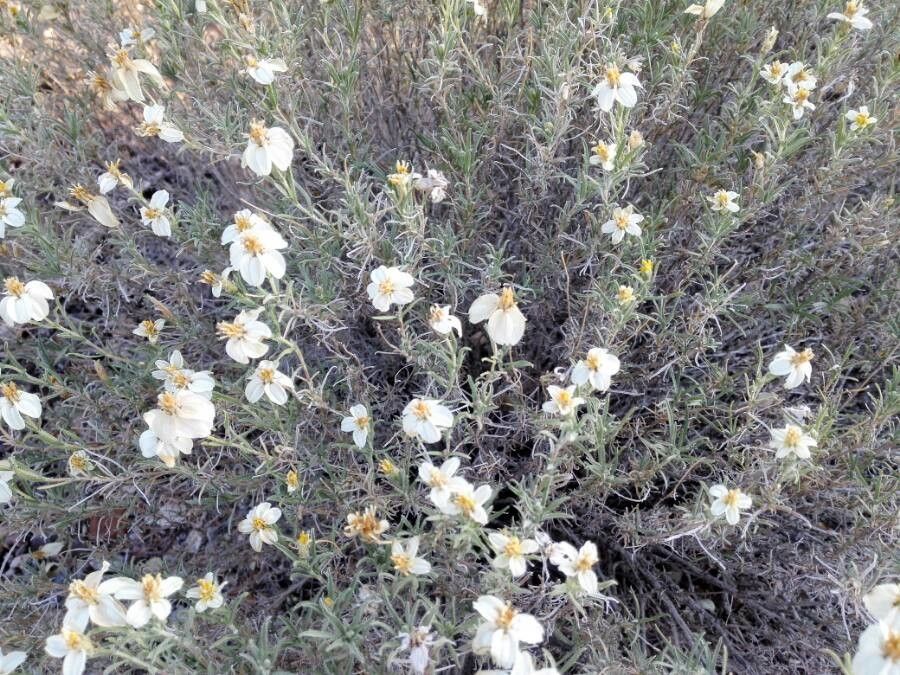
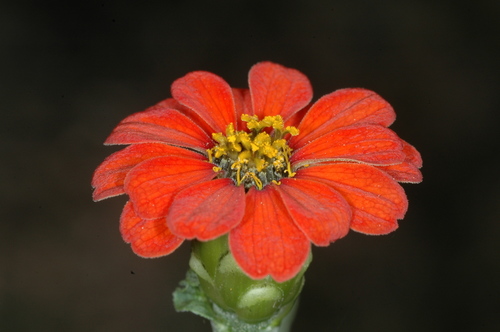
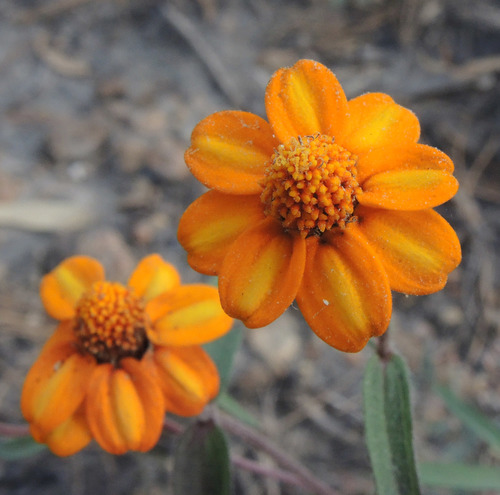
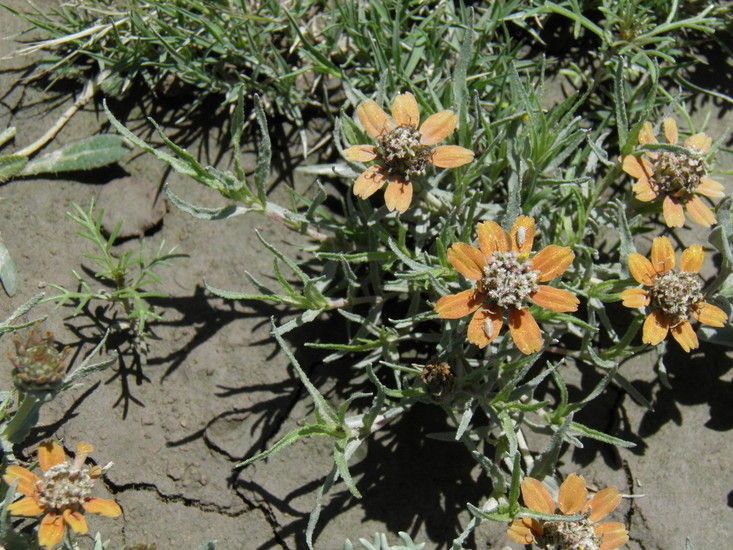
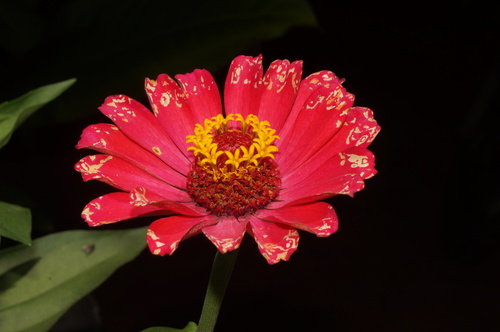
Zinnia acerosa is a low-growing perennial flowering plant native to the Southwestern United States and Northern Mexico. Common names include desert zinnia, wild zinnia, white zinnia, and spinyleaf zinnia. It is a popular landscape plant in the southwest due to its low water use and long bloom period. The flowers also serve as a food source for southwestern butterflies. In the United States, Zinnia acerosa grows in Arizona, Utah, New Mexico, and Texas. In Mexico, it has been found in Sonora, Chihuahua, Coahuila, Durango, Nuevo León, Zacatecas, and San Luis Potosí.Zinnia acerosa is a small, branching subshrub up to 16 cm (6.4 inches) tall. Leaves are very narrow, sometimes needle-shaped, up to 2 cm (0.8 inches) long. The plant produces flower head one per stem, each head with 4-7 yellow or white ray florets surrounding 8-13 yellow or purple disc florets.
White zinnia is disease-resistant and generally not prone to illnesses. Regarding care, this plant is fairly low-maintenance. When grown outdoors it needs little watering, and larger plants typically do not require pruning. Smaller plants, however, should be pruned after they finish blooming. White zinniat is suitable for anyone with outdoor space, such as a garden or deck, and does not demand much gardening experience.
How to keep Zinnia Acerosa.
Light
White zinnia thrives with abundant sunlight, reflecting its origin in open, sunny habitats. Although generally resilient, too little light can stunt its growth, while too much may cause damage such as scorching.
Water
White zinnia is well-suited to arid conditions, exhibiting significant drought tolerance and only requiring watering every 2-3 weeks. It thrives in dry environments, making it ideal for indoor areas with controlled humidity. Its long dormancy period serves as a clear indication of its low water needs.
Temperature
White zinnia is native to areas with temperatures ranging from 32 to 100°F (0 to 38°C). It performs best within that range. However, seasonal adjustments are needed to prevent the plant from being exposed to extreme cold or heat.
Fertilizer
Timing is essential for fertilizing a white zinnia. Fertilize in early spring and continue monthly until early summer. Fertilizer helps produce attractive blooms and supplies energy during both dormant and active growth phases.
Pruning
The white zinnia is characterized by its daisy-like flowers and narrow leaves. To keep these plants healthy, prune them from early to late winter. This involves cutting back the stems to promote bushiness and removing any dead parts. Thinning the plants improves air circulation, while deadheading encourages more blooms. Regular pruning is essential for maintaining the plant's health and vigor. For the best results, always use clean, sharp tools.
Botanical profile.
- Plant Type
- Shrub
- Life Cycle
- Perennial
- Genus
- Zinnia
- Family
- Asteraceae
- Hardiness Zone
- 3-11
- Mature Height
- 15 cm
- Mature Spread
- 91 cm
- Leaf Color
- Green, Gray
- Leaf Type
- Evergreen
- Flower Color
- White, Yellow
- Flower Size
- 2.54 cm to 7.62 cm
- Bloom Time
- Late spring, Summer, Fall
- Planting Time
- Spring, Summer
- Harvest Time
- Summer, Fall, Early winter
- Native Area
- Mexico
Other names.
Reader questions.
What are the sunlight requirements for White zinnia?
White zinnia requires significant sun exposure to thrive, originating from sunny, open habitats. The plant flourishes best in locations that receive above 6 hours of sunlight daily, known as full sun exposure, or in areas with about 3-6 hours of sunlight, termed partial sun exposure. It's crucial to observe the movement of sunlight through your garden to find the perfect balance of light and shade, ensuring your plants' optimal growth and happiness.
What are the optimal temperature conditions for growing White Zinnia?
White Zinnia, known botanically as Zinnia acerosa, thrives in a temperature range from 32 to 100°F (0 to 38°C). This range represents the ideal condition for the plant to grow optimally. To ensure its health, adjustments in care should be made with seasonal changes to protect it from extreme cold or heat. Despite its strong cold resistance, in regions where winter temperatures may plunge below -35°C, taking measures to protect the plant from frostbite is advisable.
How does insufficient or excessive sunlight affect White zinnia?
While White zinnia is resilient and thrives under ample sun exposure, insufficient light can inhibit its growth, and too much sun can cause damage, such as scorching. For indoor plants, artificial lighting can be a crucial solution when natural sunlight is inadequate, especially during winter or in less sunny spaces. LED lights are a preferred choice for indoor plant lighting, providing customizable wavelengths necessary for plant growth. Full sun plants require 30-50W/sq ft, partial sun plants 20-30W/sq ft, and full shade plants 10-20W/sq ft of artificial light, positioned 12-36 inches above the plant for 8-12 hours per day to mimic natural sunlight.
How can White Zinnia be protected against cold temperatures?
White Zinnia exhibits significant cold resistance, so it typically doesn't require special frost protection measures. However, if temperatures are expected to fall below -35°C, it's important to safeguard the plant. Wrapping the trunk and branches with insulating materials like non-woven fabric or cloth can help. Additionally, watering the plant abundantly before the first freeze of autumn to keep the soil moist can help the plant withstand winter and early spring by preventing drought and water scarcity.
What are the key symptoms of light deficiency or overexposure in White zinnia?
Symptoms of light deficiency in White zinnia include smaller new leaves, leggy or sparse growth, faster leaf drop, slower or no new growth, and lighter-colored or chlorotic leaves, indicating poor photosynthesis. Overexposure symptoms include sunscald, leaf curling, wilting, and leaf scorching, revealing damage due to intense sunlight. These symptoms highlight the plant's response to varying light conditions, emphasizing the need for balanced sun exposure.
What should be done if White Zinnia is exposed to temperatures below its tolerance?
White Zinnia can tolerate cold but should be kept above -30°C during winter. Exposure to temperatures below -35°C may not show immediate effects during winter, but come spring, its branches may turn brittle and dry, preventing new shoots from emerging. In such cases, it is recommended to prune away any dead branches to encourage new growth.
How can you address light-related issues for White zinnia both indoors and outdoors?
To address light-related issues for White zinnia, gradually increase sunlight exposure to at least 6 hours daily by moving plants to a sunnier location each week, using a south-facing window for indoor plants and ensuring curtains remain open during the day. If needed, supplement with artificial light for a minimum of 8 hours daily. Outdoors, avoid sudden changes in light intensity to prevent sunburn. For plants in the ground, reduce obstructions like trees by pruning and consider transplanting smaller plants during their dormant period to a location with sufficient sunlight and good drainage.
How to care for White Zinnia during high temperatures?
During summer, it's essential to ensure that the temperature around White Zinnia does not exceed 38°C. If temperatures soar above 43°C, the plant's leaves may begin to lighten, tips might dry out, and it could become susceptible to sunburn. To protect and care for the plant, trim away any sunburned or dry parts, move the plant to a shaded area or utilize a shade cloth, and maintain soil moisture by watering in the early morning and late evening.