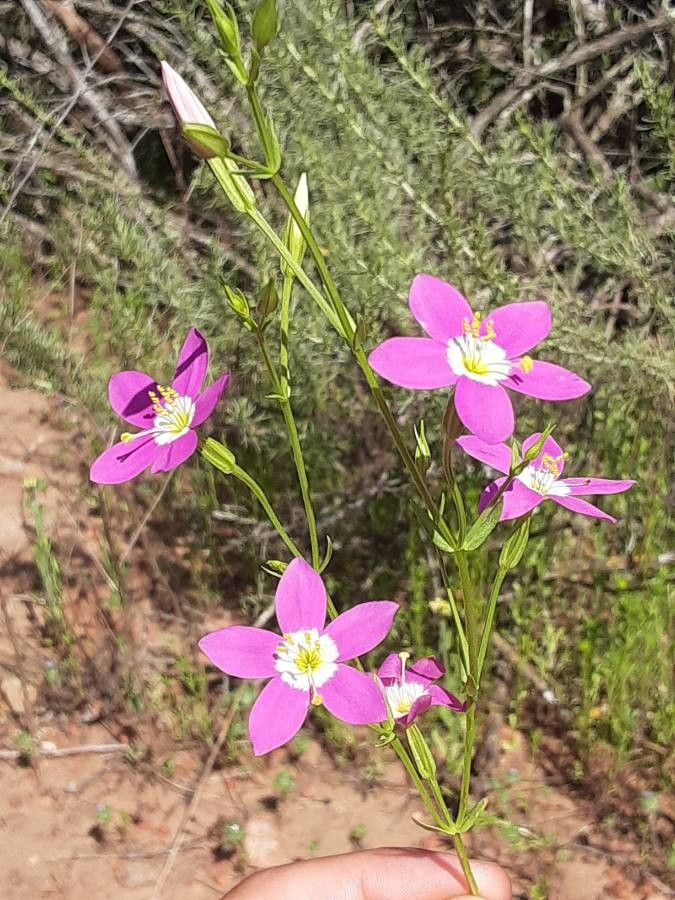
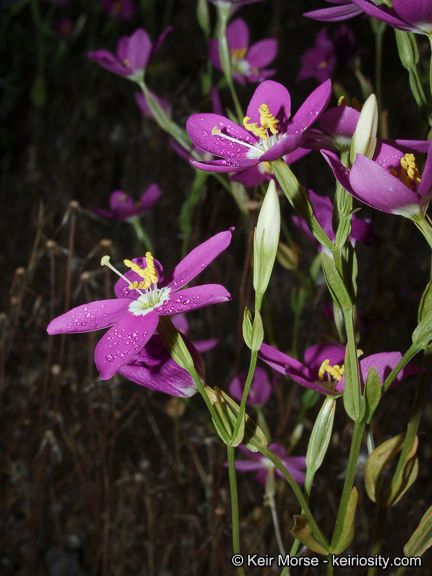
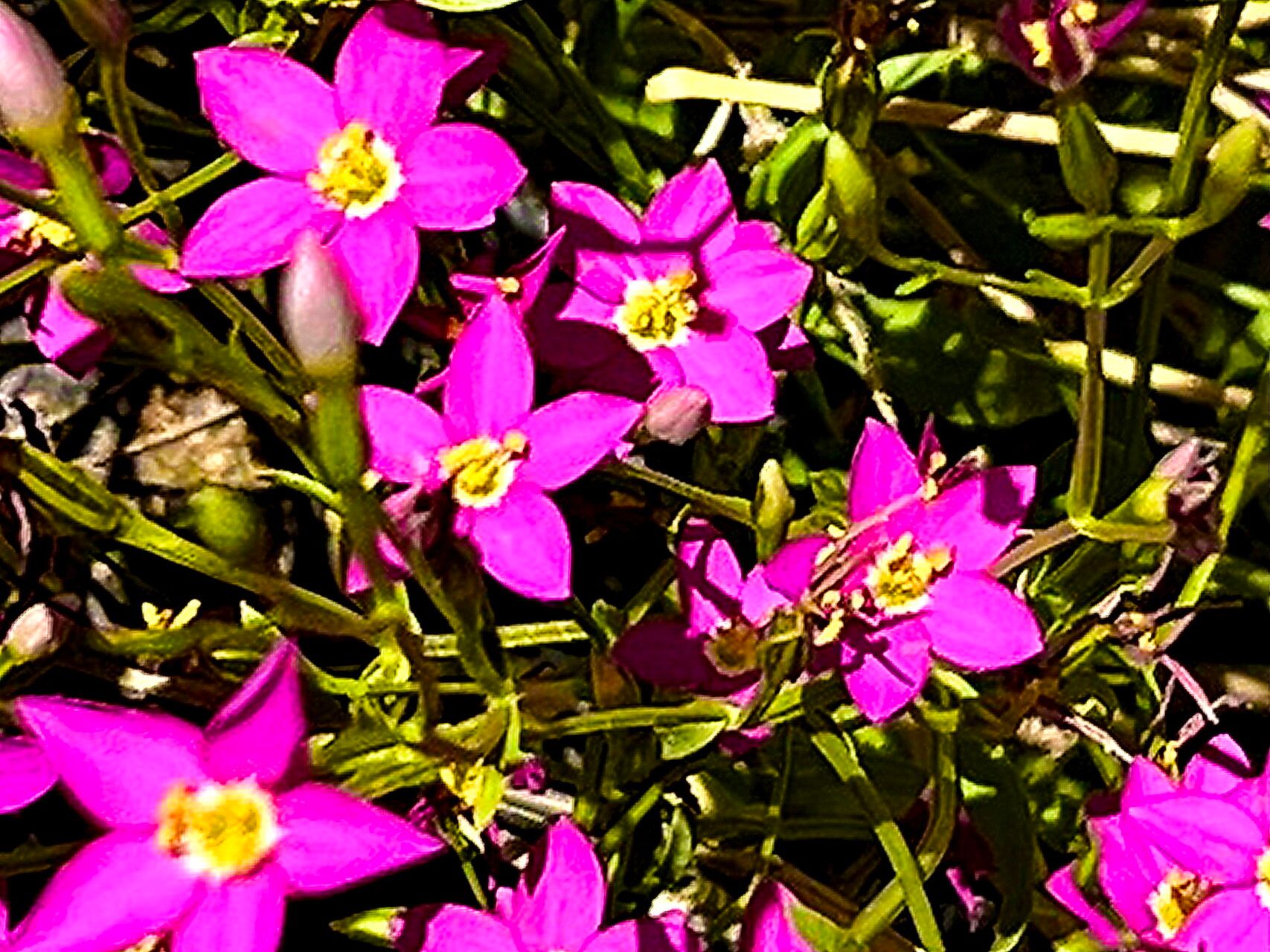
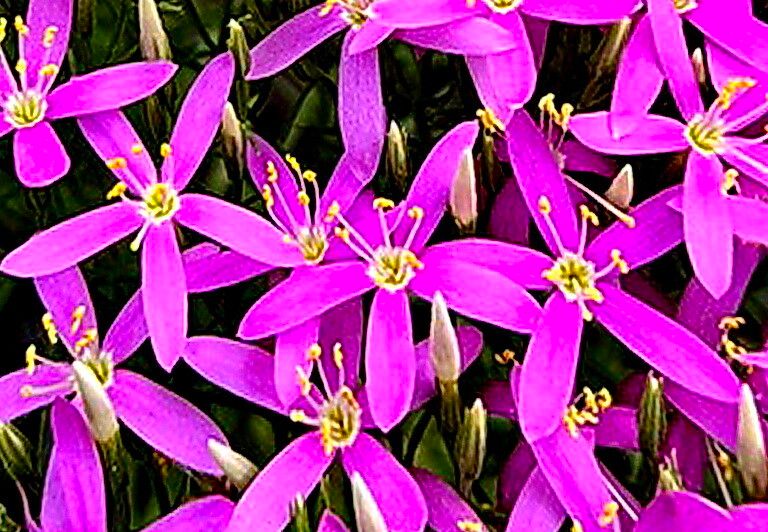
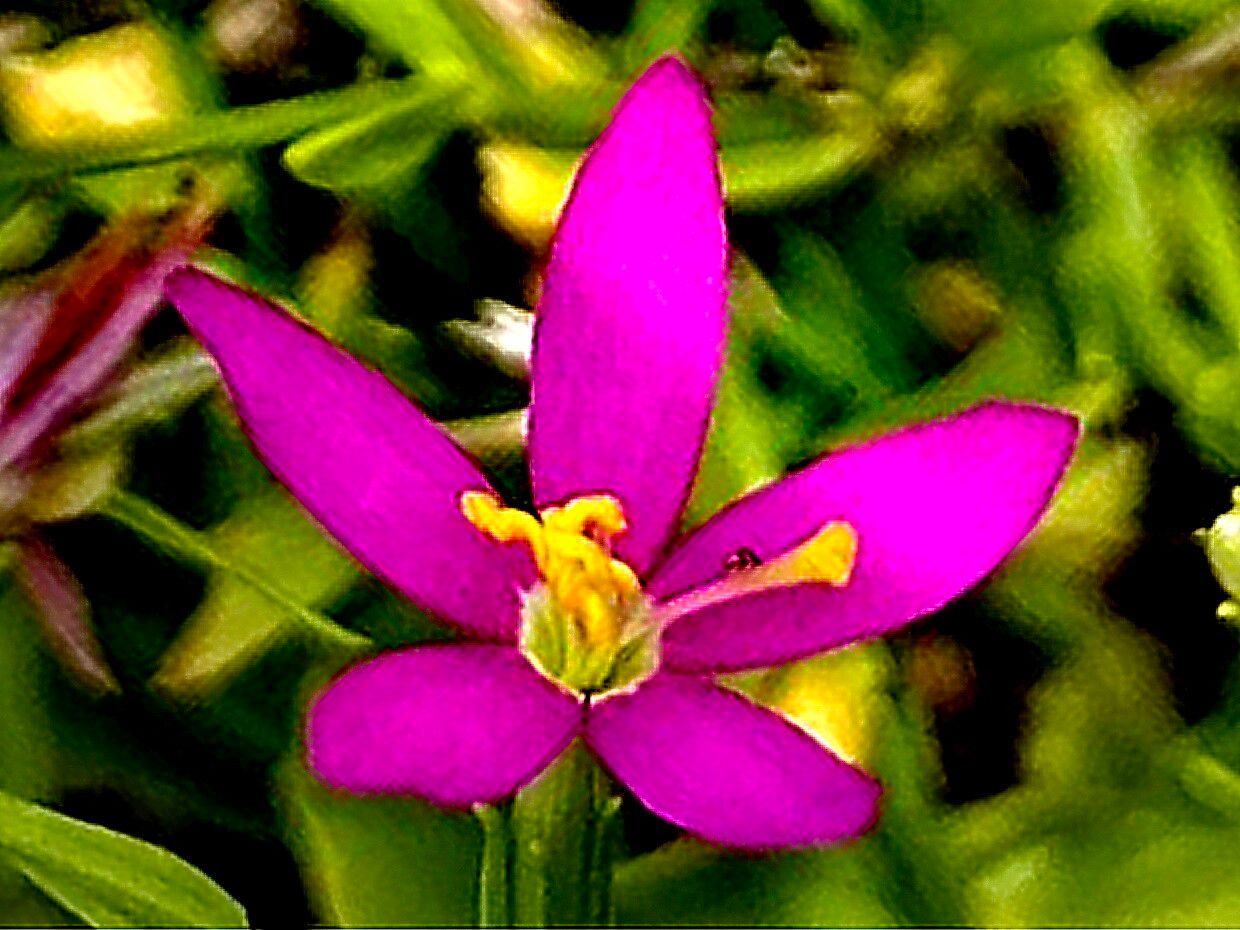
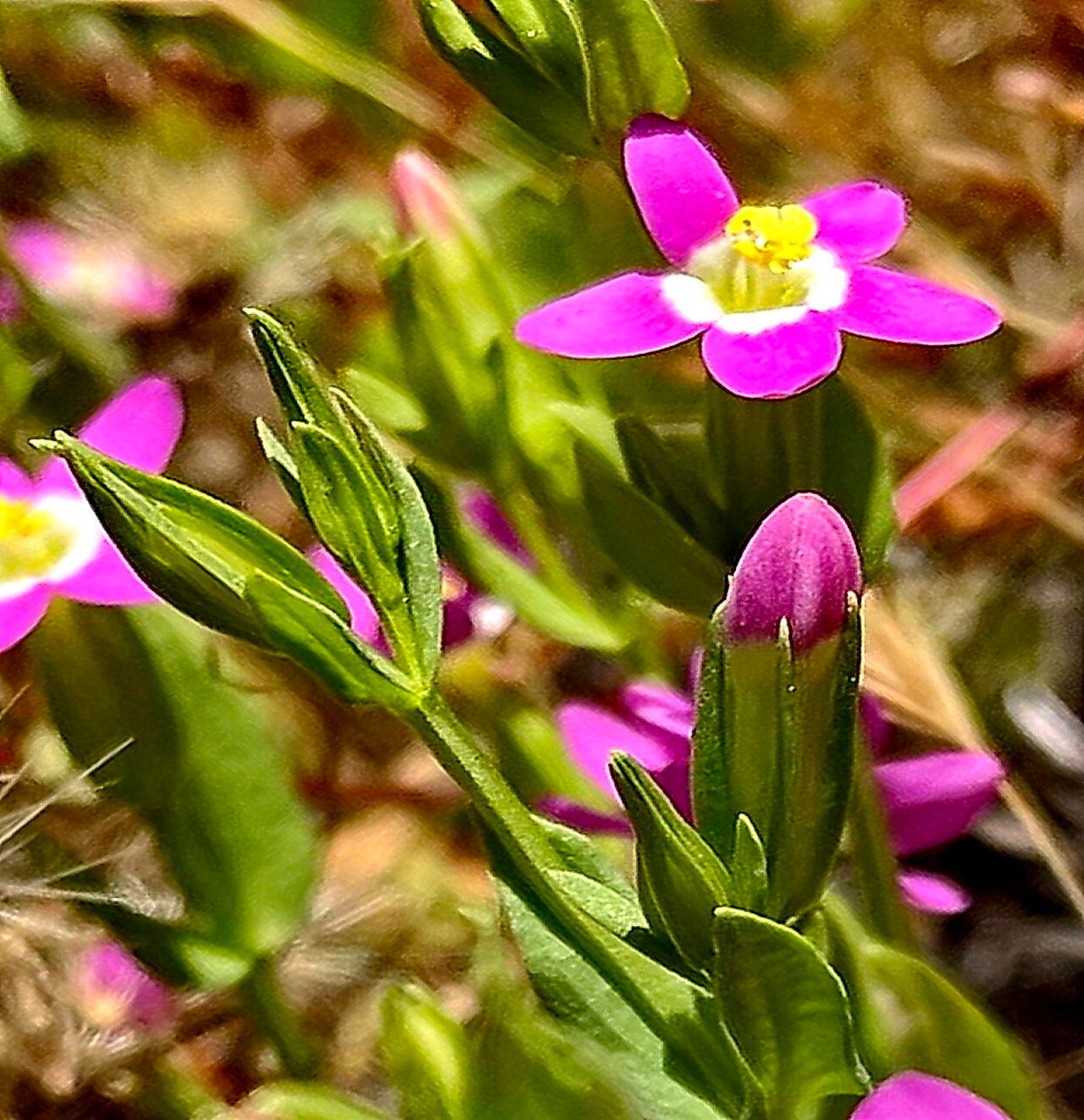
Zeltnera venusta is a species of flowering plant in the gentian family known by the common names California centaury, charming centaury and canchalagua. This centaury is native to much of California, southern Oregon, and northwest Baja California. It grows in many habitats up to elevations around 1300 meters. It is an annual wildflower rarely reaching half a meter in height. The pointed oval leaves grow opposite on the thin stems. The inflorescence is tipped with one or more showy star-shaped flowers, each with a white-centered magenta corolla about 2 centimeters wide. Until 2004, it was placed in genus Centaurium as Centaurium venustum.
Charming centaury has good resistance to disease and typically is not prone to illnesses. However, it can be affected by pests and diseases present in its surroundings. These infections are generally mild. For care, this plant requires a moderate level of maintenance. It should be pruned regularly to preserve a neat appearance and encourage healthy growth. Fertilizing can also help stimulate flowering. Charming centaury is suitable for anyone with outdoor space, such as a garden or patio, and does not demand extensive care experience. It may need more attention when grown indoors.
How to keep Zeltnera Venusta.
Light
Charming centaury does best in bright daylight and can also withstand somewhat less luminous conditions. It comes from habitats where sunlight is abundant, and its development is greatly aided by that exposure. Too much or too little light can cause it to grow less vigorously or become paler.
Water
Charming centaury flourishes in dry environments due to its excellent drought tolerance. Although it efficiently retains water as an evergreen, it still requires weekly watering to stay healthy. This makes it a great choice for indoor cultivation, especially when humidity is well-controlled.
Temperature
Charming centaury can tolerate a wide span of temperatures, although its occurrence can still be restricted by particular combinations of moisture and heat. It does best in warm summers with sufficient rainfall or irrigation. Long stretches of cloudy, rainy weather or prolonged high heat increase the chance of Charming centaury dying. In winter, adequate protection from cold can boost the plant’s survival.
Fertilizer
When most of Charming centaury’s blooms have opened to full size, resume fertilizing. Around the peak flowering period, feed it once every three to four weeks, weather permitting. After Charming centaury begins producing fewer new blooms, stop fertilizing; there’s no need to feed the plant when it can no longer produce additional blooms.
Pruning
Charming centaury benefits from pruning between early and late spring, which encourages growth and helps shape the plant. Be sure to remove any dead stems to maintain the plant's health and lightly trim any overgrown areas to improve airflow. Avoid heavy pruning to preserve the blooms. These practices enhance the plant's aesthetic appeal, prevent disease, and ensure a robust appearance.
Botanical profile.
- Plant Type
- Herb
- Life Cycle
- Annual
- Genus
- Zeltnera
- Family
- Gentianaceae
- Hardiness Zone
- 8-10
- Mature Height
- 30 cm to 61 cm
- Mature Spread
- 30 cm to 61 cm
- Leaf Color
- Green
- Leaf Type
- Semi-evergreen
- Flower Color
- Pink
- Flower Size
- 1.52 cm to 3.05 cm
- Bloom Time
- Late spring, Early summer, Mid summer
- Planting Time
- Spring, Summer, Autumn
- Harvest Time
- Mid summer, Late summer, Early fall
- Native Area
- Mexico
Other names.