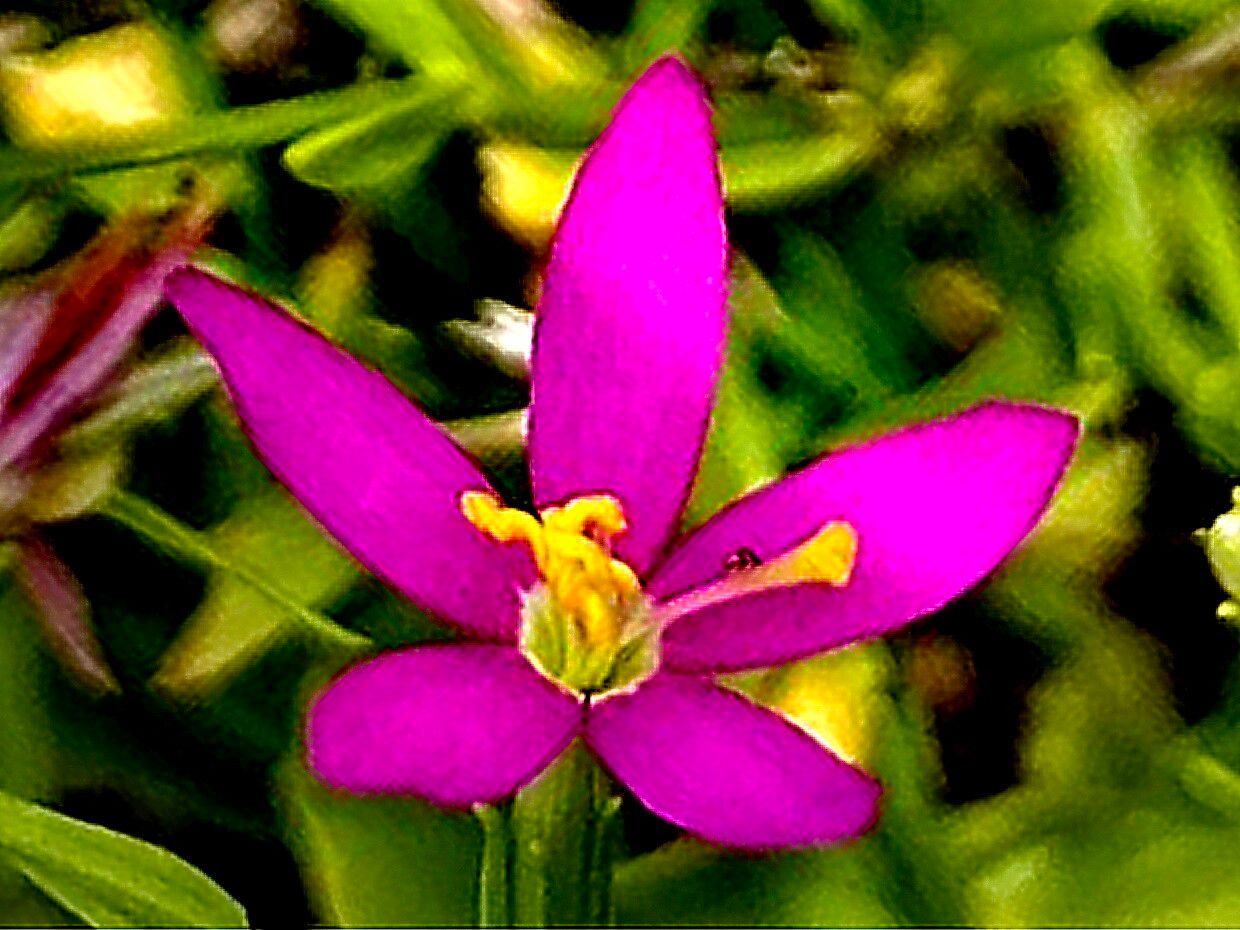
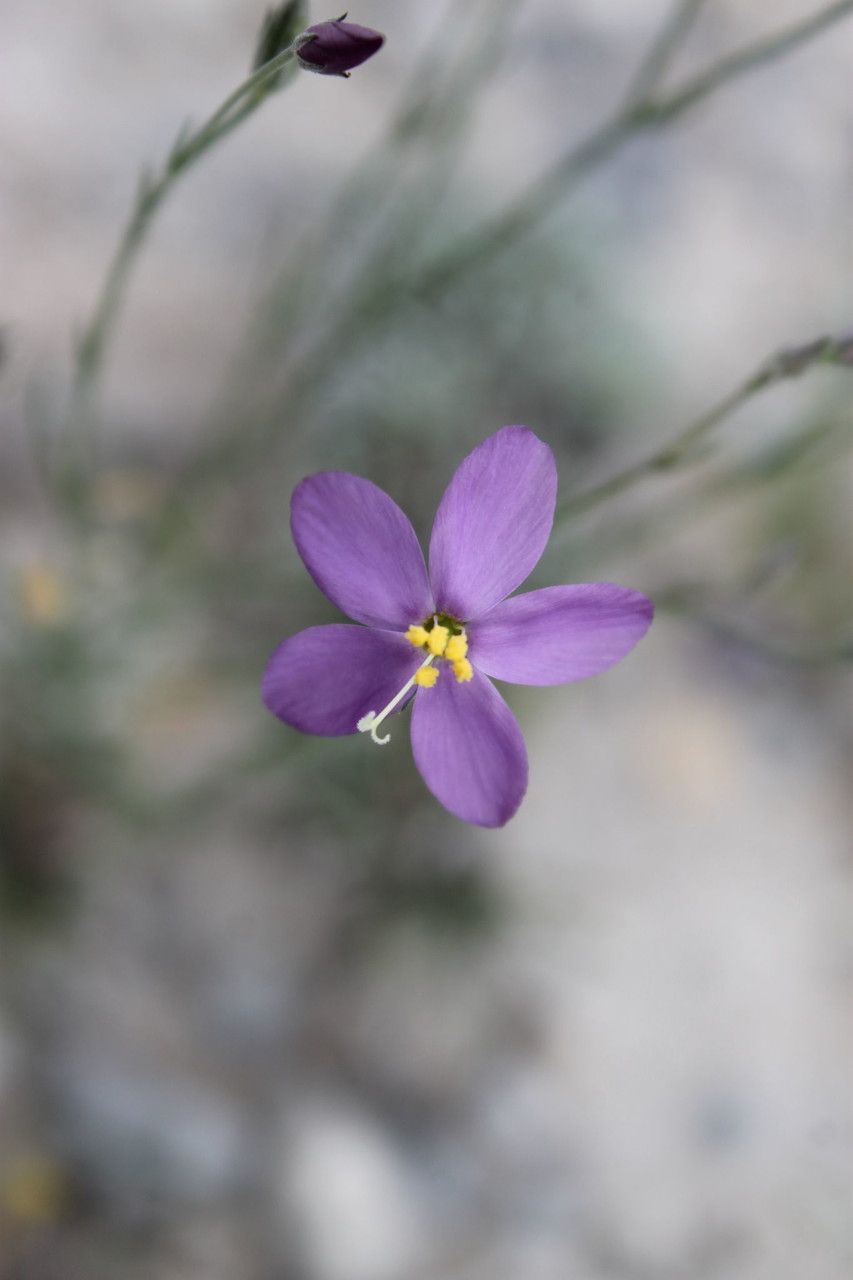
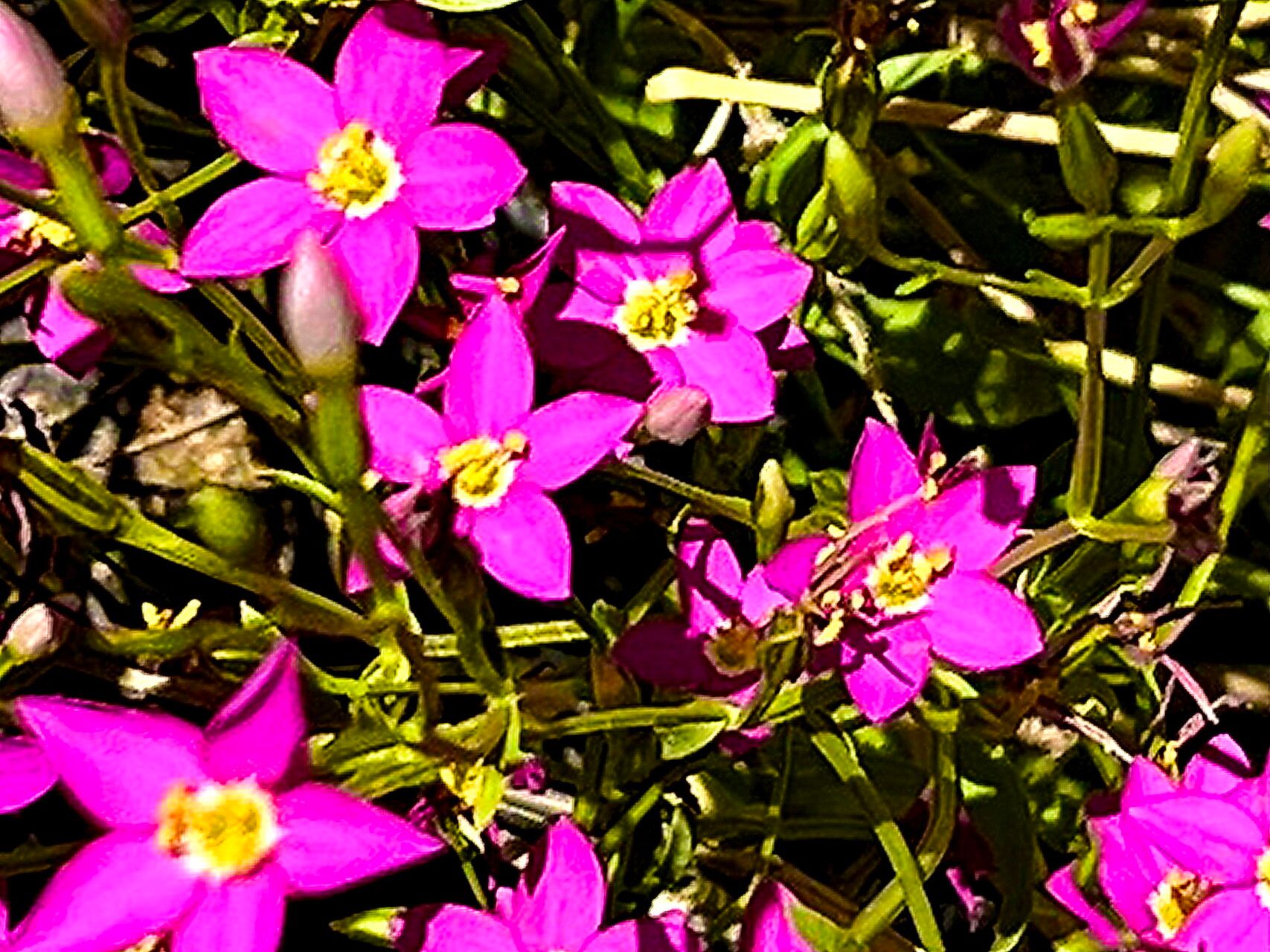
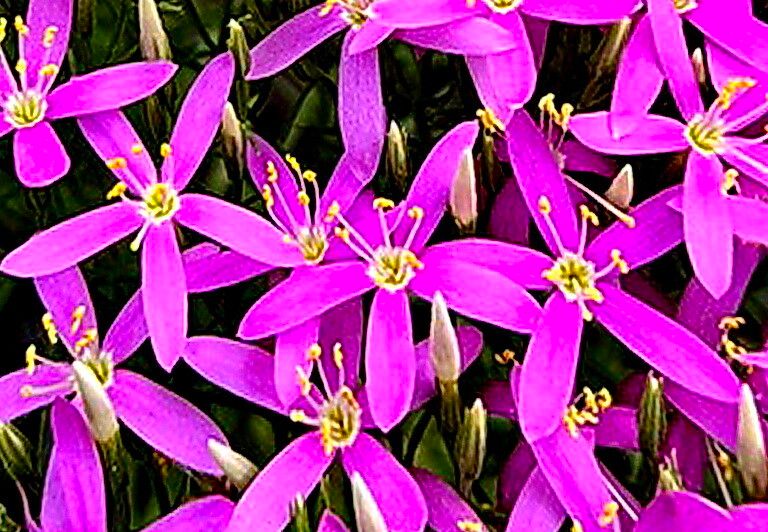
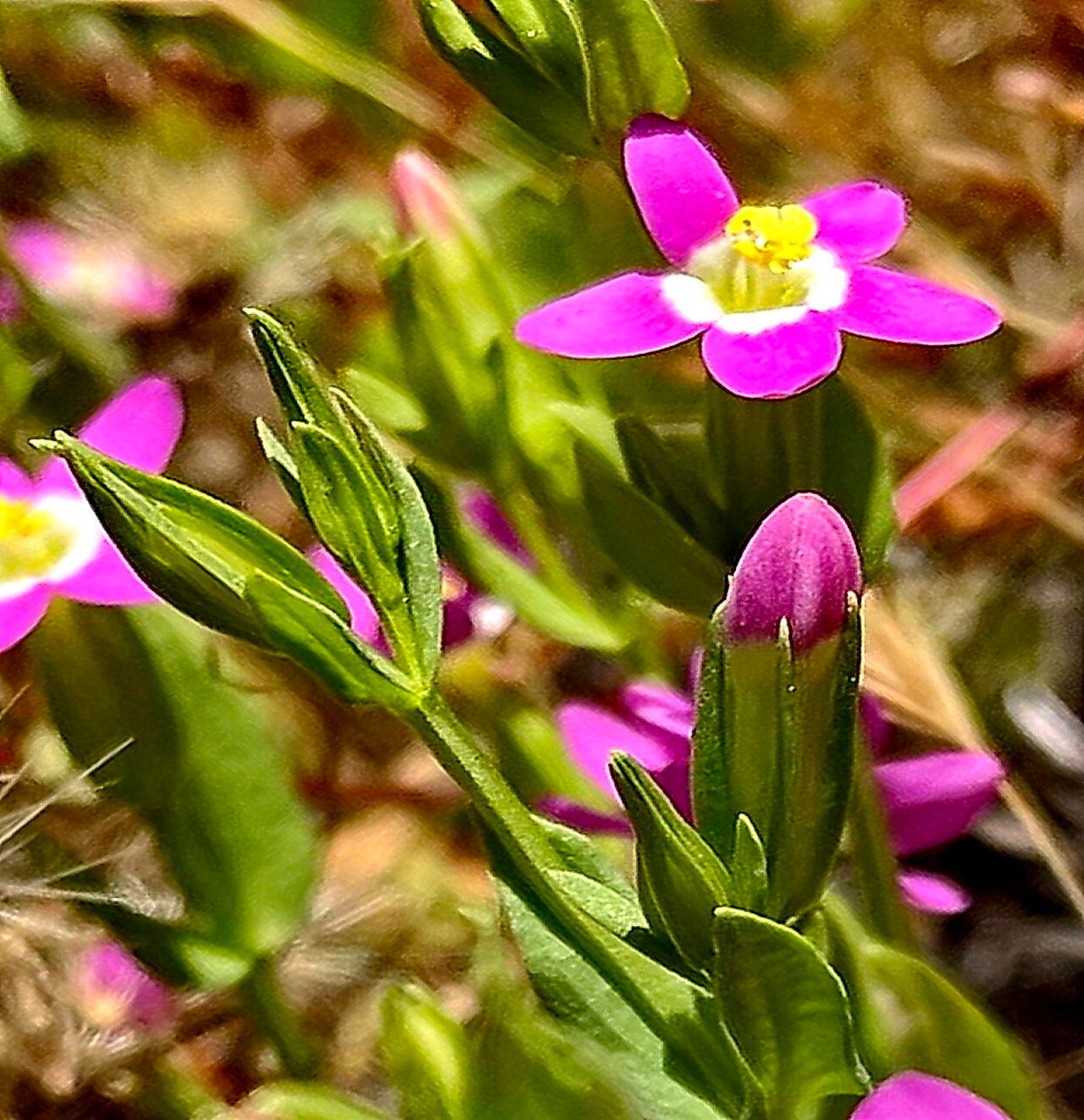
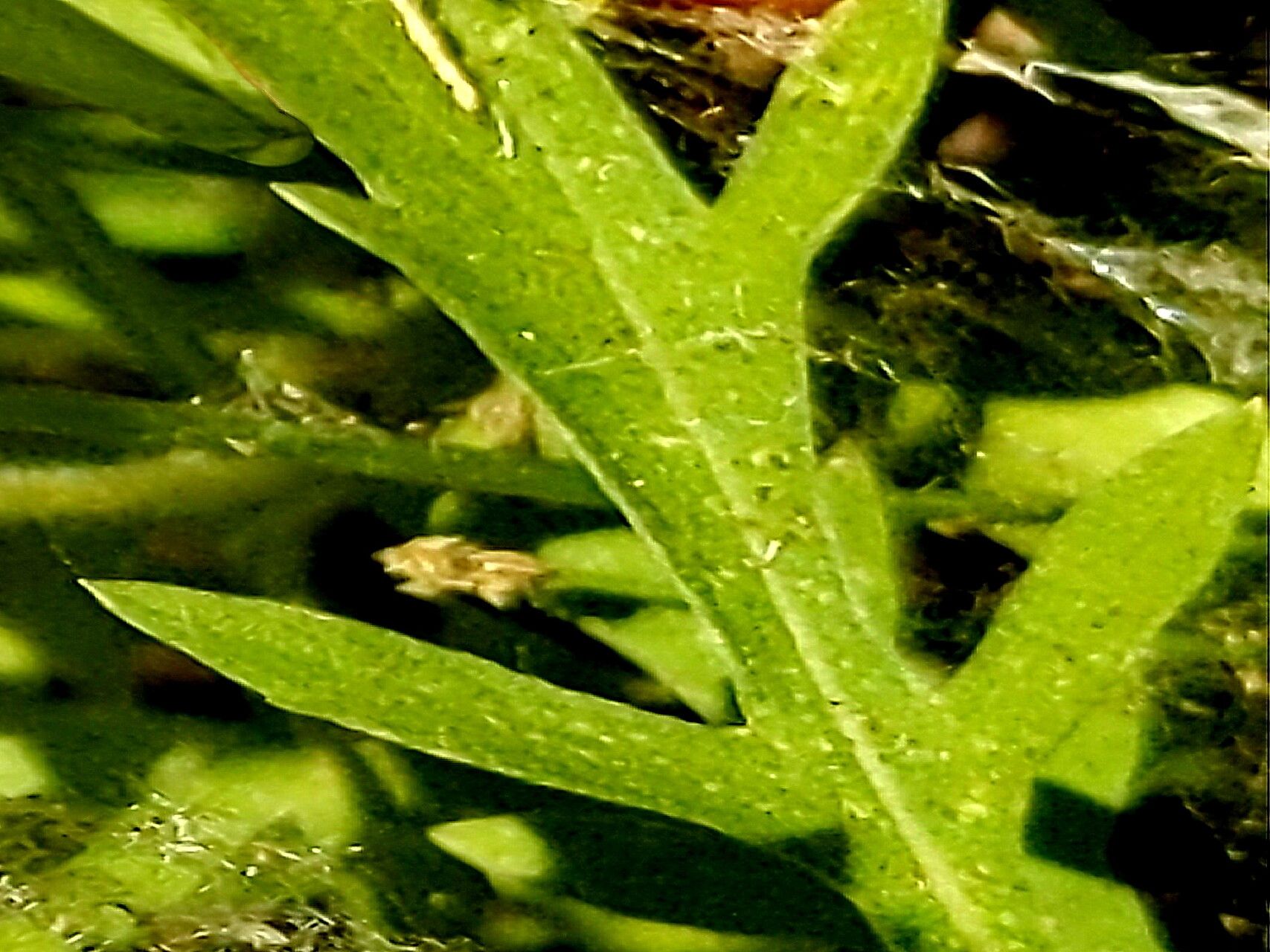
Centaurium calycosum is a species of flowering plant in the gentian family known by the common name Arizona centaury. It is native to northern Mexico and the southwestern United States, where it grows in moist places in otherwise dry habitat, such as riverbanks. This is an erect biennial herb growing up to half a meter tall. The widely lance-shaped leaves appear in a basal rosette and along the slender stem, each up to 7 centimeters long. The inflorescence is an open array of flowers on short pedicels. Each flower opens into five pointed lobes, each about a centimeter long and dark rose pink in color.
Arizona centaury has good disease resistance and is generally not prone to diseases. However, it may be susceptible to pests and diseases present in its surroundings. These infections are usually not severe. In terms of care, this plant requires medium maintenance. It needs regular pruning to maintain a neat appearance and healthy growth. Fertilization can also help encourage flowering. Arizona centaury is suitable for anyone with an outdoor space, such as a garden or patio, and does not require extensive plant-care experience. It may need more attention when grown indoors.
How to keep Zeltnera Calycosa.
Light
The Arizona centaury is a perennial herb that thrives in the sun, originating from open environments, typically flourishing in meadows and grasslands. This plant prefers full sun, although it is also capable of enduring partial sunlight conditions.
Temperature
The Arizona centaury plant can acclimate to a variety of temperature conditions, nevertheless, its spread may still be constricted by amalgamations of heat and water conditions. It flourishes ideally in warm climates in the summer with enough rainfall or irrigation. Extended spans of overcast and wet weather, in conjunction with extended high temperatures, could enhance the probability of the Arizona centaury wilting. In the winter months, appropriate shielding from the cold could boost the survival odds of the plant.
Fertilizer
The best period to fertilize an Arizona centaury is during early spring, as it transitions from dormancy to active growth. Fertilization offers essential nutrients necessary for robust development. Despite Arizona centaury's modest fertilization requirements, providing it with nutrients yearly can boost its longevity and stimulate improved, long-lasting blossoms.
Pruning
To promote the healthy growth of Arizona centaury, it's important to prune it in early spring, which aligns with its natural growth cycle. Start by removing any dead or damaged stems to improve air circulation and reduce the risk of disease. Be sure to use clean, sharp tools for the best results. Regular pruning encourages the plant to grow bushier and enhances its flowering.
Botanical profile.
- Plant Type
- Herb
- Life Cycle
- Perennial
- Genus
- Zeltnera
- Family
- Gentianaceae
- Hardiness Zone
- 7-10
- Mature Height
- 20 cm to 40 cm
- Mature Spread
- 15 cm to 30 cm
- Leaf Color
- Green
- Leaf Type
- Deciduous
- Flower Size
- 1.02 cm to 1.52 cm
- Bloom Time
- Summer
- Planting Time
- Spring
- Harvest Time
- Late summer, Early fall, Mid fall
- Native Area
- Mexico
Other names.