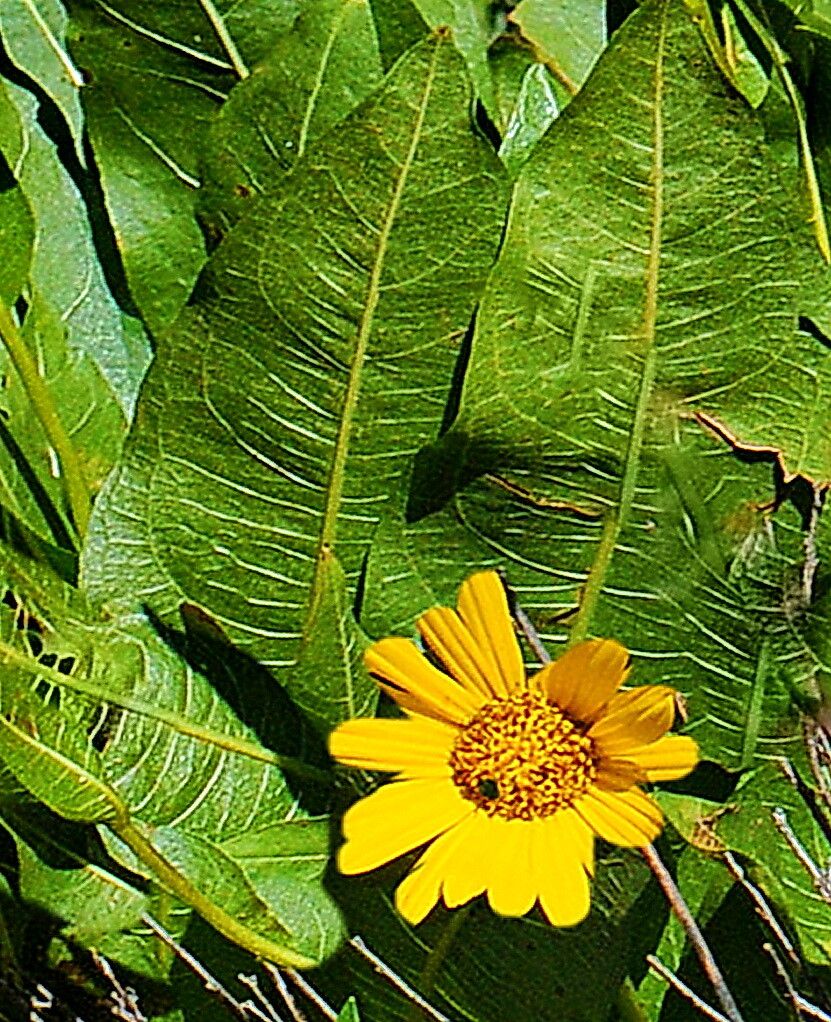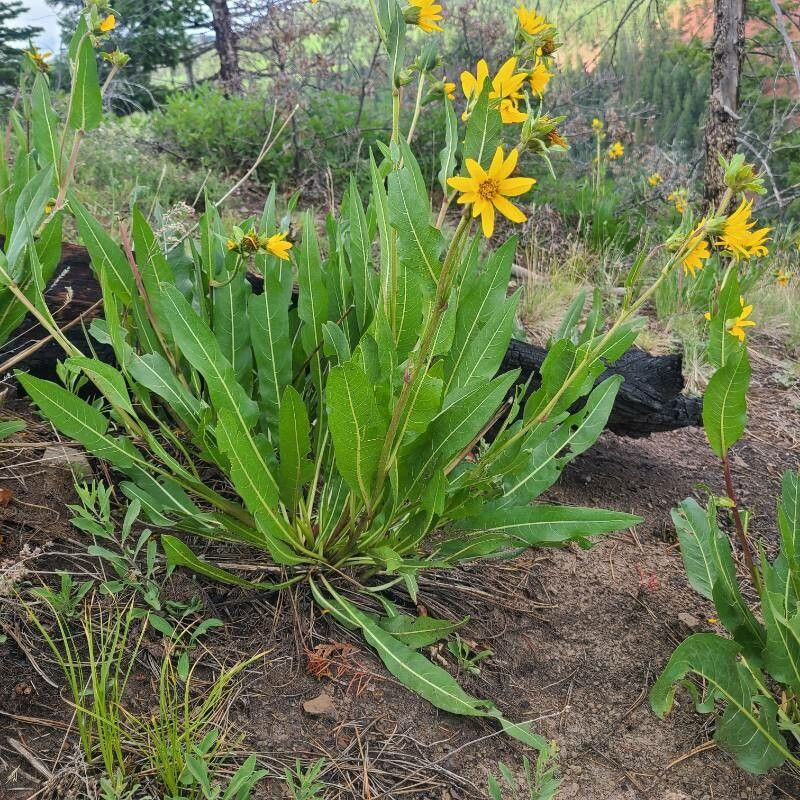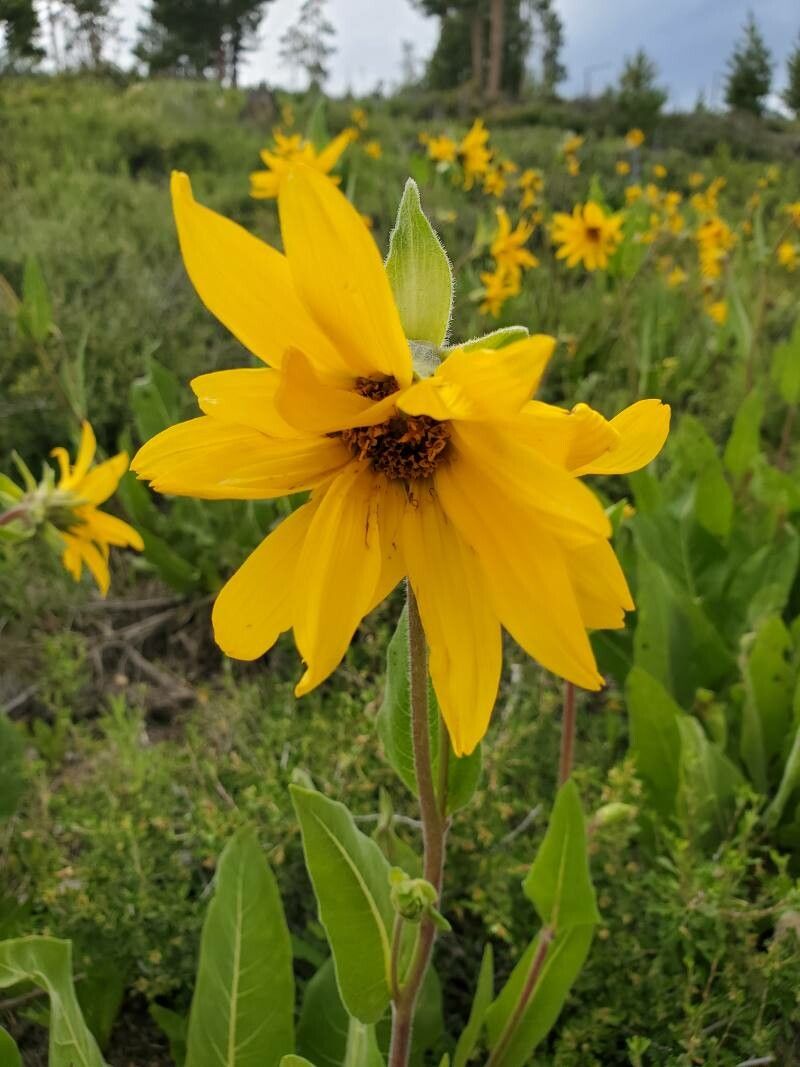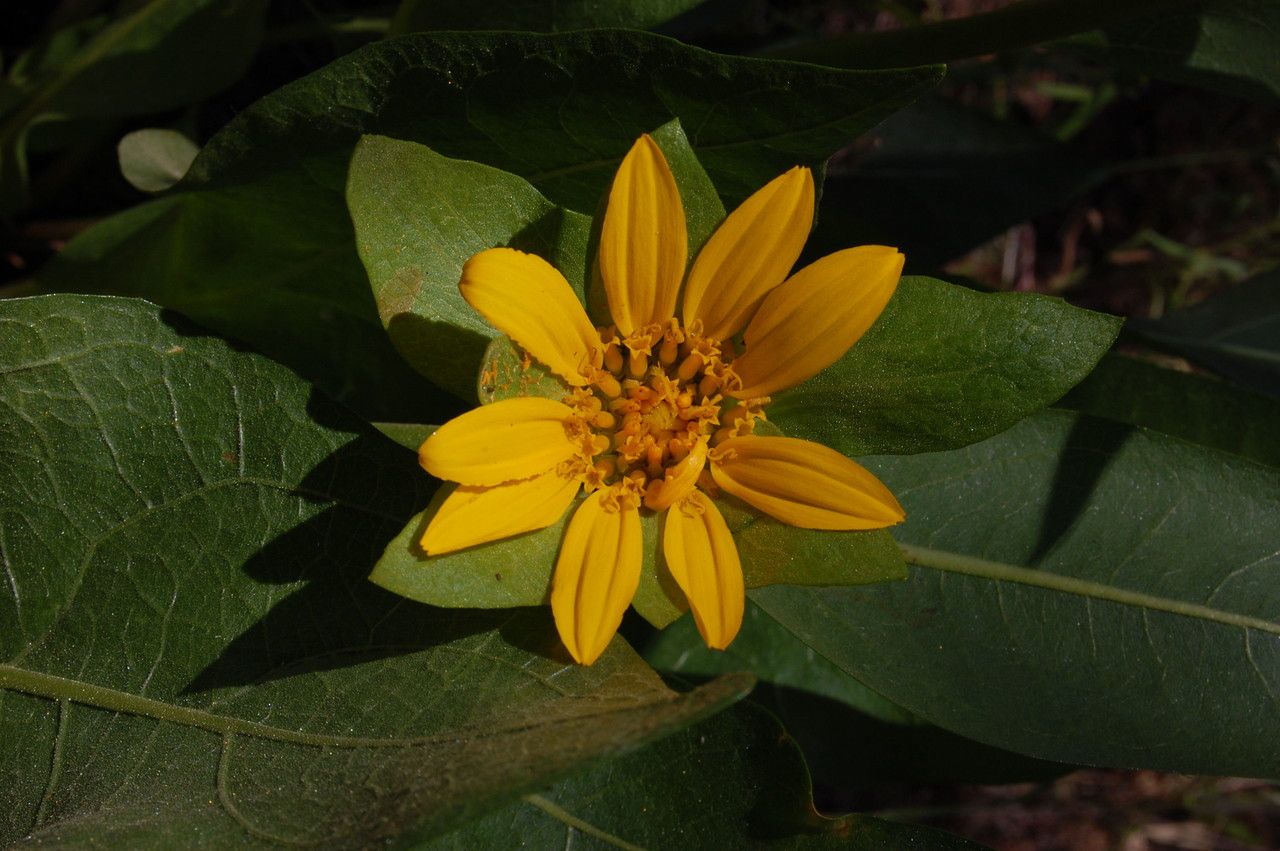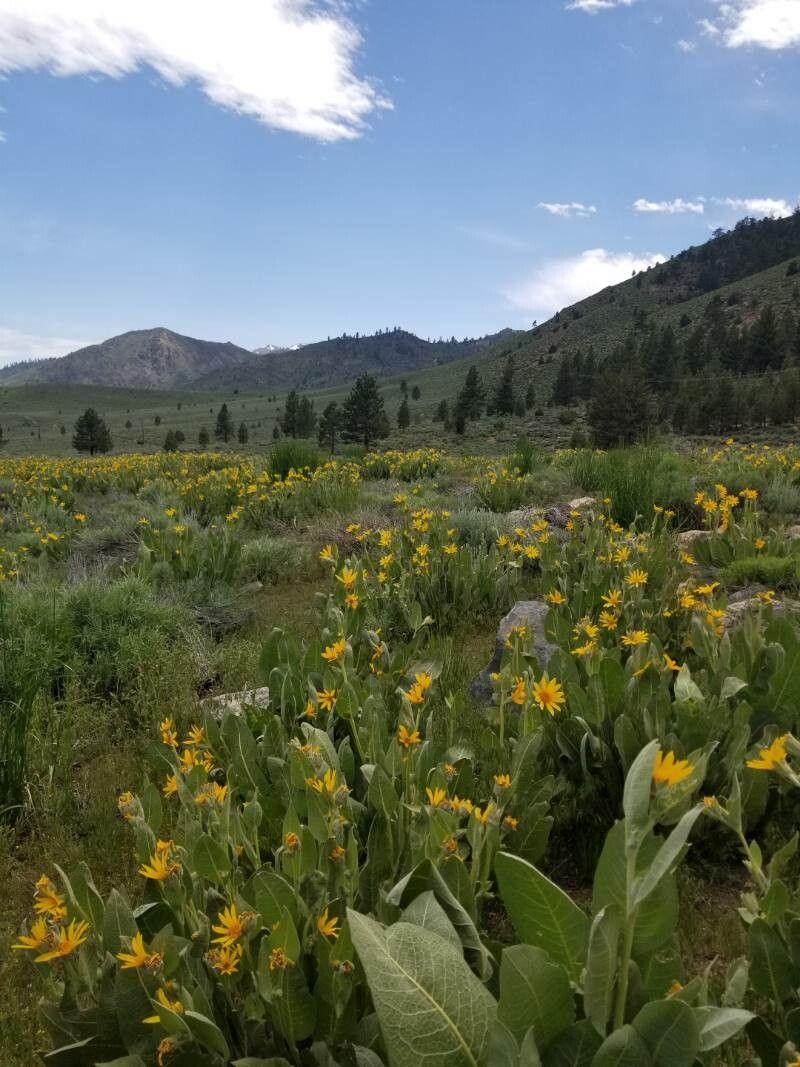
Wyethia mollis is a species of flowering plant in the family Asteraceae known by the common name woolly mule's ears. The plant is hairy to woolly in texture, sometimes losing its hairs with age.
Woolly Mule's Ears is fairly disease-resistant and generally not prone to illness. However, it can be affected by pests and diseases present in its surroundings. These infections are typically not serious. As for care, this plant requires a moderate level of maintenance. It should be pruned regularly to keep a good appearance and support healthy growth. Fertilizing can also help encourage flowering. Woolly Mule's Ears is suitable for anyone with an outdoor area, such as a garden or patio, and does not demand extensive care experience. It may need more attention when grown indoors.
How to keep Wyethia Mollis.
Light
Woolly Mule's Ears is a sun-loving perennial herbaceous plant native to open habitats, frequently flourishing in meadows and grasslands. It prefers full sun but can also tolerate partial sun conditions.
Water
Woolly Mule's Ears, a drought-tolerant plant native to North America's dry regions, typically requires watering once a week. When grown indoors, it thrives in well-draining soil. This herbaceous perennial has varying water needs: it requires more frequent watering during its active growth phase and less during its dormant period.
Temperature
Woolly Mule's Ears is native to regions with moderate temperatures, growing best within the range of 59 to 95 °F (15 to 35 ℃). Seasonal adjustments during warmer or colder periods may be necessary to preserve optimal growth.
Fertilizer
The best time to fertilize a Woolly Mule's Ears is in early spring, as it breaks dormancy and starts active growth. Fertilizing supplies essential nutrients for healthy development. While Woolly Mule's Ears has fairly low fertilizer requirements, applying fertilizer annually can improve its survival and encourage better, longer-lasting blooms.
Pruning
Woolly Mule's Ears are characterized by their distinctive woolly leaves and vibrant yellow flowers. For optimal growth and health, prune them from early to late spring. This helps to remove dead leaves and spent flowers, improving air circulation, preventing disease, and encouraging robust growth for the next season.
Botanical profile.
- Plant Type
- Herb
- Life Cycle
- Perennial
- Genus
- Wyethia
- Family
- Asteraceae
- Hardiness Zone
- 7-10
- Mature Height
- 30 cm to 91 cm
- Mature Spread
- 30 cm to 91 cm
- Leaf Color
- Green
- Leaf Type
- Deciduous
- Flower Color
- Yellow
- Flower Size
- 4.06 cm to 10.16 cm
- Bloom Time
- Mid spring, Late spring
- Planting Time
- Spring, Summer, Autumn
- Harvest Time
- Early summer, Mid summer