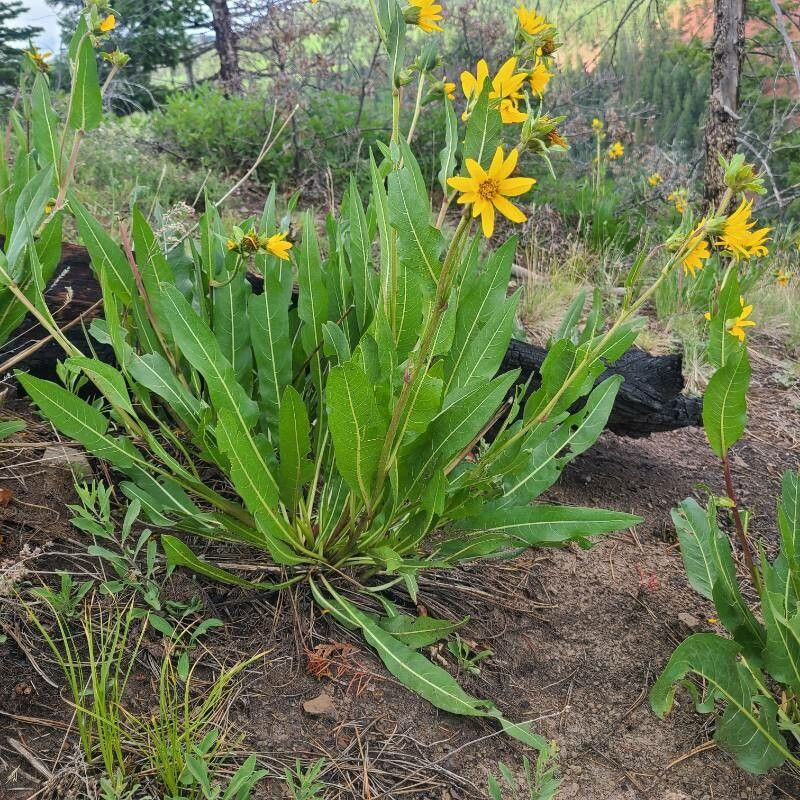
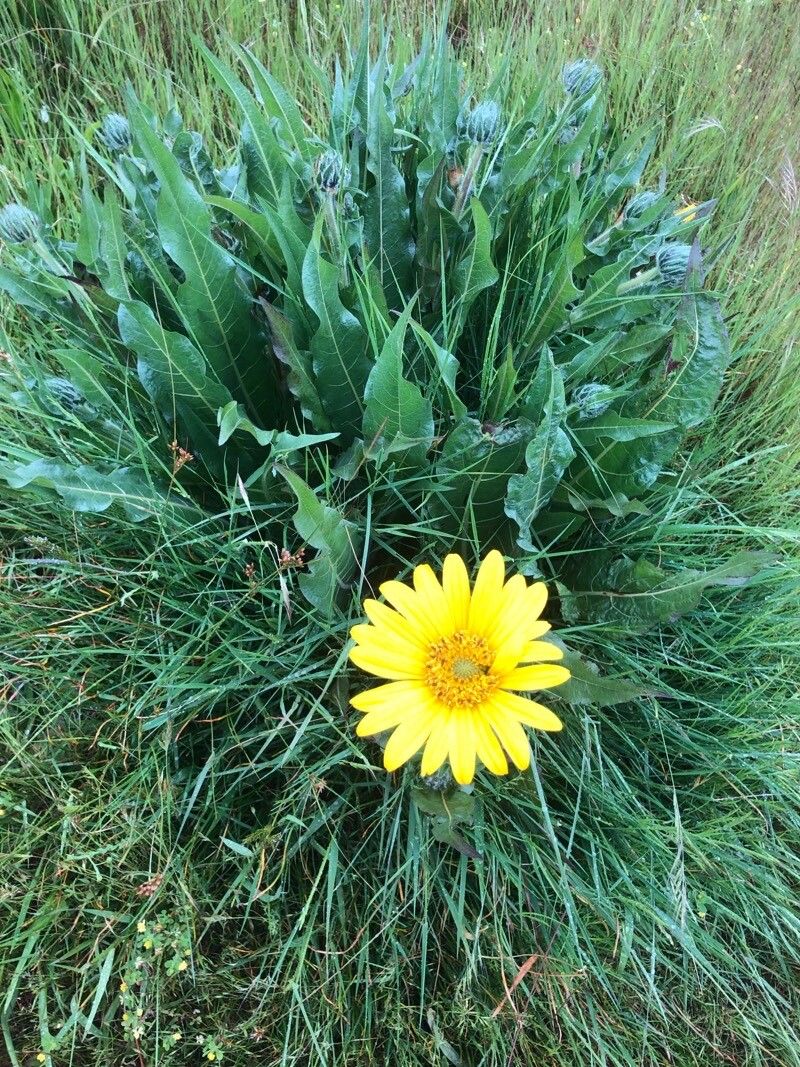
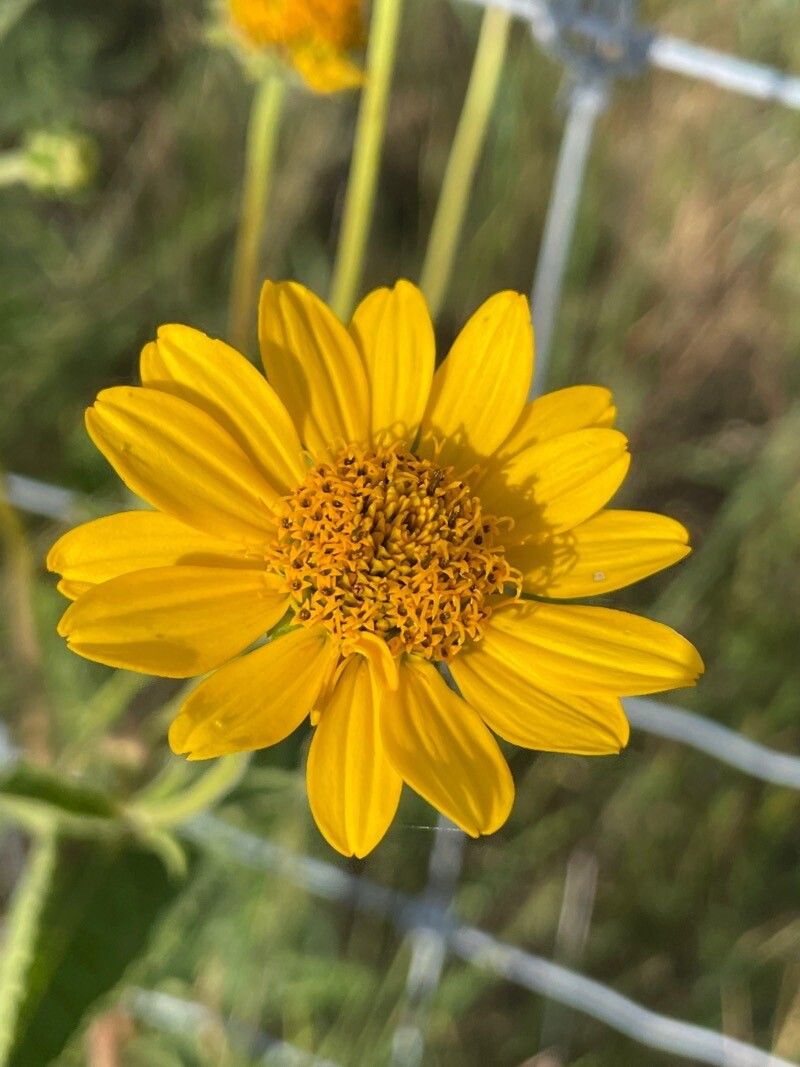
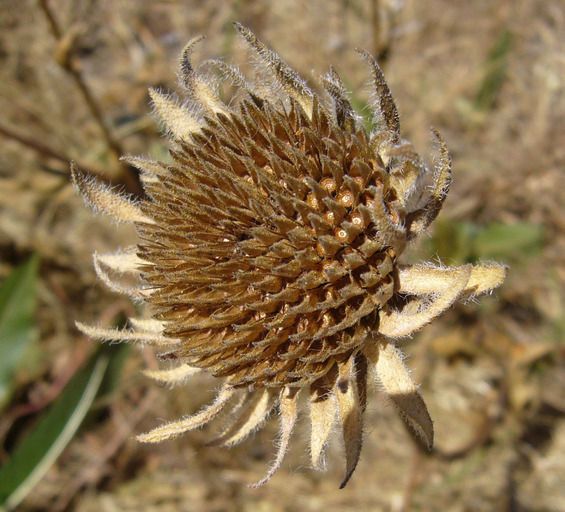
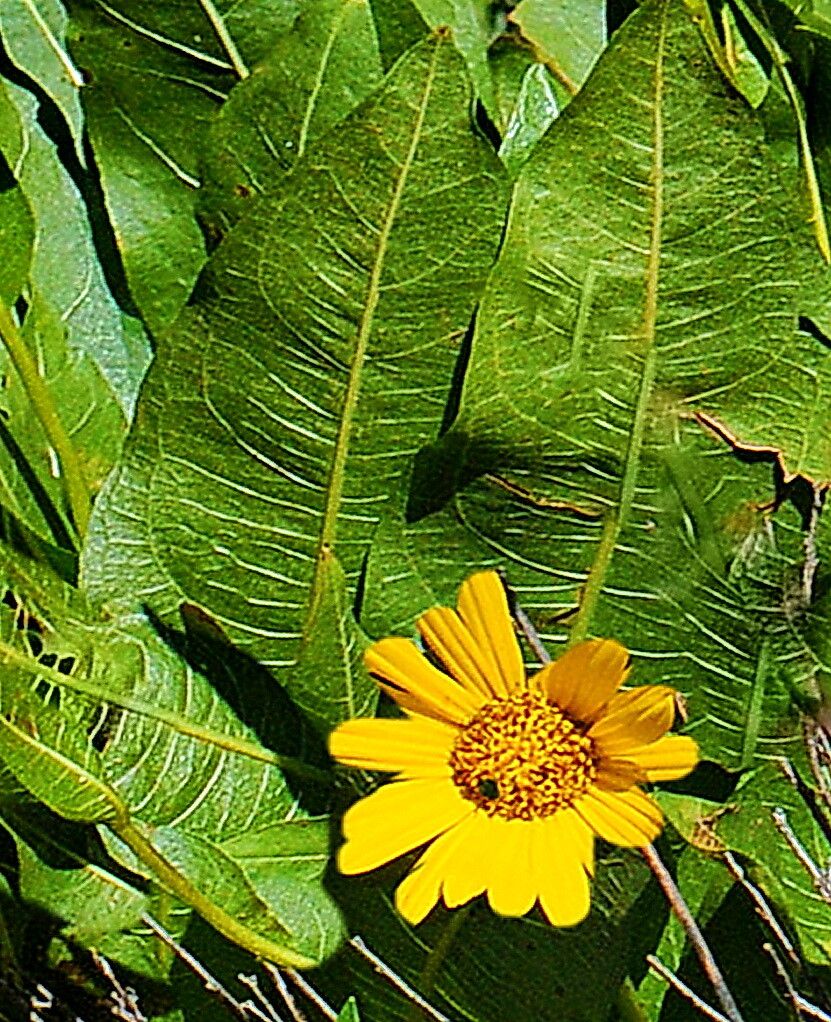
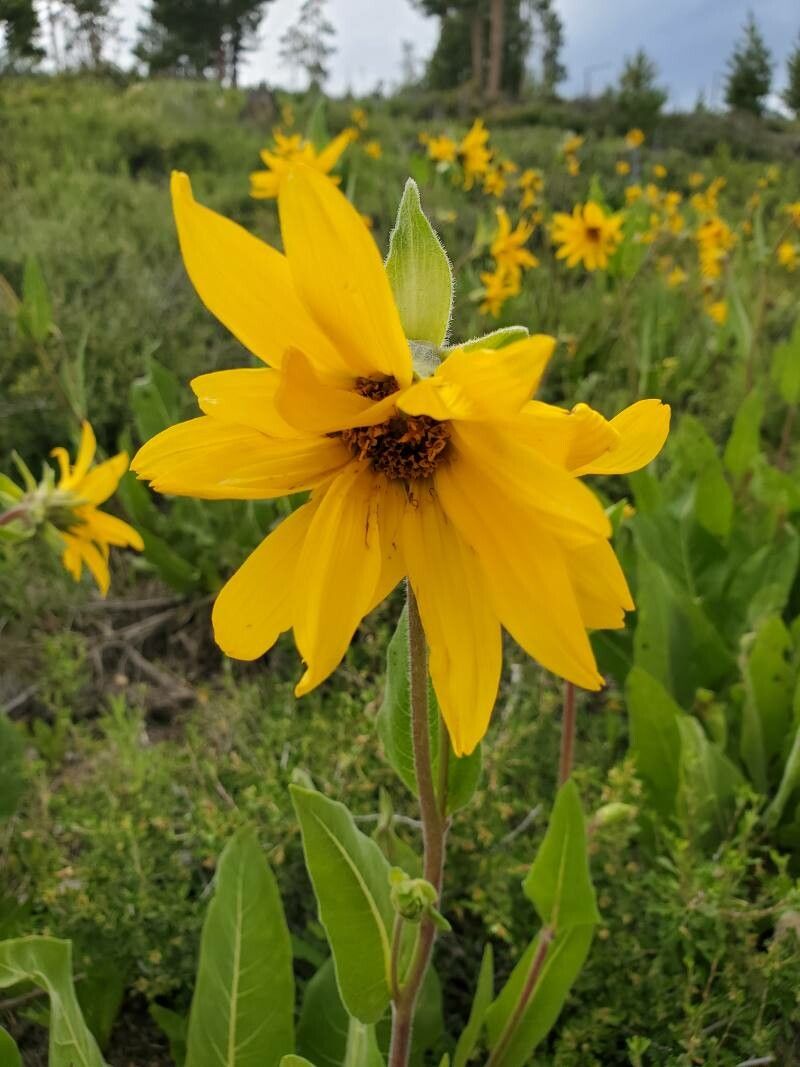
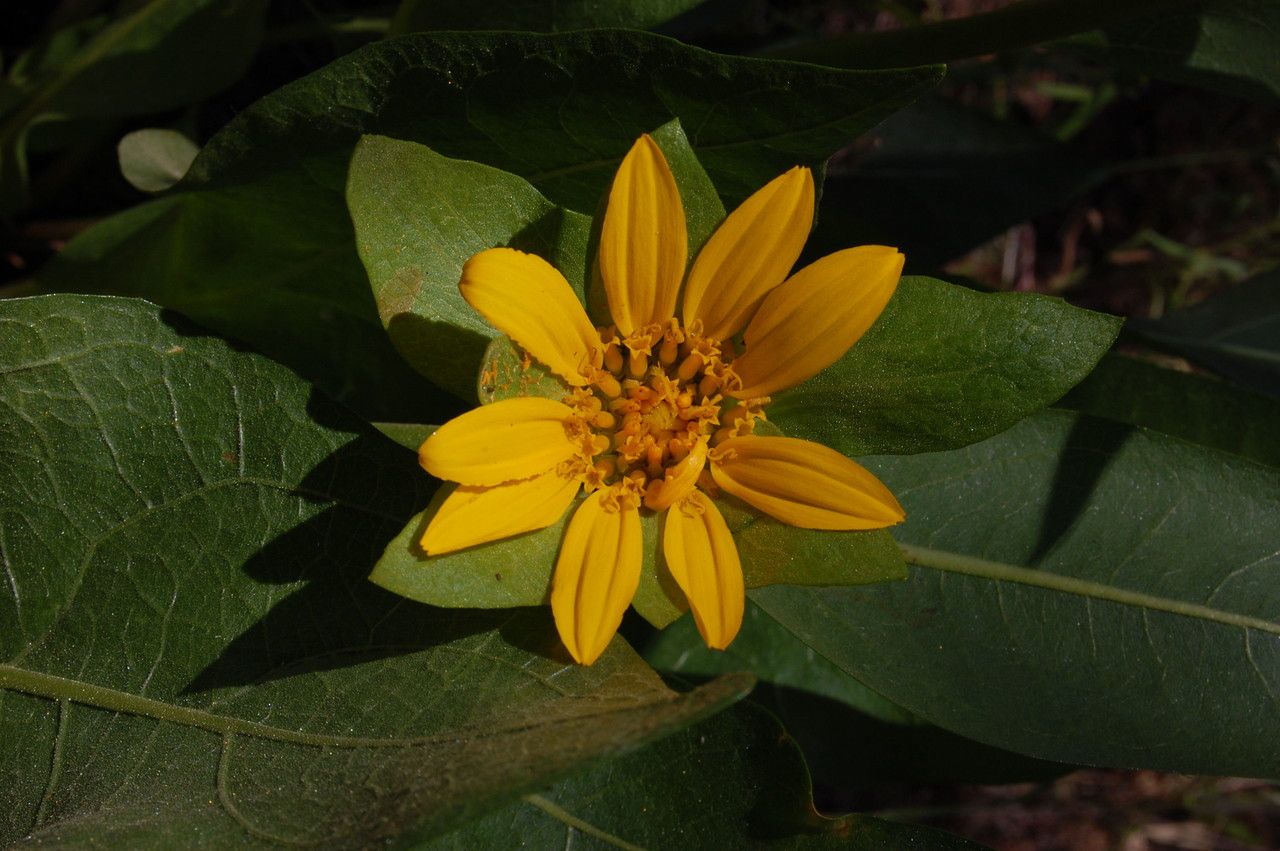
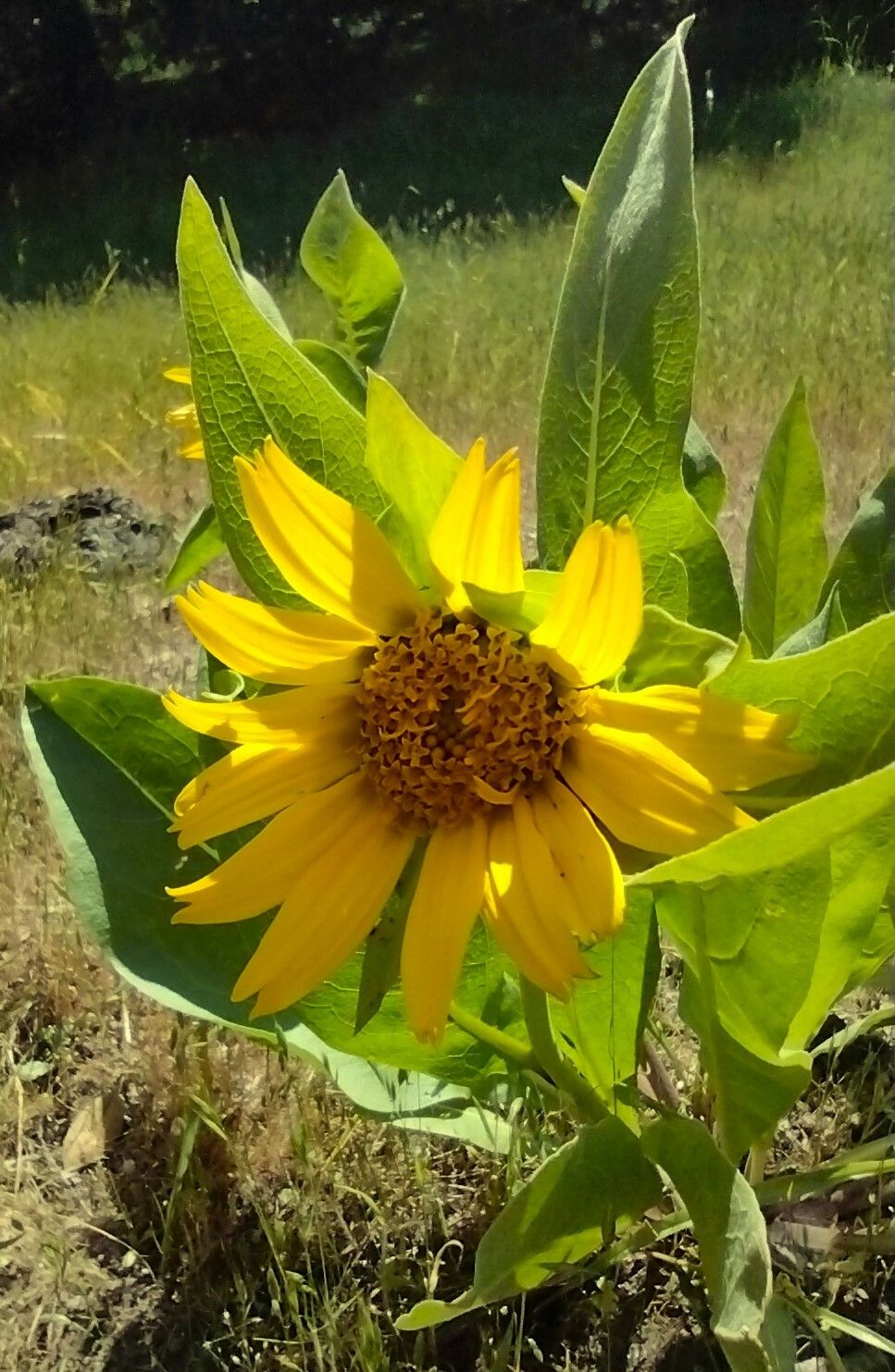
Wyethia angustifolia is a species of flowering plant in the family Asteraceae known by the common names California compassplant and narrowleaf mule's ears. It is native to the west coast of the United States from Washington to California, where it grows in grassland, meadows, and other open habitat. It is a perennial herb growing from a tough taproot and caudex unit and producing a stem 30 to 90 centimeters tall. The leaves have lance-shaped blades up to 50 centimeters tall. The inflorescence produces one or more large sunflower-like flower heads at the top of the hairy stem. The head has narrow, hairy phyllaries at the base. It contains up to 21 yellow ray florets each up to 4.5 centimeters long and many yellow disc florets. The fruit is an achene which may be nearly 2 centimeters long including its pappus.
Narrowleaf Mule Ears has strong resistance to disease and is usually not prone to illnesses. However, it can be vulnerable to pests and diseases present in its environment. When infections do occur, they are typically not serious. As for care, this plant needs a moderate amount of maintenance. It should be pruned regularly to keep a neat appearance and encourage healthy growth. Fertilizing can also help stimulate flowering. Narrowleaf Mule Ears is suitable for anyone with outdoor space, such as a garden or patio, and does not require a great deal of gardening experience. It may need extra care if grown indoors.
How to keep Wyethia Angustifolia.
Light
Narrowleaf Mule Ears does best beneath an unshaded sky. The strength and duration of sunlight exposure are essential to the plant’s steady growth. It originates in open areas, where abundant sun shapes its vigor. Too little light can impede its development, while too much can subject it to stress.
Water
Narrowleaf Mule Ears, adapted to its native habitat, prefers consistent moisture but can endure short dry periods due to its drought tolerance. For optimal health, it is recommended to water it weekly. This plant thrives in climates with seasonal rainfall patterns that meet its hydration needs.
Temperature
Narrowleaf Mule Ears is adapted to a mild temperature range, typically thriving between 59 to 100.4 °F (15 to 38 ℃). Its native, temperature-sensitive habitat requires seasonal adjustments, including reduced exposure during excessively hot periods for optimal growth.
Fertilizer
For Narrowleaf Mule Ears, the primary time to apply fertilizer is in early spring when the flowers are beginning to form. The appropriate fertilizer promotes better blooms and helps Narrowleaf Mule Ears produce attractive flowers. Fertilizing in early spring ensures strong flowering during the season and supplies energy for dormant growth stages.
Pruning
Narrowleaf Mule Ears is a plant characterized by its slender, lance-shaped leaves and bright yellow flowers. To promote new growth and extend the blooming period, it is beneficial to prune the plant regularly in the spring. This includes removing any dead growth and spent blooms. Additionally, thinning the plant helps improve air circulation, which reduces the risk of disease, enhances its appearance, and supports its overall resilience.
Botanical profile.
- Plant Type
- Herb
- Life Cycle
- Perennial
- Genus
- Wyethia
- Family
- Asteraceae
- Hardiness Zone
- 8-11
- Mature Height
- 46 cm to 61 cm
- Mature Spread
- 30 cm to 91 cm
- Leaf Color
- Green
- Leaf Type
- Semi-evergreen
- Flower Color
- Yellow
- Flower Size
- 4.57 cm
- Bloom Time
- Mid spring, Late spring
- Planting Time
- Spring, Summer
- Harvest Time
- Early summer, Mid summer
Other names.
Reader questions.
How should I water my Narrowleaf Mule Ears effectively?
To properly care for the Narrowleaf Mule Ears, it's important to use filtered water that is at room temperature. Tap water may contain harmful particles, so filtered water is preferable. The plant is used to warm environments, so avoid using cold water because it can shock its system. Also, it's best to avoid overhead watering to prevent complications with the foliage. Instead, water the plant by applying filtered room temperature water directly to the soil until it is completely soaked. This helps moisten the roots and allows them to spread through the soil to collect necessary nutrients.
Why should I put fertilizer on my Narrowleaf Mule Ears?
Fertilization is important for the Narrowleaf Mule Ears because it provides essential nutrients for growth above and below ground. While the overall fertilization needs for this plant are relatively low, annual fertilization can greatly benefit its survival and promote the development of longer-lasting flowers. Therefore, those who want their Narrowleaf Mule Ears to thrive should prioritize regular fertilization.
What are the sunlight requirements for Narrowleaf Mule Ears?
Narrowleaf Mule Ears requires full sun, meaning it should receive more than 6 hours of sunlight daily. It's essential to observe how sunlight moves through your garden to ensure a balance of light and shade, optimizing plant health. These plants thrive best in environments similar to their native open areas, where they can receive plentiful sun exposure. Inadequate sunlight can impair their growth, and excessive exposure can cause stress.
What temperature range is ideal for Narrowleaf Mule Ears?
Narrowleaf Mule Ears thrives in a mild temperature range, typically between 59 to 100.4 °F (15 to 38 °C). It's important to adjust its exposure during excessively hot periods to ensure optimal growth. The plant has some cold tolerance and generally does not require special protection if the temperature remains above -5°C. However, if temperatures are expected to drop below -5°C, temporary measures such as wrapping the plant with plastic film or fabric should be taken to protect it from cold damage. These protections should be removed once the temperature rises again.
What do I do if I give my Narrowleaf Mule Ears too much or too little water?
Both overwatering and underwatering can harm your Narrowleaf Mule Ears, but overwatering is more common. Too much water can cause the stems and leaves to wilt and turn yellow. Overwatering for a long time can also lead to diseases like root rot, mold, and mildew, which can kill the plant. Narrowleaf Mule Ears are drought tolerant, so underwatering is less likely but still possible. When underwatered, the leaves may become brittle and brown. It's important to notice signs of overwatering early because some diseases like root rot cannot be fixed if left too long. If you see early signs of overwatering, reduce watering immediately. Check the soil drainage. If it's poor, replace it with a loose, well-draining potting mix. If you notice signs of underwatering, water more regularly until the signs disappear.
When should I fertilize my Narrowleaf Mule Ears?
The best time to fertilize a Narrowleaf Mule Ears is late winter to early spring when it is transitioning from dormancy to active growth. This will promote healthy growth and help the plant start the season well. Fertilizing in early spring is generally most beneficial, but fall is also an option. However, it is not advisable to fertilize during summer or winter.
How essential is sunlight for the growth of Narrowleaf Mule Ears?
Sunlight plays a crucial role in the smooth growth cycle of Narrowleaf Mule Ears, with its intensity and duration being vital factors. Originating from open areas, these plants are accustomed to significant sun exposure, which greatly influences their health. A lack of sunlight could result in impaired growth, emphasizing the importance of selecting a sunny location for planting them.
How does Narrowleaf Mule Ears respond to low temperatures?
Narrowleaf Mule Ears has a moderate tolerance to low temperatures, faring best when the temperature is above 15°C. It should be kept above -5°C during winter to prevent damage. When the temperature falls below -10°C, the leaves might droop, and in severe cases, wilt and fall off. To protect Narrowleaf Mule Ears from low temperatures, frost-damaged parts should be trimmed off, and the plant should be wrapped with non-woven fabric or cloth. Additionally, constructing a wind barrier can help protect it from cold winds.
How often do I need to water my Narrowleaf Mule Ears?
If your Narrowleaf Mule Ears plant is in a pot, you can determine if it needs water by sticking your finger into the soil. If the top two to three inches of soil are dry, it's time to water it. If you have this plant outdoors in the ground, you can use the same method to test the soil. When the top few inches of soil have dried out, it's time to water. Usually, during the spring and early fall, you will water this plant approximately once a week using this method. In extremely hot weather, you may need to water it twice a week or even more. However, mature and well-established Narrowleaf Mule Ears plants have a good ability to withstand drought.
When is it best not to fertilize my Narrowleaf Mule Ears?
To properly nourish your Narrowleaf Mule Ears, it is best to fertilize them only during late winter and early spring. This plant doesn't require frequent fertilization, and one feeding per year is sufficient. Overfertilizing during spring, summer, and fall can have negative consequences. However, if you missed fertilizing in spring, it is acceptable to fertilize in the fall. Notably, during winter when the plant is in a dormant phase and not actively growing, fertilization is unnecessary.
What should I do if natural sunlight is insufficient for my Narrowleaf Mule Ears?
If natural sunlight is insufficient, especially during winter or in less sunny spaces, consider using artificial lighting to supplement light. For indoor plants, artificial lights such as LED can provide the necessary wavelengths and intensity needed for optimal growth. Full sun plants should receive 30-50W/sq ft, partial sun plants 20-30W/sq ft, and full shade plants 10-20W/sq ft of artificial light. The light source should be placed 12-36 inches above the plant, for 8-12 hours per day, to mimic natural daylight conditions.
What should be done if Narrowleaf Mule Ears experiences high temperatures?
During the summer, it's crucial to keep Narrowleaf Mule Ears below 38°C to prevent heat damage. Exposure to temperatures above 43°C can result in lighter leaf coloration, dry and withered leaf tips, curling leaves, and increased susceptibility to sunburn. To mitigate damage from high temperatures, trim away sunburned and dried-up parts and relocate the plant to a shaded area, particularly away from the midday and afternoon sun. Alternatively, using a shade cloth can help create necessary shade. Ensuring the soil remains moist through morning and evening watering can also aid in the plant's recovery and maintenance during hot periods.