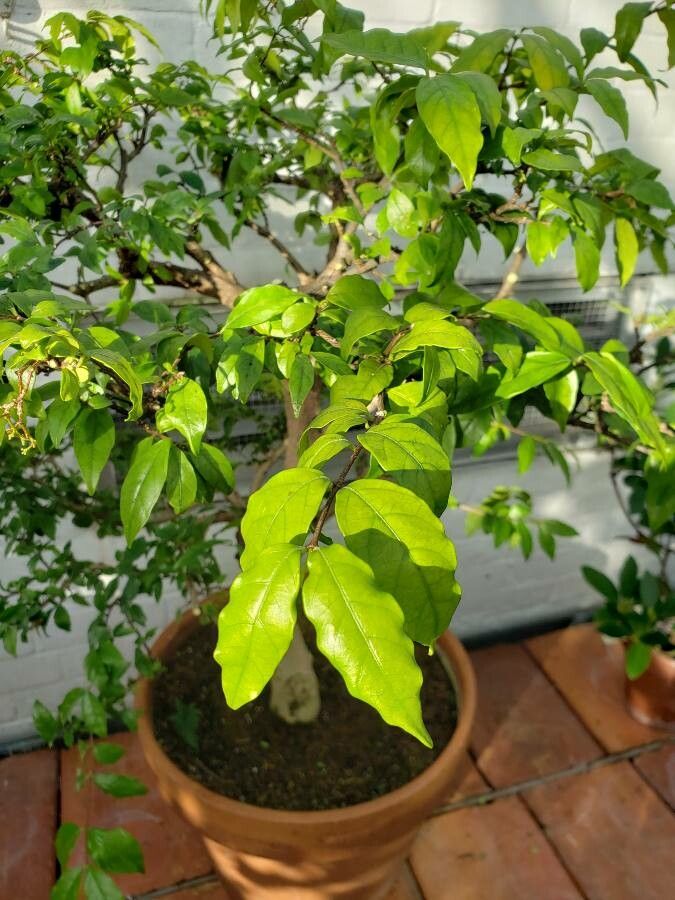
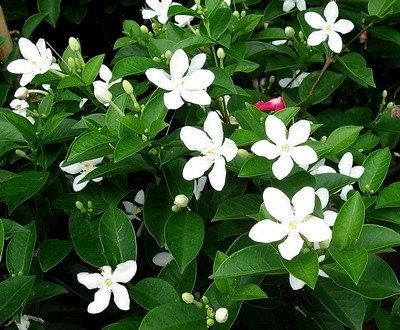
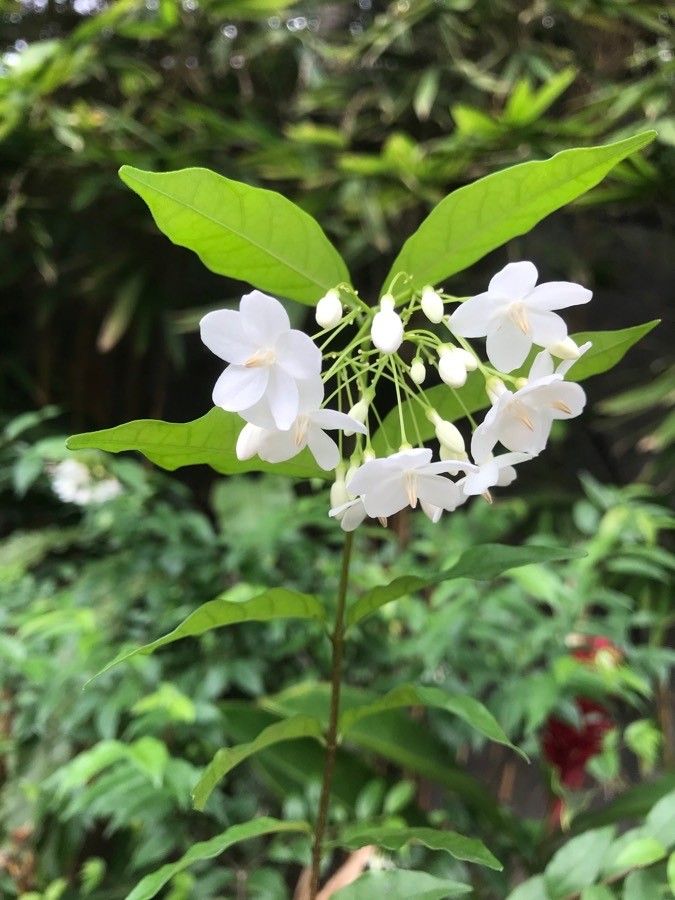
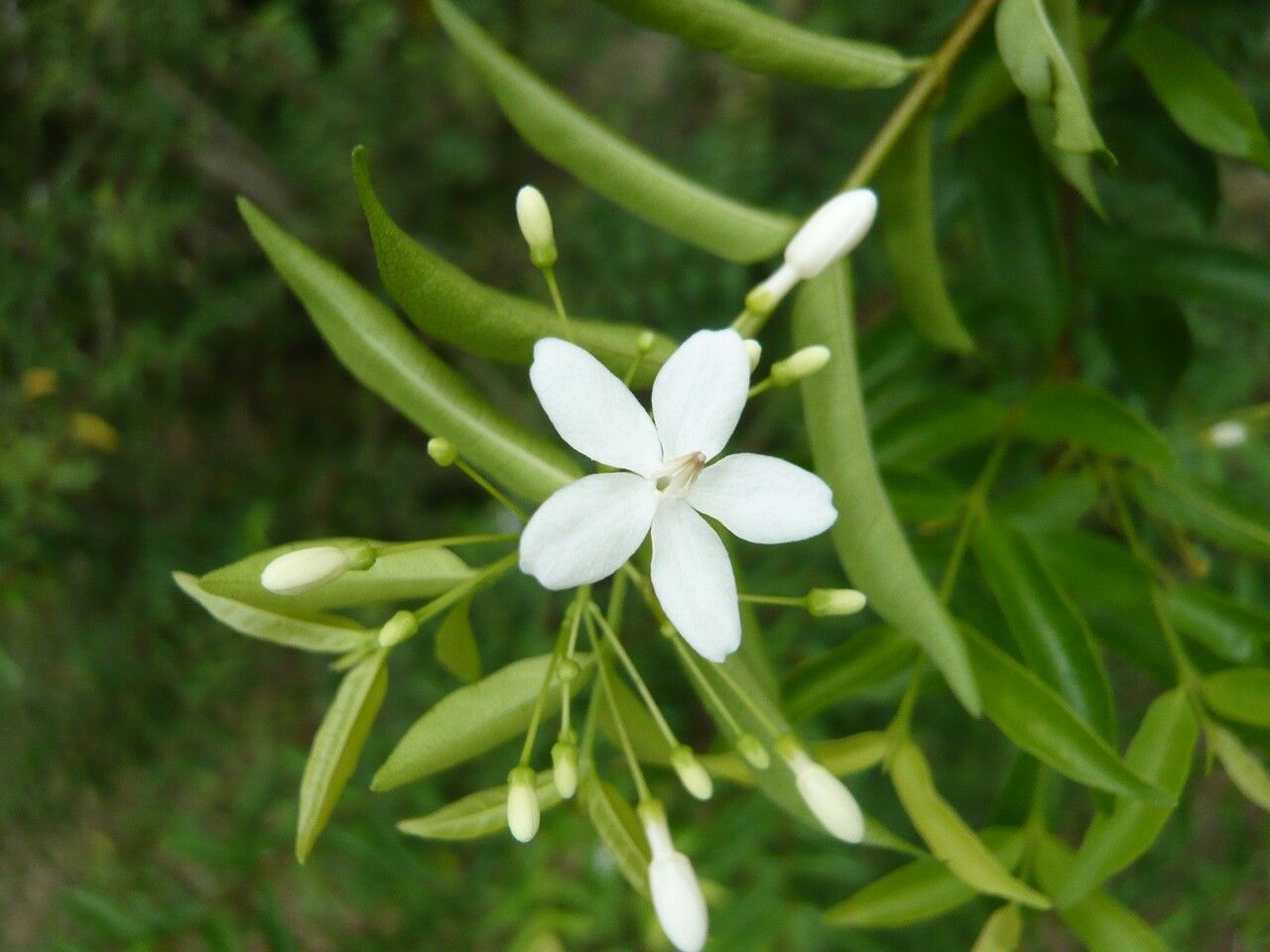
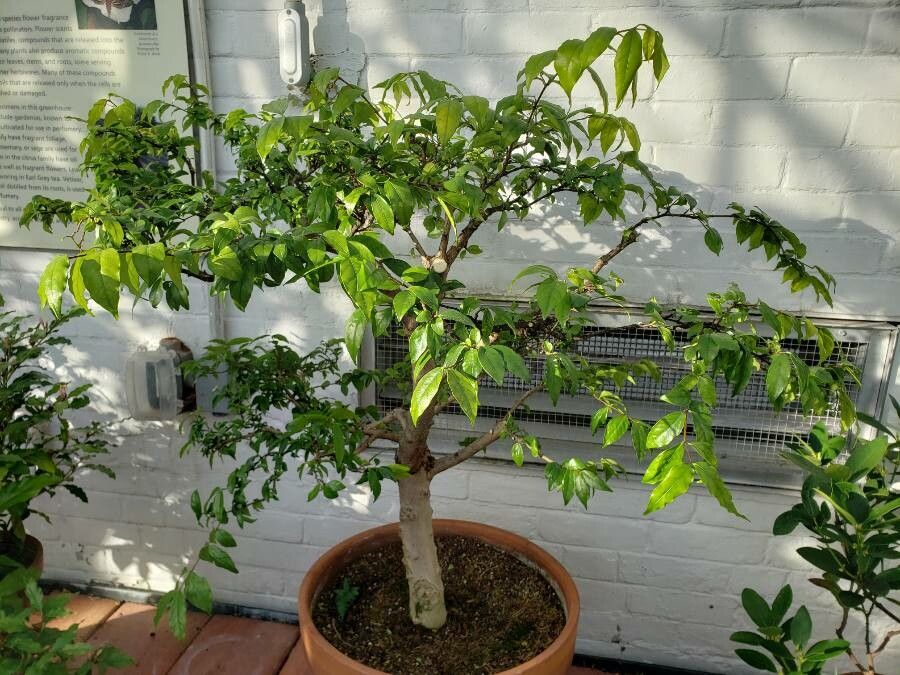
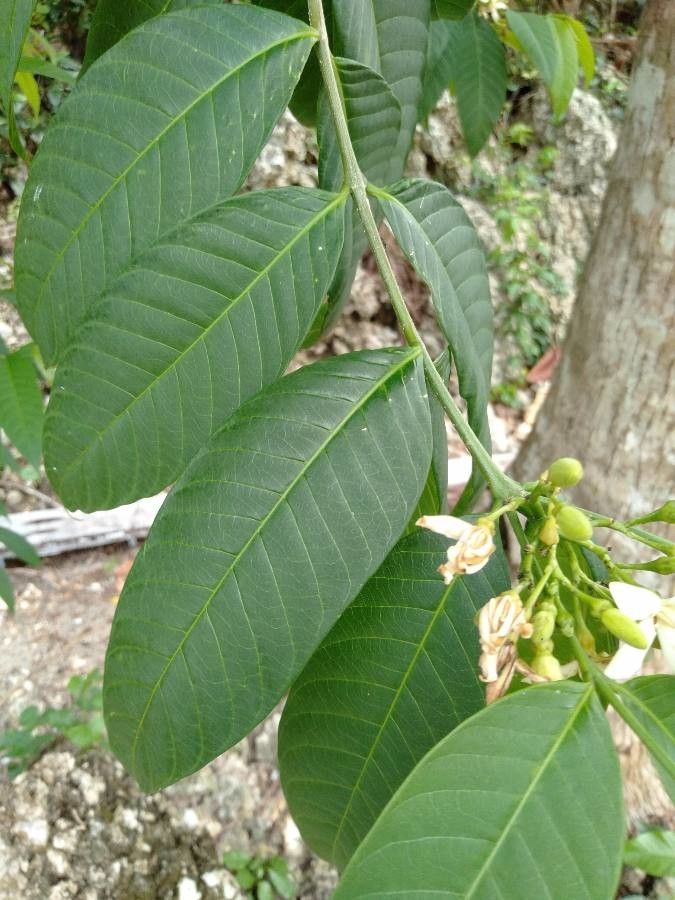
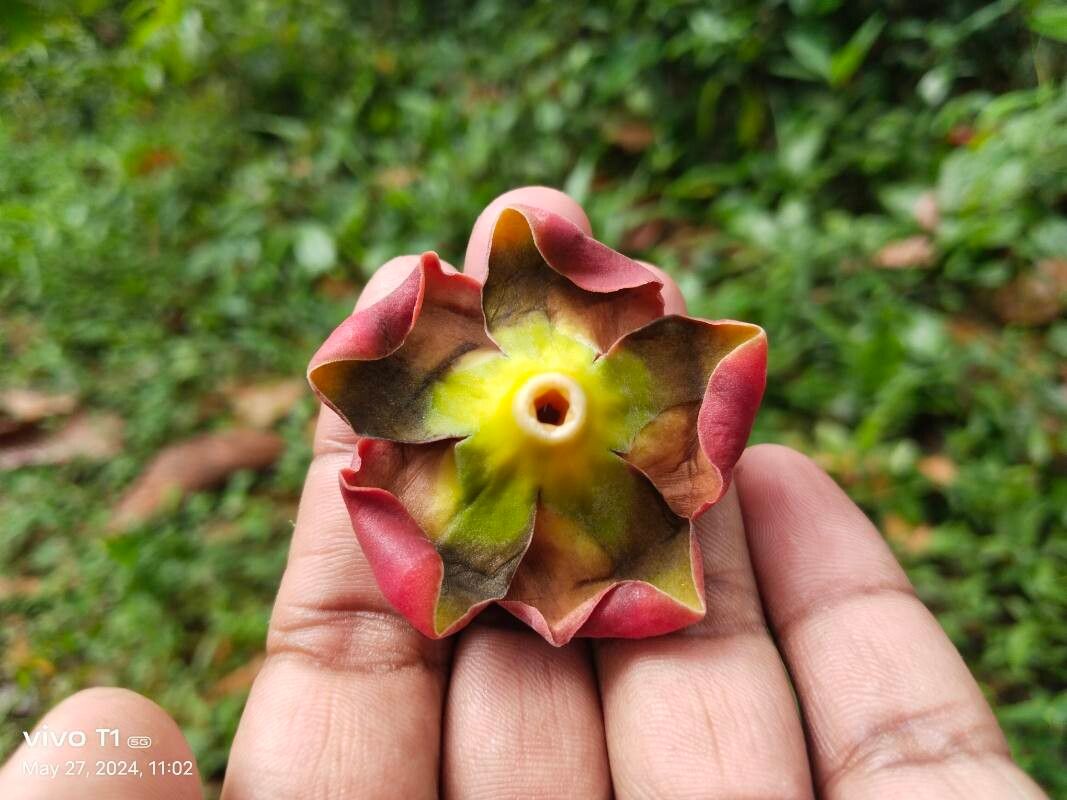
Wrightia religiosa, commonly known as the sacred Buddhist tree or water jasmine, is a small to medium-sized evergreen tree from the Apocynaceae family. Native to Southeast Asia, it is found in countries such as India, Thailand, and Myanmar.
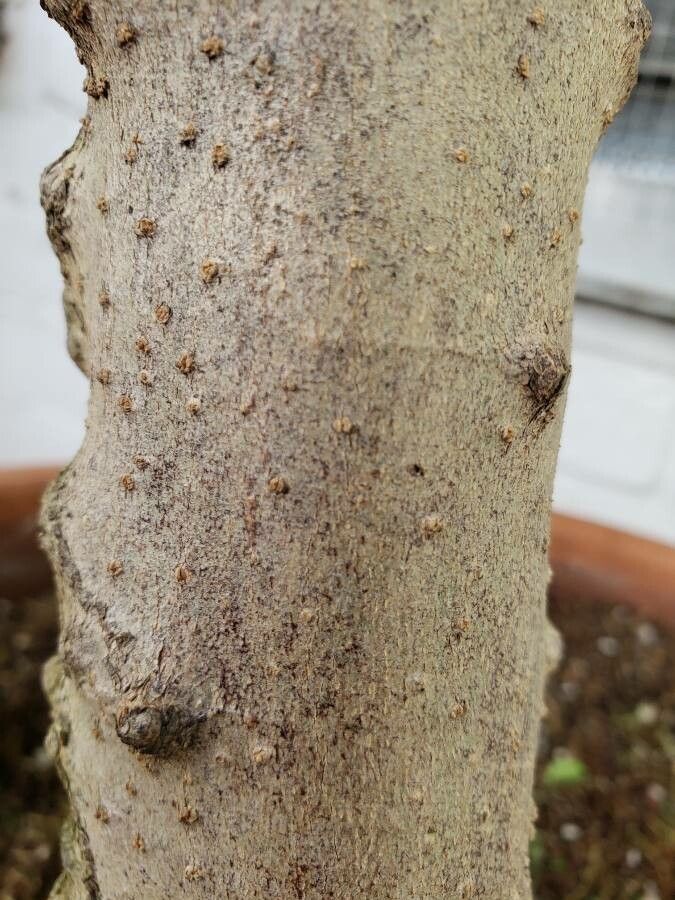
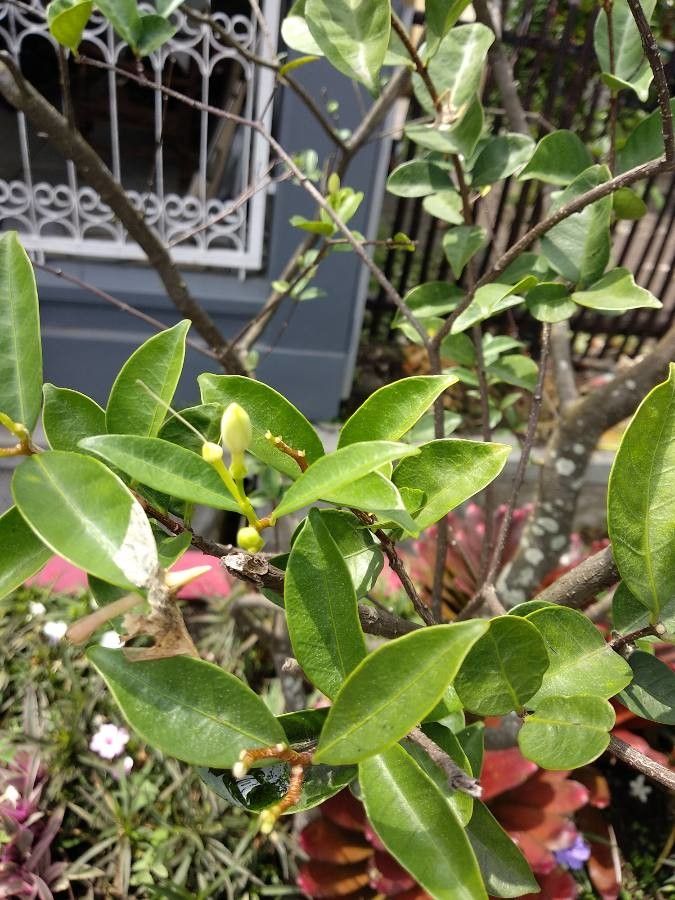
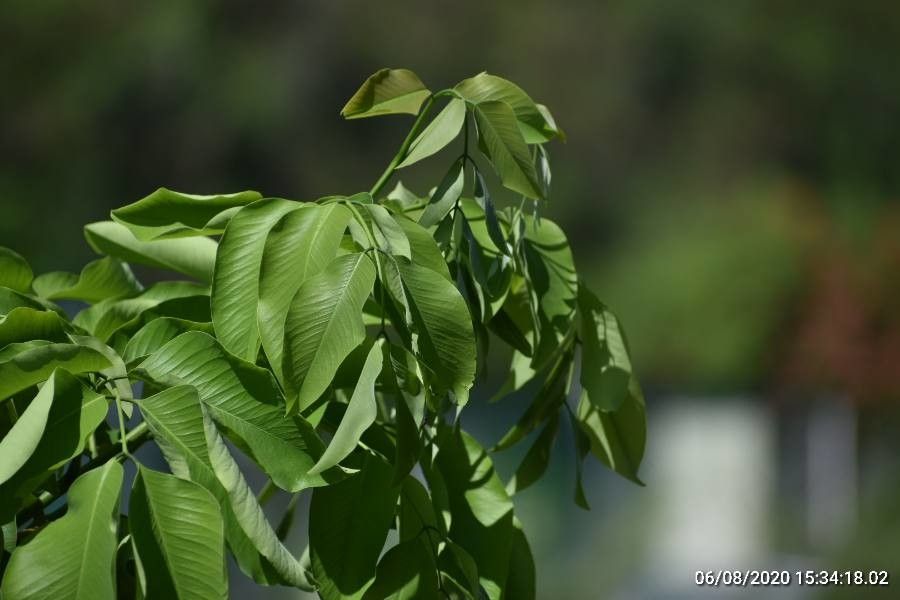
This plant features smooth grey bark and glossy green leaves arranged in whorls of three or four. The oval-shaped leaves have pointed tips and a leathery texture. During the summer months, it produces clusters of fragrant white flowers.
Wrightia religiosa holds sacred significance for Buddhists, as it is believed to be connected to Buddha’s birthplace. Additionally, it has been used for centuries in traditional medicine, prized for its anti-inflammatory properties.
The tree thrives in well-drained soil and partial shade but can also tolerate full sun. It requires regular watering; however, overwatering should be avoided to prevent root rot.
Overall, Wrightia religiosa is an attractive ornamental plant with cultural significance and medicinal benefits, making it an excellent addition to any garden or landscape design project.
Water jasmine is quite resistant to disease and typically does not develop illnesses. In terms of care, the plant is fairly low-maintenance. When grown outdoors it needs only light watering, and larger specimens usually do not require pruning. Smaller plants, however, should be pruned after they finish blooming. Water jasmine is appropriate for anyone with an outdoor area, such as a garden or a deck, and does not demand much experience in plant care.
How to keep Wrightia Religiosa.
Light
Water jasmine needs plenty of sunlight and does best in a place where it gets sun all day. It can tolerate occasional shade. Lack of light slows its growth and causes leaves to become paler, while too much sun can scorch the plant. This applies at every stage of growth and reflects the sunny conditions of its native habitat.
Water
Water jasmine, which originates from humid environments, is efficient at retaining moisture and shows moderate drought tolerance. It should be watered every 1-2 weeks, allowing the soil to dry slightly between waterings. As an evergreen plant often grown indoors, water jasmine thrives with consistent moisture and benefits from higher humidity levels, reflecting its tropical habitat requirements.
Temperature
Water jasmine is native to regions with average temperatures of 68 to 95 °F (20 to 35 °C). It does best in warmer climates and may need extra heat during colder months to reproduce its natural conditions.
Fertilizer
The best time to fertilize a Water jasmine is in early spring, when it comes out of dormancy. This encourages overall growth and flower development. Fertilizing improves the foliage, stems, and branches, and promotes flowers that are large, vivid, and long-lasting. It also helps move nutrients from the roots to the flowers and enhances the plant's health and resistance to disease.
Pruning
Water jasmine is known for its fragrant white flowers and delicate foliage. For best results, prune the plant during its dormant period, from early to late winter, to remove any leggy growth and dead branches. Making clean cuts helps prevent infections and encourages denser foliage and better blooming, which enhances the vibrancy of gardens.
Pot & Repot
Repot your water jasmine every 2 to 3 years, preferably in early spring. Choose a pot that has enough space for the roots to grow. Use soil that drains well and keep the soil consistently moist, but be careful not to overwater. This will help the plant recover and promote healthy growth.
Toxicity
There’s not much information available to know if Wrightia religiosa is considered toxic or not. Some varieties of Wrightia are considered poisonous, so it would be best not to eat/chew or swallow any part of this shrub. If accidentally eaten, rush to your nearest hospital or contact a medical professional.
Further reading →
The toxicity and danger assessments provided are for reference only. We do not assure their accuracy, so it's crucial not to depend on them. Seek professional advice when necessary for accurate guidance.
Botanical profile.
- Plant Type
- Tree
- Life Cycle
- Perennial
- Genus
- Wrightia
- Family
- Apocynaceae
- Hardiness Zone
- 10
- Mature Height
- 1.52 m
- Mature Spread
- 1.52 m
- Leaf Color
- Green, Blue
- Leaf Type
- Evergreen
- Flower Color
- White
- Flower Size
- 2.54 cm to 3.05 cm
- Bloom Time
- All year round
- Planting Time
- Spring
- Harvest Time
- All year round
- Native Area
- Malaysia, Indonesia, Cambodia, Vietnam, Myanmar, Thailand, China
Other names.
Reader questions.
How should I water my Water jasmine plant?
Watering your Water jasmine is not a complicated task. You can use a watering can, hose, or even a cup to water this plant. It's important to apply the water directly to the soil, making sure to moisten all areas evenly to provide water to the entire root system. Using filtered water is helpful as tap water may contain harmful particles. It's also beneficial to use water at or slightly above room temperature to avoid shocking the Water jasmine. However, this plant usually responds well to any kind of water you give it.
Why should I use fertilizer for my Water jasmine plant?
Fertilization is crucial for the overall health and well-being of a Water jasmine. By providing the right amount of energy and nutrients, your Water jasmine will grow lush foliage, strong stems, and branches. While the flowers of Water jasmine are highly valued by gardeners, fertilization is also beneficial for their production. It helps the plant develop large, vibrant, and long-lasting flowers by facilitating the transfer of fuel from the roots to the stems and flowers. Additionally, proper fertilization keeps the plant in good general condition, enhancing its ability to combat diseases.
What are the sunlight requirements for water jasmine?
Water jasmine thrives in conditions where it can receive generous amounts of sunlight throughout the day, ideally thriving in full sun exposure of above 6 hours of sunlight. It can, however, tolerate partial sun, meaning about 3-6 hours of sunlight. Insufficient light can hinder growth and cause leaves to pale, whereas too much direct exposure can damage the plant. It's essential to observe how sunlight moves through your garden to find a spot that offers the perfect balance for your water jasmine, ensuring it meets its sunlight needs at various growth stages.
What is the native climate of Water Jasmine?
Water Jasmine, scientifically known as Wrightia religiosa, thrives in environments with average temperatures ranging between 68 to 95 °F (20 to 35 °C). It loves warmer climates and requires additional heating during colder months to mimic its natural habitat. In autumn, if grown outdoors, it should be moved indoors near a bright window, maintaining a distance from direct heat sources to ensure it remains in its temperature comfort zone, ideally above 20°C, as temperatures approaching 5°C can severely harm the plant.
What should I do if I give my Water jasmine plant too much or too little water?
For outdoor plants, especially newly planted or seedling plants, it is common for them to experience a lack of watering. To ensure the tree's survival, it is important to consistently water it for the first few months, especially when it is small or newly planted. This is because once the roots are established, Water jasmine can usually rely on rainfall for hydration. When you have Water jasmine planted in pots, the risk of overwatering increases. If you accidentally overwater your Water jasmine, you should take immediate action to address the situation. First, stop watering the plant to minimize the impact of overwatering. Next, check the roots by removing the Water jasmine from its pot. If no root rot is found, you can return the plant to its container. However, if root rot is detected, trim away the affected roots and consider applying a fungicide to prevent further damage. Finally, repot the Water jasmine in well-draining soil. On the other hand, underwatering is a relatively simple problem to fix. If you notice the leaves of your Water jasmine drooping, drying out, or falling off, it is likely underwatered. Simply increase your watering frequency, and you will see the leaves regain their fullness. Remember to adjust your watering schedule promptly once underwatering occurs.
When should I fertilize my Water jasmine plant?
The best time to fertilize a Water jasmine is in early spring when it is coming out of its dormant phase and preparing to bloom. This will give the plant energy for growth and flower development. However, you can also feed it again in the fall, although the amount of fertilizer needed is less than the first feeding. Some gardeners also choose to fertilize the Water jasmine during planting, but this is not always necessary.
Can water jasmine grow under artificial lighting?
Yes, water jasmine can grow under artificial lighting, which becomes particularly important when natural sunlight is insufficient, such as during winter or in less sunny spaces indoors. For optimal growth under artificial lights, it's advised to select the right type of light, with LED lights being a popular choice due to their ability to mimic specific wavelengths needed by plants. Full sun plants require 30-50W/sq ft, partial sun plants need 20-30W/sq ft, and full shade plants need 10-20W/sq ft of artificial light. The light source should be placed 12-36 inches above the plant, and the duration should mimic natural daylight hours, generally between 8-12 hours per day.
How does low temperature affect Water Jasmine and what are the solutions?
Low temperatures are a significant threat to Water Jasmine, which prefers and thrives in warm climates, ideally above 20°C. During winter, ensuring the temperature stays above 5°C is crucial. Exposure to temperatures below 1°C can result in leaves lightening in color, eventually turning brown or black with symptoms like wilting and drooping post frost damage. To remedy frost damage, affected parts should be trimmed off, and the plant moved to a warm indoor spot, preferably near a south-facing window for ample sunlight. However, it's important to avoid placing it near heaters or air conditioning vents to prevent the air around it from becoming excessively dry.
How frequently should I water my Water jasmine plant?
If your area lacks rainfall, it's important to give your outdoor plants adequate watering. During the spring and fall, watering every 2 weeks should be sufficient. However, in the summer when plants need more water, you'll need to water them more often. In the winter, when growth is slower and plants need less water, you can water them less frequently or not at all. For Water jasmine plants, especially young or newly planted ones, it's important to water them more frequently to help them establish and grow into adaptable and drought tolerant plants. When it comes to potted plants, there are two main ways to determine how often to water your Water jasmine. One approach is to follow a predetermined watering schedule of once every week or once every other week. However, this may not always be sufficient as it doesn't consider the specific conditions of your growing environment. Another approach is to water based on soil moisture. It's best to wait until the top two to four inches of soil, about ⅓ to ½ depth of the pots, have completely dried out before watering again. This method allows you to adjust your watering frequency based on the season, as drier conditions in the summer will require more frequent watering.
When is it better to not use fertilizer on my Water jasmine plant?
Water jasmine, like many plants, does not require fertilization during the winter because it is in a dormant phase and does not need much energy from the soil for new growth. Fertilizing during this time increases the risk of overfertilization. The ideal feeding times for Water jasmine are in early spring and fall, so it does not need fertilizer for most of the spring and summer. Additionally, it is recommended to refrain from feeding the plant if it is exposed to excessively hot or dry conditions.
What are common symptoms of insufficient light in water jasmine?
Common symptoms of insufficient light in water jasmine include smaller new leaves, leggy or sparse growth, faster leaf drop, slower or halted new growth, lighter-colored new leaves, chlorosis (leading to yellow leaves), sunscald, leaf curling, wilting, and leaf scorching. These symptoms indicate that the plant is not receiving enough sunlight, impacting its health and growth. Adjustments in lighting, whether by moving the plant to a sunnier spot or using artificial lighting, can help address these issues.
What should be done when Water Jasmine is exposed to high temperatures?
In the summer, it's vital to keep Water Jasmine's temperature below 35°C to prevent overheating. Temperatures exceeding 41°C can cause the leaves to lighten and increase the risk of sunburn. To manage heat stress, trim away sunburned or dried areas on the plant. Relocating the plant to an area shaded from the midday and afternoon sun will protect it from extreme heat. Ensuring the plant is watered in the morning and evening can also help keep the soil adequately moist, further aiding in its care under high temperature conditions.