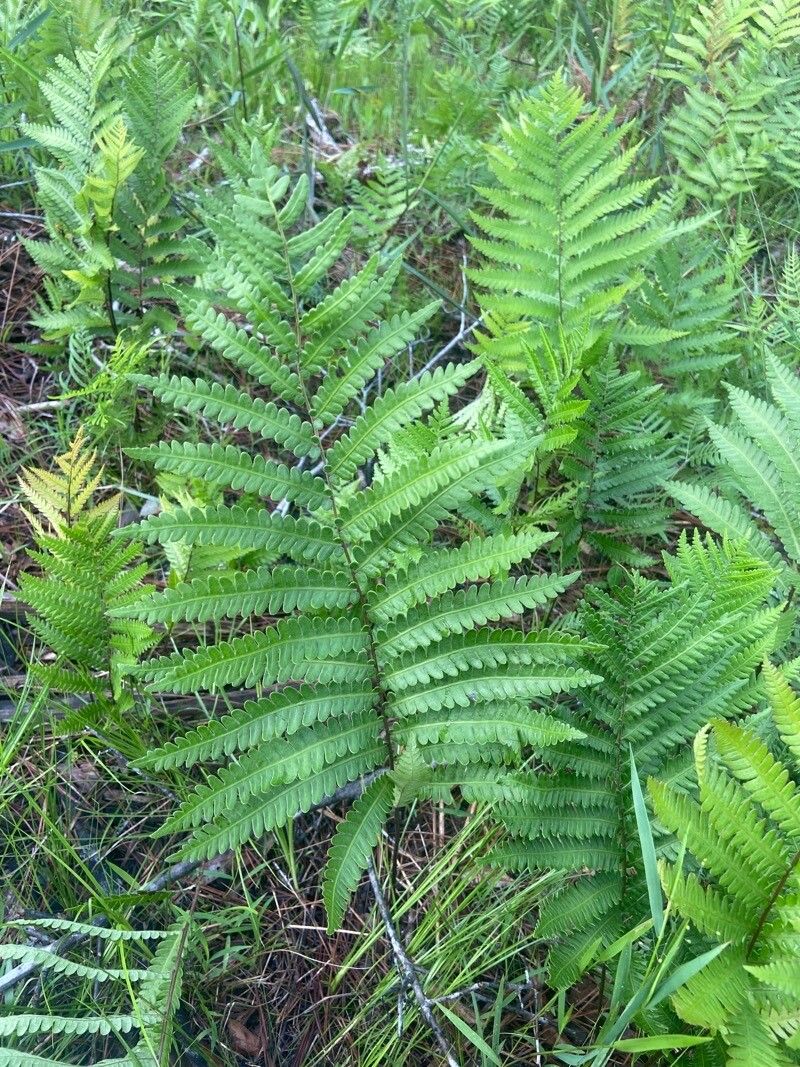
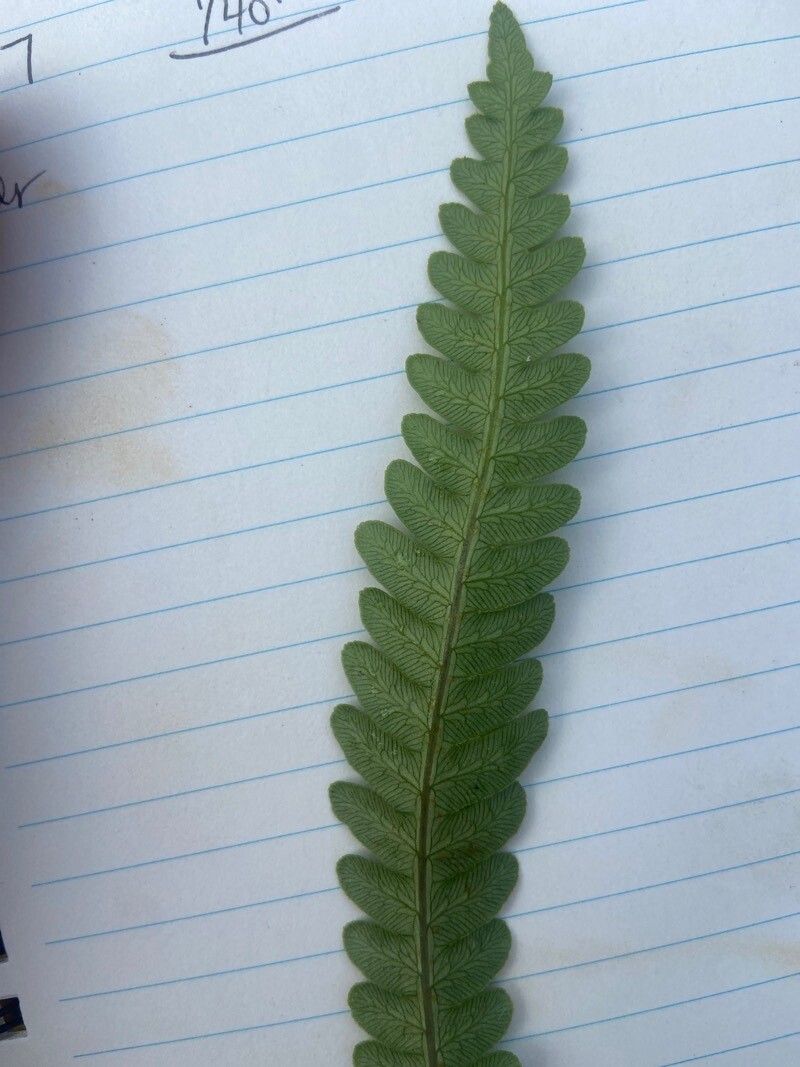
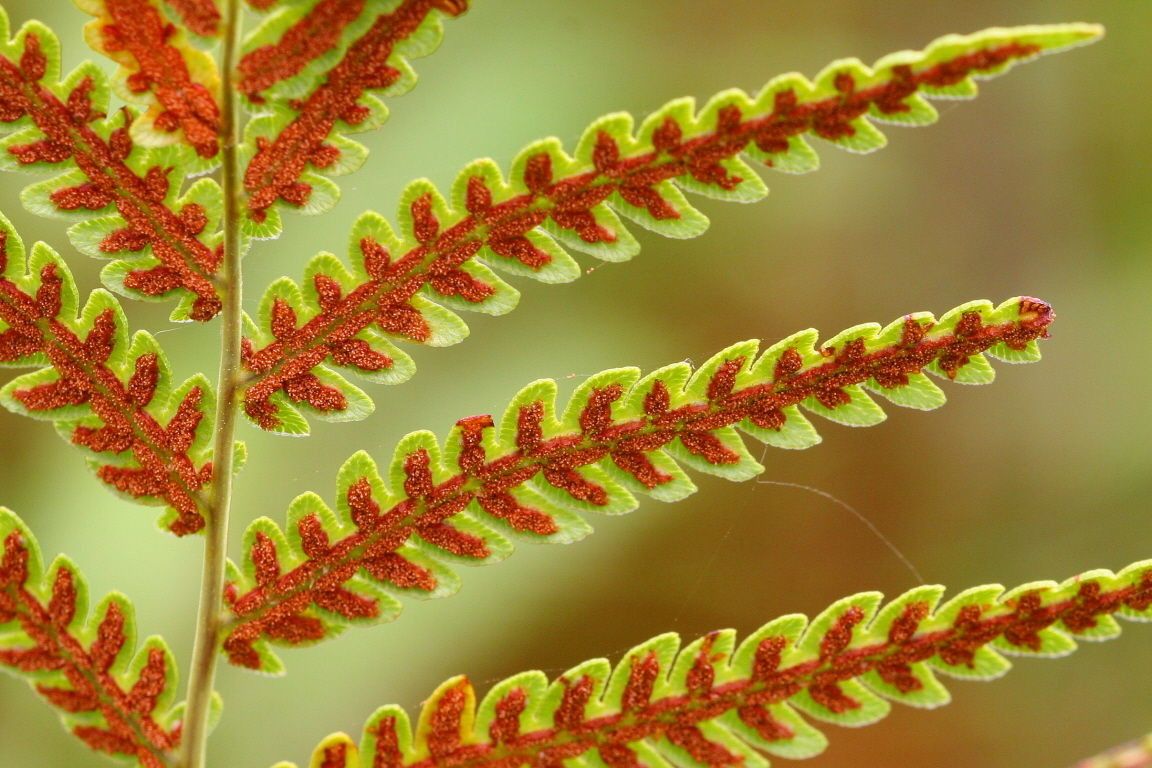
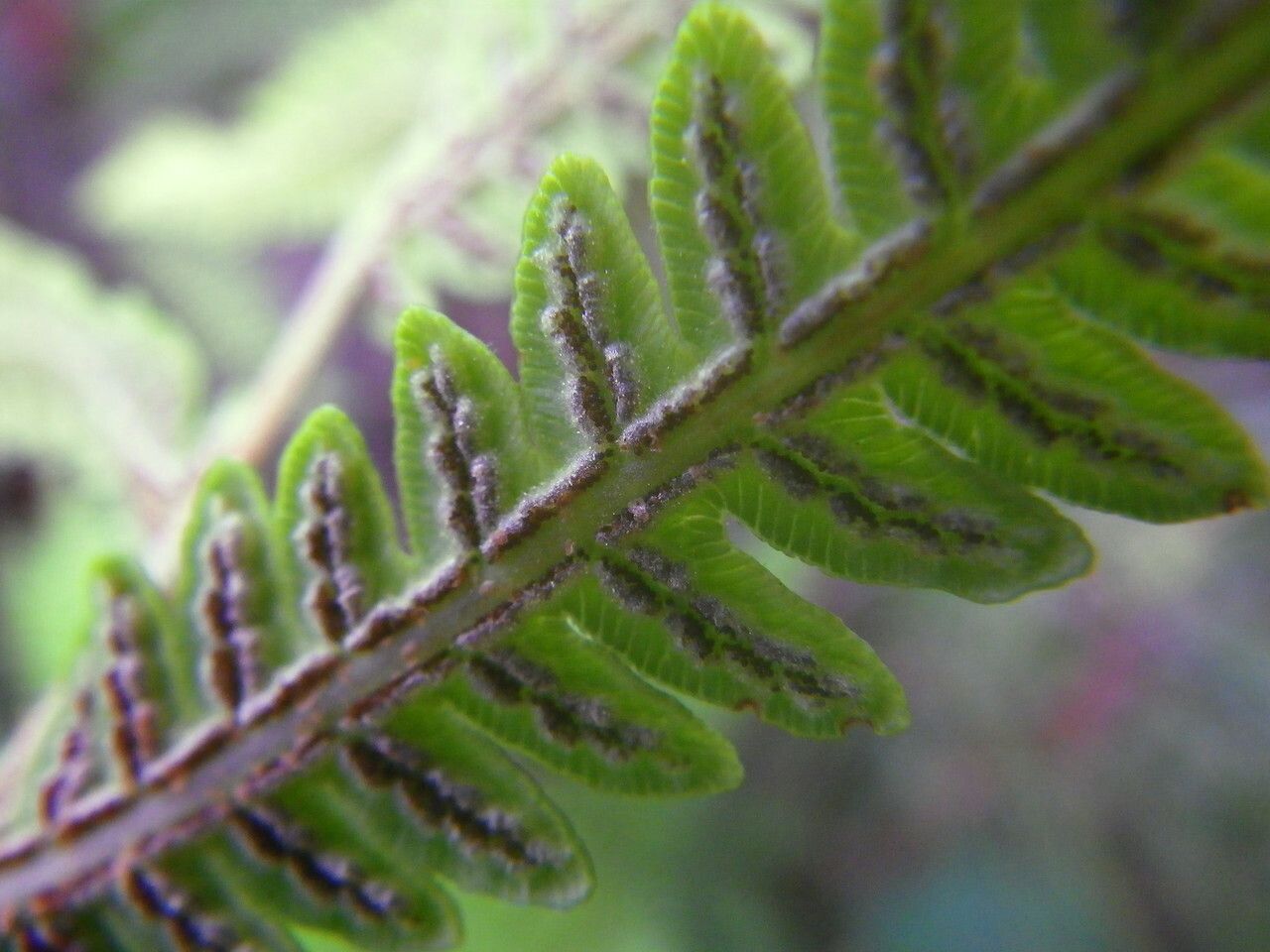
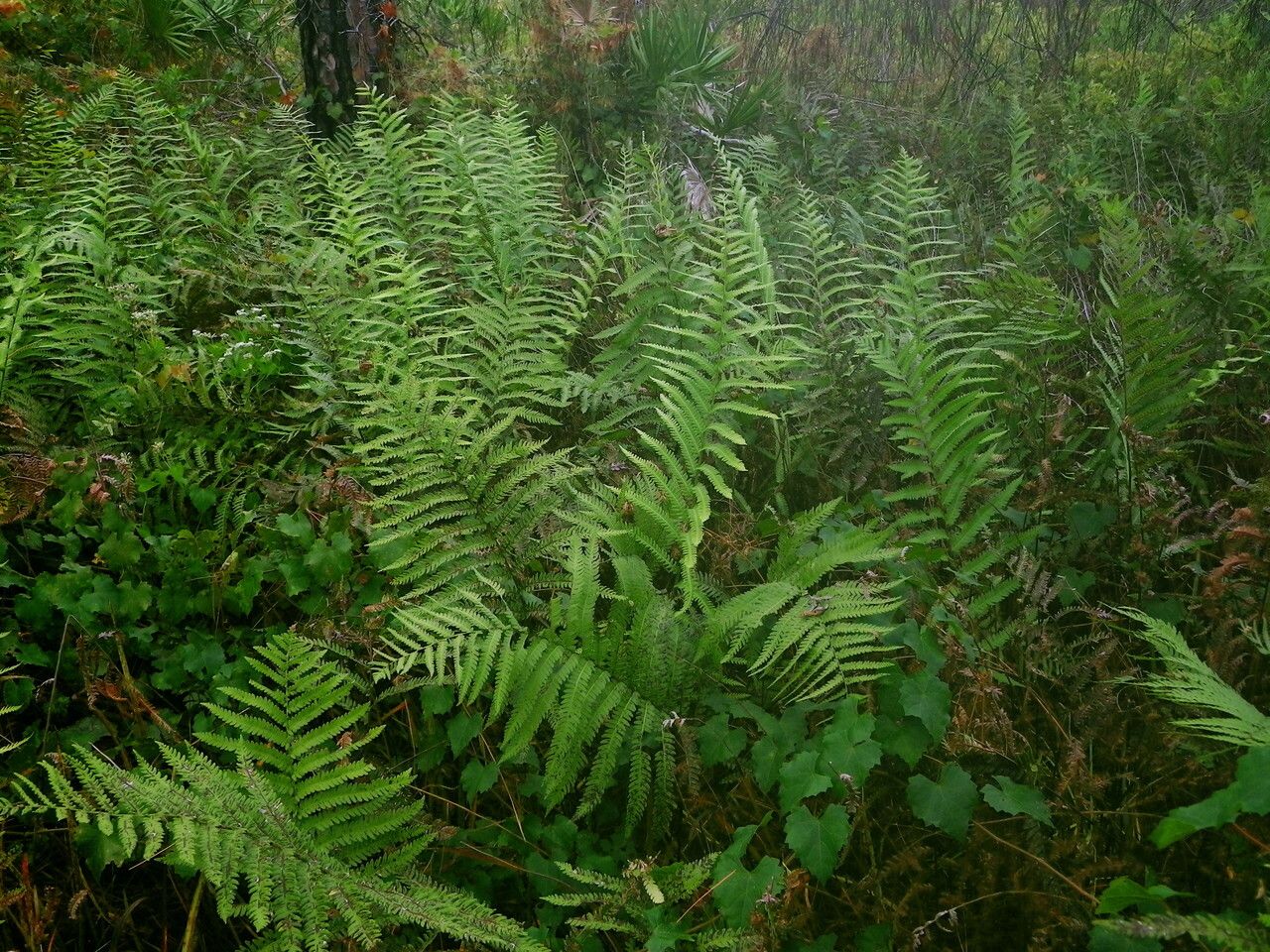
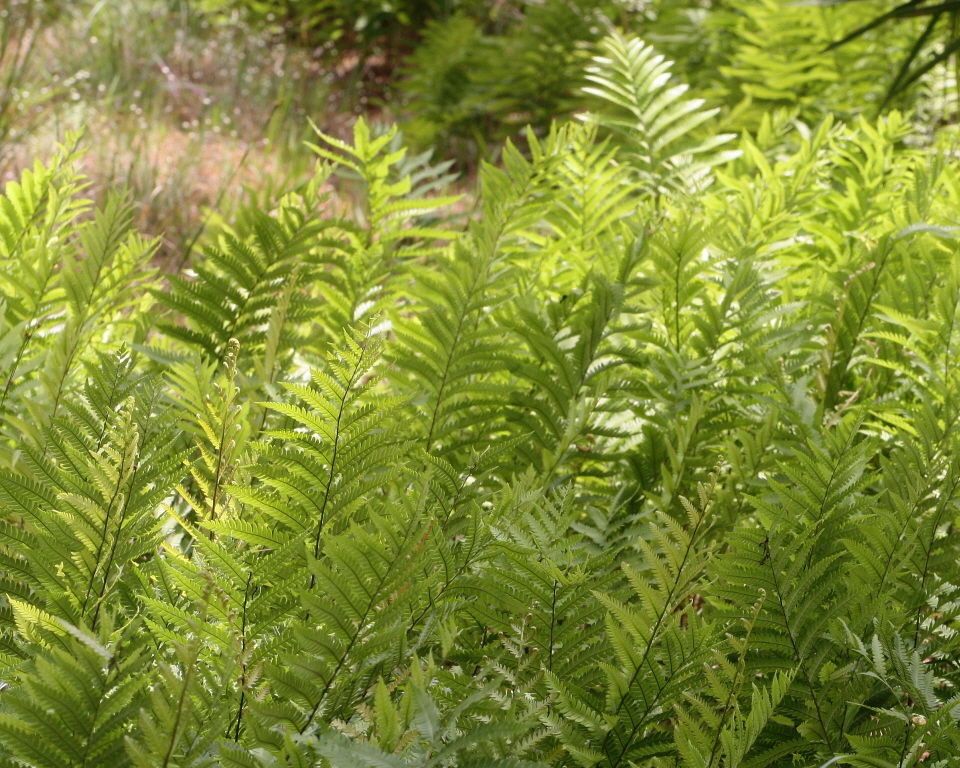
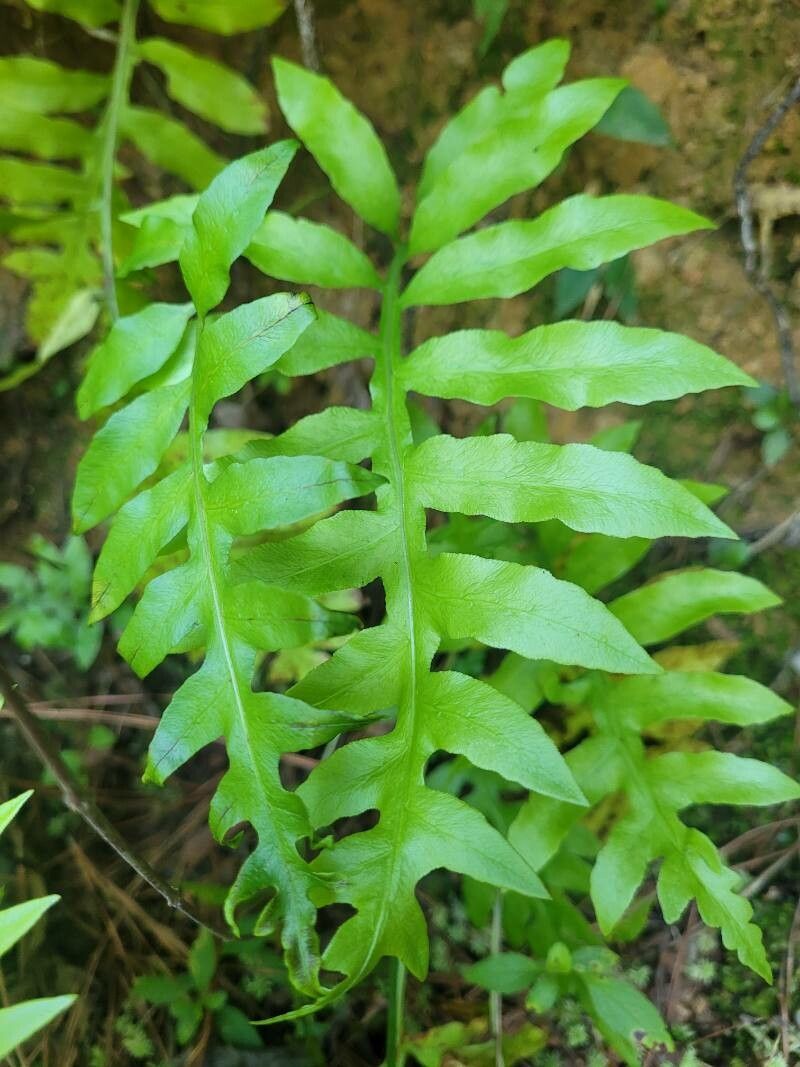
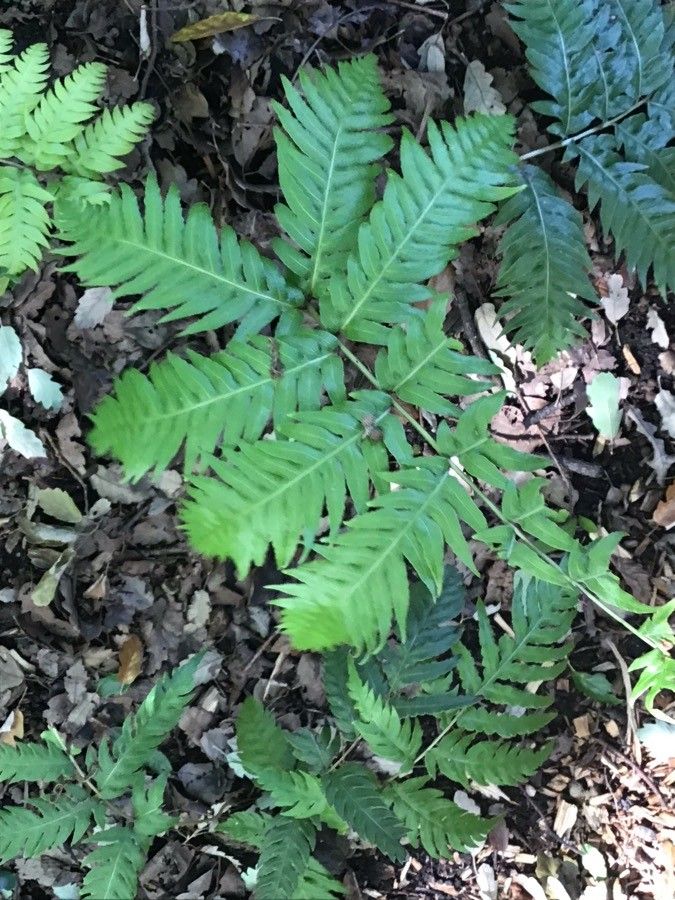
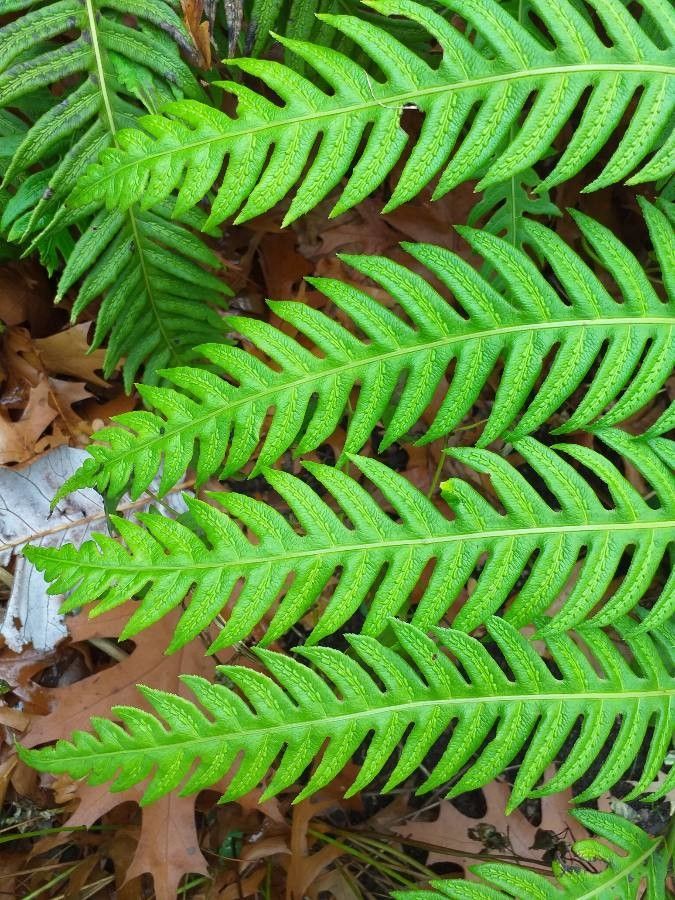
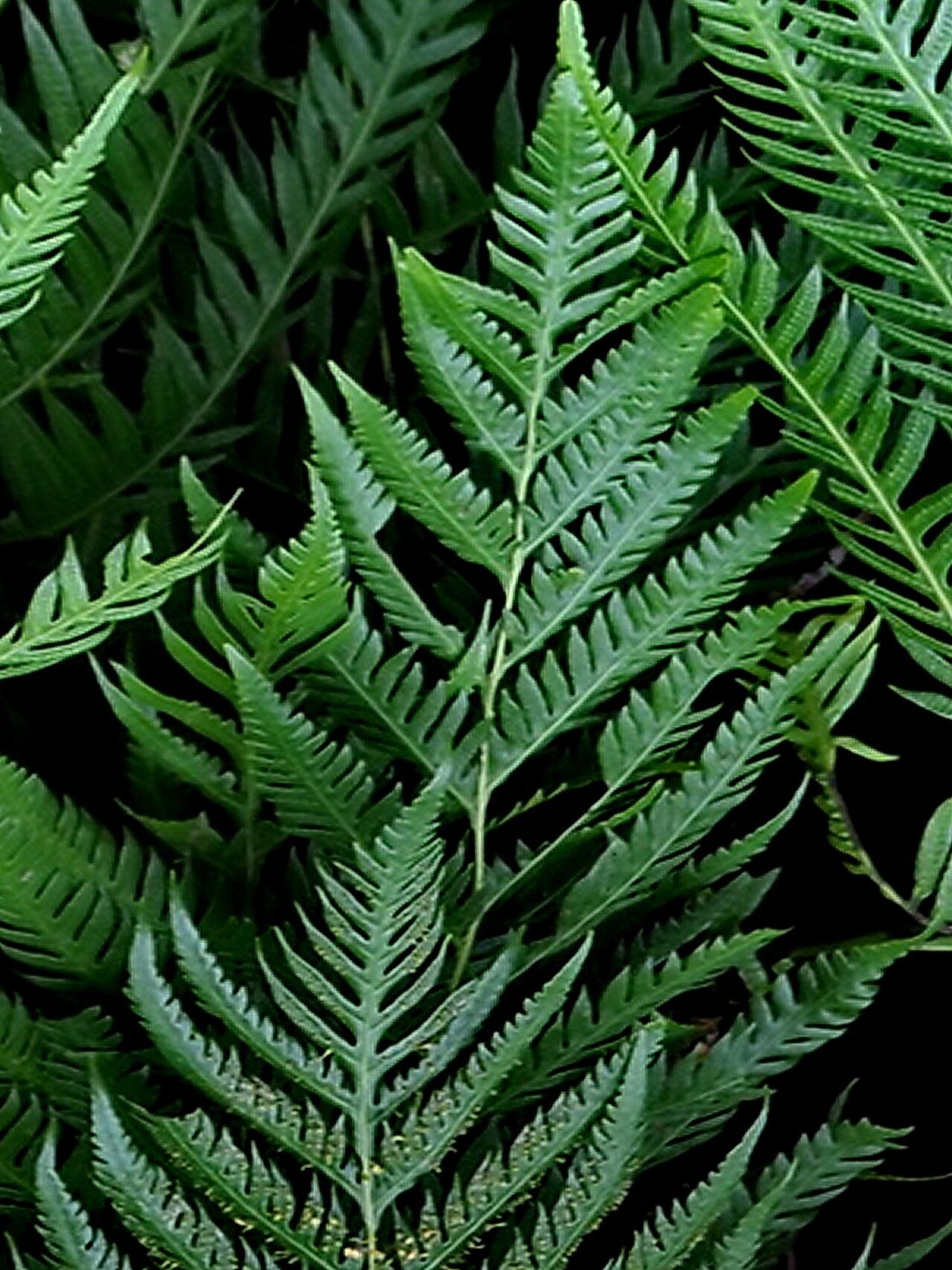
Anchistea is a genus of leptosporangiate ferns in the family Blechnaceae. It has only one species, Anchistea virginica (synonym Woodwardia virginica) the Virginia chain fern, which has long creeping, scaly, underground stems or rhizomes giving rise to tall (up to about 4 feet, 120 centimetres) widely separated, deciduous, single leaves. In contrast, the leaves of Osmundastrum cinnamomeum, which can be mistaken for A. virginica, grow in a group from a crown. Also in contrast to O. cinnamomeum the leaves are monomorphic without distinct fertile fronds. The lower petiole or stipe is dark purple to black, shiny and swollen, the upper rachis is dull green. The leaf blade is green and lanceolate, composed of 12 to 23 paired, alternate pinnatifid pinnae. The pinnae are subdivided into 15 to 20 paired segments that are ovate to oblong. The lower rachis is naked for about half its length. The sori or spore-producing bodies are found on the underside of the pinnae and are long and form a double row which outlines the major veins of the pinnae. In common with all ferns, A. virginica exhibits a gametophyte stage in its life cycle (alternation of generations) and develops a haploid reproductive prothallus as an independent plant. The spores are produced in red-brown sori which line the spaces (areolae) between the costa and costules. Further photographs can be found at the Connecticut Botanical Society and Ontario Ferns websites.
Virginia chain fern is typically fairly resistant to disease and has few insect pests. It is regarded as challenging to care for because it needs consistently moist conditions and regular watering. Its roots, however, can rot if the plant is overwatered or kept in poorly ventilated conditions. The fern is better suited to growers with some experience, since most people can keep it alive for a limited time. Nevertheless, it may struggle to thrive and its leaves can dry out and deteriorate in health over time.
How to keep Woodwardia Virginica.
Light
The Virginia chain fern flourishes in abundant light but is fairly adaptable and can tolerate shadier conditions and spots that receive only brief periods of light. These lighting conditions, typical of the fern's native habitat, encourage lush, vigorous growth. Both extreme lack and excess of light can impede its healthy development.
Temperature
Virginia chain fern is native to mild-temperature environments and thrives within a range of 32 to 95 °F (0 to 35 ℃). To sustain healthy growth across different seasons, moderate temperature adjustments may be required.
Botanical profile.
- Plant Type
- Fern
- Life Cycle
- Perennial
- Genus
- Woodwardia
- Family
- Aspleniaceae
- Hardiness Zone
- 3-10
- Mature Height
- 30 cm to 91 cm
- Mature Spread
- 61 cm to 91 cm
- Leaf Color
- Green, Light Green
- Leaf Type
- Semi-evergreen
- Bloom Time
- Summer, Fall
- Planting Time
- Spring, Summer, Autumn
- Native Area
- Cuba
Other names.