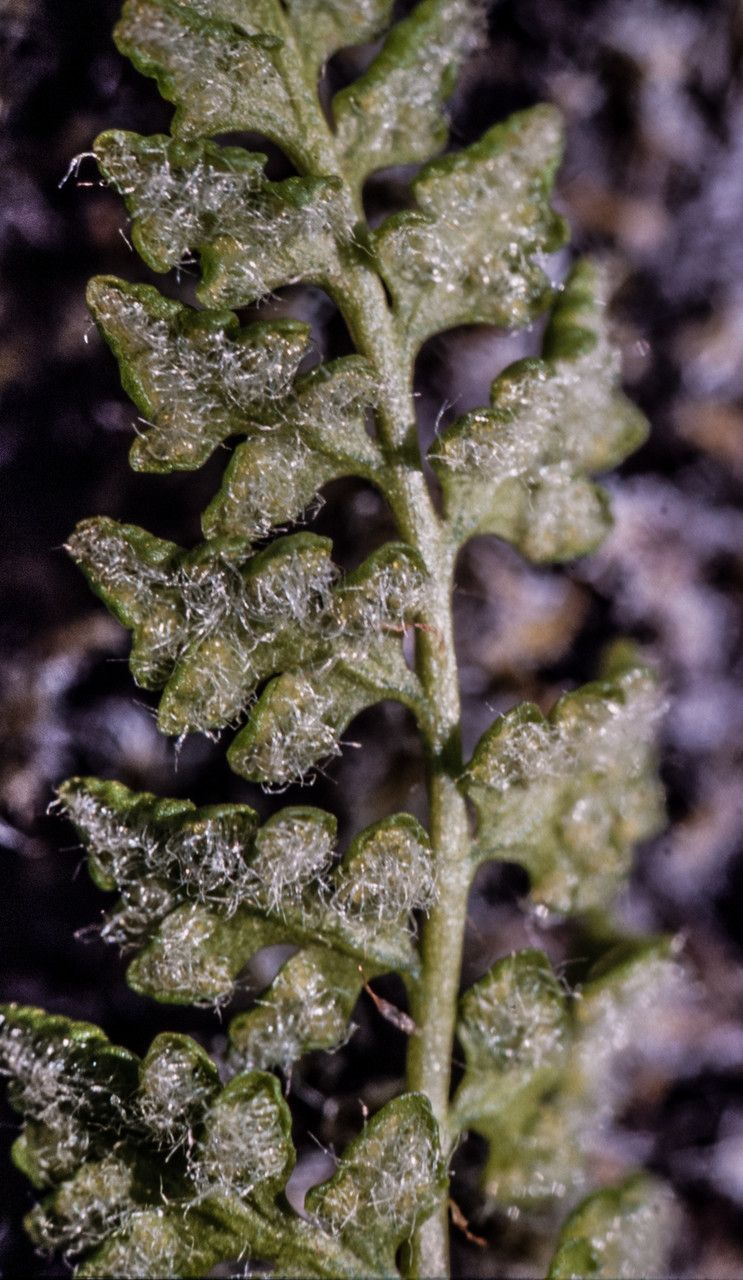
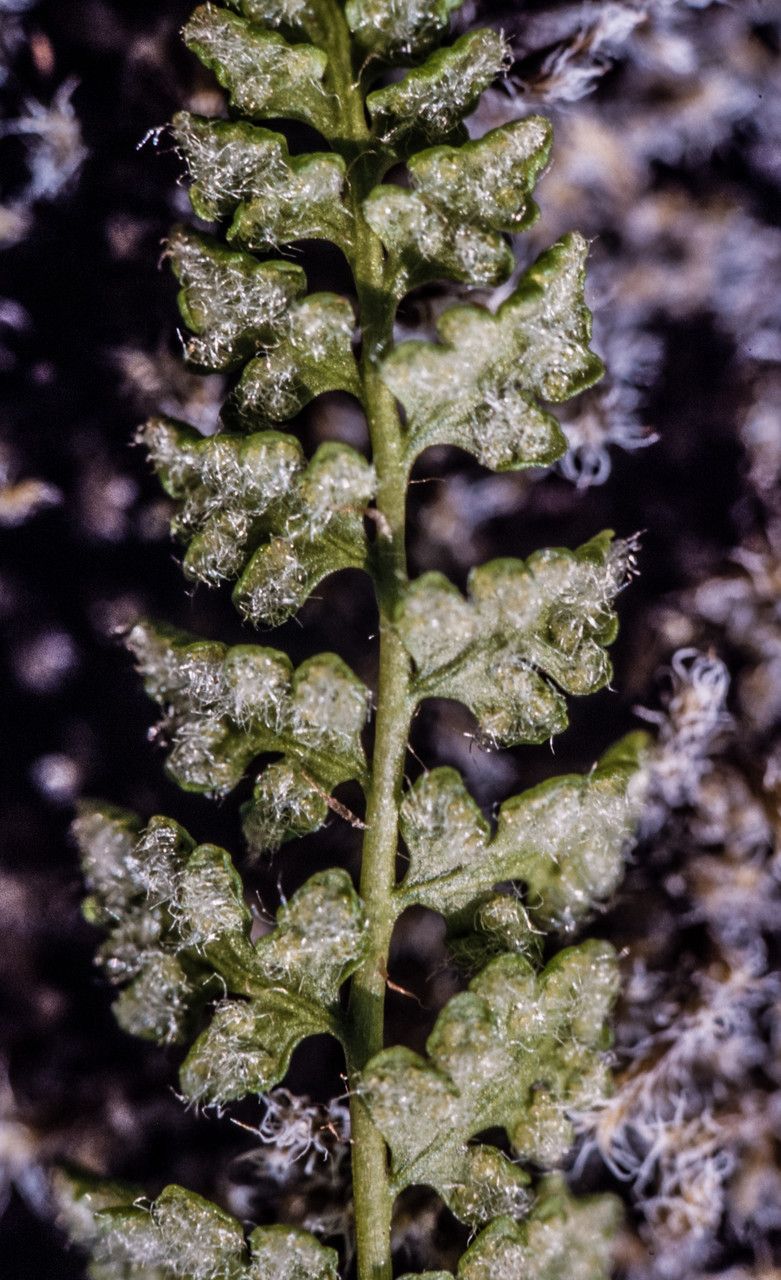
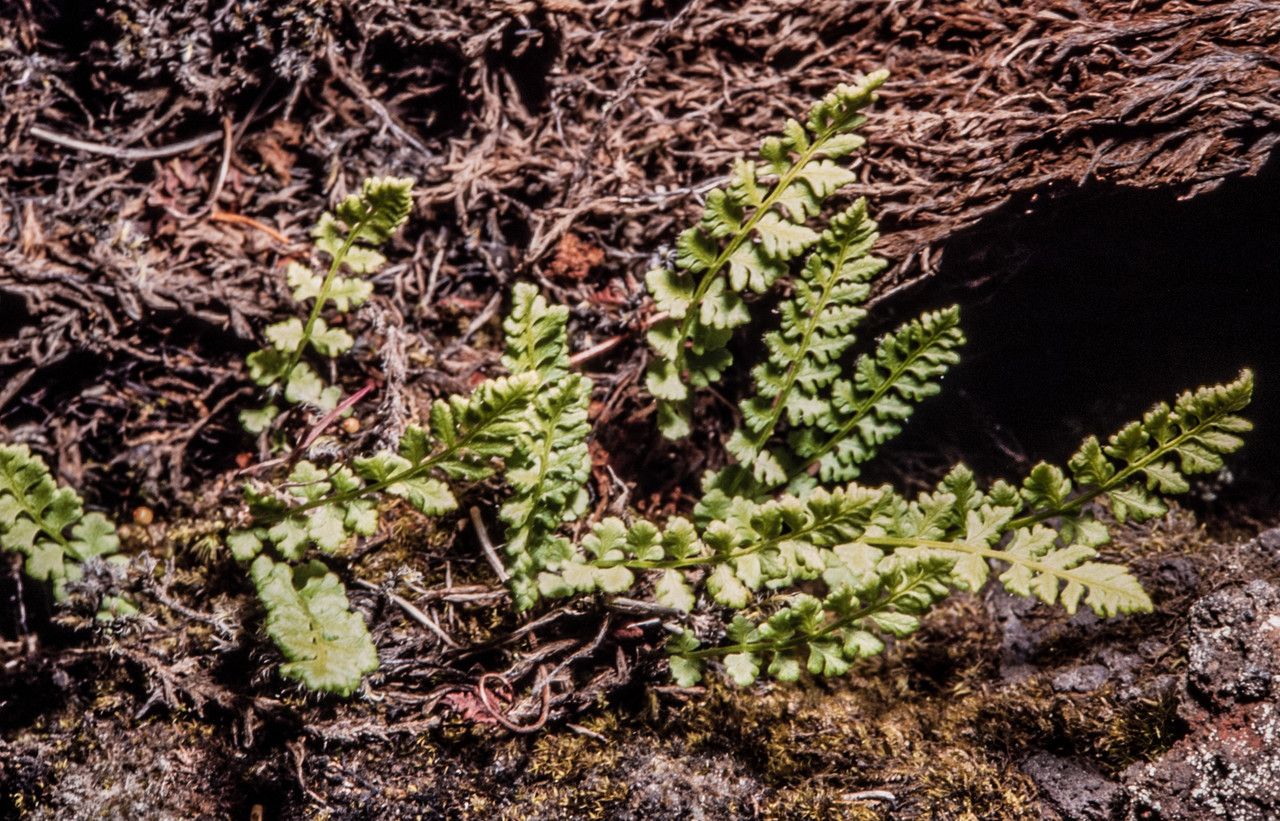
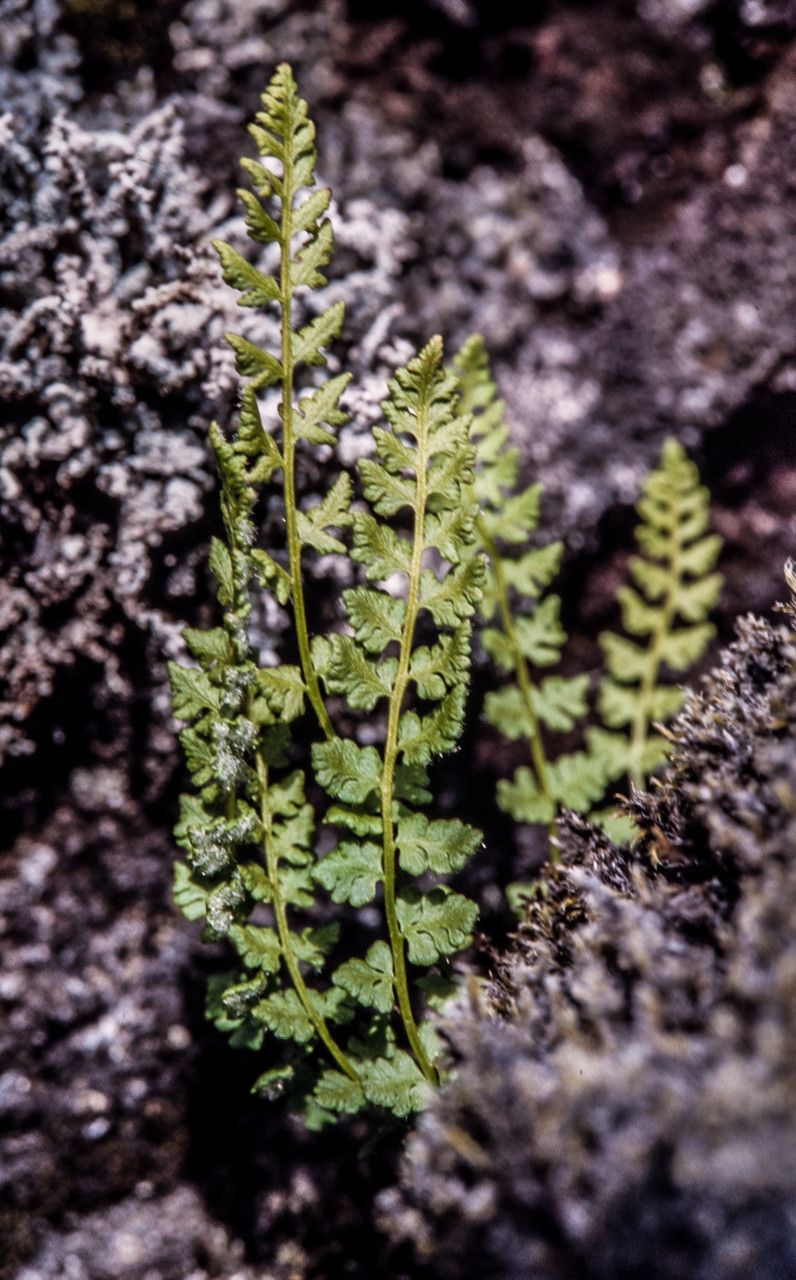
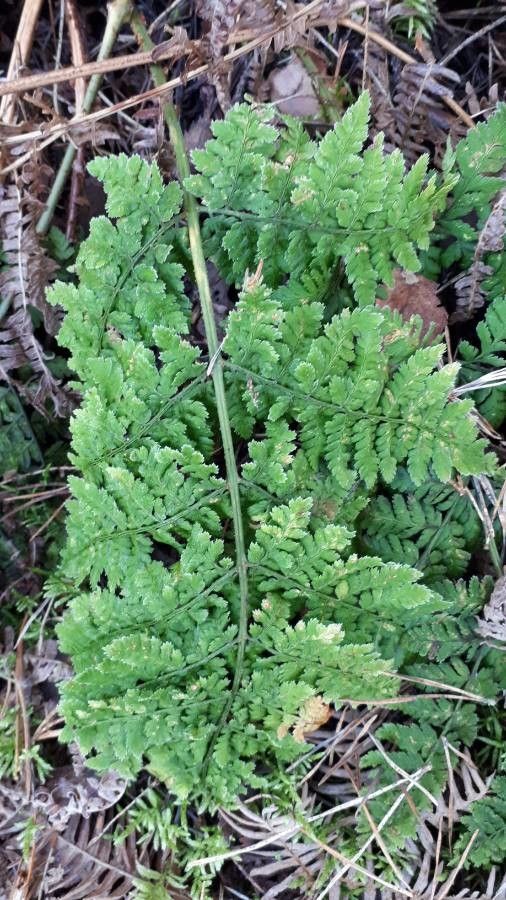
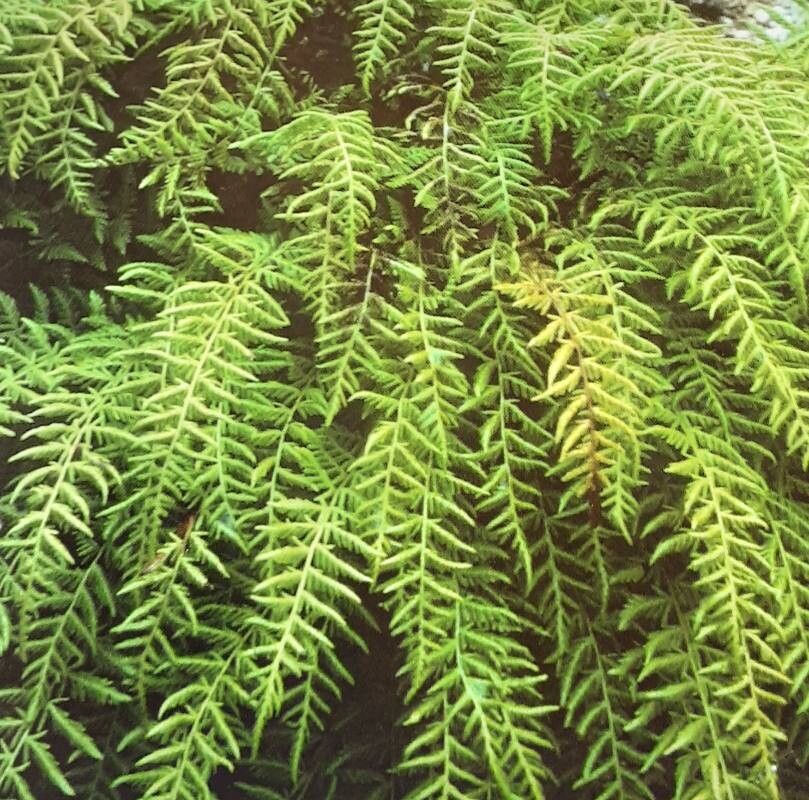
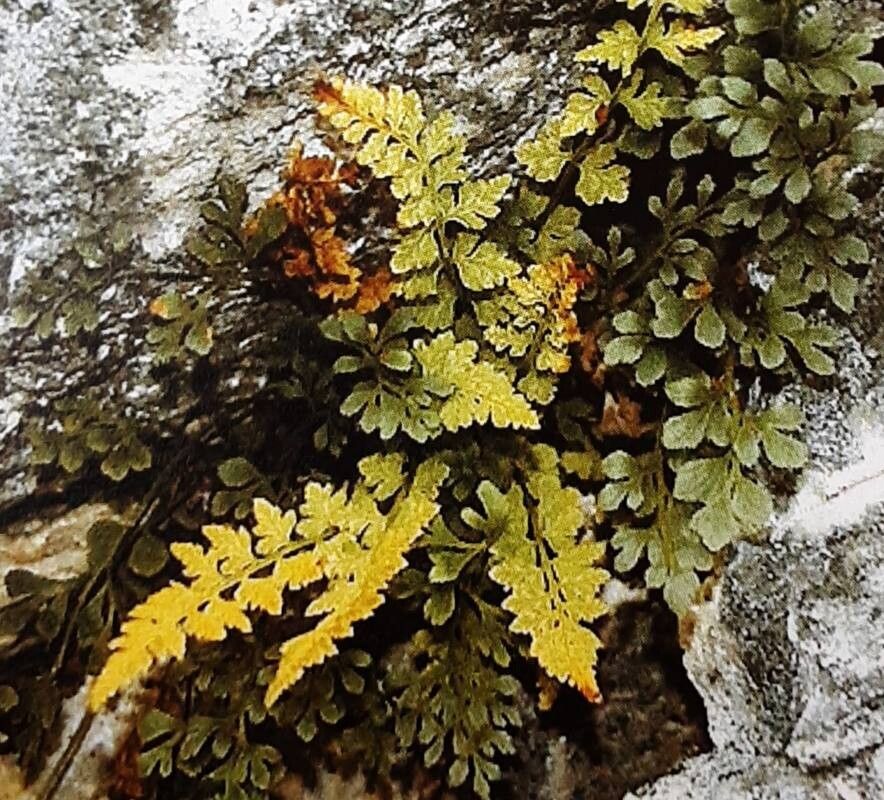
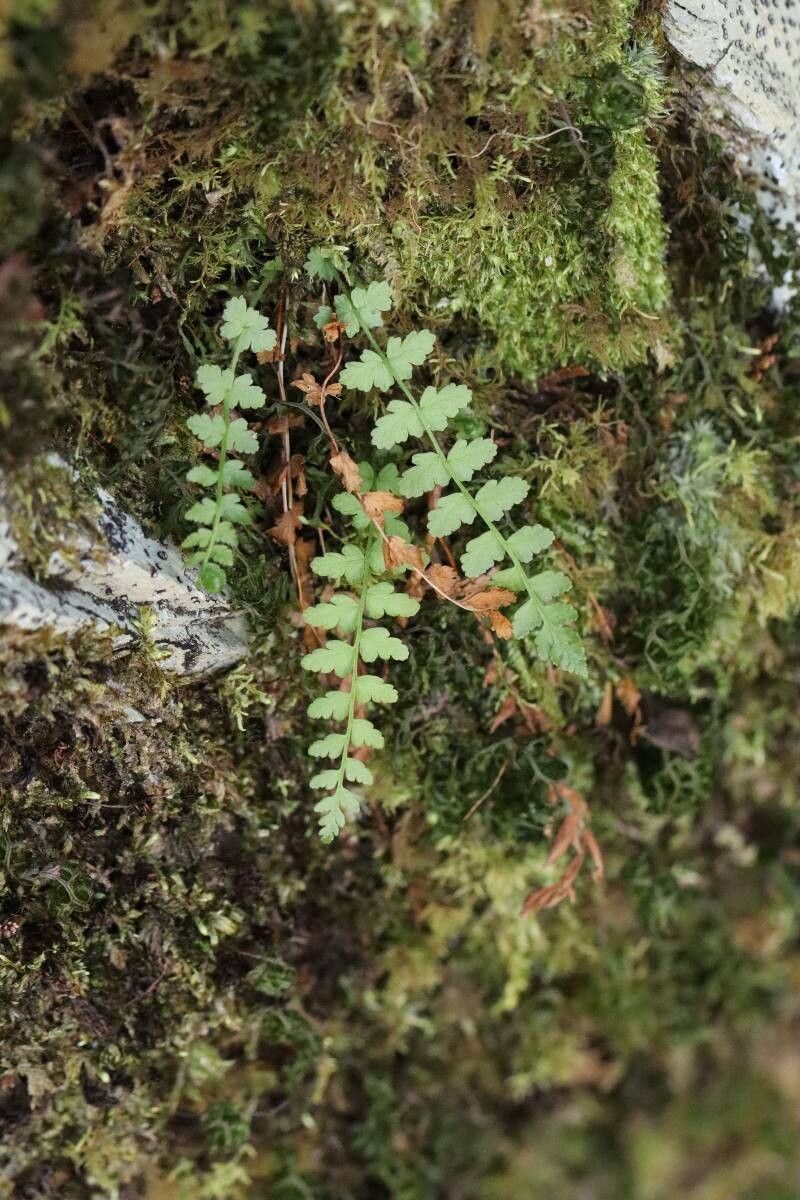
Woodsia ilvensis, commonly known as the Oblong Woodsia, is a small fern species that belongs to the Woodsiaceae family. It is native to Europe and North America and thrives in rocky habitats such as cliffs, crevices, and slopes. The plant has a compact growth habit, with fronds typically ranging from 10 to 30 cm in length and 2 to 5 cm in width. The fronds are dark green with a glossy texture on the upper surface and a paler underside.
The Oblong Woodsia fern produces spores on the undersides of its fronds, visible as small brown dots arranged in rows along each side of the midrib. Although it prefers moist soil conditions, it can tolerate some drought once established.
This fern is an excellent choice for rock gardens or naturalistic landscapes due to its compact size and attractive foliage. It also thrives in woodland gardens or shaded areas with dappled sunlight.
Overall, Woodsia ilvensis is a visually appealing fern that enhances any garden setting while providing important ecological benefits. It helps with erosion control and offers habitat for wildlife, such as insects and birds that rely on it for food or shelter throughout their life cycles.
Rusty woodsia has good resistance to disease and is generally not susceptible to illnesses. However, it can be vulnerable to pests and diseases present in its environment. These problems are generally not serious. In terms of care, this plant requires a moderate level of maintenance. It should be pruned regularly to keep a pleasing appearance and encourage healthy growth. Fertilizing can also help stimulate flowering. Rusty woodsia is appropriate for people with outdoor spaces such as a garden or patio and does not call for extensive care experience. It may need more attention when kept indoors.
How to keep Woodsia Ilvensis.
Light
The rusty woodsia prefers plenty of light, naturally growing in areas that receive abundant sunlight. It does well in those conditions but can tolerate moderate light. Too much or too little sunlight can hinder the plant's growth.
Water
Rusty woodsia thrives in the understories of temperate forests, where it requires consistent humidity and soil rich in organic matter. It prefers evenly moist conditions and can tolerate moderate drought. To ensure its health, it should be watered weekly. Using rainwater for watering can improve nutrient absorption and enhance the quality of its foliage.
Temperature
Rusty woodsia can tolerate a wide range of temperatures, but its distribution may still be constrained by specific combinations of moisture and heat. It does best in warm summer conditions with enough rainfall or supplemental watering. Long periods of cloudy, rainy weather or extended high temperatures can raise the chance of Rusty woodsia dying. In winter, appropriate protection from cold can improve the plant’s survival rate.
Fertilizer
Typically, a single fertilizer application in spring suffices for Rusty woodsia, although several feedings can boost growth to the fullest. Apply every month to month and a half. Fertilization improves leaf appearance and performance, helping maintain even color and a healthy texture. It also promotes root development and nutrient uptake for sustained plant health.
Pruning
Rusty woodsia is a resilient fern characterized by its rust-colored scales. To promote healthy growth, prune in early to late spring, focusing on removing any dead fronds. Clearing away old foliage helps prevent disease and improves air circulation. Be cautious not to prune heavily, as maintaining its robust and natural appearance is important.
Botanical profile.
- Plant Type
- Herb
- Life Cycle
- Perennial
- Genus
- Woodsia
- Family
- Aspleniaceae
- Hardiness Zone
- 3-8
- Mature Height
- 11 cm to 18 cm
- Mature Spread
- 10 cm to 15 cm
- Leaf Color
- Green, Olive Drab
- Leaf Type
- Evergreen
- Bloom Time
- Summer, Fall
- Planting Time
- Spring, Summer, Autumn
- Native Area
- Sweden, Austria, Czech Republic, Slovakia, Poland, Croatia, Slovenia, Ukraine, China, Russia, Norway, Hungary, Germany, Italy, Kazakhstan, Switzerland, Denmark, Iceland, Estonia, Japan, Mongolia, Finland, United Kingdom, Romania, France
Other names.
Reader questions.
How should I water my Rusty woodsia plant?
To properly care for the Rusty woodsia plant, it's important to use filtered water at room temperature. Tap water may have particles that can harm the plant, so filtered water is preferred. The water temperature should be warm as the plant is accustomed to a warm climate and cold water can shock it. It's best to avoid watering the plant from above as it can cause problems with the leaves. Instead, thoroughly soak the soil with your filtered room temperature water. This helps moisten the roots and aids in nutrient absorption.
What are the sunlight requirements for Rusty Woodsia?
Rusty Woodsia (Woodsia ilvensis) thrives in environments that provide abundant sunlight. For optimal growth, it needs full sun exposure, which is above 6 hours of sunlight per day, but it can also tolerate partial sun, receiving about 3-6 hours of sunlight. It's crucial to monitor the movement of sunlight through your garden to find spots that offer a balance of light and shade, ensuring the plant's wellbeing. Excessive or insufficient sunlight exposure can negatively affect the plant's growth.
What should I do if I give my Rusty woodsia plant too much or too little water?
Overwatering is a common issue for Rusty woodsia and can cause wilting, yellowing leaves, and diseases like root rot. Underwatering is less common but can lead to brittle, brown leaves. It's important to identify and address overwatering early to prevent irreversible damage. Reduce watering and replace poorly draining soil if necessary. If underwatering is suspected, increase watering until signs improve.
How important is lighting for the growth of Rusty Woodsia indoors?
Indoor Rusty Woodsia plants require adequate lighting for optimal growth, especially when natural sunlight is insufficient, such as during winter or in less sunny spaces. Artificial lighting, like LED lights, can be a vital solution, providing the necessary light wavelengths. For full sun plants, 30-50W/sq ft of artificial light is recommended, 20-30W/sq ft for partial sun plants, and 10-20W/sq ft for full shade plants. The light source should be placed 12-36 inches above the plant, mimicking natural sunlight as closely as possible and ensuring the plant receives 8-12 hours of light daily.
How much should I water my Rusty woodsia plant?
If your Rusty woodsia plant is in a pot, the most precise way to determine if it needs water is to check the soil moisture. Simply stick your finger into the soil and if the top two to three inches are dry, it is time to water it. If you have it planted outdoors in the ground, you can use a similar method to test the soil. Once again, if the top few inches of soil have dried out, give it some water. Typically, during spring and early fall, you may need to water this plant about once a week using this method. However, during extremely hot weather, you may need to increase watering to twice or more per week. It is worth noting that mature, well-established Rusty woodsia plants have a remarkable ability to withstand drought.
What are the symptoms of inadequate light exposure in Rusty Woodsia?
Rusty Woodsia may exhibit various symptoms under inadequate light conditions, including smaller new leaves, leggy or sparse growth, faster leaf drop, slower or halted growth, lighter-colored new leaves, and symptoms of overexposure like chlorosis, sunscald, leaf curling, wilting, and leaf scorching. These signs indicate that the plant is struggling either with too little or too much sunlight. Adjusting light exposure appropriately can mitigate these symptoms and promote healthy growth.
How much water does my Rusty woodsia plant need?
To properly water your Rusty woodsia, don't hesitate to give it a generous amount of water. Make sure the top two to three inches of soil are dry before watering. It's best to thoroughly soak the soil, allowing excess water to flow out of the drainage holes at the bottom of the pot. If you don't see excess water draining, you may have underwatered your plant. However, be cautious not to let water accumulate in the soil, as it can harm the plant. Conversely, if water doesn't drain properly, it may indicate poorly draining soil, which is harmful to the plant's health. If the plant is outdoors, it generally only needs about 1 inch of rain per week.
What solutions can address light-related issues for Rusty Woodsia?
To address light-related issues in Rusty Woodsia, indoor solutions include gradually moving the plant each week to a sunnier location, ideally by a south-facing window, or using artificial light sources like desk or ceiling lamps for at least 8 hours daily. For outdoor plants, it's critical to adjust their location gradually to avoid shock from sudden light intensity changes. If obstructions like trees block sunlight, consider pruning. For smaller plants, transplanting during the dormant period to a location with ample sunlight and good drainage may help. It's important to note that parts of the plant damaged by insufficient sunlight might not recover, but new growth should be healthy following an increase in light exposure.
How do I water my Rusty woodsia plant when it's growing?
The water needs of the Rusty woodsia can vary depending on growth stages. In the first few years of its life or when you have just transplanted it, it will require more water than usual. This is because the plant is focused on growing new roots to support future growth, and these roots perform better with slightly more moisture. After a few seasons, the Rusty woodsia will need less water. Another growth stage that may require more water is during the bloom period, as flower development utilizes a significant amount of moisture. Therefore, you may need to water your Rusty woodsia more during this time.
How should I water my Rusty woodsia plant all year round?
The Rusty woodsia has higher water needs in the hottest months of the year. During summer, you might need to water it more than once a week, depending on how quickly the soil dries. However, the opposite is true in winter. The plant enters a dormant phase and requires less water. In fact, you may not need to water it at all during winter. If you choose to water, limit it to once a month. Overwatering during winter increases the risk of disease in the Rusty woodsia.
What's the difference in how I water my Rusty woodsia when it's inside compared to when it's outside?
The Rusty woodsia is commonly grown indoors by gardeners who live in non-temperate and non-tropical regions. If you're considering growing this plant indoors, remember that soil in a container dries out faster than ground soil. Additionally, factors like air conditioning units can increase the plant's water needs. However, if you decide to plant it outside, you may not need to water it much, especially if you receive regular rainfall. On the other hand, if you grow the Rusty woodsia indoors, you'll need to water it more frequently since you can't rely on rainwater to soak the soil.