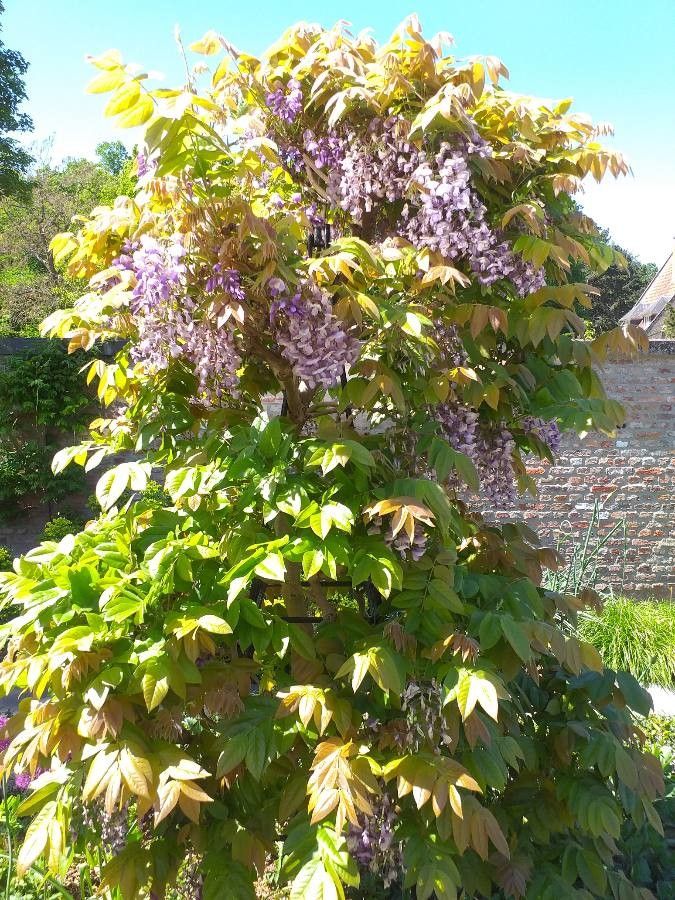
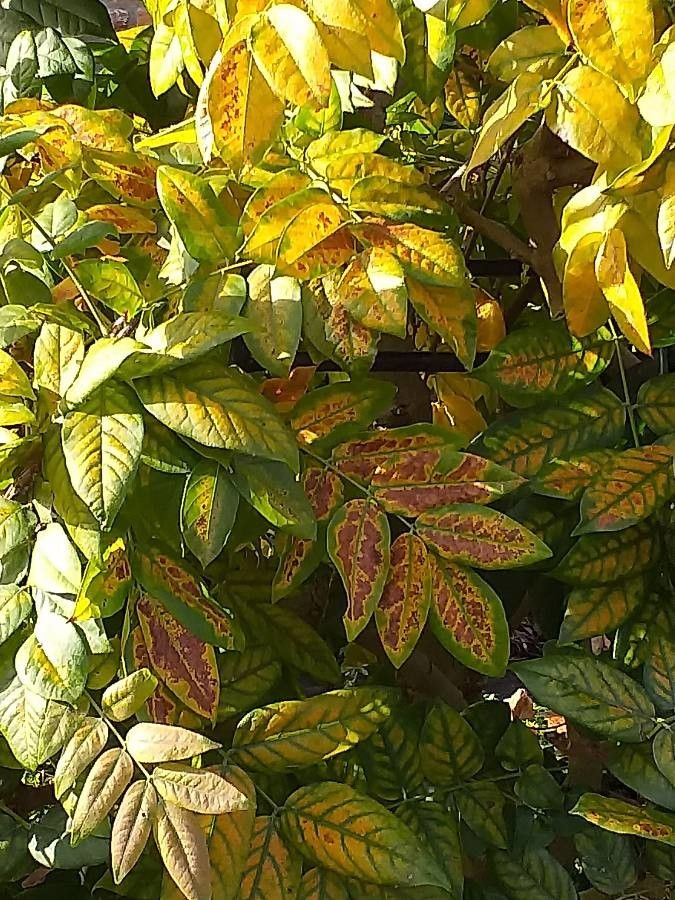
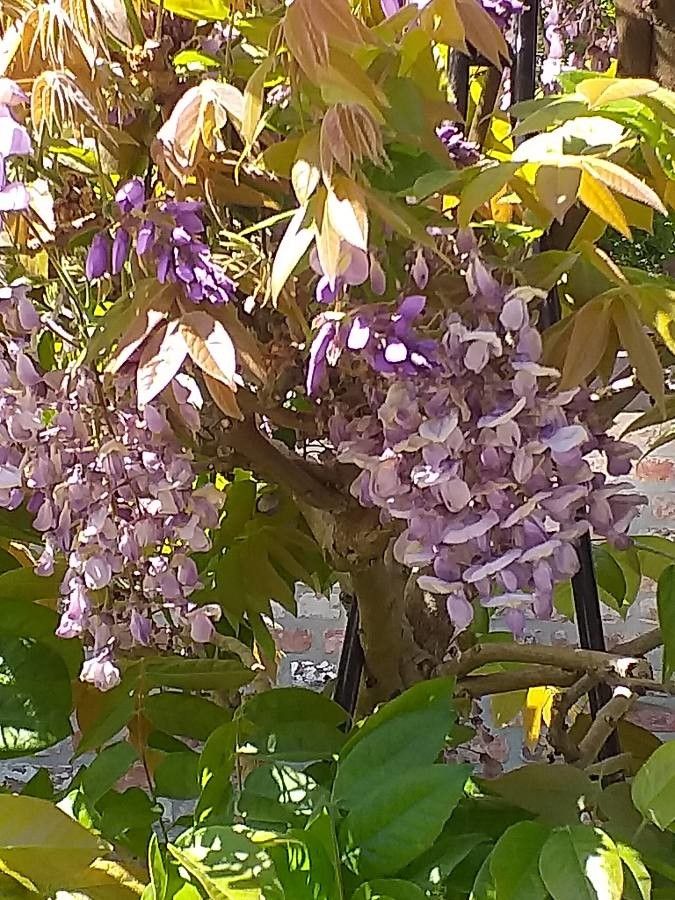
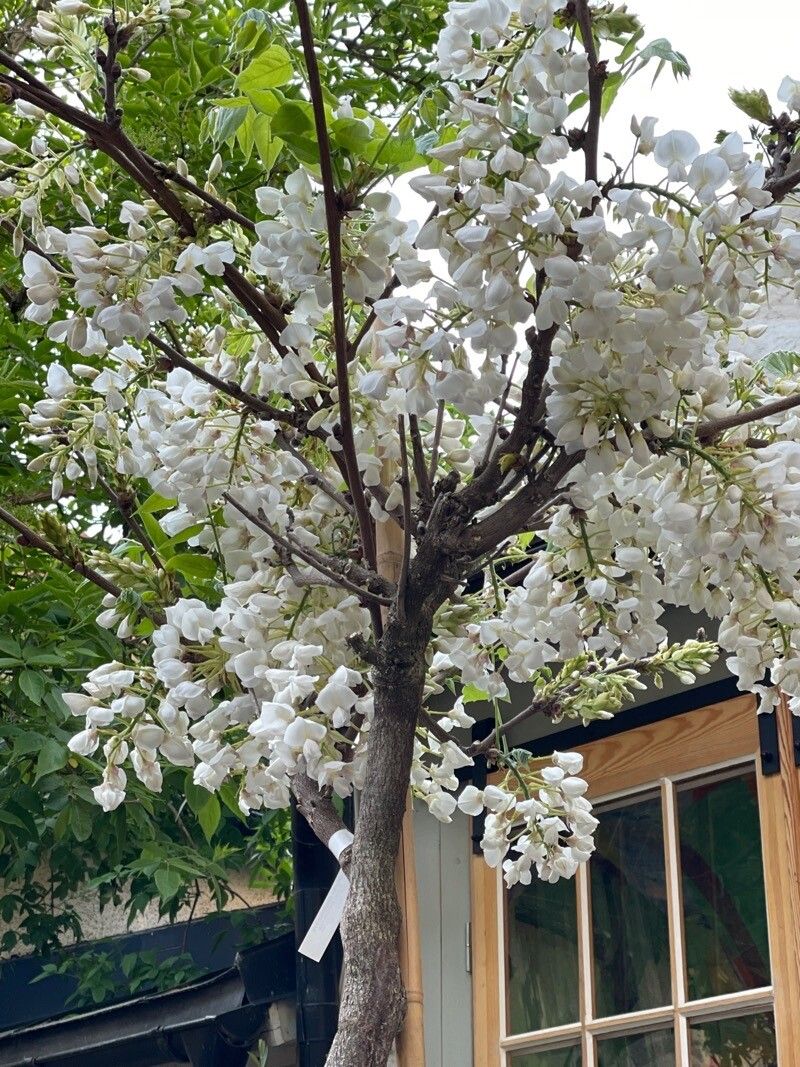
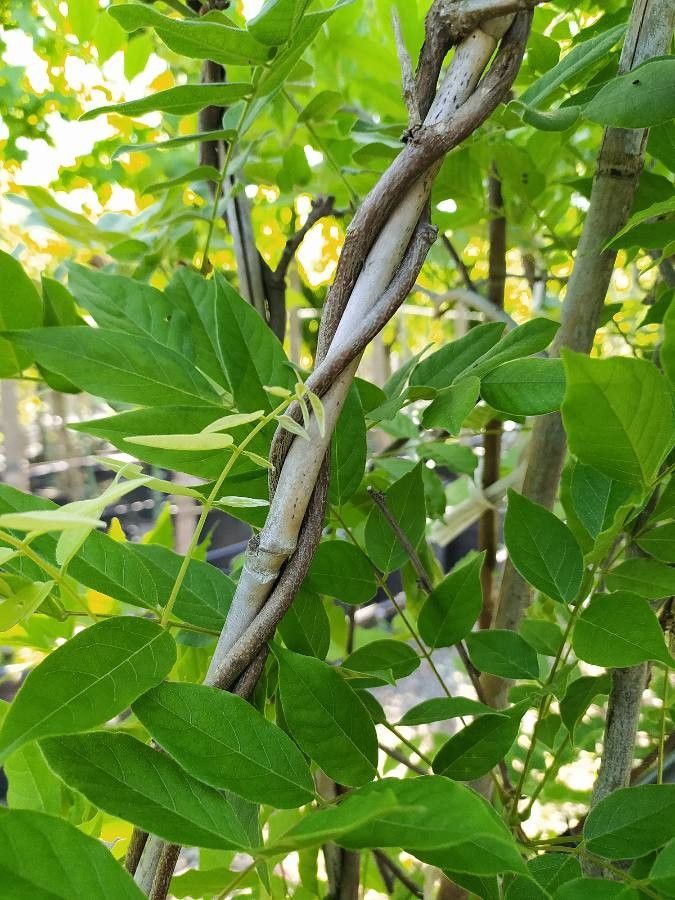
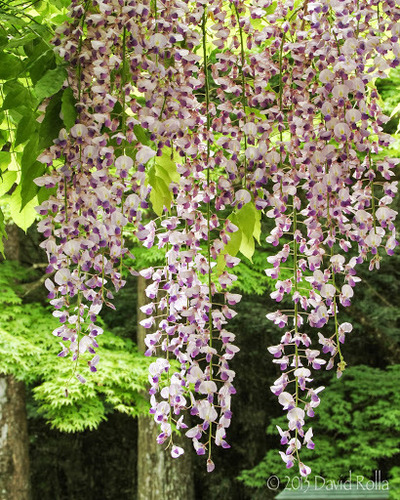
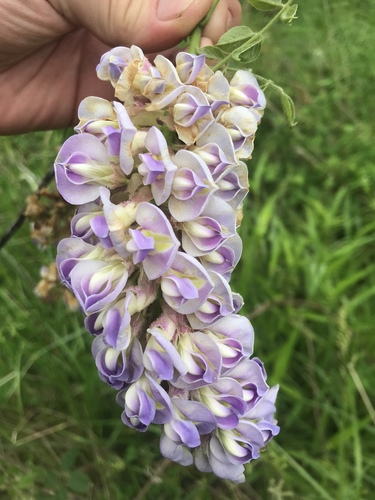
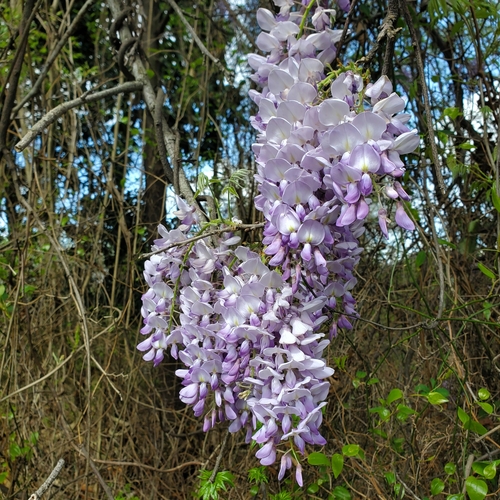
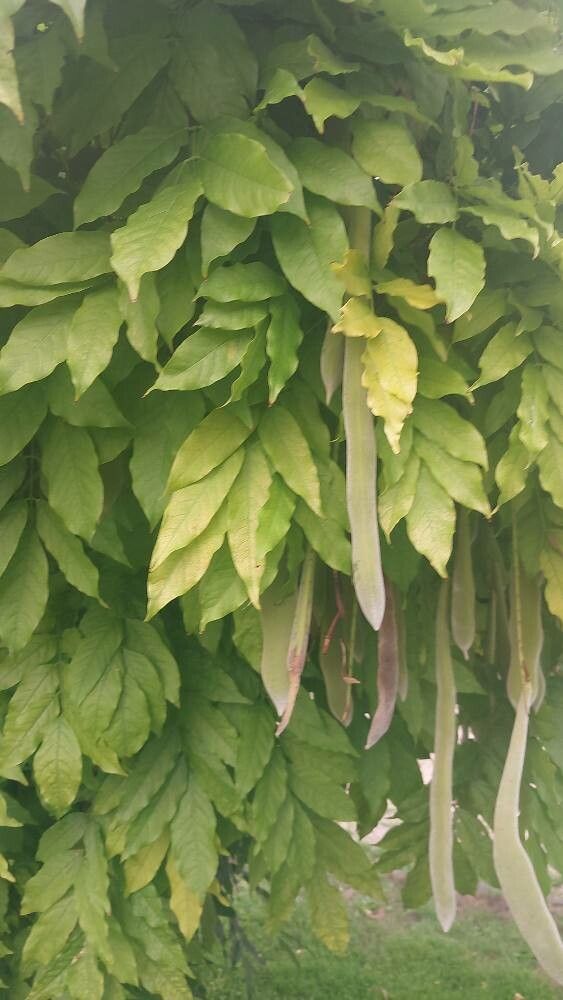
Wisteria brachybotrys, commonly known as Silky Wisteria, is a deciduous climbing plant that belongs to the pea family. Native to Japan, this plant can reach up to 9 meters in height. It features a woody stem and produces beautiful clusters of fragrant flowers that hang down in shades of lilac, pink, or white during the spring season. The leaves of Wisteria brachybotrys are pinnate, consisting of 9 to 13 oval-shaped leaflets with a glossy texture. While the plant prefers full sun exposure, it can also tolerate partial shade. It thrives in well-drained soil with moderate moisture levels. Known for its stunning flowers and attractive foliage, Wisteria brachybotrys is commonly used as an ornamental plant in gardens. However, it's important to note that the seeds and pods of this species are toxic if ingested by humans or animals. Overall, Wisteria brachybotrys is an elegant climbing vine with beautiful blooms that add charm to any garden or landscape design.
Silky Wisteria exhibits strong resistance to disease and is generally not vulnerable to illnesses. In terms of care, this plant is fairly low-maintenance. When grown outdoors it needs only light watering, and larger specimens typically do not require pruning. Smaller plants, however, should be pruned after they finish blooming. Silky Wisteriat is appropriate for anyone with outdoor space, such as a garden or deck, and does not demand much experience in plant care.
How to keep Wisteria Brachybotrys.
Light
Silky Wisteria comes from open habitats, such as sunny meadows and forest margins, which offer abundant light. It flourishes in Full Sun but also tolerates Partial Sun, adapting well to varying sunlight conditions.
Water
Silky Wisteria grows best in moist, temperate regions with stable humidity levels. To care for it, water the plant moderately every 1-2 weeks, being careful not to overwater. Although it is typically grown outdoors, natural rainfall during its active growing season can supplement your irrigation efforts.
Temperature
Silky Wisteria is highly adaptable to different climate conditions, from blistering summers to freezing winters. Nonetheless, it has a preferred temperature range for healthy growth. If temperatures climb too high, the plant is susceptible to heat and humidity stress, which can kill it. In locations where temperatures near the lower limit of its cold tolerance, applying insulation is important to protect the plant.
Fertilizer
The timing is important for fertilizing Silky Wisteria. Apply fertilizer in early spring and continue once a month through early summer. Fertilizer encourages lovely blooms and supplies energy during both dormant and active growth phases.
Pruning
To ensure your Silky Wisteria thrives, it's important to prune it regularly in early spring to maintain its shape and health. Remove any dead or crossing branches to improve airflow and allow more sunlight to reach the plant. Additionally, cut back last year's growth to two or three buds to encourage flowering and manage the plant's size, which will result in optimal blooms.
Botanical profile.
- Plant Type
- Vine
- Life Cycle
- Perennial
- Genus
- Wisteria
- Family
- Fabaceae
- Hardiness Zone
- 5-9
- Mature Height
- 7.92 m to 11.89 m
- Mature Spread
- 4.88 m to 7.92 m
- Leaf Color
- Green
- Leaf Type
- Deciduous
- Flower Color
- Lavender, Purple
- Flower Size
- 2.03 cm to 3.05 cm
- Bloom Time
- Early spring, Mid spring
- Planting Time
- Spring, Summer
- Harvest Time
- Summer
- Native Area
- Japan, China
Other names.
Reader questions.
What are the sunlight requirements for Silky Wisteria?
Silky Wisteria requires full sun, which means it should receive above 6 hours of sunlight daily. There's also the option for partial sun placement, where it can thrive with about 3-6 hours of sunlight. It's important to observe the movement of sunlight through your garden to find spots that offer the right mix of light and shade. This careful selection will ensure the happiness and health of your Silky Wisteria plants.
What is the botanical name of Silky Wisteria?
The botanical name of Silky Wisteria is Wisteria brachybotrys.