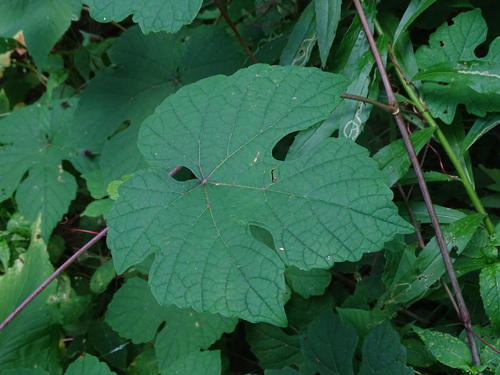
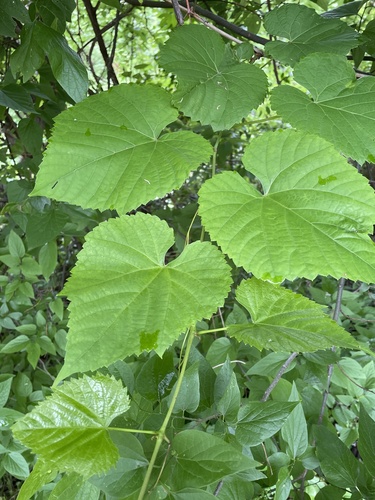
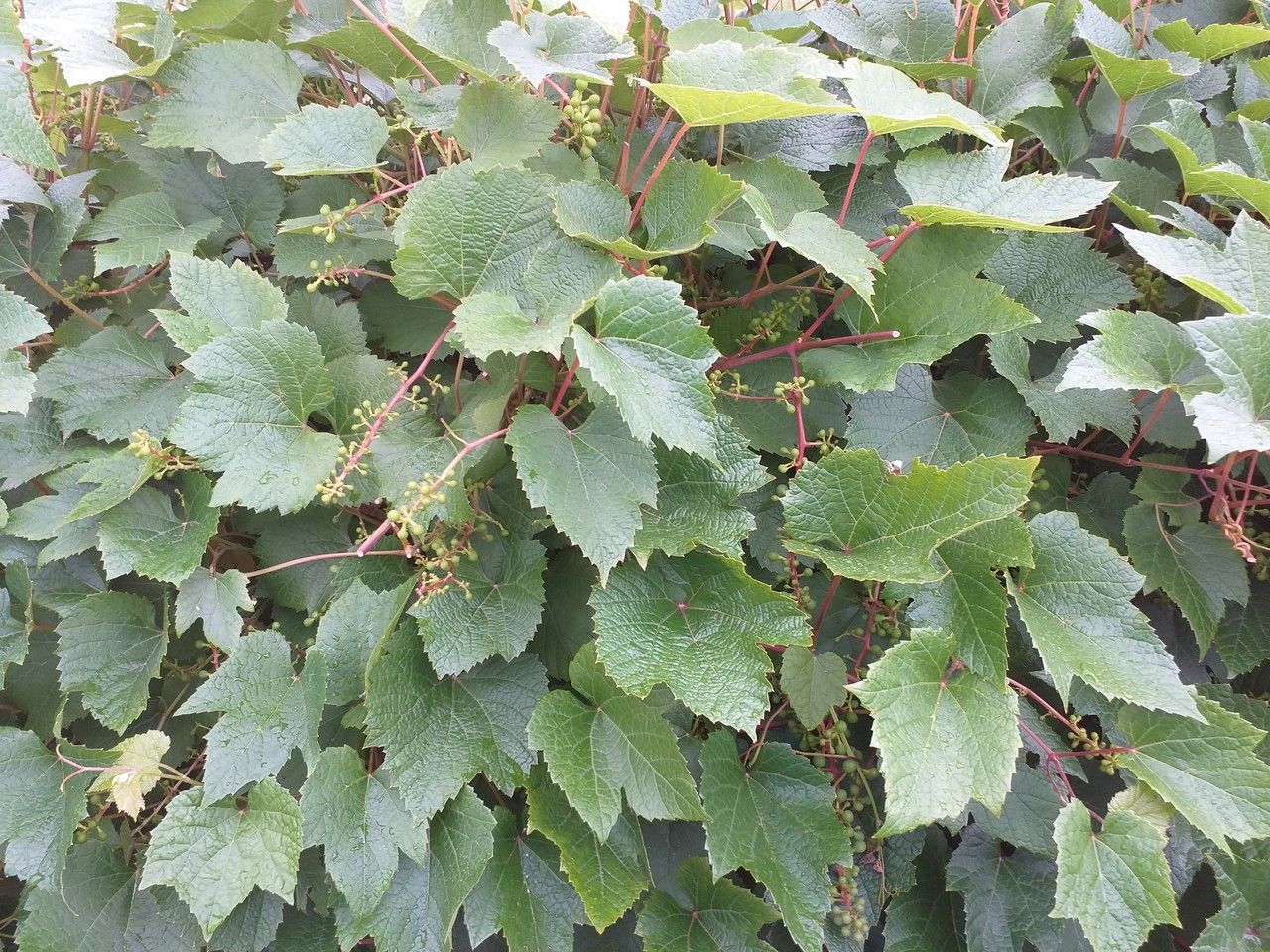
Vitis labrusca, commonly known as the fox grape, is a species of grapevine native to eastern North America. This deciduous vine can grow up to 15 meters in length and features large, deeply lobed, and toothed leaves. The fruit, a small, round berry, ranges in color from green to purple-black when ripe and is celebrated for its distinctive "foxy" or musky flavor and aroma.
Cultivated for centuries, Vitis labrusca is valued for its fruit, which can be enjoyed fresh or used to produce juice, jelly, wine, and other products. The vine is also popular as an ornamental plant, known for its attractive foliage and ability to climb structures such as trellises and arbors.
Beyond its culinary and ornamental uses, Vitis labrusca has notable medicinal properties. Its leaves have been used in traditional medicine for their anti-inflammatory effects, while extracts from the fruit have shown potential anti-cancer benefits.
Overall, Vitis labrusca is an important species both culturally and economically due to its diverse applications, ranging from culinary and medicinal to ornamental uses.
Common grape vine is highly resistant to disease and usually does not get sick. Regarding care, this plant is fairly low-maintenance. When grown outdoors it needs only minimal watering, and larger specimens typically do not require pruning. Smaller plants, however, should be pruned after they have bloomed. Common grape vinet is suitable for anyone with an outdoor area, such as a garden or deck, and does not need much gardening experience.
How to keep Vitis Labrusca.
Light
The common grape vine does best with a plentiful amount of sunlight every day, though it can also do well with moderate light exposure. Sunlight is essential for its development and benefits the plant's health and productivity. Its natural habitat is a sunny one, but not one with extreme light conditions. Too much or too little sunlight can impede growth and the plant's overall health.
Water
The fox grape thrives in the humid climate of Eastern North America, where it prefers consistently moist conditions. Although it can withstand short periods of drought, it truly flourishes with slightly moist soil. For optimal growth, water the plant weekly, but reduce the frequency during the colder months when it enters dormancy to match its natural growth cycle.
Temperature
Common grape vine is a temperate woody plant native to areas with average temperatures between 41 and 95 ℉ (5 to 35 ℃). It favors temperatures of 60 to 68 ℉ (16 to 20 ℃) during flowering and fruit set, and a bit cooler conditions in autumn to encourage sugar accumulation. In winter, the plant needs a dormant period with temperatures below 45 ℉ (7 ℃) to ensure proper bud break and healthy growth in the next season.
Fertilizer
The Common grape vine plant needs adequate nutrients to achieve the best fruit production. Apply fertilizer in early spring to promote new growth and flower development. Regular feeding keeps the plant healthy, encourages more flavorful fruit, and prevents nutrient deficiency problems like yellowing leaves and poor fruit yield.
Pruning
Pruning fox grape is crucial for promoting healthy growth, preventing disease, and controlling pests. The key techniques involve bud picking, flower thinning, and winter pruning. It's important to maintain strong branches and selectively trim shoots while applying protective agents to large wounds. Additionally, ensure you properly dispose of cuttings to prevent any potential infections.
Pot & Repot
Repot the common grape vine in early spring, choosing a container only slightly larger than the current one and with proper drainage. Use a well-draining potting mix and position the root ball at the same depth as before. Gently loosen any roots that are root-bound. After repotting, water thoroughly and place the pot in a warm, shady spot. Regular pruning will help keep the plant’s size down and encourage new growth.
Botanical profile.
- Plant Type
- Vine
- Life Cycle
- Perennial
- Genus
- Vitis
- Family
- Vitaceae
- Hardiness Zone
- 5-10
- Mature Height
- 32 m
- Mature Spread
- 3.96 m
- Leaf Color
- Green
- Leaf Type
- Deciduous
- Flower Color
- Green, Yellow
- Flower Size
- 2.54 cm
- Bloom Time
- Late spring, Early summer
- Planting Time
- Spring, Autumn
- Harvest Time
- Mid summer
- Native Area
- Austria, Czech Republic, Slovakia, Romania, Montenegro, Bulgaria, Croatia, Slovenia, Ukraine, Serbia, Russia, Germany, Italy, Switzerland, Hungary, France
Other names.
Reader questions.
How should I water my Fox grape plant in the best way?
To ensure excellent root development, it is recommended to place a garden hose at the base of the plant. It is important to avoid directly spraying the leaves. Keep in mind that outdoor plants exposed to direct sunlight may require more frequent watering. Bubblers can be used to moisten the roots of each plant, while soaker hoses are useful for covering the entire garden or bed when adding or removing plants, as they help push the roots deeper into the soil. After watering, make sure to drain any excess water and allow the soil to dry before watering again. To prevent diseases, water at ground level rather than spraying the leaves. On sunny days, it may be beneficial to spray the entire bush with water. Whether the plant is in a pot or in the ground, it is important to remember that Fox grape prefers deep watering as opposed to light sprinkling.
Why should I add fertilizer to my Fox grape?
Plants need constant nourishment for healthy growth, especially fast-growing varieties, as they tend to deplete the soil of nutrients. By regularly fertilizing Fox grape, we can provide it with the extra nutrients it needs to thrive and produce delicious fruit. If plants are not fertilized for a long time, they can encounter various issues. Nutrient deficiency often results in problems such as yellow leaves, reddish coloration, distorted shapes, withered tips, or even significant dieback. In some cases, these deficiencies can also affect the bark, leading to slow growth, poor shoot development, and a lack of fruit production.
What are the sunlight requirements for Fox grape?
Fox grape requires full sun, meaning it thrives best with above 6 hours of sunlight daily, but it can also tolerate partial sun, or about 3-6 hours of sunlight. It is essential to watch how sunlight moves through your garden and place your plants in spots that ensure a balance of light and shade, optimizing their growth and health. Originating from areas with ample sunlight, Fox grape's healthiest growth occurs under abundant sun exposure, though both shortage and oversupply of sunlight can hamper its growth and vitality.
What is the native region of Fox grape, and what are its temperature requirements?
Fox grape is native to North America and thrives in temperature ranges from 5 to 35°C (41 to 95°F). It prefers cooler temperatures during the early stages of growth but can withstand higher temperatures in the summer. The plant demonstrates strong cold resistance, requiring no special frost protection measures in winter unless temperatures are anticipated to drop below -25°C. In such cold conditions, protecting the plant with materials like non-woven fabric or cloth wrapped around the trunk and branches is advisable. Additionally, to prevent drought and ensure moisture throughout winter and early spring, it is recommended to water the plant abundantly before the first freeze in autumn, keeping the soil moist.
What do I do if I give Fox grape too much/too little water?
An overwatered Fox grape displays several signs of distress. Its leaves turn yellow, drop off, and wilt. Additionally, the plant may appear dull and unhealthy, with mushy stems. If these symptoms arise, it is advisable to adjust your watering schedule accordingly. Conversely, wilting can also signify under watering. In such cases, the leaves become crispy and dry. Conversely, overwatered leaves will appear soft and wilted. When the soil becomes dry and regular watering proves insufficient, it is necessary to provide a thorough watering. This will aid in the recovery of the Fox grape, although the plant may continue to exhibit dryness and yellowing leaves due to damaged roots for a few days. Once the plant returns to normal, the yellowing of the leaves will cease. When cultivating the Fox grape indoors, it is vital to check the moisture levels in the pot. Overwatering should be avoided, and the presence of black spots should be monitored. If black spots are present, allow the soil to dry out for a few days before watering again. Overwatering can lead to root rot, so if discolored and slimy roots are observed, it may be necessary to transfer the plant to a different pot. Preventing root rot should be prioritized, and the soil should not be allowed to become excessively soggy. When planting the Fox grape outdoors, it is recommended to dig a little deeper. If, upon checking with your fingers, the soil feels too dry, it may indicate under watering. Adequate watering is crucial for the plant's recovery.
When should I fertilize my Fox grape for best results?
To get the most benefits, it's recommended to fertilize your Fox grape in early spring, before the buds start to appear. During this time, the plant is utilizing the stored reserves from winter to support new growth. Since a good amount of energy is needed for the development of blooms, it's ideal to fertilize about 2 to 4 weeks before the expected blooming period. This allows enough time for the nutrients to penetrate the soil and be absorbed by the plant. You can continue fertilizing throughout the spring, but it's not advisable to fertilize during autumn. Fertilizing late in the season can lead to excessive late foliage growth, which can make the leaves more susceptible to damage during winter.
How does artificial lighting support Fox grape growth indoors?
Indoor Fox grape plants require adequate lighting for optimal growth. When natural sunlight is insufficient, artificial lights serve as a crucial solution, especially during winter or in less sunny spaces. LED lights are recommended for their ability to provide specific wavelengths needed by the plants. For full sun plants, 30-50W/sq ft of artificial light is needed, partial sun plants require 20-30W/sq ft, and full shade plants need 10-20W/sq ft. The light source should be placed 12-36 inches above the plant to mimic natural sunlight, and the duration should mimic natural daylight hours, with most plants needing 8-12 hours of light per day.
How does Fox grape react to low temperature conditions?
Fox grape is cold-tolerant, ideally kept in temperatures above 5°C, and should remain above -20°C during winter. If temperatures fall below -25°C, the plant may not show immediate signs of distress during winter; however, in spring, the branches might become brittle and dry, possibly resulting in no new shoots emerging. To mitigate this, any dead branches that have failed to produce new leaves by spring should be pruned away.
How often do I need to water my Fox grape plant?
The Fox grape prefers deep, infrequent watering. It is best to soak them in a gallon of water at a time, especially if they are in pots. Potted plants have limited water storage and the soil dries out quickly. In cold regions, water every 3 to 5 days. Water in the morning when the soil is dry, both indoors and outdoors. Check the soil moisture by feeling the top 2-3 inches. If it is dry, give the plant a thorough watering. On hot days, check the soil moisture daily as it can dry out rapidly. If you have a garden, irrigation is necessary. In hot climates, water once a week. Only water if the top 2-3 inches of soil are dry. Consider the amount of rainfall and avoid overwatering to prevent root rot. Fox grape grows mainly in spring and fall. Use 3 to 4 inches of mulch outdoors to conserve water. Sandy soil drains faster, so water more frequently. Clay soil drains slower, so it requires less frequent watering. Keep track of watering dates and be aware that drooping leaves may signal a day late for watering.
When is the best time to not fertilize my Fox grape?
Here are some tips to follow when fertilizing Fox grape: - In the first year of growth, avoid fertilizing altogether. Only provide fertilizer if it is absolutely necessary. - If you pruned 20% or more of the plant the previous year, refrain from fertilizing. - Do not fertilize plants that are diseased or damaged, as it can do more harm than good. Address the root cause of the issue before fertilizing. - Avoid fertilizing after the peak of summer, as it can lead to excessive growth just before winter. - During hot and dry times of the year, do not fertilize Fox grape. Dry soil is not as effective in delivering fertilizer, and stimulating growth during this time may require additional water that may not be available. - It is best to fertilize earlier in the season when temperatures are cooler. - Be cautious of applying fertilizer near other plants or lawns, as Fox grape can absorb it and unintentionally receive a double dose.
What are the symptoms of insufficient sunlight for Fox grape?
Fox grape, when grown in conditions with suboptimal lighting, might exhibit various symptoms indicating light deficiency. These include smaller new leaves compared to mature ones, leggy or sparse growth due to longer spaces between leaves or stems, faster leaf drop as a survival mechanism in low light, slower or no new growth due to the plant entering survival mode, lighter-colored new leaves indicating a lack of chlorophyll, chlorosis or yellowing of leaves, sunscald marked by pale or necrotic areas on leaves or stems, leaf curling as a defense against excessive sunlight, wilting due to increased water loss, and leaf scorching characterized by brown, dry edges on leaves from excessive sunlight.
What impact does high temperature have on Fox grape, and how can it be managed?
During summer, maintaining the Fox grape's temperature below 35°C is crucial. Temperatures above 38°C may cause the leaves to lighten in color and tips to dry and wither, increasing susceptibility to sunburn. Management of high-temperature stress includes trimming sunburned and dried parts of the plant, relocating the plant to a shaded area during the midday and afternoon sun, or using a shade cloth to protect it. Additionally, watering the plant in the morning and evening helps keep the soil moist and supports plant health under high temperature.