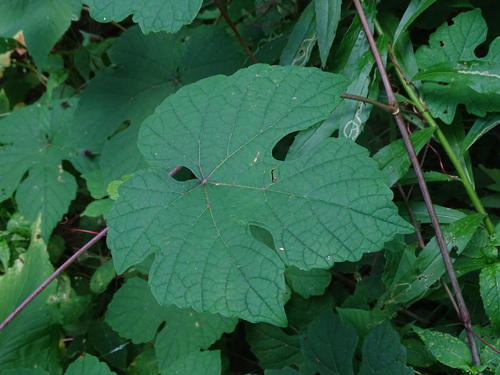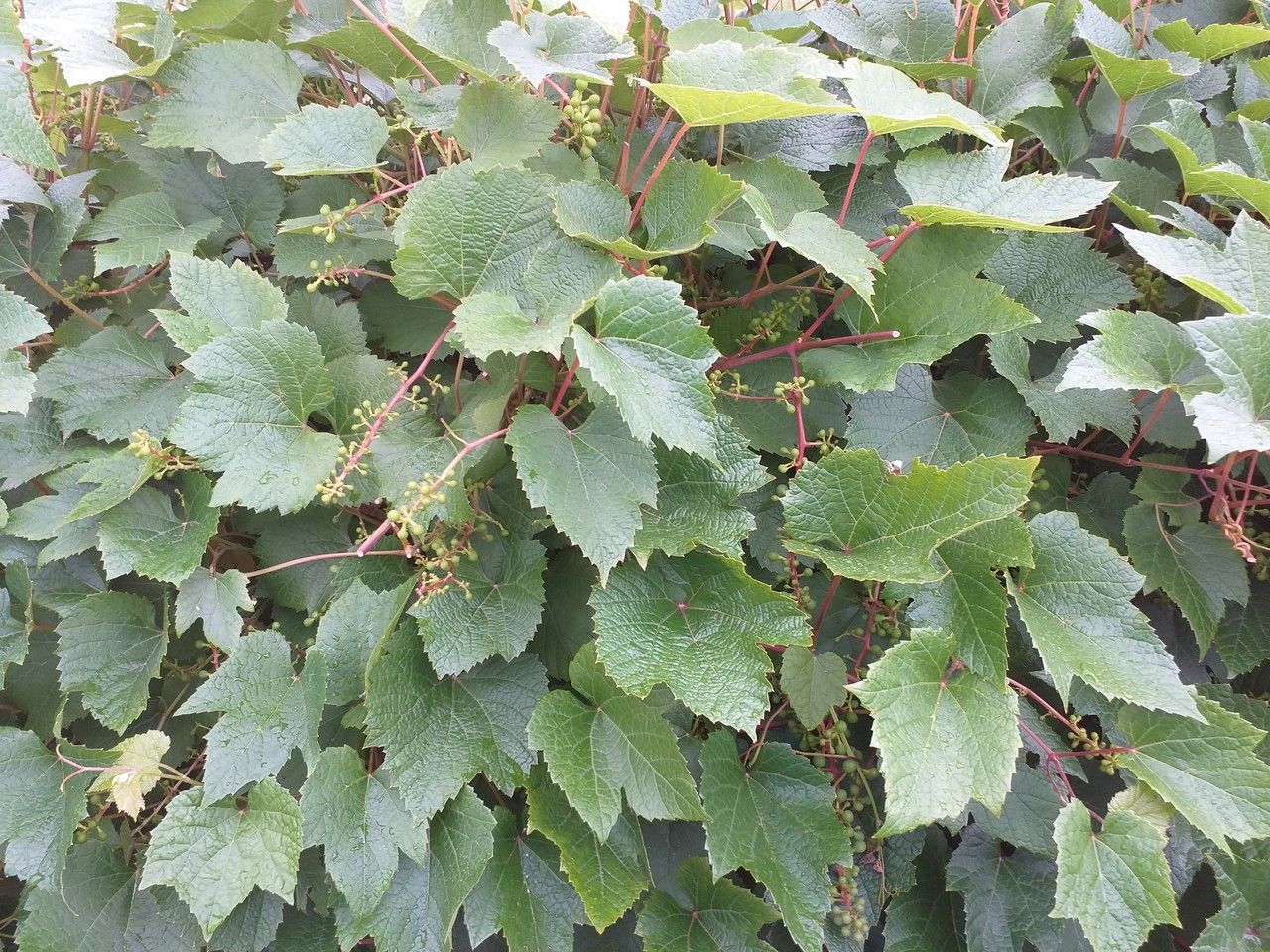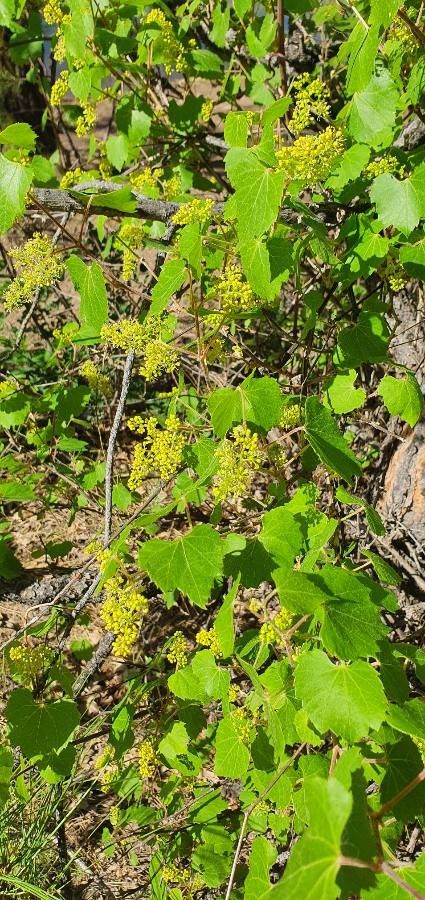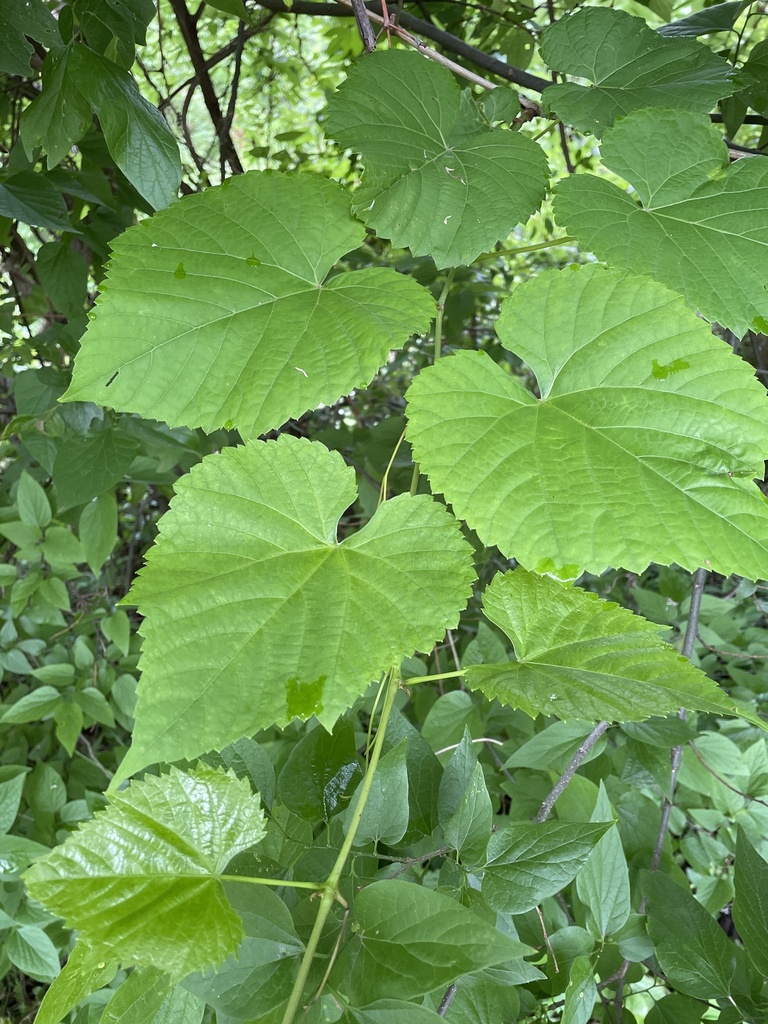
Vitis vulpina (with common names frost grape, winter grape, fox grape, and wild grape.) is a North American species of herbaceous perennial vines in the grape family. It is widespread across most of the eastern and central United States as well as the Canadian Province of Ontario.The genus name Vitis comes from the Latin word for "vine" and the species name vulpina comes from the Latin word for "fox-like" or belonging to a fox. It is believed that foxes were attracted to this type of grapevine, and Linnaeus used the term vulpina to differentiate these smaller wild grapes from the other American known grapes. The more common name, frost grape, refers to the fact that this otherwise acidic/tart-tasting grape becomes more desirable and sweet once it is exposed to a frost. Vitis vulpina is a high-climbing woody vine with a thick trunk and red tendrils. The grapes and the vine itself have many uses ranging from herbal remedies to edible delicacies.
Frost grape is resistant to disease and generally not susceptible to illnesses. Regarding care, the plant is fairly low-maintenance. When grown outdoors it needs little watering, and larger specimens typically do not require pruning. Smaller plants, however, should be trimmed after they have finished blooming. Frost grapet is suitable for anyone with outdoor space, such as a garden or deck, and does not demand extensive care experience.
How to keep Vitis Vulpina.
Light
Frost grape grows best in full sun, which supports optimal development and vigor. Still, it is hardy enough to tolerate conditions with a modest reduction in sunlight. When it does not receive enough light, the plant can show reduced growth and lower-quality fruit. Its native environment is characterized by plentiful sun exposure.
Water
The frost grape originates from moist woodlands and thrives in environments that remain consistently wet. While it prefers to be watered weekly, it can withstand short periods of drought. Typically grown outdoors, the frost grape is quite resilient and can adapt to various climates, adjusting its water needs based on the growing season.
Humidity
This plant will thrive in moderate humidity, which is probably the level in your home. However, misting it a few times a week can be very beneficial. Make sure the room has good ventilation.
Temperature
Native to North America, frost grape grows in temperate areas with temperatures ranging from 5 to 35 ℃ (41 to 95 ℉). In warmer months it prefers temperatures around 25 to 30 ℃ (77 to 86 ℉) and requires sufficient moisture to prevent wilting. In cooler months, temperatures near 0 to 10 ℃ (32 to 50 ℉) promote leaf color changes and support dormancy.
Fertilizer
The Frost grape plant needs adequate nutrients to achieve optimal fruit production. Apply fertilizer in early spring to encourage new growth and bloom development. Regular feeding keeps the plant healthy, results in more delicious fruit, and prevents nutrient deficiency problems like yellow leaves and poor fruit production.
Pruning
Pruning frost grapes is essential for promoting healthy growth and preventing diseases. Key techniques include bud picking, flower thinning, and winter pruning. It's important to maintain strong buds on the branches, remove excess flower spikes, and cut back axillary shoots in the early years. In winter, prune to encourage the development of robust fruiting branches, and apply protective agents to larger wounds to aid in healing.
Pot & Repot
Repot the Frost grape in early spring, picking a container only slightly larger than the current one with good drainage. Use a well-draining potting mix and position the root ball at the same level it was before. Gently loosen any root-bound roots. After repotting, water thoroughly and keep the plant in a warm, shaded place. Regular pruning will help control its size and encourage new growth.
Botanical profile.
- Plant Type
- Vine
- Life Cycle
- Perennial
- Hardiness Zone
- 5-10
- Mature Height
- 14.94 m to 20.12 m
- Mature Spread
- 3.05 m to 6.1 m
- Leaf Color
- Green
- Leaf Type
- Deciduous
- Flower Color
- Green
- Flower Size
- 0.25 cm
- Bloom Time
- Late spring, Early summer
- Planting Time
- Spring
- Harvest Time
- Mid summer
Other names.
Reader questions.
How should I water my Frost grape?
Here are some tips for watering your plants effectively: - Place a garden hose at the base of the plant to facilitate root development. Avoid spraying the leaves directly, as this can be detrimental. - If your plants are outdoors and exposed to direct sunlight, the leaves may need more water. - You can use bubblers to provide moisture directly to the roots of each plant. - Soaker hoses are another option, especially when adding or removing plants. They can cover the entire garden or bed, ensuring that the roots receive ample water. - After watering, make sure to drain any excess water and allow the soil to dry before watering again. - When watering, aim for ground level to prevent the spread of diseases. - On a sunny day, it may be beneficial to spray the entire bush with water. - Whether your plants are potted or in the ground, remember that Frost grapes prefer deep watering rather than light sprinkling.
Why should I add fertilizer to my Frost grape plant?
Regular fertilization is necessary to supply nutrients to fast-growing plants like Frost grape. This not only helps them stay healthy but also promotes the growth of more delicious fruit. If plants are not fertilized for a long time, they may face various problems. Nutrient deficiency can result in issues such as yellow leaves, reddish coloration, shape deformities, withered tips, or dieback in large areas of the plant. It can also lead to bark disorders, slow growth, poor shoot development, and a lack of fruit production.
What are the sun requirements for a frost grape?
Frost grape requires full sun, which means it needs above 6 hours of sunlight daily to thrive optimally. It can also tolerate partial sun, about 3-6 hours of sunlight. It's important to watch how sunlight moves through your garden to choose spots that provide the perfect balance of light and shade for your plants, ensuring their happiness and health.
What is the native habitat and ideal temperature range for frost grape?
Frost grape, botanically known as Vitis vulpina, is native to North America and thrives in temperate regions. It prefers temperature ranges between 5 to 35°C (41 to 95°F), with an optimal growing range during warmer seasons of 25 to 30°C (77 to 86°F). Adequate moisture is crucial to prevent wilting. In cooler seasons, temperatures from 0 to 10°C (32 to 50°F) are beneficial for dormancy and encourage leaf color changes. Frost grape has a strong resistance to cold and usually does not require special frost protection measures, but it's important to provide cold protection when winter temperatures are expected to drop below -25°C by wrapping the trunk and branches with insulating materials.
What do I do if I give Frost grape plants too much or too little water?
An overwatered Frost grape can display several symptoms, including yellowing, dropping off, and wilting leaves. The plant may also appear dull and unhealthy, with mushy stems. If you notice these signs, it is recommended to adjust your watering schedule accordingly. On the other hand, wilting can also be a sign of under watering, in which case the leaves may become crispy and dry. To determine if watering is needed, check the soil for dryness. If the soil is dry, a full watering is necessary. While this will help the grape recover, the plant may still exhibit dryness and yellowing leaves for a few days due to root damage. Once the plant returns to normal, the yellowing of leaves will cease. When growing Frost grapes indoors, always check the moisture levels in the pot. Avoid overwatering and look out for black spots, as this could indicate the need for the soil to dry out by withholding water for a few days. Overwatering can lead to root rot, so if you observe discolored and slimy roots, consider transferring the plant to a different pot. It is crucial to prevent root rot by avoiding excessively soggy soil. When planting Frost grapes outdoors, ensure that the soil is not too dry. If the soil feels dry when checked with your fingers, it may indicate that the plant is being underwatered. Proper watering is essential for aiding in the plant's recovery.
When should I fertilize my Frost grape for best results?
To optimize growth and bloom development, it is recommended to fertilize Frost grape in early spring, before the buds appear. During this time, the plant utilizes its stored winter reserves to produce new growth. To ensure adequate nutrient uptake, it is advised to fertilize about 2 to 4 weeks before the expected bloom period. This allows enough time for the nutrients to penetrate the soil and be absorbed by the plant. While you can continue to fertilize during spring, it is advisable to avoid fertilizing in autumn as this may lead to excessive late-season foliage growth, making the leaves vulnerable to winter damage.
How essential is sun exposure for frost grape's growth and health?
Sun exposure is critical for the growth and health of frost grape, as it ideally thrives under full exposure to solar rays. This promotes optimal growth and fruit quality. While the plant has a resilience to withstand slightly reduced sun intensity, inadequate light can result in stunted growth and poor fruit quality. Frost grape's original habitat is characterized by abundant solar exposure, highlighting the importance of sunlight for this plant.
How should frost grape be cared for in extreme temperatures?
Frost grape is remarkably cold-tolerant, best thriving above 5°C and needing protection when temperatures drop below -20°C. Exposure to temperatures below -25°C may not show immediate damage, but can lead to brittle and dry branches in spring as well as a lack of new shoots. In such cases, it is advised to prune away the dead branches to encourage new growth. During high temperatures, specifically above 35°C and particularly when exceeding 41°C, the plant's leaves may lighten in color and become dry, indicating susceptibility to sunburn. To mitigate this, trim the sunburned parts, provide shade during peak sun hours, and ensure the soil stays moist with regular watering in the morning and evening.
How much water does my Frost grape need?
The Frost grape requires deep and infrequent watering, especially when planted in pots. Pots have limited water storage and the soil dries out faster, so it's important to water them every 3 to 5 days in cold regions. Water the plant early in the morning when the soil is dry, either indoors or outdoors. Check the soil moisture by touching it - if the top 2-3 inches are dry, it's time to water thoroughly. On hot days, check the moisture daily as the pot soil can dry out quickly. If you have a garden, you'll also need to irrigate the soil. In hot climates, watering once a week is recommended. Only water when you notice about 2-3 inches of soil becoming too dry, and consider the amount of rainfall before adding more water to prevent root rot. Frost grapes typically grow in spring and fall. Outdoor plants may benefit from adding 3-4 inches deep mulch for water conservation. Sandy soil requires more frequent watering, while clay soil can be watered less frequently to avoid root rot. You can mark the date on the calendar when you water and watch for drooping leaves, which may indicate the need for watering.
When is it not a good idea to fertilize my Frost grape?
When growing Frost grape in the first year, avoid fertilizing altogether. If it's not necessary, be cautious about providing fertilizer. Similarly, if you pruned 20% or more of the plant the previous year, refrain from fertilizing. Do not fertilize plants that are diseased or damaged, as this can cause more harm. Instead of relying on fertilizer as a cure-all, address the root cause of any issues before considering feeding the plant again. Avoid fertilizing Frost grape after the peak of summer, as excessive growth just before winter can occur. Additionally, during hot and dry periods, refrain from fertilizing since dry soil does not effectively deliver fertilizer as moist soil does. Fertilizing at this time can also stimulate growth that requires additional water, which may not be available. It is best to apply fertilizer earlier in the season when temperatures are cooler. Lastly, bear in mind that Frost grape can absorb fertilizer from nearby plants. Take care not to inadvertently over-fertilize neighboring plants or lawns.
What solutions are there for indoor frost grape plants with insufficient natural sunlight?
For indoor frost grape plants with insufficient natural sunlight, artificial lighting is a vital solution. It's important to choose the right type of artificial light, such as LED lights, which can provide specific wavelengths needed by plants. Full sun plants require 30-50W/sq ft, partial sun plants need 20-30W/sq ft, and full shade plants need 10-20W/sq ft of artificial light. The light source should be placed 12-36 inches above the plant to mimic natural sunlight, and most plants need 8-12 hours of light per day.
How much water should I give my Frost grape?
The Frost grape typically needs about a gallon of water on a regular schedule. For potted plants, water them deeply until you see water dripping from the bottom of the pot, then wait for the soil to dry before watering again. Use a water calculator or moisture meter to determine how much water you've given your plant in a week. During the flowering period, provide plenty of water, but allow the moisture to evaporate afterward to prevent root rot. If the Frost grape is planted outdoors and receives adequate rainfall, it may not need extra watering. However, when the Frost grape is young or newly planted, ensure it receives 1-2 inches of rain per week. As the Frost grape grows, it can rely solely on rainfall. Only when the weather is extremely hot or there hasn't been any rainfall for 2-3 weeks should you consider giving the Frost grape a thorough watering during cooler parts of the day to avoid heat damage. Additional watering will be necessary during prolonged dry spells.