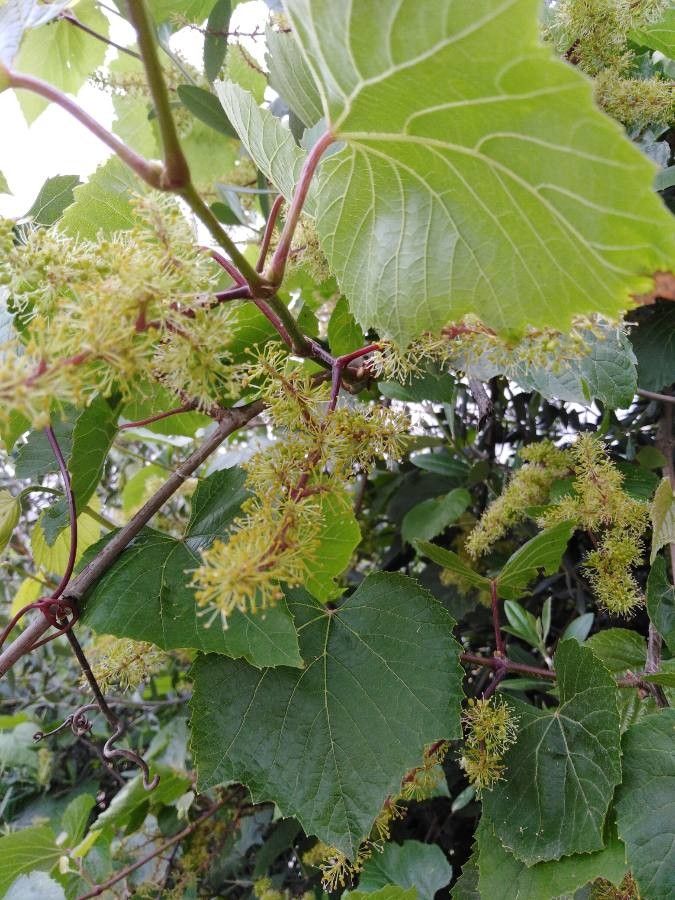
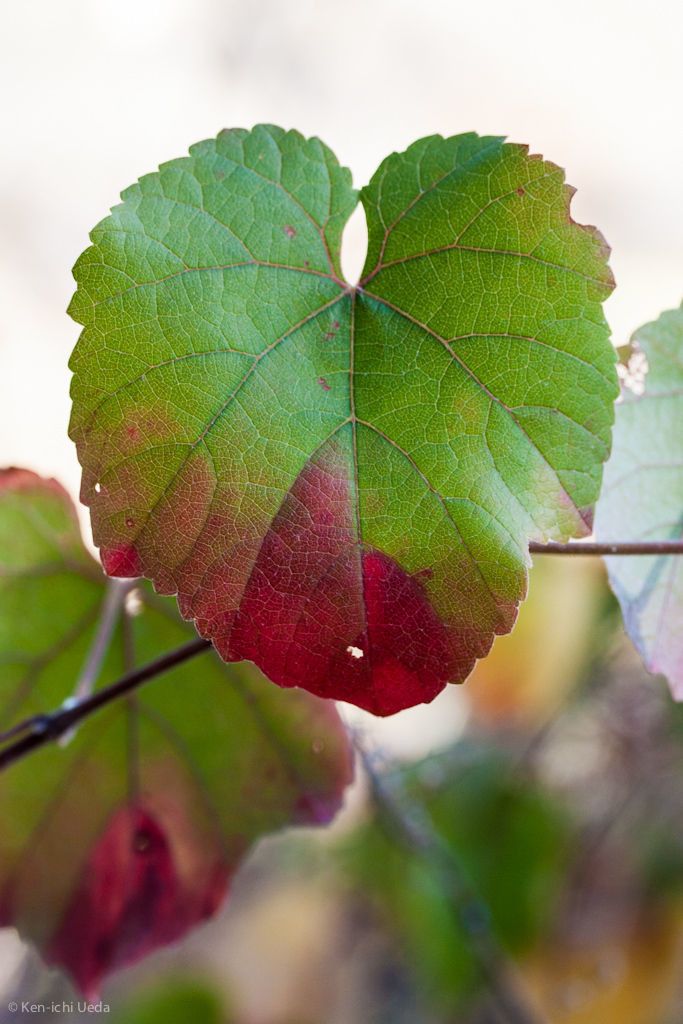
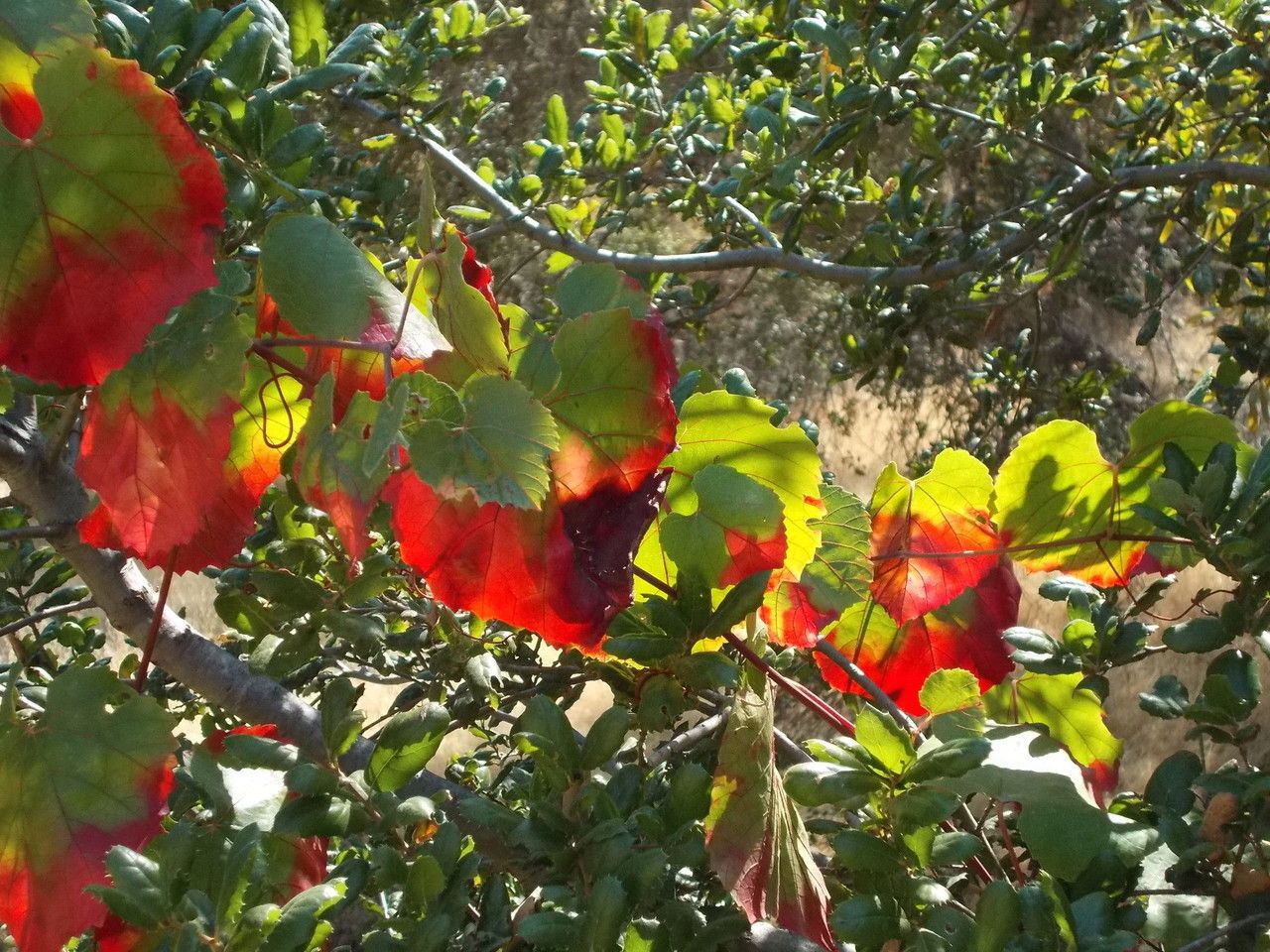
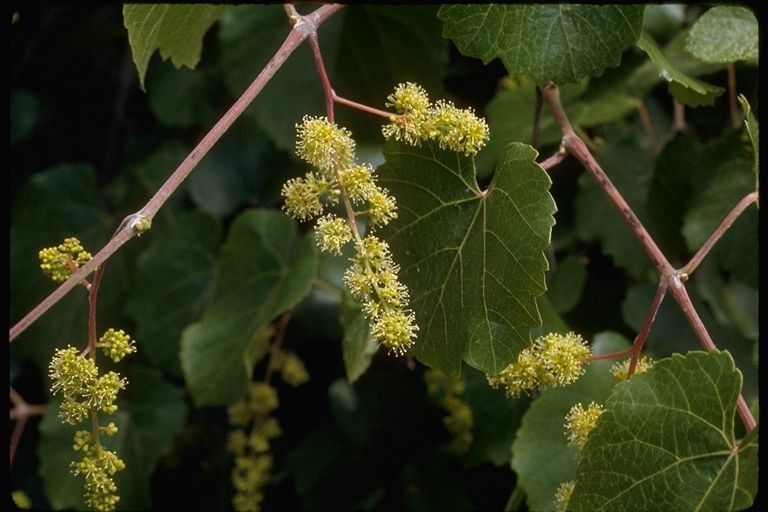
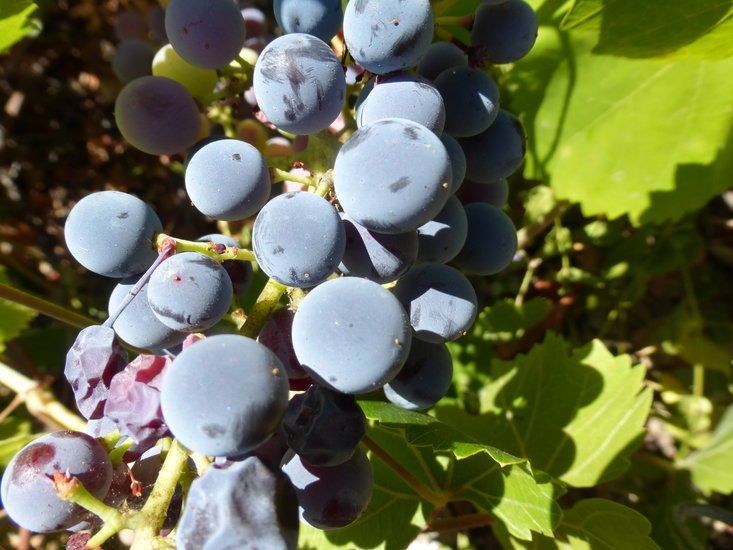
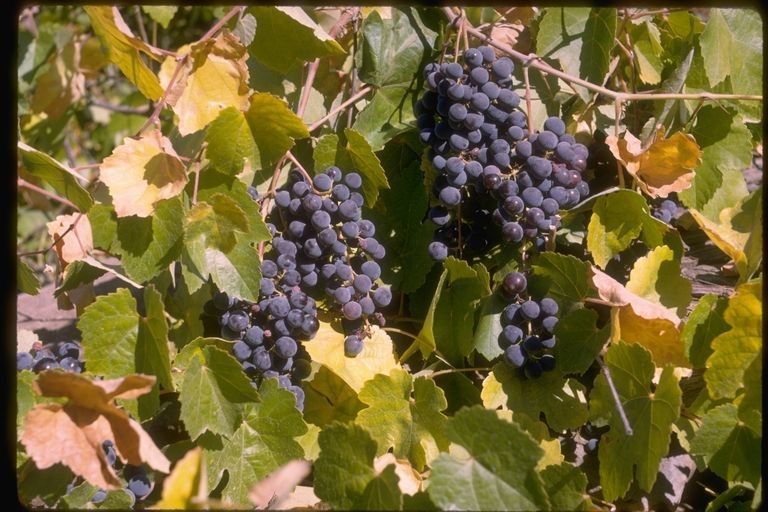
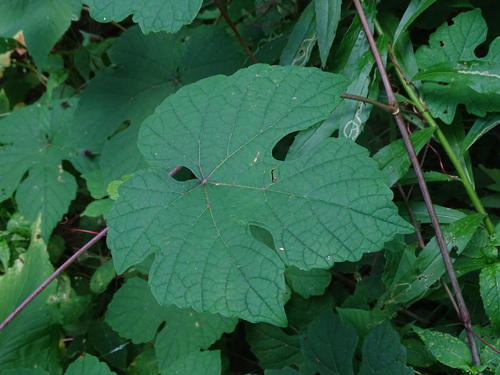
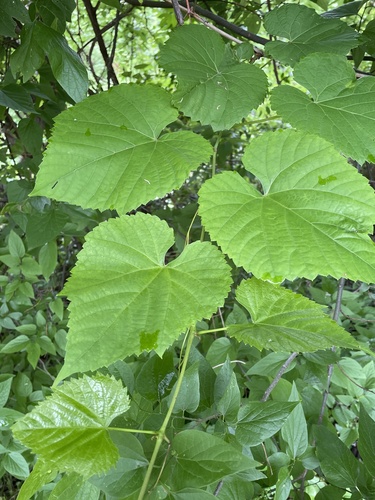
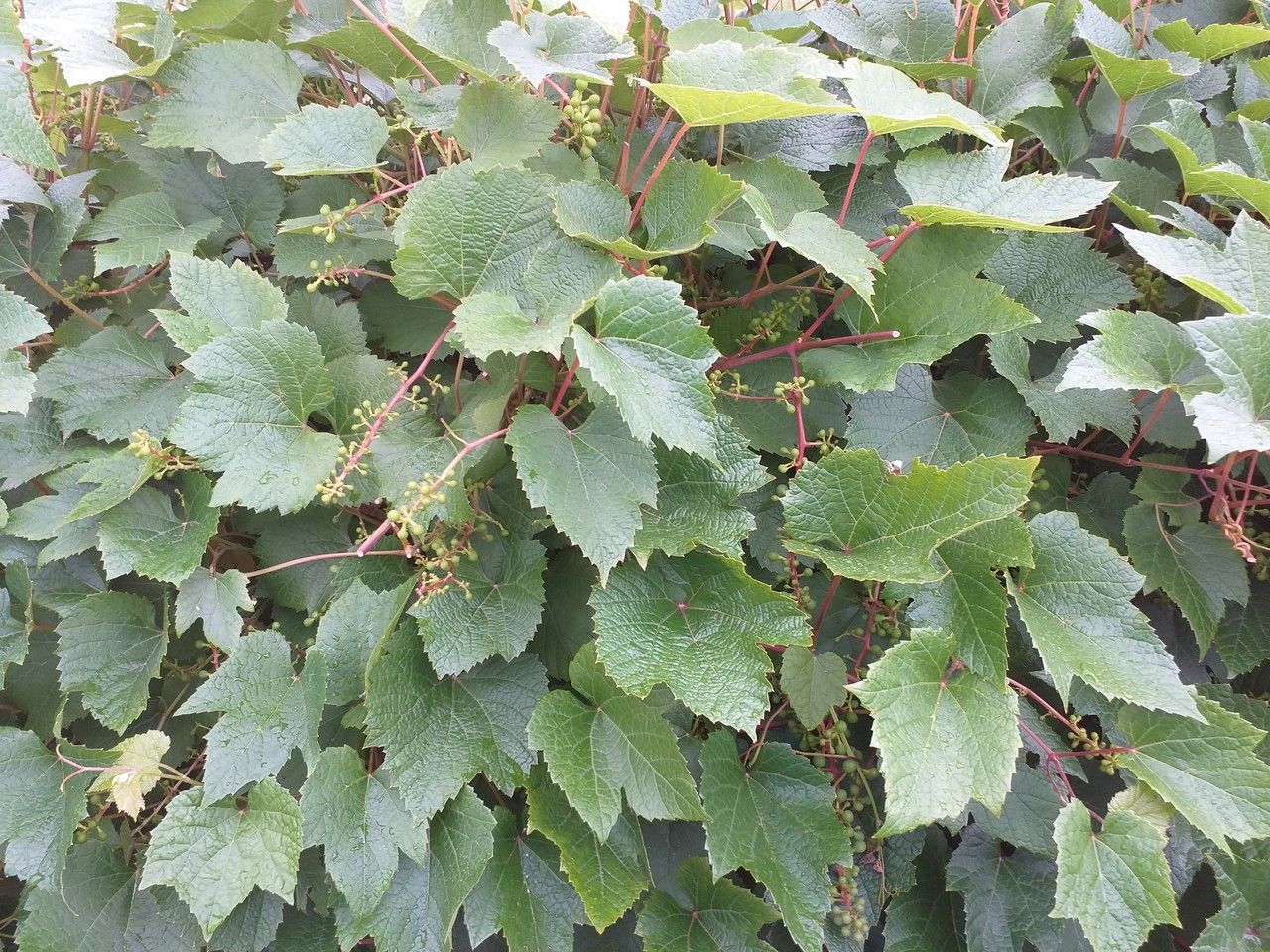
Vitis californica, commonly known as the California wild grape, is a grapevine species native to California and southwestern Oregon. This deciduous vine can grow up to 50 feet in length and features large, lobed leaves that turn yellow in the fall. The plant produces small clusters of dark purple grapes that are edible but not commonly used commercially due to their small size and tart flavor.
Vitis californica is an important plant for wildlife, providing food and habitat for birds, mammals, and insects. It also holds cultural significance for Native American tribes, who have used the plant for food, medicine, basket weaving materials, and fabric dye.
While the vine can be grown in gardens or landscapes, it requires support structures such as trellises or arbors due to its climbing nature. Vitis californica is a hardy plant that can tolerate drought conditions once established but prefers moist soil with good drainage.
California wild grape is resistant to disease and is generally not likely to get sick. As for care, this plant is fairly low maintenance. Planted outdoors it needs only small amounts of water, and larger specimens usually do not require pruning, while smaller ones should be trimmed after they finish blooming. California wild grape is suitable for anyone with an outdoor area, such as a garden or deck, and does not call for a lot of gardening experience.
How to keep Vitis Californica.
Light
Suited to habitats with abundant sunlight, california wild grape grows best in locations that receive plenty of light throughout the day. It can also tolerate settings where the sun’s rays are weaker or filtered. Excessive or insufficient sun can damage the plant, causing poor growth or diseased conditions.
Water
The California wild grape, native to California, thrives under a moderate watering regime. It benefits from weekly watering but can withstand brief dry spells. Its water needs decrease during the rainy season, as it adapts to natural rainfall and requires less supplemental irrigation.
Temperature
The California wild grape thrives in temperate regions and prefers temperatures between 15 and 35 ℃ (59 to 95 ℉). In summer, the plant can tolerate higher temperatures if given ample water. During winter, it becomes dormant and can endure colder conditions provided the soil is well-drained.
Fertilizer
The California wild grape plant needs adequate nutrients to achieve optimal fruit production. Fertilize in early spring to promote new growth and bloom development. Regular feeding helps the plant remain healthy, produce more delicious fruit, and prevents nutrient deficiency problems like yellow leaves and poor fruit production.
Pruning
Pruning California wild grape is crucial for healthy growth and disease prevention. Important practices involve selecting specific buds, thinning flowers before they bloom, and carefully pruning during the winter. After two years, concentrate on pruning strong branches, making sure to leave 2-3 buds. It's important to apply protective treatments to large cuts and to dispose of the clippings properly.
Pot & Repot
Repot California wild grape in early spring into a pot only slightly larger than the current one with adequate drainage. Use a well-draining potting mix and position the root ball at the same level as before. Gently loosen any roots that are root-bound. After repotting, water generously and set the plant in a warm, shady spot. Prune regularly to control size and encourage new growth.
Botanical profile.
- Plant Type
- Vine
- Life Cycle
- Perennial
- Genus
- Vitis
- Family
- Vitaceae
- Hardiness Zone
- 7-10
- Mature Height
- 9.14 m
- Mature Spread
- 3.05 m
- Leaf Color
- Green, Yellow, Orange
- Leaf Type
- Deciduous
- Flower Color
- Green
- Flower Size
- 0.25 cm to 0.51 cm
- Bloom Time
- Early summer, Mid summer
- Planting Time
- Spring, Autumn
- Harvest Time
- Mid summer
Other names.
Reader questions.
What's the best way to water my California wild grape?
To ensure excellent root development, place a garden hose at the base of the plant instead of directly spraying the leaves. If the plant is outdoors and getting direct sunlight, the leaves may require more watering. Use bubblers or soaker hoses to moisten the roots if necessary. When adding or removing plants, use soaker hoses to deeply water the entire garden or bed. After watering, drain any excess water and allow the soil to dry before watering again. Water at ground level to prevent diseases. On sunny days, it is beneficial to spray the entire bush with water. Whether the grape plant is in a pot or in the ground, remember that deep watering is preferred over light sprinkling.
Why should I put fertilizer on my California wild grape?
Regular fertilization is important for the growth of plants, especially fast-growing types like the California wild grape. Without sufficient nutrients, plants can face a range of problems such as yellow leaves, reddish color, shape deformities, withered tips, or dieback. Bark disorders, slow growth, poor shoot development, and a lack of fruit production can also be caused by nutrient deficiency. Therefore, providing the California wild grape with extra nutrients through fertilization not only helps keep it healthy, but also promotes the growth of more delicious fruit.
What are the sunlight requirements for California wild grape?
California wild grape thrives best in areas with abundant sunlight throughout the day, requiring more than 6 hours of sunlight for full sun conditions and about 3-6 hours for partial sun conditions. It's crucial to monitor the movement of sunlight through your garden to ensure that your plants receive the right balance of light and shade, fostering optimal growth and health.
What are the ideal temperature conditions for California wild grape?
California wild grape, or Vitis californica, grows best in temperate climates with temperatures ranging from 15 to 35°C (59 to 95°F). During the summer months, the plant can handle higher temperatures as long as it receives enough water. In winter, it enters a dormant state, during which it can tolerate colder temperatures, provided the soil is well-drained. The California wild grape has a strong resistance to cold, and special frost protection measures are typically unnecessary. However, if temperatures are expected to drop below -15°C, it's important to protect the plant by wrapping its trunk and branches with non-woven fabric or cloth, and to water it abundantly before the first freeze in autumn to keep the soil moist and prevent winter and early spring drought.
What should I do if I give too much or too little water to a California wild grape?
An overwatered California wild grape may exhibit yellow, wilted leaves that eventually drop off. The plant may also appear lackluster and unhealthy, showing signs of mushy stems. When these symptoms arise, it is advisable to adjust your watering schedule when feasible. However, wilting can also indicate under watering. In such cases, the leaves may become crispy and dry, while overwatered leaves appear soft and wilted. If the soil is dry and watering alone is insufficient, provide a thorough watering in a timely manner. Sufficient water will aid in the recovery of the California wild grape, but the plant may still exhibit dryness and yellowing leaves due to the damaged root system. Once the plant regains its health, the yellowing of the leaves will cease. When keeping the California wild grape indoors, always check the moisture levels in the pot and refrain from overwatering. Look for signs of black spots, and if present, allow the soil to dry out by withholding water for a few days. Overwatering can promote root rot, so it is advisable to transfer the plant to a different pot, especially if discolored and slimy roots are observed. As much as possible, avoid root rot and prevent the soil from becoming excessively soggy. When planting the California wild grape outdoors, ensure adequate watering by checking the soil's moisture level with your fingers. If the soil is excessively dry, it may indicate under watering, thus necessitating proper hydration to aid in the plant's recovery.
When should I fertilize my California wild grape for the best results?
It is recommended to fertilize California wild grape in early spring before the buds appear. During this time, the plant uses its stored reserves from winter to support new growth. Fertilizing about 2 to 4 weeks before blooming allows enough time for the nutrients to be absorbed and distributed throughout the plant. While you can continue to fertilize in spring, it is not advised to fertilize in autumn as excessive foliage may develop, making the leaves vulnerable to winter damage.
How does artificial lighting support the growth of California wild grape indoors?
When natural sunlight is insufficient, especially during winter or in less sunny spaces, artificial lighting can provide a significant boost to the growth of indoor California wild grape plants. LED lights are recommended due to their ability to be customized to specific wavelengths needed by plants. Full sun plants require 30-50W/sq ft, partial sun plants need 20-30W/sq ft, and full shade plants should have 10-20W/sq ft of artificial light. The light source should be placed 12-36 inches above the plant and kept on for 8-12 hours per day to mimic natural sunlight conditions.
How does low temperature affect California wild grape, and what solutions are recommended?
California wild grape is quite cold-tolerant, thriving best when temperatures stay above 15°C and typically requiring temperatures to remain above -10°C during winter. However, when temperatures fall below -15°C, the plant may not show immediate damage but its branches can become brittle and dry by spring, failing to produce new shoots. The recommended solution for dealing with such damage is to prune away any dead branches that have not produced new leaves come spring.
How frequently do I need to water my California wild grape?
The California wild grape prefers deep and infrequent watering. If planted in pots, be sure to soak them in a gallon of water each time because the limited water storage in pots causes the soil to dry out quickly. In colder regions, water the grape plant every 3 to 5 days, preferably in the morning when the soil is dry. You can check if watering is needed by examining the soil. If the top 2-3 inches of soil is dry, give the plant a full watering. On hot days, monitor the moisture daily as the heat can rapidly dry out the soil in pots. If you have a garden, remember to irrigate the soil as well. In hot climates, watering once a week is sufficient. Only water when you notice that about 2 to 3 inches of soil has become too dry, without adding to it unnecessarily to prevent root rot. If there is ample rainfall, additional watering may not be necessary. California wild grape typically thrives in spring and fall, so when planted outdoors, add a layer of mulch about 3 to 4 inches deep to retain more water. In sandy soil, water the plants more frequently as it tends to drain faster. However, with clay soil, you can water less frequently, allowing 2-3 days for the plant to dry out and prevent root rot. To keep track of your watering schedule, mark the dates on a calendar, and pay attention to any drooping leaves, which may indicate that you need to water sooner.
When is the best time to not use fertilizer on my California wild grape?
Here are some tips for fertilizing California wild grape plants: 1. In the first year of growth, it's best to avoid fertilizing altogether. If fertilizer is necessary, be cautious about providing it. 2. If you pruned 20% or more of the plant the previous year, do not fertilize. 3. Avoid fertilizing diseased or damaged plants, as this can cause more harm than good. Instead, address the root cause of the issue first. 4. Do not fertilize after the peak of summer, as this can lead to excessive growth just before winter. 5. During hot and dry times of the year, refrain from fertilizing California wild grape. Dry soil does not effectively deliver fertilizer, and stimulating growth can require more water that may not be available. 6. It's best to apply fertilizer earlier in the season when temperatures are cooler. 7. Keep in mind that nearby plants or lawns can absorb fertilizer that has been applied, so be cautious to avoid inadvertently giving plants a double-dose of fertilizer.
What signs indicate insufficient sunlight for California wild grape?
Signs of light deficiency in California wild grape include smaller new leaves compared to older ones, leggy or sparse growth, faster leaf drop, slower or no new growth, pale or irregularly colored new leaves, chlorosis (yellowing leaves), sunscald on leaves or stems, leaf curling, wilting, and leaf scorching. These symptoms suggest the plant is struggling with inadequate light exposure and may be in survival mode.
What effects do high temperatures have on California wild grape, and how can these issues be mitigated?
During the summer, California wild grape should ideally be kept in conditions below 35°C. Exposure to temperatures over 41°C can cause the leaves to lighten in color and the tips to become dry and withered, making the plant more prone to sunburn. To mitigate these issues, sunburned and dried-up parts of the plant should be trimmed away. The plant should be moved to a shaded location or covered with a shade cloth to protect it from midday and afternoon sun. Additionally, watering the plant in the morning and evening can help keep the soil moist and reduce the risk of heat damage.