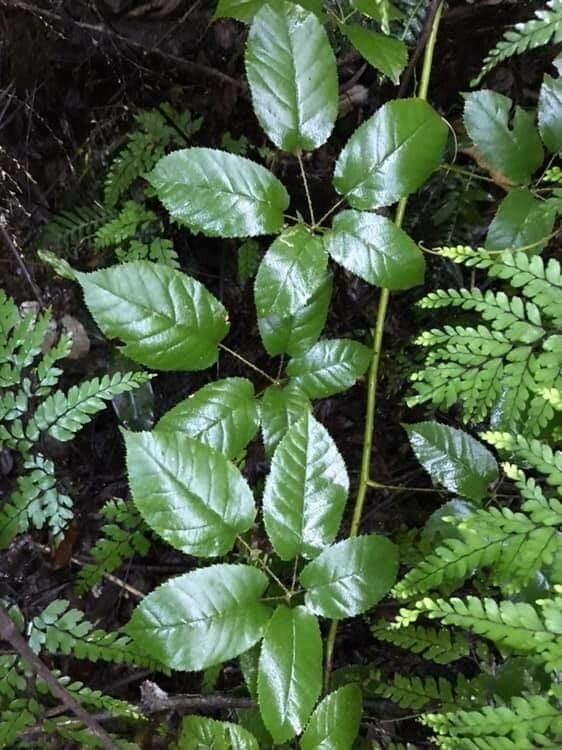
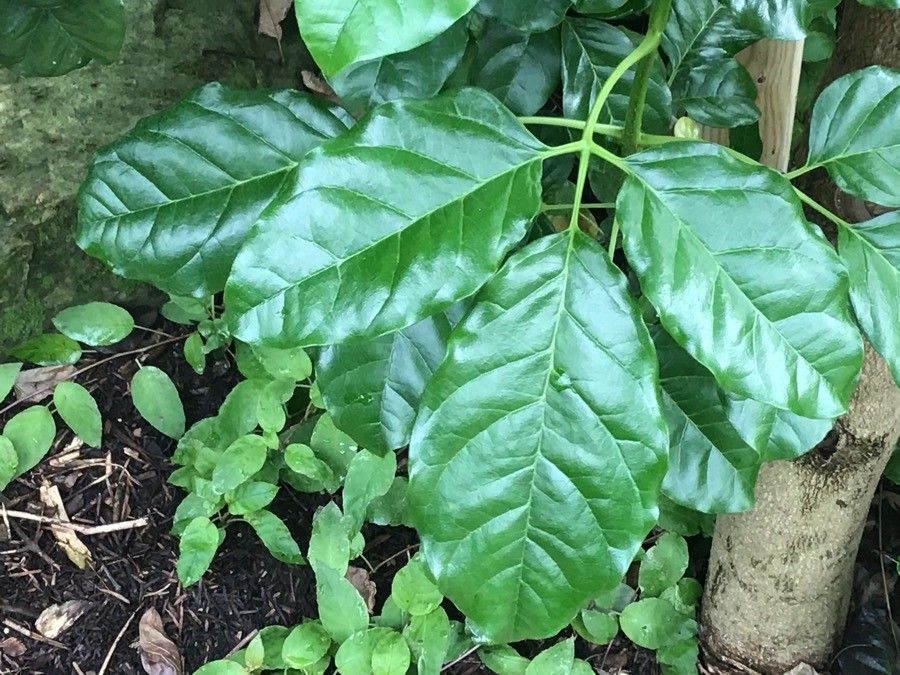
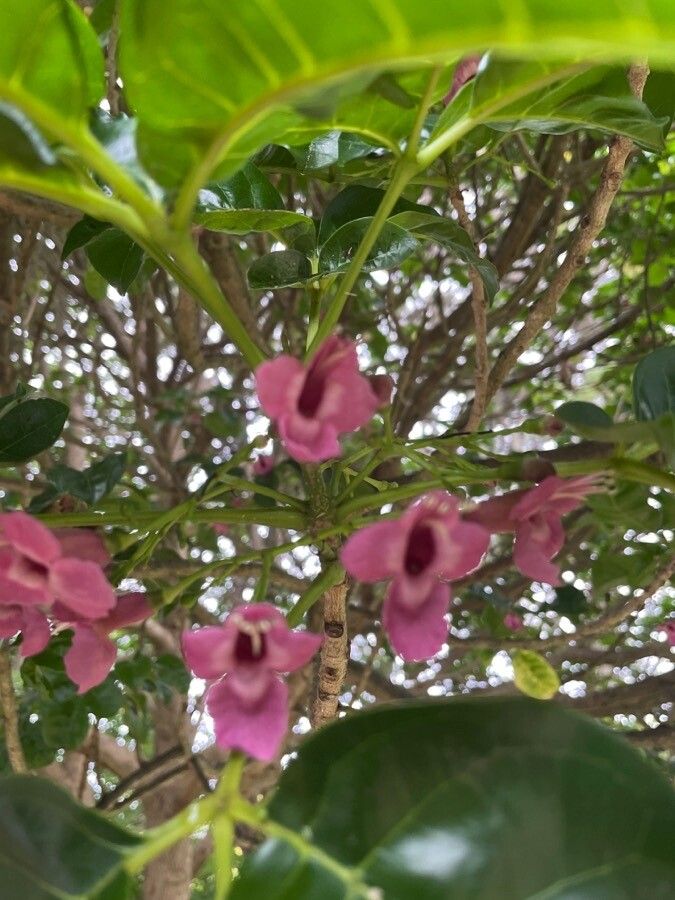
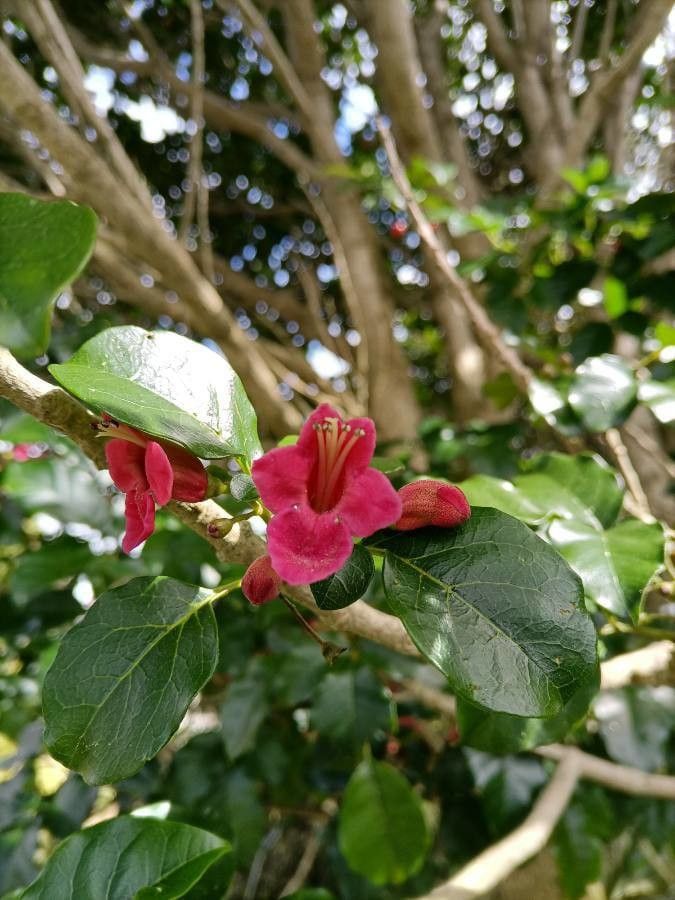
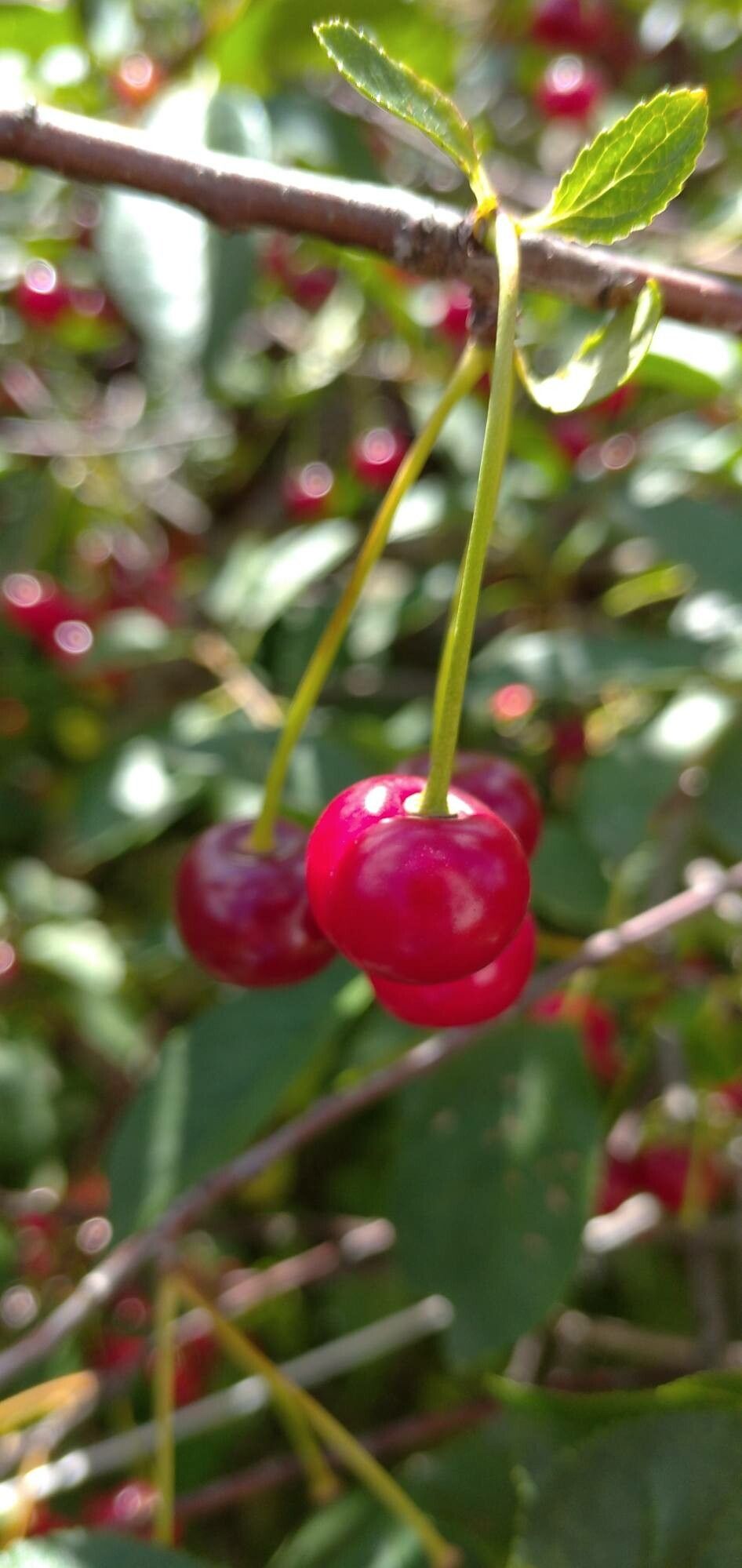
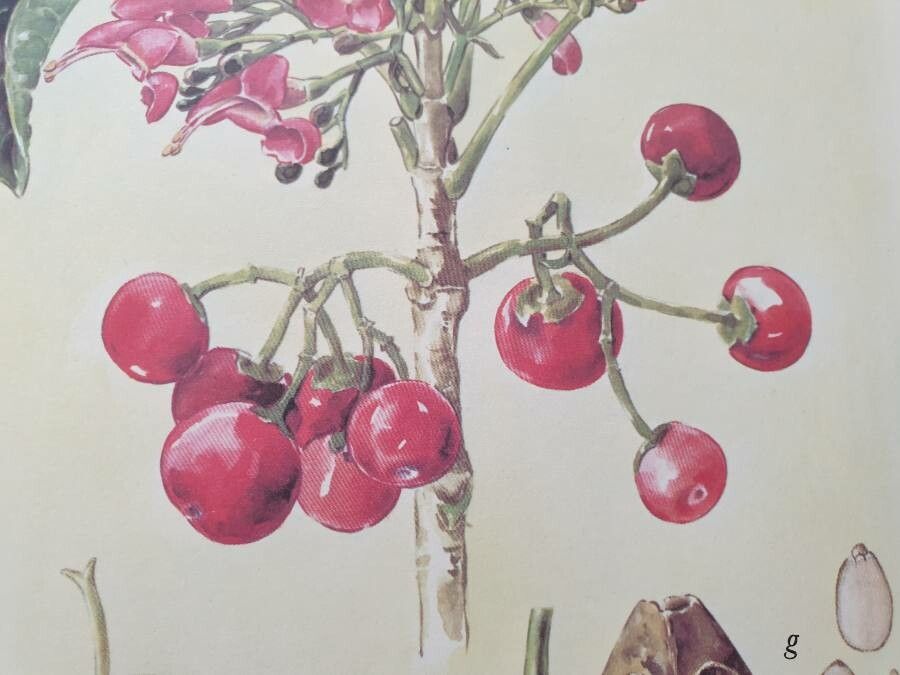
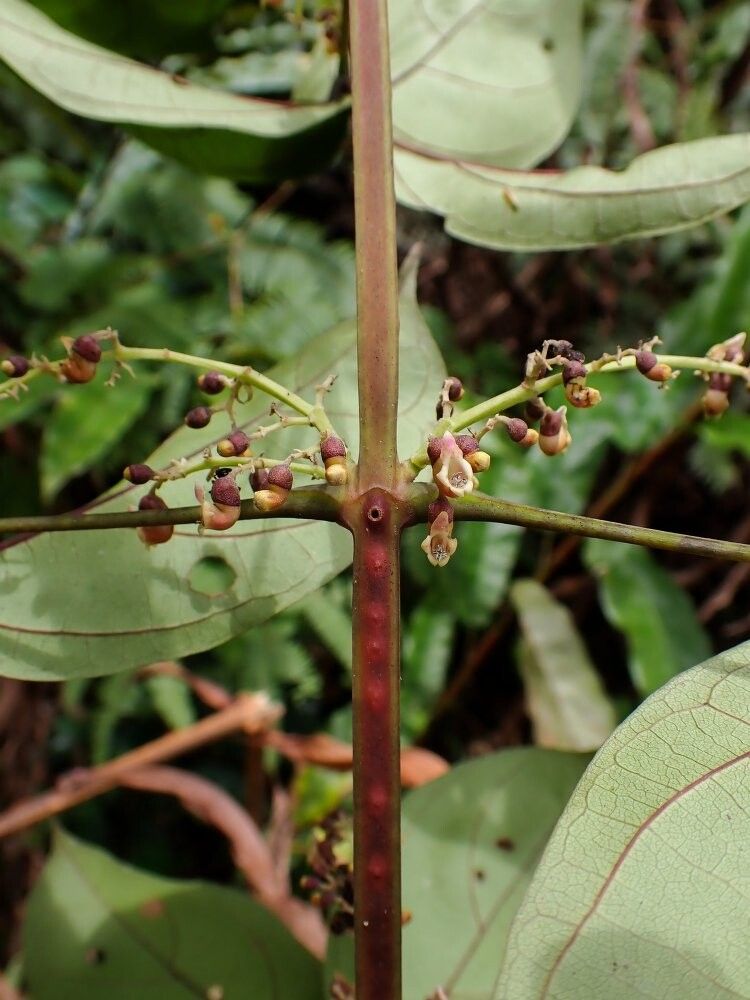
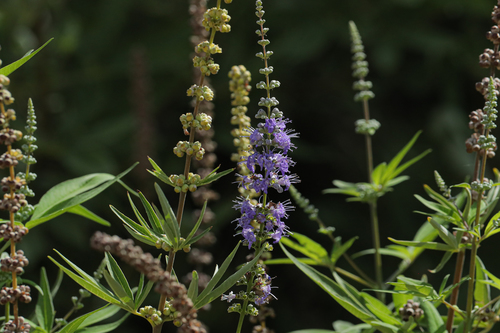
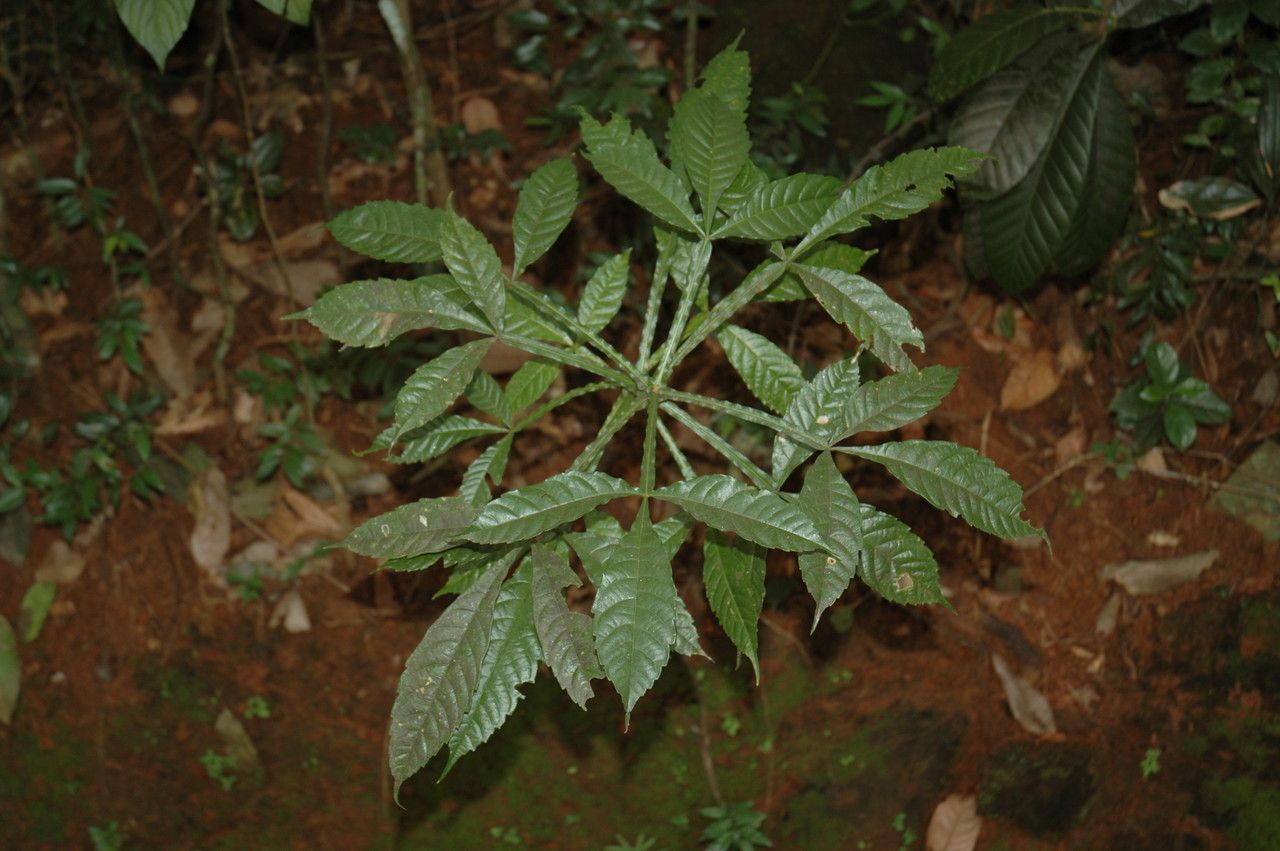
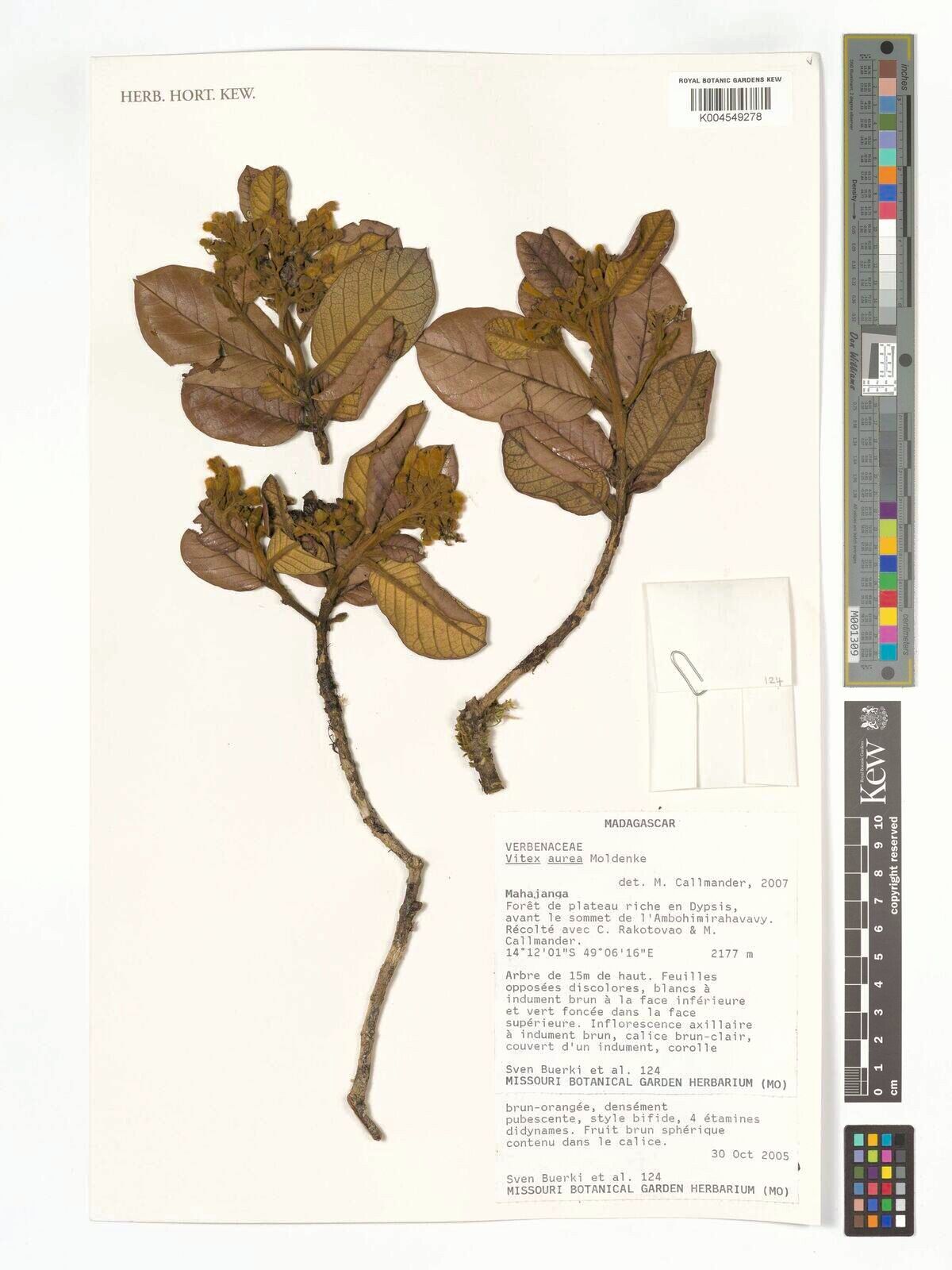
Vitex lucens, commonly known as the Shiny-leaved Chaste Tree, is a small to medium-sized tree in the Verbenaceae family. Native to Australia, it thrives in diverse habitats, including rainforests, woodlands, and along watercourses. This tree can grow up to 10 meters tall and features a dense crown of glossy green leaves that release a pleasant aroma when crushed. The leaves are compound, consisting of 5 to 7 lanceolate-shaped leaflets.
In spring and summer, the Shiny-leaved Chaste Tree produces clusters of small purple flowers that attract bees, butterflies, and other pollinators. Its fruit is a small black drupe containing a single seed.
Indigenous Australians have used this plant for medicinal purposes for centuries. It has served as an antiseptic for wounds, an analgesic for pain relief, and an insect repellent.
Vitex lucens is also popular in landscaping for its attractive foliage and flowers, as well as its ability to draw wildlife such as birds to gardens or parks.
Overall, Vitex lucens is a versatile plant valued for both its medicinal and aesthetic qualities, making it popular among gardeners and those interested in natural remedies alike.
Puriri has good resistance to disease and is generally not prone to illnesses. In terms of care, this plant is fairly low maintenance. When grown outdoors it needs minimal watering, and larger plants typically do not require pruning. Smaller plants, however, should be pruned after they have bloomed. Puririt is appropriate for anyone with an outdoor area, such as a garden or deck, and does not need much care experience.
How to keep Vitex Lucens.
Light
Puriri performs best when grown in full sunlight. It can tolerate locations with some cover, but it thrives with unobstructed light. Excessive shade can limit the plant's growth and harm its health. Native to places with plentiful sun, puriri adjusts to different light conditions at various stages of its development. Too much sun can stress the plant, while too little light may hinder its growth.
Water
Puriri plants thrive in humid forests and have a moderate tolerance for drought. To mimic their natural conditions, water them every 2 to 3 weeks. It's important to use well-draining soil to prevent waterlogging during heavy rains and maintain the optimal moisture level for healthy growth.
Temperature
Puriri is naturally suited to temperate climates, favoring temperatures from 68 to 100°F (20 to 38 ℃). To ensure optimal growth, regulate the temperature to mimic these conditions, particularly during seasonal changes.
Fertilizer
Fertilize a Puriri in early spring as it comes out of dormancy. Doing so supports overall growth and flower development. Fertilization improves the foliage, stems, and branches, and encourages flowers that are larger, more vivid, and longer-lasting. It also helps transfer nutrients from the roots to the flowers and enhances the plant's health and resistance to disease.
Pruning
The Puriri is a hardy evergreen tree with glossy leaves and historical significance. To maintain its health and appearance, it is best to prune the tree from early to late winter. Focus on removing dead wood and overcrowded branches to improve airflow. This pruning practice encourages denser foliage and vibrant blooms, making the Puriri more resilient against pests and diseases.
Botanical profile.
- Plant Type
- Tree
- Life Cycle
- Perennial
- Genus
- Vitex
- Family
- Lamiaceae
- Hardiness Zone
- 9-11
- Mature Height
- 19.81 m
- Mature Spread
- 1.52 m to 2.13 m
- Leaf Color
- Dark Green
- Leaf Type
- Evergreen
- Flower Color
- Pink, Red
- Flower Size
- 2.54 cm to 5.08 cm
- Bloom Time
- Summer
- Planting Time
- Spring, Summer, Autumn
- Harvest Time
- Fall
- Native Area
- New Zealand
Other names.
Reader questions.
What are the sunlight requirements for Puriri plants?
Puriri plants thrive best when exposed to maximal sunlight, preferring over 6 hours of direct sunlight to ensure their optimal growth and health. They are capable of adapting to varying light conditions across different growth stages, originally hailing from environments abundant in sunlight. However, they can also grow in areas with partial sun, about 3-6 hours of sunlight, although excessive shading is detrimental to their growth. Insufficient light exposure can stress the plant, negatively impacting its development and health.
What temperature conditions are ideal for the growth of Puriri?
Puriri, scientifically known as Vitex lucens, thrives in temperate environments and prefers a temperature range of 68 to 100°F (20 to 38°C). To ensure Puriri grows optimally, it's important to adjust the temperature to emulate these conditions throughout the year, especially during seasonal changes. Puriri is extremely heat-loving, and exposure to cold temperatures can cause harm. In the autumn, it's recommended to bring Puriri plants grown outdoors indoors and place them near a bright window, maintaining a distance from heaters to prevent any potential damage. Keeping the temperature above 20°C during winter supports its growth, as temperatures approaching 0°C are detrimental to the plant.
How should I use artificial lighting for my indoor Puriri plant?
When natural sunlight is insufficient, especially during winter or in less sunny spaces, artificial lighting becomes crucial for your indoor Puriri plant's growth. It's recommended to use LED lights because they can be tailored to provide specific wavelengths of light needed by your plants. For full sun plants, aim for 30-50W/sq ft, for partial sun plants 20-30W/sq ft, and for full shade plants 10-20W/sq ft of artificial light. Place the light source 12-36 inches above the plant to mimic natural sunlight, ensuring the plant receives 8-12 hours of light per day.
How to manage Puriri in low temperatures and prevent cold damage?
Puriri prefers warm temperatures and is not tolerant to low temperatures, thriving best when the temperature is above 20°C. During winter, ensure the temperature is kept above 0°C to avoid any harm. If the temperature falls below -5°C, the leaves may lighten in color and, following frost damage, gradually turn brown or black. Symptoms such as wilting and drooping may also occur. To manage cold damage, trim off the frost-damaged parts immediately and move the plant to a warm environment indoors for cold protection. Placing the plant near a south-facing window ensures ample sunlight. However, avoid placing the plant near heaters or air conditioning vents to prevent the air from becoming excessively dry.
What are common symptoms of light deficiency in Puriri plants?
Symptoms of light deficiency in Puriri plants include the development of smaller leaves compared to previous ones, leggy or sparse growth, faster leaf drop, slower or halted growth, and the appearance of lighter-colored new leaves indicating a lack of chlorophyll. Furthermore, plants might show signs of chlorosis, where leaves lose their green color, sunscald characterized by bleached spots on the plant tissue, leaf curling as a defense against too much light, wilting due to excessive water loss, and leaf scorching evident by brown, crispy edges on leaves due to overexposure to sunlight.
What steps should be taken if a Puriri experiences high temperatures?
In high temperature conditions, specifically during the summer when temperatures should ideally stay below 38°C, steps should be taken to protect Puriri if the temperature exceeds 43°C, causing the leaves to lighten and increase susceptibility to sunburn. To mitigate high temperature effects, trim away the sunburned and dried-up parts and move the plant to a location that provides shade, especially from the midday and afternoon sun. It's also beneficial to water the plant in the morning and in the evening to ensure the soil remains moist, aiding in temperature regulation for the plant.
How can I improve sunlight exposure for my Puriri plant?
To enhance sunlight exposure for your Puriri plant, gradually move it to a sunnier location each week until it gets at least 6 hours of direct sunlight daily. For indoor plants, utilize a south-facing window and keep curtains open to maximize sunlight and nutrient accumulation. If moving the plant isn't feasible, consider using artificial light for at least 8 hours daily. For outdoor plants, it's crucial to transition them to brighter spots gently to prevent sunburn. Additionally, observe the environment to identify and reduce obstructions, and for smaller plants, consider transplanting during their dormant period to a location with abundant sunlight and good drainage.