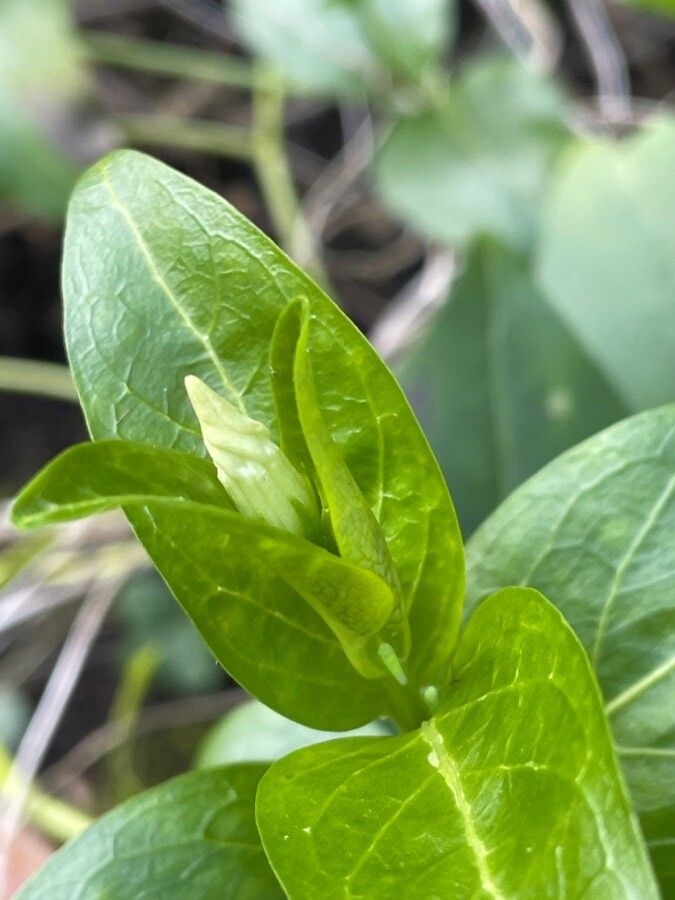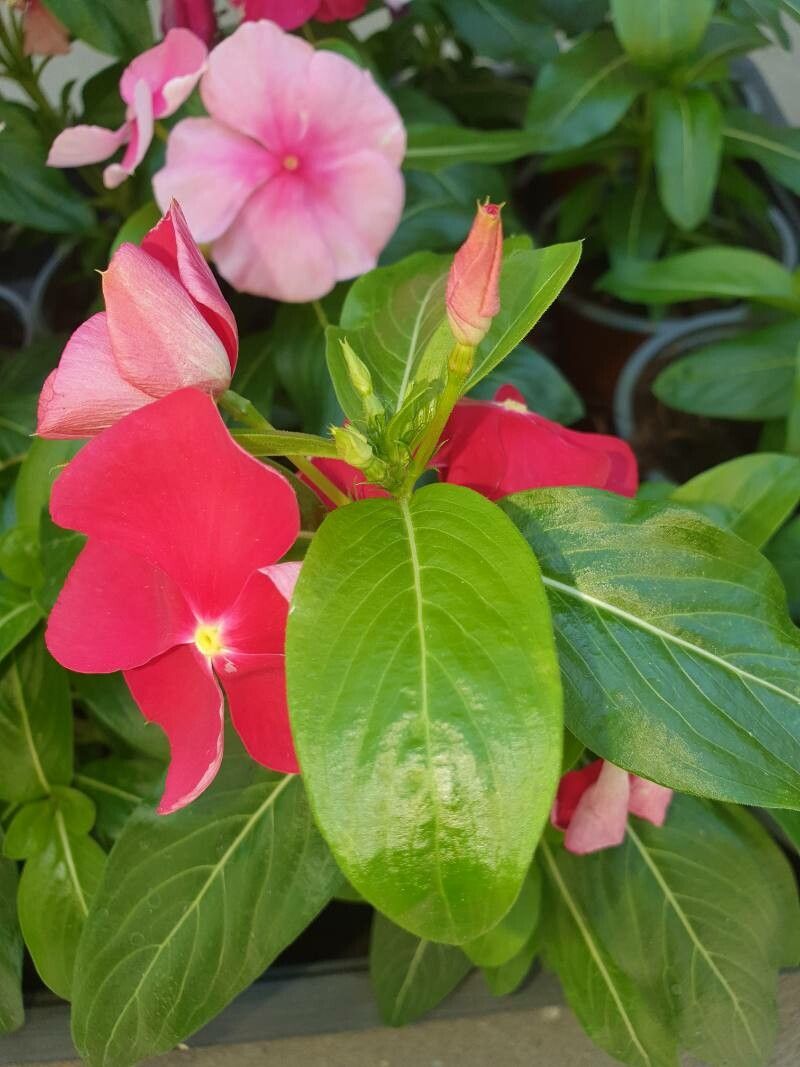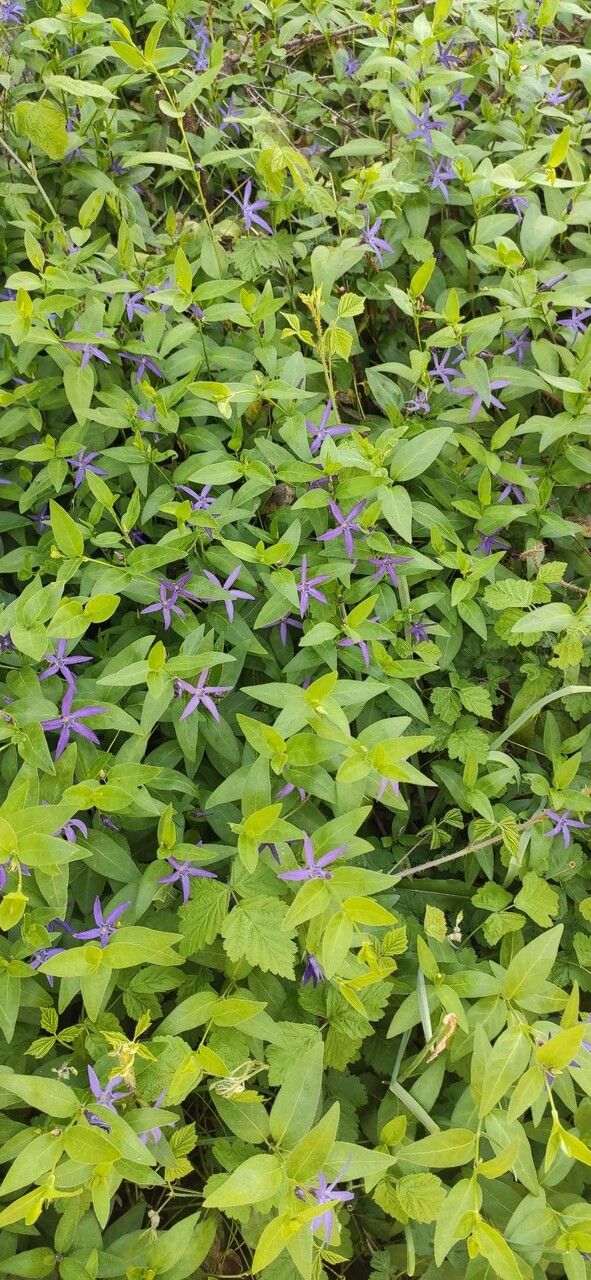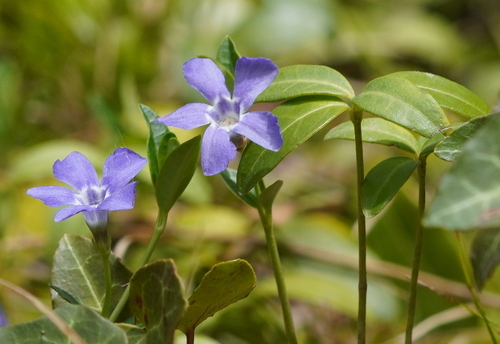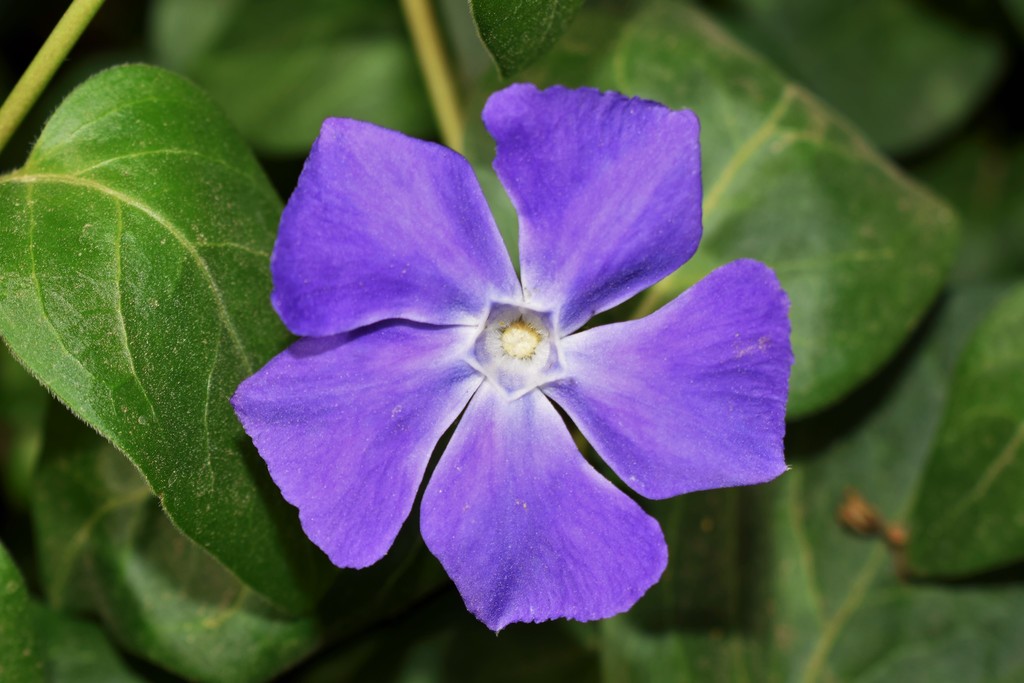
Vinca major, commonly known as greater periwinkle, is a perennial plant from the Apocynaceae family. Native to Europe and western Asia, it has been introduced and naturalized in many parts of the world. This plant features glossy, dark green, oval-shaped leaves that grow opposite each other on the stem. It produces beautiful blue-violet flowers with five petals, which bloom from spring to fall.
Vinca major is a popular ground cover due to its ability to spread quickly and form dense mats of foliage. While it can grow up to 12 inches tall, it may spread up to 6 feet wide under ideal conditions. The plant thrives in moist, well-drained soil with partial shade or full sun exposure.
The leaves of Vinca major contain alkaloids that have been used for centuries in medicinal treatments for conditions such as high blood pressure, diabetes, and cancer.
It's important to note, however, that Vinca major can become invasive in areas where it has been introduced. It competes with native plants for resources, potentially disrupting ecosystems. Therefore, it should be planted responsibly or avoided entirely if there is a concern about invasive species in your area.
Overall, Vinca major is an attractive ground cover option, thanks to its beautiful flowers and glossy foliage. However, care should be taken when planting this species outside its native range to prevent ecological damage or disruption in local ecosystems. Gardeners should manage this plant properly over time to avoid invasiveness and consider less aggressive alternatives when appropriate.
Bigleaf periwinkle belongs to the Vinca genus, commonly known as periwinkles. To differentiate the plants within this genus, each species is given a name that highlights its unique characteristics. Like many Vinca plants, the flowers of the bigleaf periwinkle feature five petals arranged in a shape reminiscent of a windmill. However, what truly sets this plant apart is its leaves. Compared to other Vinca species, the leaves of the bigleaf periwinkle are larger, reaching sizes of 2 to 9 centimeters. The species name "major," which means "larger" or "greater," aptly describes this defining trait and thus gives the plant its common name, bigleaf periwinkle.
Greater periwinkle is generally resistant to disease and is usually not susceptible to illnesses. However, it can be prone to leaf spots when light and ventilation are poor and watering is excessive. The care level for this plant is considered easy, since it only requires regular watering. It does not require much care beyond that. Greater periwinkle is suitable for people who do not have the time or energy to devote to regular maintenance.
How to keep Vinca Major.
Light
Greater periwinkle grows best with a moderate amount of sunlight, but it is adaptable and can tolerate a range of light conditions. It can handle locations with plentiful sun as well as spots that are fairly shaded. However, receiving too much or too little sunlight can impede its healthy development.
Water
Native to the Mediterranean region, greater periwinkle flourishes in moderately moist conditions. It prefers soil that is consistently damp but can tolerate short periods of dryness. To ensure its well-being, watering once a week is recommended. As an evergreen, greater periwinkle keeps its foliage throughout the year, so it requires careful watering during the growing season to achieve optimal growth and vigor.
Humidity
This plant needs special care because it loves high humidity levels of 60-80% or more. The best way to achieve this is by placing a humidifier near the plant. Daily misting is also essential! Make sure the room has good ventilation.
Temperature
The greater periwinkle needs moderate temperatures to do well and is native to areas with mild climates. It grows best in temperatures from 59 to 100 ℉ (15 to 38 ℃), though it can tolerate occasional drops below 50 ℉ (10 ℃). In summer, give the plant some protection to prevent scorching when temperatures exceed 86 ℉ (30 ℃).
Fertilizer
Typically, a single fertilizer application in spring is enough for Greater periwinkle, although repeated feedings can enhance growth. Apply every month to every month and a half. Fertilizing improves leaf appearance and function, helping maintain uniform color and a healthy texture. It also promotes root development and nutrient uptake for sustained plant health.
Pruning
The greater periwinkle is a resilient evergreen plant that produces beautiful blue-purple flowers. To promote healthy growth and vibrant blooms, it's best to prune the plant from early to late spring. Be sure to trim overgrown stems and remove any dead foliage to prevent disease. Regular maintenance helps keep the plant from becoming invasive and ensures it retains a neat shape.
Pot & Repot
Repot Greater periwinkle in early spring, selecting a container only slightly larger than the current one and with proper drainage. Use a well-draining potting mix, making sure the root ball is positioned at the same level as before. Gently tease out any root-bound roots. After repotting, water thoroughly and place the plant in a warm, shady spot. Regular pruning helps keep the plant’s size in check and encourages new growth.
Botanical profile.
- Plant Type
- Vine, Herb
- Life Cycle
- Perennial
- Genus
- Vinca
- Family
- Apocynaceae
- Hardiness Zone
- 8-11
- Mature Height
- 25 cm to 91 cm
- Mature Spread
- 91 cm
- Leaf Color
- Green, Yellow
- Leaf Type
- Evergreen
- Flower Color
- Blue, Purple, White, Green, Violet
- Flower Size
- 3.05 cm to 5.08 cm
- Bloom Time
- Mid spring, Late spring, Early summer, Mid summer
- Planting Time
- Spring
- Harvest Time
- Summer
- Native Area
- Mediterranean Europe, Asia Minor, and northern Africa
Other names.
Reader questions.
When Should I Water My Greater Periwinkle?
Proper watering is essential for the health and growth of Greater Periwinkle (Vinca major), involving timely hydration to support its vibrant flowers and robust resistance against diseases. Assessing the need for water includes checking the soil's top 1 to 2 inches for dryness, observing any wilting or discolored leaves, ensuring adequate moisture during flower bud formation, and adjusting for high temperatures and sunlight exposure. Over-watering can lead to root diseases, while under-watering may cause wilting or even plant death. Identifying these signs will guide effective watering practices.
What kind of fertilizer does my Greater periwinkle plant require?
Choosing the best fertilizer for a Greater periwinkle is actually quite easy. These plants do well with a general-purpose garden fertilizer that has equal amounts of nitrogen, phosphorus, and potassium. A fertilizer with a ratio of 10-10-10 or something similar works well. Avoid fertilizers with high nitrogen levels if you're unsure. Granular fertilizers are often the best choice for Greater periwinkle and should be slow-release for convenience. Additionally, using an organic soil amendment like compost can be beneficial for feeding your Greater periwinkle.
What are the sunlight requirements for Greater Periwinkle?
Greater Periwinkle needs a moderate amount of sunlight to thrive but is adaptable to different light conditions. It can withstand both areas with substantial sun and considerably shadowed places. However, it's important to balance the exposure as too much or too little sunlight could negatively affect its growth. The plant thrives best in partial sun, requiring about 3-6 hours of sunlight daily, but it can also adapt to full sun or full shade conditions which involve more than 6 hours of sunlight. Observing how sunlight moves through your garden will help in choosing the right spots for your plants, ensuring they receive the perfect balance of light and shade.
What is the ideal temperature range for growing Greater Periwinkle?
The Greater Periwinkle thrives in moderate temperatures, ideally between 59 to 100°F (15 to 38°C). It possesses some tolerance to cold, being able to withstand occasional temperatures lower than 50°F (10°C). During hot summers, with temperatures above 86°F (30°C), it's advised to provide the plant with some form of shelter to prevent scorching.
How Should I Water My Greater Periwinkle?
Watering Greater Periwinkle properly involves maintaining moist but not waterlogged soil, using a bottom-watering technique or a narrow spout watering can for direct soil hydration, avoiding foliage moisture to prevent diseases, and using a moisture meter for precision. For outdoor plants, supplement natural rainfall during dry spells, and for indoor plants, adjust for lower humidity. Effective watering supports the plant's health without the risks of root rot from overwatering or wilting from underwatering.
Why do I have to put fertilizer on my Greater periwinkle?
The main structure of the Greater periwinkle is made up of its leaves. Fertilization plays a critical role in keeping these leaves healthy and attractive. By providing proper fertilization, you can maintain consistent color and a strong texture in the leaves. Fertilization also has benefits below the surface of the soil. It helps the Greater periwinkle develop new roots and sustain existing roots within its root system. This not only ensures its current health but also improves its ability to absorb nutrients from the soil in the future.
How can artificial lighting be used for indoor Greater Periwinkle?
For indoor Greater Periwinkle plants requiring additional light, especially when natural sunlight is insufficient, artificial lighting can be a crucial solution. LED lights are recommended due to their ability to provide specific wavelengths needed for plant growth. The intensity required varies with the type of plant - full sun plants need 30-50W/sq ft, partial sun plants 20-30W/sq ft, and full shade plants 10-20W/sq ft of artificial light. The light source should be placed 12-36 inches above the plant to mimic natural sunlight effectively, and the duration should match the natural daylight hours, typically between 8-12 hours per day.
What should be done if temperatures drop below the Greater Periwinkle's tolerance level?
Greater Periwinkle generally doesn't require protective measures if the temperature stays above its minimum tolerable level. However, if it's forecasted to go below this threshold, it's necessary to take temporary protective actions. Wrapping the plant in plastic film, fabric, or using other suitable materials can help. Once the temperatures rise again, these protections should be promptly removed.
How Much Water Does Greater Periwinkle Really Need?
The water requirement for Greater Periwinkle depends on various factors like pot size, root depth, and plant size, aiming for soil moisture up to at least 6 inches deep. A well-hydrated plant displays lush green leaves and sturdy stems. However, balance is key, as overwatering can lead to yellowing leaves and root rot, while underwatering results in wilting and stunted growth. Regularly checking the soil's moisture and avoiding leaf wetting are advised practices, along with mulching to retain soil moisture.
When should I put fertilizer on my Greater periwinkle?
When you grow your Greater periwinkle outdoors, you can expect new growth to shoot out in early spring. This is your cue to start fertilizing for the year. Typically, one application of fertilizer is sufficient for a healthy Greater periwinkle. However, if you want to maximize its growth, you can fertilize multiple times during the spring and early summer. In this case, you should feed your Greater periwinkle roughly once every month to a month and a half.
What are the symptoms of insufficient light in Greater Periwinkle?
When Greater Periwinkle is grown indoors with insufficient light, several subtle symptoms may appear, signaling light deficiency. These include smaller new leaves compared to previous ones, leggy or sparse growth where the space between leaves or stems increases, making the plant appear weak and stretched. Other symptoms include faster leaf drop, slower or halted growth, lighter-colored new leaves, and chlorosis where leaves lose their green color and become yellow. Excessive sunlight can cause symptoms like sunscald, leaf curling, wilting, and leaf scorching.
How does the Greater Periwinkle respond to low temperatures?
The Greater Periwinkle has moderate tolerance to low temperatures. It thrives best when the weather remains above its suitable growth temperature minimum. During winter, keeping it above the minimum tolerable temperature is crucial. If the temperature falls below its growth limit, the plant's leaves may droop and, in severe cases, wilt and fall off. To mitigate frost damage, trim the affected parts and use materials like non-woven fabric or cloth to wrap the plant, and consider setting up a wind barrier for added protection.