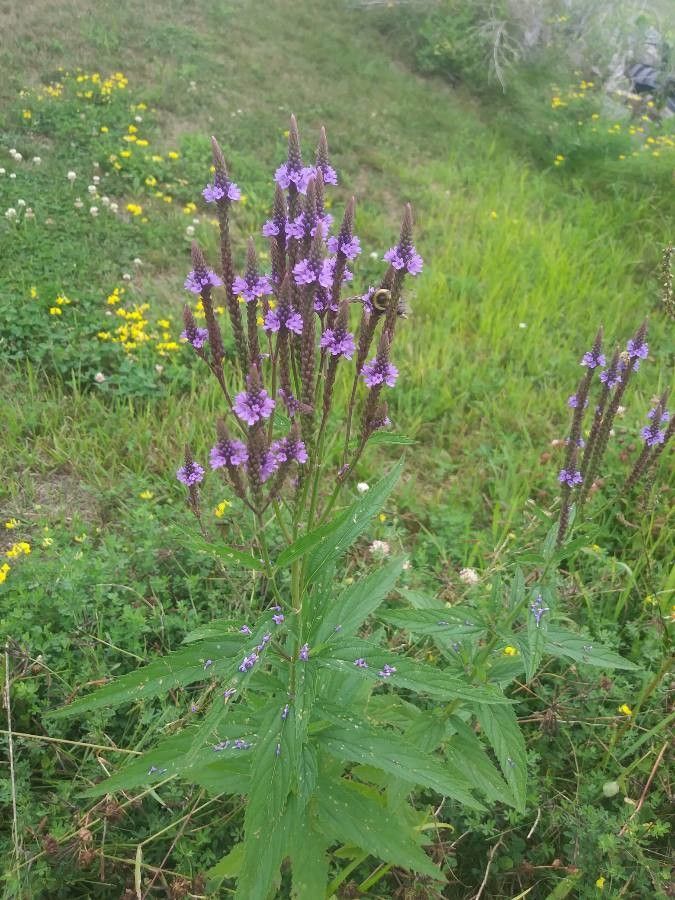
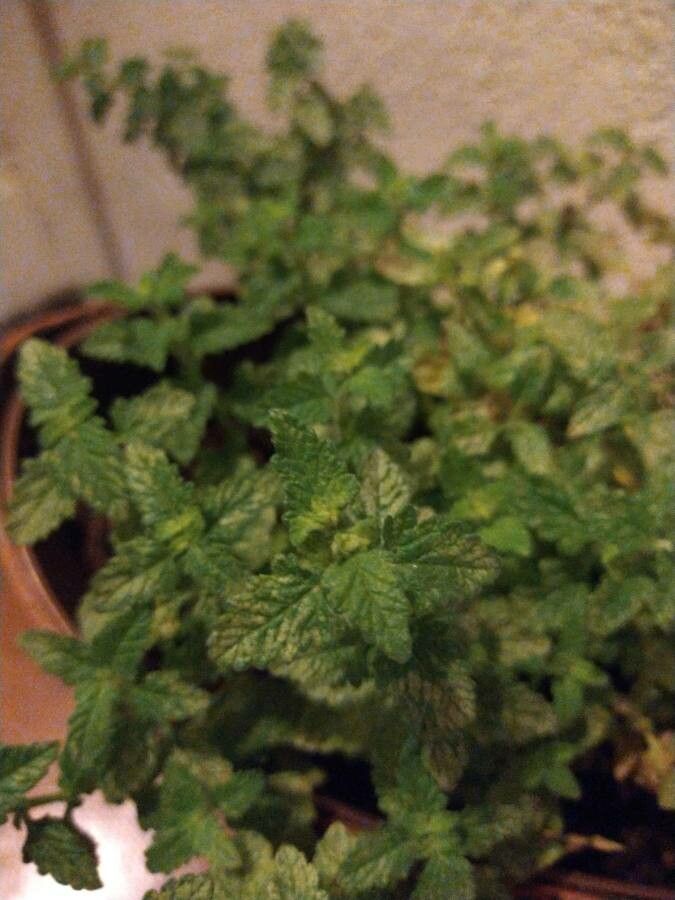
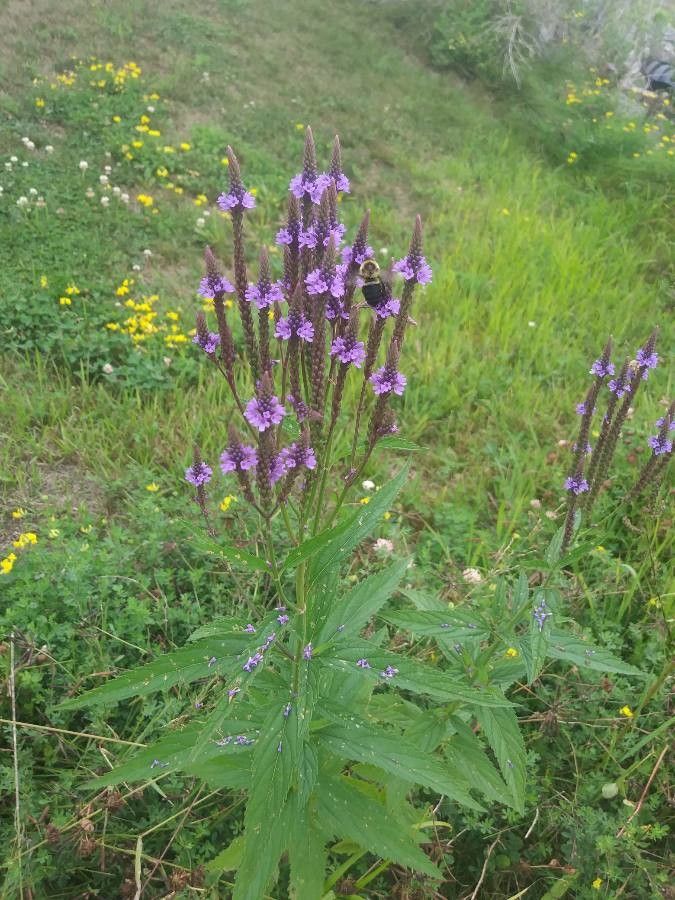
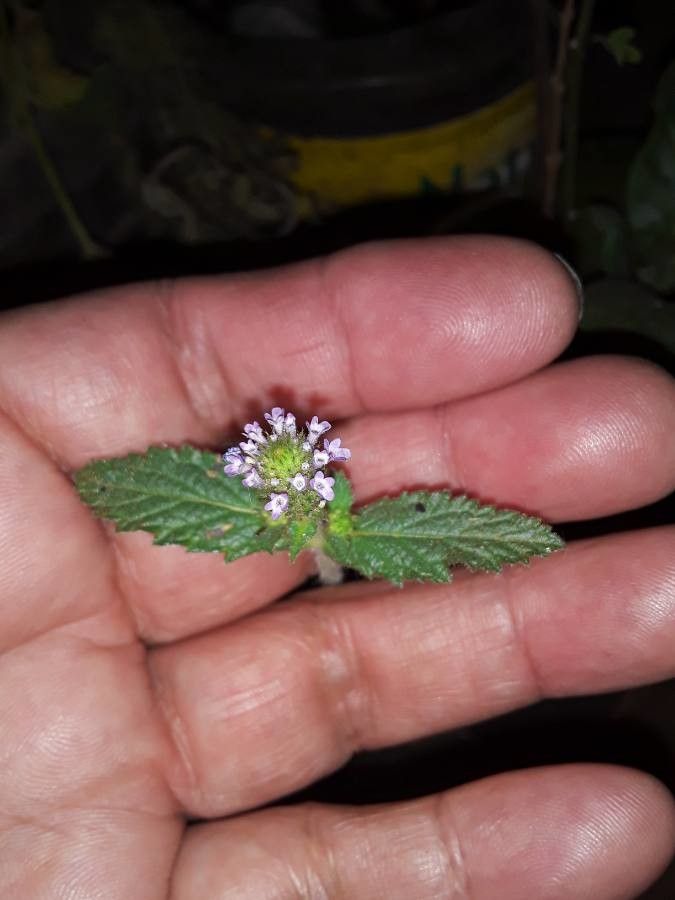
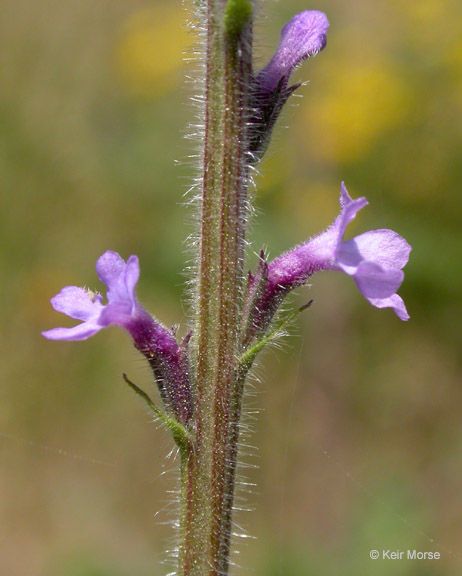
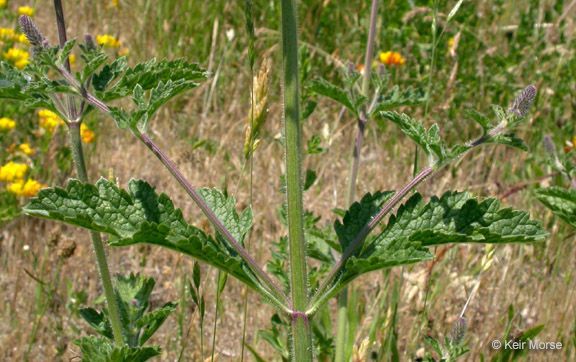
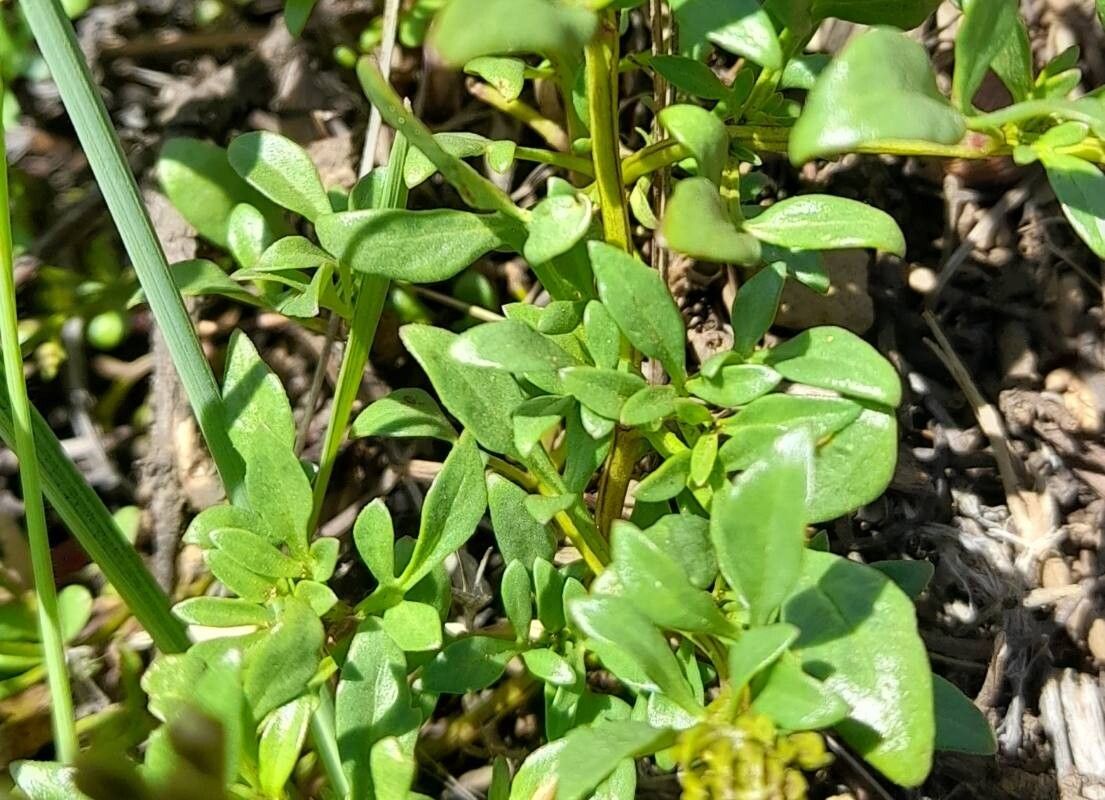
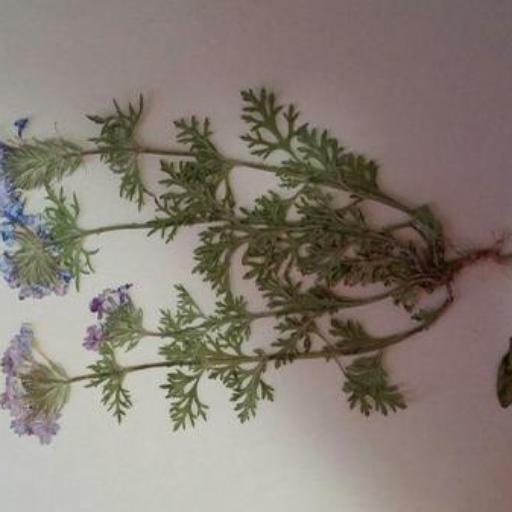
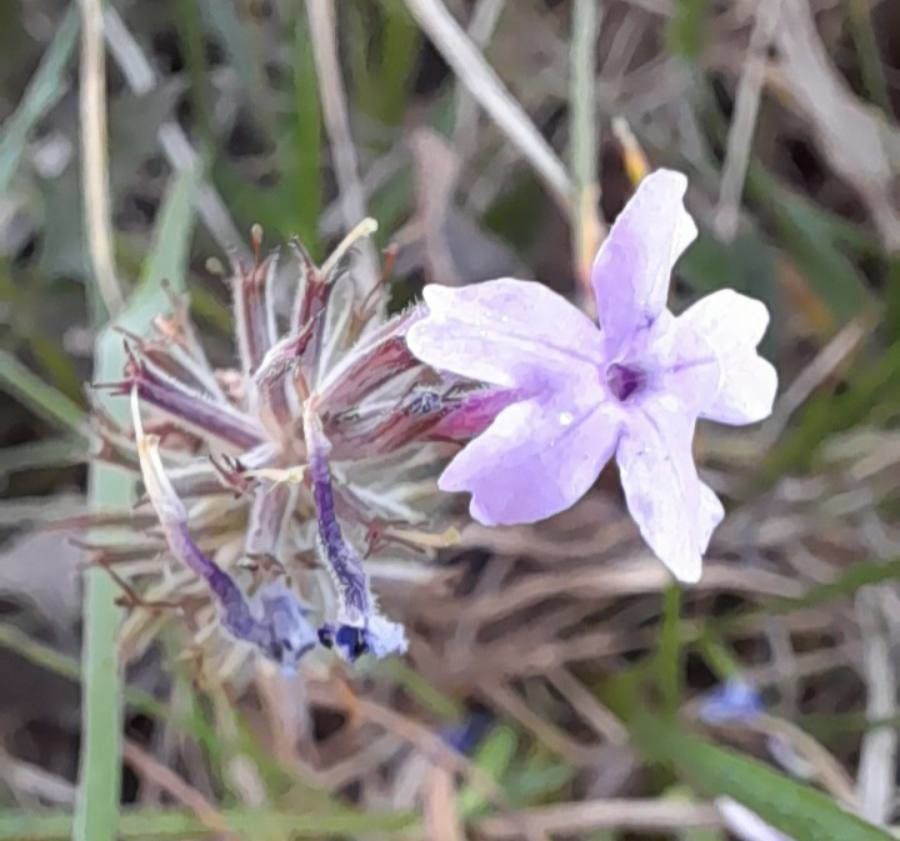
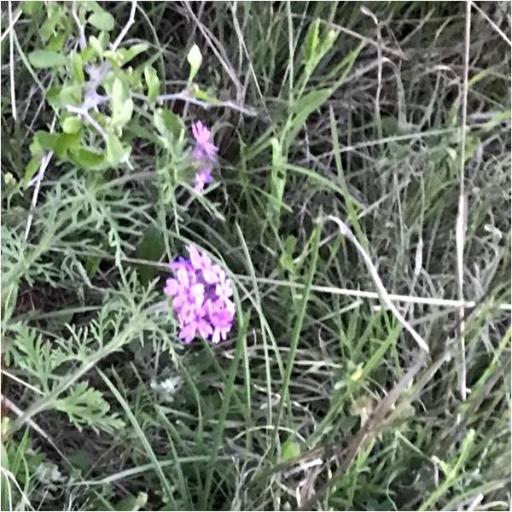
Verbena lasiostachys is a species of verbena known by the common name western vervain. It is native to western North America from Oregon, throughout California, to Baja California. It is widespread and occurs in many types of habitat, including California chaparral and woodlands and the Sierra Nevada. It is also found in disturbed areas, where it grows like a common weed.
Western vervain is fairly resistant to disease and typically does not suffer from many illnesses. Still, it can be vulnerable to pests and diseases found in its environment. When infections do occur, they are generally mild. Regarding care, the plant needs medium maintenance. Regular pruning is necessary to keep it looking good and to encourage healthy growth. Applying fertilizer can also aid in boosting its flowering. Western vervain is a good choice for anyone with outdoor space, like a garden or patio, and it does not demand extensive care experience. It can be more demanding to look after when cultivated indoors.
How to keep Verbena Lasiostachys.
Light
The western vervain grows best when it gets a generous amount of sunlight each day. It can tolerate areas with somewhat less light, but for optimal growth it needs abundant illumination. In its native range it does well under ample sun. Both too little and too much light can hinder its development and overall health.
Water
Western vervain, native to dry regions, is highly drought-tolerant and typically requires only weekly watering. In its natural habitat, it depends on occasional rainfall. When cultivating this plant outdoors, keep in mind its growing season. Consistent soil moisture during its active growth period is essential for maintaining its optimal health.
Temperature
Western vervain is native to temperate regions and generally thrives at temperatures between 68 and 95°F (20 to 35°C). To ensure its growth, these temperatures may need to be adjusted to account for seasonal changes.
Fertilizer
The best time to fertilize a Western vervain is in early spring, as it comes out of dormancy and starts active growth. Fertilizing supplies essential nutrients for healthy development. Although Western vervain has relatively low fertilizer requirements, applying fertilizer annually can improve its survival and encourage better, longer-lasting flowers.
Pruning
Western vervain is a perennial plant with attractive lavender-blue flowers. For best results, prune it from early to late spring by removing dead stems and cutting it back by one-third to maintain its shape. Regular pruning improves air circulation and encourages blooming. For more detailed pruning techniques, consult horticultural resources.
Botanical profile.
- Plant Type
- Herb
- Life Cycle
- Perennial
- Genus
- Verbena
- Family
- Verbenaceae
- Hardiness Zone
- 9
- Mature Height
- 49 cm to 91 cm
- Mature Spread
- 49 cm to 91 cm
- Leaf Color
- Green, Dark Green
- Leaf Type
- Deciduous
- Flower Color
- Lavender, Purple
- Flower Size
- 0.76 cm
- Bloom Time
- Late spring, Summer
- Planting Time
- Spring, Summer, Autumn
- Harvest Time
- Mid summer, Late summer, Early fall, Mid fall
- Native Area
- Mexico
Other names.
Reader questions.
How should I water my Western vervain plant?
To properly water the Western vervain, use filtered room temperature water. Tap water may have harmful particles, so filtered water is preferred. Since the Western vervain is accustomed to warm environments, avoid using cold water as it can be a shock. Additionally, overhead watering should be avoided to prevent foliage issues. Instead, directly apply the filtered room temperature water to the soil until it is fully soaked. This benefits the plant by moisturizing the roots and promoting nutrient absorption.
What are the sunlight requirements for Western Vervain?
Western Vervain thrives best with a generous amount of daily sunlight exposure. For ideal growth, it should be placed in a location that receives above 6 hours of sunlight, known as full sun conditions. It can also adapt to partial sun conditions where it gets about 3-6 hours of sunlight. However, both a shortage and excess of light can impede its overall growth and health. It's important to observe how sunlight moves through your garden and choose spots that provide the right balance of light and shade to ensure the plants' happiness.
What is the native climate for Western Vervain?
Western vervain, botanically known as Verbena lasiostachys, is native to temperate regions and thrives best in temperatures between 68 to 95°F (20 to 35°C). Due to its origin, it is accustomed to moderate temperatures, and if you're growing it in an area where the temperature deviates from this range, making adjustments based on seasonal variations could be necessary to ensure its successful growth.
What should I do if I give my Western vervain too much or too little water?
Both overwatering and underwatering can harm the health of your Western vervain, but overwatering is more common. Overwatering can cause wilting, yellowing leaves, and diseases like root rot, mold, and mildew, which can be fatal to the plant. Underwatering is less common because Western vervain has good tolerance for drought. However, it can still happen and result in brittle, brown leaves. It's important to notice signs of overwatering early to prevent irreversible damage. If you see such signs, reduce watering and check the soil quality. If the soil doesn't drain well, replace it with a loose, well-draining potting mix. If you notice signs of underwatering, simply water the plant more regularly until the signs improve.
Can artificial lighting be used for Western Vervain?
Yes, artificial lighting can be used for Western Vervain, especially when natural sunlight is insufficient, such as during winter or in less sunny spaces. Indoor plants require adequate lighting for optimal growth. LED lights are popular for indoor plant lighting as they can provide specific wavelengths needed by plants. For full sun plants like Western Vervain, 30-50W/sq ft of artificial light is recommended. The light source should be placed 12-36 inches above the plant to mimic natural sunlight, for 8-12 hours per day to promote faster, healthier growth.
Does Western Vervain have any cold tolerance?
Yes, Western vervain exhibits some degree of cold tolerance and doesn't usually require special care if temperatures remain above 0°C. However, when temperatures are expected to drop below freezing, temporary measures for cold protection should be implemented. This can include wrapping the plant in plastic film, fabric, or other protective materials to shield it from the cold. It's important to remember to remove these protective coverings once the temperature rises to prevent any potential damage from overheating.
How often should I give water to my Western vervain?
If your Western vervain plant is in a pot, the most precise way to determine if it needs water is by checking the soil. Simply insert your finger into the soil and if you feel that the top two to three inches are dry, then it's time to water it. For those who have Western vervain growing outdoors, the same method can be used to test the soil. Once you notice that the first few inches of soil have dried out, it's a sign to provide water. During spring and early fall, following this method will likely require watering the plant once every week. However, in extremely hot weather, you may need to increase the frequency to twice or even more per week. It's worth noting that mature, well-established Western vervain plants have a remarkable ability to withstand drought.
What are some symptoms of insufficient sunlight in Western Vervain?
Symptoms of insufficient sunlight in Western Vervain include smaller new leaves compared to the mature ones, leggy or sparse growth, faster leaf drop, slower or no new growth, lighter-colored new leaves, and chlorosis. Excessive sunlight can cause sunscald, leaf curling under extreme conditions, wilting, and leaf scorching. These symptoms indicate that the plant is not receiving the appropriate amount of light for healthy growth.
How does low temperature affect Western Vervain and what are the solutions?
Western vervain has a moderate tolerance for low temperatures and fares best above 20°C. During the winter months, it's crucial to keep it above 0°C to prevent damage. Should the temperature fall below -5°C, the plant's leaves may begin to droop; they might recover in mild cases, but in more severe situations, the leaves can wilt and eventually fall off. The remedy includes trimming away the frost-damaged parts and taking preventive actions against future cold exposure. Wrapping the plant with non-woven fabric or cloth and setting up a wind barrier can offer effective protection against the chilly winds.
How much water does my Western vervain plant need?
When watering your Western vervain, don't hold back on the amount of water you give. Wait until the first two to three inches of soil are dry, and then give the plant a thorough watering, making sure to soak the soil completely. The water you add should be enough to cause excess water to flow out of the drainage holes at the bottom of the pot. If you don't see excess water draining, you likely haven't watered enough. However, be careful not to let water accumulate inside the soil, as this can be dangerous for the plant. On the other hand, if water doesn't drain through the pot, it could mean that the soil doesn't drain well, which is harmful for the plant's health. If the plant is outside, receiving about 1 inch of rain per week should be enough.
What solutions are available for light-related issues in Western Vervain?
For light-related issues, gradually acclimate Western Vervain to receive at least 6 hours of direct sunlight daily, using a south-facing window and keeping curtains open during the day. For plants that are large or not easily movable, consider using artificial light, keeping a desk or ceiling lamp on for at least 8 hours daily or investing in professional plant grow lights. If the plant is outdoors, gradually move it to a sunnier location each week, avoiding sudden changes in light intensity to prevent sunburn. When reducing obstructions, observe which areas block sunlight and consider pruning or moving the plant to a location with ample sunlight and good drainage.
What impact does high temperature have on Western Vervain and how can these issues be mitigated?
When summer temperatures soar above 35°C, the health of Western vervain can be adversely affected. If the temperature exceeds 38°C, you may notice the leaves turning lighter in color, drying out at the tips, curling, and becoming susceptible to sunburn. To counteract these issues, trim away the sunburned or dried parts of the plant. Moving the plant to a shaded area during the peak sun of midday and afternoon, or using a shade cloth, can protect it from the harsh sunlight. Additionally, watering the plant in the early morning and evening helps to keep the soil adequately moist, further aiding in the plant's resilience against high temperatures.