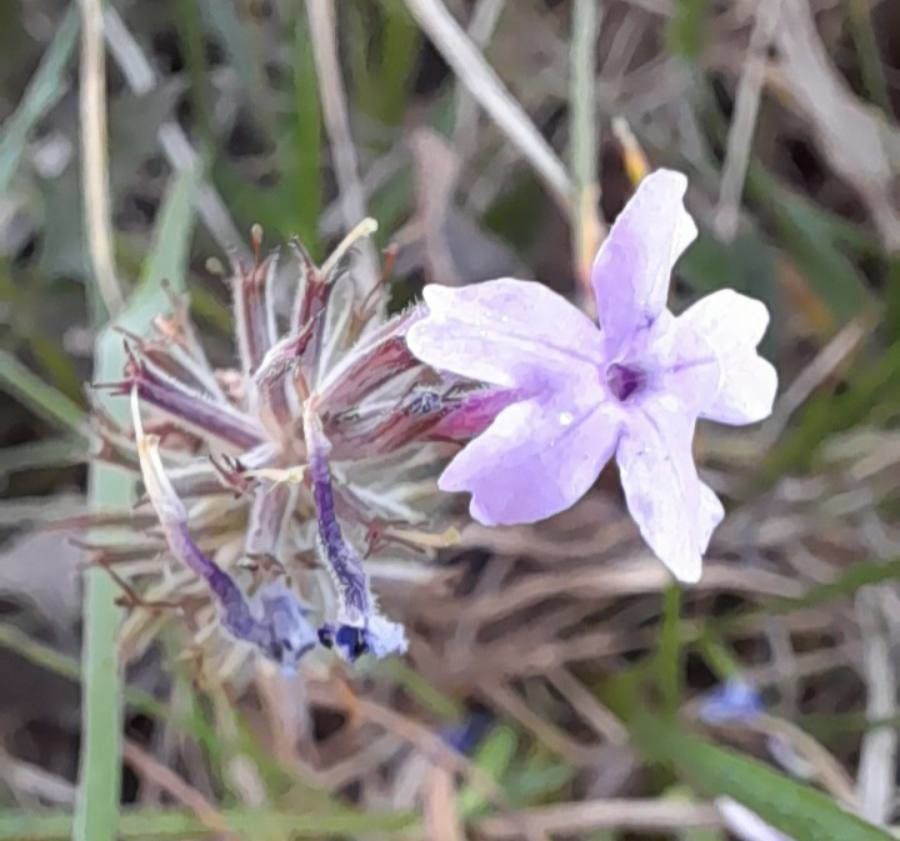
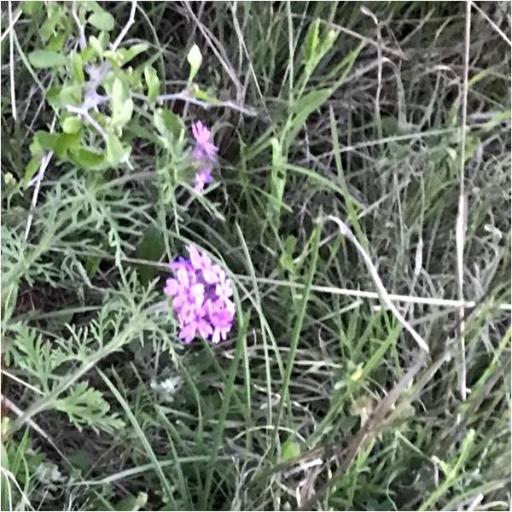
Verbena gooddingii, commonly known as Goodding's verbena, is a perennial flowering plant that belongs to the Verbenaceae family. Native to the southwestern United States and northern Mexico, this versatile plant thrives in a variety of habitats, such as rocky slopes, desert washes, and grasslands.
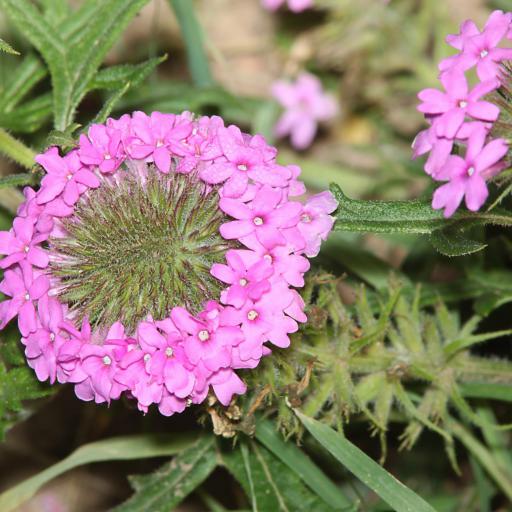
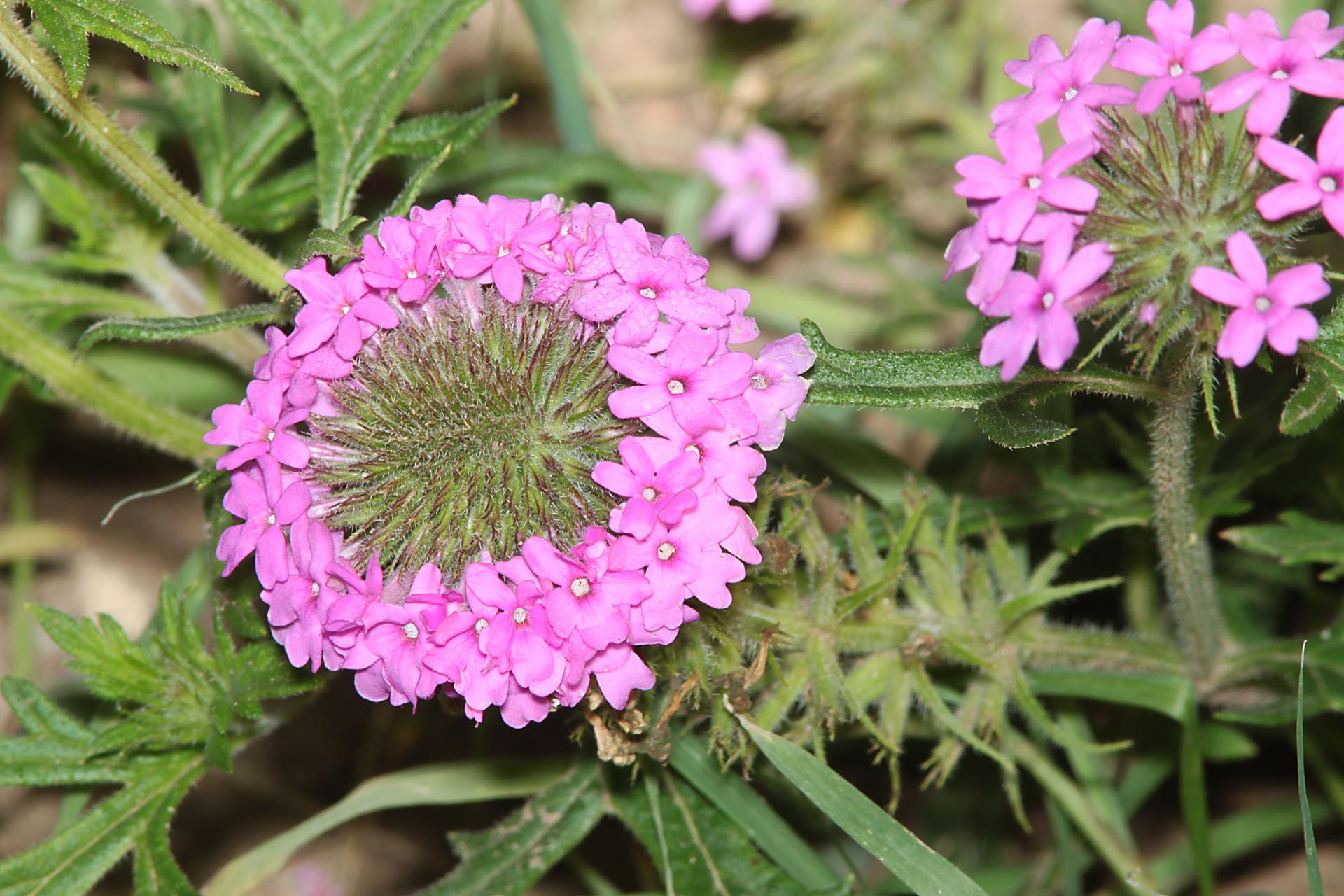
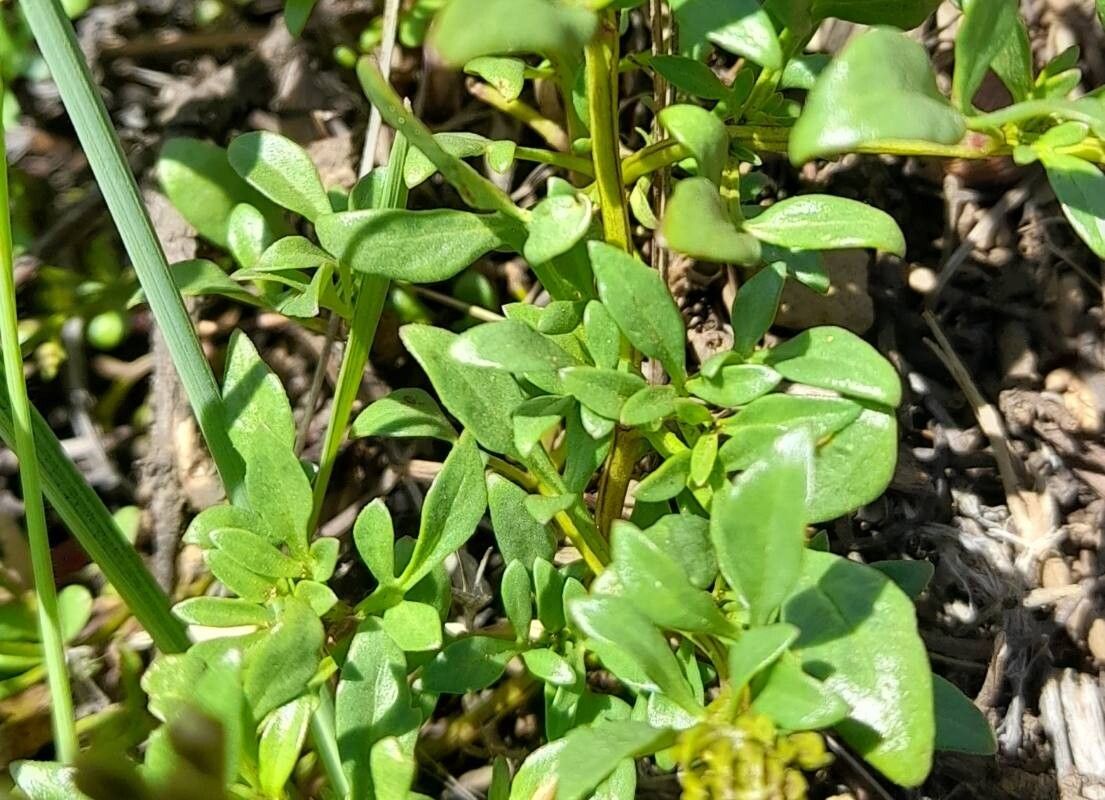
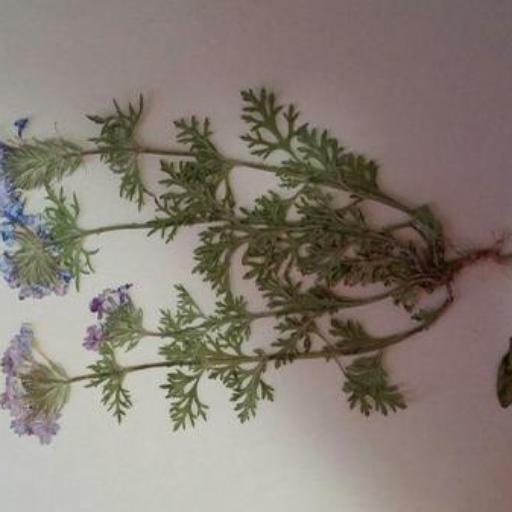
Typically, Goodding's verbena grows to a height of 1-2 feet and spreads about 2-3 feet. It features slender stems adorned with small green leaves that have serrated edges. The plant produces small, tubular flowers in shades of purple or lavender-blue.
Known for its nectar-rich flowers, Goodding's verbena attracts a variety of pollinators, including bees, butterflies, and hummingbirds. Additionally, it has medicinal properties that have been utilized by Native American tribes to treat various ailments.
This plant prefers full sun exposure but can tolerate partial shade in hotter climates. It requires well-draining soil and is drought-tolerant once established.
Overall, Verbena gooddingii is an attractive flowering perennial that adds color and interest to any garden or landscape while providing ecological benefits by attracting pollinators.
Southwestern mock vervain is fairly resistant to disease and typically does not suffer from illnesses. Still, it can be affected by pests and diseases present in its surroundings. These problems are usually not serious. In terms of care, the plant needs moderate maintenance. It should be pruned regularly to maintain a tidy appearance and healthy growth. Fertilizing can also help encourage flowering. Southwestern mock vervain is suitable for anyone with outdoor space, such as a garden or patio, and does not require extensive care experience. It may need more attention when grown indoors.
How to keep Verbena Gooddingii.
Light
Southwestern mock vervain is a sun-loving perennial herbaceous plant native to open habitats, frequently found in meadows and grasslands. It prefers full sun but can also tolerate partial sun.
Temperature
Southwestern mock vervain comes from tropical areas, where the climate is generally warm and humid. Consequently, it is adapted to high heat and humidity. It does not tolerate abrupt temperature shifts and prefers a consistent temperature environment, so it's important to prevent temperature swings indoors. It typically cannot withstand cold conditions and needs warmer temperatures for growth. If the ambient temperature falls too low, the plant may stop growing or even die.
Fertilizer
Proper fertilization is essential for the health and appearance of Southwestern mock vervain. Fertilize Southwestern mock vervain during summer, repeating the treatment monthly throughout the season. Nutrients power growth and help maintain the plant’s parts. Fertilization improves Southwestern mock vervain’s flowering display, ensuring the best blooms.
Botanical profile.
- Plant Type
- Herb
- Life Cycle
- Perennial
- Genus
- Verbena
- Family
- Verbenaceae
- Hardiness Zone
- 7-10
- Mature Height
- 0 cm to 30 cm
- Mature Spread
- 30 cm to 61 cm
- Leaf Color
- Green
- Leaf Type
- Deciduous
- Flower Color
- Purple, Lavender
- Flower Size
- 1.02 cm to 2.03 cm
- Bloom Time
- All year round
- Planting Time
- Spring, Summer, Autumn
- Harvest Time
- All year round
- Native Area
- Mexico
Other names.