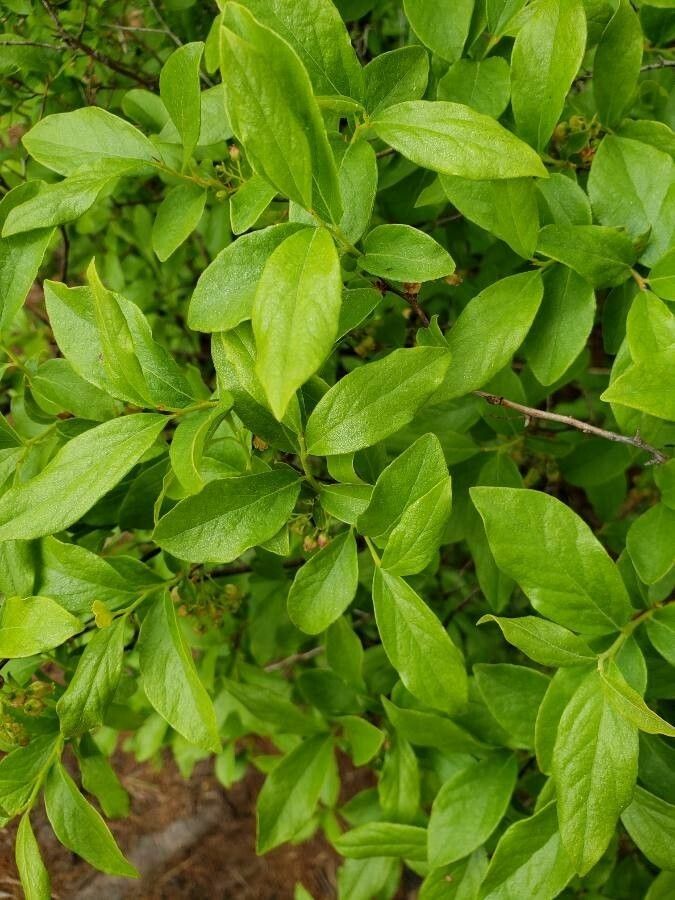
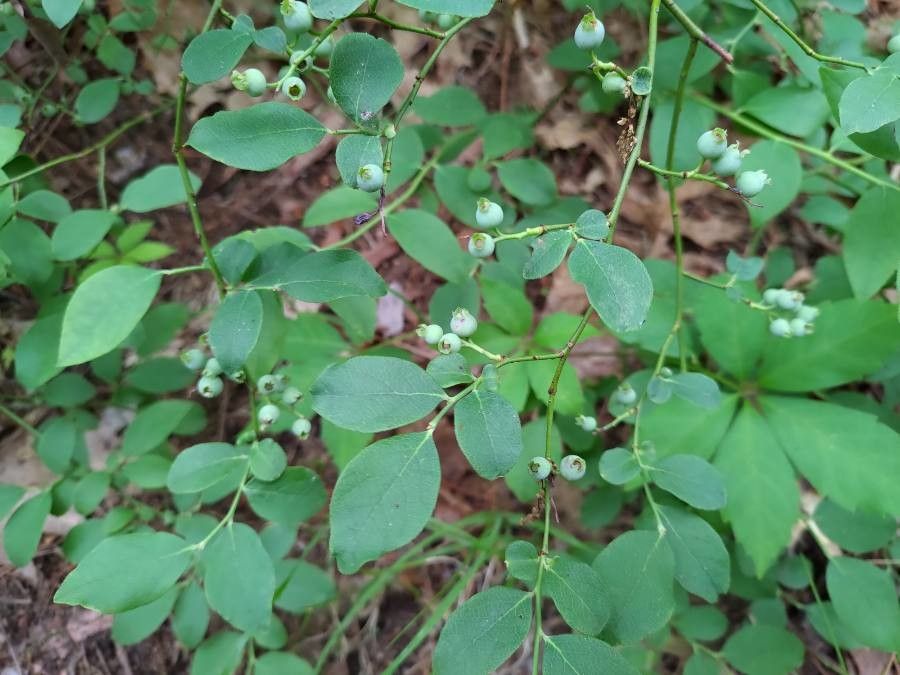
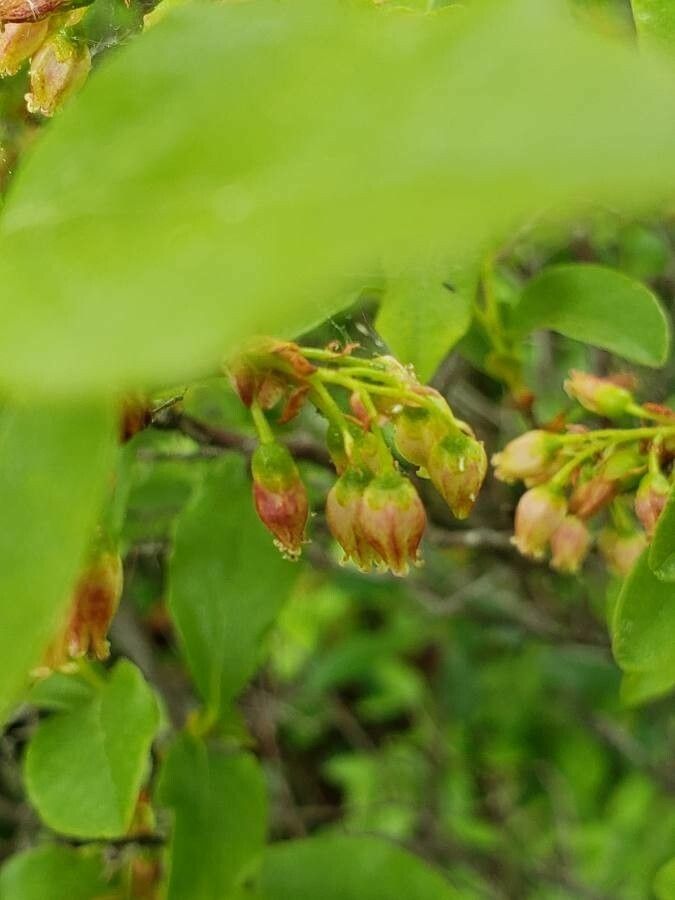
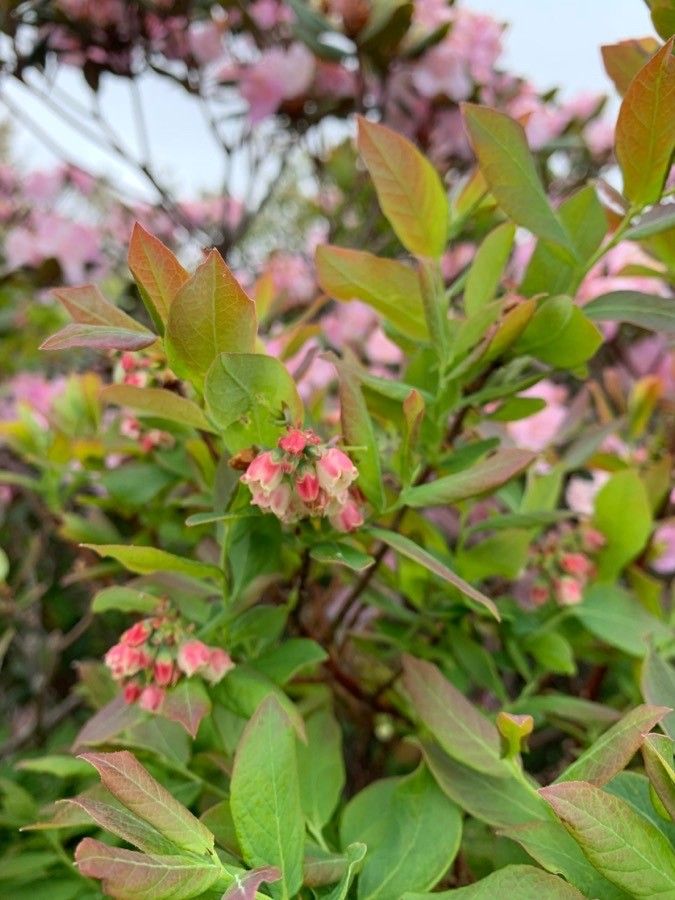
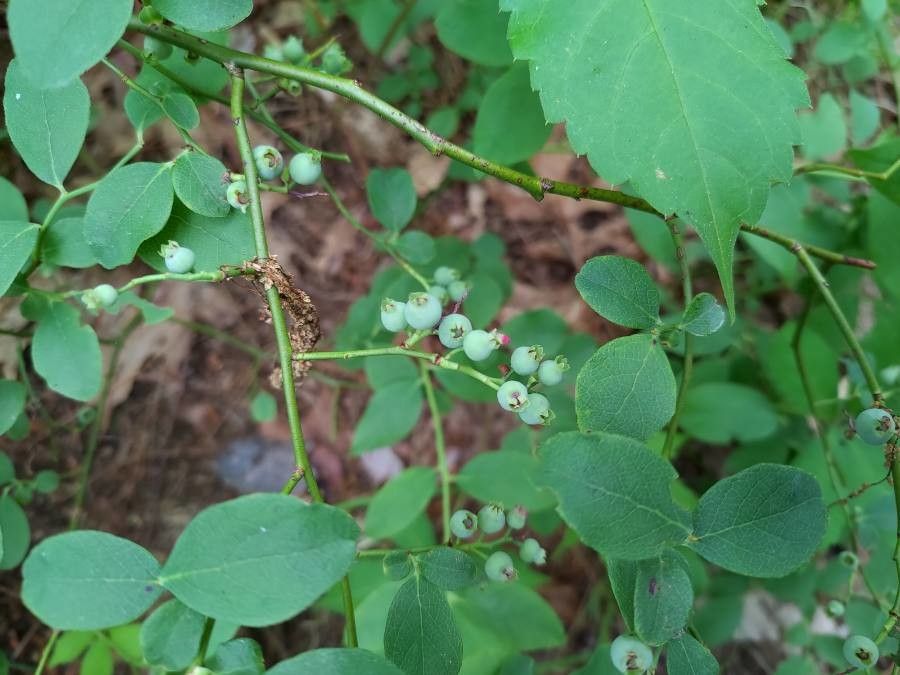
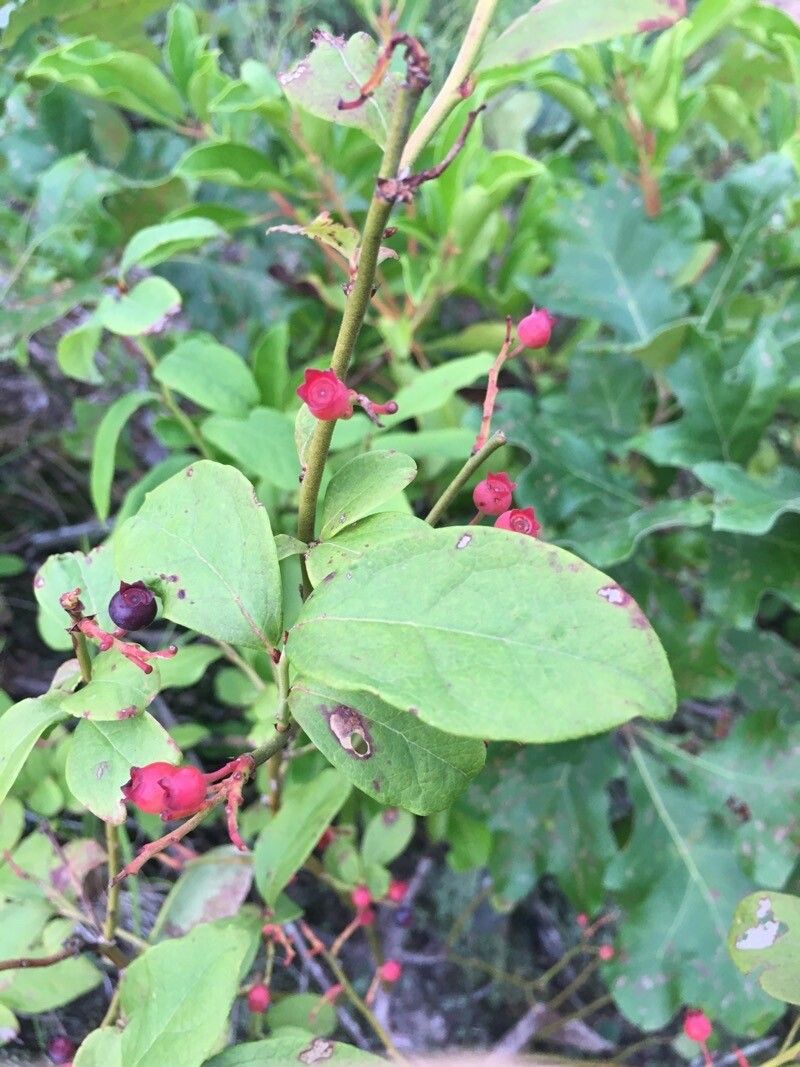
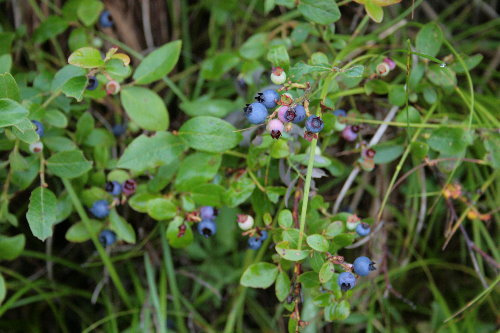
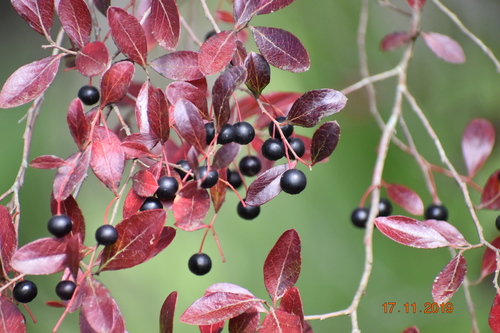
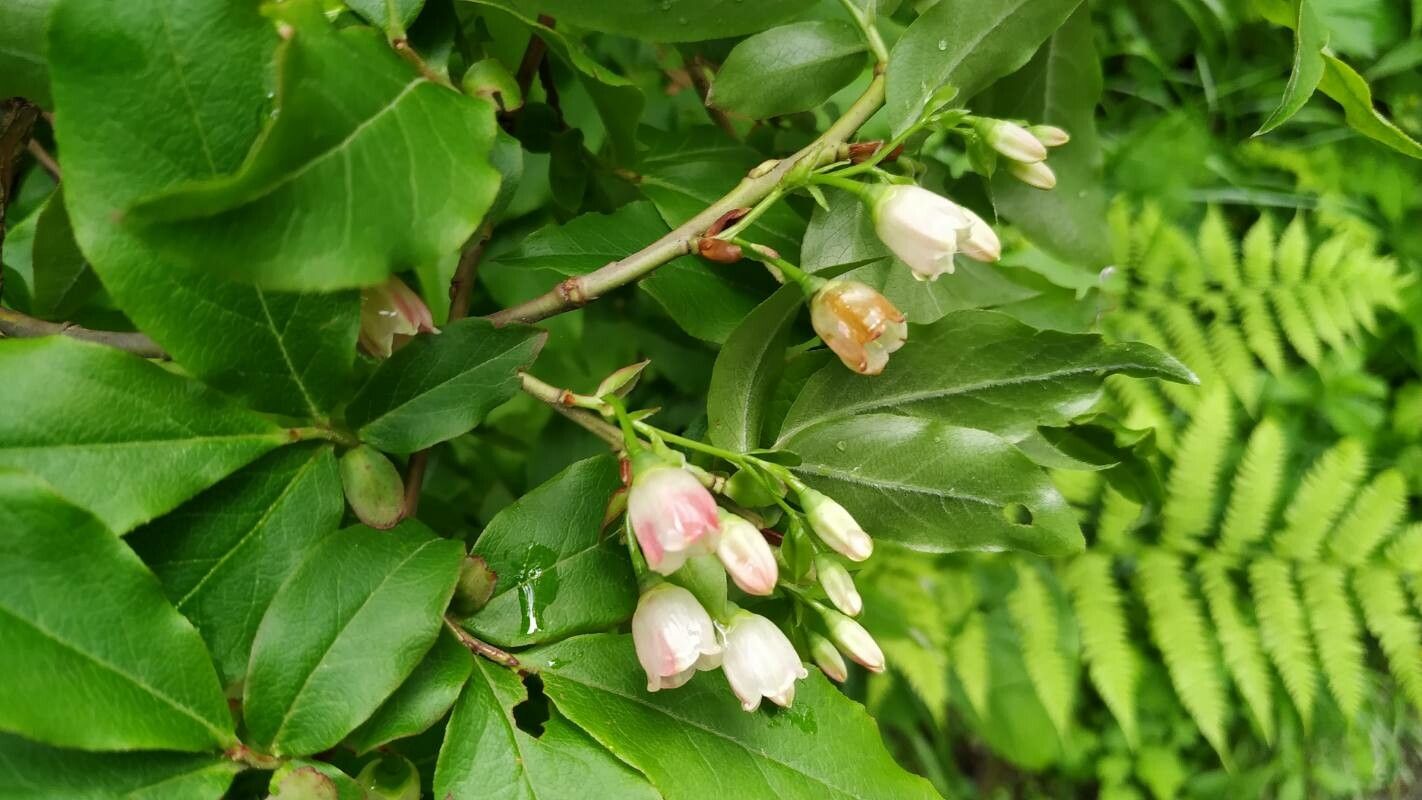
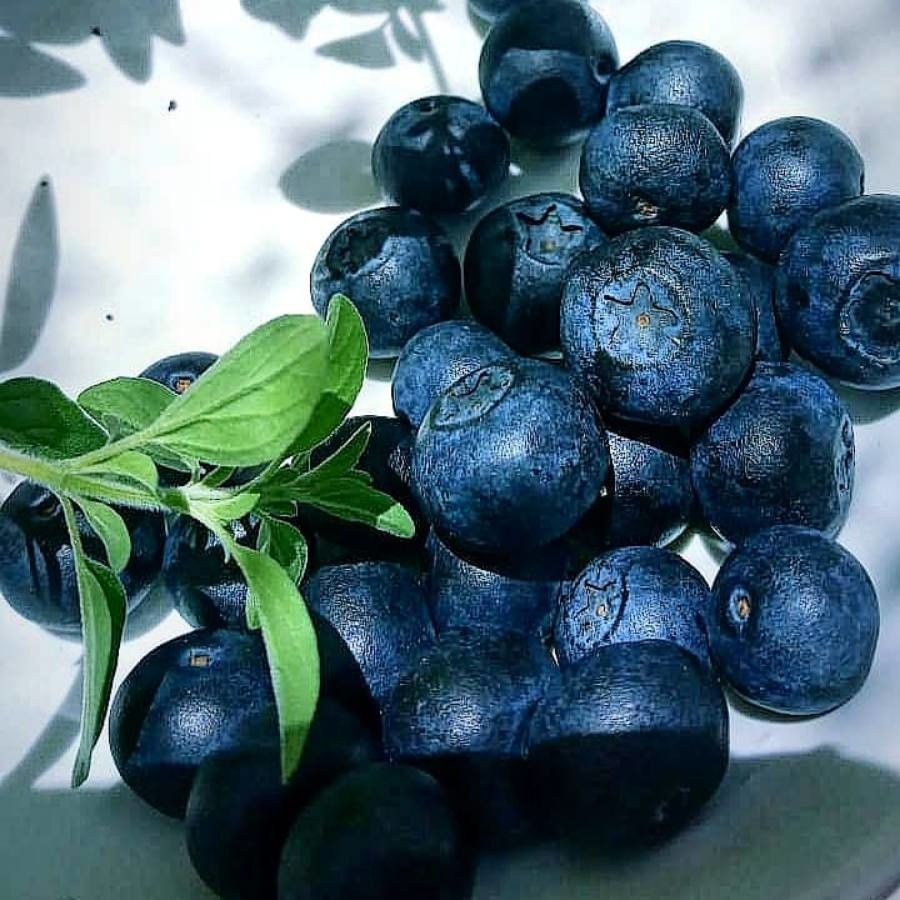
Vaccinium pallidum is a species of flowering plant in the heath family known by the common names hillside blueberry, Blue Ridge blueberry, late lowbush blueberry, and early lowbush blueberry. It is native to central Canada (Ontario) and the central and eastern United States (from Maine west to Wisconsin and south as far as Georgia and Louisiana) plus the Ozarks of Missouri, Arkansas, southeastern Kansas and eastern Oklahoma.Vaccinium pallidum is a deciduous shrub, erect in stature but variable in height. It generally grows 23 to 51 centimeters (9 to 20 in) tall, but depending on environmental conditions it ranges from 8 centimeters (3.2 inches) to one full meter (40 inches) in height. It is colonial, sprouting from its rhizome to form colonies of clones. The shrub has greenish brown to red bark on its stems, and the smaller twigs may be green, reddish, yellowish, or gray. The alternately arranged leaves are also variable. They are generally roughly oval and measure 2 to 6 centimeters (0.8–2.4 inches) long. They are green to yellowish or bluish in color, turning red in the fall. The flowers are cylindrical, bell-shaped, or urn-shaped and are borne in racemes of up to 11. They are white to pinkish or greenish in color, or "greenish white with pink striping", and about half a centimeter to one centimeter long. They are pollinated by bees such as bumblebees and Andrena carlini. The fruit is a berry up to 1.2 centimeters long. It is waxy blue to shiny black in color, or rarely pure white. It contains several seeds, a few of which are generally not viable. The plant reproduces sexually via seed and vegetatively by sprouting from the rhizome.Vaccinium pallidum grows in many types of habitat, including oak and chestnut woodlands, maple-dominated swamps, pine barrens, pine savanna, and a variety of forest types. It grows in the understory of trees such as red oak, black oak, white oak, post oak, chestnut oak, blackjack oak, Virginia pine, shortleaf pine, pitch pine, loblolly pine, longleaf pine, jack pine, eastern hemlock, red maple, and black cherry.Vaccinium pallidum is common on disturbed sites such as roadsides and abandoned fields. It also grows at climax in old-growth oak stands in the South Carolina piedmont. It can grow on dry, rocky soils, sandy and gravelly soils, and heavy clay. The climate is generally humid.The wild fruits are food for many types of bird and other animals. Each individual fruit has approximately eight calories. For humans the taste is "sweet to bland" and the fruit can be eaten fresh, in pies, or as jelly. The fruit is harvested and sold commercially in some areas, such as northeastern Alabama and northwestern Georgia. The plant is also grown as an ornamental.
Hillside Blueberry shows strong resistance to disease and is usually not vulnerable to illnesses. In terms of care, this plant is fairly low-maintenance. Planted outdoors, it needs only light watering, and larger plants typically do not require pruning. Smaller plants, however, should be trimmed after they have finished blooming. Hillside Blueberryt is appropriate for anyone with outdoor space, such as a garden or deck, and does not demand much gardening experience.
How to keep Vaccinium Pallidum.
Light
The hillside Blueberry grows best with moderate sunlight but can tolerate locations that receive more sun. Originating in sun-dappled settings, it benefits from sunlight to sustain steady, healthy growth. Excessive sun can stress it, while too little light can impede its development.
Water
Hillside Blueberry plants do best in well-drained, acidic soils. While they prefer consistent moisture, they can adapt to drought conditions. To prevent over-watering, it's recommended to water them every three weeks. If you're growing them outdoors, take natural rainfall into account during the growing season to ensure their moisture needs are met.
Temperature
The hillside Blueberry prefers moderate temperatures of 32 to 70 ℉ (0 to 21 ℃), matching its native growth conditions. In winter it requires cool temperatures between 0 to 32 ℉ (-18 to 0 ℃) to enter dormancy. During the summer it favors warmer temperatures ranging from 60 to 80 ℉ (16 to 27 ℃).
Fertilizer
The Hillside Blueberry plant needs adequate nutrients to achieve the best fruit production. Apply fertilizer in early spring to encourage new growth and bloom development. Consistent fertilizing keeps the plant healthy, produces tastier fruit, and prevents nutrient deficiency problems such as yellowing leaves and reduced fruit yield.
Pruning
Hillside Blueberry plants are low-growing shrubs known for their bell-shaped flowers and berries. To maintain their health and improve fruit production, it is best to prune them from early to late winter. Focus on removing damaged wood and thinning out older stems to encourage new growth and improve air circulation. This practice promotes vigorous spring growth, enhances fruit yield, and keeps the plants healthy.
Botanical profile.
- Plant Type
- Shrub
- Life Cycle
- Perennial
- Genus
- Vaccinium
- Family
- Ericaceae
- Hardiness Zone
- 3-8
- Mature Height
- 61 cm to 91 cm
- Mature Spread
- 61 cm to 91 cm
- Leaf Color
- Green, Yellow, Red, Gold
- Leaf Type
- Deciduous
- Flower Color
- White, Pink
- Flower Size
- 2.54 cm
- Bloom Time
- Mid spring, Late spring, Early summer
- Planting Time
- Spring, Summer
- Harvest Time
- Mid summer
Other names.
Reader questions.
What is the most effective way to water my Hillside Blueberry?
To promote excellent root development, it's recommended to place a garden hose at the base of the plant. Be sure to avoid directly spraying the leaves. If the plant is outdoors and exposed to direct sunlight, the leaves may need more watering. You can use bubblers or soaker hoses to moisten the roots. When adding or removing plants, consider using soaker hoses that can cover the entire garden or bed, enabling the roots to penetrate deeply. After watering, drain any excess water and allow the soil to dry before watering again. To prevent diseases, water at ground level. On a sunny day, it may be beneficial to spray the entire bush with water. Regardless of whether the plant is potted or in-ground, remember that Hillside Blueberries prefer deep watering rather than light sprinkling.
Why do I have to add fertilizer to my Hillside Blueberry plant?
Regular fertilization is crucial for the Hillside Blueberry plant to thrive and yield delicious fruit. The rapid growth of certain plant types can quickly deplete the soil of essential nutrients. Without regular fertilization, plants can face various problems, such as nutrient deficiency. Symptoms of nutrient deficiency in plants often manifest as yellow leaves, reddish discoloration, deformities in leaf shape, withered tips, or dieback in large areas of the plant. Additionally, nutrient deficiency can lead to bark disorders, slow growth, weak shoot development, and a lack of fruit production.
What are the sunlight requirements for Hillside Blueberry plants?
Hillside Blueberry plants require varying amounts of sunlight to thrive. Partial sun exposure amounts to about 3-6 hours of sunlight a day, while full sun exposure is above 6 hours of daylight. Originating from environments that enjoy a blend of light and shade, these plants perform best under moderate sunlight but can adapt to more intensely sunlit areas. It's essential to observe your garden's sunlight patterns closely to find spots that offer an optimal balance for your plants, ensuring their growth and health.
What is the ideal temperature range for Hillside Blueberry growth?
Hillside Blueberry thrives in a moderate temperature range of 32 to 70°F (0 to 21°C), mirroring its native environment conditions. In winter, it benefits from cooler temperatures ranging between 0 to 32°F (-18 to 0°C) to enter dormancy. Summertime requires warmer conditions, with ideal temperatures spanning from 60 to 80°F (16 to 27°C). Hillside Blueberry is known for its strong cold resistance, making special frost protection measures generally unnecessary. However, in extremely cold winters where temperatures are expected to drop below -35°C, it's crucial to protect the plant by wrapping its trunk and branches with insulating materials like non-woven fabric. Additionally, watering the plant abundantly before the first freeze of autumn is recommended to keep the soil moist and help prevent drought and water shortages during the colder months.
What do I do if I give Hillside Blueberry too much or too little water?
An overwatered Hillside Blueberry may display yellow leaves that eventually drop off and wilt. The plant may also appear dull and unhealthy, with mushy stems. When these signs start to show, it's important to adjust your watering schedule accordingly. Wilting can also indicate under watering, characterized by crispy and dry leaves. In such cases, check the dry soil and provide a thorough watering when necessary. However, even with sufficient water, the damaged root system may cause the plant to continue looking dry with yellow leaves for a few days. Once the plant recovers, the yellowing of leaves will cease. When you have a Hillside Blueberry indoors, always check the moisture levels in the pot and avoid overwatering. Look out for signs of black spots, and if present, allow the soil to dry out by withholding watering for a few days. Overwatering can lead to root rot, so if you notice discolored and slimy roots, consider transferring the plant to a different pot. Preventing root rot is crucial, so don't let the soil become too soggy. When planting your Hillside Blueberry outdoors, it is advised to dig a little deeper. If the soil feels too dry when checked with your fingers, it might indicate underwatering. Adequate watering is necessary to assist the plant in recovering.
When should I fertilize my Hillside Blueberry?
The ideal time to fertilize Hillside Blueberry is early spring, before the buds appear. During this time, the plant utilizes the energy reserves it stored up during winter dormancy to support new growth. To ensure the necessary nutrients are available for bloom development, it is recommended to apply fertilizer about 2 to 4 weeks prior to when you anticipate blooming. This gives enough time for the fertilizer to be absorbed and distributed throughout the plant. While you can continue fertilizing during spring, it is not advised to fertilize in autumn as it can result in excessive foliage growth late in the season, making the leaves susceptible to winter damage.
How does artificial lighting support plant growth?
Indoor plants, including Hillside Blueberries, might require artificial lighting to compensate for insufficient natural sunlight, especially during winter or in less sunny locations. Artificial lights, such as LED lights, can be tailored to provide specific wavelengths necessary for plant growth. The intensity of artificial light required varies with the type of plant: full sun plants need 30-50W per square foot, partial sun plants require 20-30W per square foot, and full shade plants need 10-20W per square foot. For optimal growth, the light source should be positioned 12-36 inches above the plant and kept on for 8-12 hours per day to mimic natural daylight hours.
How does Hillside Blueberry react to low temperatures?
Hillside Blueberry is very cold-tolerant and can thrive well above 0°C. However, during winter, it's preferable to keep the temperature above -30°C. Exposure to temperatures below -35°C might not show immediate adverse effects during the winter, but by spring, the plant's branches may become brittle and dry, leading to a lack of new shoot growth. To mitigate damage from such low temperatures, dead branches that failed to produce new leaves should be pruned away in spring.
How much should I water my Hillside Blueberry plant?
To care for Hillside Blueberry plants, it is important to water them deeply and infrequently. If the plants are in pots, soak them in a gallon of water each time to account for their limited water storage. In cold regions, water the plants every 3 to 5 days, ideally in the morning when the soil is dry. Check the top 2-3 inches of soil; if it's dry, give the plant a thorough watering. During hot days, monitor soil moisture daily to prevent it from drying out. If you have a garden, water the plants once a week in hot climates, ensuring the top 2-3 inches of soil are not too dry. Be mindful of rainfall and avoid overwatering to prevent root rot. When planting outdoors, add mulch 3 to 4 inches deep to conserve water. For sandy soil, water more frequently as it drains faster. In contrast, clay soil requires less frequent watering to avoid root rot. Keep track of watering dates on a calendar and watch for drooping leaves as a sign that watering may be needed.
When is the best time to not fertilize my Hillside Blueberry?
To ensure the healthy growth of Hillside Blueberry plants, it is important to follow a few guidelines regarding fertilization. Firstly, it is advisable to avoid fertilizing the plants during their first year of growth. Even in subsequent years, fertilizer should only be provided if necessary. Secondly, refrain from fertilizing if you pruned 20% or more of the plant in the previous year. Additionally, it is best to hold off on fertilizing plants that are diseased or damaged, as this can cause more harm than good. It is crucial to address the root cause of any issues before considering fertilization. Furthermore, avoid fertilizing Hillside Blueberry plants after the peak of summer, as this can lead to excessive growth just before winter. Fertilization should also be avoided during hot and dry periods, as dry soil is not as effective at delivering fertilizer, and it could stimulate growth that requires additional water which might not be available. It is recommended to apply fertilizer earlier in the season when temperatures are cooler. Lastly, be mindful that Hillside Blueberry plants can absorb fertilizer that has been applied to nearby plants or lawns, so take care to avoid inadvertently providing a double-dose of fertilizer.
What are the symptoms of inadequate sunlight in Hillside Blueberry?
When Hillside Blueberry plants receive insufficient light, they exhibit several symptoms. These include smaller new leaves, leggy or sparse growth, faster leaf drop, slowed or halted growth, paler new leaves, chlorosis (yellowing leaves due to a breakdown of chlorophyll), sunscald (damage from intense light exposure), leaf curling as a defense against excessive sunlight, wilting from rapid water loss, and leaf scorching characterized by brown, dry edges or patches on leaves. These symptoms reflect the plant's struggle to adapt to inadequate light conditions.
What should be done if Hillside Blueberry is exposed to high temperatures?
During the summer months, it's crucial to ensure that the Hillside Blueberry does not experience temperatures above 32°C. Exceeding 35°C can cause the leaves to lighten in color, and tips may become dried and withered, increasing susceptibility to sunburn. To protect the plant under high temperature conditions, trim away the sunburned and dried parts and relocate the plant to a shaded location or utilize a shade cloth to shield it from the intense midday and afternoon sun. Regular watering in the morning and evening is essential to maintain soil moisture and help the plant cope with the heat.