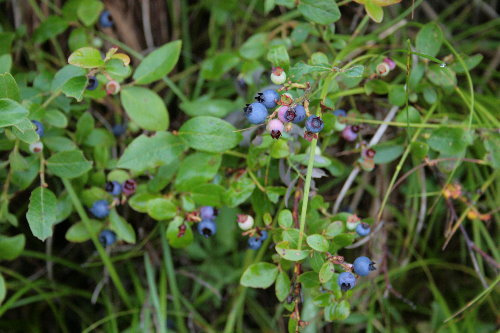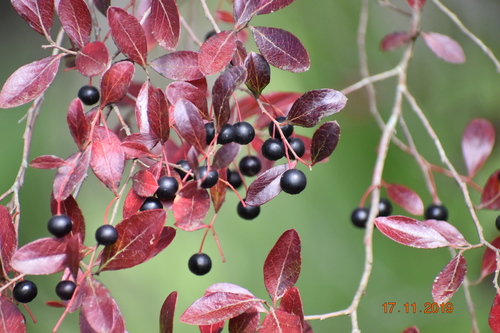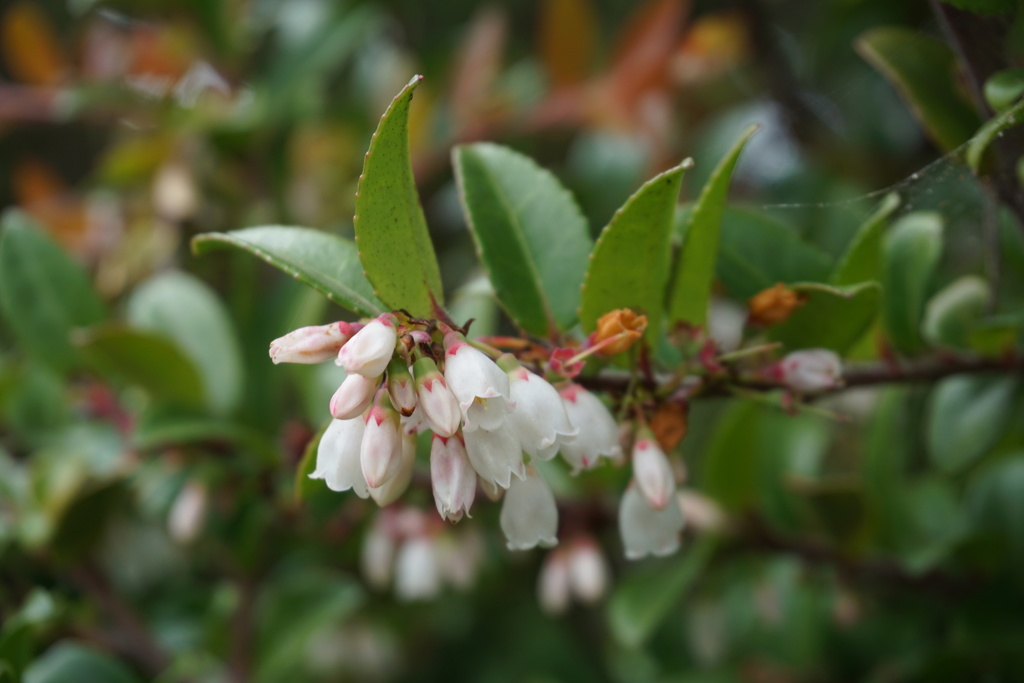
Vaccinium ovatum, commonly known as the evergreen huckleberry, is a flowering plant species in the heath family, Ericaceae. It is native to the western coast of North America, ranging from British Columbia to California. This plant typically grows as a shrub or small tree, reaching heights of up to 4 meters. Its leaves are dark green, glossy, and oval-shaped with serrated edges.
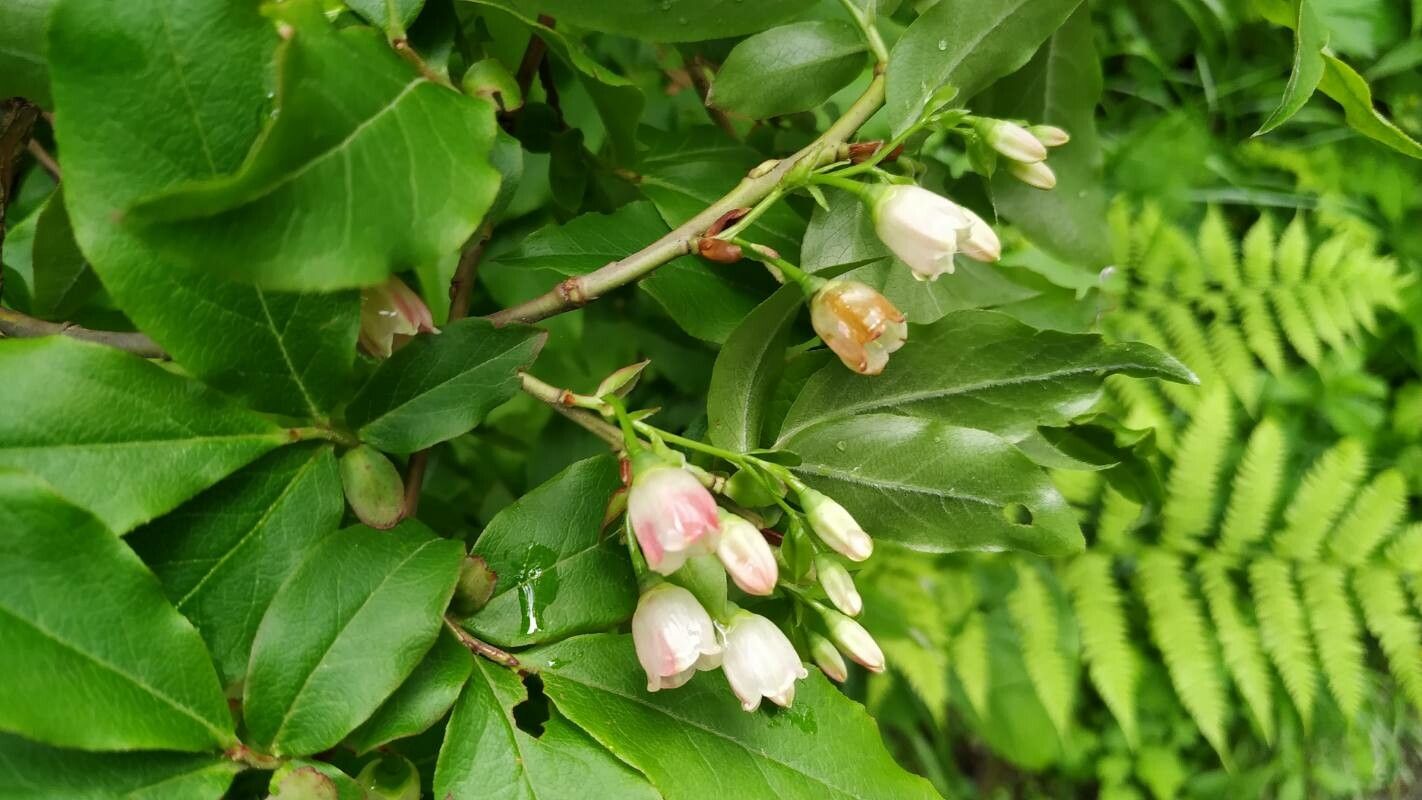
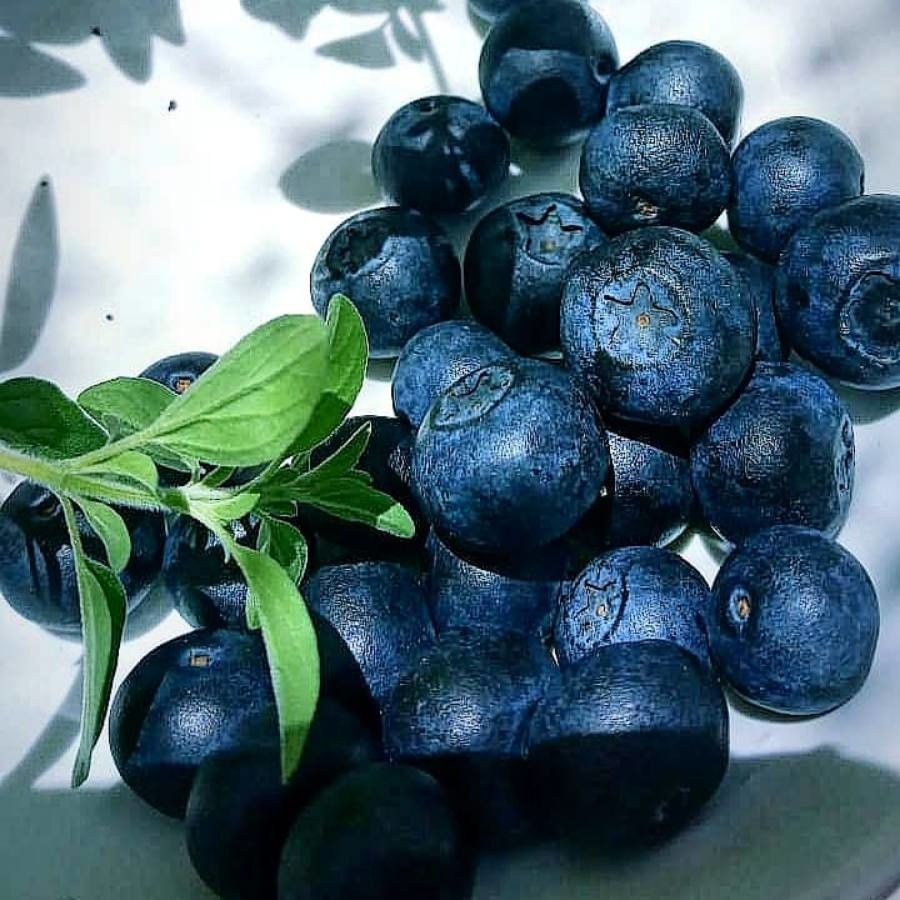
The evergreen huckleberry produces small white or pinkish flowers that bloom from late spring to early summer. These flowers are followed by dark blue-black berries that ripen in late summer to early fall. The berries are edible and have a sweet-tart flavor.
The plant thrives in moist, well-drained soil and partial shade but can also tolerate full sun if adequate moisture is provided. It is commonly found in coastal forests, woodlands, and along streams.
Indigenous peoples have used Vaccinium ovatum for medicinal purposes for centuries, leveraging its high antioxidant content to treat colds, coughs, sore throats, stomachaches, and more.
Overall, Vaccinium ovatum is an attractive ornamental shrub that provides year-round interest with its glossy foliage. It also provides food for wildlife, such as birds, which feed on its berries during winter months when food sources are scarce, making it an important part of the ecosystems it inhabits.
Evergreen huckleberry is fairly disease-resistant and is generally not susceptible to illnesses. Regarding care, this plant is fairly low-maintenance. When grown outdoors it needs little watering, and larger specimens typically do not require pruning. Smaller plants, however, should be pruned after they finish blooming. Evergreen huckleberryt is appropriate for anyone with an outdoor area, such as a garden or deck, and does not demand much care experience.
How to keep Vaccinium Ovatum.
Light
Evergreen huckleberry does well in the full strength of daylight, yet can also persist in various levels of shade. Coming from habitats where sunlight is consistently present, it uses that solar energy to support healthy growth. Too much or too little light can interfere with its normal growth pattern.
Water
Evergreen huckleberry thrives in high humidity and can withstand drought conditions. It typically needs watering every 1-2 weeks. As an evergreen plant, it keeps its leaves all year round, which helps it manage water efficiently during dry spells. This makes it relatively easy to care for.
Temperature
The evergreen huckleberry is indigenous to areas with average annual temperatures of 8 to 18 ℃ (46 to 64 ℉), but can thrive in temperatures between 15 and 35 ℃ (59 to 95 ℉). In summer the plant prefers warm conditions and needs adequate irrigation to avoid overheating; in winter, temperatures below 0 ℃ (32 ℉) can cause damage, so careful management during frost periods is necessary.
Fertilizer
Fertilize your Evergreen huckleberry in early spring to encourage healthy growth. Regular feeding improves overall health, leading to vigorous development, increased tolerance of challenging conditions, and enhanced resistance to pests and diseases. Follow a specific fertilization routine for your Evergreen huckleberry to keep the foliage bright with deep color and a full, lush appearance.
Pruning
The evergreen huckleberry is a versatile shrub that retains its green leaves year-round and produces edible black berries. To keep the plant healthy and productive, prune it in late spring after it has finished flowering. This practice helps remove dead branches, encourages healthy growth, and increases berry production. Additionally, proper pruning can prevent disease, improve airflow, and help maintain a manageable size for the shrub.
Pot & Repot
When repotting Evergreen huckleberry, choose a pot 1-2 inches (2.5–5.1 cm) larger with ample drainage. Use a well-draining potting mix. Repot in spring or fall, ensuring the root ball is slightly lower than the rim of the flower pot. Water thoroughly after repotting and place it in a warm spot with indirect sunlight.
Botanical profile.
- Plant Type
- Shrub
- Life Cycle
- Perennial
- Genus
- Vaccinium
- Family
- Ericaceae
- Hardiness Zone
- 7-9
- Mature Height
- 0.3 m to 2.74 m
- Mature Spread
- 3.05 m
- Leaf Color
- Green, Red, Bronze
- Leaf Type
- Evergreen
- Flower Color
- Pink, White
- Flower Size
- 2.54 cm
- Bloom Time
- Mid spring, Late spring, Early summer
- Planting Time
- Spring
- Harvest Time
- Mid summer, Late summer
Other names.
Reader questions.
How should I water my Evergreen huckleberry plant?
Your Evergreen huckleberry is not particular about how you water it, so you can use any watering tool you have available. This includes watering cans, hoses, or even cups. Just make sure to water the soil directly and evenly, so all parts of the root system receive the necessary moisture. Using filtered water can be helpful to avoid harmful particles that may be present in tap water. Additionally, it is best to use water at or slightly above room temperature, as very cold or hot water can be a bit shocking for the plant. However, the Evergreen huckleberry generally responds well to any type of water you provide.
Why should I put fertilizer on my Evergreen huckleberry?
To ensure your Evergreen huckleberry plant stays healthy, regardless of the type you have, regular fertilization is key. By providing the right nutrients, your plant will grow stronger and be better equipped to handle challenging growing conditions and ward off diseases and pests. It's important to keep the foliage intact as it adds to the plant's attractiveness. To achieve this, create and stick to a fertilization schedule that is tailored to your Evergreen huckleberry. This will result in vibrant, lush leaves with a deep color.
What are the sunlight requirements for evergreen huckleberry?
Evergreen huckleberry requires full sun exposure of above 6 hours of sunlight daily to thrive optimally, but it can also manage in partial sun to full shade conditions, which is about 3-6 hours of sunlight. The plant originates from environments that are constantly bathed in sunlight, using it to foster healthy growth. However, the right balance of light and shade is crucial, as too much or too little light may disrupt its normal growth patterns. Monitoring how sunlight moves through your garden and choosing spots that offer an optimal mix of light can ensure the well-being of your plants.
What are the ideal temperature conditions for growing Evergreen Huckleberry?
Evergreen Huckleberry thrives in regions with average annual temperatures between 8 to 18°C (46 to 64°F), and can tolerate temperatures from 15 to 35°C (59 to 95°F). During summer, it prefers warm temperatures and requires adequate irrigation to prevent overheating. In winter, it can tolerate cold but temperatures lower than 0°C (32°F) might cause damage. The plant has strong cold resistance and usually does not require special frost protection unless winter temperatures are expected to drop below -15°C. To protect against cold, wrap the trunk and branches with materials like non-woven fabric. Before the first freeze in autumn, water the plant abundantly to ensure the soil remains moist through the cold months.
What do I do if I give my Evergreen huckleberry plant too much or too little water?
When you have outdoor plants, especially newly planted ones or seedlings, they can suffer from lack of watering. It's important to remember to water them enough for the first few months when they are small or newly planted. Once the roots are established, Evergreen huckleberry plants can rely on rain for hydration most of the time. If you have Evergreen huckleberry plants in pots, overwatering is more likely to happen. If you accidentally overwater your plant, you should take immediate action to fix the situation. First, stop watering the plant to minimize the effects of overwatering. Then, carefully remove the plant from its pot to inspect the roots. If you don't find any root rot, you can return the plant to its container. But if you do find signs of root rot, trim away the affected roots and consider using a fungicide to prevent further damage. Lastly, repot the Evergreen huckleberry in well-draining soil. On the other hand, underwatering is easier to fix. If you don't water the plant enough, the leaves may droop, dry out, and fall off. However, after sufficient watering, the leaves will quickly return to their normal state. So, make sure to adjust your watering frequency as soon as you notice underwatering.
When should I fertilize my Evergreen huckleberry to get the best results?
To keep your Evergreen huckleberry healthy and growing well, it's best to fertilize it in late winter or early spring. This gives the plant the nutrients it needs to thrive once the weather warms up. If you live in a warm climate region, it's also helpful to give the huckleberry another round of fertilization in early fall. This not only provides additional nutrients for the following growing season, but also makes the plant more resilient to winter cold, reducing the risk of foliage damage. Fertilizing earlier in the fall ensures that new branches have enough time to grow and withstand the cold winter.
How can artificial lighting be used for indoor evergreen huckleberry plants?
Indoor evergreen huckleberry plants can benefit from artificial lighting, especially when natural sunlight is insufficient, like during winter or in less sunny spaces. LED lights are recommended due to their ability to be customized to emit specific wavelengths needed by plants. For full sun plants, 30-50W per square foot is required, for partial sun plants 20-30W per square foot, and for full shade plants, 10-20W per square foot. The artificial light should be placed 12-36 inches above the plant to mimic natural sunlight and be kept on for 8-12 hours per day to simulate the natural duration of daylight.
What should I do if the Evergreen Huckleberry experiences temperatures below -15°C?
Although the Evergreen Huckleberry is cold-tolerant, temperatures below -15°C may lead to brittle and dry branches by spring, with a failure to produce new shoots. To mitigate this, prune away any dead branches in the spring to encourage new growth.
How often should I give water to my Evergreen huckleberry plant?
When it comes to watering outdoor plants, most of them can rely on rainfall. However, if you live in an area with limited rainfall, you'll need to water your plants adequately. In the spring and fall, watering every 2 weeks should be enough, but during the summer, you'll need to water more frequently. In winter, when plants don't grow as much, water sparingly or not at all. If your Evergreen huckleberry is young or newly planted, it will need more frequent watering to help it establish and grow. For potted plants, there are two ways to determine how often to water your Evergreen huckleberry. One option is to set a predetermined watering schedule, such as once a week or every other week. However, this may not always be accurate for your specific growing conditions. Another approach is to check the soil moisture and water when the top two to four inches have dried out completely. This method takes into account the plant's water needs and the environment.
When is it best not to fertilize my Evergreen huckleberry plant?
There are specific times throughout the year when you should avoid fertilizing your Evergreen huckleberry. First, avoid fertilizing during the early and mid-winter months when the plant is dormant and doesn't require feeding. It is also not recommended to fertilize during late spring and summer because the weather is usually hotter and dryer, which can have a detrimental effect on the plant if fertilized. To prevent any issues, it is best to stick to a fertilization schedule that involves feeding only during early spring and early fall.
What are the symptoms of light deficiency or excessive exposure in evergreen huckleberry?
Evergreen huckleberry shows several symptoms when it experiences light deficiency or excess. Light deficiency can lead to small leaves, leggy or sparse growth, faster leaf drop, slower or stopped growth, and lighter-colored or chlorotic leaves. Excessive sunlight causes symptoms like chlorosis, sunscald, leaf curling, wilting, and leaf scorching. These issues indicate that the plant is not in an ideal lighting condition, either lacking the necessary sunlight for photosynthesis or being damaged by too much direct exposure.
How does high temperature affect Evergreen Huckleberry, and what are the solutions?
During summer, it's crucial to keep the Evergreen Huckleberry below 35°C. Temperatures exceeding 38°C may cause the leaves to lighten in color and the tips to become dry and withered, making the plant more susceptible to sunburn. To address this, trim away the sunburned and dried parts of the plant. Move the plant to a shadier location or use a shade cloth during the midday and afternoon sun. Ensure the soil remains moist by watering the plant in the morning and evening.