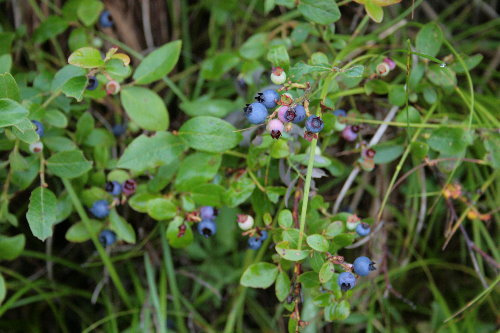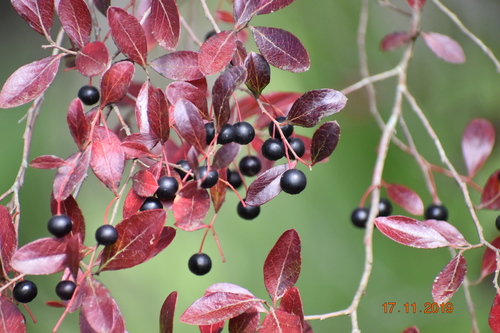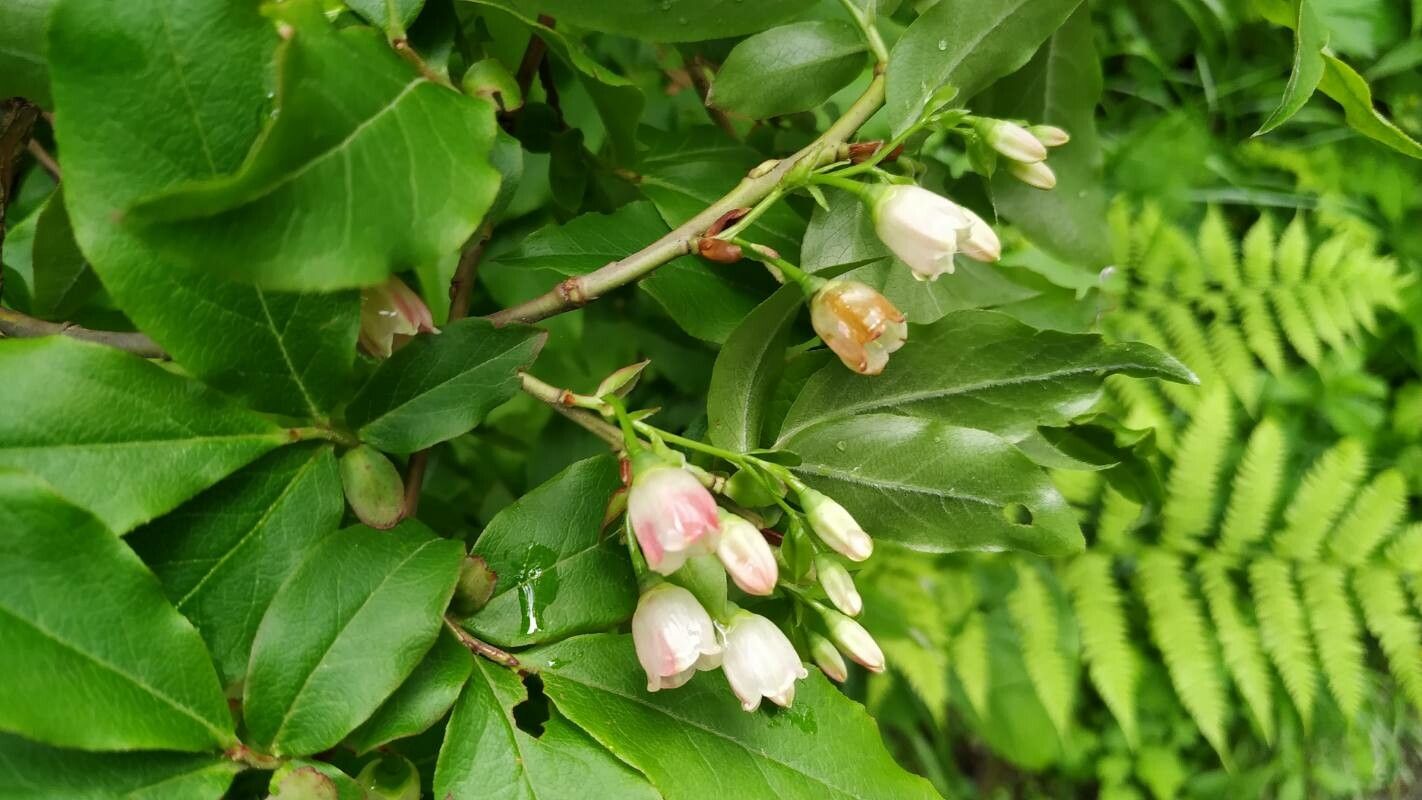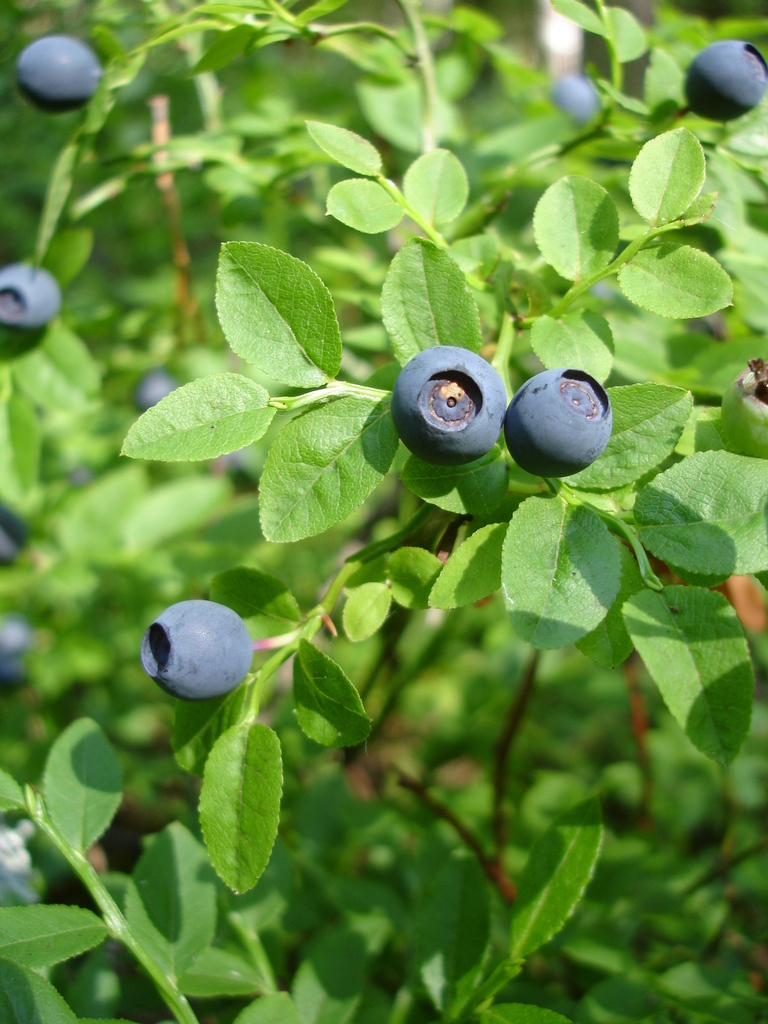
Vaccinium myrtillus, commonly known as bilberry, is a small shrub belonging to the Ericaceae family. It is native to Europe, Asia, and North America and can typically be found in forests, heaths, and moors. The plant usually grows up to 60 cm in height, with dark green, oval-shaped leaves that have serrated edges.
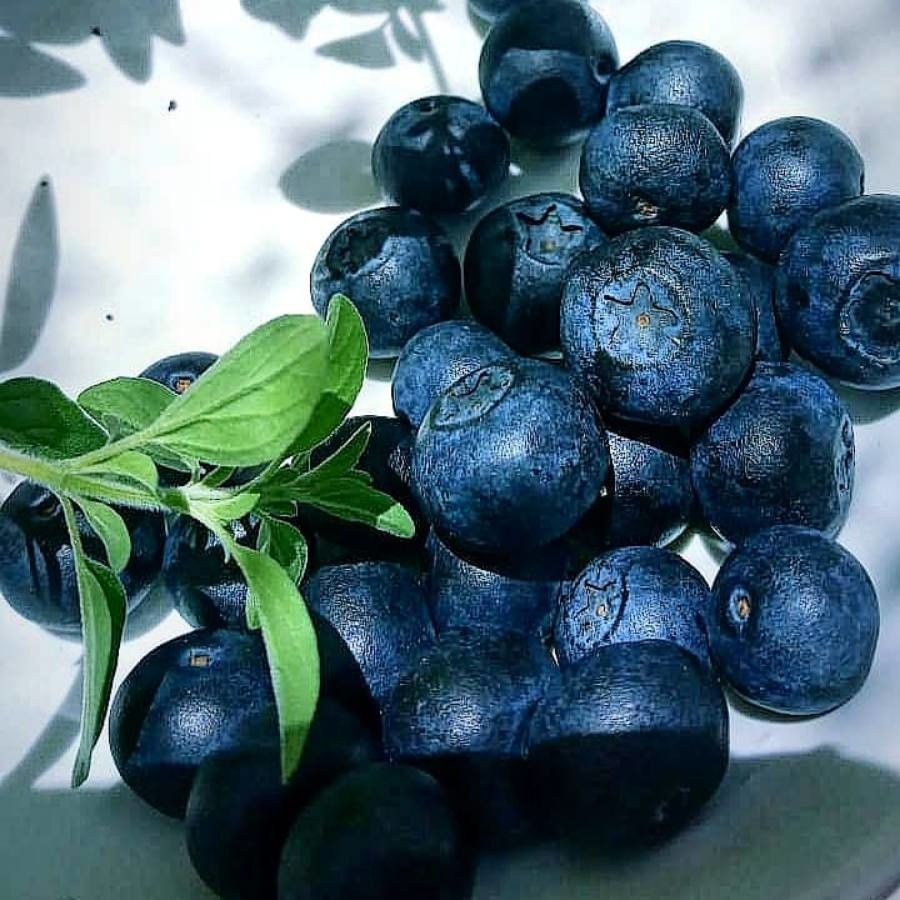
Bilberry produces small, blue-black berries that are edible and sweet. These berries are rich in antioxidants such as anthocyanins, which give them their distinctive color. They have traditionally been used for medicinal purposes, including improving vision, reducing inflammation, and treating diarrhea.
The plant's leaves have also been utilized for their tannin content, which provides astringent properties. This makes them useful for treating skin conditions such as eczema and wounds.
Bilberry is also popular in the food industry, where it is used in jams, jellies, and baked goods due to its sweet flavor profile.
Overall, Vaccinium myrtillus has a variety of uses, ranging from medicinal to culinary applications, making it an important plant species both culturally and economically.
Bilberry is fairly disease-resistant and typically not prone to illnesses. In terms of care, the plant is relatively low-maintenance. When grown outdoors it needs only minimal watering, and larger plants typically do not require pruning. Smaller plants, however, should be trimmed after they finish blooming. Bilberryt is appropriate for anyone who has an outdoor area, such as a garden or deck, and it does not demand much prior care experience.
How to keep Vaccinium Myrtillus.
Light
Bilberry does best in lighting that is neither overly bright nor too faint. Although it can withstand continuous sun exposure, it performs optimally with moderate sunlight. Its roots, adapted to forest habitats, have evolved to find shelter beneath tree cover, so it tolerates slight shade. When light is either too little or too much, bilberry’s vigor can decrease, which negatively affects its growth.
Water
Bilberry plants thrive in well-drained, acidic soils and require consistent moisture for optimal growth. It's best to water them every three weeks, allowing the soil surface to dry out slightly between waterings. Although bilberry plants have some drought tolerance, they prefer higher humidity levels and are better suited for cooler climates. They are typically grown outdoors.
Humidity
This plant will thrive in moderate humidity, which is probably the level in your home. However, misting it a few times a week can be very beneficial. Make sure the room has good ventilation.
Temperature
Bilberry is native to regions where temperatures range from 32 to 90 °F (0 to 32 °C). The plant favors cooler climates and performs best under those conditions. During episodes of extreme heat or cold, adjustments may be necessary, and it is advisable to establish a controlled environment that provides the appropriate temperature.
Fertilizer
The Bilberry plant needs adequate nutrients for optimal fruit production. Fertilize in early spring to encourage new growth and bloom development. Regular fertilization helps the plant stay healthy, produce more delicious fruit, and prevents nutrient deficiency issues like yellow leaves and poor fruit production.
Pruning
Bilberry plants thrive when they are carefully pruned. This involves removing dead wood and thinning the branches to improve air circulation. The best time to prune is from early to late winter, which helps maintain the plant's shape, encourages healthier growth, and boosts fruit production for the following season. Regular pruning also rejuvenates older plants.
Toxicity
Vaccinium myrtillus has no toxic effects reported.
Further reading →
The toxicity and danger assessments provided are for reference only. We do not assure their accuracy, so it's crucial not to depend on them. Seek professional advice when necessary for accurate guidance.
Botanical profile.
- Plant Type
- Shrub
- Life Cycle
- Perennial
- Genus
- Vaccinium
- Family
- Ericaceae
- Hardiness Zone
- 2-8
- Mature Height
- 15 cm to 61 cm
- Mature Spread
- 30 cm
- Leaf Color
- Green, Red
- Leaf Type
- Deciduous
- Flower Color
- Pink
- Flower Size
- 0.05 cm to 0.05 cm
- Bloom Time
- Late spring, Early summer
- Planting Time
- Autumn, Winter, Spring
- Harvest Time
- Mid summer
- Native Area
- North America
Other names.
Reader questions.
How should I water my Bilberry plant?
To help the plants develop strong roots, place a garden hose at the base rather than spraying the leaves directly. If the plants are outdoors and in direct sunlight, the leaves will need more water. Consider using bubblers or soaker hoses to keep the roots moist. When adding or removing plants, use soaker hoses that cover the entire garden or bed to ensure deep root growth. After watering, drain any excess water and allow the soil to dry before watering again. Water at ground level to prevent diseases. On a sunny day, it can be beneficial to spray the entire bush with water. Whether potted or in-ground, remember to give Bilberry plants deep watering instead of light sprinkling.
Why should I put fertilizer on my Bilberry?
Regular fertilization is important to provide Bilberry with the necessary nutrients for its health and optimal growth. This is especially crucial because the growth of plants, especially fast growing types, depletes the soil of nutrients. By ensuring a steady supply of nutrients, Bilberry can produce more delicious fruit. If plants are not fertilized over a long period of time, they can face numerous problems. Nutrient deficiency can result in issues with foliage such as yellow leaves, reddish coloration, shape deformities, withered tips, or significant dying off of plant parts. Additionally, certain nutrient deficiencies can cause problems with bark, slow growth, poor shoot development, and a lack of fruit production.
What are the sunlight requirements for bilberry plants?
Bilberry plants thrive in conditions that offer a balanced exposure to sunlight, with a preference for moderate light. They can tolerate both partial and full sun, with partial sun defined as about 3-6 hours of sunlight and full sun as more than 6 hours. However, these plants fare best when they receive light that is neither too intense nor too dim, reflecting their forest origin where they grow beneath tree cover. Too little or too much light may diminish the bilberry's growth and vitality.
What is the ideal temperature range for growing Bilberry?
Bilberry thrives in cooler climates, ideally within a temperature range of 32 to 90°F (0 to 32°C). The plant has strong cold resistance, but during extreme temperatures, either cold or hot, creating a controlled environment is recommended to maintain the desired temperature conditions. For winters with temperatures expected to drop below -40°C, cold protection is important. This can include covering the trunk and branches with non-woven fabric or cloth. Additionally, watering the plant abundantly before the first freeze in autumn ensures the soil remains moist, which supports the plant during winter and early spring.
What do I do if I give Bilberry too much or too little water?
If a Bilberry plant is overwatered, it may exhibit yellowing, dropping, and wilting leaves. The plant may also appear dull and unhealthy, with mushy stems. When these signs start to show, it is advisable to adjust your watering schedule. However, wilting can also indicate under watering. In this case, the leaves may become crispy and dry compared to the soft, wilted leaves of an overwatered plant. If the soil is dry and simply watering the plant is not enough, give it a full watering in due time. Sufficient water will help the Bilberry recover, but the plant may still have dry and yellow leaves for a few days due to root damage. Once the plant returns to normal, the yellowing of the leaves will cease. When you have a Bilberry indoors, always check the moisture levels in the pot and avoid overwatering. Look out for signs of black spots, and if present, allow the soil to dry out by refraining from watering for a few days. Overwatering can lead to root rot, so consider transferring the plant to a different pot if you notice discolored and slimy roots. It is important to prevent root rot by avoiding overly soggy soil. When planting Bilberry outdoors, ensure the soil is adequately moist. If you find the soil to be too dry when you check with your fingers, it may indicate underwatering. In such cases, proper watering is necessary to support the plant's recovery.
When should I put fertilizer on my Bilberry to help it grow better?
The best time to fertilize Bilberry is in the early spring, before the buds start to grow. This is when it uses its stored reserves to put out new growth. To support the development of blooms, it's recommended to fertilize about 2 to 4 weeks before the expected blooming period. This gives enough time for the nutrients to soak into the soil and be absorbed by the plant. It's also possible to continue feeding Bilberry during spring, but avoid fertilizing in the autumn as this can lead to excessive foliage growth late in the season, making the leaves vulnerable to damage during winter.
How does artificial lighting support bilberry plant growth indoors?
When natural sunlight is insufficient for bilberry plants indoors, especially during winter or in less sunny spaces, artificial lighting can be a crucial support for optimal growth. LED lights are recommended due to their ability to provide specific wavelengths necessary for plant growth. For full sun plants, a strength of 30-50W per square foot is necessary, while partial sun plants require 20-30W per square foot, and full shade plants need 10-20W per square foot. The artificial light should be placed 12-36 inches above the plant, mimicking natural sunlight as closely as possible, and typically for 8-12 hours a day to support the plant's natural growth cycle.
How does Bilberry react to low temperatures?
Bilberry is a cold-tolerant plant that performs best when temperatures remain above 0°C. During winter, it is generally safe if temperatures do not fall below -35°C. However, if temperatures plummet below -40°C, the plant might not show immediate distress, but its branches can become brittle and dry out by spring. Under these conditions, no new shoots will emerge. To aid recovery, prune away any dead branches in spring to encourage new growth.
How often should I give water to my Bilberry plant?
The Bilberry plant prefers deep and infrequent watering. If it is planted in a pot, be sure to soak it in a gallon of water each time. Potted plants dry out faster due to limited water storage. In colder regions, water the plant every 3 to 5 days. Water it early in the morning when the soil is dry, either indoors or outdoors. You can check the soil moisture by feeling the top 2-3 inches of soil. If it's dry, it's time to water the plant. During hot days, check the soil moisture daily as it can dry out quickly. If you have a garden, you should also irrigate the soil. In hot climates, watering once a week is sufficient. Only water when the top 2-3 inches of soil are dry. Take into account the amount of rainfall and avoid overwatering to prevent root rot. Bilberry plants thrive during spring and fall. When planted outdoors, use 3-4 inches of mulch to conserve water. Sandy soil drains faster, so water more frequently. Clay soil drains slower, so water less frequently to avoid root rot. Keep track of watering dates on a calendar and pay attention to drooping leaves as a sign of possible delay in watering.
When is the best time to not add fertilizer to my Bilberry?
To properly fertilize Bilberry plants, there are a few guidelines to follow. Firstly, refrain from fertilizing during the first year of growth and be cautious about providing fertilizer if it is not necessary. Additionally, do not fertilize if you pruned 20% or more of the plant the previous year. It is also important to avoid fertilizing plants that are diseased or damaged. It is crucial to address the underlying issue before considering fertilizer as a solution. Furthermore, it is not recommended to fertilize after the peak of summer as this can lead to excessive growth just before winter. During hot and dry periods, it is best to withhold fertilizer because dry soil does not effectively distribute it, and stimulating growth might demand more water than is available. Lastly, keep in mind that Bilberry plants can absorb nearby fertilizer, so be cautious about inadvertently providing a double-dose of fertilizer to plants or lawns in close vicinity.
What are common symptoms of inadequate lighting in bilberry plants?
Bilberry plants exhibit several symptoms when they do not receive adequate light, which may include smaller new leaves, leggy or sparse growth, accelerated leaf drop, slower or halted growth, and lighter-colored or irregularly patterned new leaves. Excessive sunlight can also harm, leading to chlorosis (yellowing of the leaves), sunscald, leaf curling, wilting, and leaf scorching. These symptoms primarily indicate either an excess or a deficiency in light exposure, affecting the plant's overall health and productivity.
What are the effects of high temperatures on Bilberry and how can they be mitigated?
During summer, it is crucial to keep Bilberry's temperature below 32°C. Exceeding 35°C can cause the plant's leaves to lighten in color, with the tips becoming dry and withered, indicating a higher likelihood of sunburn. To mitigate these effects, trim away any sunburned or dry parts of the plant. Moving the plant to a shaded area or using a shade cloth can protect it from the harsh midday and afternoon sun. Additionally, watering the Bilberry plant in the morning and evening helps maintain soil moisture and supports the plant's health during higher temperatures.