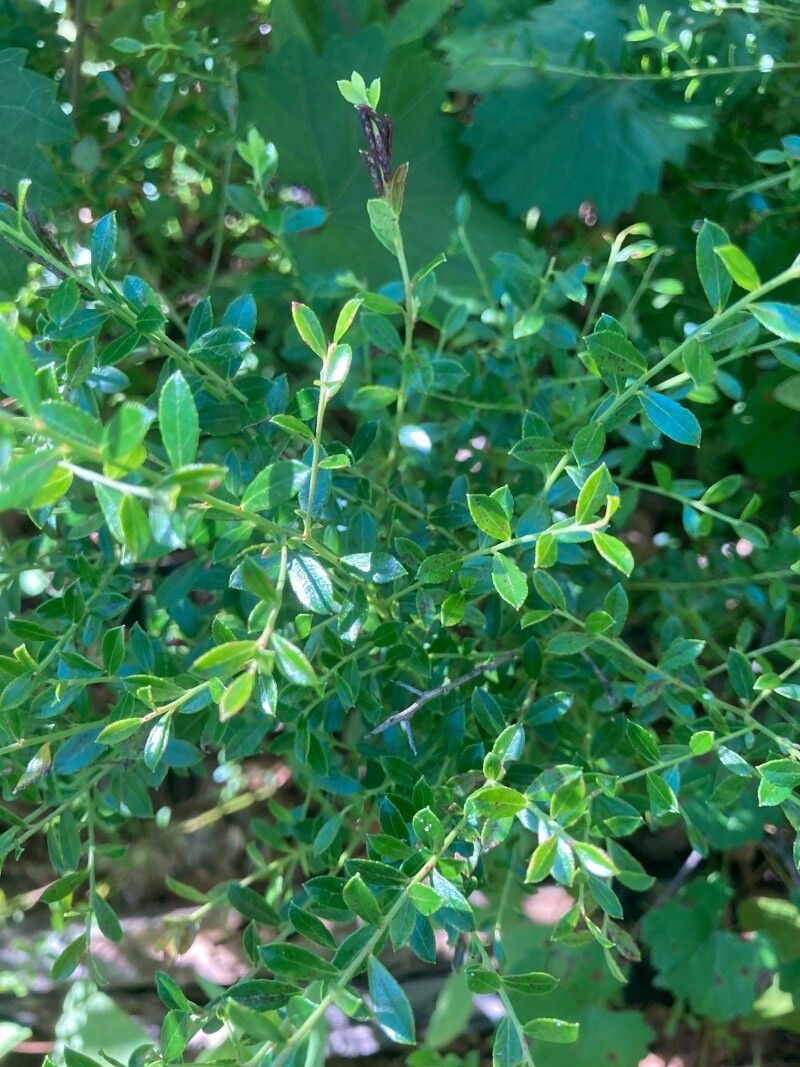
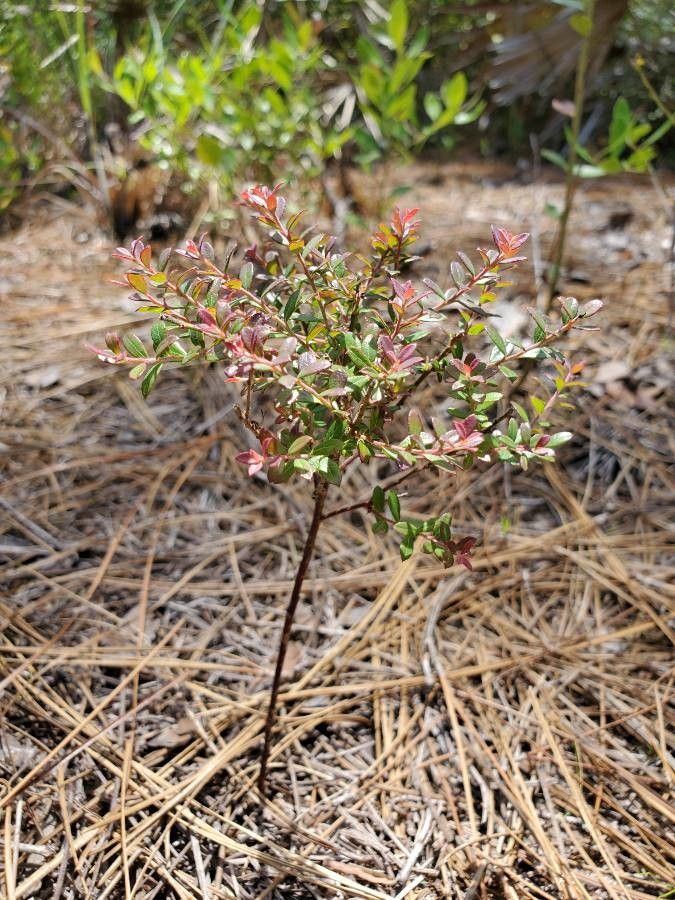
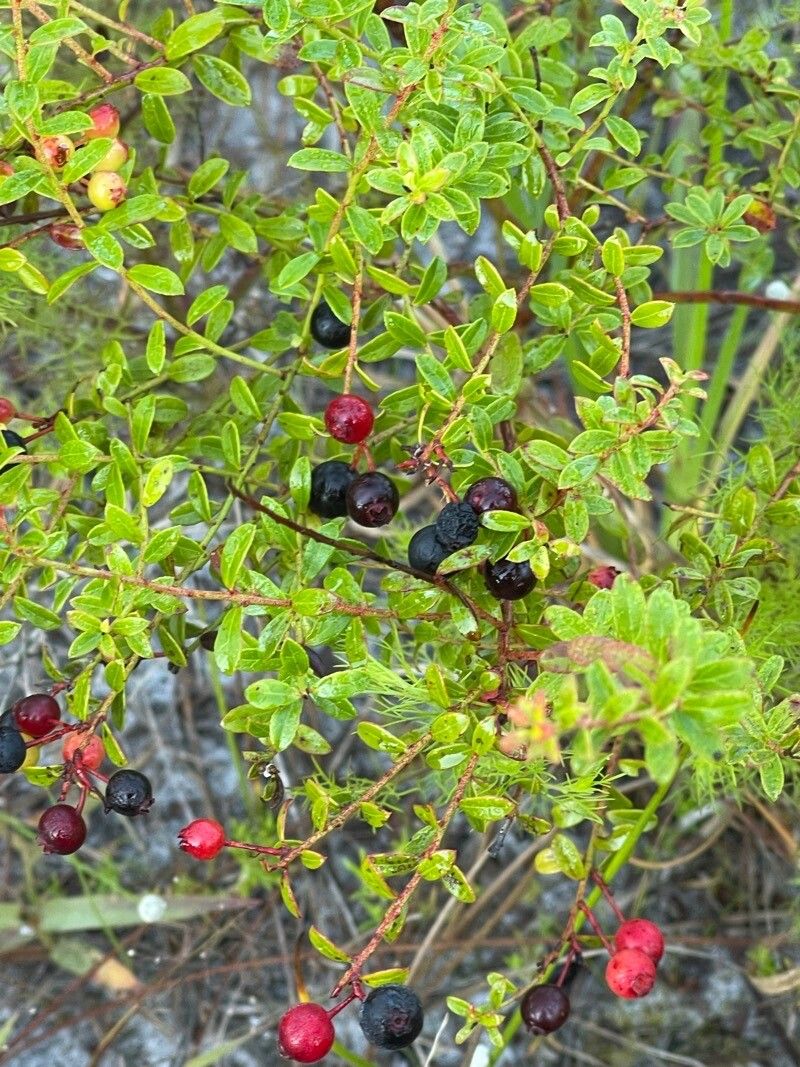
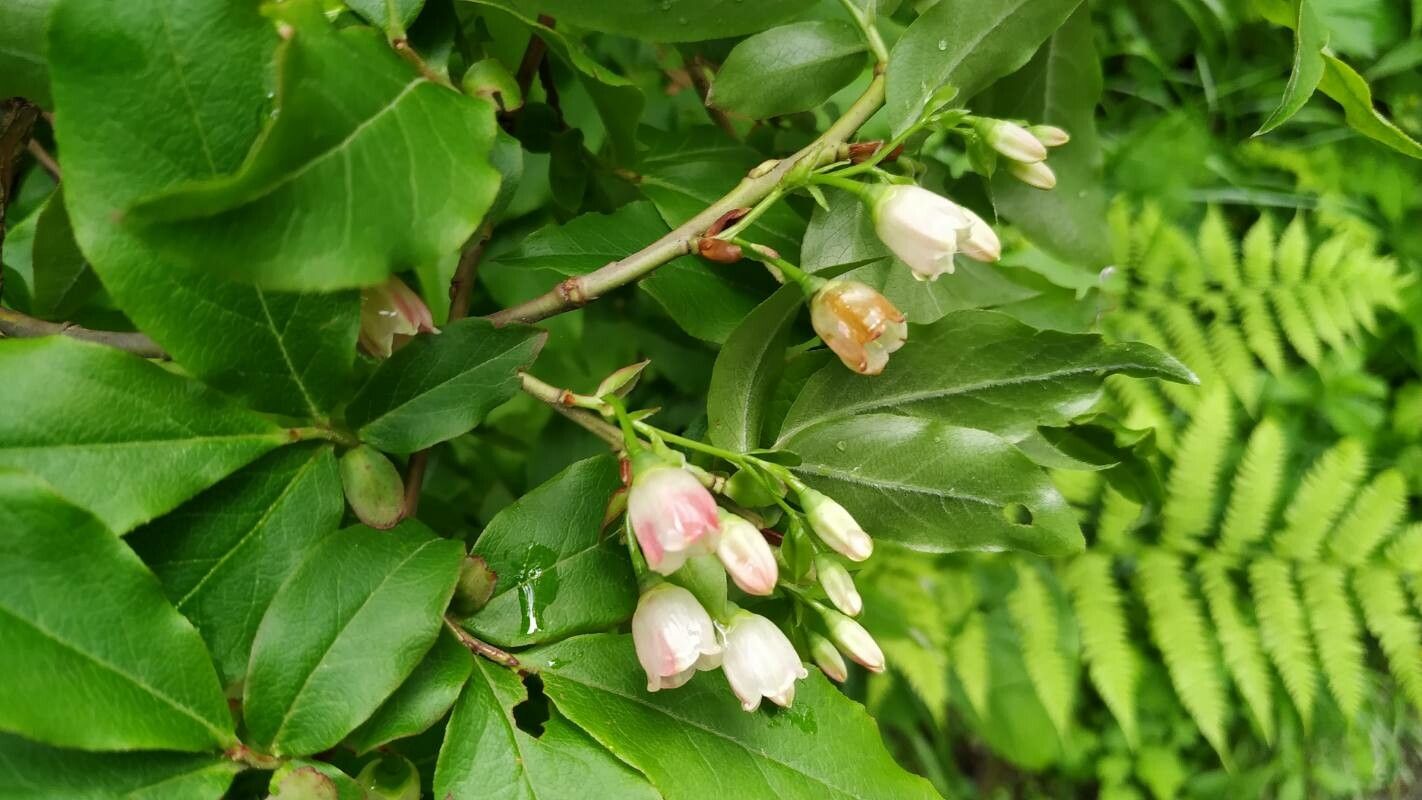
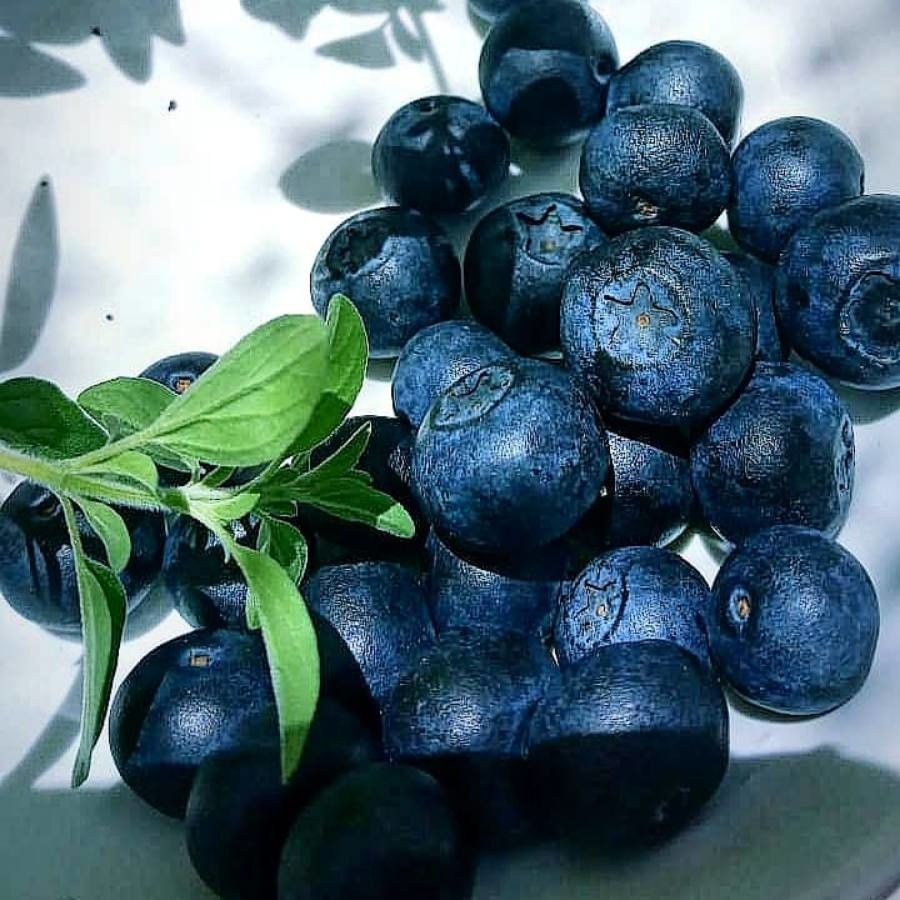
Vaccinium myrsinites, commonly known as the shiny blueberry or evergreen blueberry, is a small shrub in the heath family. Native to North America, this plant thrives in various habitats, including bogs, swamps, and moist woods. It typically grows to a height of 1-2 feet and features shiny green leaves that remain evergreen in warmer climates.
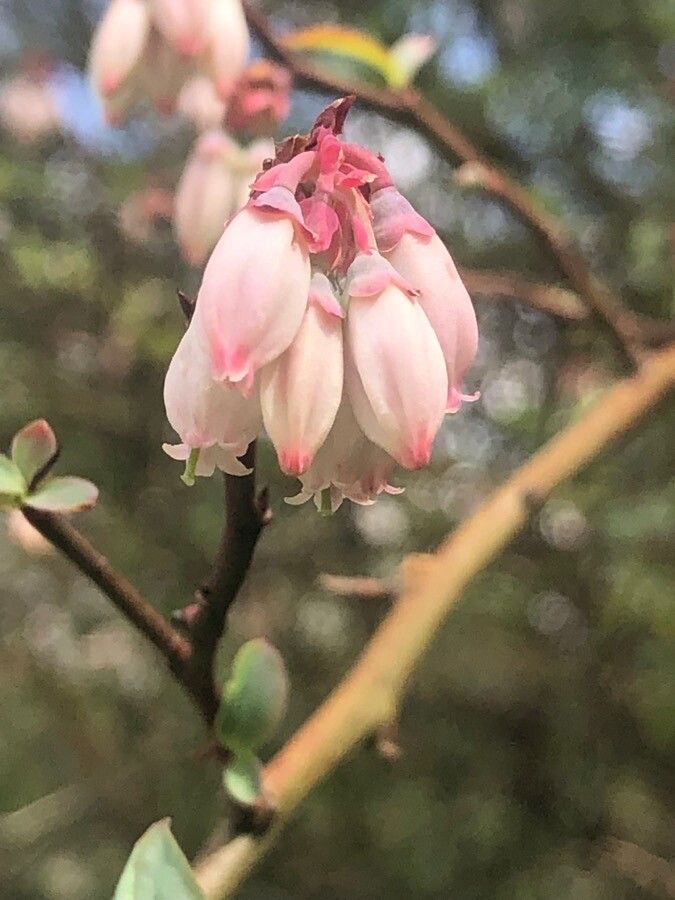
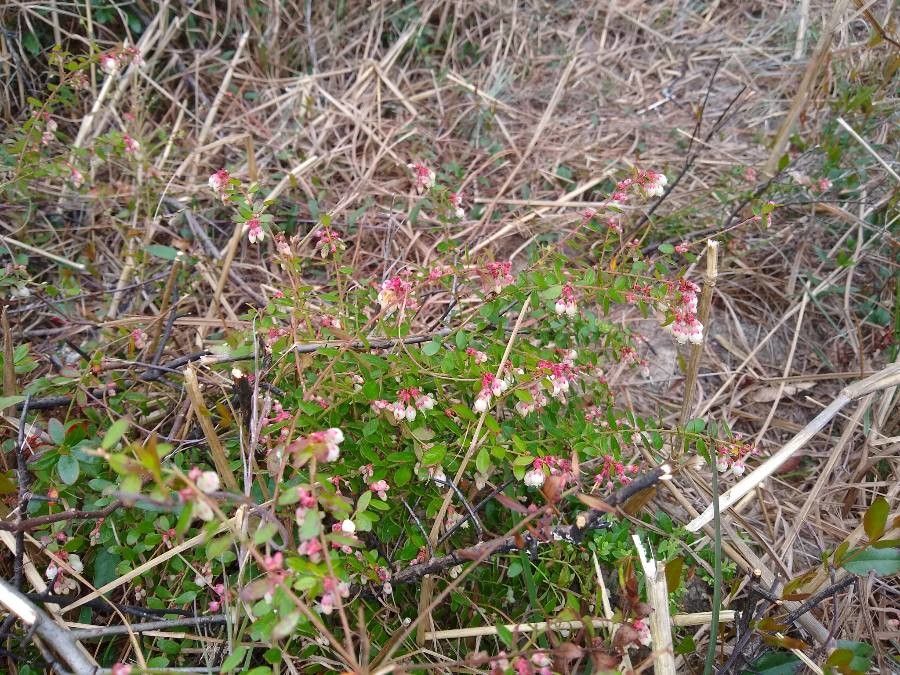
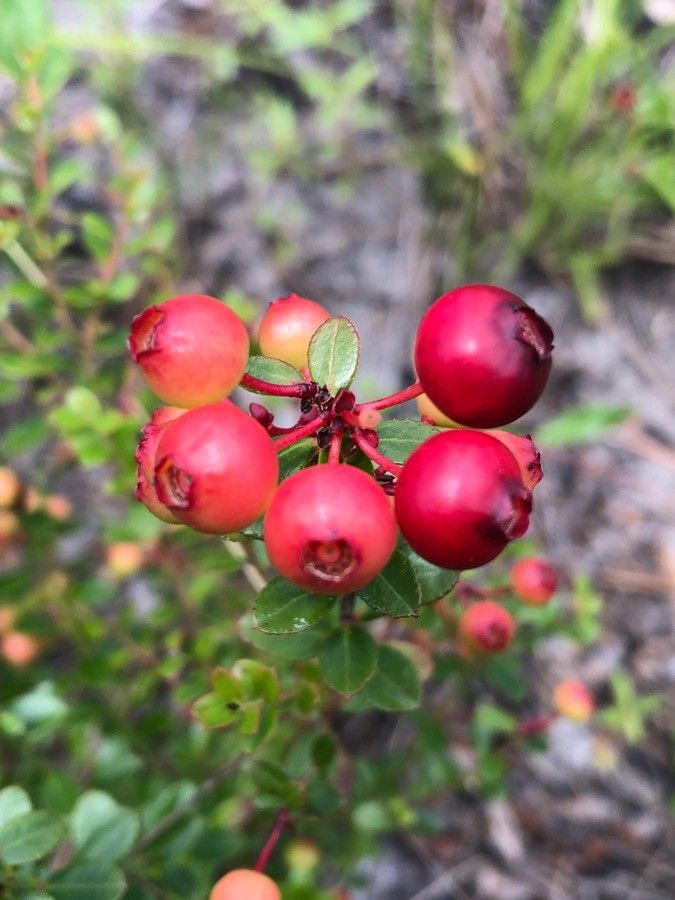
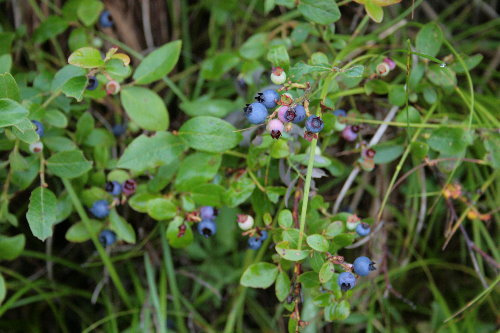
In spring, the shiny blueberry produces small white or pinkish flowers, which are followed by edible berries that transition from green to a deep blue-black color as they ripen. The berries have a sweet yet slightly tart flavor and are versatile in use, perfect for eating fresh or incorporating into jams, jellies, pies, and other desserts.
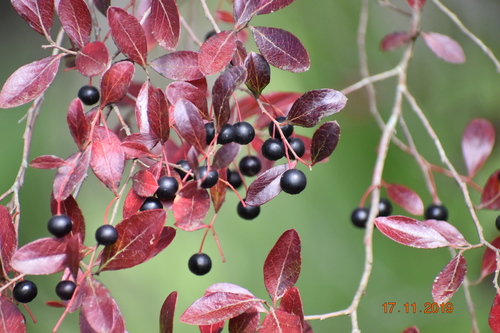
This shrub prefers acidic soil with good drainage and partial shade, although it can also flourish in full sun given adequate moisture. It is renowned for its ornamental value, with its attractive foliage turning a reddish-bronze hue in the fall.
Traditionally, Native Americans have utilized Vaccinium myrsinites for its medicinal properties, particularly for treating diarrhea and dysentery, thanks to its high tannin content. Additionally, it is an important food source for wildlife, including birds such as grouse, thrushes, and robins.
Overall, Vaccinium myrsinites is a visually appealing shrub that offers both ornamental beauty and edible fruits. Its ease of cultivation makes it an excellent addition to any garden landscape design.
Shiny blueberry is resistant to disease and is generally unlikely to develop illnesses. Regarding care, this plant is fairly low-maintenance. When grown outdoors it needs only light watering, and larger plants typically do not require pruning. Smaller plants, however, should be pruned after they have finished blooming. Shiny blueberry is suitable for anyone with an outdoor area, such as a garden or deck, and does not require much gardening experience.
How to keep Vaccinium Myrsinites.
Light
Shiny blueberry comes from open habitats like sunny meadows and forest edges, which provide abundant light. It prefers full sun but will also tolerate partial sun, adapting well to various sunlight conditions.
Water
The shiny blueberry is highly drought-tolerant and thrives with infrequent watering. It prefers to be irrigated just once every 2-3 weeks, allowing the soil to dry out between waterings. As an evergreen plant, the shiny blueberry retains leaf moisture throughout the year, making it well-suited for outdoor cultivation with natural rainfall.
Temperature
Shiny blueberry adapts well to temperature, tolerating higher heat and considerable temperature swings. In hot weather, care should be taken to water appropriately and offer some shade to prevent sunburn. However, Shiny blueberry is relatively sensitive to cold; while it can endure a certain amount of chill, very low temperatures may cause frost damage.
Fertilizer
The Shiny blueberry plant needs adequate nutrients for optimal fruit production. Fertilize in early spring to promote new growth and bloom development. Regular fertilization keeps the plant healthy, leads to more delicious fruit, and prevents nutrient deficiency problems like yellow leaves and poor fruit production.
Pruning
Shiny blueberry, recognized for its glossy leaves, should be pruned during the dormant phase from early to late winter. This helps maintain its shape and encourages new growth. To optimize the plant's health, remove dead branches and thin out overcrowded areas. This enhances air circulation, reduces the risk of disease, and rejuvenates the plant.
Botanical profile.
- Plant Type
- Shrub
- Life Cycle
- Perennial
- Genus
- Vaccinium
- Family
- Ericaceae
- Hardiness Zone
- 7-9
- Mature Height
- 91 cm
- Mature Spread
- 91 cm
- Leaf Color
- Green, Blue, Gray, Silver
- Leaf Type
- Evergreen, Semi-evergreen
- Flower Color
- White, Pink
- Flower Size
- 0.51 cm to 0.76 cm
- Bloom Time
- Early spring, Mid spring
- Planting Time
- Spring
- Harvest Time
- Summer
Other names.
Reader questions.
What are the sunlight requirements for Shiny blueberry?
Shiny blueberry requires full sun, which means it needs above 6 hours of sunlight daily, but it can also tolerate partial sun, about 3-6 hours of sunlight. Originating from open environments like sunny meadows and forest edges, it adapts well to various sunlight conditions. However, it's crucial to watch how sunlight moves through your garden to ensure spots provide the optimal balance of light and shade for the plants.
What is the common name of Vaccinium myrsinites?
The common name of Vaccinium myrsinites is Shiny blueberry.
Can I use artificial lighting for Shiny blueberry if natural sunlight is insufficient?
Yes, artificial lighting is recommended when natural sunlight is not sufficient, especially during winter or in less sunny spaces. LED lights are a popular choice as they can be tailored to provide specific wavelengths needed by plants. For full sun plants, 30-50W/sq ft of artificial light is needed; for partial sun plants, 20-30W/sq ft; and for full shade plants, 10-20W/sq ft. Ensure the light source is placed 12-36 inches above the plant and provide 8-12 hours of light per day to mimic natural daylight hours.
What are the common symptoms of light deficiency or excessive sunlight in Shiny blueberry?
Common symptoms of light deficiency in Shiny blueberry include small leaves, leggy or sparse growth, faster leaf drop, slower or no new growth, and lighter-colored new leaves. Excessive sunlight can cause chlorosis, sunscald, leaf curling, wilting, and leaf scorching. These symptoms help identify the plant's need for adjustment in light exposure.
What solutions are available for addressing light-related issues in Shiny blueberry?
To address light-related issues in Shiny blueberry, gradually move the plant to a sunnier location each week for at least 6 hours of direct sunlight daily. Consider using artificial light if the plant is large or not easily movable, keeping a lamp on for at least 8 hours daily, or invest in professional grow lights. For outdoor plants, avoid sudden changes in light intensity to prevent sunburn. Minimize obstructions by pruning trees or branches that block sunlight and consider transplanting smaller plants to a location with more sun and good drainage. Note that parts affected by insufficient sunlight might not recover, but new growth will be healthy after increasing light exposure.