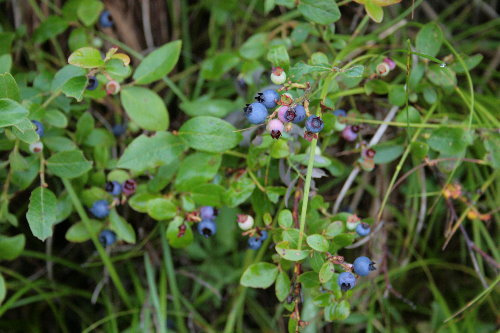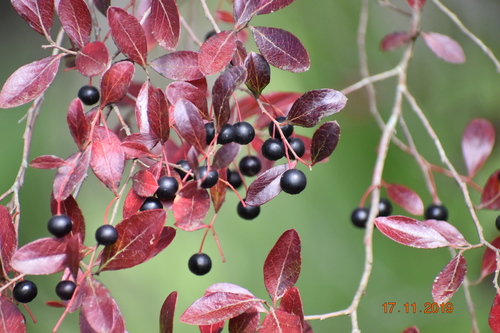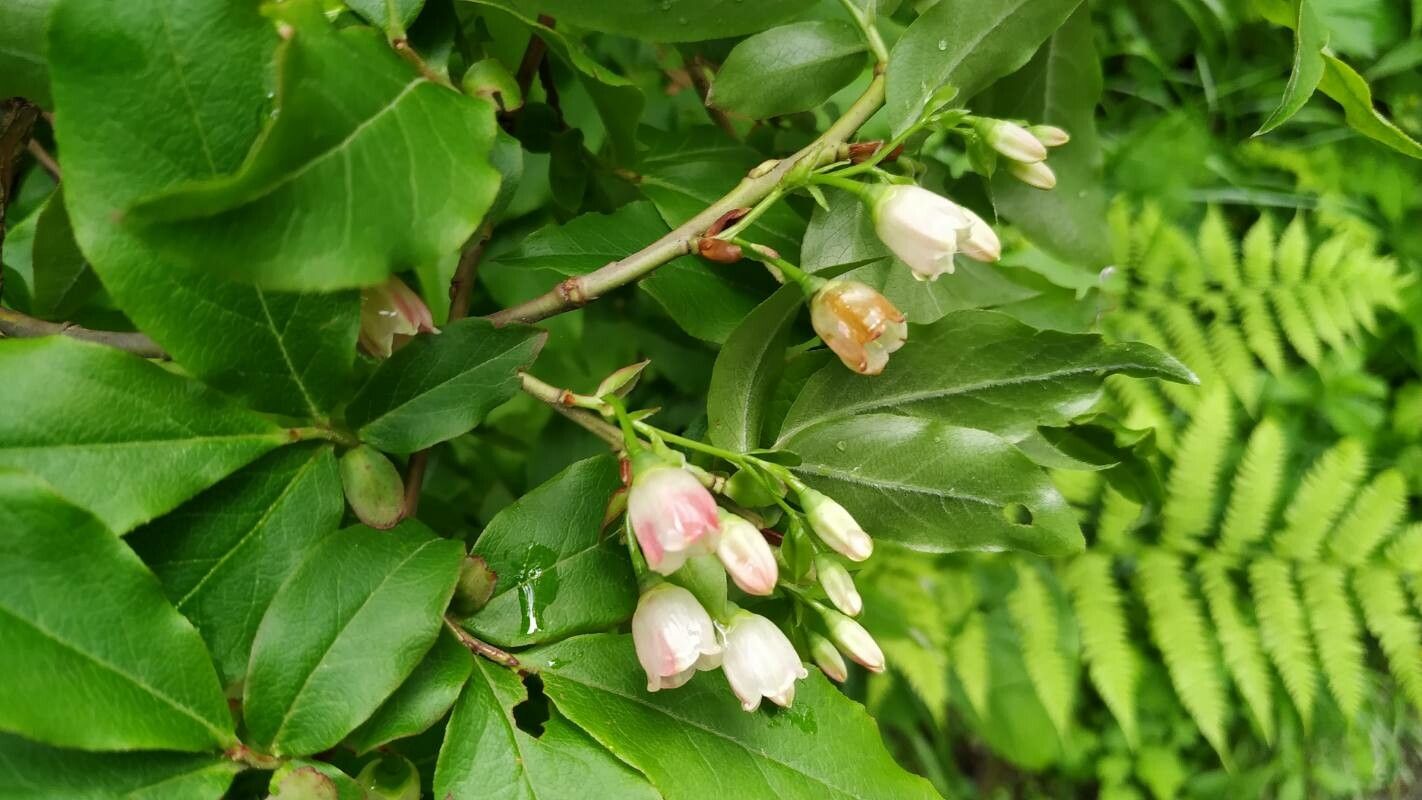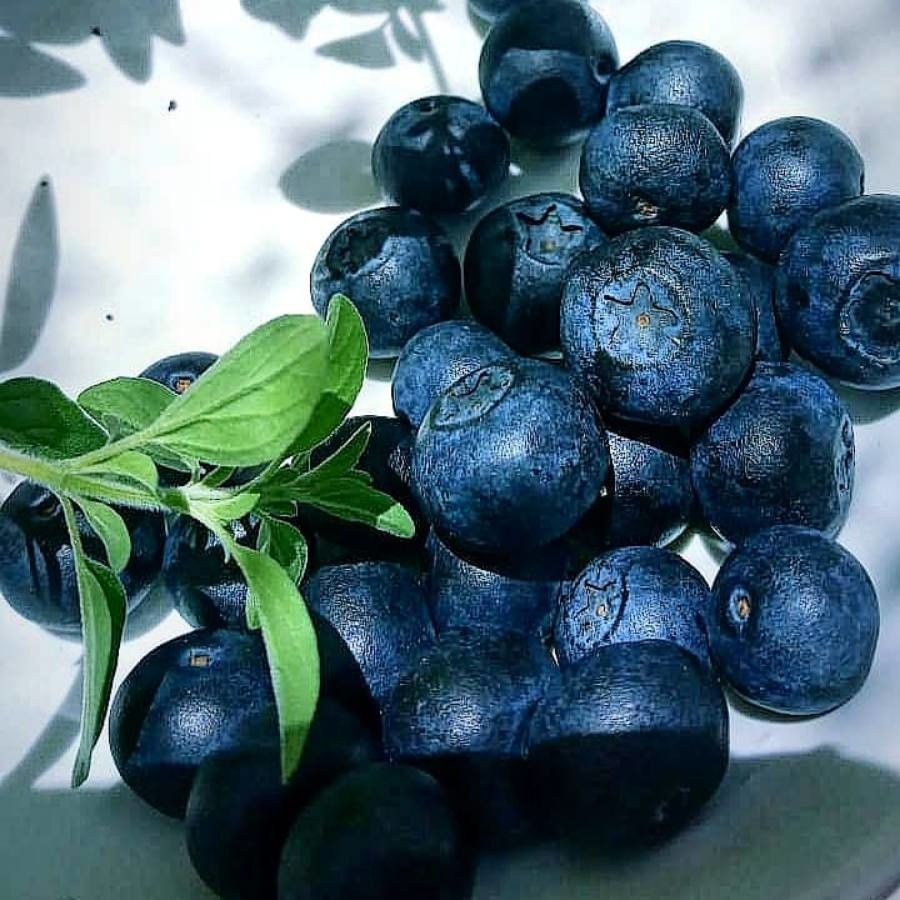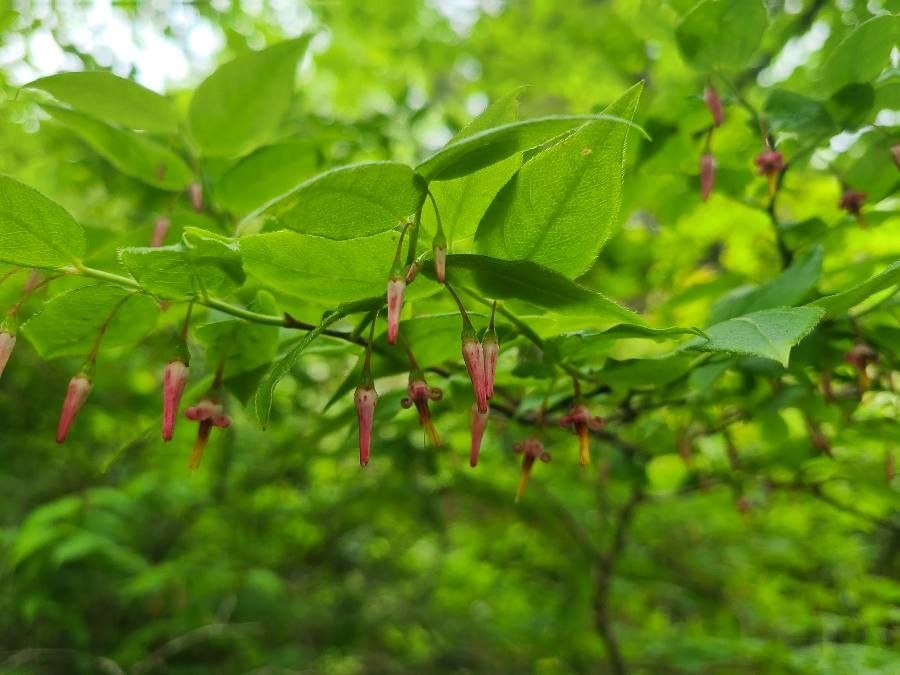
Vaccinium erythrocarpum – also commonly known as mountain blueberry, southern mountain cranberry, bearberry, arando, and dingleberry – is a species of cranberry. Vaccinium erythrocarpum has an oddly discontinuous distribution, with one subspecies in the southeastern United States and the other in east Asia.Vaccinium erythrocarpum is a deciduous shrub. Its flowers bloom in June; the individual flowers are hermaphrodite and are pollinated by insects. They produce scarlet, transparent berries. It grows in woodlands and areas of dappled shade. SubspeciesVaccinium erythrocarpum subsp. erythrocarpum (Miq.) Kloet – southern Appalachian Mountains of southeastern United States (from West Virginia to northeastern Georgia) Vaccinium erythrocarpum subsp. japonicum – China, Japan, Korea
Southern mountain cranberry shows good resistance to disease and is usually not susceptible to illnesses. As for care, this plant is fairly low-maintenance. When grown outdoors it needs only minimal watering, and larger specimens generally do not require pruning. Smaller specimens, however, should be pruned after they finish blooming. Southern mountain cranberry is appropriate for anyone with an outdoor area, such as a garden or deck, and does not demand extensive gardening experience.
How to keep Vaccinium Erythrocarpum.
Light
Southern mountain cranberry is native to habitats like forest understories or rocky areas, where it grows in natural shade. It prefers partial sun but can also tolerate full sun or full shade, reflecting its versatile and hardy nature.
Water
Southern mountain cranberry thrives in cool, moist mountainous areas and prefers moderate humidity with consistent moisture levels. To keep the soil ideally damp, it's best to water it twice a week. Being an evergreen plant, the southern mountain cranberry retains water in its leaves, which helps it endure varying moisture conditions.
Fertilizer
The Southern mountain cranberry needs adequate nutrients to produce fruit at its best. Apply fertilizer in early spring to promote new growth and bloom development. Regular fertilization helps keep the plant healthy, encourages production of more delicious fruit, and prevents nutrient deficiency problems like yellowing leaves and poor fruit production.
Pruning
The Southern mountain cranberry is known for its vibrant red berries and lush foliage. To ensure optimal growth, it is recommended to prune the plant in early spring. This involves removing dead branches, thinning out older stems, and eliminating suckers. Regular pruning not only improves the plant's appearance but also boosts berry production, as advised by reliable horticultural guidelines.
Botanical profile.
- Plant Type
- Shrub
- Life Cycle
- Perennial
- Genus
- Vaccinium
- Family
- Ericaceae
- Hardiness Zone
- 4-8
- Mature Height
- 1.52 m
- Mature Spread
- 1.22 m
- Leaf Color
- Green, Dark Green
- Leaf Type
- Deciduous
- Flower Color
- Pink, White
- Flower Size
- 0.51 cm to 0.76 cm
- Bloom Time
- Mid spring, Late spring
- Planting Time
- Spring, Summer, Autumn
- Harvest Time
- Late summer, Early fall, Mid fall
Other names.
Reader questions.
What are the sun requirements for Southern mountain cranberry (Vaccinium erythrocarpum)?
Southern mountain cranberry (Vaccinium erythrocarpum) thrives in varying sunlight conditions. For optimal growth, it requires full sun, meaning it should receive more than 6 hours of sunlight daily. However, it can also grow well in partial sun, with about 3-6 hours of sunlight each day. It's crucial to observe how sunlight moves through your garden to find spots offering the perfect combination of light and shade, ensuring your Southern mountain cranberry plants grow happily.
What is the Southern mountain cranberry?
The Southern mountain cranberry is known botanically as Vaccinium erythrocarpum. Information regarding its essentials, symptoms, and other details were not provided or are unavailable.