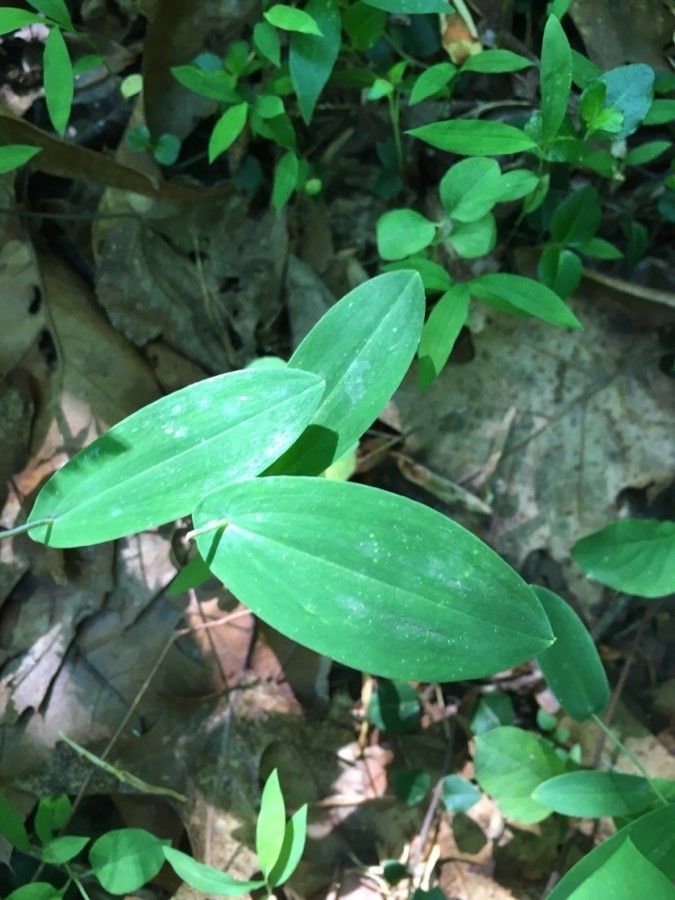
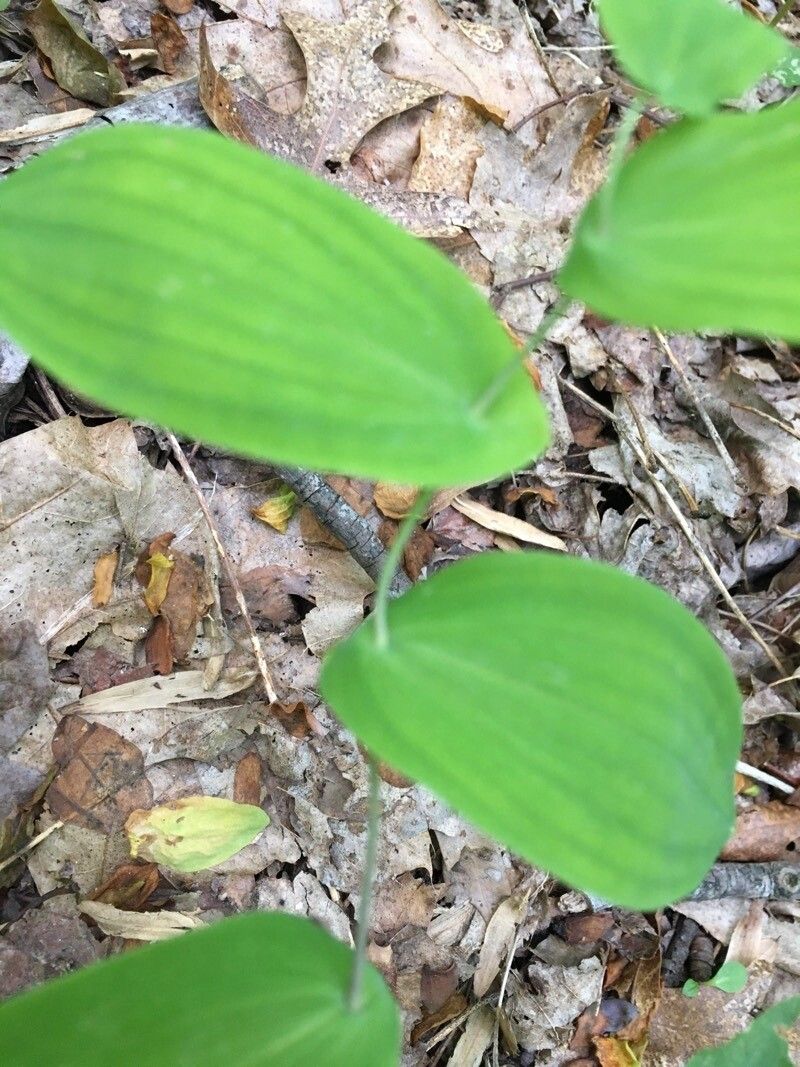
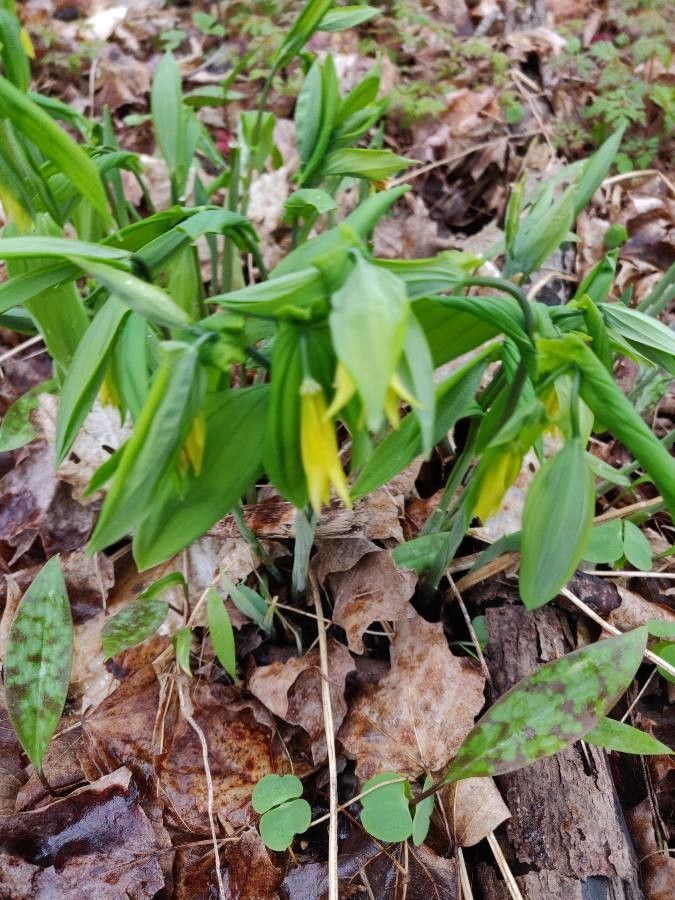
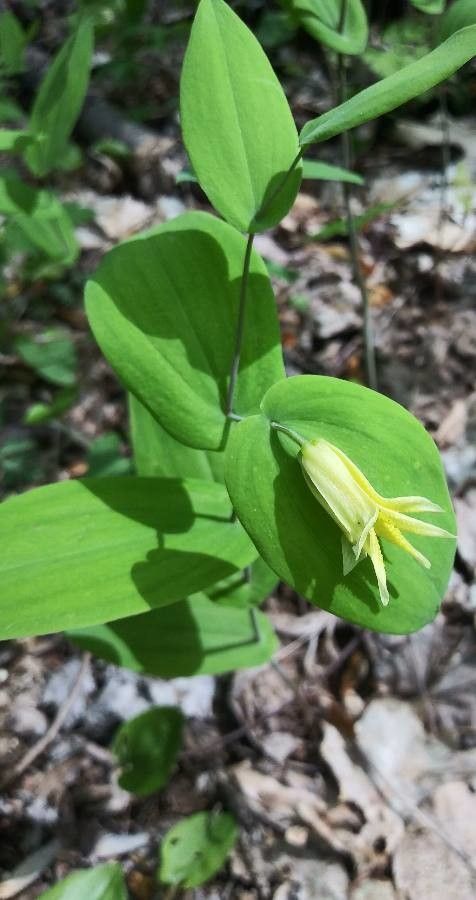
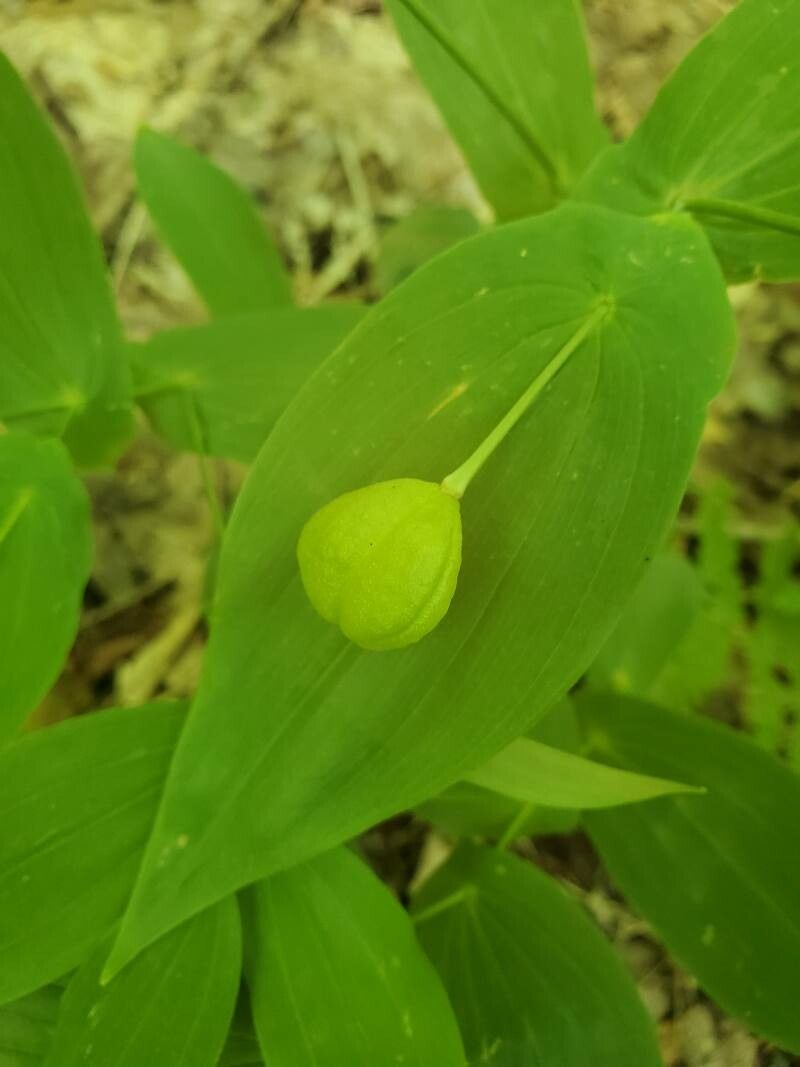
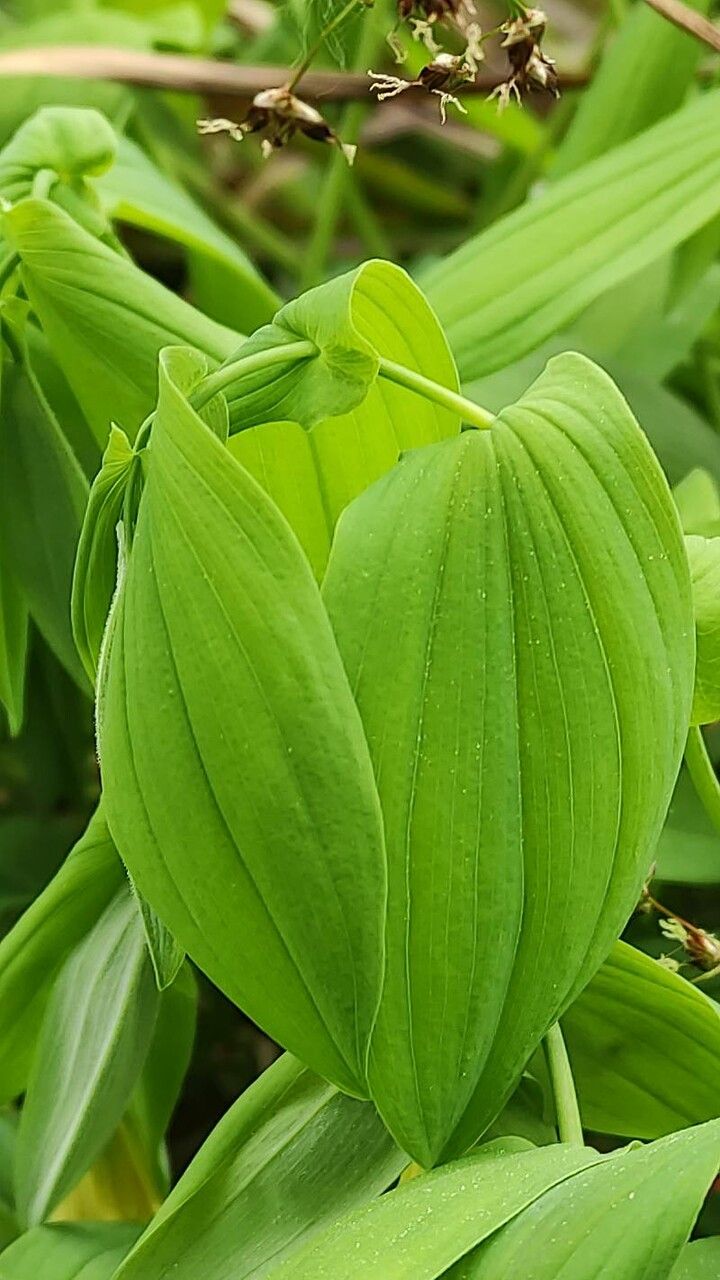
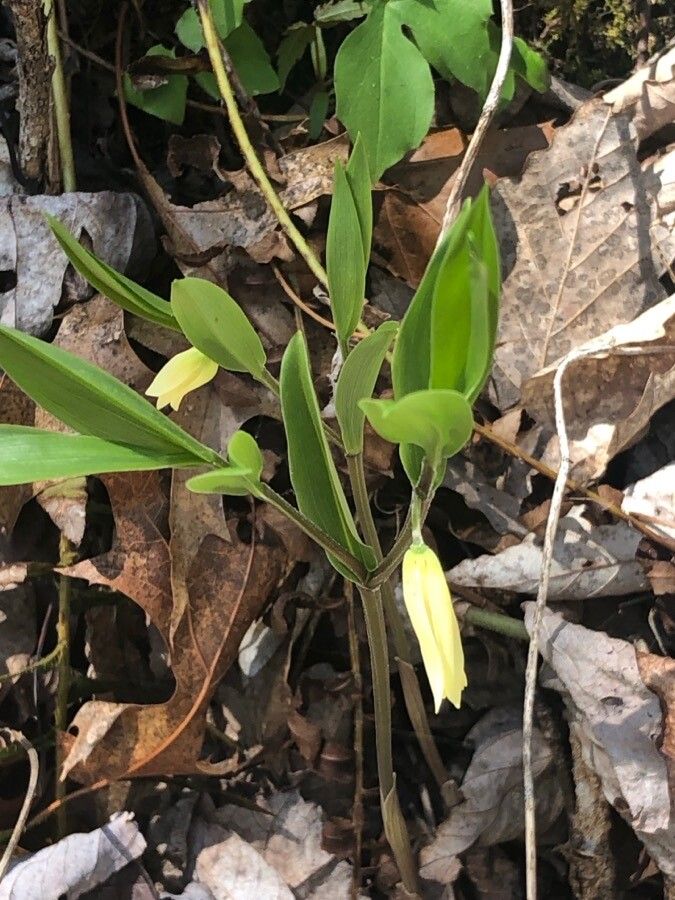
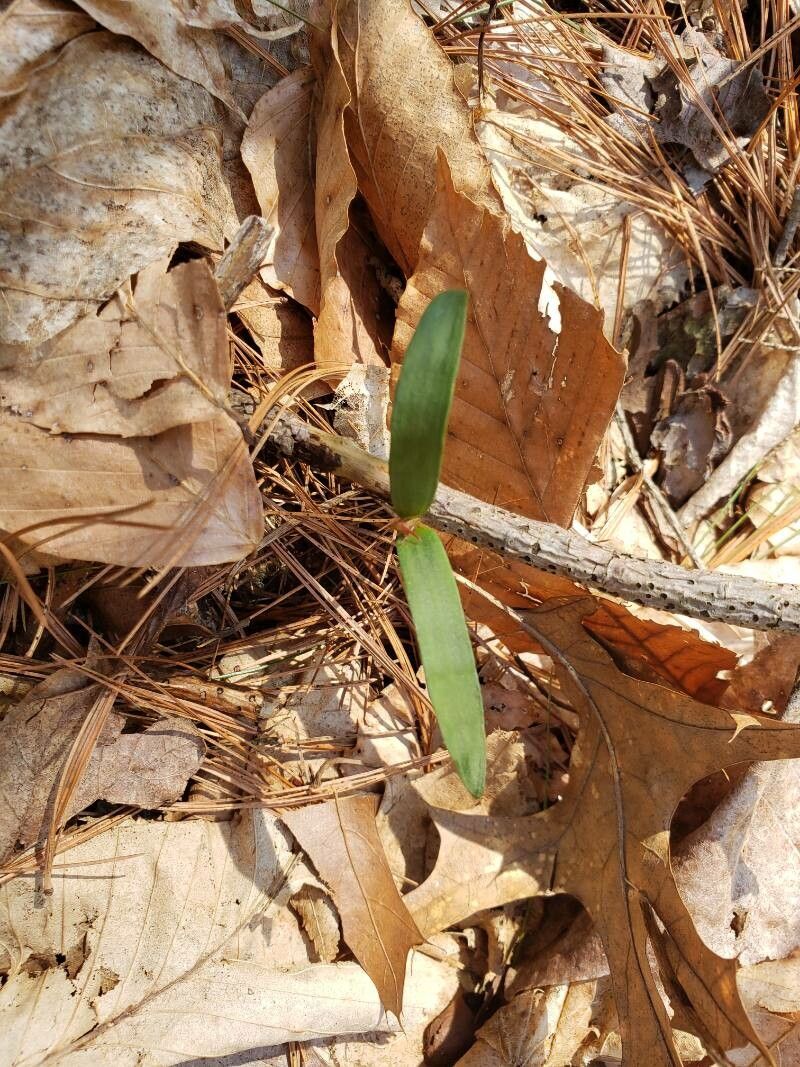
Uvularia perfoliata, the perfoliate bellwort, is a perennial forb native to the eastern United States and Canada, which produces pale yellow flowers in spring.
Perfoliate bellwort is fairly disease-resistant and is usually not prone to illnesses. Nevertheless, it can be affected by pests and diseases present in its environment. These outbreaks are generally not severe. In terms of upkeep, this plant needs a moderate amount of maintenance. It should be pruned regularly to maintain an attractive appearance and healthy growth. Fertilizing can also aid in encouraging flowering. Perfoliate bellwort is suitable for anyone with outdoor space, such as a garden or patio, and does not require extensive plant-care experience. It may need more attention when grown indoors.
How to keep Uvularia Perfoliata.
Light
Perfoliate bellwort does best when kept out of strong sunlight, preferring spots with lower light. It can tolerate moderate light, but very intense sun may harm it. In the wild it is commonly found tucked beneath taller foliage, demonstrating its need for reduced light levels.
Water
Perfoliate bellwort flourishes in environments with moderate moisture and consistent humidity. It needs evenly moist soil and should be watered weekly. As a herbaceous perennial, this plant benefits from mulching, which helps retain soil moisture and mimics the leaf litter found in its native woodland habitat.
Temperature
Perfoliate bellwort comes from habitats that match its preferred temperature range of 41 to 89.6 °F (5 to 32 ℃). This hardy plant tolerates a variety of seasonal temperatures, as long as the climate stays moderate and avoids extremes.
Fertilizer
The best time to fertilize a Perfoliate bellwort is in early spring, as it comes out of dormancy and begins active growth. Fertilization supplies essential nutrients for healthy development. Although Perfoliate bellwort has relatively low fertilizer needs, annual feeding can improve its survival and encourage better, longer-lasting flowers.
Pruning
Prune perfoliate bellwort in early spring to remove dead stems and improve its shape. Thin out overcrowded areas to enhance air circulation and prevent disease. Avoid heavy pruning to maintain its natural form, as timely pruning encourages blooming and promotes vigorous growth.
Botanical profile.
- Plant Type
- Herb
- Life Cycle
- Perennial
- Genus
- Uvularia
- Family
- Colchicaceae
- Hardiness Zone
- 4-8
- Mature Height
- 30 cm
- Mature Spread
- 30 cm
- Leaf Color
- Green, Gray, Silver
- Leaf Type
- Deciduous
- Flower Color
- Yellow
- Flower Size
- 2.54 cm to 5.08 cm
- Bloom Time
- Early spring, Mid spring
- Planting Time
- Summer, Autumn
- Harvest Time
- Early summer, Mid summer
Other names.
Reader questions.
How should I water my Perfoliate bellwort plant in the best way?
To properly care for the Perfoliate bellwort, it is best to use filtered water that is at room temperature. Tap water may contain harmful particles, so filtered water is preferred. The water should be at room temperature or slightly warmer to avoid shocking the plant, as it is accustomed to warm environments. Instead of overhead watering, it is recommended to pour the filtered room temperature water directly onto the soil until it is completely soaked. This helps to moisturize the roots and support their growth and nutrient absorption.
Why do I have to put fertilizer on my Perfoliate bellwort plant?
The main structure of the Perfoliate bellwort is made up of its leaves. Fertilization is important for maintaining the appearance and function of these leaves. It helps the plant maintain consistent color and a healthy texture. Fertilization also benefits the plant below the soil's surface by promoting root growth and maintenance. This ensures the plant's overall health and improves its ability to absorb nutrients from the soil in the future.
What are the sunlight requirements for Perfoliate Bellwort?
Perfoliate Bellwort requires specific amounts of sunlight to thrive. Full shade conditions mean less than 3 hours of sunlight daily, whereas partial sun refers to about 3-6 hours of sunlight. It's crucial to observe how sunlight moves through your garden and select spots that offer an ideal balance of light and shade. This careful placement ensures the plants receive the appropriate light exposure for optimal growth and health.
What are the ideal temperature conditions for Perfoliate bellwort?
Perfoliate bellwort thrives in environments with temperatures ranging from 41 to 89.6 °F (5 to 32 °C). Being a sturdy plant, it is adaptable to various seasonal temperatures, requiring only a moderate climate and avoiding extreme conditions. It possesses strong cold resistance, making special frost protection measures generally unnecessary during winter. However, in extremely cold conditions where winter temperatures are expected to drop below -30°C, it is essential to offer protection by covering the plant with materials like soil or straw. Additionally, watering the plant abundantly before the first freeze in autumn, ensuring the soil is moist and enters a frozen state, helps prevent drought and water scarcity during winter and early spring.
What do I need to do if I give too much or too little water to my Perfoliate bellwort?
Overwatering is a more common problem than underwatering when it comes to caring for your Perfoliate bellwort. When the plant receives too much water, its stems and leaves may wilt and turn yellow. Prolonged overwatering can lead to diseases like root rot, mold, and mildew, which can be fatal for the plant. Underwatering is less likely to occur since the Perfoliate bellwort is somewhat drought-tolerant. However, if underwatering does happen, you'll notice brittle and brown leaves. It's important to recognize signs of overwatering early and take action promptly. Some diseases caused by overwatering, like root rot, may not be reversible if you wait too long. If you spot the early signs, reduce your watering schedule and check the soil's drainage. If the soil doesn't drain well, replace it with a loose and well-draining potting mix. On the other hand, if you notice signs of underwatering, increase your watering frequency until the signs improve.
When should I fertilize my Perfoliate bellwort?
If you grow your Perfoliate bellwort outdoors, it will send out new growth in early spring. This is your cue to start fertilizing for the year. Typically, a single application of fertilizer in the spring is sufficient. However, if you want to maximize growth, you can fertilize multiple times during spring and early summer. In this case, feed your Perfoliate bellwort approximately once every month to a month and a half.
What are the essential growing conditions for Perfoliate Bellwort?
Perfoliate Bellwort flourishes best under conditions that protect it from intense sunlight, thriving in areas with lower light levels. A moderate amount of light is acceptable, but strong sunlight can be harmful. In its natural habitat, Perfoliate Bellwort often grows beneath larger foliage, indicating its preference for environments with less light intensity. Indoor plants require sufficient lighting to grow well, especially when natural sunlight is lacking, such as during winter or in less sunny spots. Artificial lighting, particularly LED lights tailored to provide specific light wavelengths, can significantly benefit plant growth. Properly managing the strength, distance, and duration of artificial light exposure is vital for mimicking natural light conditions and promoting healthier plant development.
How does Perfoliate bellwort respond to low temperatures, and what should be done in spring if the plant does not sprout?
Perfoliate bellwort displays significant cold tolerance, thriving best when temperatures remain above 5°C and should ideally be kept above -25°C during winter. With temperatures dropping below -30°C, you might not observe noticeable changes during winter; however, it could lead to decreased sprouting or a lack of sprouting in spring. If certain parts of the plant fail to sprout in spring, it is advised to remove these unsprouted parts to encourage healthy growth of the plant.
How often do I need to water my Perfoliate bellwort?
If your Perfoliate bellwort plant is in a pot, the most precise way to determine if it needs water is by checking the soil moisture. Simply stick your finger into the soil, and if the top two to three inches are dry, it's time to water. On the other hand, if you have your Perfoliate bellwort planted outdoors in the ground, you can use the same method to test the soil moisture. Once you find that the top few inches of soil are dry, it's a sign that it's time to water. Typically, during spring and early fall, you'll need to water this plant about once a week using this method. However, during extremely hot weather, you may need to increase watering to about twice a week or even more. That being said, mature and well-established Perfoliate bellwort plants have an impressive ability to tolerate drought.
When is it not a good time to fertilize my Perfoliate bellwort?
During late fall and winter, your Perfoliate bellwort goes into a dormant phase and stops producing new growth. It is recommended not to fertilize it during this time. In spring and summer, if you choose to fertilize, gradually decrease the fertilization rate as summer approaches since the growth rate also slows down. It is not advisable to fertilize your Perfoliate bellwort during extremely hot weather or when the soil is very dry as it can cause stress and premature death.
What symptoms indicate insufficient light for Perfoliate Bellwort?
Perfoliate Bellwort may show several symptoms when it doesn't receive enough light, particularly for indoor plants. These include smaller new leaves compared to older ones, leggy or sparse growth, faster dropping of leaves, slower or halted growth, and paler new leaves. Chlorosis—leaves losing their green color and turning yellow—can occur from excessive sunlight, as can sunscald, leaf curling, wilting, and leaf scorching. These symptoms signal too much light exposure or insufficient light, depending on the context. Adjusting the plant's light exposure appropriately can mitigate these issues.
What are the effects of high temperatures on Perfoliate bellwort and the recommended solutions?
During summer, it is crucial to ensure that the temperature surrounding a Perfoliate bellwort plant does not exceed 32°C. When temperatures climb above 35°C, the plant's leaves may become lighter in color, curl, suffer from sunburn, and, in severe cases, the entire plant may wilt and dry. To counteract these effects, it is recommended to trim away the sunburned and dried parts of the plant. Relocating the plant to a shaded area or using a shade cloth to protect it from the midday and afternoon sun can also be beneficial. Additionally, watering the plant in the morning and evening will help maintain soil moisture, further supporting the plant's health in high temperatures.