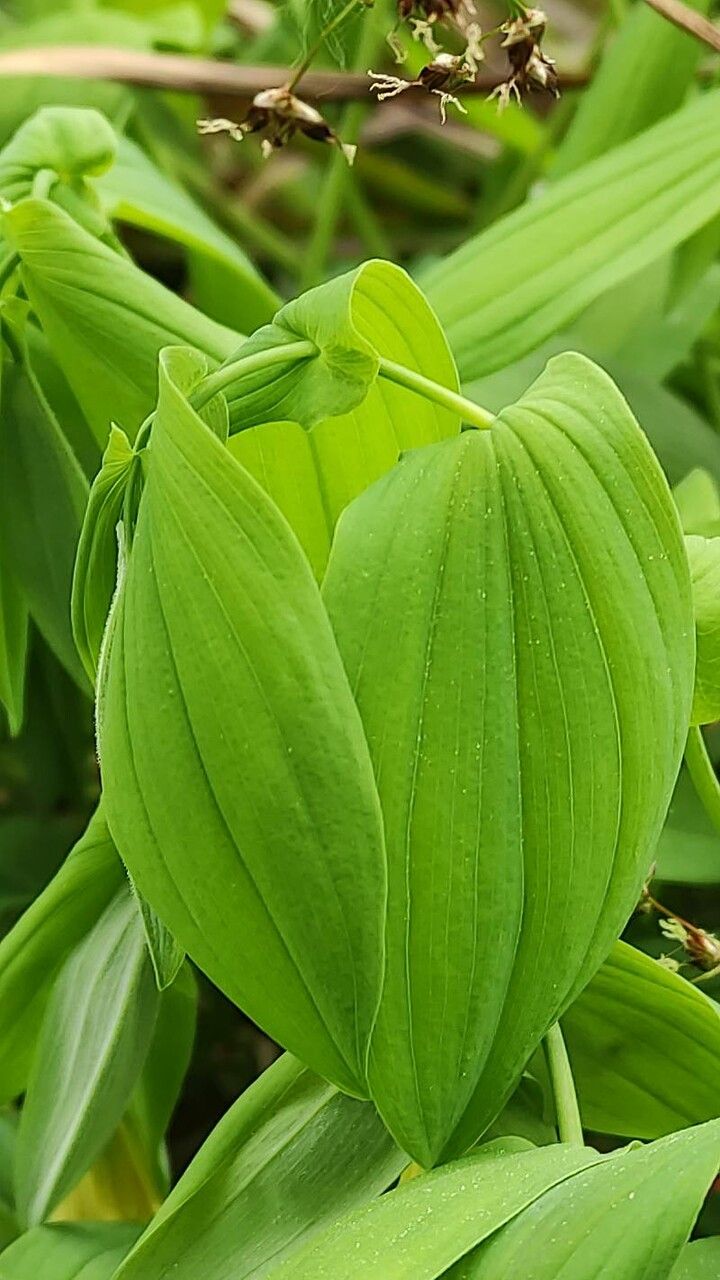
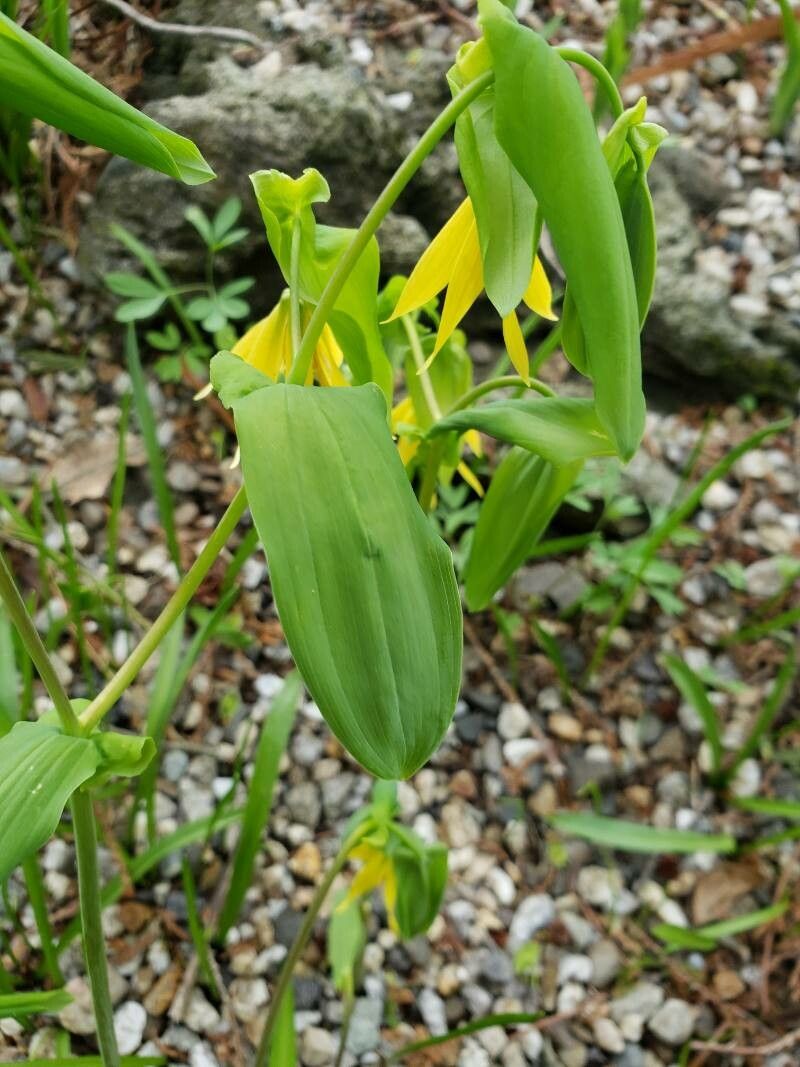
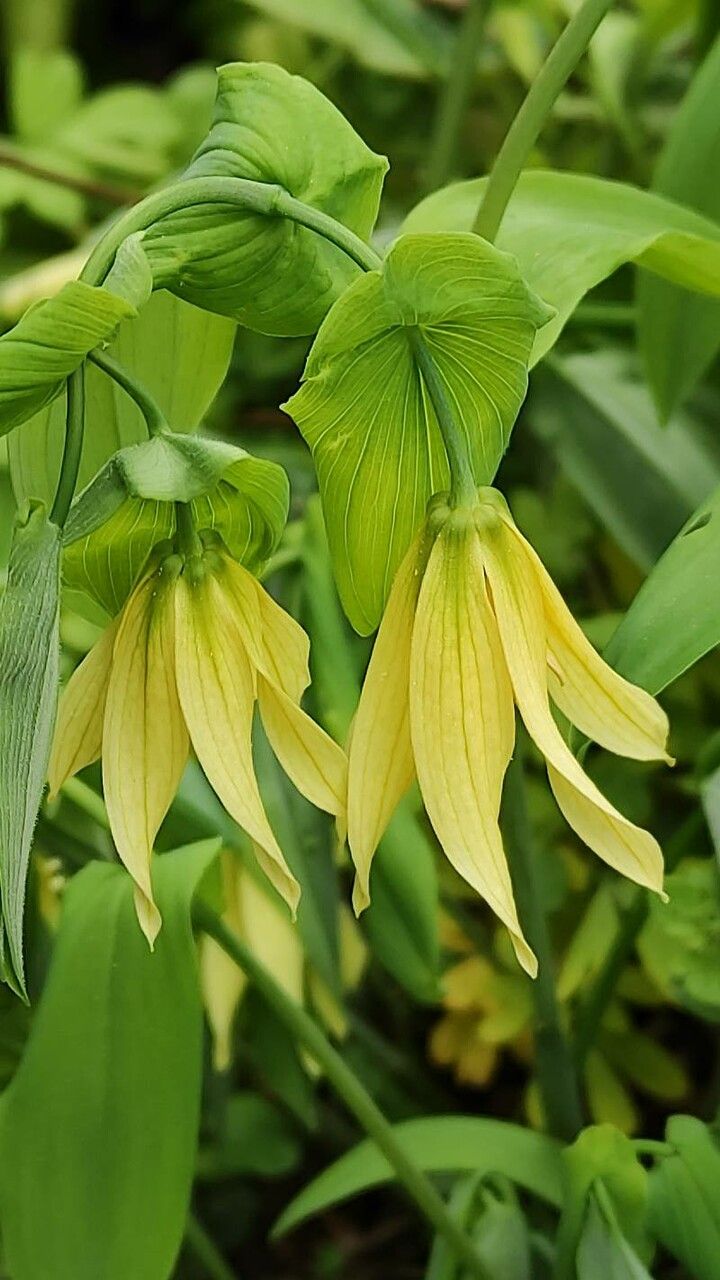
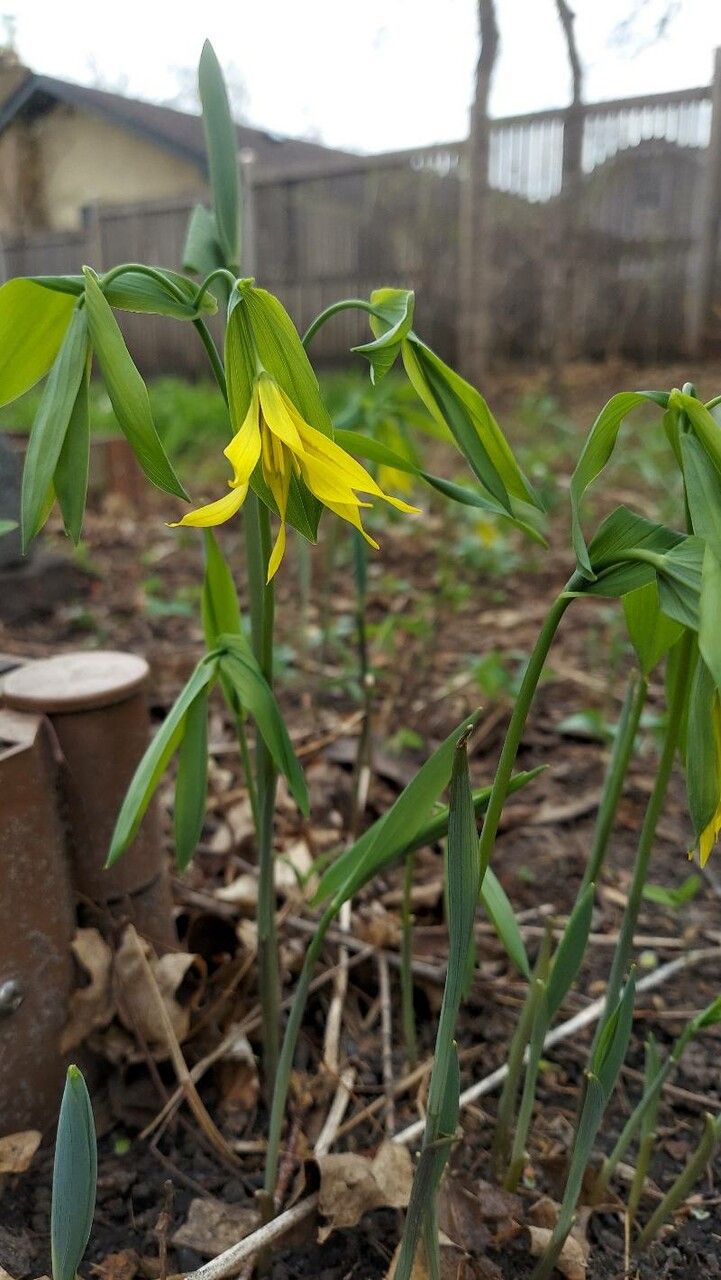
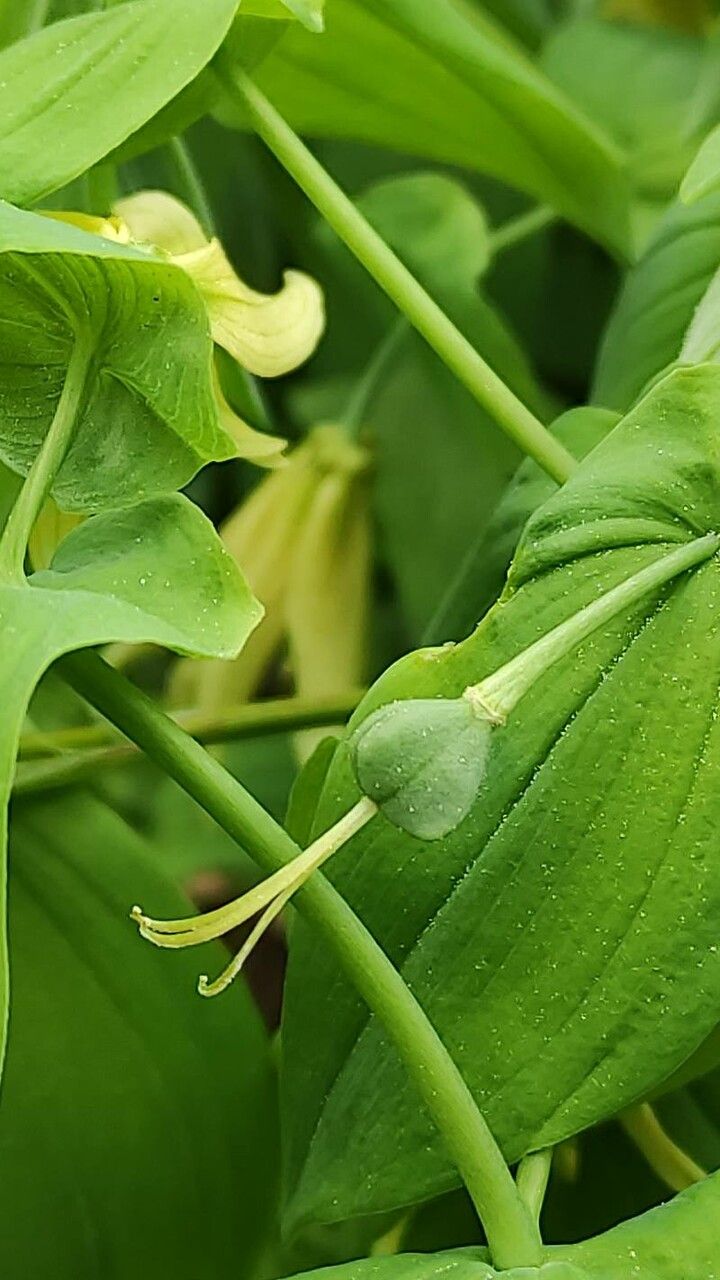
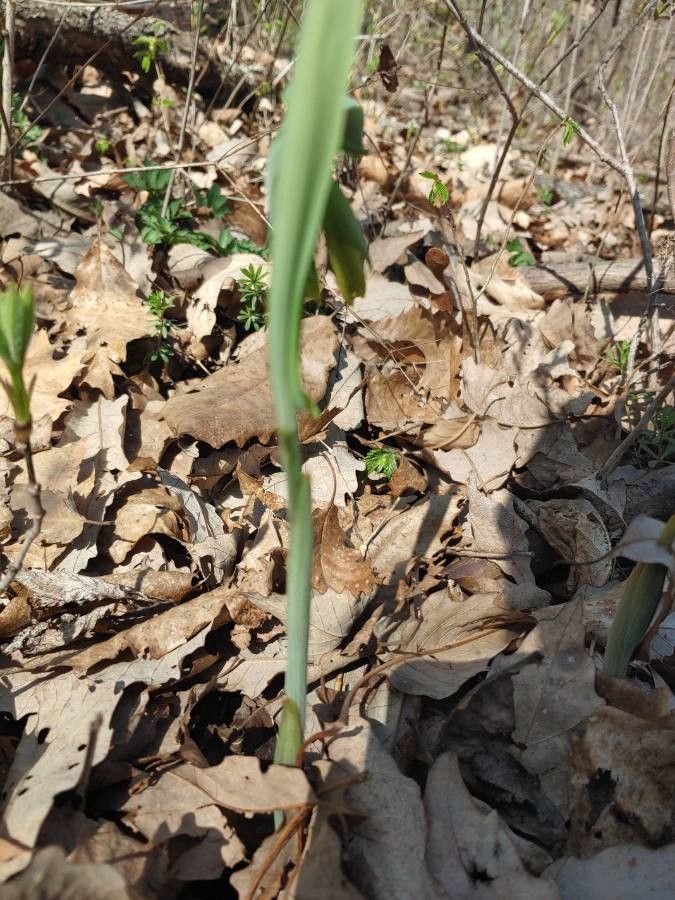
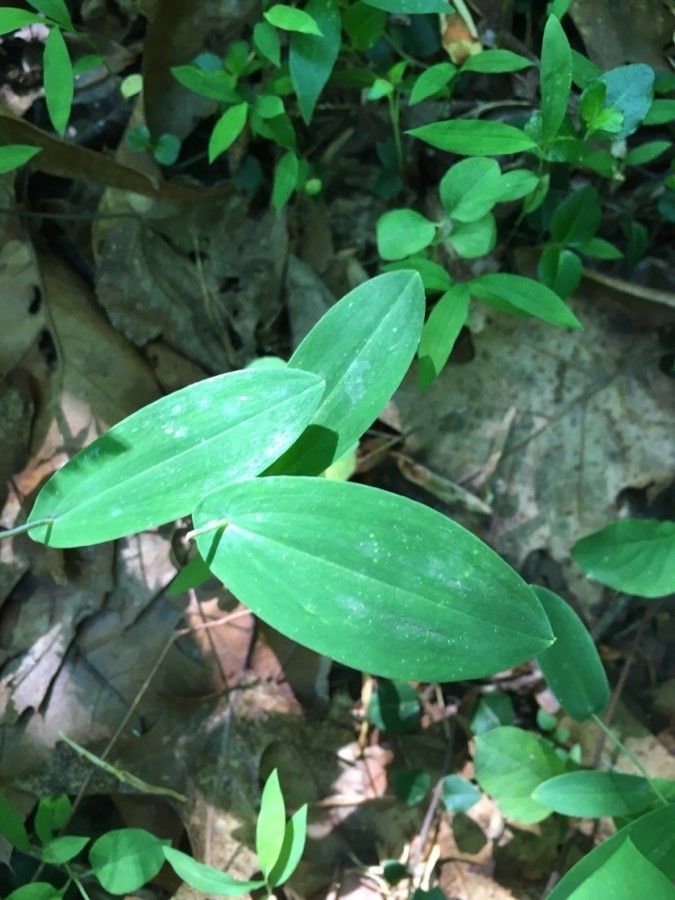
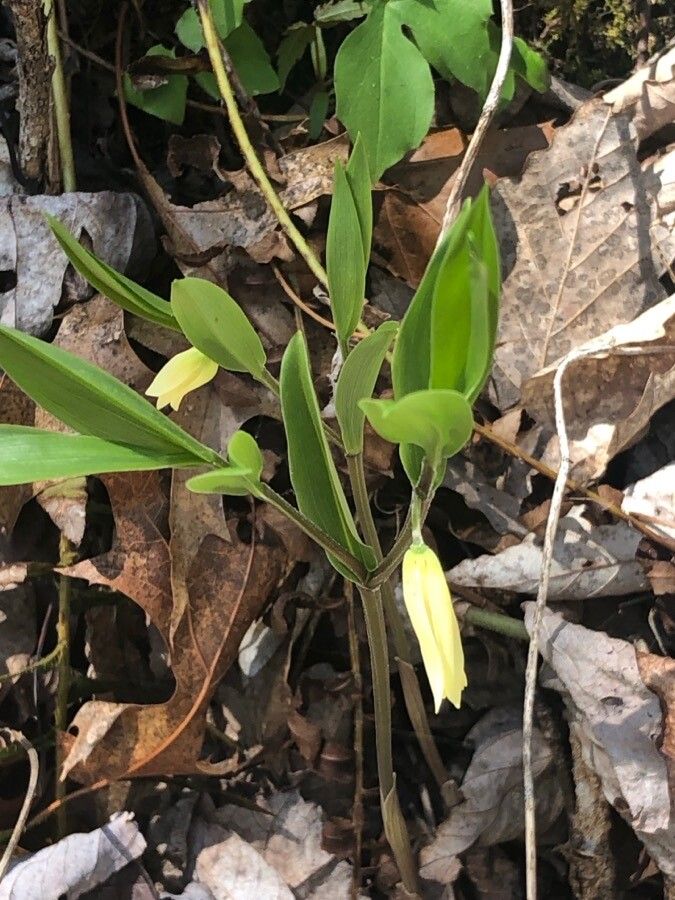
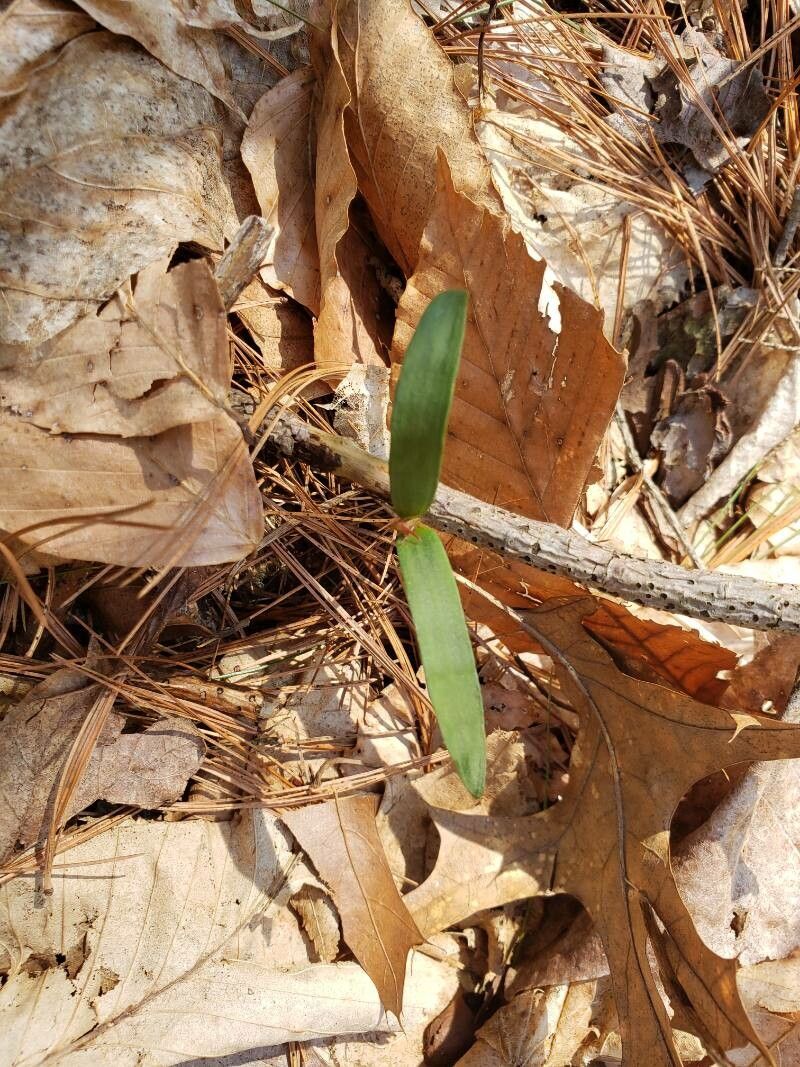
Uvularia grandiflora, the large-flowered bellwort or merrybells, is a species of flowering plant in the family Colchicaceae, native to eastern and central North America.
Large-flowered bellwort is fairly disease-resistant and typically not prone to illnesses. Still, it can be affected by pests and diseases present in its surroundings. Such infections are usually mild. In terms of care, the plant requires moderate maintenance. It should be pruned regularly to maintain a neat appearance and healthy growth. Fertilizing can also help encourage flowering. Large-flowered bellwort is suitable for anyone with outdoor space, like a garden or patio, and does not need extensive care experience. It may require more attention when grown indoors.
How to keep Uvularia Grandiflora.
Light
Large-flowered bellwort favors spots with lower light levels, doing well where strong sunlight is uncommon. It tolerates moderate sun but prefers the calm of a more sheltered setting. Excessive sun exposure can disrupt its healthy growth, while too little light may hinder its development.
Water
The large-flowered bellwort flourishes in the understories of deciduous forests, where it prefers moderate moisture and dappled sunlight. To keep the soil consistently moist and well-drained, it needs to be watered weekly. Additionally, replicating its natural humidity during the growing season enhances its blooming vitality.
Temperature
Large-flowered bellwort occurs naturally in temperate regions where typical temperatures range from 41 to 95 °F (5 to 35 ℃). It endures moderate heat and cool conditions, and strongly prefers temperatures near the middle of that range.
Fertilizer
The best time to fertilize a Large-flowered bellwort is in early spring, as it is coming out of dormancy and beginning active growth. Fertilization supplies essential nutrients for healthy development. Although Large-flowered bellwort has relatively low fertilizer requirements, applying fertilizer annually can improve its survival and encourage better, longer-lasting blooms.
Pruning
Large-flowered bellwort is known for its vibrant yellow blooms and graceful stems. To promote healthier growth and more abundant flowering, it's best to prune the plant from early to late spring, removing any dead or damaged stems. This practice not only enhances the plant's appearance but also improves its overall health, ensuring that the large-flowered bellwort thrives in gardens.
Botanical profile.
- Plant Type
- Herb
- Life Cycle
- Perennial
- Genus
- Uvularia
- Family
- Colchicaceae
- Hardiness Zone
- 4-9
- Mature Height
- 76 cm
- Mature Spread
- 30 cm
- Leaf Color
- Green
- Leaf Type
- Deciduous
- Flower Color
- Yellow
- Flower Size
- 2.54 cm to 7.62 cm
- Bloom Time
- Mid spring, Late spring
- Planting Time
- Spring, Summer
- Harvest Time
- Early summer, Mid summer
Other names.
Reader questions.
How should I water my Large-flowered bellwort plant?
To provide optimal care for the Large-flowered bellwort, it is best to water it with filtered water at room temperature. Tap water may contain harmful particles that could negatively affect the plant's health. Since this plant is accustomed to warm environments, using cold water could be a shock to its system. It is also important to refrain from watering the plant from above, as this can cause problems with the foliage. Instead, pour the filtered room temperature water directly onto the soil until it is completely soaked. This method benefits the plant by keeping the roots moist and allowing them to spread through the soil and absorb essential nutrients.
Why is it necessary to add fertilizer to my Large-flowered bellwort?
Fertilization plays an important role in the growth of the Large-flowered bellwort and other plants. It provides vital nutrients that support both above-ground and below-ground growth. However, the fertilization needs of the Large-flowered bellwort are relatively low, and the plant can survive without fertilization at times. Nevertheless, annual fertilization can greatly benefit the plant by keeping it healthy and promoting the production of longer-lasting, beautiful flowers. Therefore, those looking to enhance the appearance of their Large-flowered bellwort should prioritize annual fertilization.
What are the sunlight requirements for Large-flowered Bellwort?
Large-flowered Bellwort thrives in conditions that offer less intense sunlight, preferring areas that provide full shade (less than 3 hours of direct sunlight) to partial sun (about 3-6 hours of sunlight). It's essential to observe how sunlight moves through your garden throughout the day to find the ideal spot that ensures the plant's well-being by offering the right balance between light and shade.
What is the native climate for Large-flowered Bellwort?
Large-flowered bellwort, also known as Uvularia grandiflora, is native to temperate climates, thriving in areas where the temperature typically ranges between 41°F (5°C) and 95°F (35°C). This plant is adaptable to both moderate heat and chilly conditions but prefers temperatures that fall in the middle of this spectrum. It exhibits strong cold resistance, indicating that special frost protection measures are not generally required.
What should I do if I give too much or too little water to my Large-flowered bellwort?
Overwatering is a more common issue than underwatering for the health of your Large-flowered bellwort. When this plant gets too much water, its stems and leaves may wilt and turn yellow. Overwatering over time can lead to diseases like root rot, mold, and mildew, which can be lethal to your plant. Underwatering is less common because the plant can handle drought to some extent. However, it is still possible, and you will notice brittle and brown leaves if it occurs. It's important to be alert for signs of overwatering with your Large-flowered bellwort. Some diseases, like root rot, may become irreversible if not addressed promptly. If you see early signs of overwatering, reduce watering immediately and check the soil drainage. If the soil doesn't drain well, replace it with a loose, well-draining potting mix. On the other hand, if you notice signs of underwatering, simply water more regularly until the signs disappear.
When should I fertilize my Large-flowered bellwort plant?
The best time to fertilize a Large-flowered bellwort is in late winter to early spring when it is coming out of dormancy and starting to grow. This will help the plant grow strong and healthy for the season. Fertilizing in early spring is usually the most beneficial, but it is also okay to fertilize in the fall. However, it is not recommended to fertilize during the summer or winter.
How should I care for Large-flowered Bellwort in terms of light?
Caring for Large-flowered Bellwort involves protecting it from too much direct sunlight while ensuring it gets sufficient light to maintain healthy growth. When conditions do not provide enough natural light, especially indoors or during less sunny seasons, artificial lighting can be a significant aid. LED lights, offering 30-50W/sq ft for full sun plants, 20-30W/sq ft for partial sun plants, and 10-20W/sq ft for full shade plants, should be considered. The lights need to be placed 12-36 inches above the plant, mimicking natural sunlight for 8-12 hours per day.
How should Large-flowered Bellwort be protected during extreme winter conditions?
While Large-flowered Bellwort does not usually need frost protection thanks to its strong cold resistance, it is crucial to provide protection if winter temperatures are expected to plummet below -30°C (-22°F). Protection can be achieved by covering the plant with insulating materials, such as soil or straw. Additionally, before the onset of the first freeze in autumn, watering the plant abundantly to ensure the soil is moist going into the freeze can help prevent water scarcity and drought stress during the winter and early spring months.
How frequently should I water my Large-flowered bellwort?
If your Large-flowered bellwort is potted, the most precise way to determine if it needs water is to check the soil moisture by inserting your finger into it. Once the top two to three inches of soil feel dry, it is time to water the plant. For Large-flowered bellwort grown outdoors in the ground, a similar method can be used to test the soil moisture. Again, when the top few inches of soil have dried out, it is time to water the plant. Typically, during the spring and early fall, watering once a week using this method is sufficient. However, during extremely hot weather, you may need to water the plant twice or more per week. It is worth noting that mature, well-established Large-flowered bellwort plants have an impressive ability to withstand drought.
When is the best time to not put fertilizer on my Large-flowered bellwort plant?
To properly care for your Large-flowered bellwort, avoid fertilizing it during most of the year, except for late winter and early spring. This plant has low fertilization needs, so a single annual feeding is sufficient. Overfertilization can occur if you continue fertilizing during spring, summer, and fall, leading to complications. However, if you missed fertilizing in spring, it is acceptable to feed the plant in fall. Additionally, refrain from fertilizing during winter when the plant is in a dormant phase and not experiencing new growth.
What signs indicate insufficient or excessive light for Large-flowered Bellwort?
When Large-flowered Bellwort experiences less than optimal light conditions, it may show signs of stress such as small or pale new leaves, leggy growth, faster leaf drop, or halt in growth for insufficient light. Excessive sunlight can cause chlorosis, sunscald, leaf curling, wilting, and leaf scorching. These symptoms help identify whether the plant needs adjustments in its lighting conditions.
What are the effects of low temperatures on Large-flowered Bellwort and how can they be mitigated?
Large-flowered Bellwort is cold-tolerant and fares best when temperatures stay above 5°C (41°F). During winter, it's essential to keep the temperatures above -25°C (-13°F). If temperatures fall below -30°C (-22°F), the plant might not show immediate damage but could have decreased sprouting or fail to sprout at all come spring. To mitigate these effects, any non-sprouting parts should be removed in the spring.