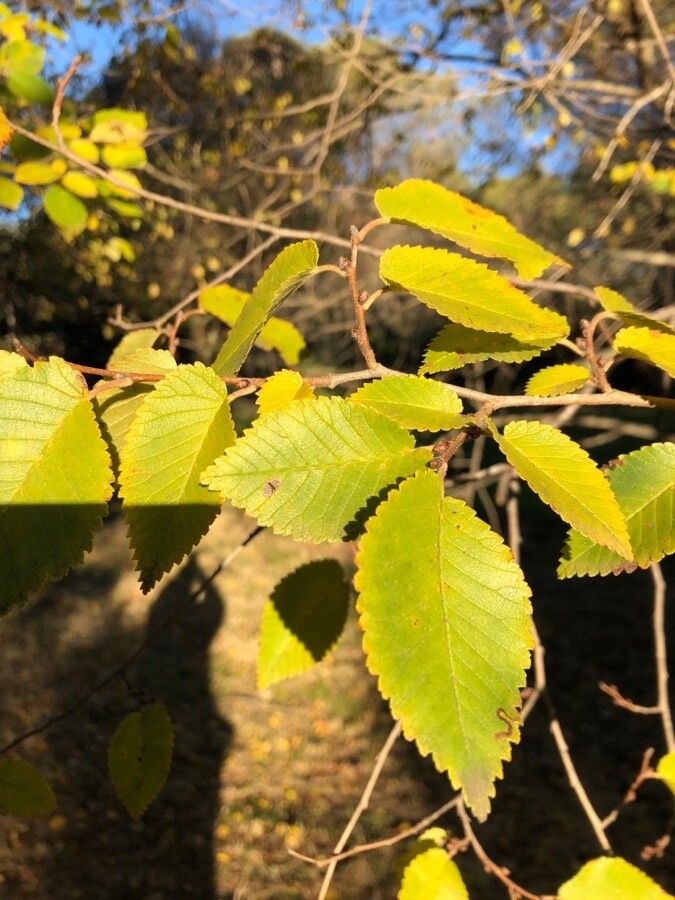
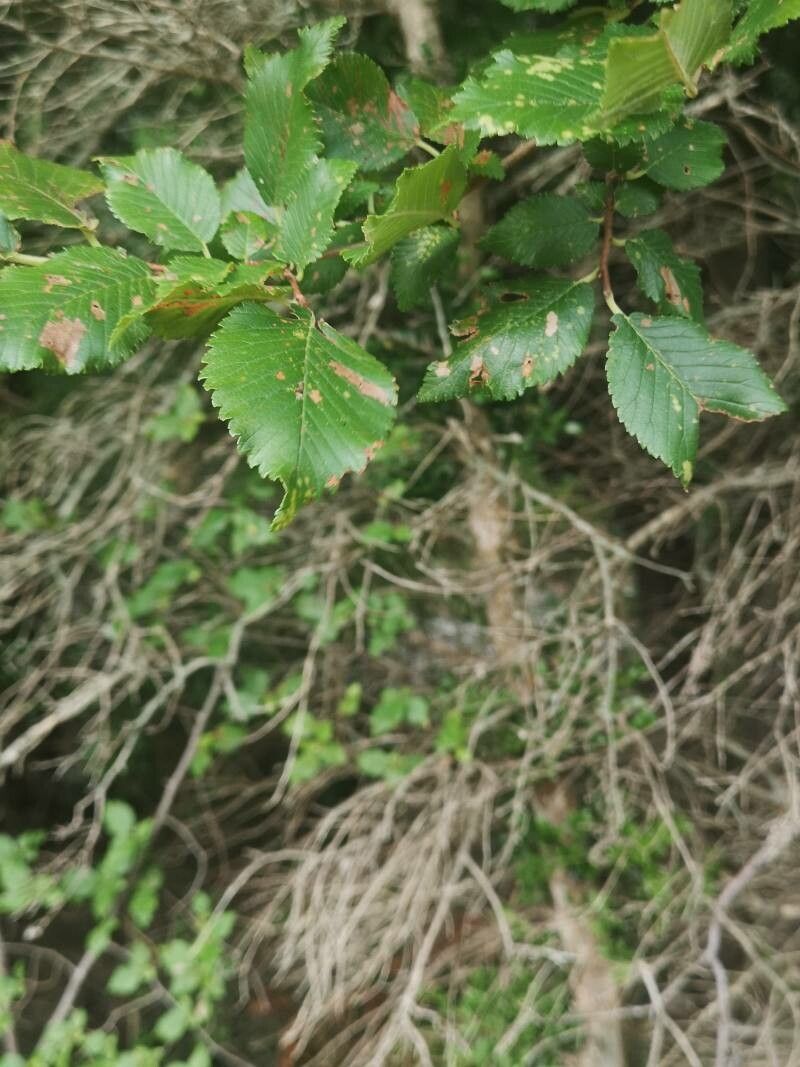
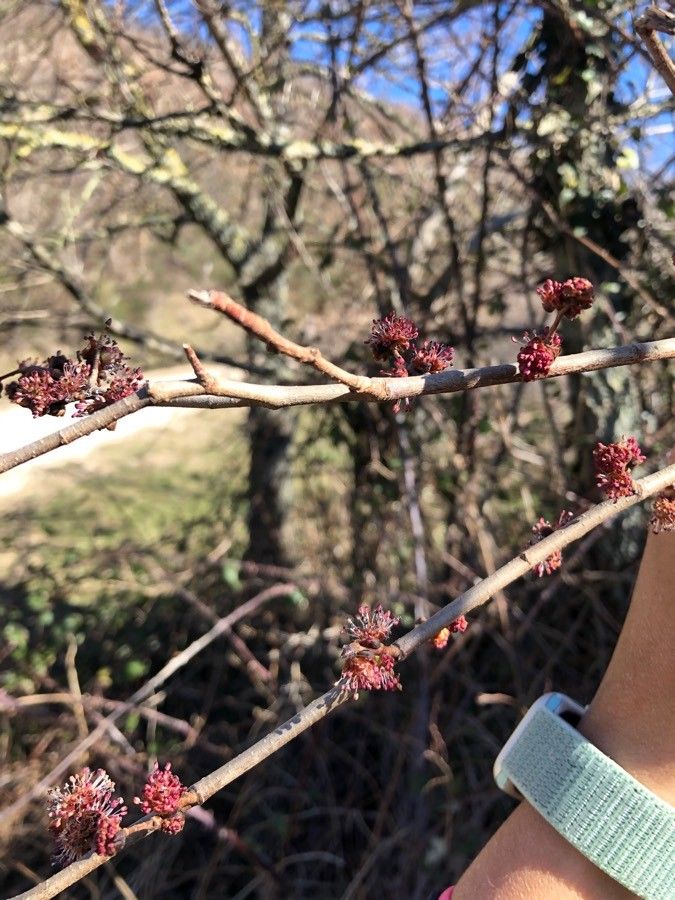
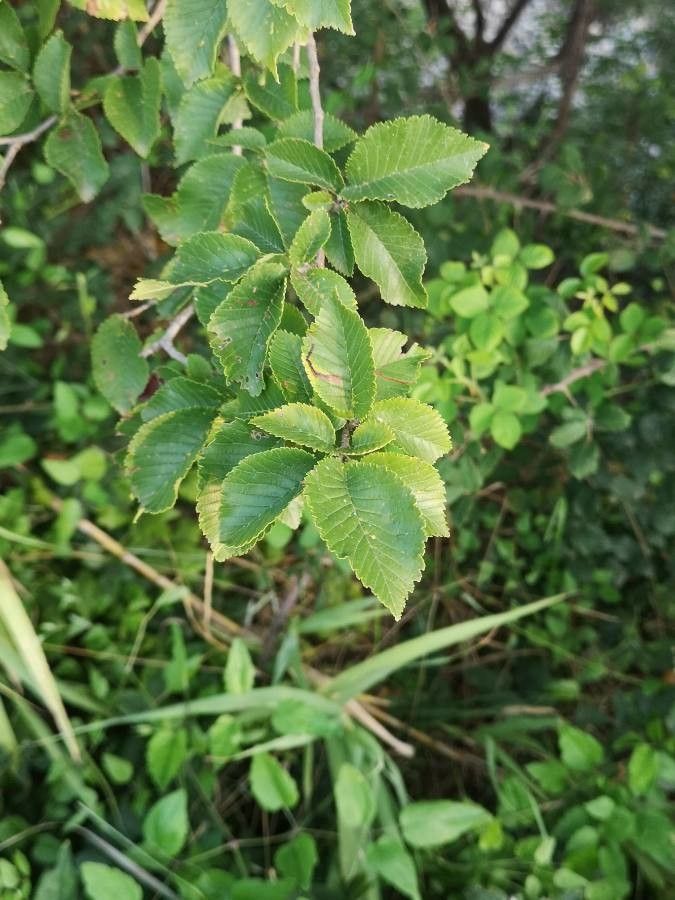
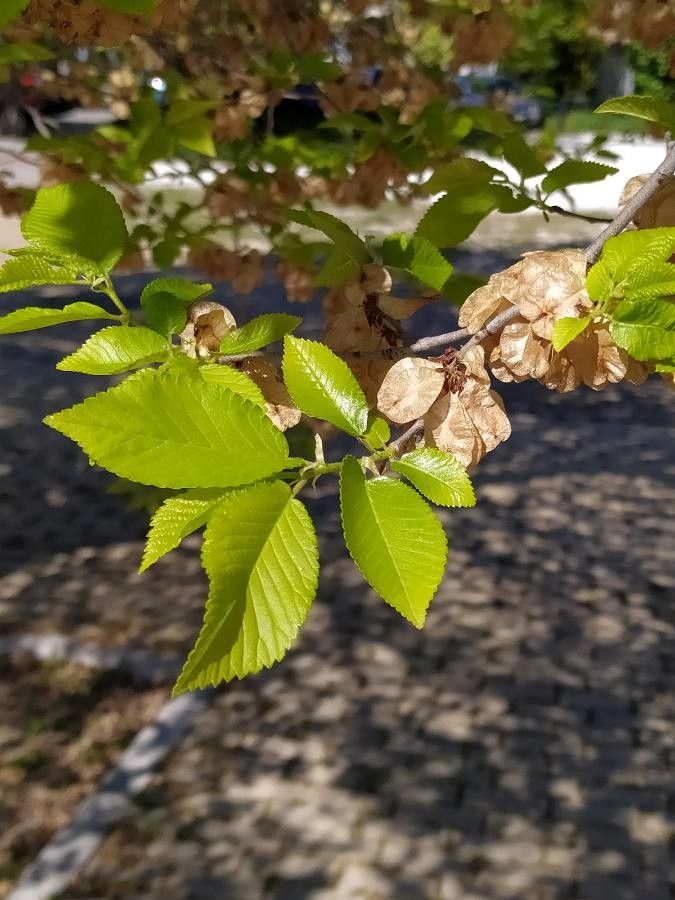
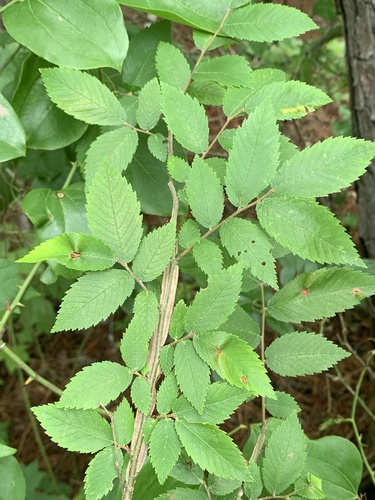
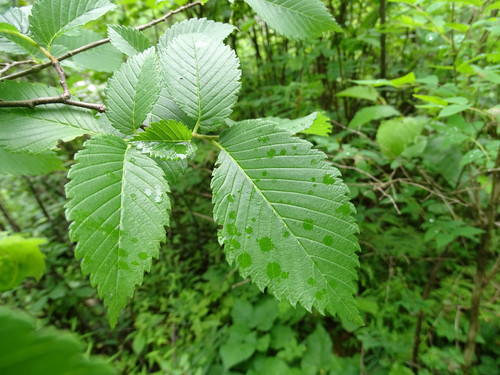
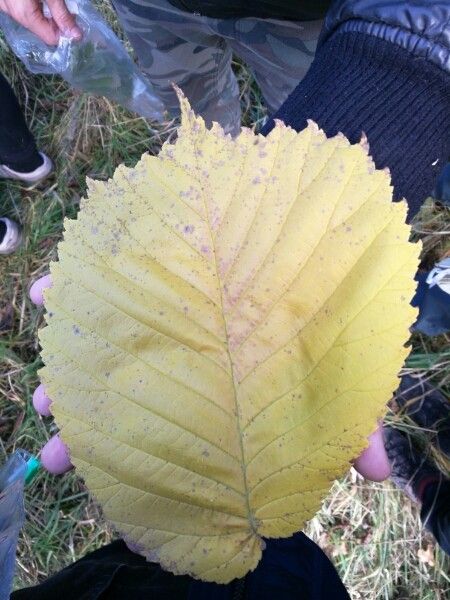
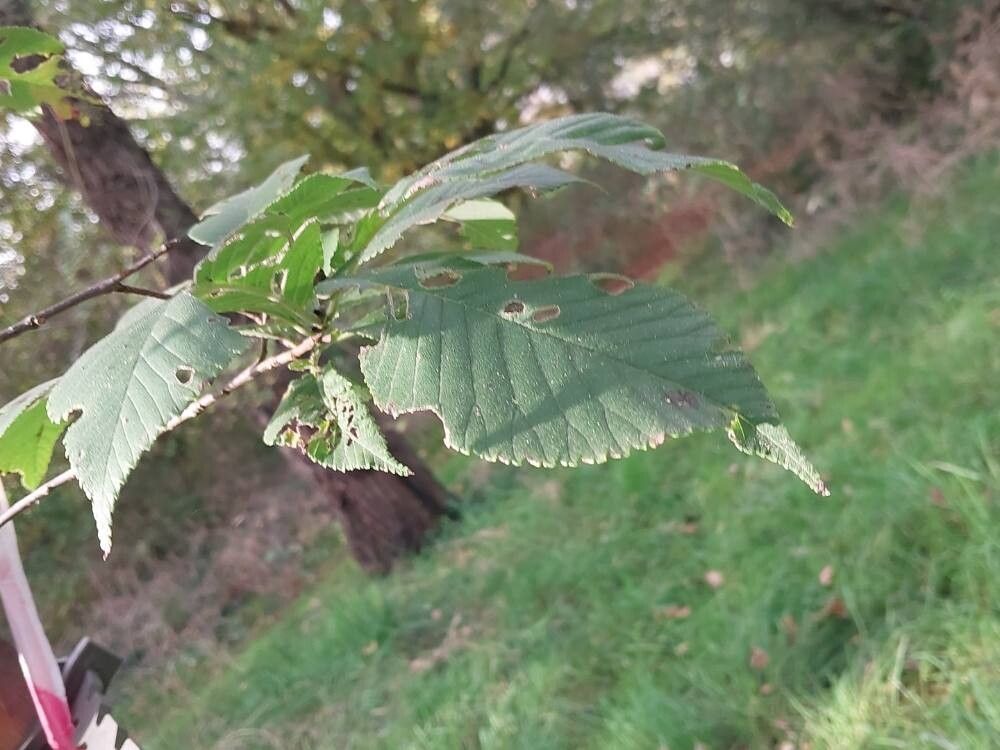
Ulmus carpinifolia, commonly known as the Hornbeam-leaved Elm, is a deciduous tree species belonging to the Ulmaceae family. Native to southern Europe and western Asia, this tree can reach heights of up to 25 meters. It features a broad crown and dense foliage composed of dark green, oval-shaped leaves with serrated edges.
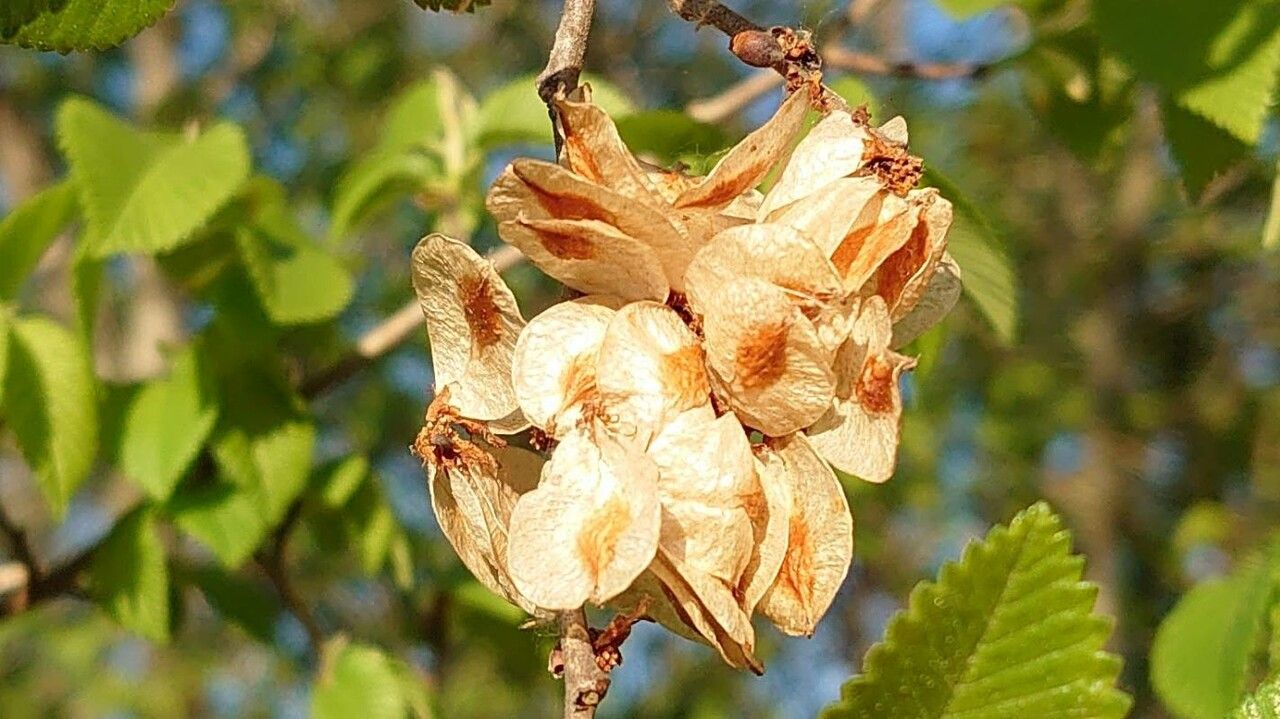
The tree's grayish-brown bark is characterized by deep fissures that form diamond-shaped patterns. In early spring, before the leaves appear, Ulmus carpinifolia produces small flowers, which are followed by winged fruits known as samaras.
Preferring well-drained soils, Ulmus carpinifolia can thrive in both full sun and partial shade. While it is resistant to Dutch elm disease, it is susceptible to infestations by the elm leaf beetle.
The Hornbeam-leaved Elm is widely used as an ornamental tree due to its attractive foliage and shape. Its wood is also highly valued for its strength, durability, and resistance to decay.
Overall, Ulmus carpinifolia is an important ecological component in its native range and provides significant aesthetic value for landscaping purposes worldwide.
Botanical profile.
- Genus
- Ulmus
- Family
- Ulmaceae
Other names.