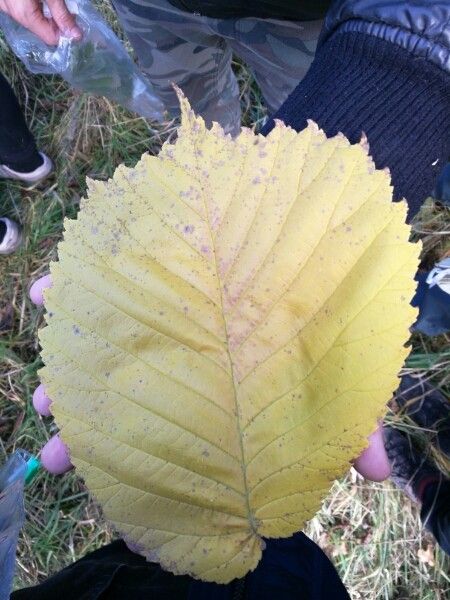
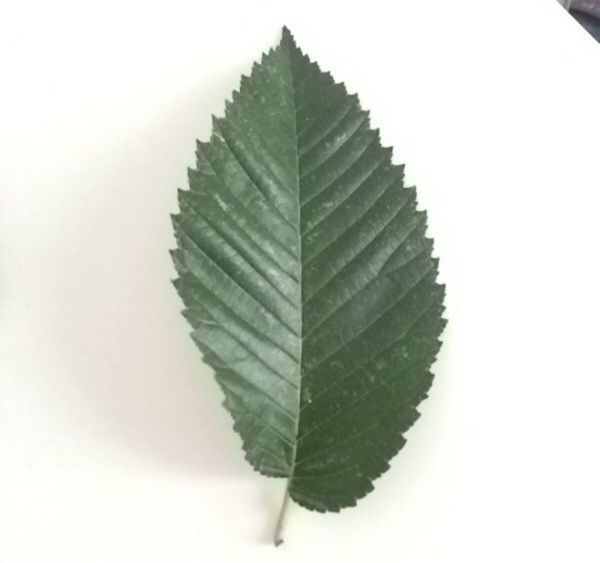
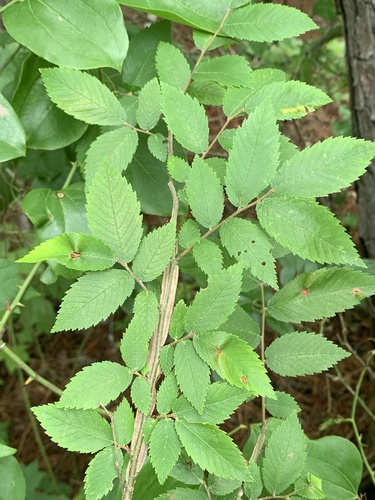
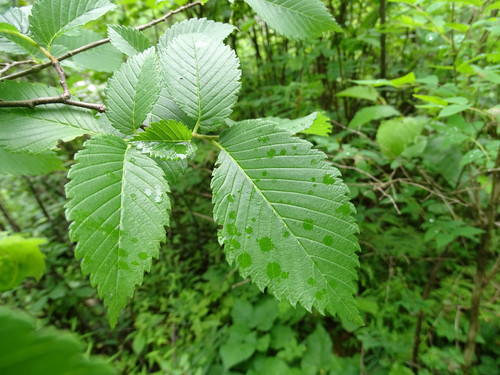
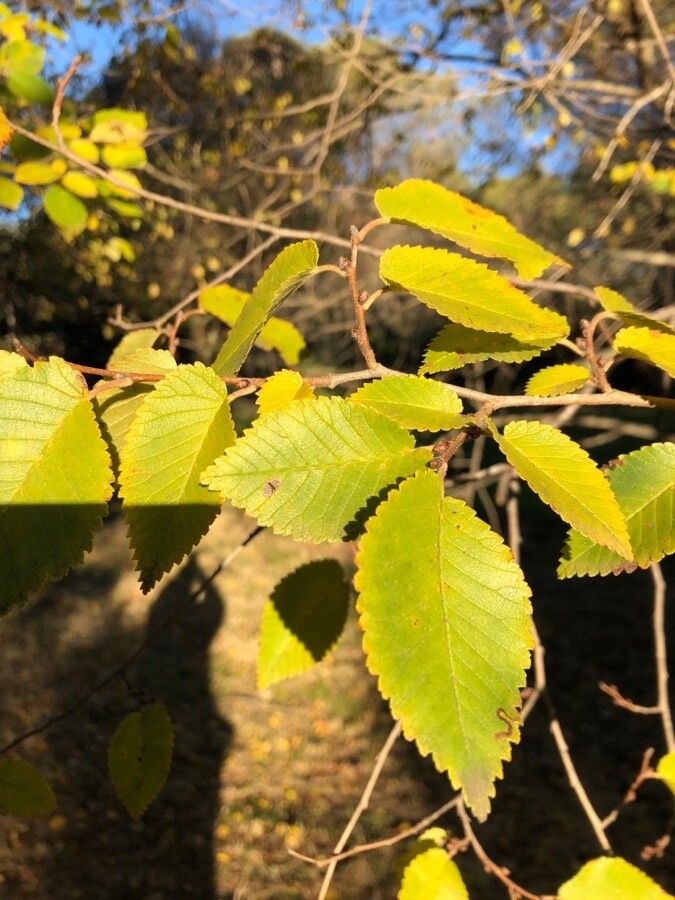
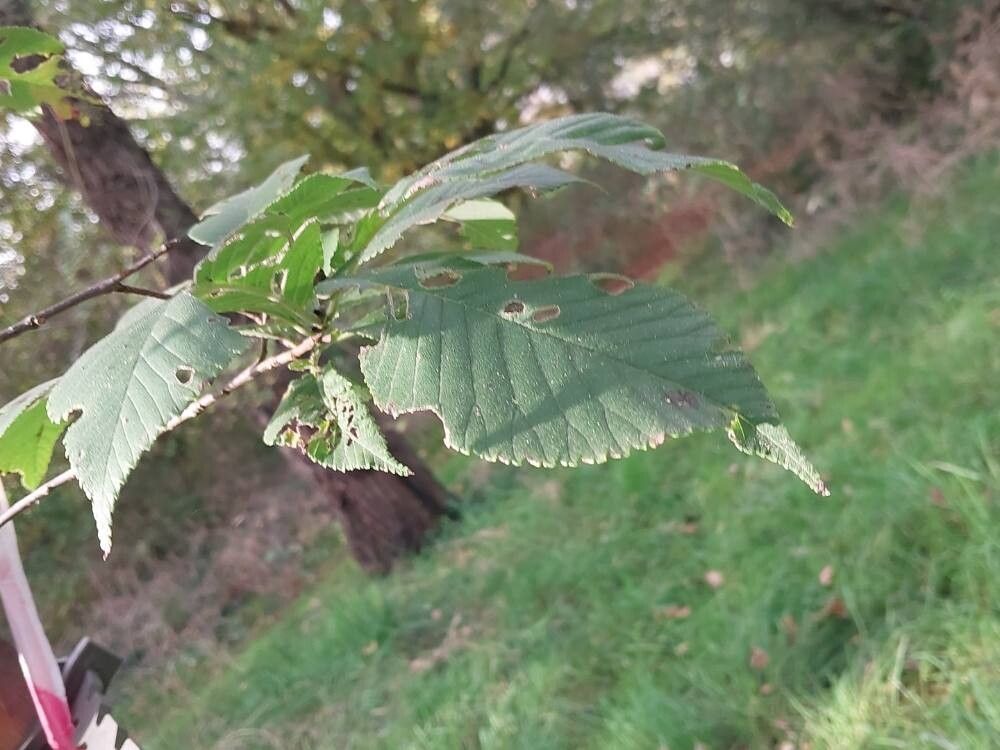
Ulmus glabra Hudson, the wych elm or Scots elm, has the widest range of the European elm species, from Ireland eastwards to the Urals, and from the Arctic Circle south to the mountains of the Peloponnese and Sicily, where the species reaches its southern limit in Europe; it is also found in Iran. A large deciduous tree, it is essentially a montane species, growing at elevations up to 1,500 m (4,900 ft), preferring sites with moist soils and high humidity. The tree can form pure forests in Scandinavia and occurs as far north as latitude 67°N at Beiarn in Norway. It has been successfully introduced as far north as Tromsø, Norway and Alta, Norway (70°N). It has also been successfully introduced to Narsarsuaq, near the southern tip of Greenland (61°N). The tree was by far the most common elm in the north and west of the British Isles and is now acknowledged as the only indisputably British native elm species. Owing to its former abundance in Scotland, the tree is occasionally known as the Scotch or Scots elm; Loch Lomond is said to be a corruption of the Gaelic Lac Leaman interpreted by some as 'Lake of the Elms', 'leaman' being the plural form of leam or lem, 'elm'.Closely related species, such as Bergmann's elm U. bergmanniana and Manchurian elm U. laciniata, native to northeast Asia, were once sometimes included in U. glabra; another close relative is the Himalayan or Kashmir elm U. wallichiana. Conversely, Ulmus elliptica from the Caucasus, considered a species by some authorities, is often listed as a regional form of Ulmus glabra.
The European white elm shows strong disease resistance and is generally not susceptible to illnesses. Regarding care, this plant is fairly low-maintenance. When grown outdoors it needs only minimal watering, and larger specimens usually do not require pruning. Smaller plants, however, should be trimmed after they have finished blooming. European white elmt is suitable for anyone with outdoor space, such as a garden or deck, and does not require extensive experience in plant care.
How to keep Ulmus Campestris.
Light
The European white elm favors locations with filtered sunlight. It thrives there because it can tolerate varying light conditions. Its native habitat provides that kind of penetrating sun, which benefits its health. However, an extreme lack or excess of light can impair its growth.
Temperature
The European white elm naturally occurs in areas with temperatures ranging from 32 to 95°F (0 to 35°C). It prefers the milder end of that spectrum. In colder seasons, gradually acclimate the plant to cooler temperatures to prevent shock.
Fertilizer
Fertilize your European white elm in early spring to encourage healthy growth. Regular fertilization boosts its overall health, leading to vigorous growth, increased resilience to harsh conditions, and improved resistance to diseases and pests. Keep a consistent fertilization schedule for your European white elm to preserve vibrant, deeply colored foliage and a lush appearance.
Botanical profile.
- Plant Type
- Tree
- Life Cycle
- Perennial
- Genus
- Ulmus
- Family
- Ulmaceae
- Hardiness Zone
- 3-9
- Mature Height
- 29.87 m
- Mature Spread
- 29.87 m
- Leaf Color
- Dark Green, Forest Green
- Leaf Type
- Deciduous
- Flower Color
- Red, White
- Flower Size
- 0.25 cm to 0.51 cm
- Bloom Time
- Spring
- Planting Time
- Spring, Autumn
- Harvest Time
- Mid summer, Late summer
- Native Area
- Turkey, Sweden, Austria, Slovakia, Montenegro, Slovenia, Croatia, Belarus, Uzbekistan, Russia, Germany, Estonia, Romania, Latvia, Belgium, Moldova, Netherlands, France, Tajikistan, Czech Republic, Bulgaria, Poland, Greece, Ukraine, Serbia, Lithuania, Kazakhstan, Switzerland, Denmark, Finland, Iran, Albania, Hungary
Other names.