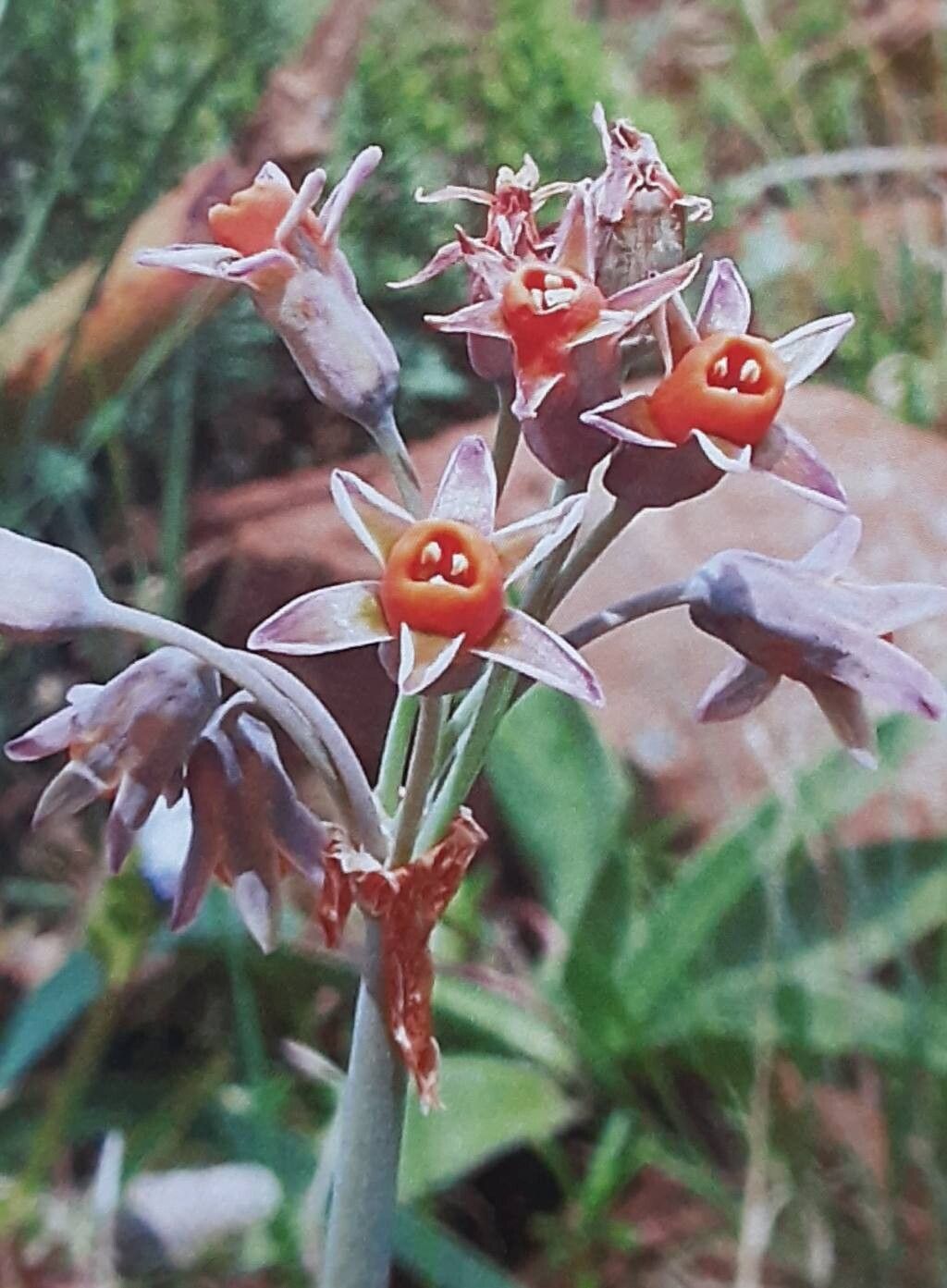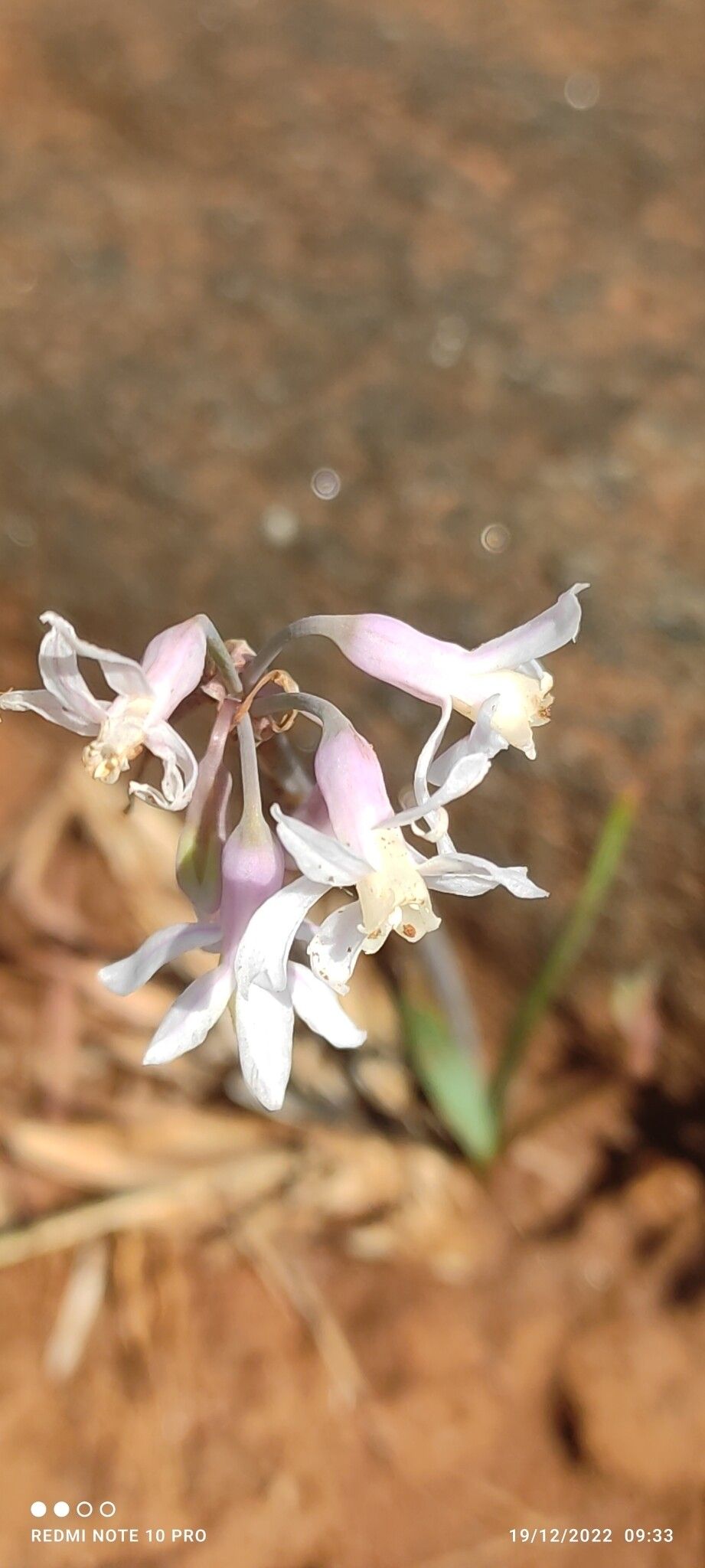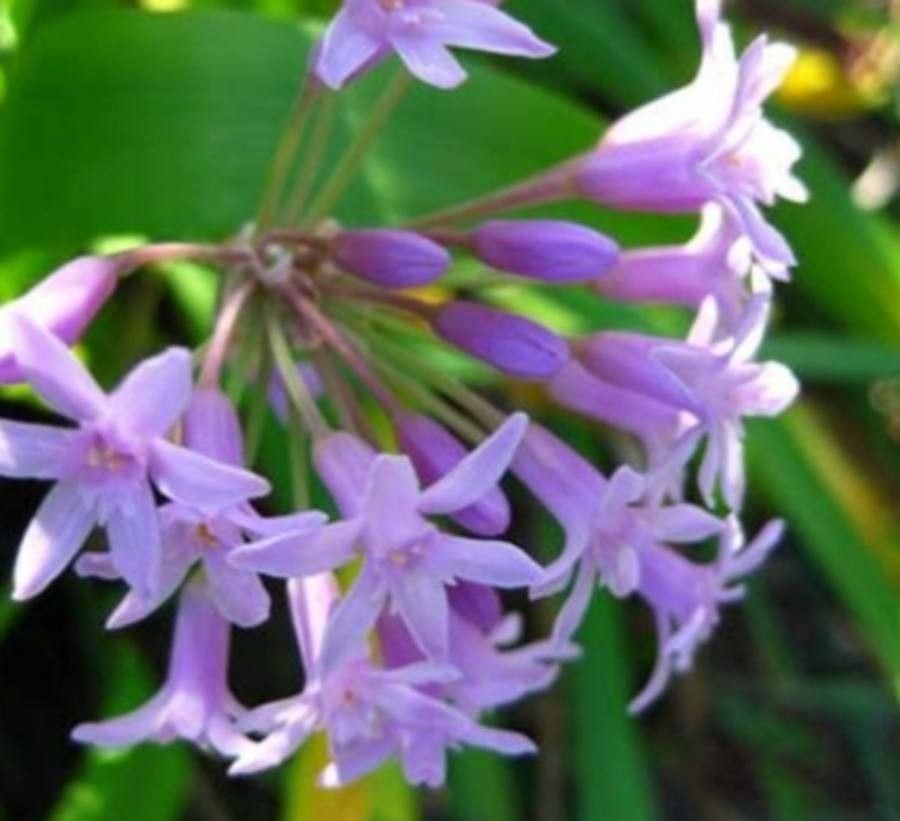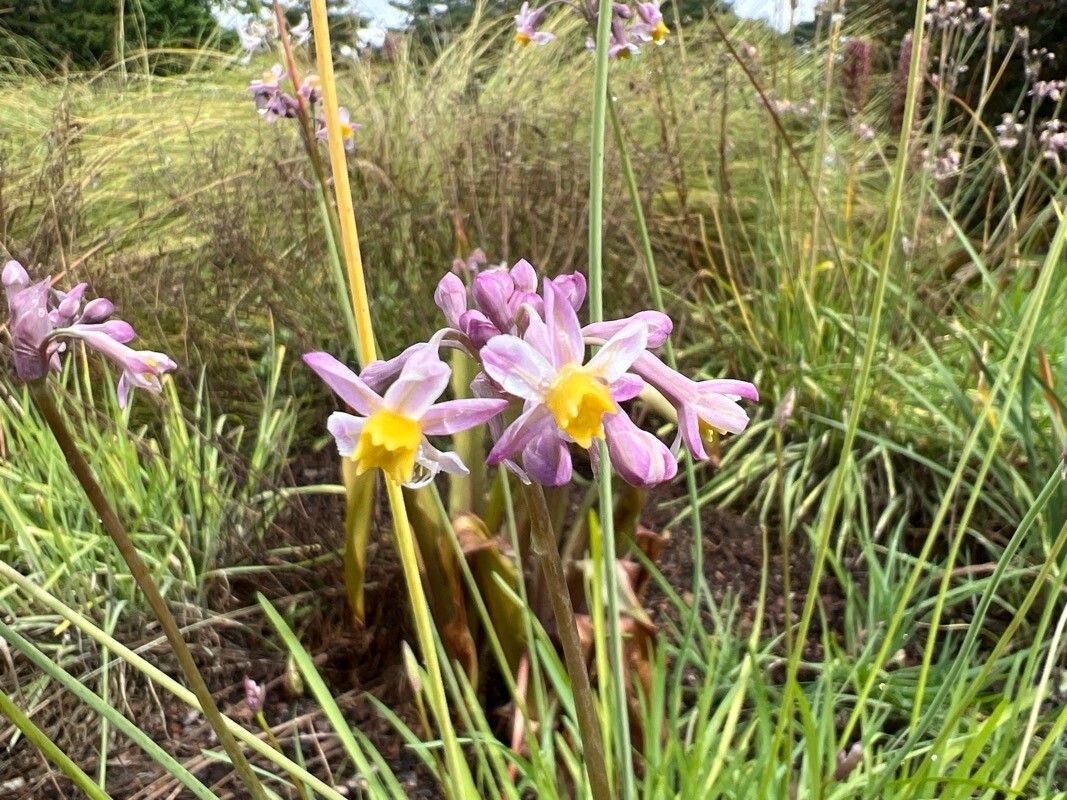
Tulbaghia natalensis, called pink wild garlic and sweet wild garlic, is a species of flowering plant in the family Amaryllidaceae, native to the Cape Provinces and KwaZulu-Natal in South Africa. It has gained the Royal Horticultural Society's Award of Garden Merit as an ornamental.
Pink Wild Garlic has strong resistance to diseases and is generally not vulnerable to them. Nevertheless, it can be affected by pests and diseases present in its surroundings. Such infections are typically mild. Regarding care, this plant needs a moderate level of maintenance. It should be pruned regularly to preserve a good appearance and healthy growth. Fertilizing can also help encourage flowering. Pink Wild Garlic is appropriate for anyone with outdoor space, like a garden or patio, and does not require extensive care experience. It may need more attention when grown indoors.
How to keep Tulbaghia Natalensis.
Light
Pink Wild Garlic is indigenous to habitats like forest underlayers or stony regions, where it naturally finds shade. It thrives best in partial sunlight, however, it is flexible enough to adjust to both full sunlight and full darkness, showing its adaptability and toughness.
Water
Tulbaghia natalensis flourishes in consistently moist environments and prefers soil that remains evenly moist. For optimal health, water the plant once a week. Adjust the watering schedule based on seasonal rainfall to mimic natural conditions: provide extra water during dry spells and reduce watering during periods of heavy rain to prevent excess moisture.
Temperature
Pink Wild Garlic can withstand a range of temperatures and is generally resilient to heat. In hotter climates, it's crucial to keep it well-watered and sheltered from direct sunlight to avoid sun damage. However, this plant isn't well-suited to colder climates. It can endure a certain degree of chill, but if the temperatures dip too low, it may suffer from frost damage.
Fertilizer
The optimal period to feed a Pink Wild Garlic is during early spring, when it transitions from a dormant state to active growth. Fertilizing supplies critical nutrients necessary for robust growth. Even though Pink Wild Garlic's demand for fertilization is somewhat low, yearly feeding can improve its longevity and encourage superior and longer-lasting blooms.
Pruning
Tulbaghia natalensis features delicate blooms and is known for its resilience. To ensure optimal growth, prune the plant from early to late spring. Remove any dead or diseased foliage and spent flowers. This process encourages new growth, maintains compactness, and enhances its visual appeal. Always use sterilized tools to promote health and prevent infections.
Botanical profile.
- Plant Type
- Herb
- Life Cycle
- Perennial
- Genus
- Tulbaghia
- Family
- Amaryllidaceae
- Hardiness Zone
- 8-11
- Mature Height
- 30 cm to 61 cm
- Mature Spread
- 20 cm to 30 cm
- Leaf Color
- Green
- Leaf Type
- Semi-evergreen
- Flower Color
- Lavender
- Flower Size
- 1.02 cm to 2.03 cm
- Bloom Time
- Mid spring, Late spring, Early summer, Mid summer
- Planting Time
- Spring, Summer, Autumn
- Harvest Time
- Summer, Early fall
- Native Area
- South Africa