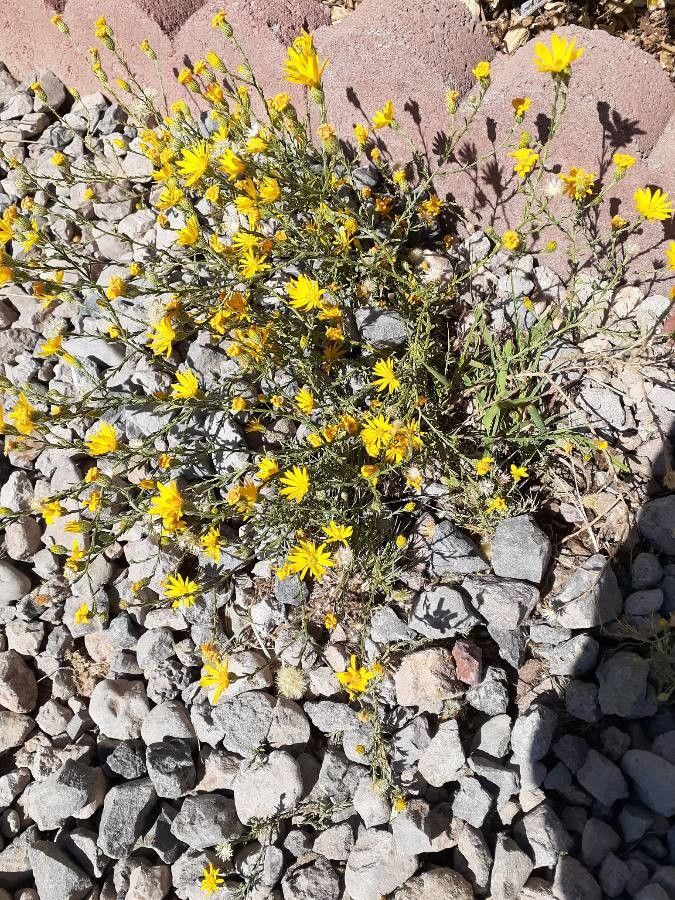
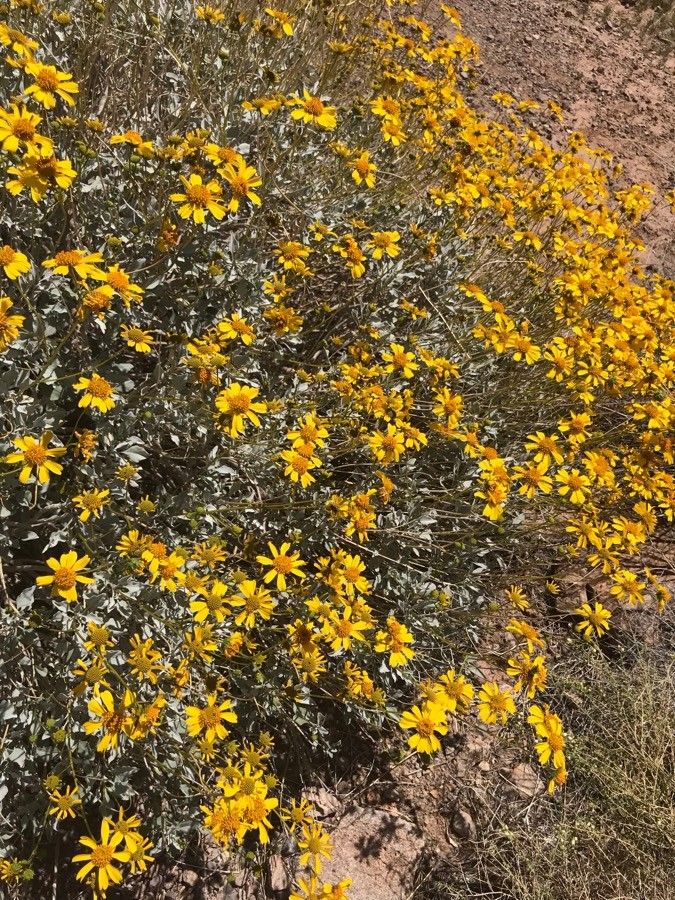
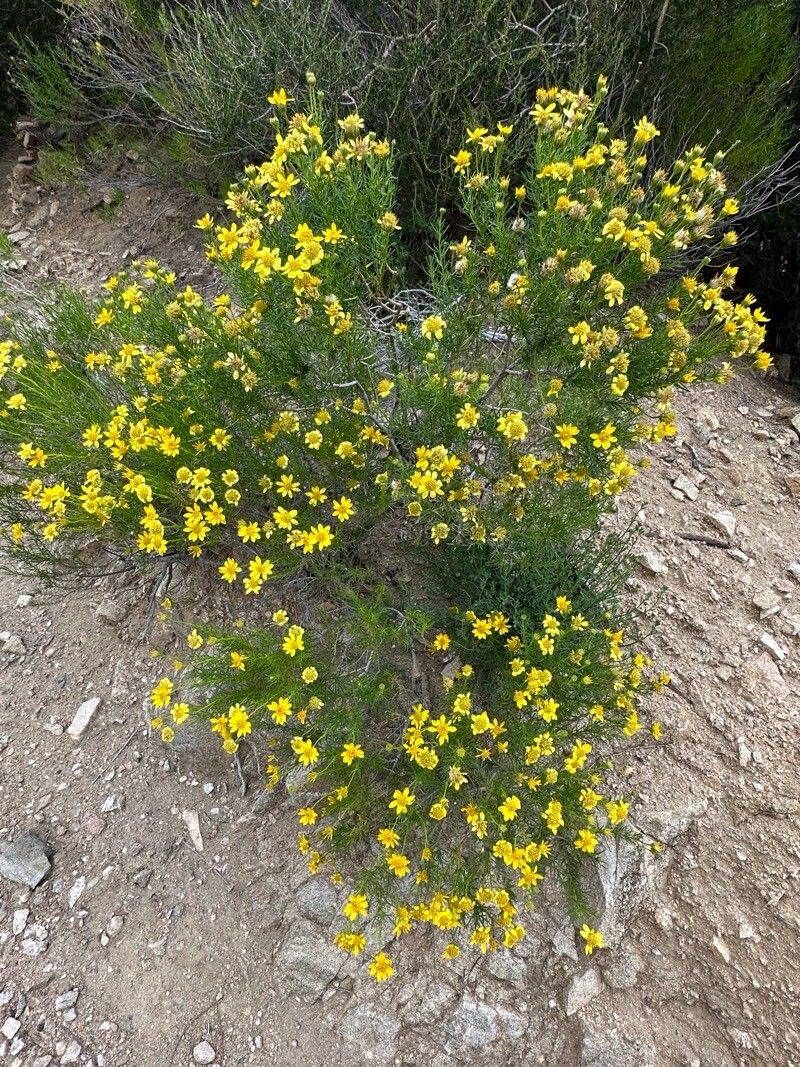
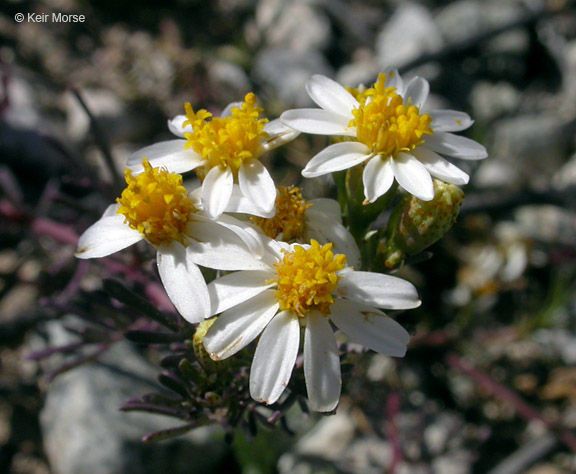
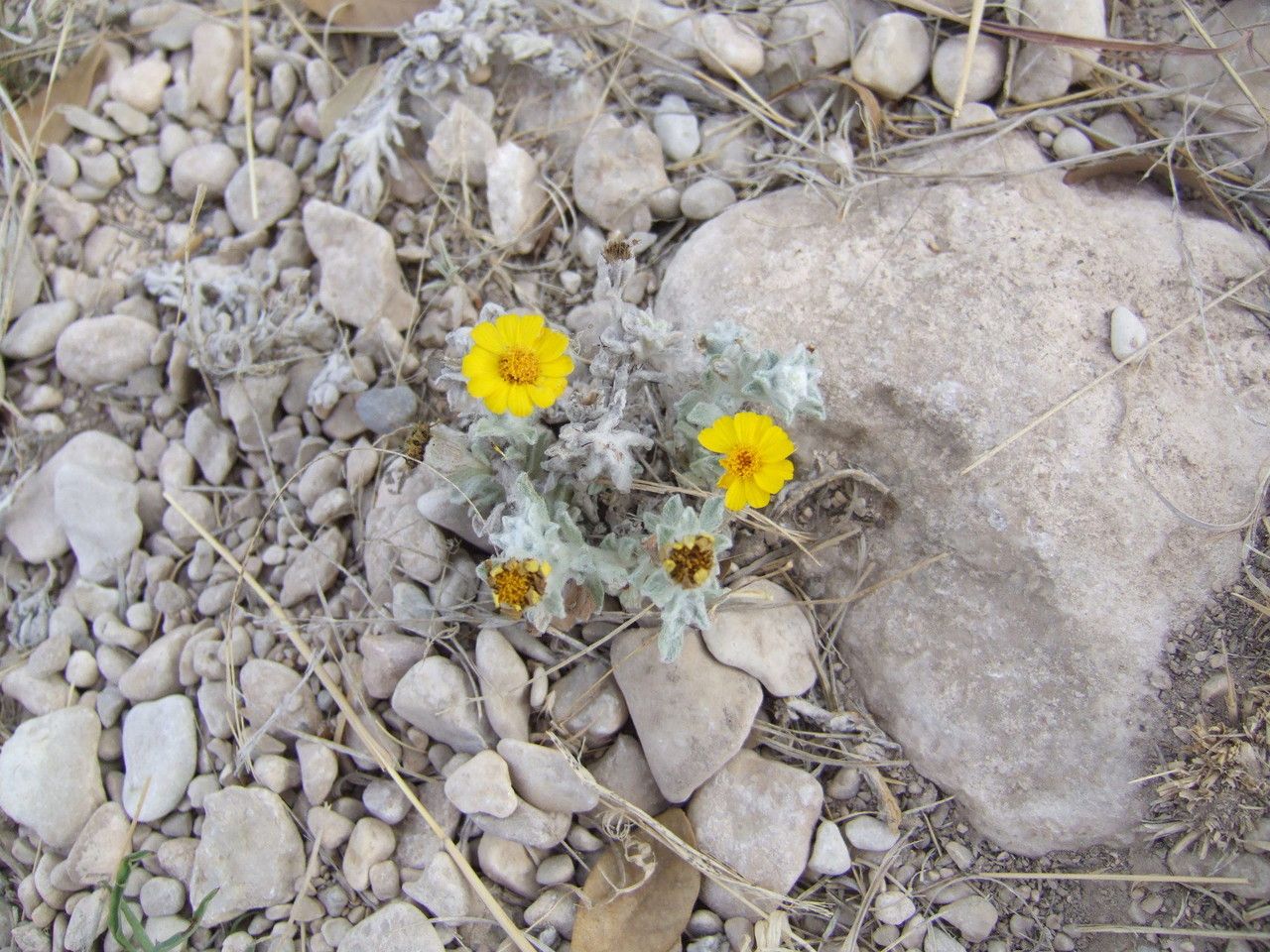
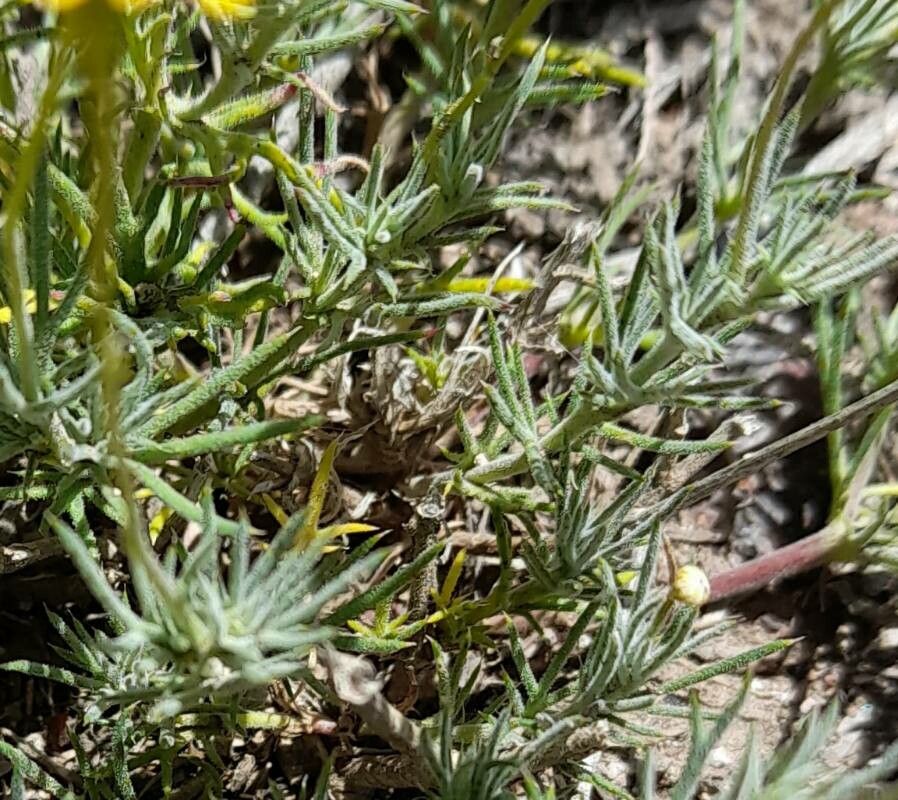
Thymophylla setifolia, commonly known as the Mexican gold poppy or Dahlberg daisy, is a small perennial plant in the Asteraceae family. It is native to Mexico and the southwestern United States, typically found in rocky or sandy soils in desert regions.
The plant exhibits a compact growth habit with finely divided, gray-green leaves. It produces bright yellow flowers with five petals that bloom from spring through fall. These flowers, about 1 inch wide, grow on long stems above the foliage.
Thymophylla setifolia is drought-tolerant and can thrive in hot, dry conditions with minimal water once established. It prefers full sun exposure but can also grow well in partial shade.
Indigenous people have used the plant for medicinal purposes for centuries, treating ailments such as fever, coughs, colds, stomach problems, and skin conditions.
In landscaping, Thymophylla setifolia is often utilized as a ground cover or border plant due to its low-growing habit and attractive yellow blooms, which attract pollinators like bees and butterflies.
Overall, Thymophylla setifolia is an attractive, low-maintenance perennial that adds color to any garden while also offering medicinal benefits when needed.
Texas pricklyleaf is fairly resistant to disease and generally does not suffer from many illnesses. That said, it can be affected by pests and diseases present in its surroundings. Such infections tend to be mild. In terms of care, the plant needs moderate maintenance. It should be pruned regularly to maintain a neat appearance and encourage healthy growth. Fertilizing can also help stimulate flowering. Texas pricklyleaf is a good choice for anyone with outdoor space, like a garden or patio, and does not require extensive gardening experience. It may need more attention if grown indoors.
How to keep Thymophylla Setifolia.
Light
Texas pricklyleaf comes from bright, open habitats where it does best in full sun. It will tolerate partial shade but favors direct sunlight for optimal growth. This plant, which may be annual or biennial, is noted for its sun-loving nature.
Temperature
Texas pricklyleaf comes from tropical areas where the climate is generally warm and humid. Consequently, it is well adapted to high heat and moisture. It is sensitive to sudden temperature changes and prefers a consistent temperature, so avoiding indoor temperature fluctuations is important. It usually cannot tolerate cold and requires higher temperatures for growth. If the surrounding temperature falls too low, the plant may stop growing or even die.
Fertilizer
When most of Texas pricklyleaf's flowers have opened to full size, resume fertilizing. Around the peak bloom period, fertilize every three to four weeks, as the weather allows. Then, once the plant begins producing fewer new blooms, stop fertilizing; there is no need to feed it when it can no longer produce more blooms.
Botanical profile.
- Plant Type
- Herb
- Life Cycle
- Annual
- Genus
- Thymophylla
- Family
- Asteraceae
- Hardiness Zone
- 7-10
- Mature Height
- 10 cm to 30 cm
- Mature Spread
- 15 cm to 30 cm
- Leaf Color
- Green
- Leaf Type
- Deciduous
- Flower Color
- Yellow
- Flower Size
- 1.02 cm to 2.03 cm
- Bloom Time
- Late spring, Summer, Fall
- Planting Time
- Spring, Summer, Autumn
- Harvest Time
- Mid summer, Late summer, Fall, Early winter
- Native Area
- Mexico
Other names.