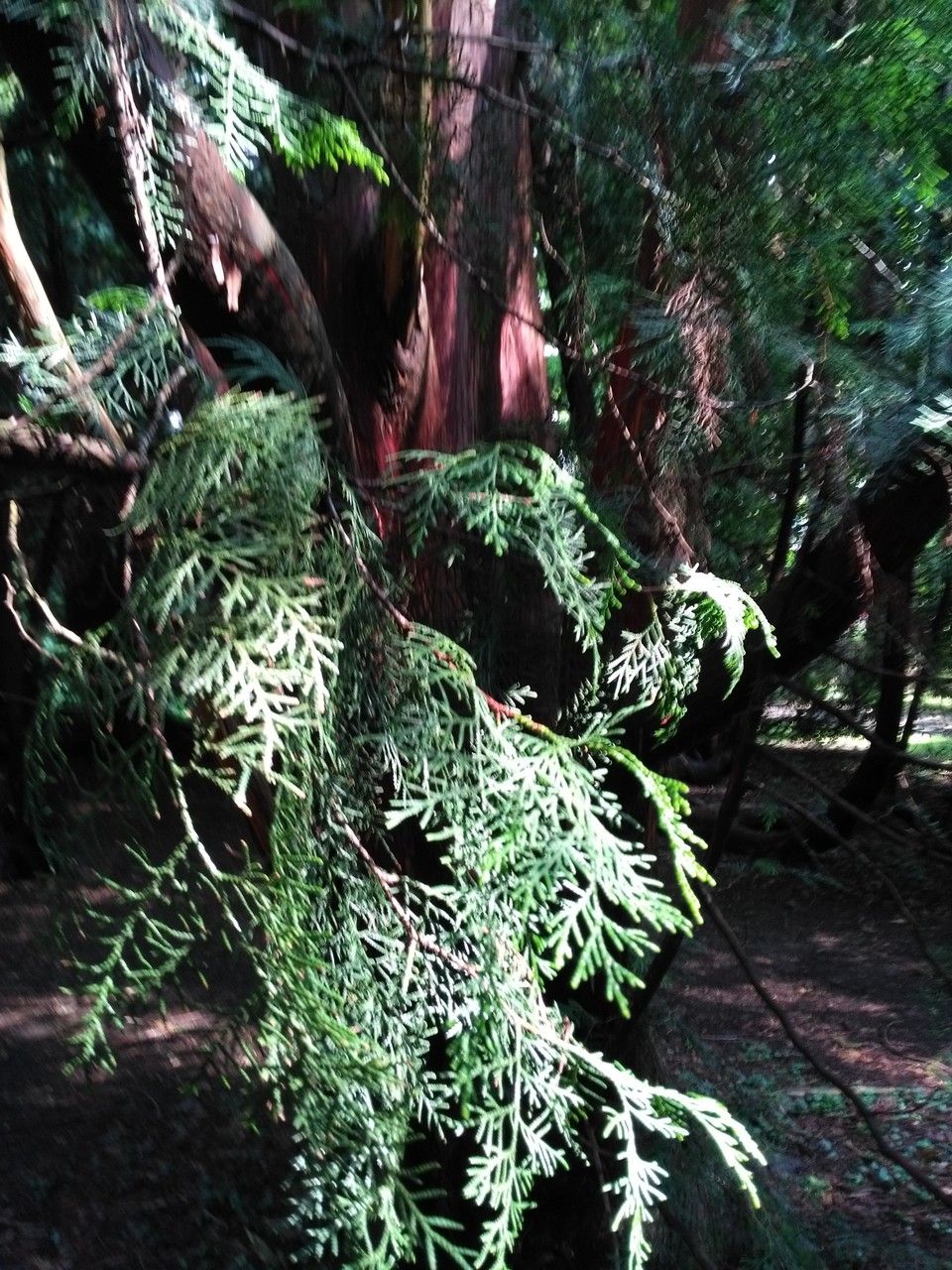
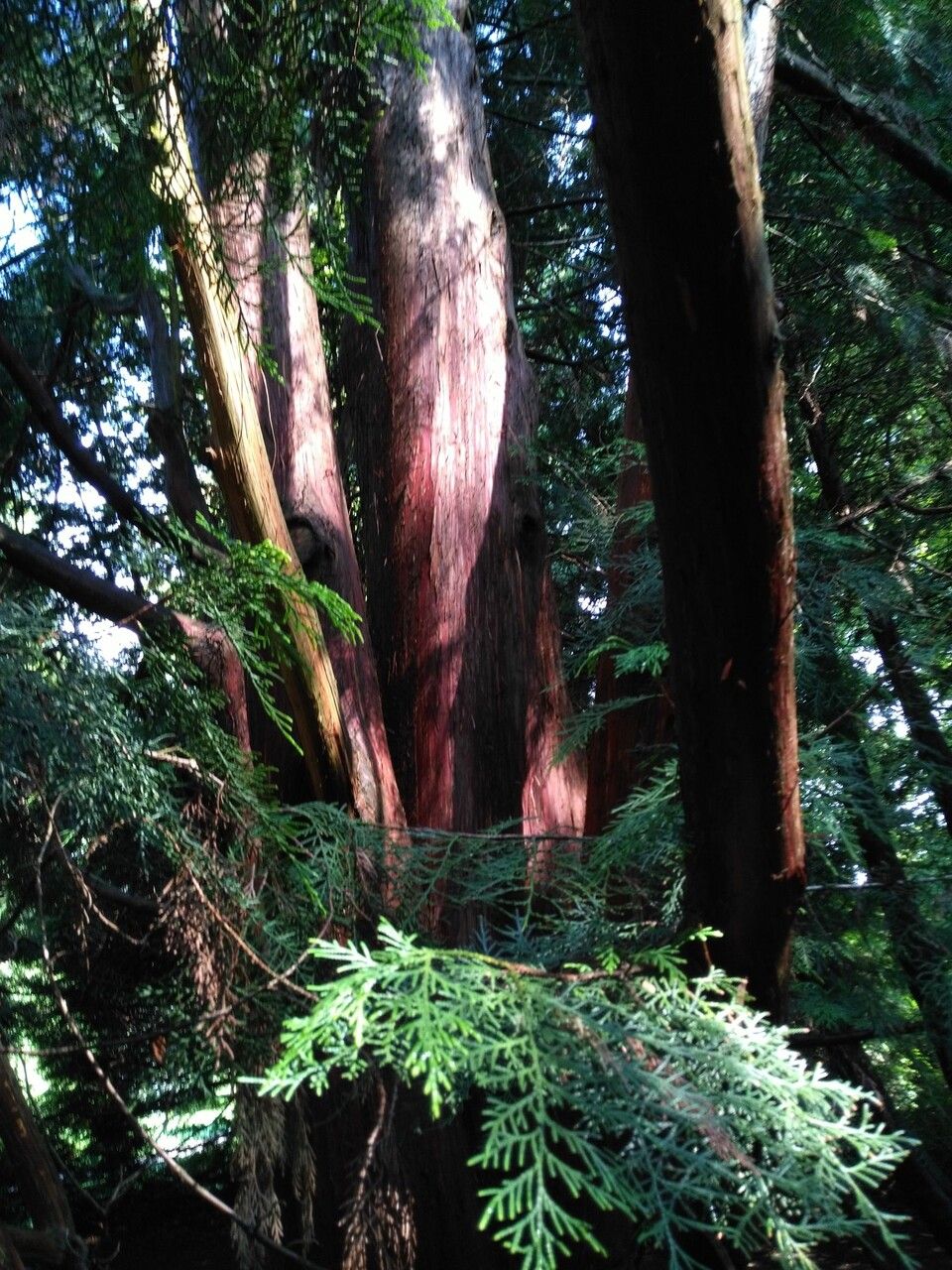
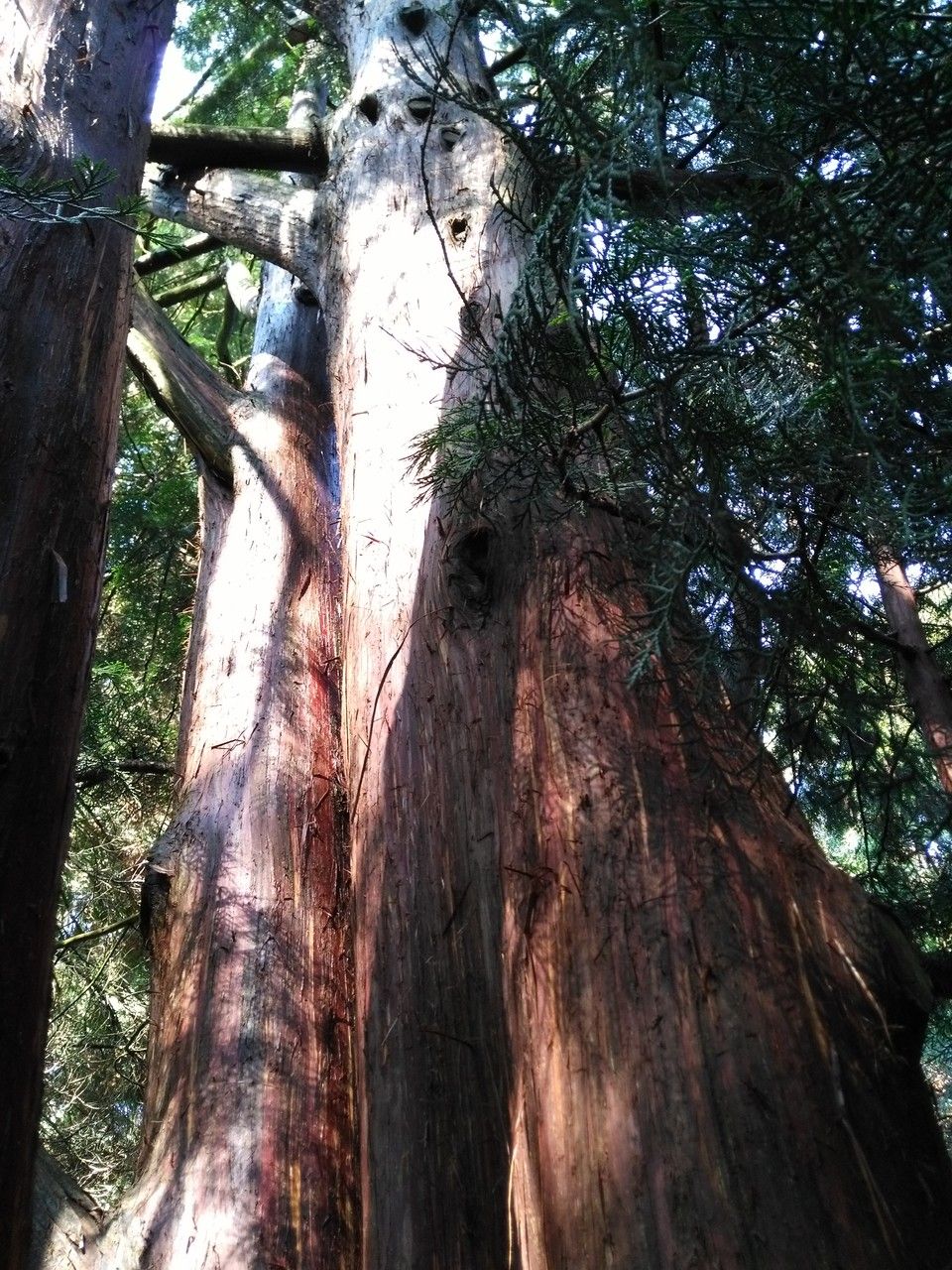
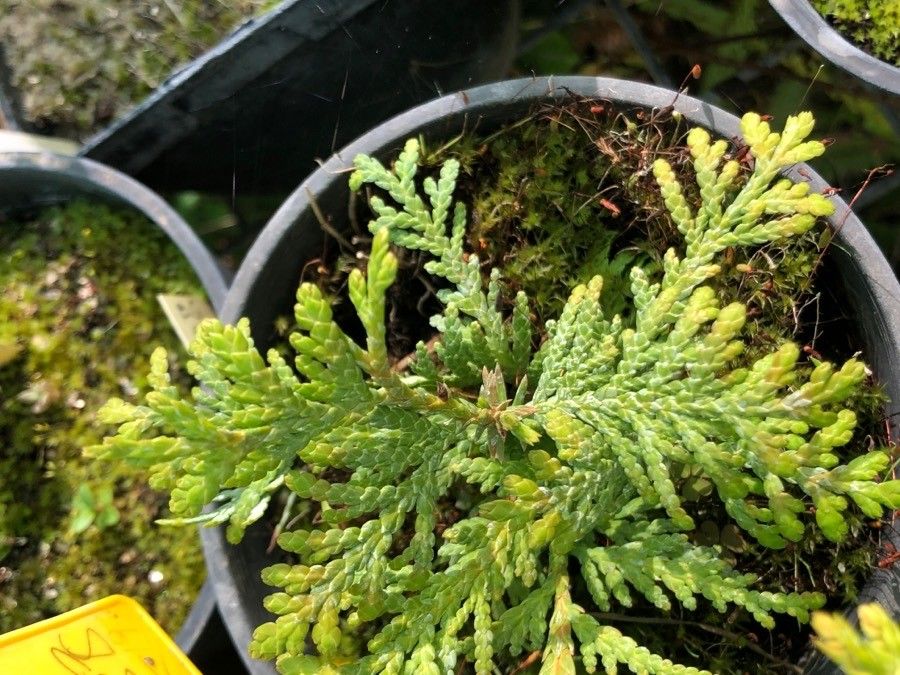
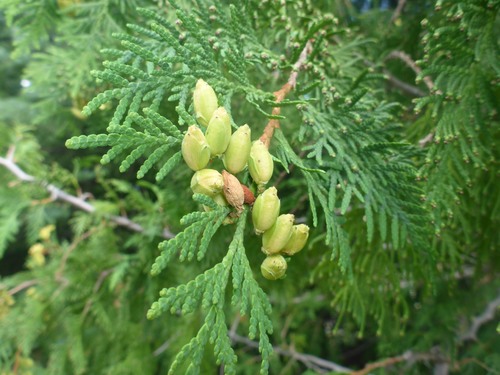
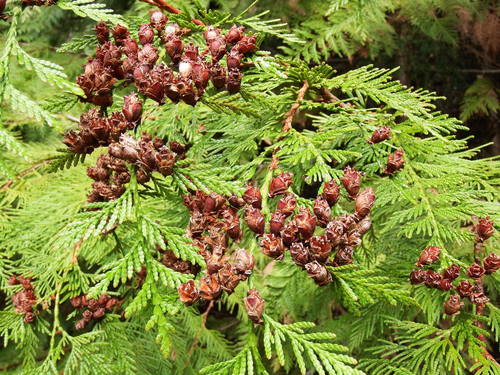
Thuja standishii (Japanese thuja; Japanese: nezuko, kurobe) is a species of thuja, an evergreen coniferous tree in the cypress family Cupressaceae. It is native to southern Japan, where it occurs on the islands of Honshū and Shikoku. It is a medium-sized tree, reaching 20–35 m tall and with a trunk up to 1 m diameter. The foliage forms in flat sprays with scale-like leaves 2–4 mm long, matte green above, and with narrow white stomatal bands below. The cones are oval, yellow-green ripening red-brown, 6–12 mm long and 4–5 mm broad (opening to 8 mm broad), with 6–10 overlapping scales. It is an important timber tree in Japan, grown in forestry plantations for its durable, waterproof, attractively scented wood. There is some evidence that extracts of T. standishii have biological activity. It contains a compound called standishinal which has shown relatively potent effects on the enzyme aromatase. It acts as an inhibitor, thus decreasing the synthesis of estradiol in the human body. This compound has been used in research and derivatives of it have shown even stronger inhibition of aromatase.
Japanese thuja is disease-resistant and generally not prone to illnesses. Carewise, this plant is fairly low-maintenance. When grown outdoors it needs minimal watering, and larger plants typically do not require pruning. Smaller plants, however, should be pruned after they have bloomed. Japanese thuja is suitable for anyone with an outdoor area, such as a garden or deck, and does not demand much gardening experience.
How to keep Thuja Standishii.
Light
Japanese thuja performs best with unobstructed sunlight. It can endure some shade, but that may negatively affect its development, leaving plants less vigorous and more prone to disease. Its native habitat on forested mountain slopes accounts for its preference for maximum sun. Both too little and too much sunlight can reduce its vitality.
Water
Originating from temperate climates, Japanese thuja thrives in slightly moist, well-drained soil and benefits from consistent moisture. It is best to water it every two weeks. As an evergreen, Japanese thuja retains its foliage throughout the year, allowing it to efficiently conserve water in changing temperatures and withstand short periods of dryness.
Temperature
Japanese thuja is highly adaptable to a range of climates, from hot summers to cold winters. Still, it has a preferred temperature range for growth. If temperatures get too high, the plant can suffer from heat and humidity stress, which may kill it. In places where temperatures approach the lower limit of its cold tolerance, applying insulation to protect the plant is advisable.
Fertilizer
Japanese thuja has specific nutrient needs and does not require heavy fertilization. Spring is the best time to apply fertilizer for optimal growth. Providing nutrients improves its health, increases its resistance to pests and diseases, and helps preserve its long lifespan.
Pruning
The Japanese thuja is known for its graceful conical shape and evergreen leaves. To maintain its health and appearance, it is important to prune the plant regularly from early to late winter. Pruning helps improve air circulation and encourages denser growth by removing any dead or crossing branches. By consistently pruning, you will have a healthier and more attractive plant.
Botanical profile.
- Plant Type
- Tree
- Life Cycle
- Perennial
- Genus
- Thuja
- Family
- Cupressaceae
- Hardiness Zone
- 5-8
- Mature Height
- 6.1 m to 9.14 m
- Mature Spread
- 3.05 m
- Leaf Color
- Dark Green
- Leaf Type
- Evergreen
- Flower Size
- 0.51 cm to 0.76 cm
- Bloom Time
- Mid spring, Late spring
- Planting Time
- Spring, Summer
- Harvest Time
- Late summer, Early fall, Mid fall
- Native Area
- Japan
Other names.
Reader questions.
What are the sunlight requirements for Japanese thuja?
Japanese thuja requires full sun exposure to thrive optimally, which means it should receive more than 6 hours of sunlight daily. It can tolerate partial sun, about 3-6 hours of sunlight, but this may influence its growth negatively by making the plant less robust and more susceptible to diseases. The natural habitat of Japanese thuja, forested mountain slopes, underlines its need for ample sunlight. It's important to watch how sunlight moves through your garden to ensure plants get the perfect balance of light and shade. Inadequate sunlight can lead to compromised vitality.
How can artificial lighting support Japanese thuja's growth indoors?
Indoor Japanese thuja plants require adequate lighting for optimal growth. When natural sunlight is insufficient, artificial lights offer a vital solution. LED lights are a popular choice because they provide specific wavelengths needed by plants. For full sun plants, 30-50W/sq ft of artificial light is needed; partial sun plants need 20-30W/sq ft, and full shade plants require 10-20W/sq ft. The artificial light source should be placed 12-36 inches above the plant to mimic natural sunlight, with most plants needing 8-12 hours of light per day.
What are the signs of insufficient or excessive sunlight in Japanese thuja?
Signs of insufficient sunlight in Japanese thuja include smaller new leaves, leggy or sparse growth, faster leaf drop, slower or halted growth, and lighter-colored or irregularly patterned new leaves. Chlorosis, sunscald, leaf curling, wilting, and leaf scorching are symptoms of excessive sunlight. These symptoms indicate either a lack of sufficient sunlight leading to inadequate chlorophyll and essential nutrients or damage from excessive sunlight exposure.
What solutions can be employed for Japanese thuja experiencing light-related issues?
For indoor plants, gradually move them to a sunnier location until they receive at least 6 hours of direct sunlight daily. Consider using a south-facing window or artificial lighting if the plant is large or not easily movable, keeping these lights on for at least 8 hours a day. Outdoors, gradually move your plants to sunnier spots to avoid sunburn. Minimizing obstructions like overhanging branches can also help increase sunlight exposure. For smaller plants, transplanting during the dormant period to a location with ample sunlight and good drainage is beneficial. While parts of the plant affected by light issues may not recover, new growth will be healthy with improved light conditions.