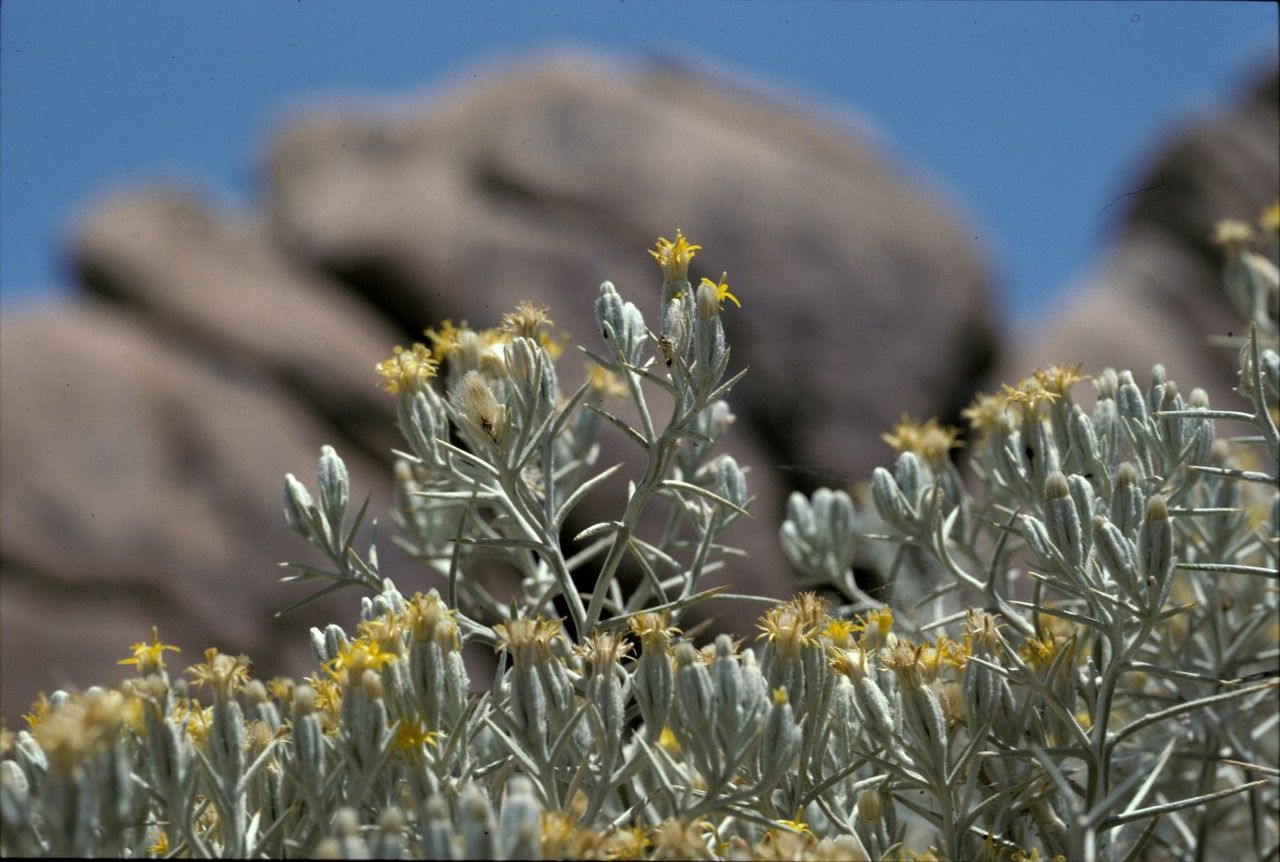
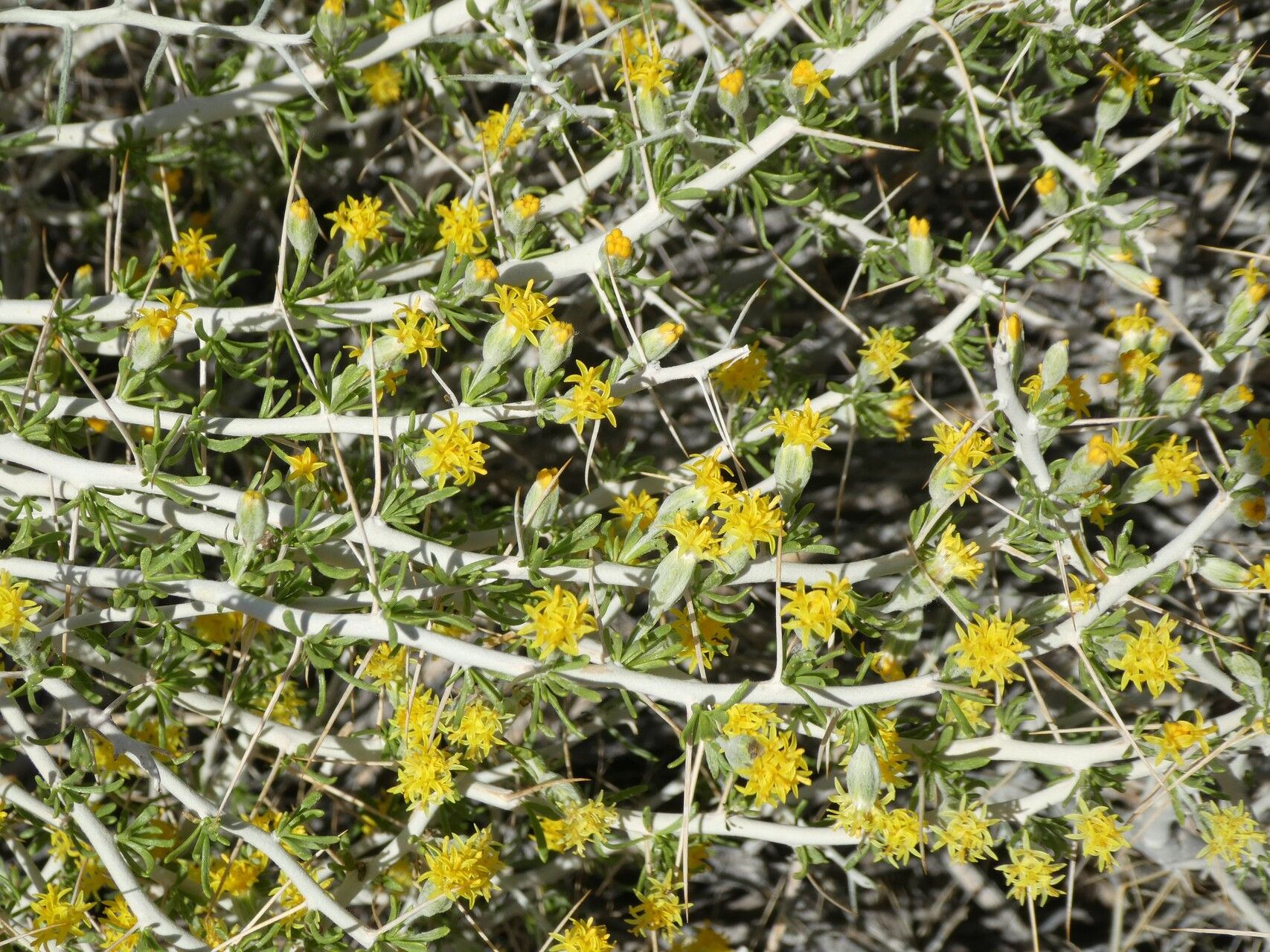
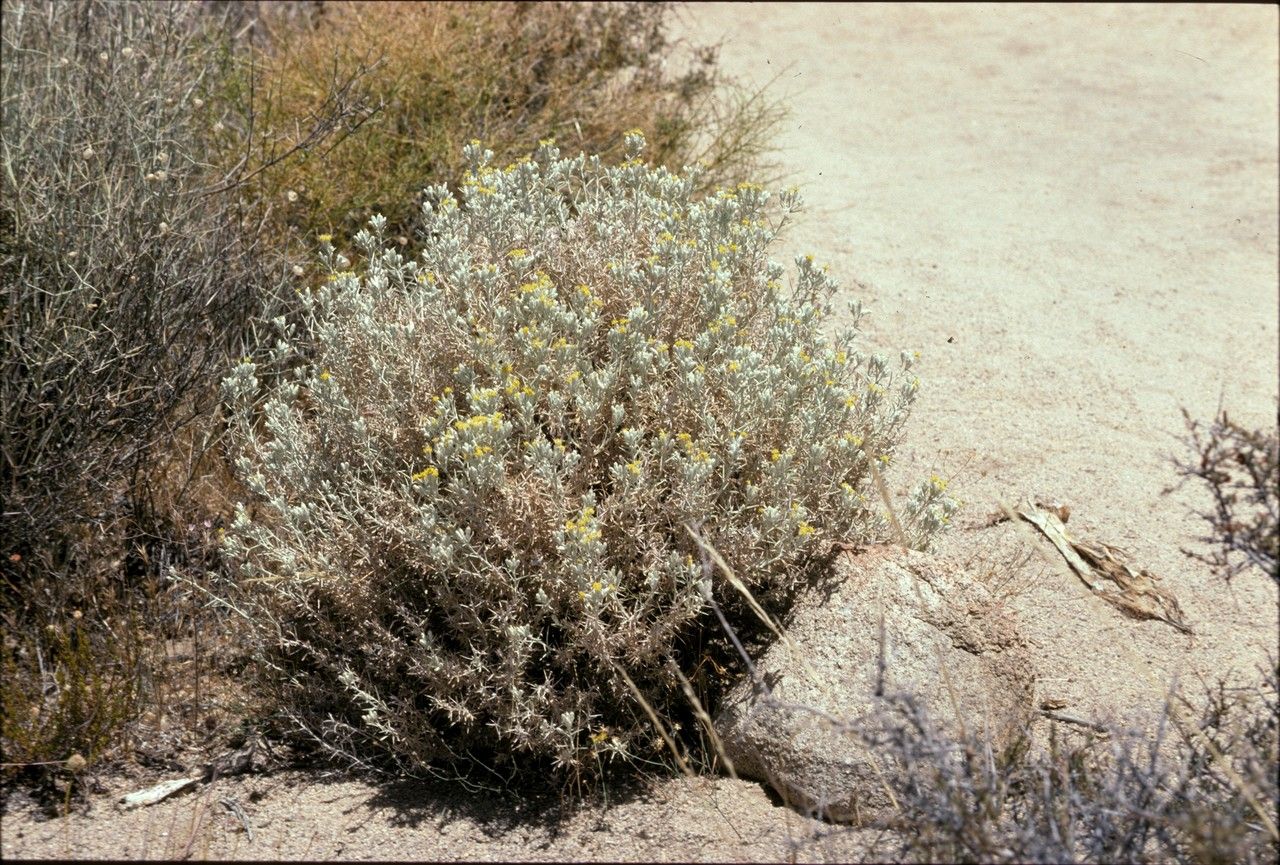
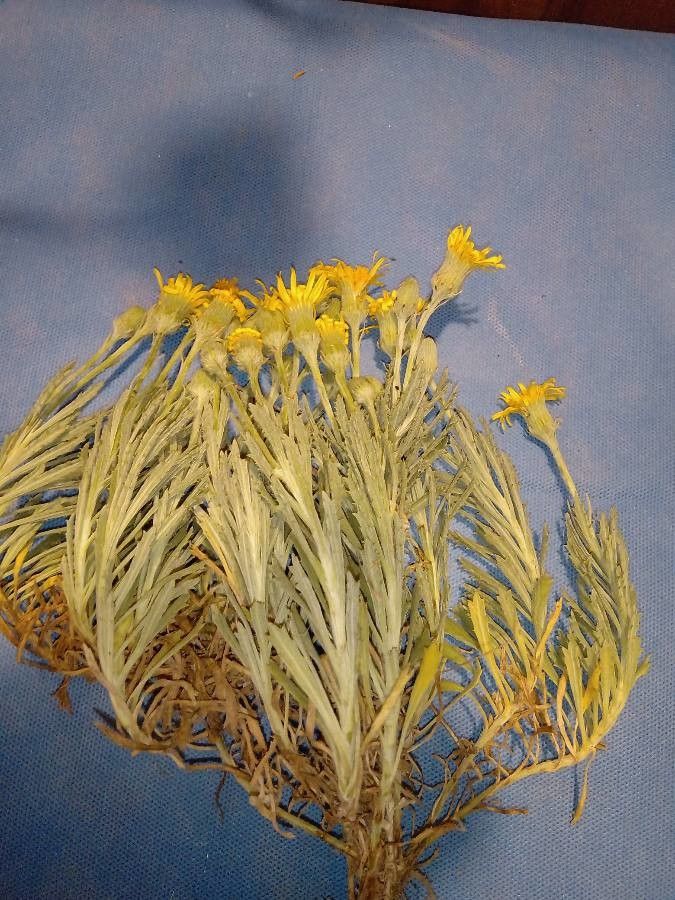
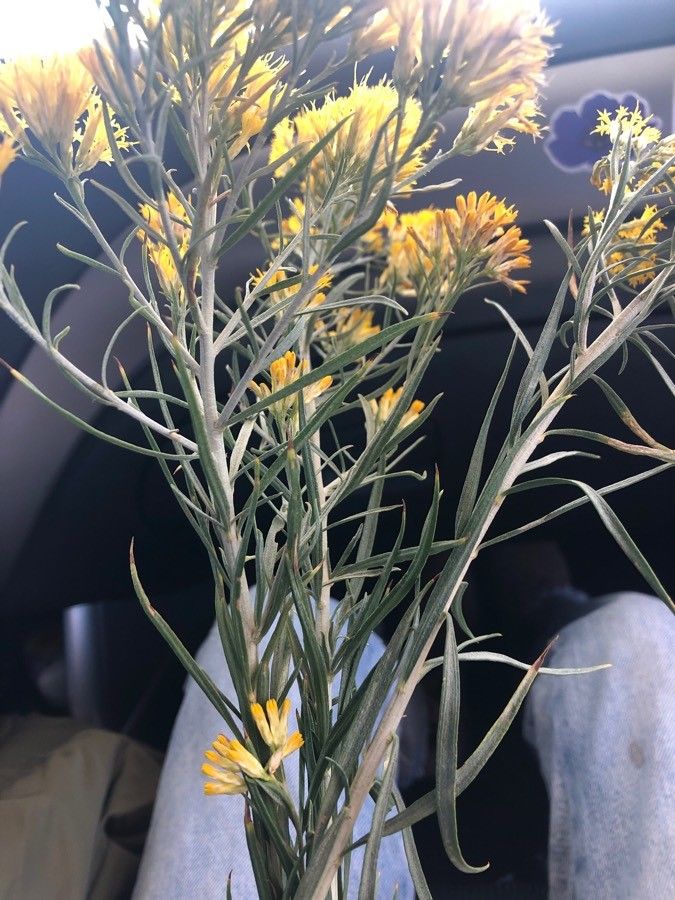
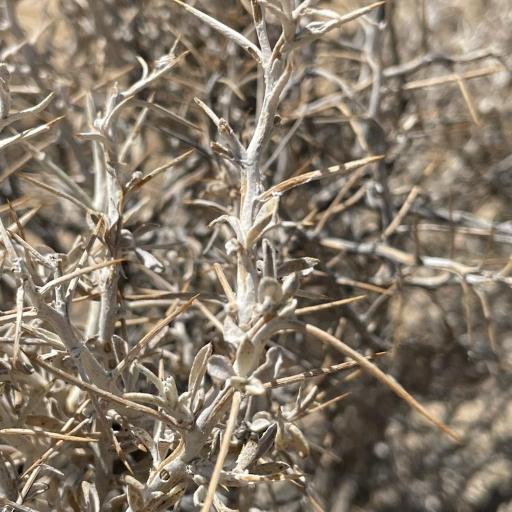
Tetradymia axillaris is a flowering plant in the daisy family known by the common names longspine horsebrush and cottonthorn. This is a plant of the sagebrush and desert plant communities of the southwestern United States. The plant forms a sprawling thicket and is very spiny. The green leaves dry and their tissues fall away, leaving the veins as hard, sharp spines. When in foliage the bush has green, hairy stems and bears yellow daisylike flowerheads in the axils, or angles, of the newest branches. The fruits are released in masses of cottony seed. There are two varieties of the species, var. axillaris and var. longispina. They grow together in some areas and there their characteristics may intergrade.The sharp spines were used as tattooing needles by the Kawaiisu Native Americans of California.
Longspine horsebrush has strong resistance to disease and is generally not susceptible to illnesses. In terms of care, this plant is fairly low-maintenance. When planted outdoors, it requires little watering, and larger plants typically do not need pruning. Smaller plants, however, should be pruned after they have finished blooming. Longspine horsebrush is suitable for anyone with outdoor space, such as a garden or deck, and does not demand extensive gardening experience.
How to keep Tetradymia Axillaris.
Light
Longspine horsebrush comes from open habitats, such as sunny meadows and forest edges, which offer plentiful light. It thrives in Full Sun but can also tolerate Partial Sun, adjusting well to different sunlight conditions.
Temperature
Longspine horsebrush shows strong adaptability to a range of climates, from blazing summers to freezing winters. Nevertheless, it has an optimal temperature range for its growth. If temperatures rise too high, the plant becomes vulnerable to heat and humidity stress, which can lead to its death. In locations where temperatures approach the lower limit of its cold tolerance, taking insulating measures to protect the plant is important.
Fertilizer
Fertilize your Longspine horsebrush in early spring to encourage healthy growth. Regular feeding boosts overall health, producing vigorous growth, better tolerance of harsh conditions, and increased resistance to diseases and pests. Keep a specific fertilization schedule for your Longspine horsebrush to maintain vibrant, deeply colored foliage and a lush appearance.
Pruning
The Longspine horsebrush is characterized by its long spines and distinctive foliage. To maintain its health and appearance, prune it in early spring using sharp tools. Focus on removing damaged branches and thinning overcrowded stems to improve air circulation. Take care to avoid heavy pruning, as this can disrupt its natural form. Make cuts just above healthy buds to promote vigorous growth.
Botanical profile.
- Plant Type
- Shrub
- Life Cycle
- Perennial
- Genus
- Tetradymia
- Family
- Asteraceae
- Hardiness Zone
- 7-10
- Mature Height
- 30 cm to 91 cm
- Mature Spread
- 30 cm to 61 cm
- Leaf Color
- Gray, Silver
- Leaf Type
- Deciduous
- Flower Color
- Yellow
- Flower Size
- 1.02 cm to 2.03 cm
- Bloom Time
- Mid spring, Late spring
- Planting Time
- Spring, Summer
- Harvest Time
- Early summer, Mid summer
Other names.