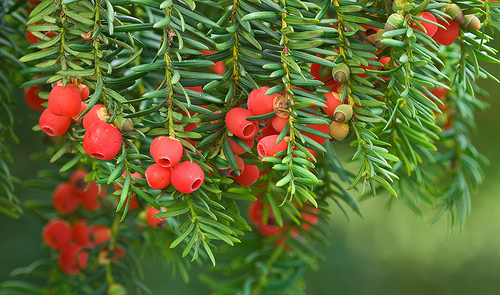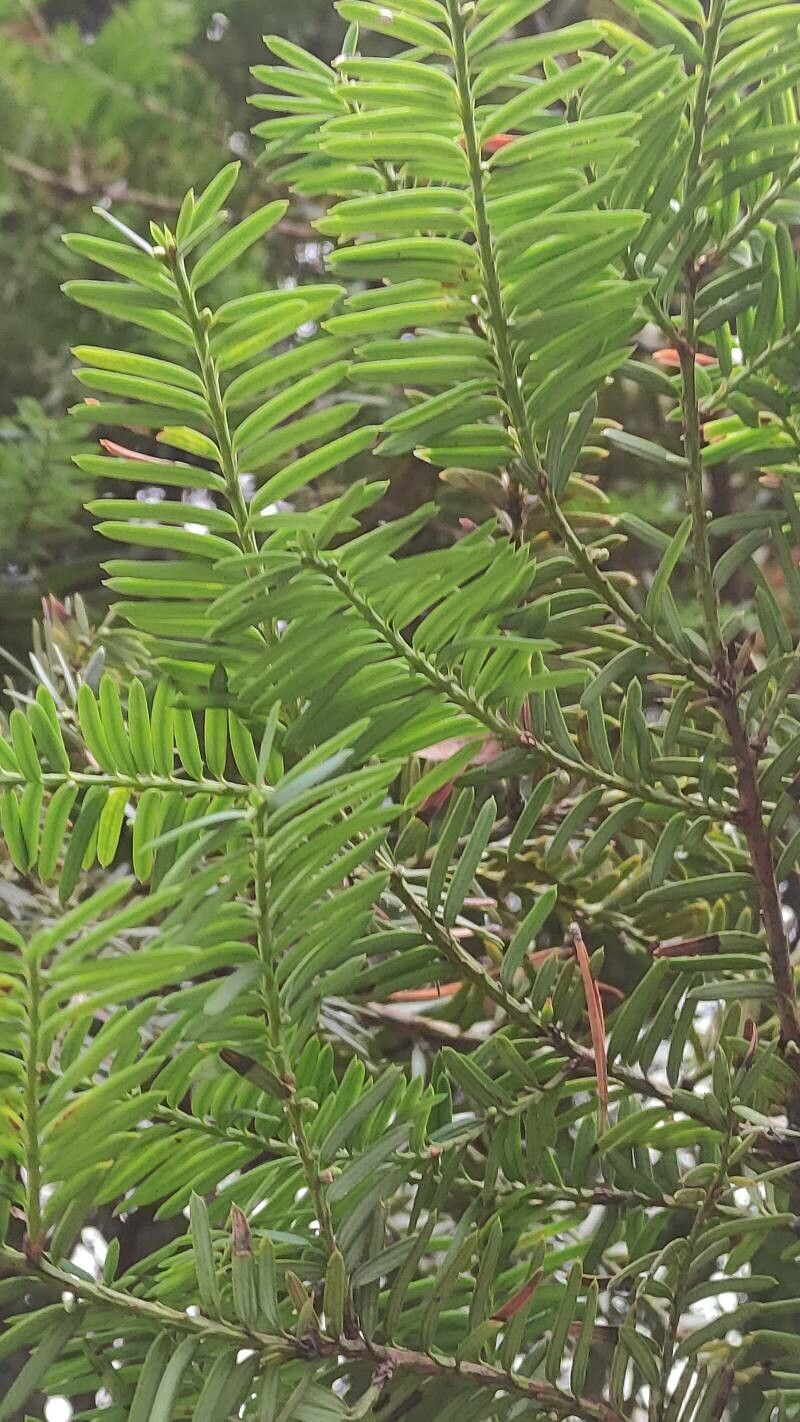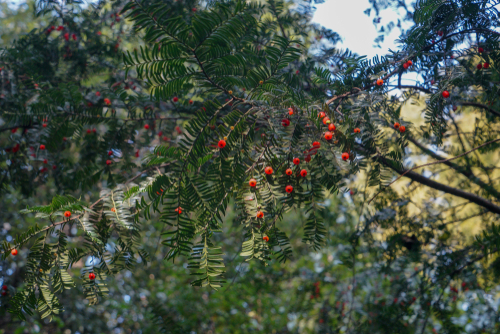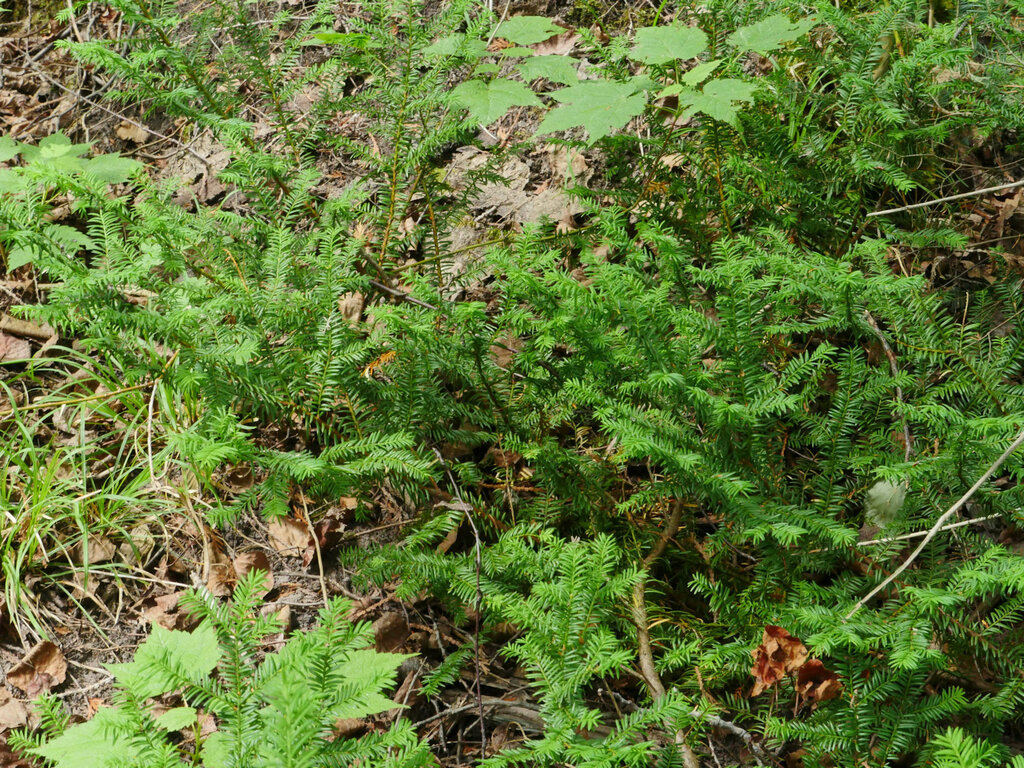
Taxus canadensis, commonly known as Canada yew or American yew, is a slow-growing evergreen shrub native to North America. Typically, it reaches a height of 1-5 meters and features a dense, bushy habit with dark green needles arranged in two rows along the stem. In the spring, the plant produces small, inconspicuous flowers, followed by red berries in the fall that are highly toxic if ingested. Canada yew commonly thrives in moist woodlands and along stream banks throughout eastern North America. It prefers well-drained soils with high organic content and thrives in conditions ranging from partial shade to full shade. This plant has been used for medicinal purposes by indigenous peoples for centuries due to its high concentration of taxol, a compound with anti-cancer properties. However, it is important to note that all parts of the plant are highly toxic if ingested by humans or animals. In addition to its medicinal uses, Canada yew is also valued as an ornamental shrub for its attractive foliage and shade tolerance. It can be used as a hedge or specimen plant in gardens or naturalized areas. Overall, Taxus canadensis is an intriguing evergreen shrub with both medicinal properties and ornamental value, but it should be handled with caution due to its toxicity.
The Canada yew is a conifer native to central and eastern North America. Interestingly, the term "yew" once referred to the color brown in plants. This shrub is often called the Canada yew because of its distinct thin, scaly brown bark.
Canada yew shows strong resistance to disease and is usually not susceptible to illnesses. Regarding maintenance, this plant is fairly low-maintenance. When grown outdoors it needs only light watering, and larger specimens typically do not require pruning. Smaller specimens, however, should be trimmed after they finish blooming. Canada yewt is appropriate for anyone who has an outdoor area, like a garden or a deck, and it does not demand extensive care experience.
How to keep Taxus Canadensis.
Light
Canada yew prospers with partial sun exposure but also shows notable resilience when subjected to bright light or placed in shady areas. This adaptability reflects its natural habitat and supports its growth. However, irregular fluctuations in light can harm the plant’s health, causing stunted growth or discoloration.
Water
Canada yew thrives in moist, well-drained soils and prefers consistent humidity. Once established, it can tolerate moderate drought, needing water every 1-2 weeks. As an evergreen, it benefits from higher humidity during its active growth periods, especially when grown indoors.
Temperature
For the canada yew, the optimal temperature range is 59 to 95 ℉ (15 to 35 ℃). As a temperate woody plant, it does best in areas where temperatures are not too extreme. During the winter months, it is important to ensure that the roots do not freeze, as this can damage the plant's growth in the following season.
Fertilizer
Canada yew has specific nutrient needs and does not require heavy fertilization. Fertilizing in spring is best for achieving optimal growth. Providing nutrients enhances its health, raises its resistance to pests and diseases, and helps preserve its long lifespan.
Pruning
Canada yew is well-suited for topiary and responds well to pruning. For best results, prune in early spring or late summer to promote growth. Avoid cutting the top until the plant reaches your desired height. Shape the plant by trimming it once or twice a year. Be sure to wear gloves while working with Canada yew, as it is toxic.
Pot & Repot
When repotting Canada yew, choose a pot 1-2 inches (2.5–5.1 cm) larger with ample drainage. Use a well-draining potting mix. Repot in spring or fall, ensuring that the root ball is slightly lower than the rim of the flower pot. Water thoroughly after repotting and place in a warm spot with indirect sunlight.
Botanical profile.
- Plant Type
- Shrub
- Life Cycle
- Perennial
- Genus
- Taxus
- Family
- Taxaceae
- Hardiness Zone
- 7-9
- Mature Height
- 2.44 m
- Mature Spread
- 1.83 m to 2.44 m
- Leaf Color
- Green
- Leaf Type
- Evergreen
- Flower Color
- Gold, Yellow, Cream
- Bloom Time
- Late spring, Early summer
- Planting Time
- Autumn, Winter
- Harvest Time
- Mid summer, Late summer
- Native Area
- Western, central and southern Europe, northwest Africa, northern Iran, and southwest Asia
Other names.
Reader questions.
When Should I Water My Canada Yew?
Understanding when to water your Canada Yew (Taxus canadensis) is vital for its health. Start by checking the soil's dryness; if the top 1-2 inches of soil are dry, it's time to water. The appearance of the leaves can also guide you. Dark green leaves suggest good health, whereas yellowing or pale leaves may indicate a need to water. Additionally, more frequent leaf dropping than usual can be a sign of insufficient water intake. Environmental factors also play a role; for instance, more watering may be needed during warmer seasons or if your plant is in full sunlight. Over-watering and under-watering both carry risks, such as root rot and wilted growth, so monitoring these signs is crucial for the well-being of your Canada Yew.
Why is it important to put fertilizer on my Canada yew plant?
To encourage healthy growth in Canada yew, it is recommended to fertilize it in the spring. It is important to remember that this plant has a long lifespan and therefore requires support. Additionally, adding nutrients to the soil can improve the overall health of the plant, making it more resistant to pests and diseases that can hinder its growth or shorten its lifespan.
What are the sunlight requirements for Canada Yew (Taxus canadensis)?
Canada Yew thrives under partial sun exposure, requiring about 3-6 hours of sunlight daily. It can also adapt to full sun conditions with more than 6 hours of sunlight as well as full shade environments. It's important to observe how sunlight moves through your garden to select locations that offer a balanced light environment for your plants, ensuring they grow healthy and vibrant.
What is the optimal temperature range for Canada yew?
The optimal temperature range for the Canada yew (Taxus canadensis) lies between 59 to 95°F (15 to 35°C). This temperate woody species thrives in conditions where temperatures are moderate and not extreme. To ensure healthy growth, it's crucial to prevent the plant's roots from freezing during the winter. Although Canada yew has strong cold resistance and usually doesn't require special frost protection, if temperatures are expected to drop below the growth limit, it's important to wrap the trunk and branches with non-woven fabric or cloth. Adequate watering before the first freeze in autumn, ensuring the soil is moist as it freezes, will help prevent drought and water scarcity during the winter and early spring seasons.
How Should I Water My Canada Yew?
Properly watering your Canada Yew involves several key techniques and tools. Using a watering can with a long, narrow spout allows for precision, making sure the water goes directly to the base and roots of the plant without causing oversaturation. Utilizing a moisture meter can help you avoid both over and under-watering by providing accurate moisture levels at the root zone. Focus your watering on the base of the plant rather than the foliage to prevent issues like fungal growth or leaf burn. Ensure the water reaches the entire root zone without concentrating only in the center or on one side, and avoid wetting the foliage. This approach will help maintain the health and vitality of your Canada Yew.
What is the ideal time to add fertilizer to my Canada yew?
Sometimes, the growing medium lacks the necessary nutrients for healthy growth. However, Canada yew is unique compared to typical garden plants. It doesn't need an abundance of extra nutrients. The ideal time to fertilize Canada yew is during the spring season, prior to new growth emerging.
How does Canada Yew adapt to different lighting conditions?
Canada Yew exhibits remarkable resilience in varying light conditions, thriving under partial sun but also adapting well to both ample lighting and shady areas. This adaptability mirrors its natural habitat conditions, contributing to its growth. However, sudden fluctuations in light exposure can disrupt the plant's health, potentially leading to issues like stunted growth or discoloration. To support optimal growth indoors, especially when natural sunlight is limited, artificial lighting can be used. LED lights are favorable for indoor plants, with full sun plants needing 30-50W/sq ft, partial sun plants 20-30W/sq ft, and full shade plants 10-20W/sq ft of artificial light. The light should be placed 12-36 inches above the plants, imitating natural sunlight for about 8-12 hours per day.
How should I care for Canada yew in low temperatures?
Canada yew is quite cold-tolerant and generally thrives in temperatures above its minimum suitable growth temperature. During winter, it's important to keep its environment above the minimum tolerable growing temperature. If temperatures fall below the critical growth limit, you might not notice immediate changes during winter, but by spring, the branches may become brittle and dry, and new shoots may fail to emerge. In the spring, it's advisable to prune away any dead branches that have failed to produce new leaves to help the plant recover.
How Much Water Does Canada Yew Really Need?
The Canada Yew, native to cool, damp forests in North America, requires consistent moisture but well-drained conditions to thrive. The exact amount of water needed depends on several factors, including pot size and the plant's root depth. Generally, a thorough soak should moisten the soil all the way through the root zone, with a 10-inch pot typically requiring about 2 liters of water. Signs of correct watering include vibrant green leaves, while yellow patches or leaf drop can indicate underwatering, and overwatering may result in root rot or dull, limp foliage. Balancing the water needs is essential, so adjusting based on observations is key.
When is it not a good time to fertilize my Canada yew?
While some plants benefit from regular fertilization, the Canada yew does not require excessive nutrients. Applying too much fertilizer can actually harm it and cause it to die back. It is best to only fertilize it during the spring season and avoid adding any fertilizer or organic matter to the soil during the summer, fall, and winter months.
What are the symptoms of insufficient light in Canada Yew?
When Canada Yew is grown indoors or under insufficient light, it may exhibit several symptoms indicating light deficiency. These include smaller new leaves, leggy or sparse growth, faster leaf drop, slowed or halted growth, and irregularly colored or paler new leaves. Excessive light can cause chlorosis, characterized by yellowing leaves, sunscald, leaf curling as a defense against excessive sunlight, wilting from increased water loss, and leaf scorching with brown or crispy leaf edges. These symptoms signal an imbalance in the plant's light exposure, necessitating adjustments to lighting conditions.
What should I do if my Canada yew experiences high temperatures?
During the summer, it's important to ensure your Canada yew is kept below its maximum suitable growth temperature. Exceeding the maximum tolerable growth temperature can cause the leaves to lighten in color, and the tips may become dry and withered, increasing susceptibility to sunburn. To protect your plant, trim away sunburned and dried-up parts. Relocate the Canada yew to a shaded location or use a shade cloth to protect it from the midday and afternoon sun. Additionally, maintain soil moisture by watering the plant in the morning and evening.