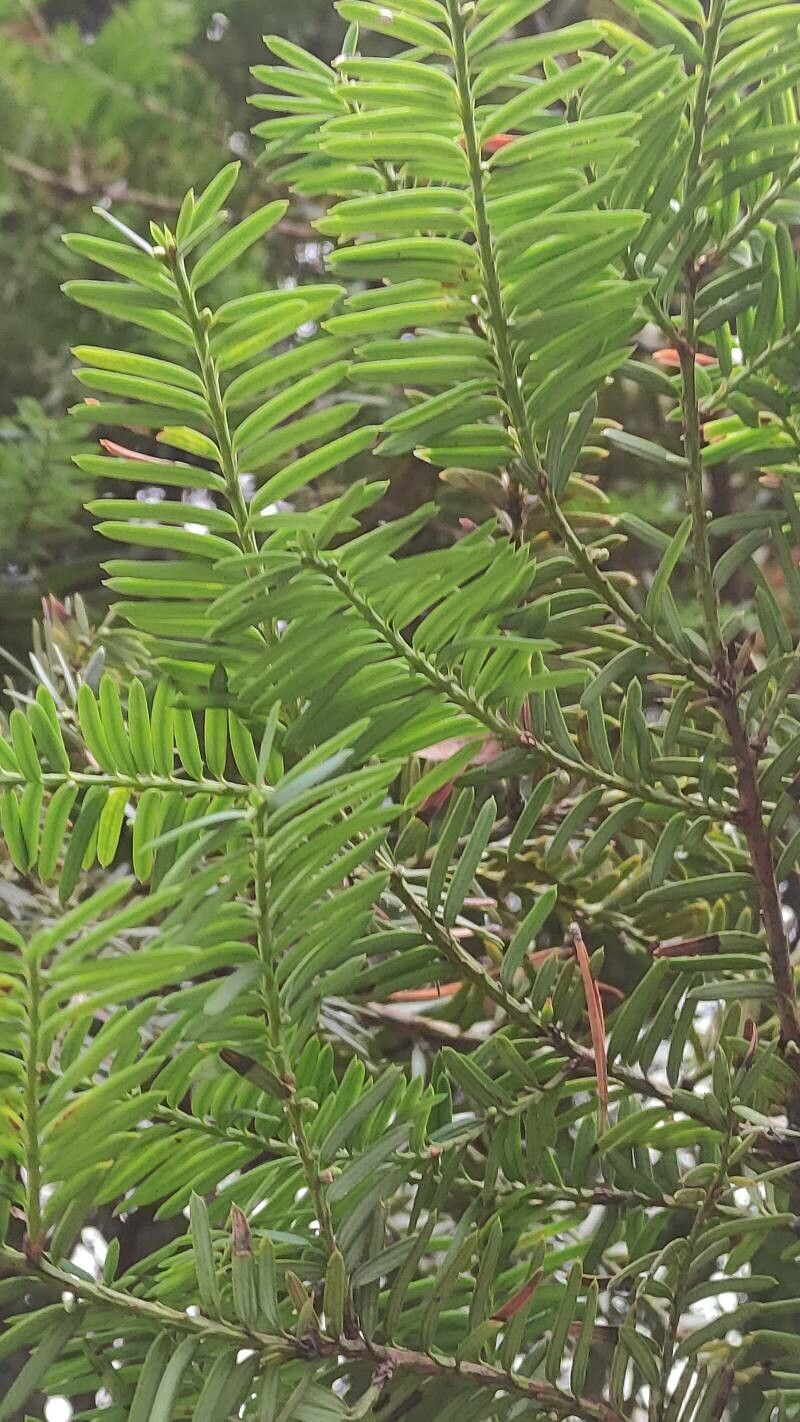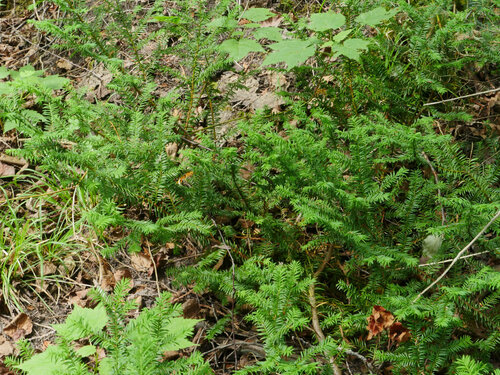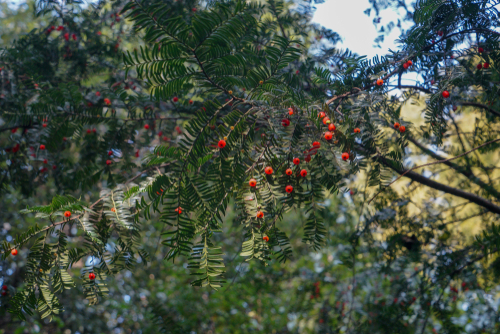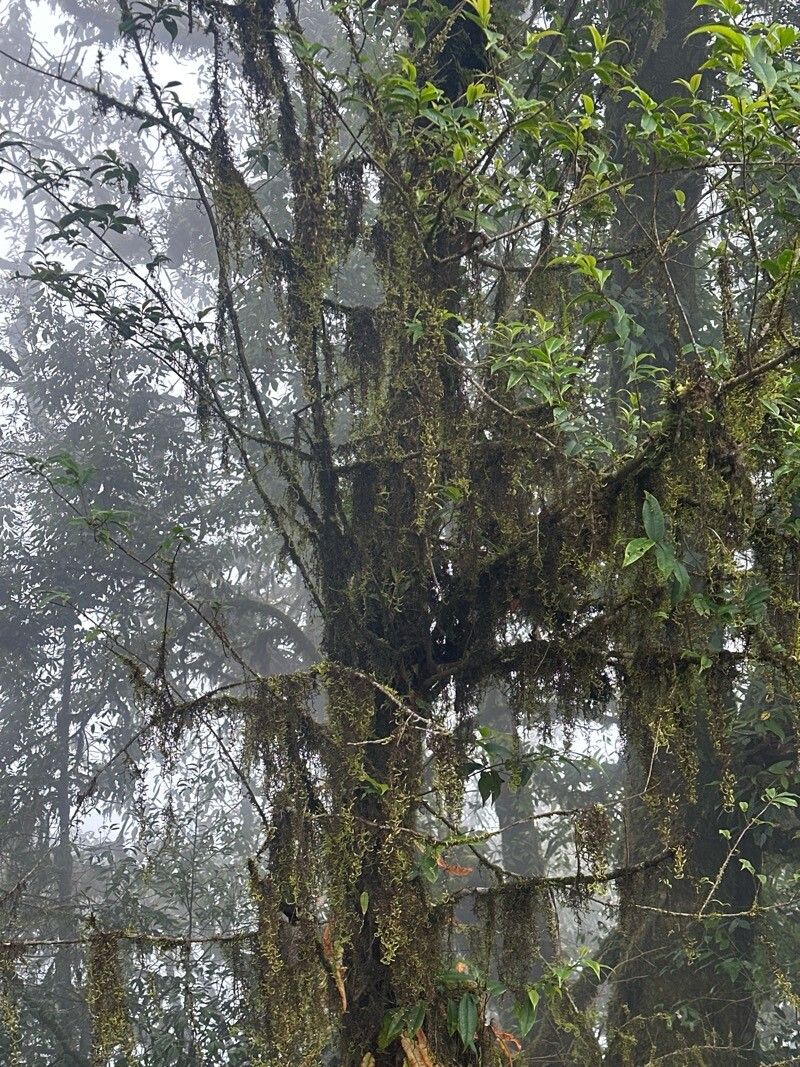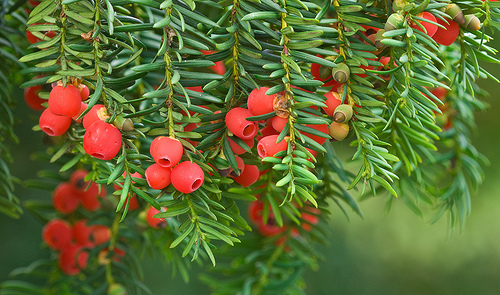
Taxus baccata, commonly known as the English yew, is a coniferous evergreen tree native to western, central, and southern Europe. This tree can grow up to 20 meters tall and features a dense crown of dark green needles arranged spirally on its branches. The tree’s bark is reddish-brown with a scaly texture.
In spring, the English yew produces small flowers that are followed by bright red berries in autumn. However, these berries are highly toxic if ingested by humans or animals.
The wood of Taxus baccata is highly valued for its durability and elasticity, making it ideal for crafting bows, furniture, and various decorative items. Additionally, the tree holds medicinal properties; it contains taxol, a compound used in chemotherapy treatments for cancer patients.
All types of yews, including the common yew, produce poisonous berries. The common yew, often found in old English churchyards, has come to symbolize longevity. According to folklore, yews were initially planted at ancient pagan holy sites, and their toxic berries were thought to protect these sites from being overtaken by churches. In ancient times, yews were also believed to have magical powers. FUN FACT · FROM THE LIBRARY
Besides its practical uses, Taxus baccata also holds cultural significance. It was often planted in churchyards during medieval times due to its associations with death and resurrection.
Despite being widely cultivated across Europe for centuries, Taxus baccata populations have declined due to over-harvesting. It is now considered endangered in some areas. Nevertheless, efforts are being made towards conservation through sustainable management practices.
Common yew shows strong disease resistance and is usually not susceptible to illnesses. In terms of upkeep, this plant is fairly low-maintenance. When planted outdoors, it needs only limited watering, and larger specimens typically do not need pruning. Smaller specimens, however, should be pruned after they have bloomed. Common yewt is appropriate for anyone with outdoor space, like a garden or deck, and does not require extensive experience in plant care.
How to keep Taxus Baccata.
Light
The common yew grows best with ample sunlight for vigorous growth and good health, though it can surprisingly tolerate areas with reduced light or even heavy shade. Native to environments with a wide variety of light conditions, too much sun can cause stress and harm, while too little sunlight may restrict its growth.
Water
The common yew thrives in moisture-retentive soils and benefits from being watered every two weeks. Once it is established, it can tolerate moderate drought conditions. As an evergreen, the common yew retains moisture in its needles throughout the year and adapts well to changing rainfall patterns, although it prefers consistent moisture levels.
Humidity
This plant will thrive in moderate humidity, which is probably the level in your home. However, misting it a few times a week can be very beneficial. Make sure the room has good ventilation.
Temperature
The common yew is native to temperate regions and prefers temperatures from 59 to 95 °F (15 to 35 ℃). It performs well within that range. Be mindful of seasonal fluctuations, making sure changes occur gradually rather than abruptly.
Fertilizer
The common yew has specific nutrient needs and does not require heavy fertilizing. Spring is the best time to apply fertilizer for optimum growth. Providing nutrients enhances its health, increases its resistance to pests and diseases, and helps sustain a long lifespan.
Pruning
The common yew is an evergreen conifer known for its dense, dark green foliage and red berries. It is best to prune it from early to late winter to improve its shape and remove any damaged wood. Regular trimming promotes denser growth. Make sure to use sharp tools to maintain the plant's health, and be mindful that some parts of the yew are toxic when handling it.
Botanical profile.
- Plant Type
- Tree, Shrub
- Life Cycle
- Perennial
- Genus
- Taxus
- Family
- Taxaceae
- Hardiness Zone
- 7-10
- Mature Height
- 10.06 m to 20.12 m
- Mature Spread
- 6.1 m
- Leaf Color
- Green, Yellow
- Leaf Type
- Evergreen
- Flower Color
- Yellow, Green
- Flower Size
- 0.25 cm to 0.51 cm
- Bloom Time
- Early spring, Mid spring
- Planting Time
- Spring, Autumn
- Harvest Time
- Mid summer, Late summer
- Native Area
- Turkey, Sweden, Austria, Slovakia, Montenegro, Slovenia, Morocco, Croatia, Russia, Germany, Estonia, Romania, Latvia, Belgium, Portugal, Netherlands, France, Czech Republic, Bulgaria, Armenia, Poland, Laos, Greece, Ukraine, Serbia, Lithuania, Norway, Italy, Spain, Switzerland, Denmark, Myanmar, Finland, Albania, Ireland, United Kingdom, Hungary, Algeria, Azerbaijan
Other names.
Reader questions.
How should I water my Common yew?
Your Common yew is not too particular about how you water it. You can use almost any tool to water the plant, such as watering cans, hoses, or cups. When watering, make sure to apply the water directly to the soil and evenly moisten all areas to support the entire root system. Using filtered water is recommended to avoid potentially harmful particles from tap water. Additionally, using water at or slightly above room temperature is good to prevent shocking the Common yew with cold or hot water. However, the plant generally responds well to any type of water.
Why should I put fertilizer on my Common yew?
To promote healthy growth in Common yew, it is beneficial to fertilize it in the spring. Considering the plant's long lifespan, providing support is crucial. Additionally, enriching the soil with nutrients can enhance the plant's well-being, making it more resistant to common pests and diseases that may hinder growth or shorten its lifespan.
What are the sunlight requirements for a Common yew (Taxus baccata)?
The Common yew thrives best under generous amounts of sunlight, typically requiring more than 6 hours of direct sunlight (Full sun) for optimal growth and health. It can also adapt to Partial sun (about 3-6 hours of sunlight) and Full shade conditions, although too much sunlight can cause stress and damage, while insufficient sunlight may hinder its development. It's crucial to monitor the sunlight exposure in your garden or indoor setting to ensure the Common yew receives the appropriate balance of light and shade for its happiness.
What is the native climate for Common yew?
Common yew, or Taxus baccata, is native to temperate climates and thrives in temperatures ranging from 59 to 95 °F (15 to 35 °C). It adapts well within these temperatures, preferring gradual changes in season over sharp fluctuations. With its strong resistance to cold, common yew generally does not require special frost protection measures during winter. However, to ensure the plant's health, it's important to water it abundantly before the first freeze of autumn, helping the soil to remain moist which prevents drought and water scarcity during the colder months.
What should I do if I give my Common yew plant too much or too little water?
For outdoor plants, especially newly planted ones or seedlings, lack of watering can be a problem. It's important to water enough for a few months, especially when the tree is small or just planted. Once the roots are established, Common yew can usually rely on rain most of the time. When Common yew is planted in pots, overwatering is more likely to happen. If you accidentally overwater your Common yew, you should act quickly to fix the situation. First, stop watering your plant right away to minimize the impact. Then, remove the Common yew from its pot to check the roots. If there is no root rot, you can put the plant back in its container. But if there are signs of root rot, trim the affected roots and consider using a fungicide to prevent further damage. Finally, repot the Common yew in well-draining soil. If your Common yew is underwatered, simply water it more frequently. It's usually an easy fix. When underwatered, the plant's leaves will droop, dry out, and fall off. But after sufficient watering, the leaves will quickly return to fullness. So make sure to adjust your watering frequency as soon as you notice underwatering.
When should I fertilize my Common yew?
The growing medium may not provide sufficient nutrients for healthy growth, but Common yew is unique compared to garden annuals and perennials. It does not need an abundance of extra nutrients. To fertilize Common yew, the optimal time is in the spring before new growth starts to appear.
How can artificial lighting be used for Common yew grown indoors?
For indoor Common yews lacking sufficient natural sunlight, especially in winter or less sunny spaces, artificial lighting can be a vital solution. LED lights are recommended because they can be customized to provide the specific wavelengths of light the plant needs. Full sun plants require 30-50 W/sq ft, partial sun plants 20-30 W/sq ft, and full shade plants 10-20 W/sq ft of artificial light. The light source should be placed 12-36 inches above the plant, mimicking natural sunlight conditions, and provided for 8-12 hours per day to promote faster and healthier growth.
What should I do if temperatures drop below the tolerance limit for Common yew?
If winter temperatures are expected to fall below the Common yew's cold tolerance limit, it's crucial to provide protection against the cold. This can be done by wrapping the trunk and branches with non-woven fabric or cloth to keep the plant warm. Ensuring the soil is adequately watered before the soil freezes helps in maintaining moisture, thereby preventing drought conditions that can be detrimental to the plant during winter and early spring.
How often should I water my Common yew plant?
To ensure the healthy growth of most outdoor plants, rainfall is usually sufficient. However, if your area lacks rainfall, there are different watering guidelines for each season. In the spring and fall, watering your plants every two weeks should be enough. During the summer, you will need to water them more often. In the winter, when plants require less water, you can reduce watering. Young or newly planted Common yew plants need more frequent watering to help them establish and grow. When it comes to potted plants, there are two ways to determine the watering frequency for your Common yew. The first option is to set a regular watering schedule, either once a week or once every other week. However, this may not take into account the specific conditions of your plant's environment. Alternatively, you can base your watering frequency on the moisture level of the soil. Wait until the top two to four inches of soil have completely dried out before watering again. This is typically around one-third to half the depth of the pots.
When should I not use fertilizer on my Common yew?
While some plants benefit from regular fertilization on a monthly or weekly basis, the Common yew is an exception. It actually does not need a significant amount of additional nutrients. In fact, excessive fertilizer can have a detrimental effect, causing the plant to experience dieback. To maintain a healthy Common yew, it is advised to only apply fertilizer in the spring and avoid doing so during the summer, fall, and winter seasons. It is also recommended not to add any organic matter to the soil during these periods.
What are the symptoms of improper lighting conditions for a Common yew?
Common yews exposed to suboptimal lighting conditions may exhibit various symptoms indicating light stress or deficiency. These can include smaller new leaves, leggy or sparse growth, faster leaf drop, slower or ceased new growth, and lighter-colored or chlorotic leaves. Additionally, excessive sunlight exposure can lead to chlorosis, sunscald, leaf curling, wilting, and leaf scorching. Observing these symptoms early can help adjust the plant's environment to better meet its lighting needs.
How does low temperature affect Common yew and what are the solutions?
Common yew is well adapted to cold conditions and usually thrives when temperatures are above its minimum growth threshold. However, if temperatures fall below its cold tolerance limit, you might not notice immediate harm during winter, but come spring, the branches may become brittle and dry, and new shoots may fail to emerge. To address this, pruning away any dead branches that have failed to produce new leaves in the spring is recommended to maintain the health and aesthetics of the plant.