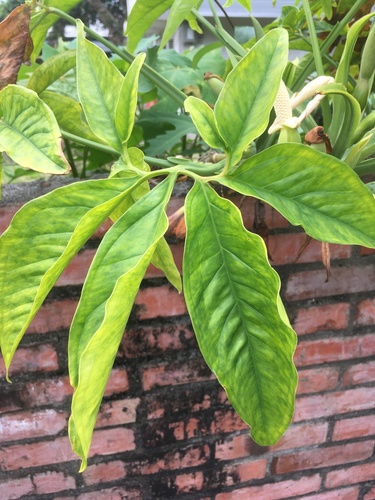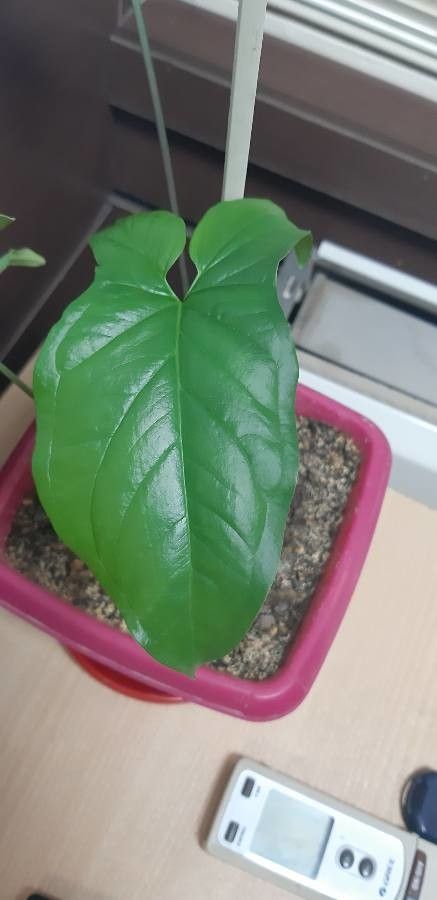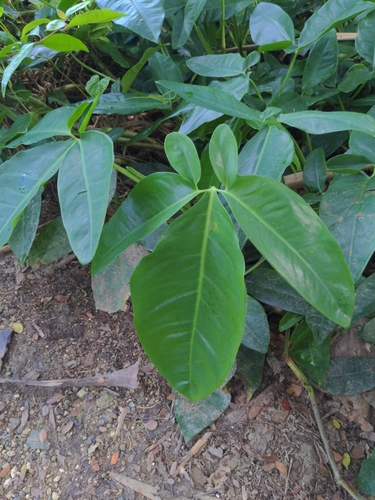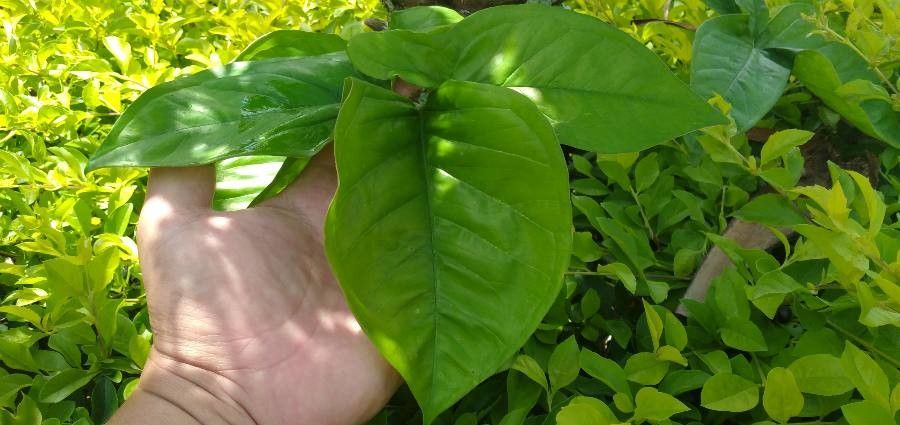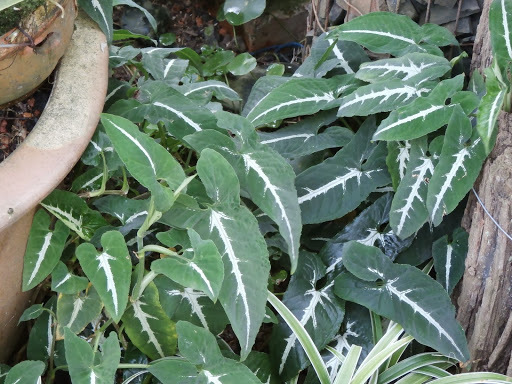
Syngonium wendlandii, a tropical plant native to Central and South America, belongs to the Araceae family, which also includes popular houseplants like the peace lily and philodendron. This plant is characterized by its striking arrow-shaped leaves, which are dark green with silver veins, making it a visually appealing choice for indoor spaces.
Caring for Syngonium wendlandii is relatively simple. It thrives in bright, indirect light and well-draining soil. The plant prefers to be kept consistently moist but not waterlogged, making it suitable for individuals who may have a tendency to overwater their plants.
Under proper care, Syngonium wendlandii can grow up to 3 feet tall. It can be propagated easily through stem cuttings or by dividing its root system. Additionally, this species has air-purifying qualities, which enhance its value as an indoor plant.
In summary, Syngonium wendlandii is a beautiful, low-maintenance houseplant that not only adds aesthetic appeal but also offers health benefits by purifying the air. It is a wonderful addition to any home or office environment.
The Silver Goosefoot Plant is reasonably disease-resistant and generally not prone to illnesses. However, when kept in poor conditions it can become more vulnerable to disease. It also has few insect pests. For care, this plant has moderate requirements. It needs plenty of sunlight, since insufficient light can make it more susceptible to disease and lead to leggy growth. Because it is frequently kept indoors, it may need to be moved to a bright spot on a regular basis. It does not need frequent watering. Overall, the Silver Goosefoot Plant is suitable for most people, though it does best with those who can provide good light conditions.
How to keep Syngonium Wendlandii.
Light
The Silver Goosefoot Plant originates from habitats like forest understories and rocky sites, where it grows in natural shade. It favors partial sun but can adapt to both full sun and full shade, reflecting its hardy and versatile nature.
Water
The Silver Goosefoot Plant thrives in environments with balanced humidity and requires moderate watering every 1-2 weeks. Although it is native to tropical rainforests and can adapt to different moisture conditions, it needs consistent moisture throughout the year. As an evergreen plant, it retains its foliage in all seasons.
Temperature
The Silver Goosefoot Plant comes from tropical areas, where the climate is generally warm and humid. Consequently, it is suited to high heat and moisture. It dislikes sudden temperature shifts and prefers steady conditions, so avoiding indoor temperature fluctuations is important. It typically cannot tolerate cold and needs warmer temperatures to grow. If the surrounding temperature falls too low, the plant may stop growing or even die.
Fertilizer
The best time to fertilize a Silver Goosefoot Plant is in early spring, as it breaks dormancy. This supports overall growth and flower development. Fertilizing improves foliage, stems, and branches, and encourages larger, more vibrant, and longer-lasting flowers. It also helps move nutrients from the roots to the flowers and strengthens the plant’s health and resistance to disease.
Pruning
The Silver Goosefoot Plant features arrow-shaped leaves with distinctive white veins. To encourage fuller growth, prune the plant in early spring by removing any dead or yellowing leaves and leggy stems. Be sure to cut just above a node to promote the development of new shoots. Regular pruning not only enhances the plant's appearance but also improves air circulation and overall health.
Pot & Repot
Repot the Silver Goosefoot plant in spring or summer when it's warm enough, choosing a slightly larger pot with good drainage. Water it thoroughly after repotting and place it in bright, indirect light. Consider adding a moss pole to support the plant as it grows.
Toxicity
This plant is poisonous to cats, dogs, and humans as it has calcium oxalate. This content can cause kidney stones and crystals if there is excessive ingestion. Take precautions and keep the young children and pets away from this plant.
Further reading →
The toxicity and danger assessments provided are for reference only. We do not assure their accuracy, so it's crucial not to depend on them. Seek professional advice when necessary for accurate guidance.
Botanical profile.
- Plant Type
- Vine
- Life Cycle
- Perennial
- Genus
- Syngonium
- Family
- Araceae
- Hardiness Zone
- 9-11
- Mature Height
- 61 cm
- Mature Spread
- 49 cm
- Leaf Color
- White, Green
- Leaf Type
- Evergreen
- Flower Color
- White, Green
- Flower Size
- 5.08 cm to 7.62 cm
- Bloom Time
- All year round
- Planting Time
- Spring, Summer, Autumn
- Harvest Time
- All year round
- Native Area
- Costa Rica