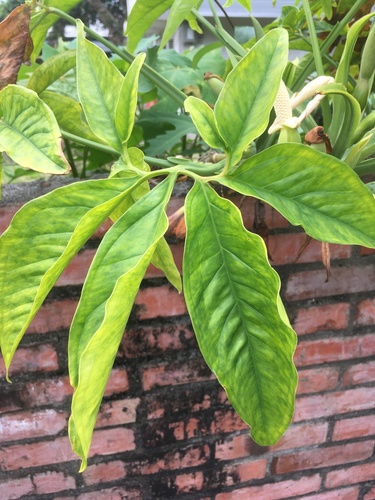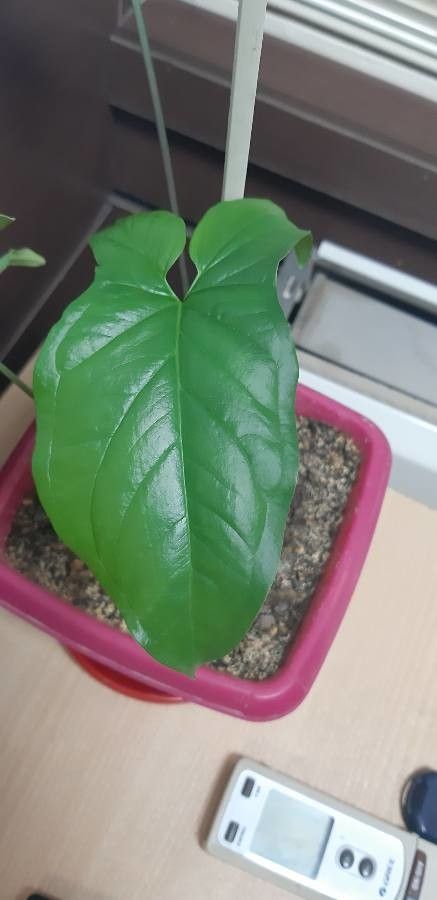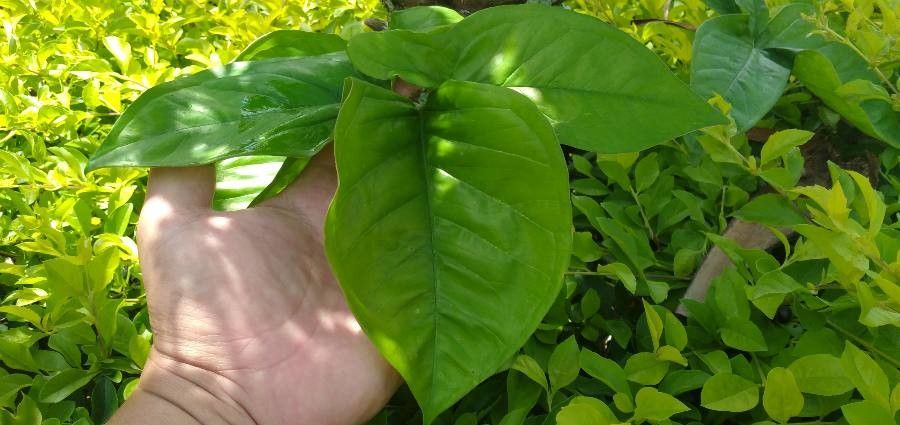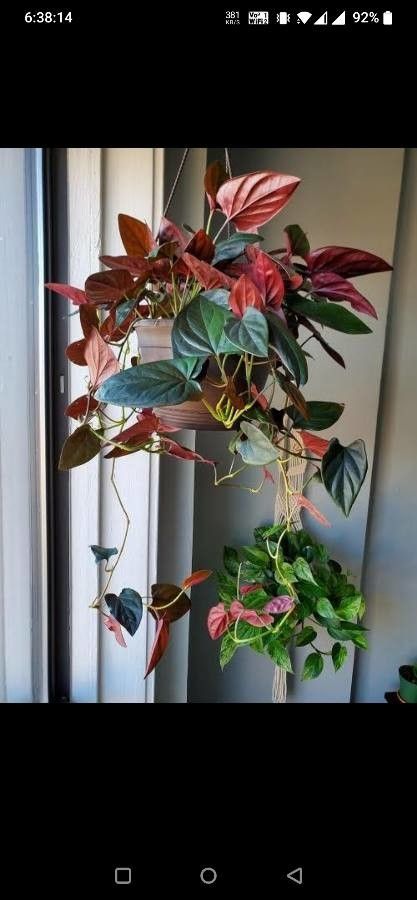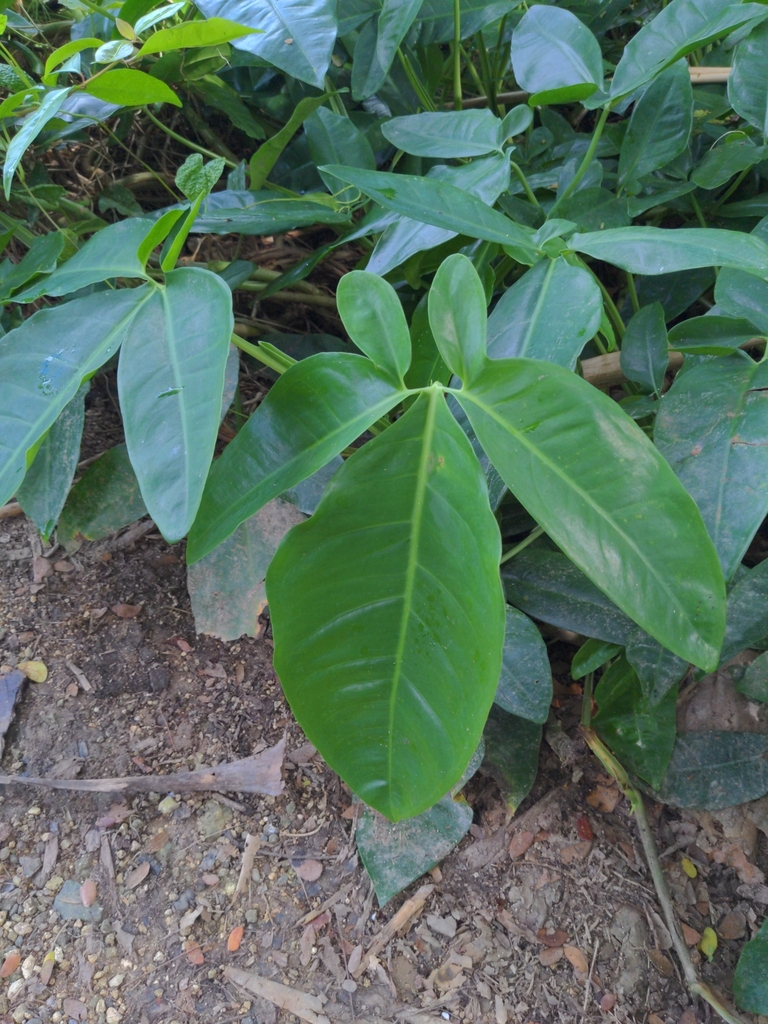
Five-fingers are trailing or climbing evergreen plants. Its arrow-shaped leaves are light green with white specks dotting the surface. Green and cream spathes arise in clusters in the summer. Five-fingers make for excellent groundcover, especially in warm environments, though they are normally developed in nurseries as a houseplant. Though they are lovely plants, five-fingers are notably toxic causing skin irritation and digestive symptoms.
The Arrowhead Vine, scientifically known as Syngonium auritum, derives its genus name from Greek, combining "syn," meaning "plus," and "gone," meaning "gonad." This refers to the fusion of the ovaries in the plant's female flowers. The common name, "arrowhead vine," is inspired by the shape of its leaves, which resemble the heads of arrows.
Arrowhead vine has strong disease resistance and is generally not prone to illnesses. However, if kept in a poor environment it can become more vulnerable to disease. It also has few insect pests. Care-wise, this plant has medium requirements. It needs plenty of sunlight, because with insufficient light it may become more disease-prone and exhibit thin growth. Since it is often grown indoors, it may need to be moved regularly to a well-lit spot. It does not require frequent watering. Overall, Arrowhead vine is suitable for most people, but it is best for those who can provide good light conditions.
How to keep Syngonium Auritum.
Light
The arrowhead vine performs best in strong, bright sunlight and favors locations filled with plenty of light. It nonetheless tolerates areas with partial illumination or even the absence of sun. Excessive light can cause leaf scorch, while too little exposure may impede its optimal development. This preference reflects its native shaded-forest habitat where sunlight is filtered through the canopy.
Water
The arrowhead vine thrives in the humid conditions of tropical rainforests and prefers an environment with high humidity and consistently moist soil. To replicate its natural habitat, water the plant weekly and mist it regularly. This will help maintain the necessary humidity levels and encourage vibrant foliage, even when the plant is kept indoors.
Temperature
The arrowhead vine originates from regions with temperate climates and performs best at temperatures between 68 and 100 °F (20 and 38 °C). Seasonal temperature adjustments are advised if conditions rise above or drop below this range.
Fertilizer
The best time to fertilize an Arrowhead vine is in early spring as it comes out of dormancy. This encourages overall growth and supports flower development. Fertilization improves the foliage, stems, and branches, while encouraging larger, more vibrant, and longer-lasting flowers. It also helps transfer nutrients from the roots to the flowers and enhances the plant's health and resistance to disease.
Pruning
To maintain the size and shape of your Arrowhead vine, it's important to prune it in early spring before new growth begins. Use clean, sharp tools to remove overgrown stems and dead leaves. Regular pruning helps encourage bushier growth, prevents the plant from becoming leggy, and directs its energy toward new growth, resulting in a healthier plant.
Pot & Repot
Repot the Arrowhead vine in spring or summer once it’s warm enough, choosing a slightly larger pot with good drainage. Water thoroughly after repotting and place it in bright, indirect light. Consider adding a moss pole for support as the plant grows.
Toxicity
The five-fingers plant is toxic to humans and pets. Contact with its sap can cause skin irritation while ingesting any part of the plant will cause stomach upset, vomiting, and diarrhea, among other digestive symptoms.
Further reading →
The toxicity and danger assessments provided are for reference only. We do not assure their accuracy, so it's crucial not to depend on them. Seek professional advice when necessary for accurate guidance.
Botanical profile.
- Plant Type
- Vine
- Life Cycle
- Perennial
- Genus
- Syngonium
- Family
- Araceae
- Hardiness Zone
- 11-12
- Mature Height
- 3.66 m to 4.57 m
- Mature Spread
- 61 cm to 91 cm
- Leaf Color
- Dark Green, Forest Green
- Leaf Type
- Evergreen
- Flower Size
- 4.32 cm to 7.62 cm
- Bloom Time
- Late spring, Early summer, Mid summer
- Planting Time
- Spring, Summer, Autumn
- Harvest Time
- Mid summer, Late summer
- Native Area
- Cuba, Jamaica
Other names.
Reader questions.
How should I water my Arrowhead vine?
There are various ways to water your Arrowhead vine. If you have it in a small indoor pot, you can easily bring it to the kitchen sink and use the faucet to water it. Simply hold the pot in your hands and stop watering once you see water coming out of the drainage holes. However, avoid doing this in winter or cold climates as it can harm the plant's roots. If your tap water has high amounts of fluorine, chlorine, or salts, it's better to use rainwater or lake water. Additionally, the Arrowhead vine also responds well to overhead watering and directly watering into the soil, so you can use a watering can, hose, or any tool you prefer.
Why is it necessary to fertilize my Arrowhead vine?
Arrowhead vine requires regular fertilization primarily due to its showy leaves, which demand a significant amount of energy for their production and upkeep. This poses a challenge as the plant must allocate sufficient energy not only for maintaining its leaves, but also for supporting the growth of its stems, branches, roots, and other essential structures. Neglecting fertilization may result in two probable outcomes. Firstly, the leaves of the Arrowhead vine may lose their natural color, texture, and overall health, greatly diminishing its ornamental appeal. Secondly, the plant's growth rate may slow down or produce weak growth that is susceptible to breakage.
What are the sunlight requirements for Arrowhead Vine?
Arrowhead Vine thrives under full sun, which means it requires more than 6 hours of sunlight daily. It can also grow in partial sun or full shade conditions, with about 3-6 hours of sunlight. It's important to observe how sunlight moves through your garden to choose the optimal spots for your plants, ensuring a perfect balance of light and shade for their growth and happiness.
What is the native environment of the Arrowhead Vine?
The Arrowhead vine, scientifically known as Syngonium auritum, is native to temperate environments and ideally thrives in temperatures between 68 to 100°F (20 to 38°C). It is an extremely heat-loving plant that does not tolerate cold well. To maintain its health, seasonal temperature adjustments might be necessary, especially when environmental temperatures exceed or fall below its ideal range.
What should I do if I give my Arrowhead vine too much or too little water?
If you realize that your Arrowhead vine is not getting enough water, the first thing you can do to fix it is to give it some water. Make sure to water it deeply until water starts to drain out of the bottom of the container, or if you are growing it outside, until the soil is completely moist. On the other hand, if you notice that your Arrowhead vine is getting too much water, you should start watering it less frequently. You should also consider the type of soil and container you are using. If the soil or container does not allow for proper drainage, your plant may become overwatered again. To prevent this, try using looser soils or containers with larger drainage holes or more porous materials. Additionally, check the location of your plant. If it is in a spot with poor ventilation, such as a corner, it is recommended to move it to a location near a window or door to improve air circulation. Ensuring that your plants are in a well-ventilated area can help reduce the chances of overwatering.
When should I fertilize my Arrowhead vine?
Arrowhead vine does not require a set feeding schedule when planted. Instead, occasional feedings are beneficial. Simply fertilize the plant when watering it. It is important to give the plant enough water, especially during the growing season. Feed the plant every two to three weeks, consistently throughout its period of new growth.
How does Arrowhead Vine respond to different light conditions?
Arrowhead Vine prefers locations with abundant light but can tolerate areas with partial light or even absence of sunlight. In its natural habitat, it is accustomed to shaded forest conditions where sunlight is filtered through. Excessive exposure to light can cause leaf scorch, while not enough light may hinder its development. For indoor plants, when natural light is lacking, especially in winter or less sunny spaces, artificial lighting can be a valuable solution to promote growth by using LED lights and maintaining appropriate wattage and distance according to plant type.
How should I care for my Arrowhead Vine during different seasons?
To care for your Arrowhead Vine throughout the seasons, it is essential to adjust its environment based on temperature changes. During colder months, specifically when temperatures are at risk of dropping below 20°C, it's recommended to bring any outdoor-grown Arrowhead Vines indoors, placing them near a bright window but avoiding direct contact with heaters to prevent damage from excessive heat. Moreover, maintaining temperatures above 20°C during winter is beneficial for the plant's growth, while exposure to temperatures nearing 10°C can be detrimental.
How frequently should I water my Arrowhead vine?
The Arrowhead vine doesn't need constant soil moisture. It's actually better to let the soil dry out between waterings. If you're growing an Arrowhead vine in a container, you can easily tell when to water it based on how dry the soil is. When about half of the soil in the container is dry, it's time to add water. You can check this by sticking your fingers or a meter into the soil. If you're growing the Arrowhead vine outdoors, you can water it about once every other week unless it has rained recently.
When is it a bad idea to add fertilizer to my Arrowhead vine?
During most of the year, you can regularly fertilize your Arrowhead vine. This is especially true during the active growing season of spring, summer, and early fall. However, things change during the winter. This plant enters a dormant growth phase where it either does not grow at all, or grows very little. Since the plant uses less energy during this time, fertilization is not necessary.
What symptoms indicate light deficiency in Arrowhead Vine?
Symptoms of light deficiency in Arrowhead Vine include smaller new leaves, leggy or sparse growth, faster leaf drop, slower or no new growth, lighter-colored new leaves, and conditions such as chlorosis, sunscald, leaf curling, wilting, and leaf scorching. These symptoms suggest the plant's struggle with inadequate light exposure, emphasizing the need for adjusting light conditions to meet the plant's needs.
What are the symptoms of low temperature exposure in Arrowhead Vine?
Exposure to low temperatures can significantly impact the Arrowhead Vine, which prefers warm settings ideally above 20°C. Symptoms of cold damage include a lightening of leaf color when temperatures fall below 5°C, with the leaves turning brown or black following frost damage. Other signs include wilting and drooping of the plant. Keeping the plant in temperatures above 10°C during winter is crucial to avoid these issues.