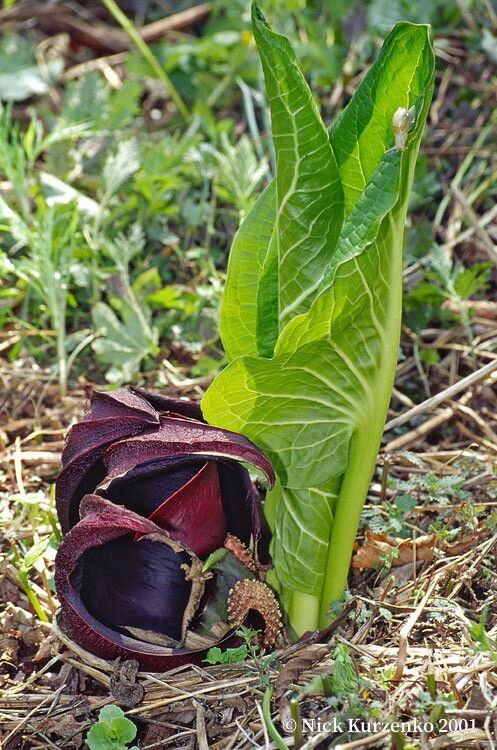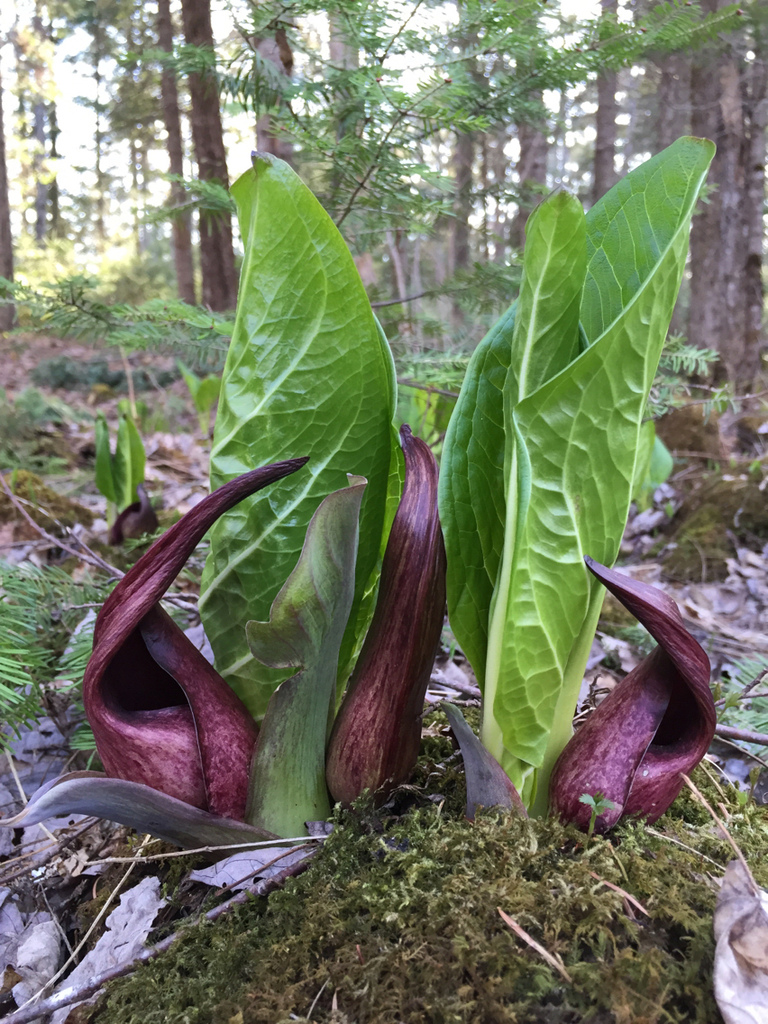
Symplocarpus foetidus, commonly known as skunk cabbage or eastern skunk cabbage (also swamp cabbage, clumpfoot cabbage, or meadow cabbage, foetid pothos or polecat weed), is a low growing plant that grows in wetlands and moist hill slopes of eastern North America. Bruised leaves present an odor reminiscent of skunk.
Skunk cabbage emits a strong, skunk-like odor when its leaves are broken or torn. This pungent smell, though unpleasant, is harmless. The plant releases this odor when it blooms, which is why it is commonly known as skunk cabbage.
Skunk cabbage is fairly disease-resistant and typically does not suffer from many illnesses. Still, it can be affected by pests and diseases present in its environment. These problems are generally mild. Carewise, the plant demands a moderate level of attention. It should be trimmed on a regular basis to preserve an attractive look and encourage healthy growth. Applying fertilizer can also help boost flowering. Skunk cabbage is appropriate for anyone who has outdoor space, such as a garden or a patio, and it does not call for extensive plant-care experience. If kept indoors, it may need more attentive care.
How to keep Symplocarpus Foetidus.
Light
Skunk cabbage does best in locations with moderate sunlight. It tolerates low light as well as full sun exposure. At first, sunlight promotes its growth, but too much light can impede development and cause damage. Its native habitat in forested wetlands explains its preference for variable light conditions.
Water
Eastern skunk cabbage, which originates from wetlands, thrives in environments with consistent moisture and high humidity. While it has moderate drought tolerance, it requires watering every 1-2 weeks to maintain moist soil conditions. Typically grown outdoors, eastern skunk cabbage can regulate its temperature through a process called thermogenesis, which reflects its preference for water-rich habitats.
Temperature
Skunk cabbage is native to temperate regions and prefers a temperature range of 41 to 89.6 ℉ (5 to 32 ℃). In winter it can tolerate lower temperatures by generating heat through cellular respiration. During summer it favors cooler conditions and is commonly found near streams and in wetlands. Keeping the soil consistently moist is important for optimal growth.
Fertilizer
One fertilizer application in spring is typically enough for Skunk cabbage, though multiple feedings can maximize growth. Apply fertilizer every month to month and a half. Fertilizing improves leaf appearance and function, helping maintain even color and a healthy texture. It also promotes root development and nutrient uptake for the plant's long-term health.
Pruning
Eastern skunk cabbage has large, aromatic leaves and blooms early in the spring. It requires only minimal pruning at this time. To maintain the plant's health, remove any dead foliage, but avoid cutting the healthy leaves. Regularly inspect the plant for signs of rot. Pruning helps improve the plant's shape and airflow. Always use clean, sharp tools to ensure good hygiene.
Botanical profile.
- Plant Type
- Herb
- Life Cycle
- Perennial
- Genus
- Symplocarpus
- Family
- Araceae
- Hardiness Zone
- 4-7
- Mature Height
- 30 cm to 91 cm
- Mature Spread
- 15 cm to 40 cm
- Leaf Color
- Green
- Leaf Type
- Evergreen
- Flower Color
- Purple
- Flower Size
- 5.08 cm
- Bloom Time
- Early spring, Winter
- Planting Time
- Autumn
- Harvest Time
- Mid spring, Late spring, Early summer
- Native Area
- Eastern North America
Other names.
Reader questions.
How should I water my Eastern skunk cabbage?
Here are some easier-to-follow instructions for watering your Eastern skunk cabbage: - If you have your plant in a small pot indoors, you can take it to the kitchen sink and use the faucet to add water. Hold the pot in your hands and stop watering when the water starts flowing out of the drainage holes. Please avoid doing this in winter or cold climates as it can harm the plant's roots. - In most cases, using the faucet is fine for watering. However, if your tap water has high levels of fluorine, chlorine, or salts, it's better to use rainwater or lake water. - Additionally, the Eastern skunk cabbage responds well to overhead watering and direct watering into the soil. You can use a watering can, hose, or any other tool that you prefer to water it.
Why should I add fertilizer to my Eastern skunk cabbage?
The Eastern skunk cabbage relies heavily on its leaves, which are essential for its structure. Fertilization plays a crucial role in maintaining the quality and function of these leaves. By properly fertilizing, you can ensure that the leaves of your Eastern skunk cabbage remain vibrant in color and have a healthy texture. Fertilization also benefits the plant beneath the soil's surface by promoting the growth of new roots and maintaining existing ones. This not only keeps your plant healthy in the present but also enhances its ability to absorb nutrients from the soil in the long run.
What are the sun requirements for Eastern skunk cabbage?
Eastern skunk cabbage requires moderate sunlight to thrive. It can grow in partial sun, receiving about 3-6 hours of sunlight per day, or in full sun to full shade conditions, where it receives more than 6 hours of sunlight daily. Initially, sun exposure can boost the plant's growth, but excessive sunlight might inhibit its development and cause damage. Given its origin in forested wetlands, Eastern skunk cabbage prefers a variety of light conditions, adapting well to both limited light and full exposure to the sun. It's important to observe how sunlight moves through your garden to pick spots that offer the right balance of light and shade, ensuring the plant's health.
What is the native habitat and preferred temperature range for the eastern skunk cabbage?
The eastern skunk cabbage, botanically known as Symplocarpus foetidus, is native to temperate regions and thrives in a temperature range of 41 to 89.6 °F (5 to 32 °C). This plant is highly adaptable to varying temperatures, making significant physiological adjustments to either produce heat during the colder winter months or to seek cooler environments near streams and wetlands during the summer. To promote optimal growth, it's crucial to maintain consistently moist soil, ensuring the plant's environment aligns with its native habitat preferences.
What should I do if I give my Eastern skunk cabbage too much water or too little water?
If you realize that your Eastern skunk cabbage is not getting enough water, the first step is to give it some water. Make sure to water it deeply until water starts draining out of the container, or until the soil outside becomes completely moist. On the other hand, if you notice that your Eastern skunk cabbage is getting too much water, start by watering it less frequently. You should also check the soil and container it is in. If the soil or container is not allowing water to drain properly, it could lead to overwatering again. To fix this, you can move your plant to soil that drains better and use a container with larger drainage holes or a more porous material. Additionally, consider the location of the plant. If it is in a corner, it would be better to move it closer to a window or near a door to improve ventilation. Placing your plants in well-ventilated areas can help reduce the risk of overwatering to some extent.
When should I put fertilizer on my Eastern skunk cabbage?
If you grow your Eastern skunk cabbage outdoors each year, it will sprout new growth in early spring. This is when you should start fertilizing it for the year. Typically, one application of fertilizer in the spring is enough for the plant to thrive. However, if you want to maximize its growth, you can fertilize it multiple times throughout the spring and early summer. In this case, you can feed your Eastern skunk cabbage roughly once every month to a month and a half.
How can artificial lighting support indoor plants like Eastern skunk cabbage?
Artificial lighting is essential for the optimal growth of indoor plants, especially when natural light is insufficient, such as during winter or in less sunny spaces. Indoor Eastern skunk cabbage and other plants require adequate lighting, which can be provided through artificial sources. LED lights are recommended due to their ability to supply specific light wavelengths needed for plant growth. For full sun plants, 30-50 watts per square foot is necessary; partial sun plants need 20-30 watts per square foot, while full shade plants require 10-20 watts per square foot of artificial light. The light should be placed 12-36 inches above the plant, replicating natural sunlight conditions, and provided for 8-12 hours daily, mimicking the natural daylight hours for most plant species.
How does the eastern skunk cabbage adapt to winter conditions and what are the recommendations for winter care?
Eastern skunk cabbage exhibits a remarkable cold tolerance, allowing it to withstand winter conditions without the need for additional frost protection. It possesses the unique ability to produce heat through cellular respiration, which helps it manage lower temperatures in winter. To prepare for the first freeze of autumn, it is advised to water the plant generously. This ensures the soil remains moist when it enters a frozen state, helping to prevent drought and water scarcity for the plant during the colder months and into early spring, thereby safeguarding its growth and health during this period.
How frequently should I give water to my Eastern skunk cabbage?
The Eastern skunk cabbage doesn't need constantly moist soil. In fact, it's better to let the soil dry out between waterings. If you're growing this plant in a container, a good way to tell when to water it is by checking how dry the soil is. If the top half of the soil is dry, it's time to water. You can use your fingers, sticks, or a soil moisture meter to check. If you're growing the Eastern skunk cabbage outdoors, you can water it about once every other week, unless it has recently rained.
When is the best time to not fertilize my Eastern skunk cabbage?
During the late fall and winter, your Eastern skunk cabbage will become dormant and stop producing new growth. Therefore, it is important to avoid fertilizing it during this time. When spring and summer arrive, if you decide to fertilize, remember to gradually reduce the frequency as summer approaches because the growth rate of the skunk cabbage will also slow down. In general, it is not advisable to fertilize the skunk cabbage during extremely hot weather or when the soil is very dry. Fertilizing under these conditions can cause unnecessary stress and potentially lead to the premature death of the skunk cabbage.
What are the symptoms of light deficiency in Eastern skunk cabbage?
When Eastern skunk cabbage is grown under insufficient light, several symptoms may indicate light deficiency. These include smaller new leaves, leggy or sparse growth, faster leaf drop, slower or no new growth, lighter-colored new leaves, chlorosis (leaves turning yellow due to the breakdown of chlorophyll), sunscald (damage from intense sunlight exposure), leaf curling (a mechanism to reduce surface area exposed to sunlight), wilting (loss of turgor pressure in leaves and stems), and leaf scorching (brown, dry, and crispy leaf edges). These symptoms reflect the plant's struggle to adapt to inadequate light conditions.
What should be done if the eastern skunk cabbage experiences temperatures below its growth threshold during winter?
While the eastern skunk cabbage is extremely cold-tolerant, winter temperatures should ideally be maintained above its lower growth threshold. Should temperatures fall below this critical point, it may not show immediate distress, but there could be a noticeable reduction in sprouting or even no sprouting at all come spring. To mitigate this effect, it is recommended to carefully remove any parts of the plant that have failed to sprout as the weather warms, which helps promote the growth of new, healthy tissue.