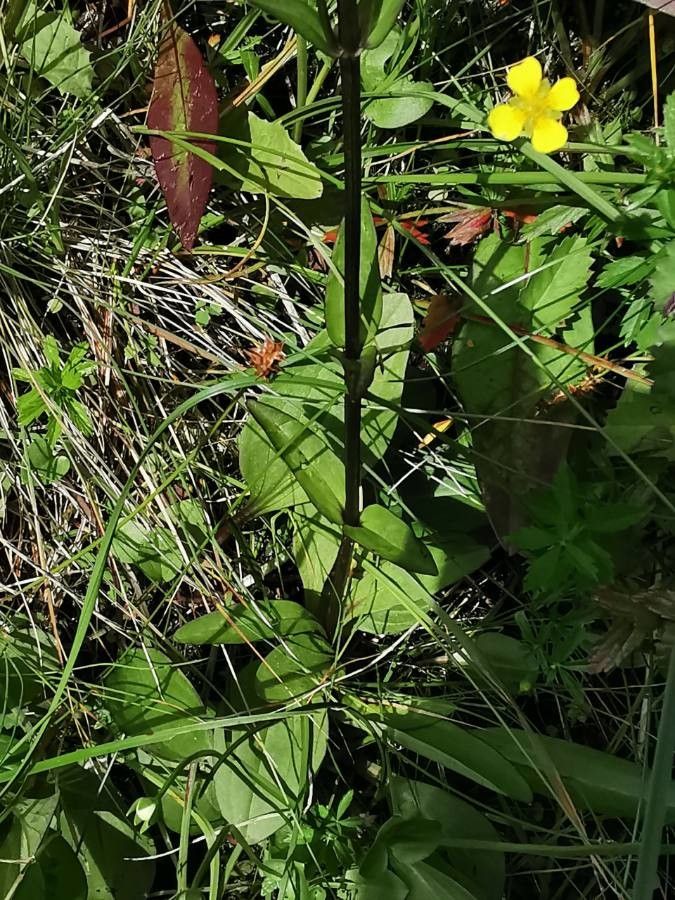
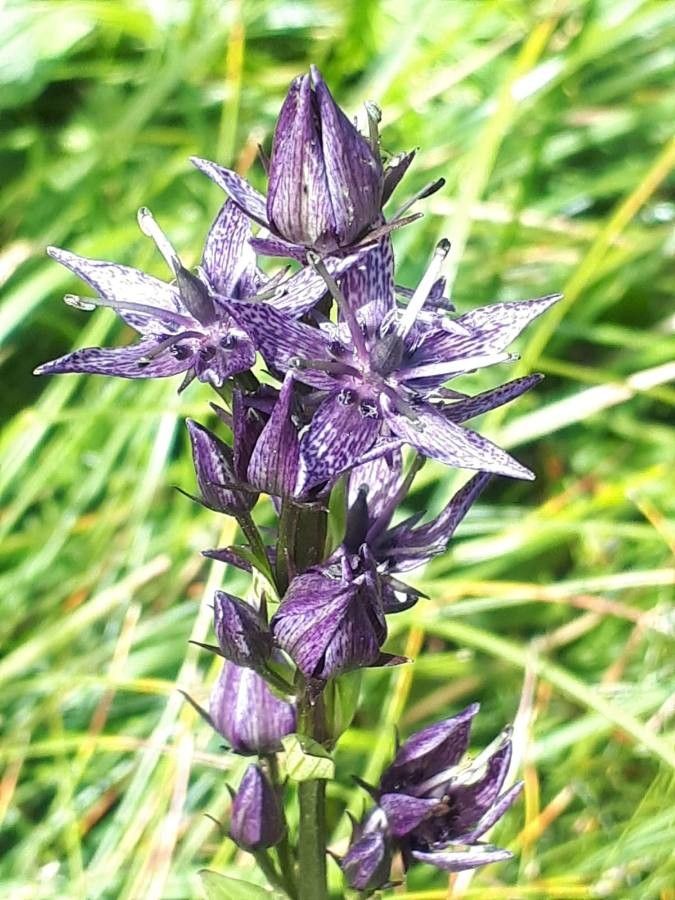
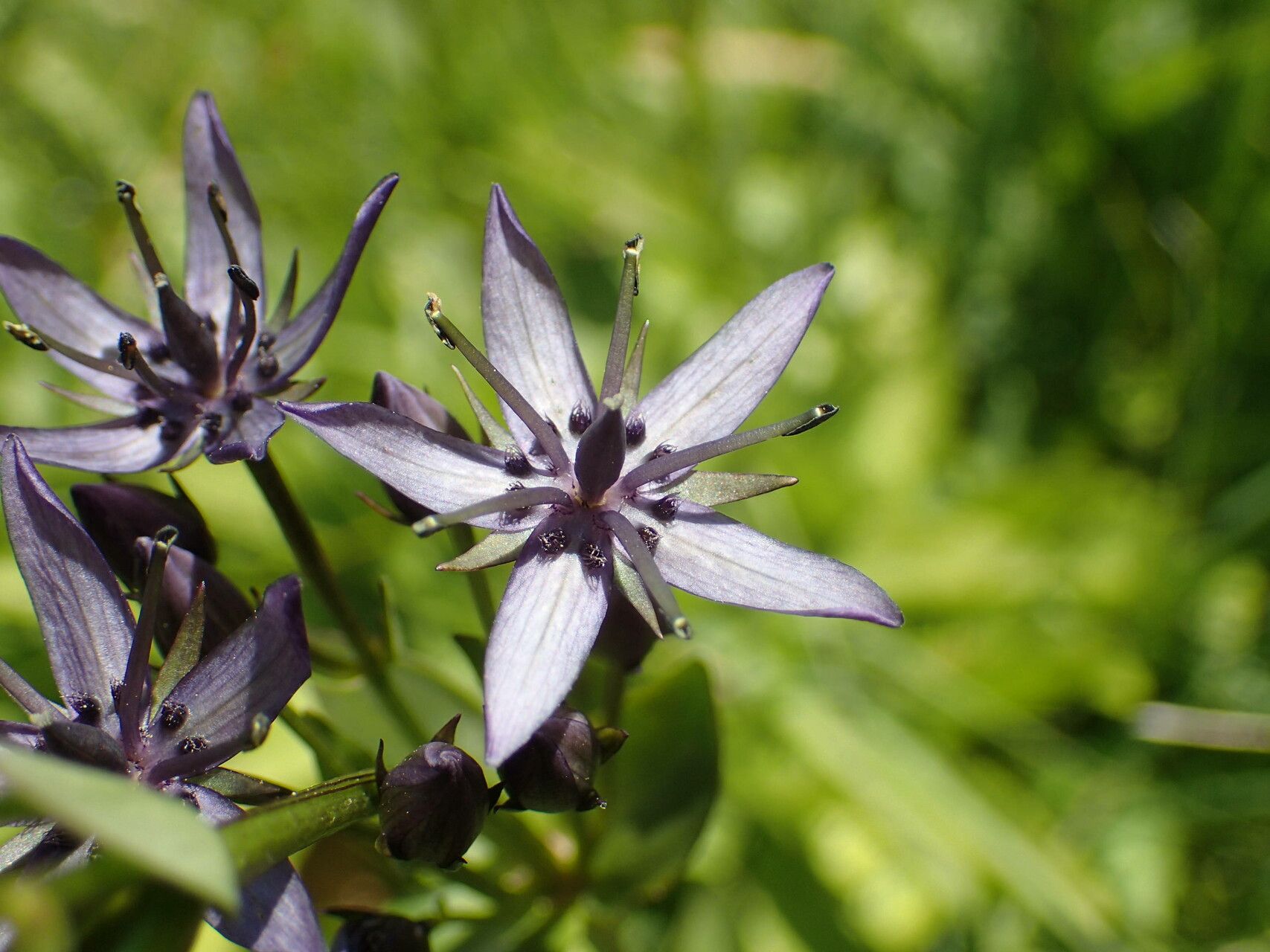
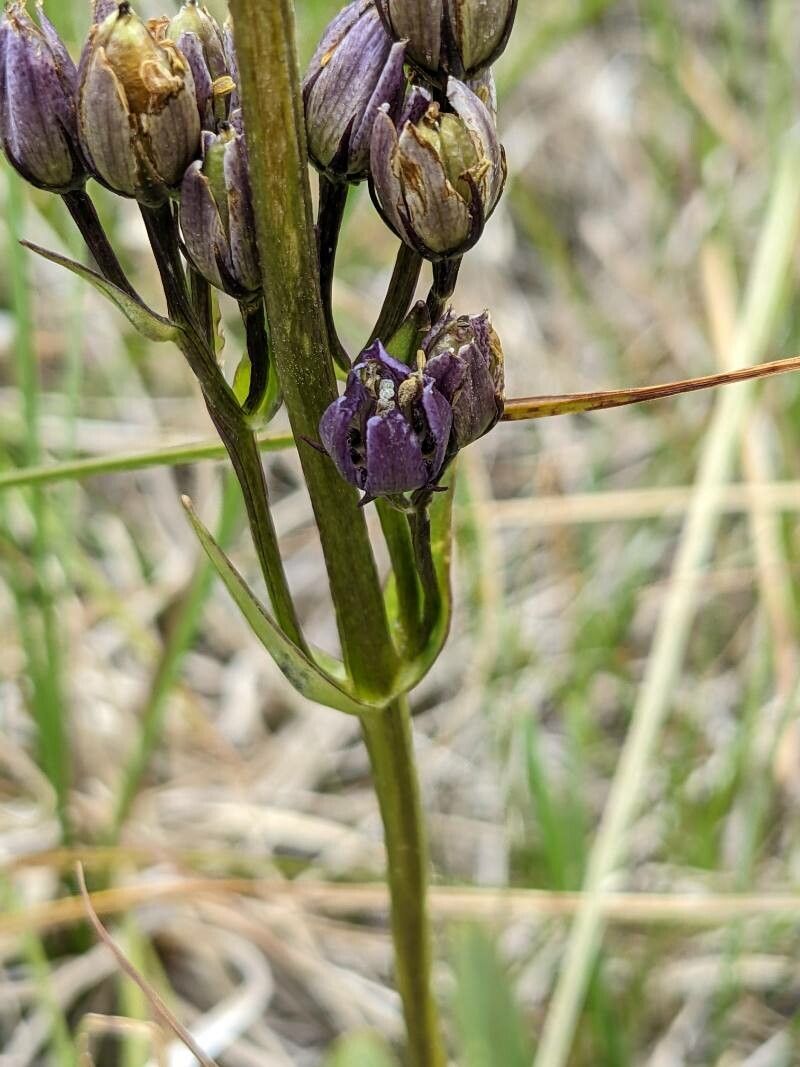
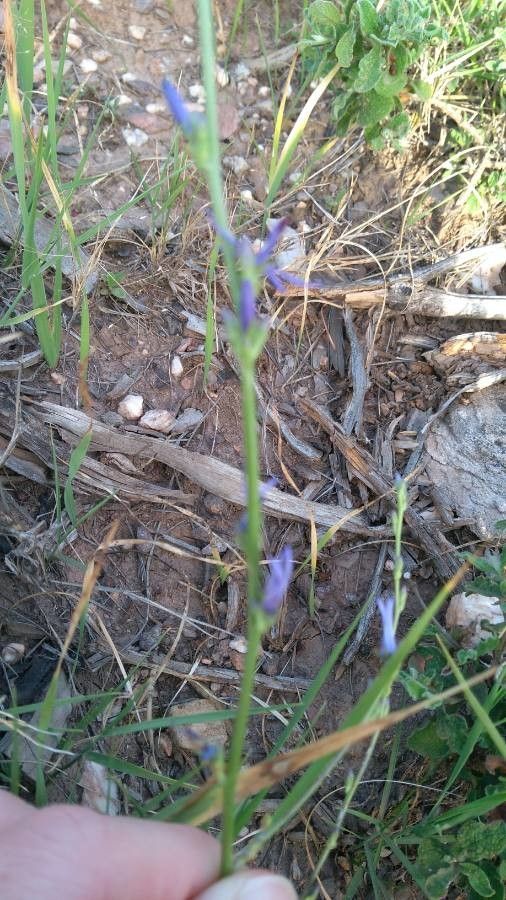
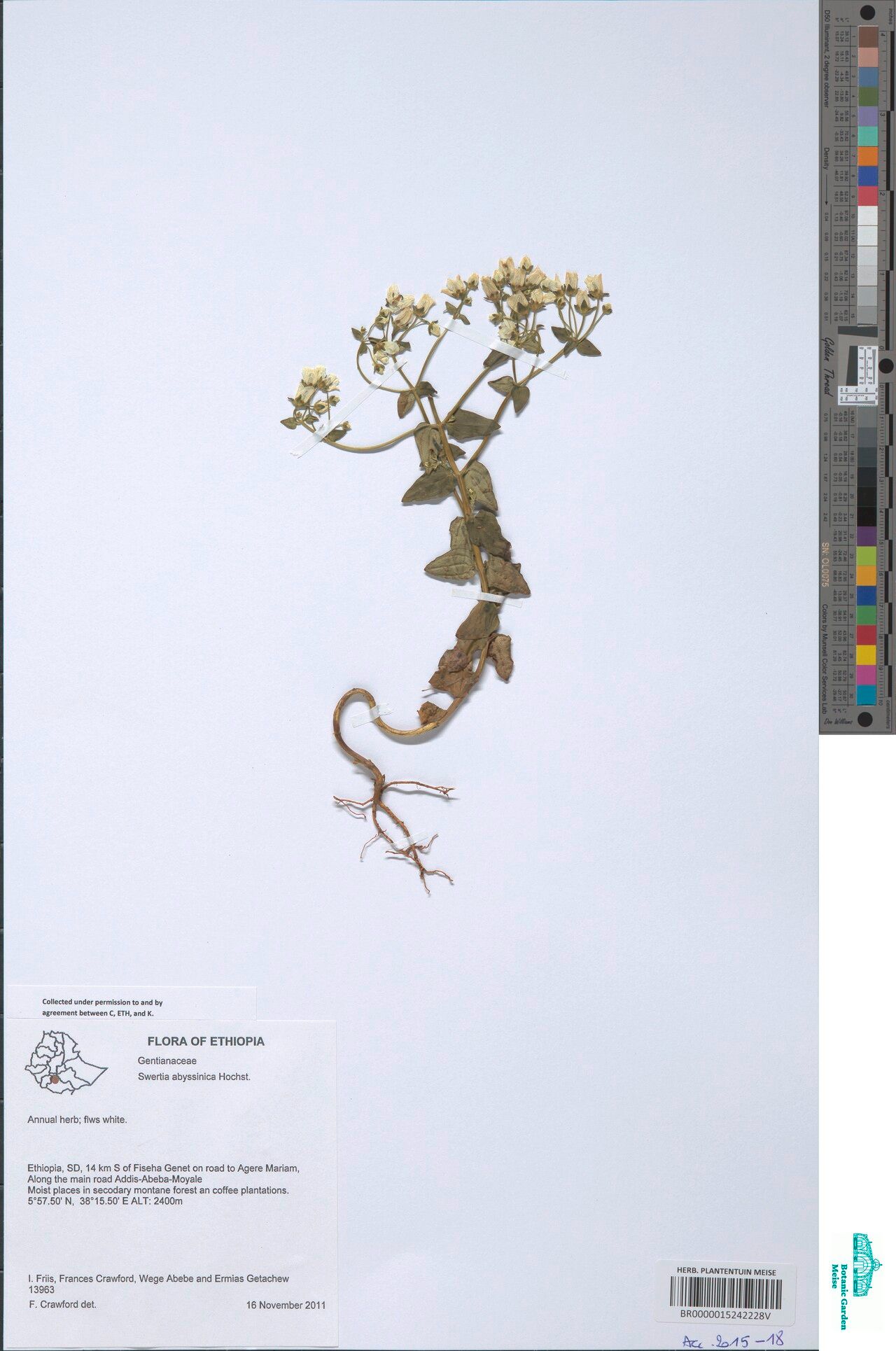
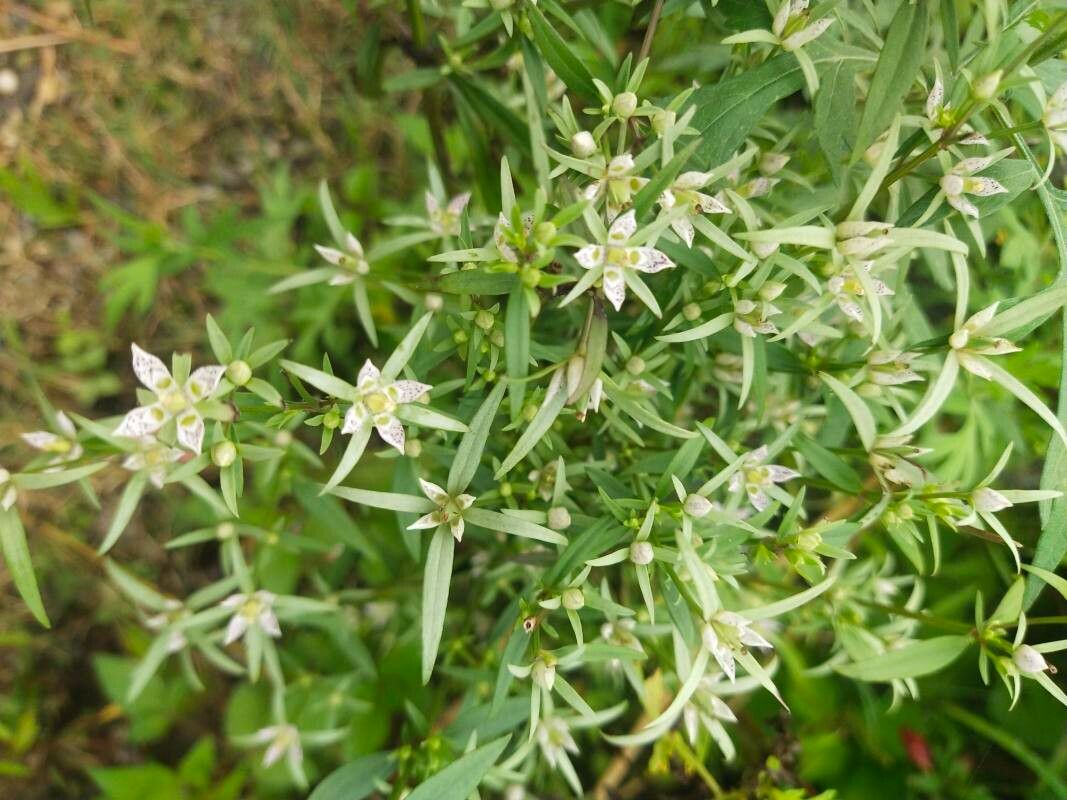
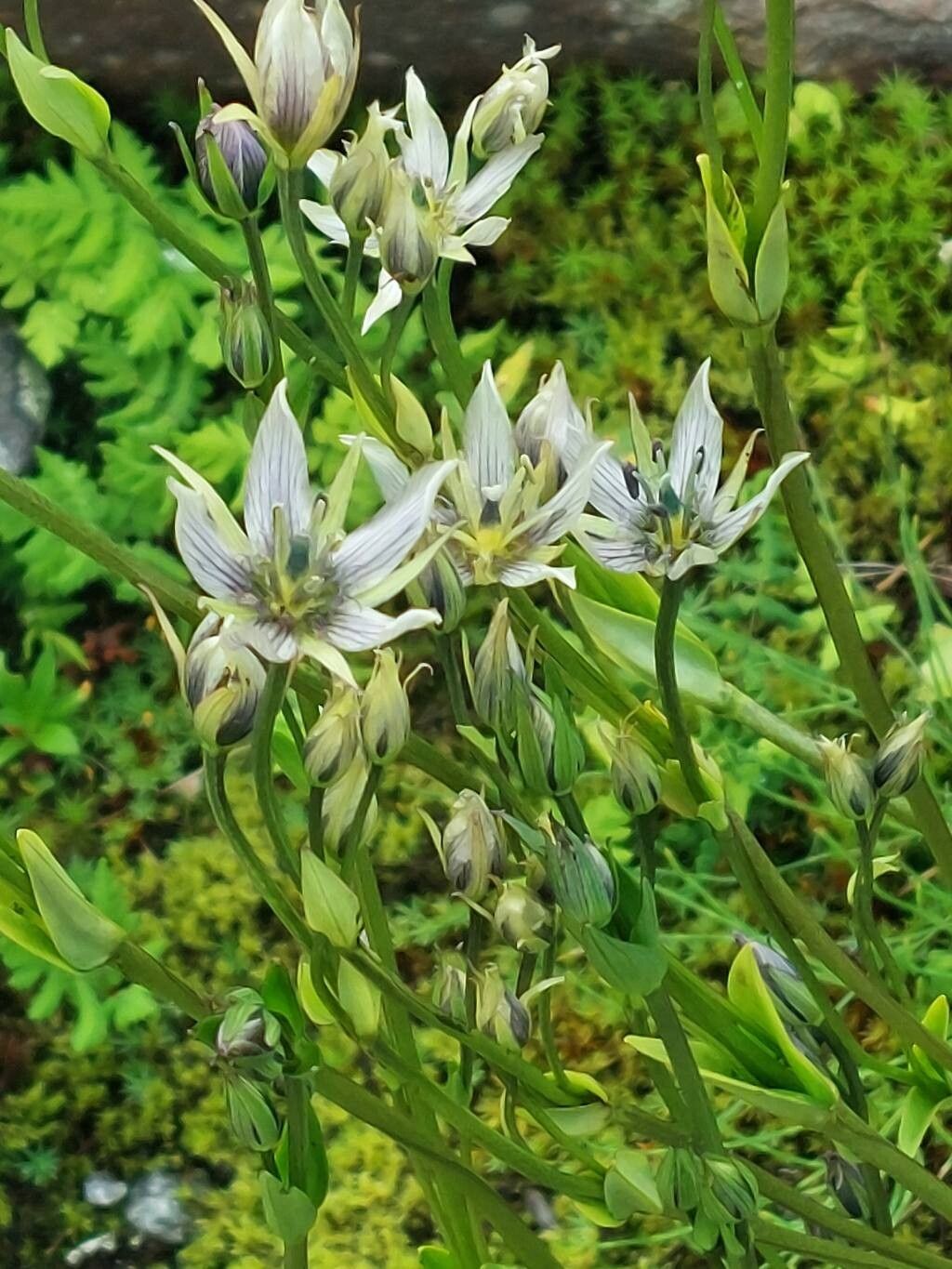
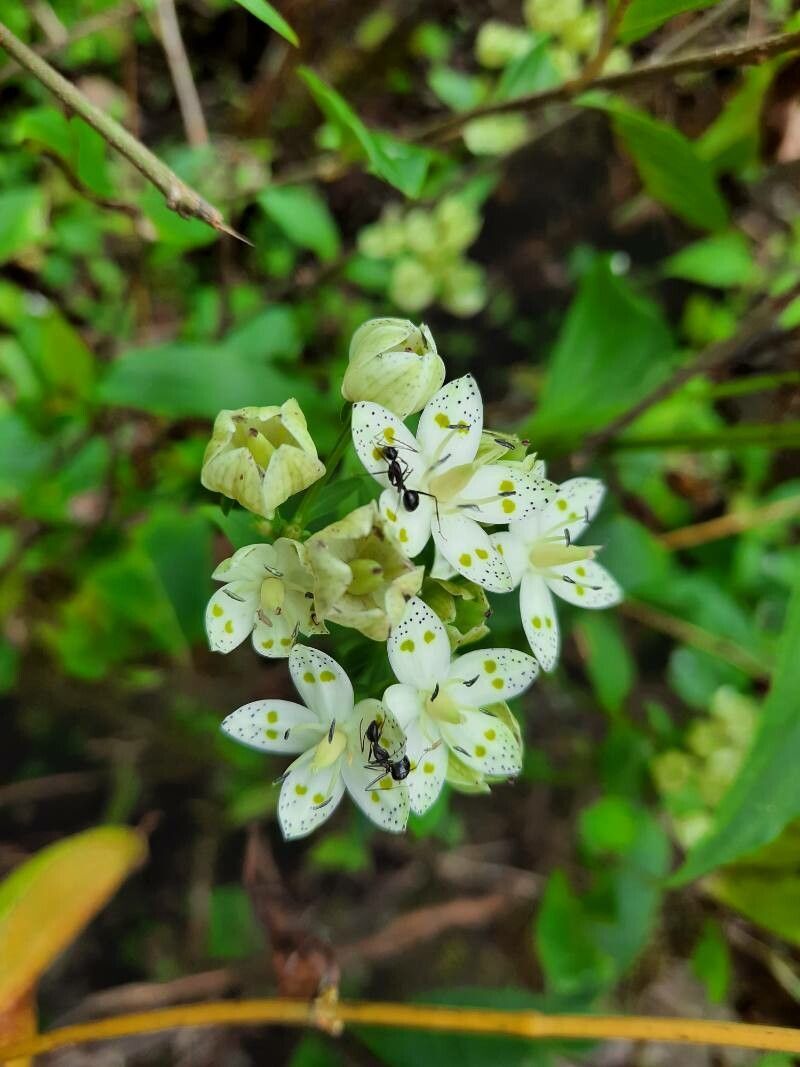
Swertia perennis is a species of flowering plant in the gentian family known by the common names felwort and star swertia. It is native to several regions of the northern hemisphere, including much of Eurasia and western North America. It is a plant of wetlands, particularly calcareous fens. It is common to abundant in many areas, but it is known to be negatively impacted by habitat fragmentation and other habitat destruction, and human activity has led to its extirpation from some areas where it was once common. It is a perennial herb producing usually one erect stem growing 10 to 50 centimeters tall. The basal leaves are spoon-shaped with rounded tips, and leaves higher on the plant are widely lance-shaped or somewhat oval, with pointed tips. The inflorescence is an open panicle of flowers atop the stem. Each flower has a calyx of four or five pointed sepals and a corolla of four or five pointed lobes each up to 1.3 centimeters long. The corolla is dull blue to violet in color with darker purplish veining or stippling. There are two rounded nectary pits at the base of each lobe of the corolla. Stamens tipped with large anthers surround a central ovary.
Felwort is fairly disease-resistant and typically does not suffer from many illnesses. Nonetheless, it can be vulnerable to pests and diseases present in its environment. Such infections are generally mild. Regarding care, the plant requires moderate maintenance. Regular pruning is necessary to maintain an attractive appearance and healthy growth. Fertilizing can also help encourage flowering. Felwort is suitable for anyone with outdoor space, such as a garden or patio, and does not demand extensive care experience. It may need more attention if kept indoors.
How to keep Swertia Perennis.
Light
Felwort prefers locations with full, unblocked sunlight but can also thrive in areas where the light is partially reduced. Too little sunlight may restrict its growth. Its tendency toward brighter conditions comes from originating in sun-rich habitats.
Water
Felwort thrives in moist environments, needing regular hydration and proper drainage to grow well. To mimic its natural habitat, it's best to water it weekly. As an herbaceous perennial, felwort grows vigorously outdoors during its growing season, provided it receives enough water to meet its natural rainfall needs.
Temperature
Felwort originates from cool temperate areas and does well in conditions ranging from 32 to 77 °F (0 to 25 ℃). To cope with seasonal shifts, make sure temperatures remain within this range, since felwort favors cooler climates.
Fertilizer
The best time to fertilize Felwort is in early spring as the flowers are beginning to form. Using the proper fertilizer promotes better blooms and helps Felwort produce attractive flowers. Fertilizing at that time secures strong flowering throughout the season and supplies energy for dormant growth phases.
Pruning
Felwort is a perennial herb known for its star-shaped flowers and medicinal properties. To keep the plant healthy and well-shaped, prune it from early to late spring. This helps remove dead stems and encourages new growth. Make sure to use sharp tools for clean cuts, and inspect the plant for any pests or diseases while pruning.
Botanical profile.
- Plant Type
- Herb
- Life Cycle
- Perennial
- Genus
- Swertia
- Family
- Gentianaceae
- Hardiness Zone
- 3-6
- Mature Height
- 30 cm to 46 cm
- Mature Spread
- 8 cm to 15 cm
- Leaf Color
- Dark Green
- Leaf Type
- Deciduous
- Flower Color
- Lavender, Purple
- Flower Size
- 2.54 cm
- Bloom Time
- Mid summer, Late summer
- Planting Time
- Spring, Summer
- Harvest Time
- Early fall, Mid fall
- Native Area
- Russia, Japan
Other names.
Reader questions.
How should I water my Felwort plant?
To properly water the Felwort, it's important to use filtered water at room temperature. This is because tap water may contain harmful particles. The Felwort is accustomed to a warm environment, so cold water can be a bit of a shock to it. It's also best to avoid overhead watering, as this can cause foliage issues. Instead, just apply the filtered room temperature water directly to the soil until it is thoroughly soaked. This helps the plant by moistening the roots and aiding in the spread of nutrients through the soil.
Why is it necessary to put fertilizer on my Felwort plant?
The main structure of the Felwort is made up of its leaves. Fertilization is a crucial way to keep these leaves looking great and functioning properly. Proper fertilization ensures that the leaves maintain consistent color and a healthy texture. Fertilization also benefits the Felwort by promoting the growth of new roots and maintaining the existing root system. This not only keeps the plant healthy in the present, but also helps it absorb soil nutrients better in the future.
What are the sunlight requirements for Felwort?
Felwort requires significant sunlight to thrive, with a preference for full sun exposure, which entails more than 6 hours of sunlight daily. It can also grow in partial sun, needing about 3-6 hours of sunlight. It's essential to observe the pattern of sunlight in your garden and place your plants accordingly, ensuring they receive the right balance of light and shade to flourish.
What is the native climate for Felwort?
Felwort, with its botanical name Swertia perennis, is native to cooler temperate regions. It thrives in environments that have a temperature range between 32 to 77 °F (0 to 25 °C). This plant adapts well to cooler climates and prefers not to be in temperatures that exceed this range to adjust effectively to seasonal changes.
What should I do if I give too much or too little water to my Felwort?
Overwatering is a common issue that can harm your Felwort plant. It causes the stems and leaves to wilt and turn yellow. Over time, it can also lead to diseases like root rot, mold, and mildew, which can be fatal. Underwatering is less common because the Felwort can tolerate drought, but it can still happen. In this case, the leaves become brittle and brown. It's important to recognize the signs of overwatering early on. Some diseases caused by overwatering, like root rot, are difficult to fix if you wait too long. If you notice early signs, reduce your watering schedule immediately. Check the soil drainage and replace it with a loose, well-draining potting mix if it drains poorly. If your Felwort needs more water, simply water it regularly until the signs of underwatering subside.
When should I fertilize my Felwort plant?
If you grow your Felwort outdoors each year, new growth will sprout in early spring. This signals that it's time to start fertilizing. Generally, a single application of fertilizer in the spring is sufficient for a healthy Felwort. However, if you want to promote maximum growth, you can fertilize multiple times throughout the spring and early summer, approximately once every month to a month and a half.
How does artificial lighting support Felwort's growth indoors?
When natural sunlight is insufficient, especially during winter or in less sunny areas, artificial lighting becomes crucial for Felwort's indoor growth. LED lights are recommended due to their ability to mimic natural light's wavelengths. Full sun plants require 30-50W per square foot, partial sun plants need 20-30W per square foot, and plants in full shade require 10-20W per square foot of artificial light. The lights should be placed 12-36 inches above the plant, simulating natural sunlight's distance, and kept on for 8-12 hours daily to match the natural daylight hours required by the plant.
How does Felwort handle cold weather, and are there any special winter care instructions?
Felwort is highly tolerant of cold weather and does not require additional measures for frost protection during the winter months. However, to prepare for the first freeze of autumn, it is advisable to water the plant generously. This ensures that the soil around the felwort remains moist and enters into a frozen state properly. Such preparation helps in preventing drought and water scarcity for the plant during the winter and early spring seasons.
How frequently should I water my Felwort?
If your Felwort plant is in a pot, the best way to determine if it needs water is to check the soil with your finger. If the top two to three inches of soil are dry, it's time to water. If you have your Felwort plant growing outdoors in the ground, you can use a similar method to test the soil. Once again, if the top few inches of soil are dry, it's time to water. Typically, during the spring and early fall, you'll need to water this plant about once a week using this method. However, in extremely hot weather, you may need to water twice or more per week. It's worth noting that mature and well-established Felwort plants can tolerate drought well.
When is the best time to not use fertilizer on my Felwort?
During the late fall and winter, your Felwort will go through a dormant phase where it stops producing new growth. It is important to avoid fertilizing your Felwort during this time. In the spring and summer, if you choose to fertilize multiple times, you should start reducing the amount of fertilizer as summer approaches because the growth rate of your Felwort will also slow down. In general, it is not recommended to fertilize your Felwort during extremely hot weather or when the soil is very dry. Fertilizing in these conditions can stress your Felwort and cause it to die prematurely.
What are the common symptoms of light deficiency in Felwort?
Symptoms of inadequate light in Felwort include smaller new leaves, leggy or sparse growth, faster leaf drop, halted growth, pale new leaves, chlorosis (yellowing leaves), sunscald, leaf curling, wilting, and leaf scorching. These symptoms indicate that the plant is not receiving enough sunlight or is exposed to too much direct light, leading to various health issues.
What should be done if the winter temperature drops below the Felwort's tolerance level?
Felwort can tolerate extremely cold temperatures, but it should not be exposed to conditions colder than -35°C. If temperatures drop below this threshold, you might not notice immediate changes during the winter, but there could be a decrease in sprouting or even no sprouting at all when spring arrives. The recommended solution for this issue is to remove any parts of the plant that have failed to sprout in the spring.