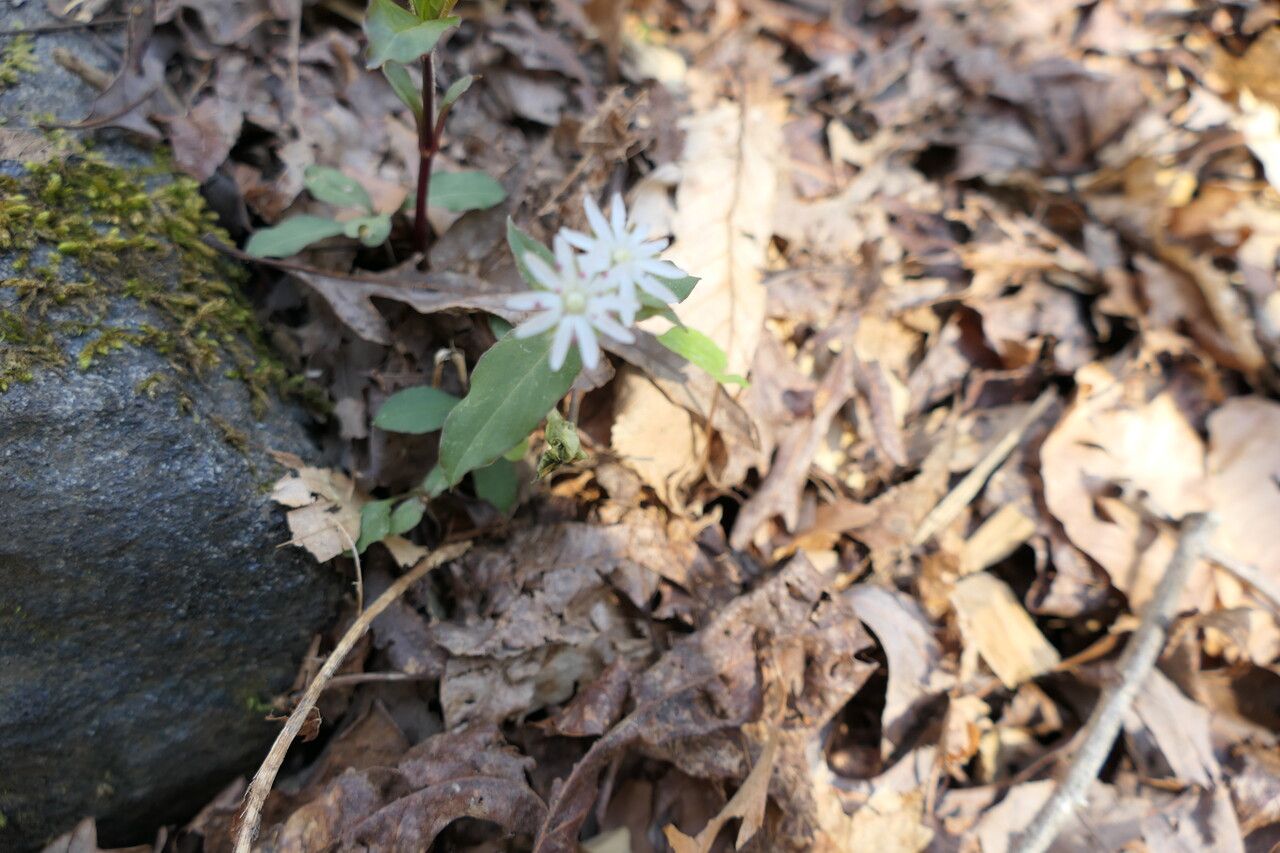
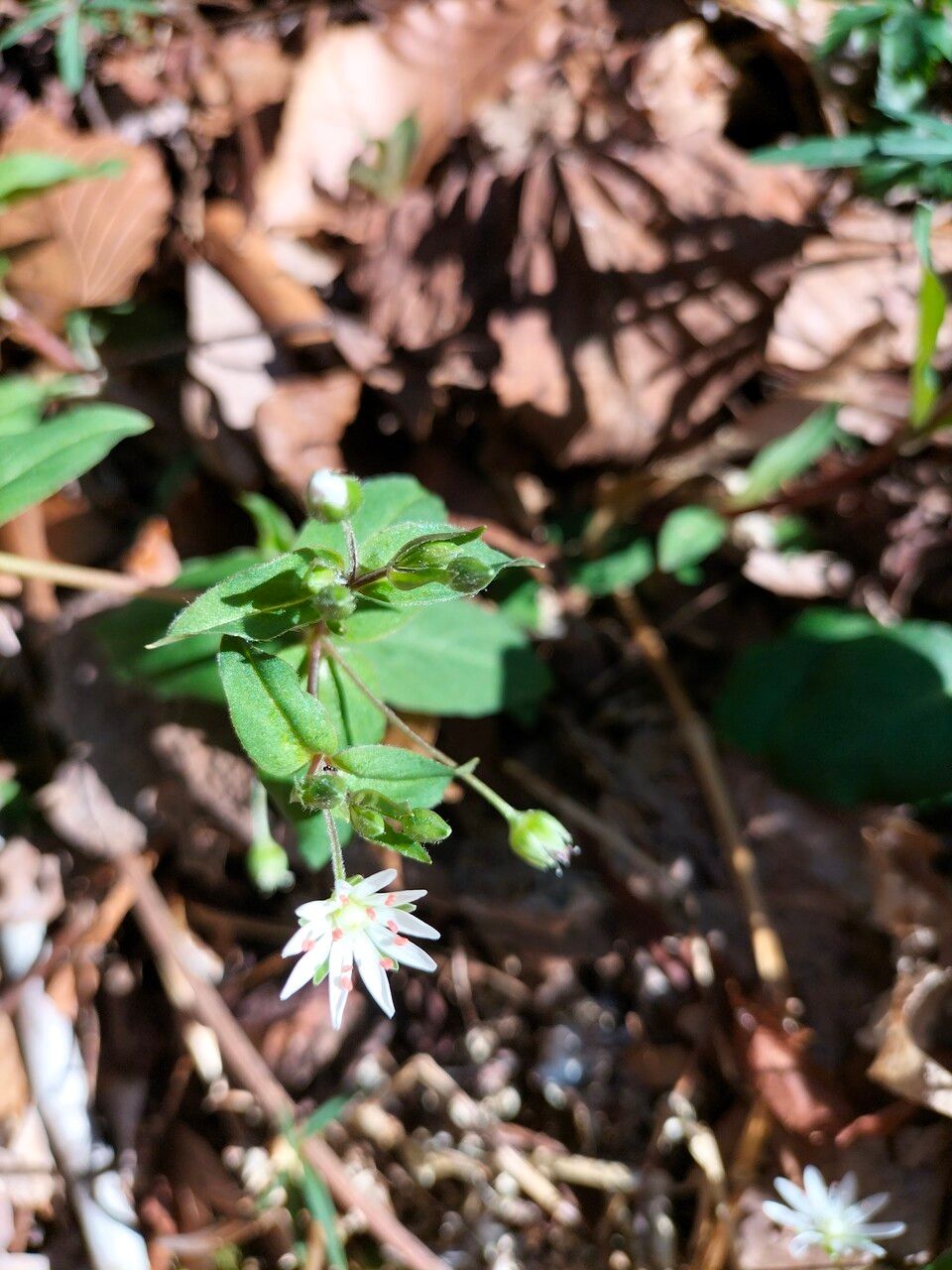
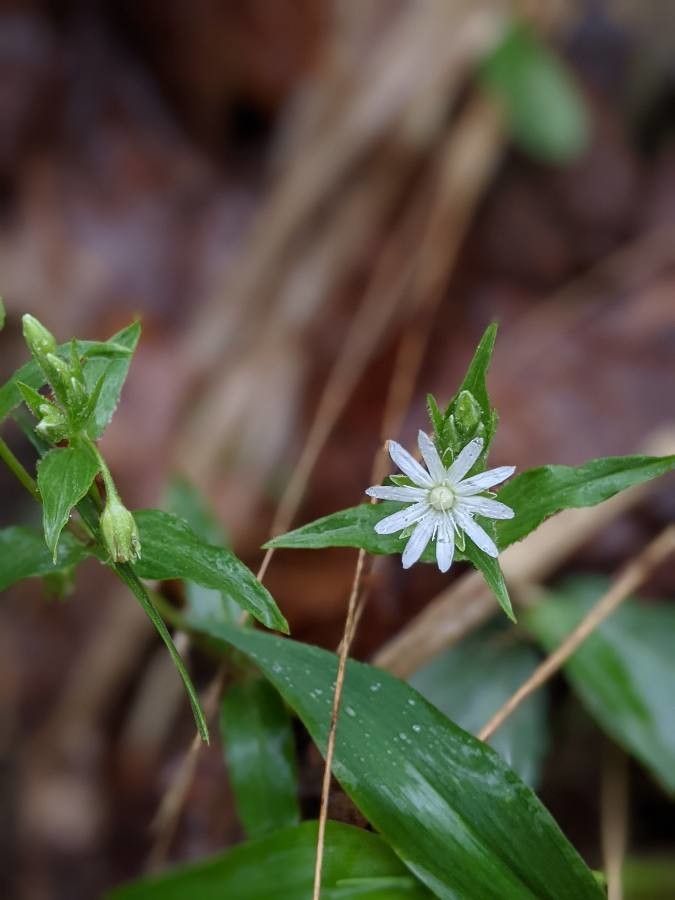
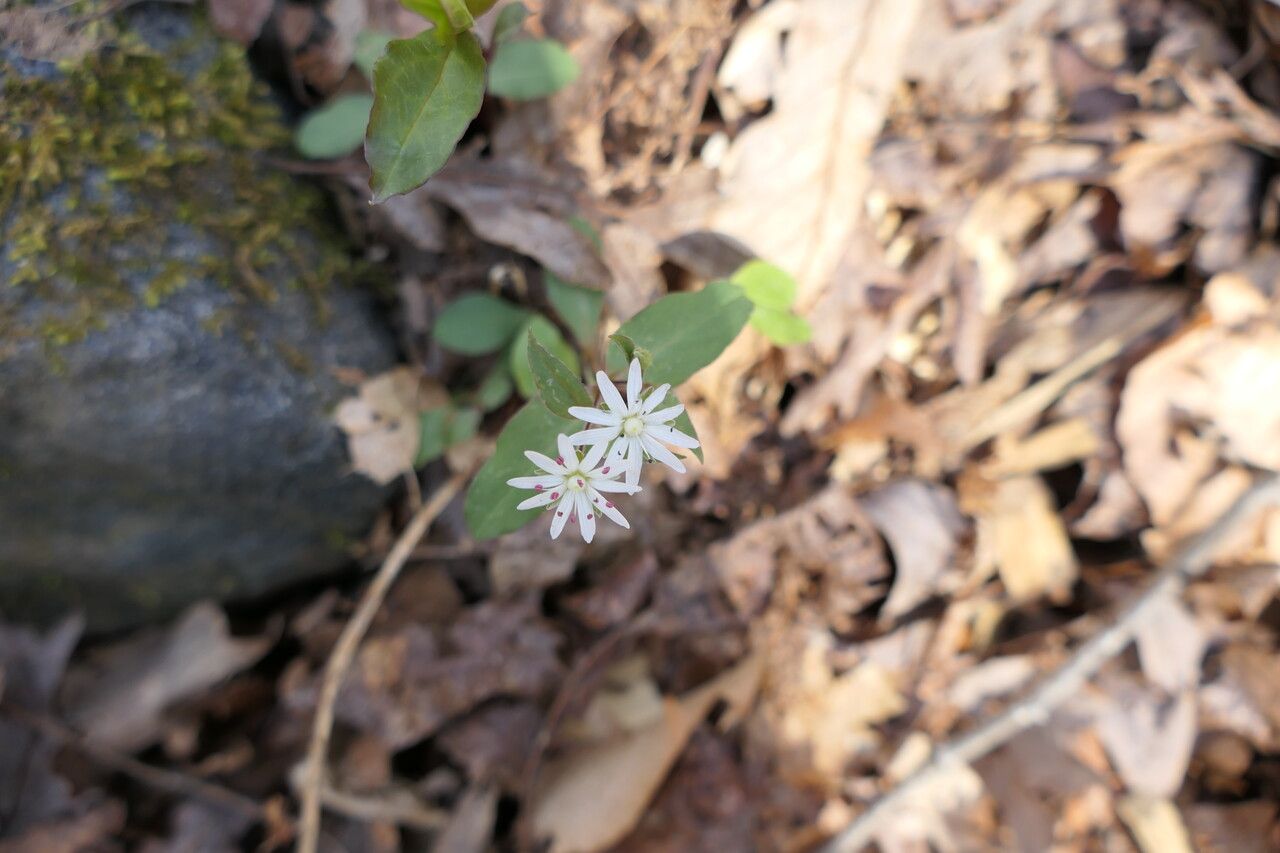
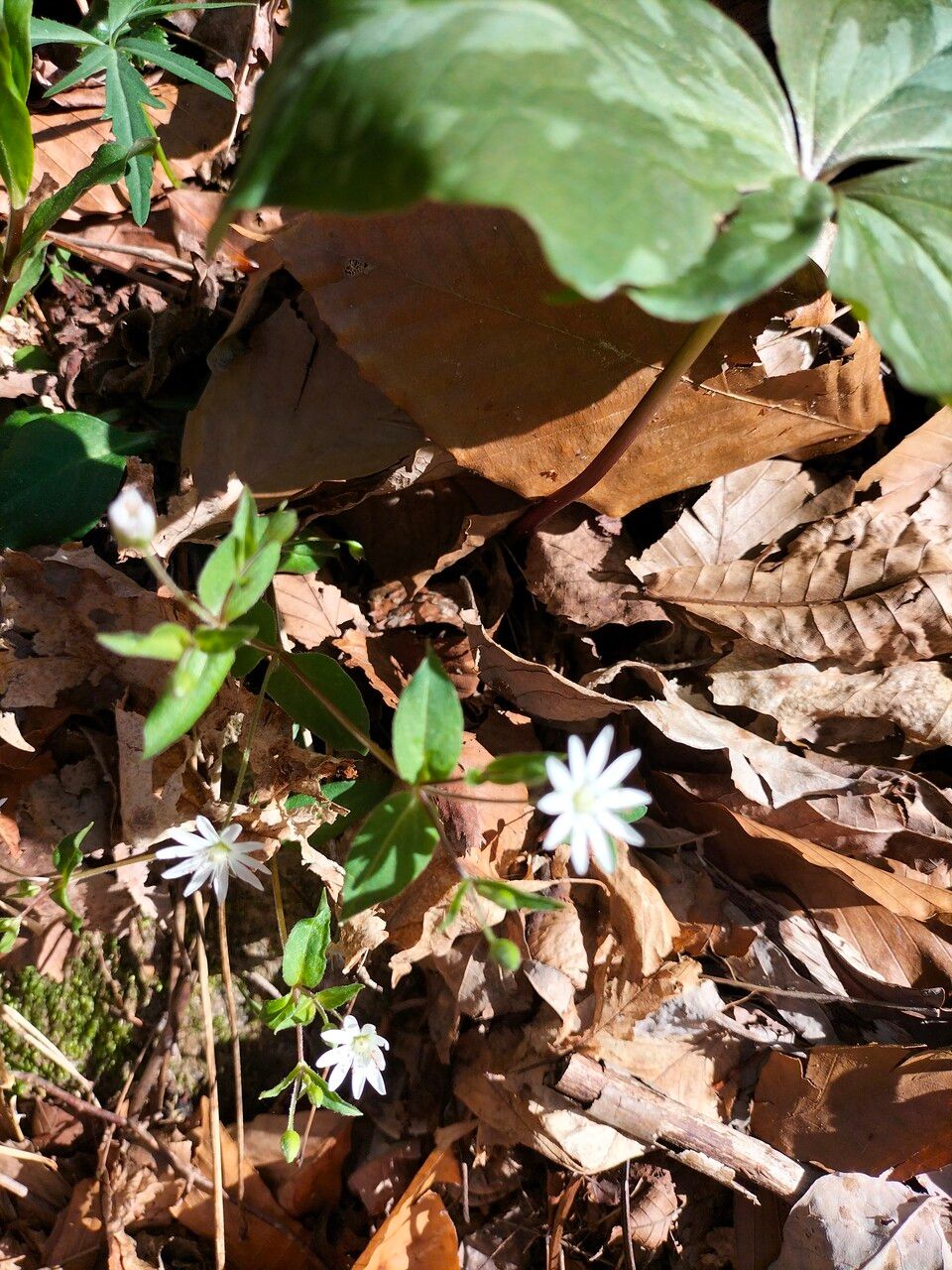
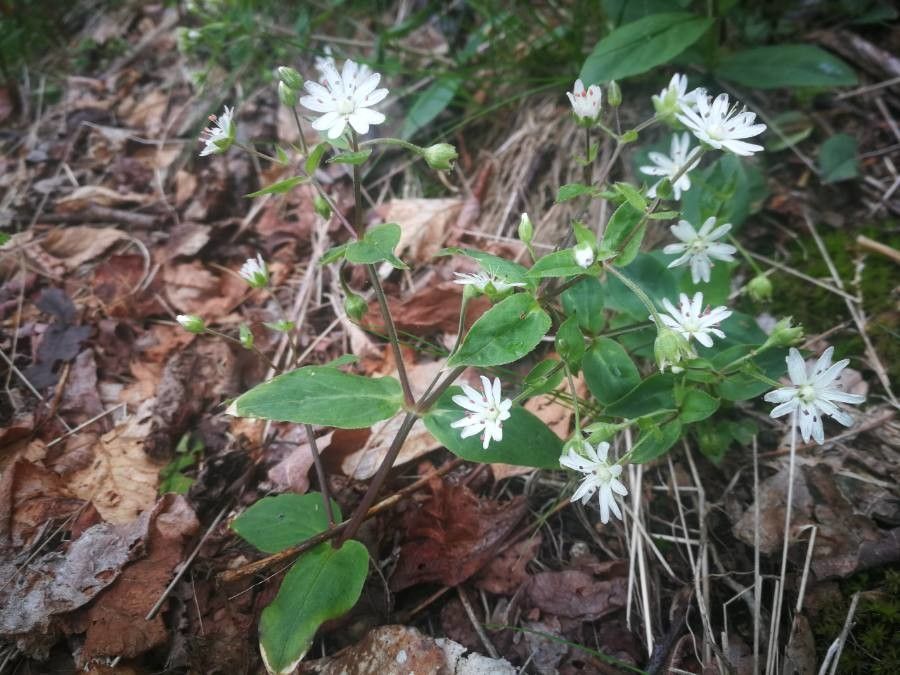
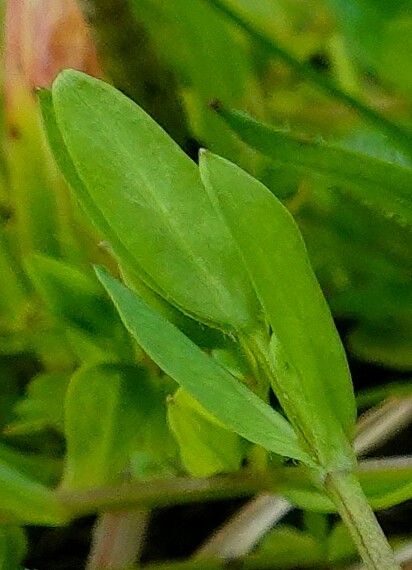
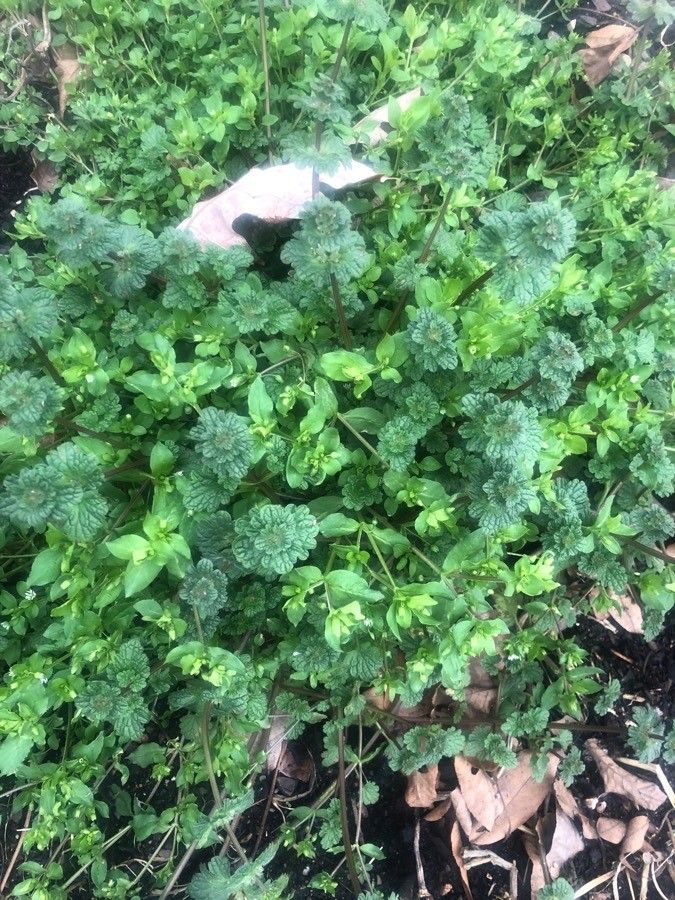
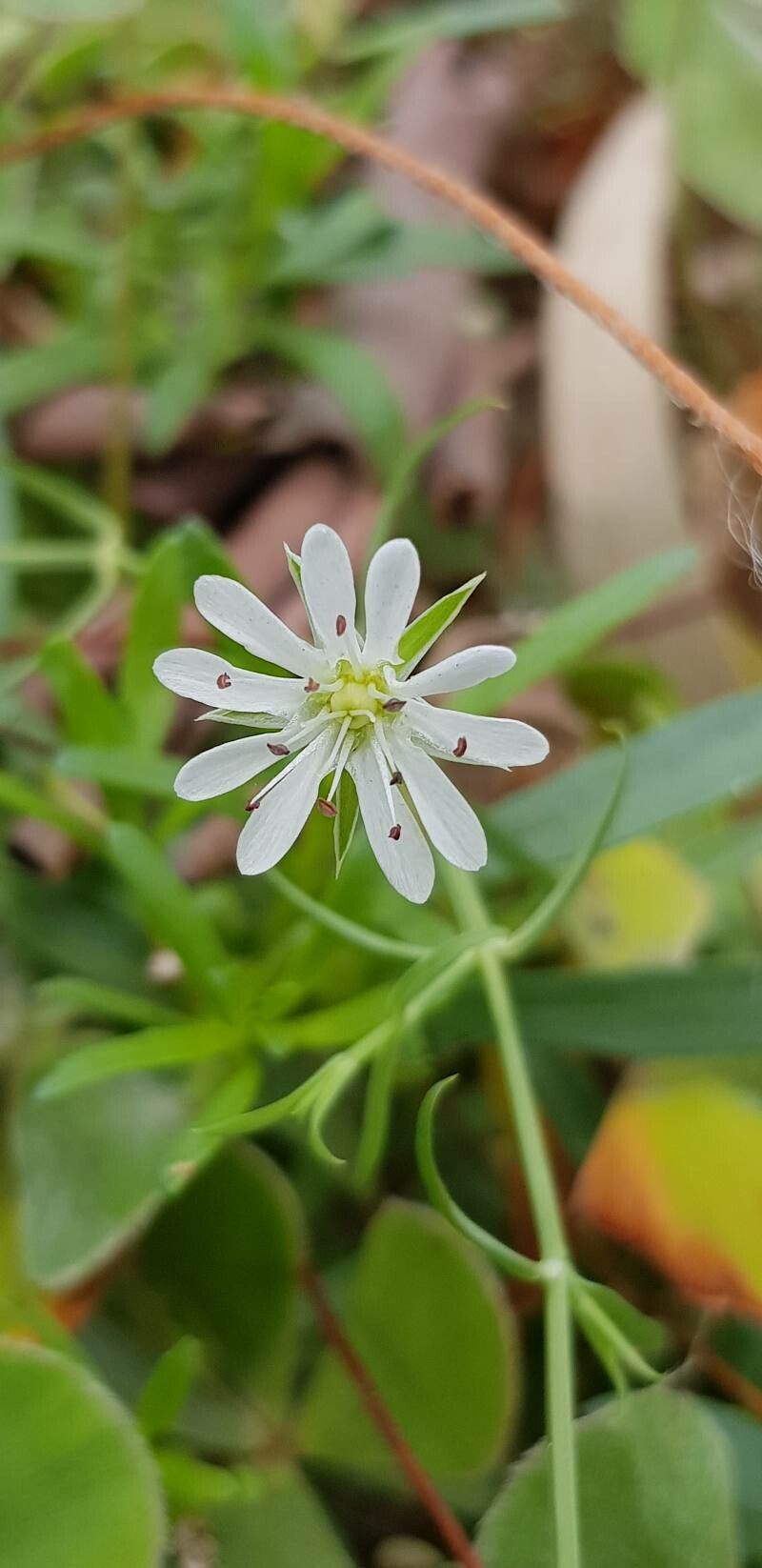
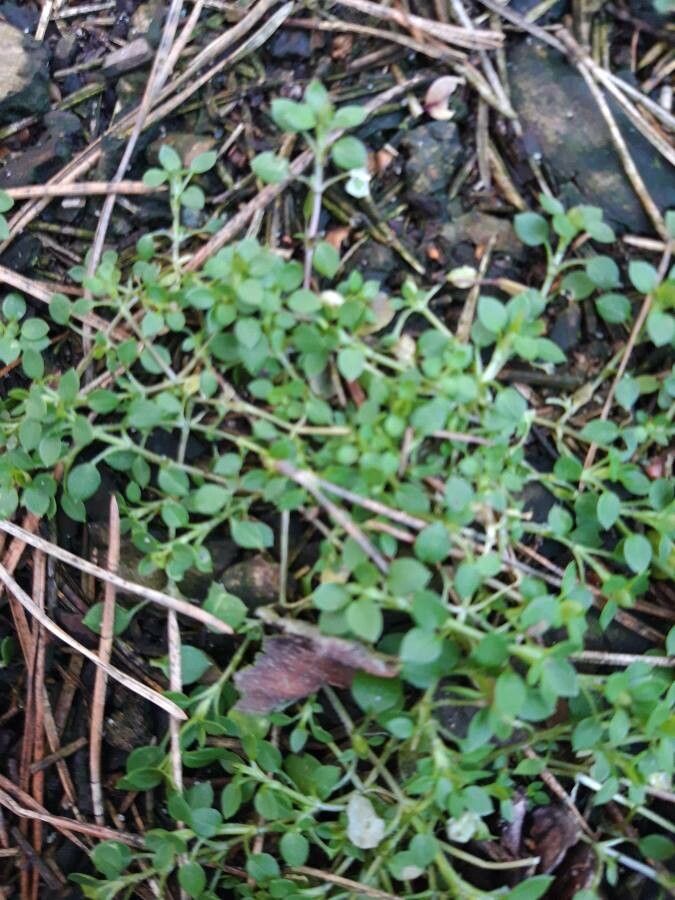
Stellaria pubera, commonly known as star chickweed, is a herbaceous plant belonging to the Caryophyllaceae family. Native to North America, it thrives in diverse habitats such as meadows, fields, and woodlands. This plant can grow up to 60 cm tall and has a slender stem with opposite leaves that are either ovate or lanceolate in shape. Star chickweed blooms from May to August, producing small white flowers that feature five petals. These flowers are followed by small capsules filled with numerous seeds, which are dispersed by wind or animals. Traditionally, the plant has been used for medicinal purposes, including treating skin irritations and digestive problems. Additionally, star chickweed is valued for its high nutritional content and is often used in salads or cooked as a vegetable. Stellaria pubera serves as an important food source for various wildlife species, including birds, rabbits, deer, and other herbivores. However, it can also be considered an invasive species due to its rapid spread through seed dispersal. In summary, Stellaria pubera is a fascinating plant with notable medicinal properties and ecological significance within its native range in North America.
Star Chickweed is fairly resistant to disease and usually not vulnerable to illnesses. Still, it can be affected by pests and diseases present in its environment. Such problems are generally mild. Regarding care, this plant needs moderate maintenance. It should be pruned regularly to keep a tidy appearance and promote healthy growth. Fertilizing can also aid in encouraging flowering. Star Chickweed is suitable for anyone with outdoor space, like a garden or patio, and does not demand extensive care experience. It may need more attention if grown indoors.
How to keep Stellaria Pubera.
Light
Star Chickweed grows best in areas with moderate sunlight, though it can cope with full shade if necessary. Sunlight supports the plant, but excessive exposure can impede its growth. Likewise, insufficient sunlight may affect its ability to develop optimally. Its native habitat has produced resilience, allowing it to tolerate both moderate and low-light conditions.
Water
Star Chickweed thrives in consistently moist, well-hydrated soil and benefits from balanced moisture levels. To replicate its natural habitat, it is recommended to water it weekly. When grown outdoors, mulching can help retain soil moisture, particularly during the active growing season. This practice supports optimal growth and enhances its moderate tolerance to drought.
Temperature
Star Chickweed is well suited to a temperate climate, doing best in conditions from 41 to 89.6°F (5 to 32°C). Native habitats with these temperatures provide the optimal conditions for growth. Seasonal temperature adjustments may be required to mimic these conditions.
Fertilizer
The best time to feed a Star Chickweed is in early spring, as it comes out of dormancy and begins active growth. Applying fertilizer supplies essential nutrients for healthy development. While Star Chickweed does not require much fertilization, giving it fertilizer once a year can improve its chances of survival and encourage nicer, longer-lasting blooms.
Pruning
Star Chickweed features star-shaped flowers and thrives in moist, well-drained soils. To encourage bushier growth, prune the plant from early to late spring, after it has finished flowering. During pruning, remove dead stems and excess growth. Regular pruning not only improves the plant's appearance but also enhances air circulation, which reduces the risk of disease and encourages more vigorous blooms.
Botanical profile.
- Plant Type
- Herb
- Life Cycle
- Perennial
- Genus
- Stellaria
- Family
- Caryophyllaceae
- Hardiness Zone
- 5-8
- Mature Height
- 15 cm to 30 cm
- Mature Spread
- 15 cm to 49 cm
- Leaf Color
- Green
- Leaf Type
- Deciduous
- Flower Color
- White
- Flower Size
- 2.54 cm
- Bloom Time
- Early spring, Mid spring
- Planting Time
- Spring
- Harvest Time
- Late spring, Early summer
Other names.
Reader questions.
How should I water my Star Chickweed?
To properly water the Star Chickweed, use filtered water at room temperature. Tap water can have harmful particles, so filtered water is preferred. The plant is accustomed to warm environments, so avoid using cold water which could shock its system. Additionally, it's best to avoid overhead watering as it may cause problems with the foliage. Instead, soak the soil with filtered room temperature water until it is completely saturated. This helps moisten the roots and enables them to spread and gather necessary nutrients.
What are the sunlight requirements for Star Chickweed?
Star Chickweed requires partial sun, with about 3-6 hours of sunlight daily, to thrive. It can also grow in full shade conditions, where it receives less than 3 hours of sunlight per day. It's essential to observe the sunlight's movements through your garden to find spots that offer a balance of light and shade, ensuring the plant's well-being.
What is the ideal climate for growing Star Chickweed?
Star Chickweed thrives in a temperate climate, with optimal growth conditions in temperatures ranging from 41 to 89.6°F (5 to 32°C). It is native to environments that offer these temperature conditions. Although it has strong cold resistance and usually doesn't require special frost protection in winter, precautions should be taken if temperatures are expected to fall below -25°C. To protect against cold, covering the plant with materials such as soil or straw can be effective. Additionally, watering the plant abundantly before the first freeze in autumn to keep the soil moist can help it withstand winter and early spring water scarcity.
What should I do if I give my Star Chickweed too much water or too little water?
Overwatering is a common issue for Star Chickweed that can cause wilted, yellow leaves and potential diseases like root rot, mold, and mildew. Underwatering is less common, but still possible, resulting in brittle, brown leaves. To prevent irreversible damage, it's important to recognize signs of overwatering early and reduce watering. Check the soil's drainage and replace it with a well-draining mix if needed. If underwatering is the problem, simply increase watering until the signs improve.
Can Star Chickweed grow under artificial lighting?
Yes, Star Chickweed can grow under artificial lighting, especially when natural sunlight is insufficient, like in winter or less sunny locations. Indoor plants benefit from artificial lights that promote faster and healthier growth. LED lights are recommended because they can be adjusted to provide specific light wavelengths needed by the plants. For full sun plants, 30-50W/sq ft is needed; partial sun plants require 20-30W/sq ft, and full shade plants need 10-20W/sq ft. The light source should be placed 12-36 inches above the plant, simulating natural sunlight for about 8-12 hours per day.
How does Star Chickweed respond to low temperatures?
Star Chickweed is quite cold-tolerant, performing best when the temperature is maintained above 5°C. During winter, it's important to ensure that temperatures do not fall below -20°C. Exposure to temperatures below -25°C might not show immediate adverse effects during the winter, but can lead to decreased sprouting or no sprouting at all come spring. A suggested solution for these conditions in the spring is to remove any parts of the plant that have failed to sprout, to encourage new growth.
How frequently do I need to water my Star Chickweed?
If your Star Chickweed plant is in a pot, the best way to know if it needs water is by checking the soil moisture. Stick your finger into the soil and if the top two to three inches are dry, it's time to water. If you have the plant planted outdoors, you can use the same method to test the soil. When the top few inches of soil have dried out, it's time to water. In the spring and early fall, you'll usually need to water this plant about once a week. However, during extremely hot weather, you may need to water it twice or more per week. It's worth noting that mature, well-established Star Chickweed plants can withstand drought quite well.
What are the signs of insufficient light in Star Chickweed?
When Star Chickweed gets insufficient light, it may show several symptoms, such as smaller new leaves, leggy or sparse growth, faster leaf drop, slowed or halted growth, lighter-colored new leaves, and various signs of distress like chlorosis, sunscald, leaf curling, wilting, and leaf scorching. These symptoms indicate that the plant is not receiving the optimal amount of sunlight it needs for healthy growth.
What should I do if Star Chickweed is exposed to high temperatures?
Star Chickweed should ideally be kept below 32°C during the summer months. If temperatures rise above 35°C, the plant may show signs of stress such as leaves becoming lighter in color, curling, and becoming susceptible to sunburn. In severe cases, the plant may wilt and dry up. To mitigate damage from high temperatures, trim away sunburned and dried-up parts of the plant. Relocating the plant to a shaded area during the midday and afternoon sun, or using a shade cloth, can also be beneficial. Additionally, watering the plant in the morning and evening will help keep the soil moist and support the plant's health.
How much water does my Star Chickweed plant need?
To properly water your Star Chickweed, don't hold back on the amount of water you give it. Wait until the top two to three inches of soil are dry, then water thoroughly. Make sure to soak the entire soil. You should add enough water so that there is excess water draining out of the drainage holes at the bottom of the pot. If you don't see any excess water, it means you haven't watered enough. However, be careful not to let water accumulate within the soil, as this can harm the plant. On the other hand, if water doesn't drain well from the pot, it could mean that the soil doesn't drain properly, which is not good for the plant's health. Avoid this situation. If the plant is outside, it will only need about 1 inch of rain per week.
How can I optimize growth for indoor Star Chickweed with insufficient natural light?
To optimize growth for Star Chickweed indoors with insufficient natural light, progressively move the plants to sunnier locations weekly until they achieve 3-6 hours of direct sunlight daily. This gradual adaptation helps the plant to adjust to changing light conditions. If the plant is too large or not easily movable, consider using artificial light sources, such as desk lamps or professional grow lights, and keep them on for at least 8 hours daily.
How should I water my Star Chickweed as it grows?
The water needs of the Star Chickweed can vary depending on its growth stages. When the Star Chickweed is in its early years or has been recently transplanted, it requires more water than usual. During these stages, the plant focuses on developing new roots to support future growth, and these roots require extra moisture. As the Star Chickweed matures, it will need less water. Another stage that may require increased watering is during the bloom period, as flower development requires a significant amount of moisture.