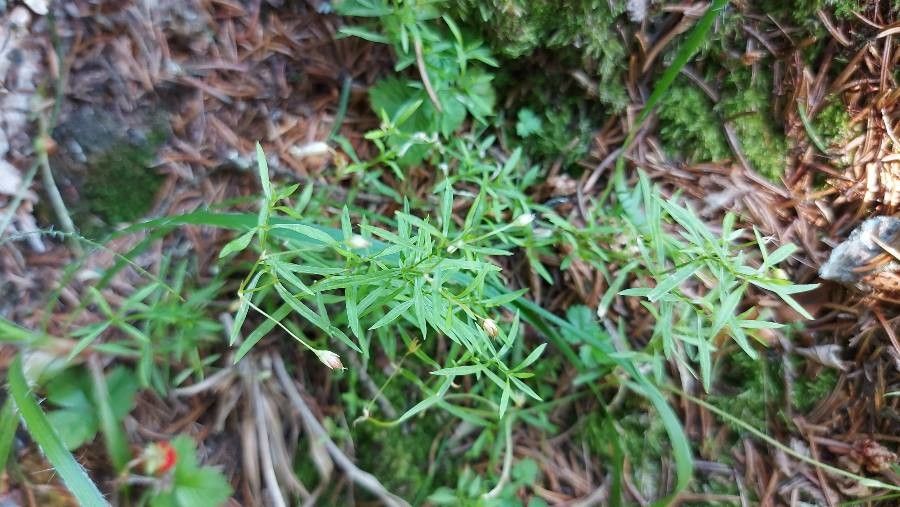
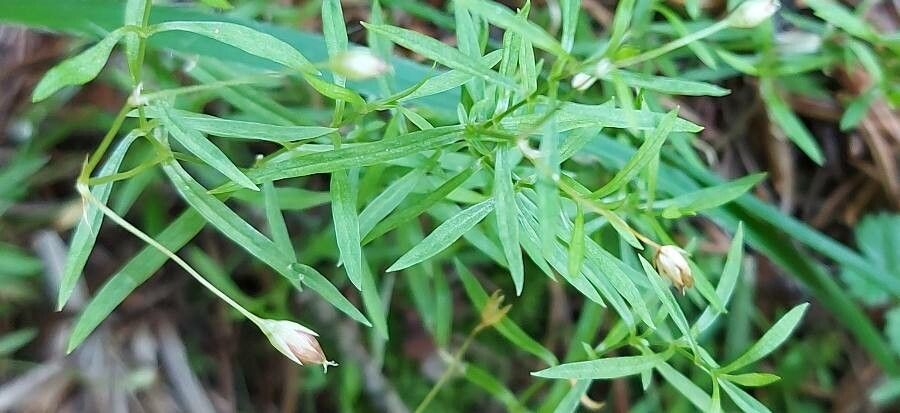
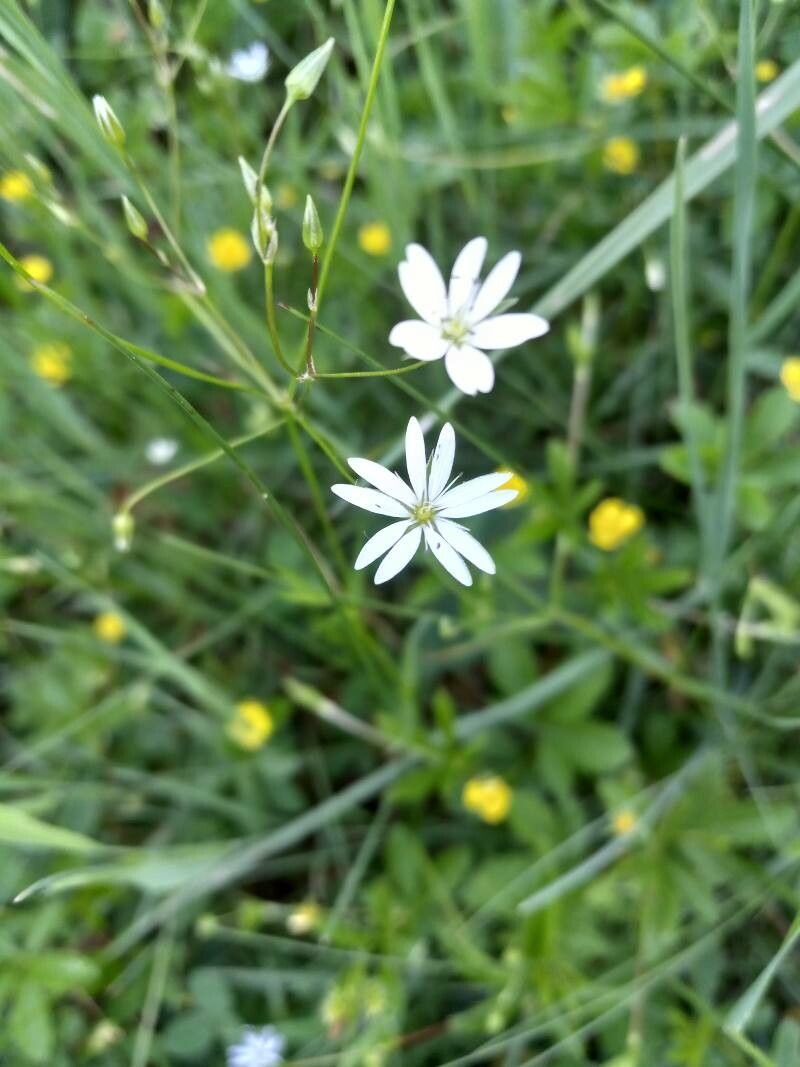
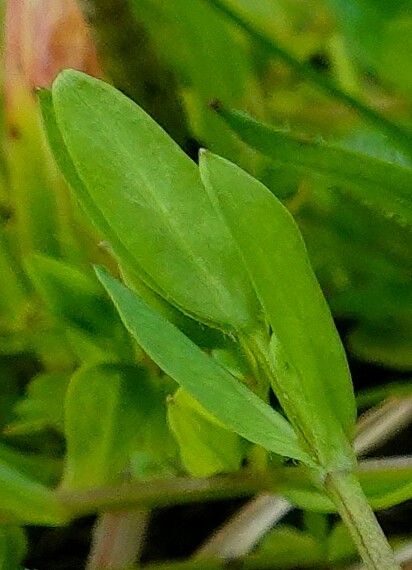
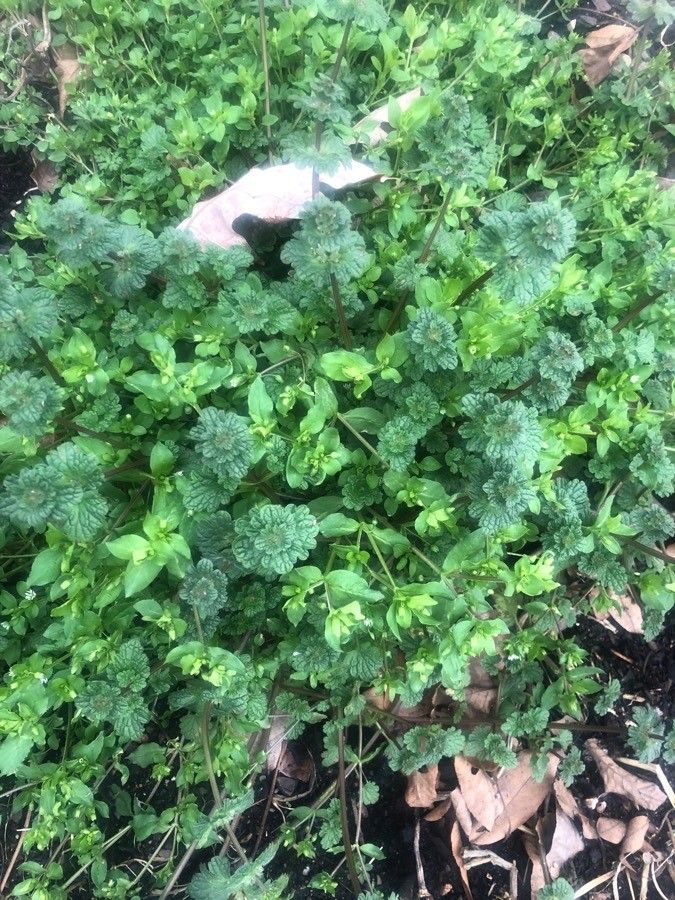
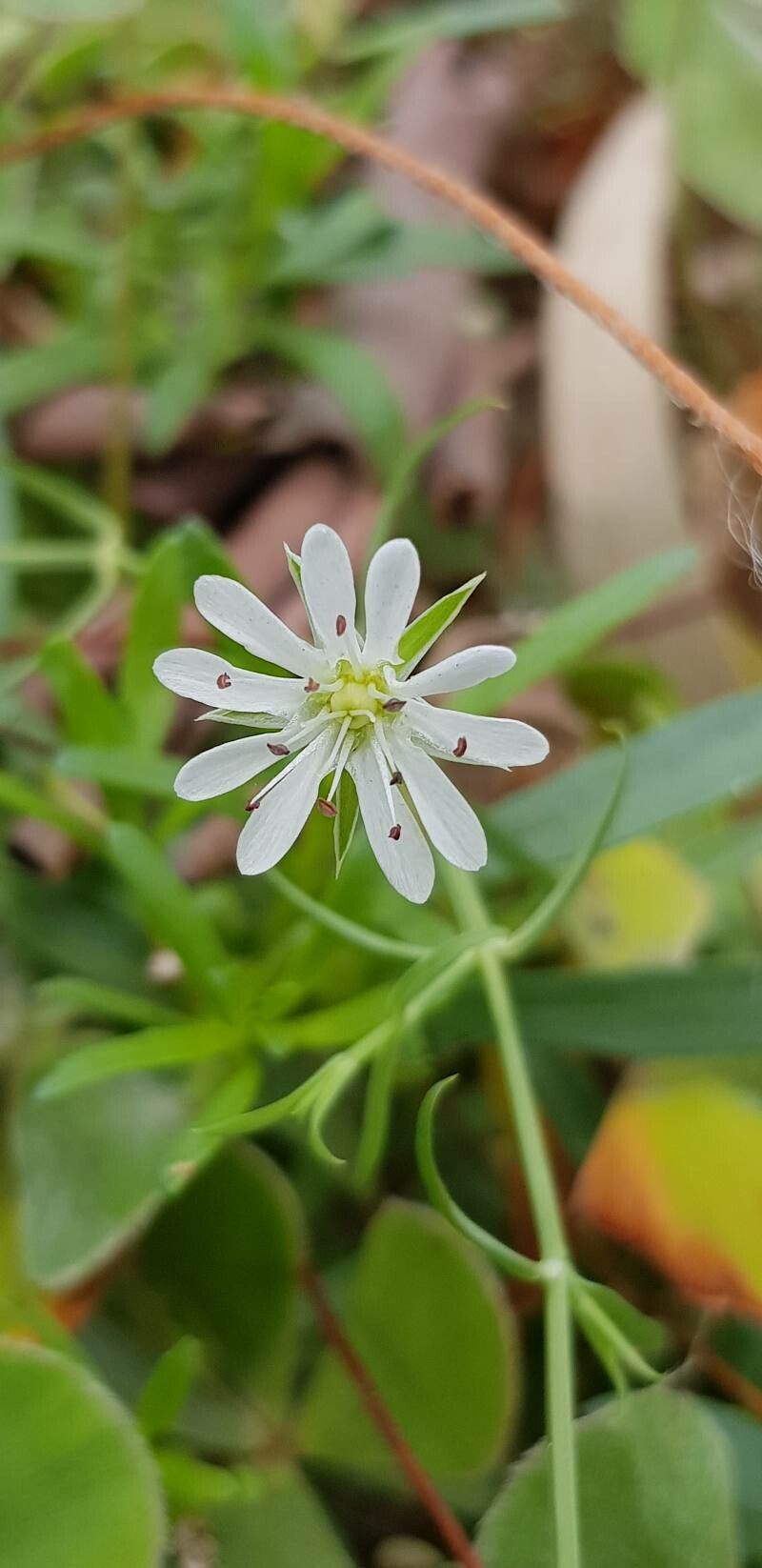
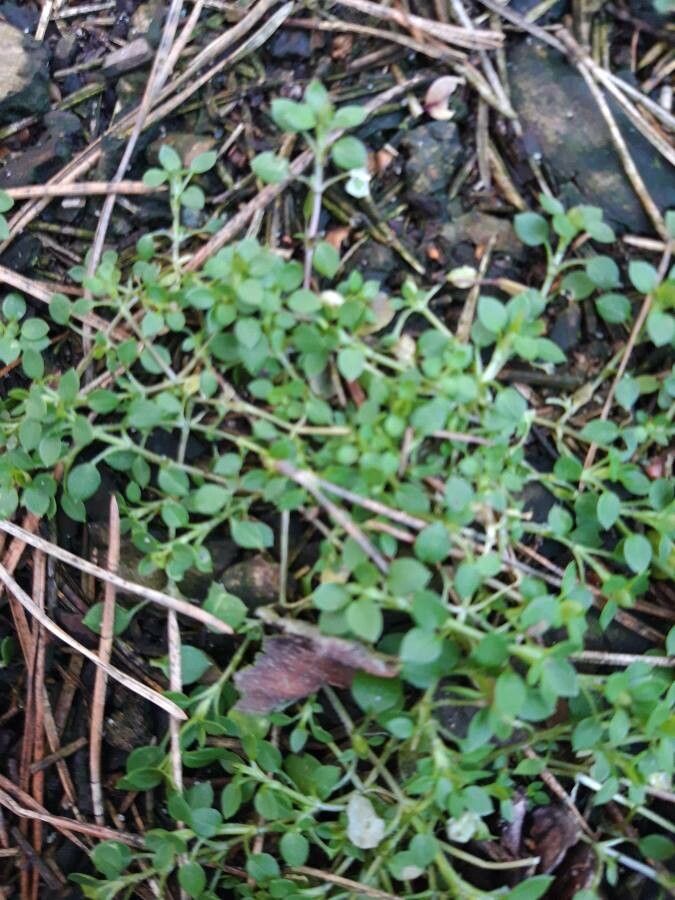
Stellaria longifolia is a species of flowering plant in the family Caryophyllaceae known by the common name longleaf starwort. It is native to much of the northern half of the Northern Hemisphere, occurring throughout northern Europe and North America. It grows in many types of moist habitat, including meadows, marshes, and roadsides. It is a rhizomatous perennial herb forming clumps with sprawling, branching stems which are mostly hairless except for tiny rough hairs along the edges of the squarish stem. The linear to lance-shaped leaves are up to 3.5 centimeters long and are oppositely arranged in pairs. The inflorescence bears several flowers, each on a short pedicel. The flower has five pointed green sepals each a few millimeters long. There are five white petals, each so deeply lobed it appears to be two.
Grass-like starwort is largely resistant to disease and typically not liable to illness. Still, it can be affected by pests and diseases found nearby. Such infections tend to be mild. Regarding care, this plant is moderately demanding. It should be pruned on a regular basis to preserve a neat appearance and healthy growth. Applying fertilizer can also encourage flowering. Grass-like starwort is appropriate for anyone with an outdoor area, like a garden or patio, and does not need extensive care experience. It may call for extra attention when kept indoors.
How to keep Stellaria Longifolia.
Light
Grass-like starwort grows best when exposed to plenty of sunlight during the day, though it can survive with only limited sun. In its native habitats, this plant often does well under open skies. Reduced sunlight exposure can result in slower growth or diminished vibrancy.
Water
Longleaf starwort flourishes in moist, temperate climates. It prefers regular watering but should not be overwatered. Weekly watering is ideal. Typically grown outdoors, this plant aligns its growth with rainfall patterns, making it a hardy and adaptable addition to gardens in regions that meet its moisture requirements.
Temperature
Grass-like starwort is often found in areas where temperatures generally range from 41 to 89.6 °F (5 to 32 °C). The plant usually prefers cooler conditions. To ensure healthy growth, it is advisable to adjust the temperature in line with seasonal changes.
Fertilizer
Usually a single fertilizer application in spring is enough for Grass-like starwort, but additional feedings can boost growth. Feed every month to every month and a half. Fertilization improves the leaves' appearance and function, helping maintain uniform color and a healthy texture. It also promotes root development and nutrient uptake, supporting long-term plant health.
Pruning
Longleaf starwort thrives in wet, shady areas and features delicate white flowers. To encourage compact growth, improve air circulation, and remove dead foliage, prune the plant from early to late spring. To preserve its health and beauty, avoid heavy pruning during the blooming season.
Botanical profile.
- Plant Type
- Herb
- Life Cycle
- Perennial
- Genus
- Stellaria
- Family
- Caryophyllaceae
- Hardiness Zone
- 4-8
- Mature Height
- 91 cm
- Mature Spread
- 20 cm
- Leaf Color
- Green, Blue
- Leaf Type
- Deciduous
- Flower Color
- White
- Flower Size
- 0.76 cm
- Bloom Time
- Late spring, Early summer, Mid summer
- Planting Time
- Spring, Summer, Autumn
- Harvest Time
- Early summer, Mid summer
- Native Area
- India, Austria, Turkey, Sweden, Slovakia, Montenegro, Pakistan, Croatia, Slovenia, Belarus, Russia, Germany, Iceland, Estonia, Romania, Latvia, Belgium, Portugal, Nepal, Netherlands, France, Czech Republic, Bulgaria, Poland, Greece, Ukraine, Serbia, China, Lithuania, Norway, Afghanistan, Italy, Kazakhstan, Spain, Switzerland, Denmark, Finland, Iran, Albania, Ireland, United Kingdom, Hungary, Azerbaijan
Other names.
Reader questions.
What are the sunlight requirements for Longleaf starwort?
Longleaf starwort thrives in environments with moderately intense sunlight, requiring about 3-6 hours of sunlight per day to be happy and prosper. It's important to observe your garden's sunlight patterns to find a spot with the perfect balance of light and shade. However, both too much and too little sunlight can be detrimental to the plant's growth. Too much light may harm the plant and impede its growth, while too little light may prevent it from blossoming properly.
What climate does longleaf starwort thrive in?
Longleaf starwort thrives in a cool to moderate climate, with ideal temperatures ranging between 32 to 70 °F (0 to 21 °C). It benefits from natural temperature variations that mimic the changing seasons to promote optimal growth. The plant is highly tolerant of cold conditions and doesn't need extra frost protection. To prepare for winter, it's advised to water the plant generously before the first freeze of autumn. This ensures the soil remains moist and enters a frozen state, which helps prevent drought and water scarcity for the plant during the colder months.
How can artificial lighting be used for indoor Longleaf starwort plants?
Indoor Longleaf starwort plants may need artificial lighting, especially in conditions of insufficient natural sunlight, like during winter or in less sunny spaces. LED lights are a popular choice, as they can offer specific wavelengths needed by the plants. Full sun plants should receive 30-50W/sq ft, partial sun plants 20-30W/sq ft, and full shade plants 10-20W/sq ft of artificial light. The light source should be placed 12-36 inches above the plant to mimic natural sunlight, and most plants will require 8-12 hours of light per day.
How does longleaf starwort react to low temperatures?
Longleaf starwort is extremely cold-tolerant and can endure winter temperatures above -45°C without showing noticeable changes during the winter season. However, if temperatures drop below this threshold, the plant may have a decreased sprouting rate or may not sprout at all during spring. To manage this, it is recommended to remove any parts of the plant that have failed to sprout once spring arrives.
What are the signs of light deficiencies in Longleaf starwort?
When grown indoors and exposed to inadequate light, Longleaf starwort may exhibit signs of light deficiency such as smaller new leaves compared to older ones, leggy or sparse growth, faster leaf drop, slower or no new growth, irregular color patterns or pale new leaves, chlorosis (yellowing leaves due to lack of chlorophyll), sunscald, leaf curling, wilting, and leaf scorching. These symptoms indicate either too much or too little sunlight exposure, affecting the plant’s health and growth.
What should I do if longleaf starwort is exposed to high temperatures?
Longleaf starwort does not tolerate high temperatures well. When exposed to temperatures above 21°C, its growth may halt, and it becomes more vulnerable to rot. To mitigate the effects of high temperatures, trim away any sunburned or dried-up parts of the plant. Relocate the plant to a shadier location or use a shade cloth to protect it from the midday and afternoon sun. Also, ensure to water the plant in the morning and evening to keep the soil moist and help it cope with the heat.
How can I address insufficient sunlight for Longleaf starwort?
To address insufficient sunlight for Longleaf starwort, consider gradually moving the plants to sunnier spots each week until they receive the optimal 3-6 hours of direct sunlight daily. For indoor plants that are large or hard to move, using desk or ceiling lamps for at least 8 hours a day, or investing in professional plant grow lights, can provide the necessary additional light. Outdoors, gradually relocate your plants to ensure they adapt without getting sunburnt. If obstructions block sunlight, such as trees, prune them to improve light access. For smaller plants, consider transplanting them during their dormant period to a sunnier location with good drainage.