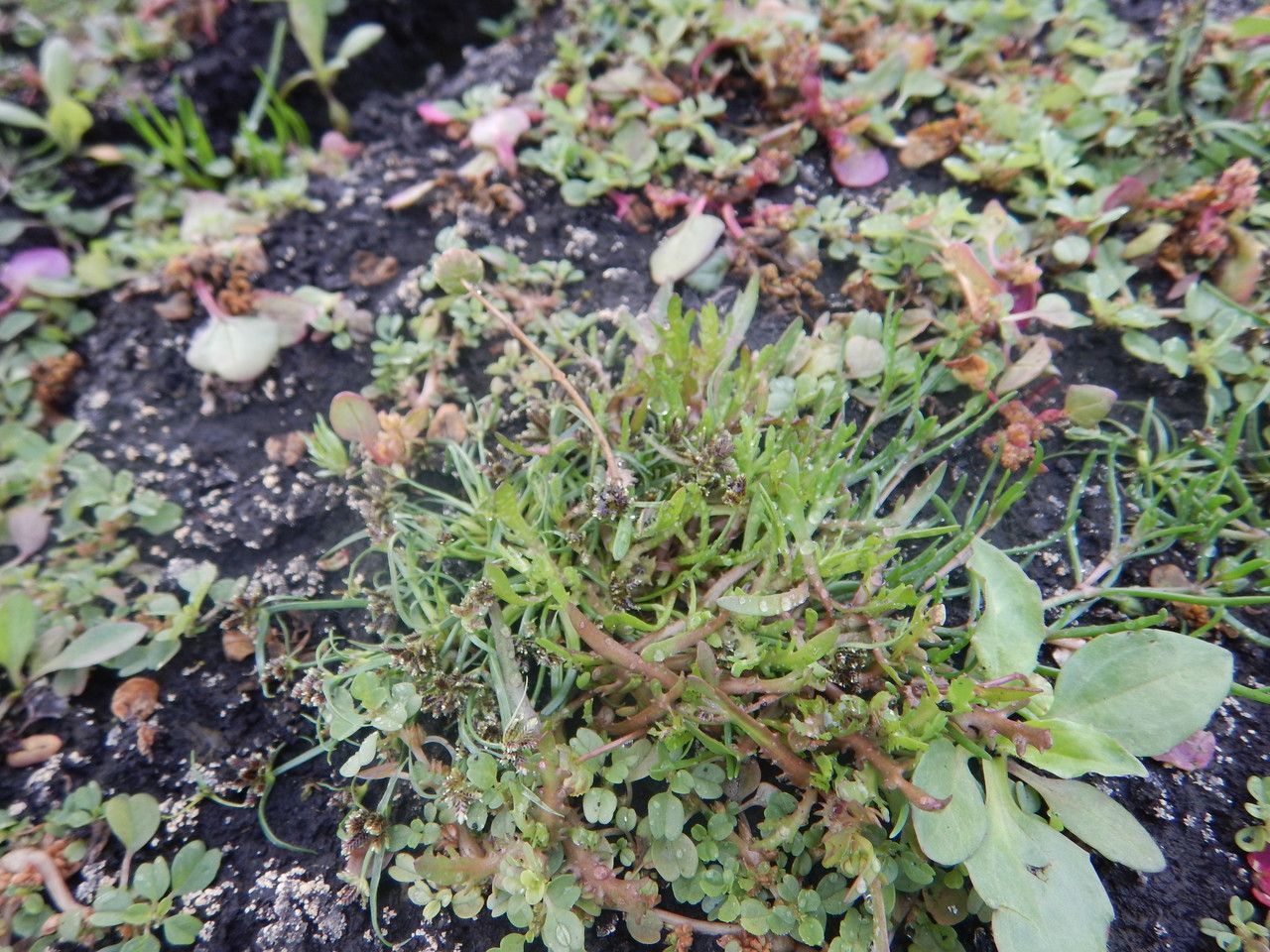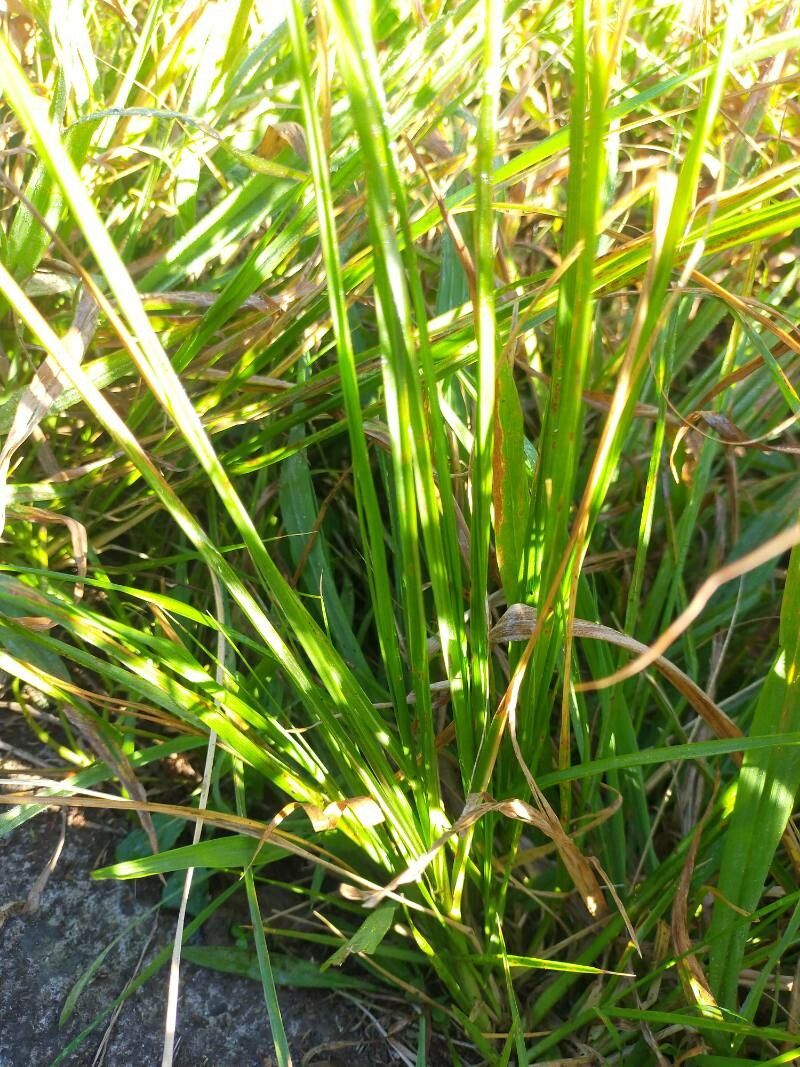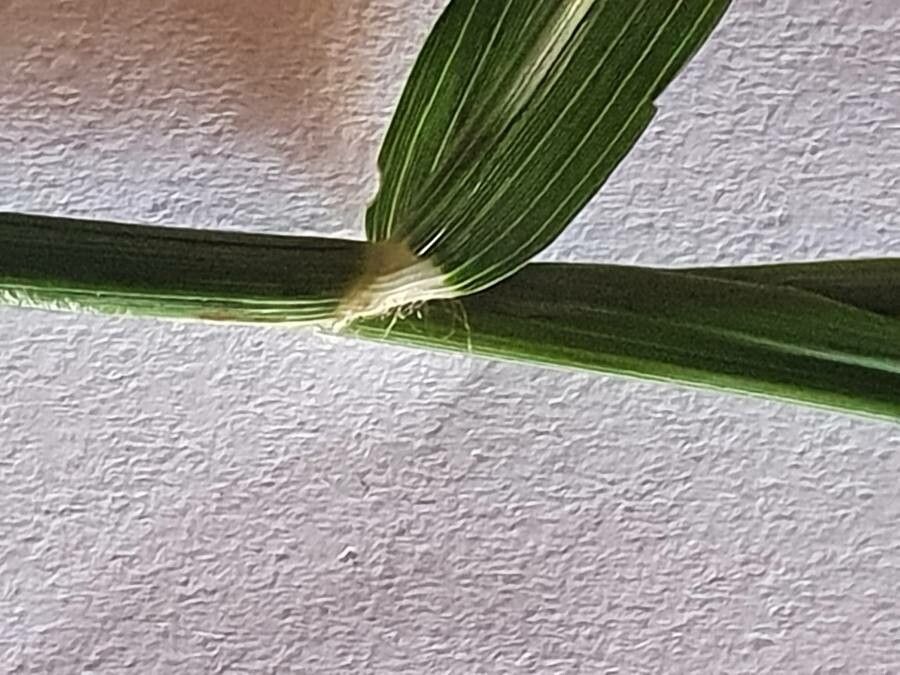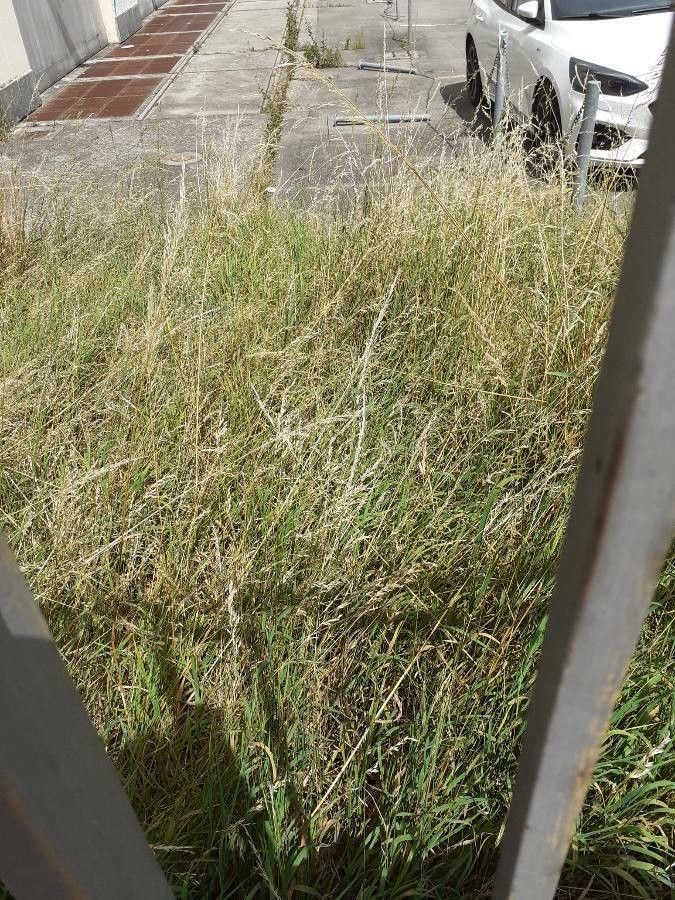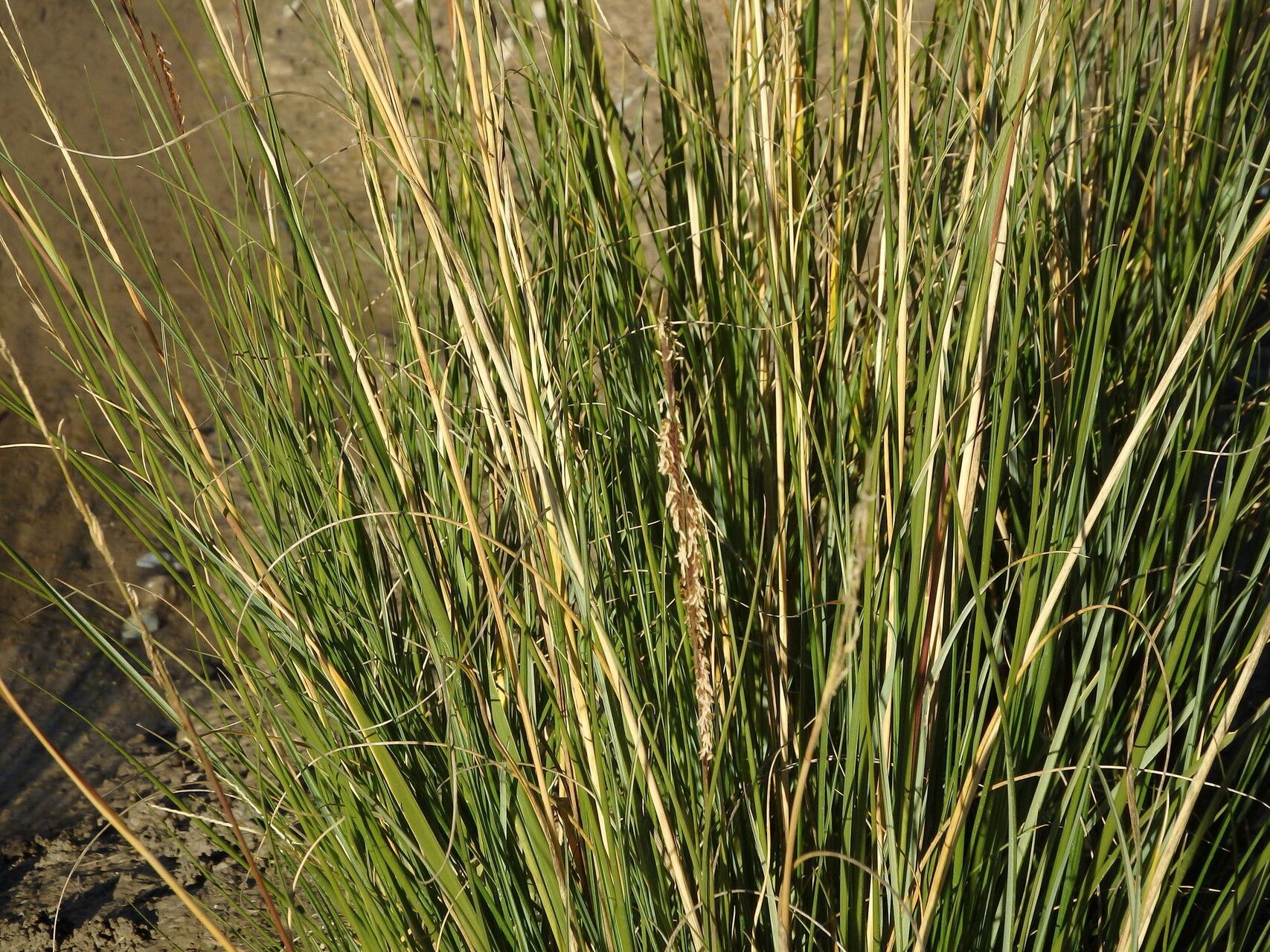
Sporobolus montevidensis is a species of grass known by the common name denseflower cordgrass. Although reclassified after a taxonomic revision in 2014, it may still be referred to as Spartina densiflora by some users. It is native to the coastline of southern South America, where it is a resident of salt marshes. It is also known on the west coast of the North America and parts of the Mediterranean coast as an introduced species and in some areas a noxious weed. In California it is a troublesome invasive species of marshes in San Francisco Bay and in Humboldt Bay, where it was introduced during the 19th century from Chile in ballast.
Dense-flowered cord grass has strong disease resistance and is generally not susceptible to illnesses. In terms of maintenance, this plant is fairly low-maintenance. When grown outdoors it needs little watering, and larger specimens typically do not require pruning. Smaller plants, however, should be trimmed after they finish blooming. Dense-flowered cord grass is suitable for anyone with an outdoor area, such as a garden or a deck, and does not call for extensive care experience.
How to keep Sporobolus Montevidensis.
Light
The perennial herbaceous plant, dense-flowered cord grass, is native to open environments and typically flourishes in meadows and grasslands. Even though it predominantly prefers full sun exposure, it is equally capable of thriving under partial sun.
Temperature
Dense-flowered cord grass has a high adaptability to heat, withstanding elevated temperatures and wider temperature fluctuations. Adequate watering and suitable shading are crucial during hotter periods to avert sun damage. On the other hand, Dense-flowered cord grass is less tolerant to colder climates. Although it can endure a certain level of coldness, intensely cold conditions can result in frost injury.
Fertilizer
Extra nutrients are needed for Dense-flowered cord grass to encourage robust new growth. By adding compost around the plant's base in spring, it can be provided with the essential nutrition it requires. The process of fertilization promotes dynamic growth and also aids the plant in becoming more resistant to diseases and pests.
Botanical profile.
- Plant Type
- Grass
- Life Cycle
- Perennial
- Genus
- Sporobolus
- Family
- Poaceae
- Hardiness Zone
- 5-9
- Mature Height
- 30 cm to 76 cm
- Mature Spread
- 20 cm to 40 cm
- Leaf Color
- Light Green, Olive Drab
- Leaf Type
- Evergreen
- Flower Size
- 0.20 cm to 0.51 cm
- Bloom Time
- Summer
- Planting Time
- Spring, Summer, Autumn
- Harvest Time
- Late summer, Early fall, Mid fall
- Native Area
- Uruguay, Chile, Argentina, Venezuela, Brazil