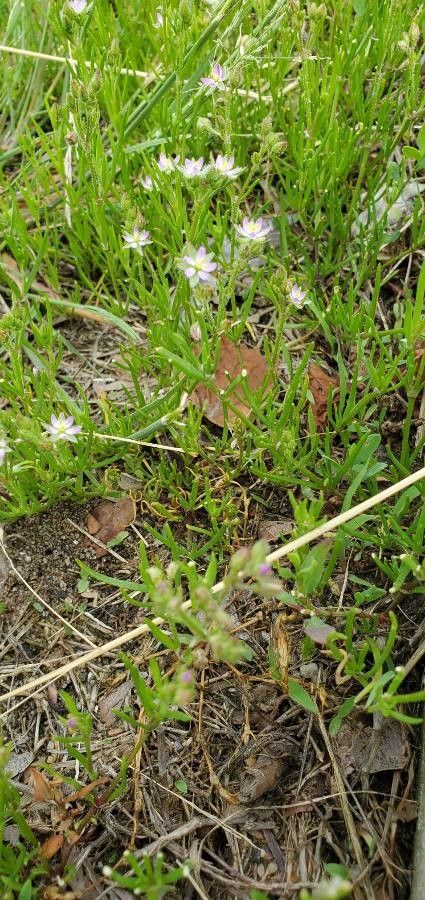
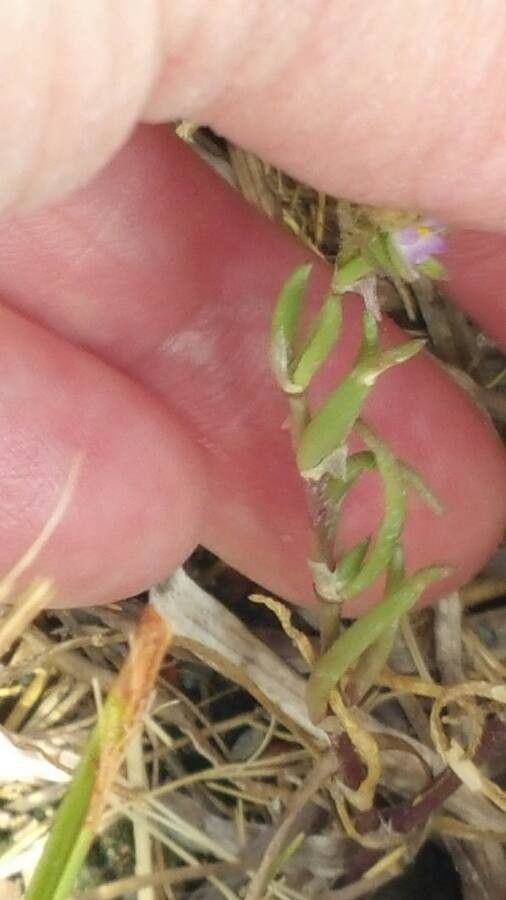
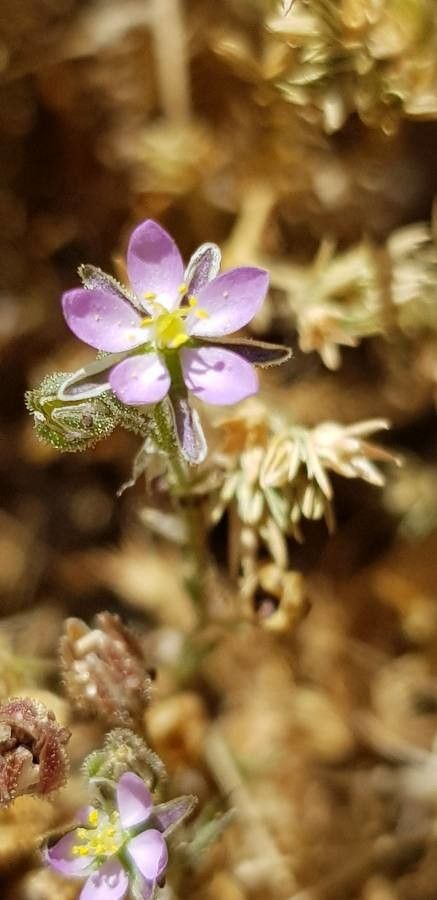
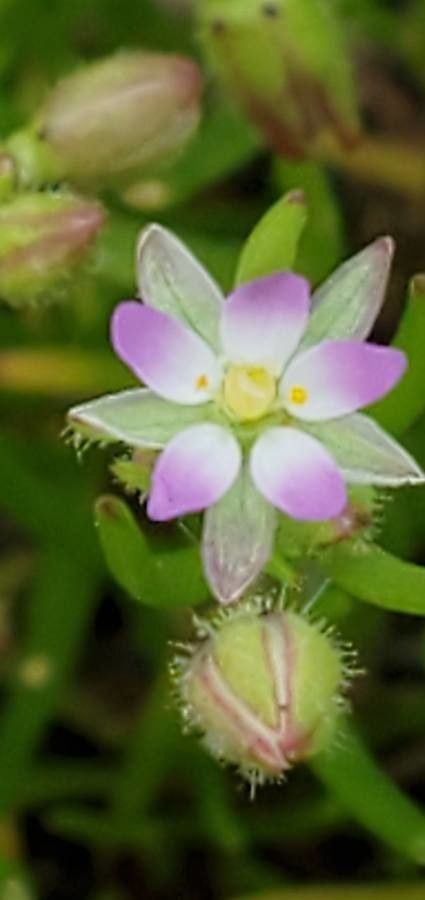
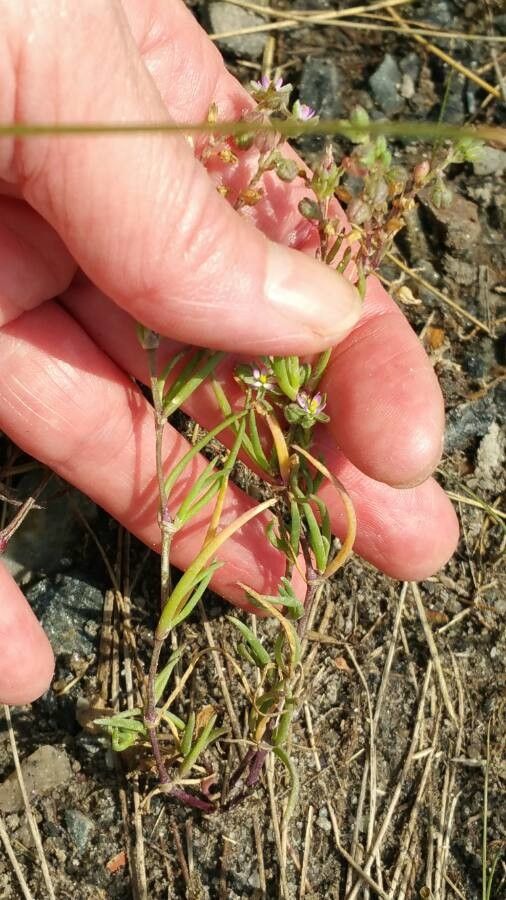
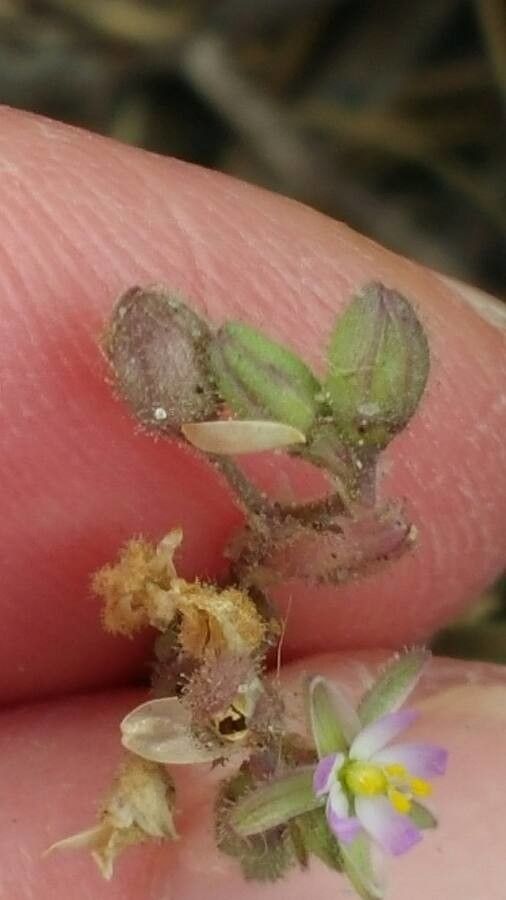
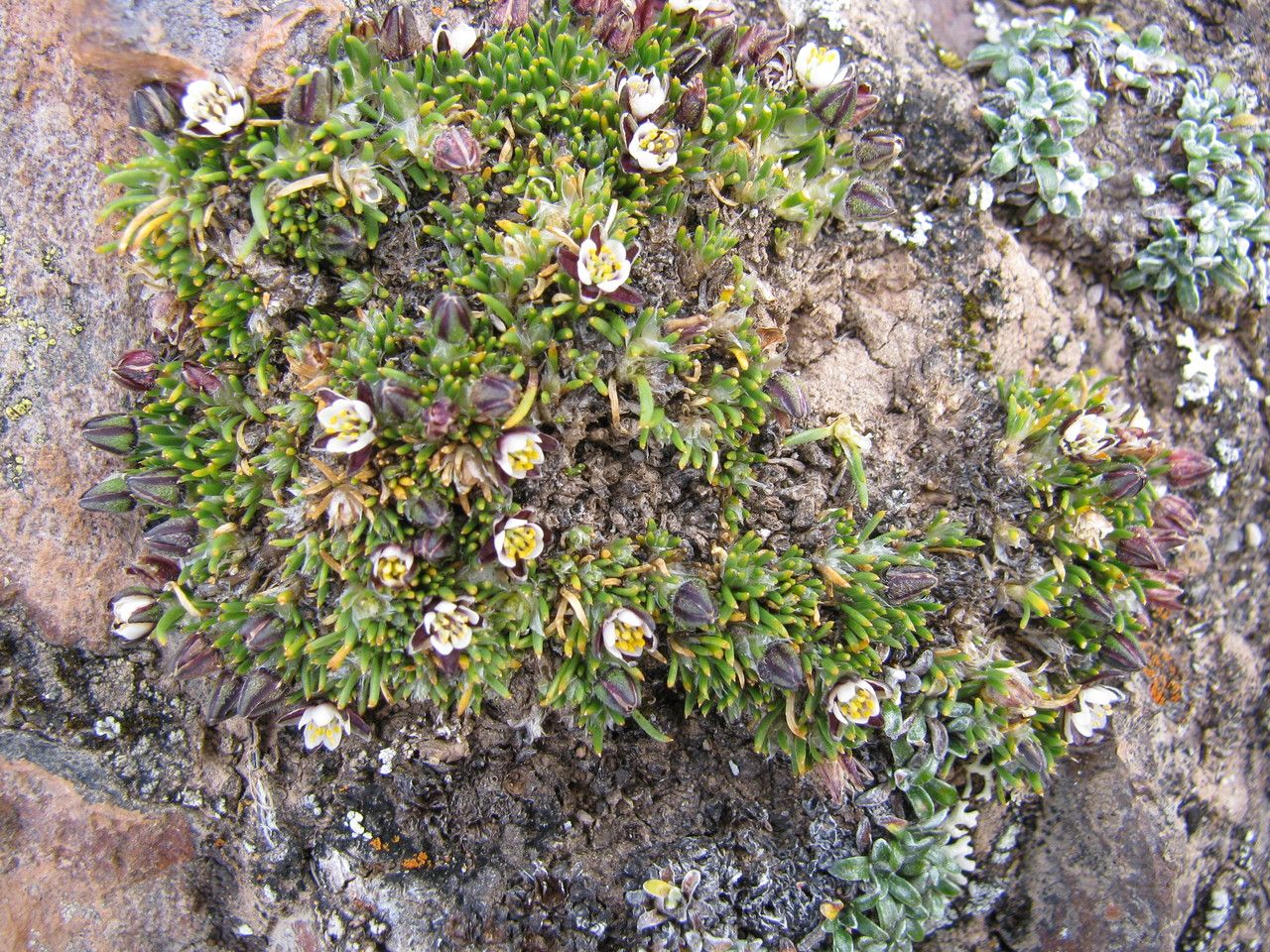
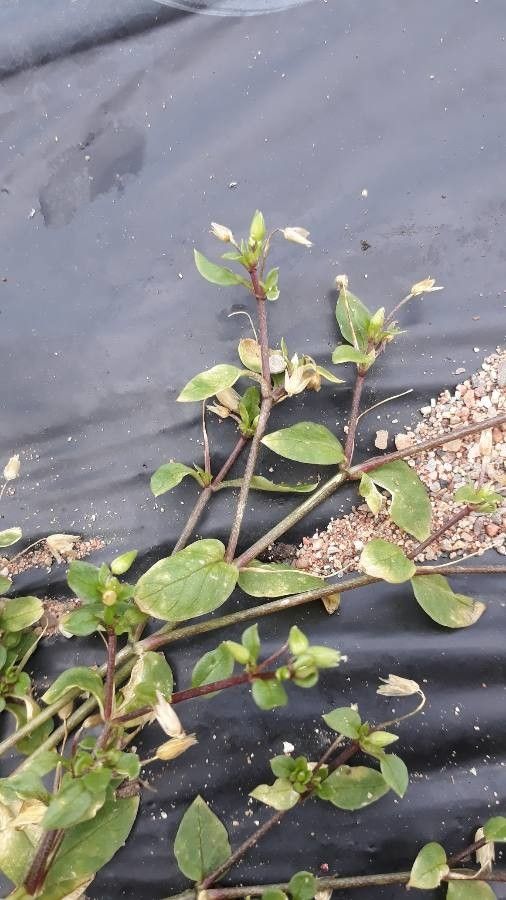
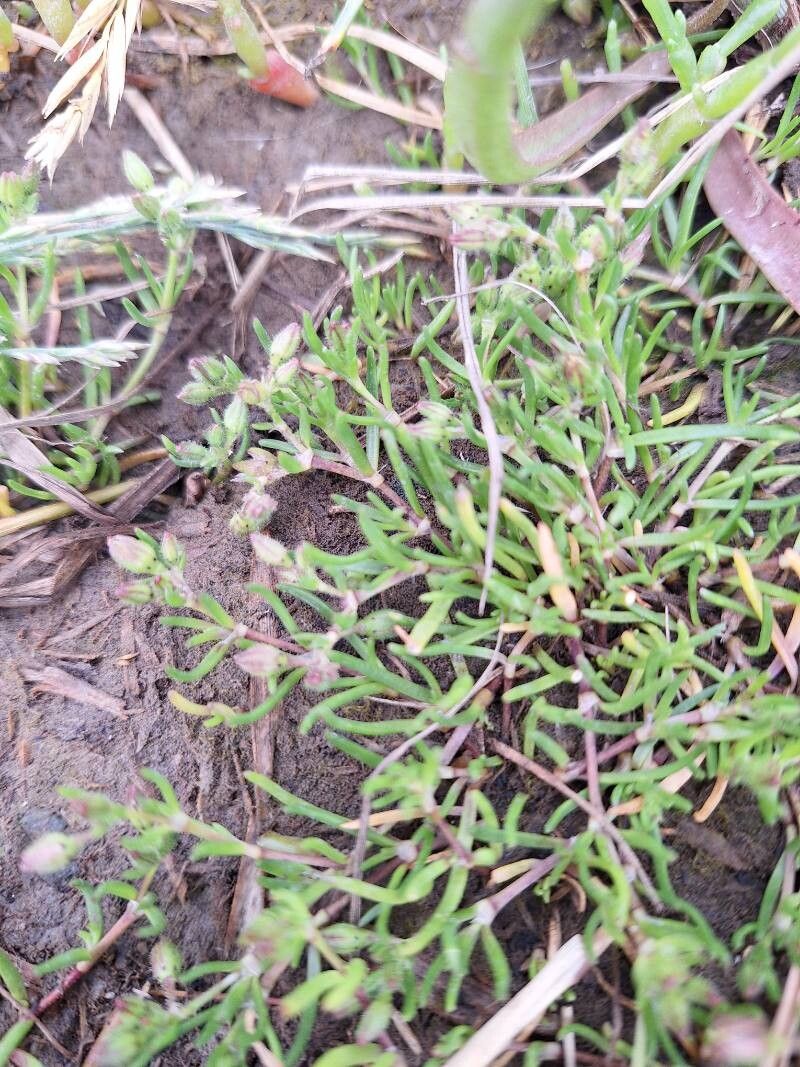
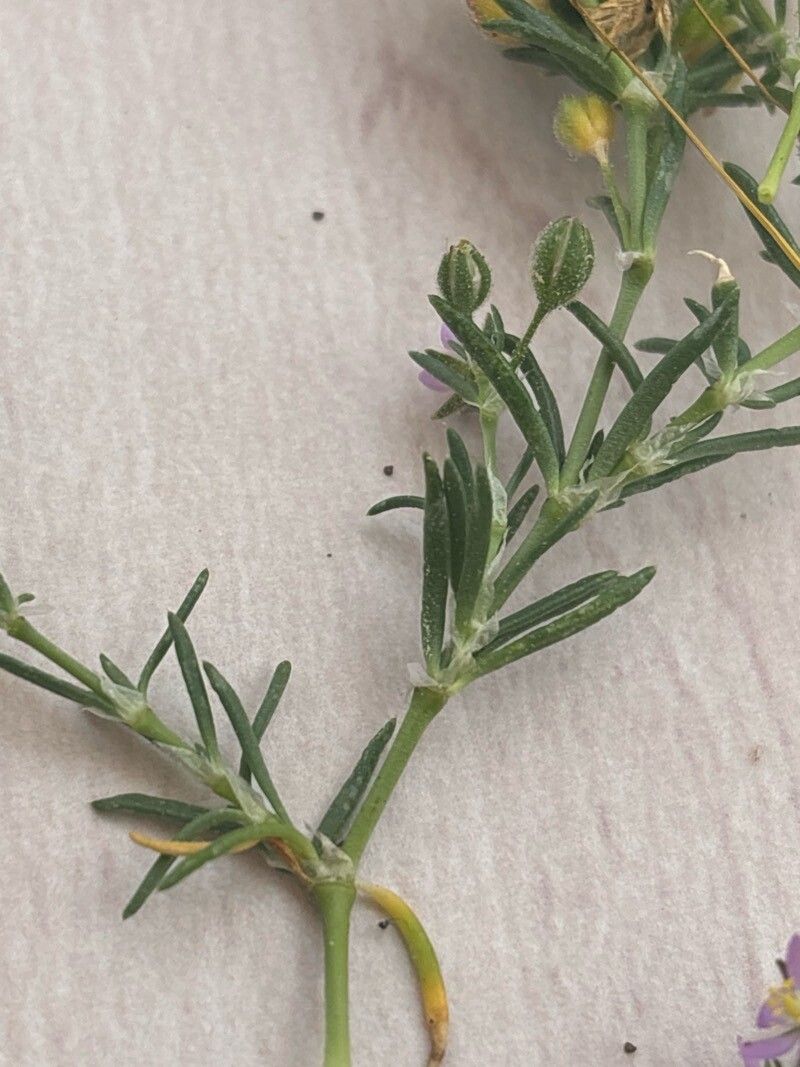
Spergularia marina, also called Spergularia salina, is a species of flowering plant in the family Caryophyllaceae (the pink family). It is known as salt sandspurry or lesser sea-spurrey. S. marina is a sprawling annual or sometimes perennial, with stems up to 35 cm (14 in) long. Like other sea-spurrey species, its flowers have white to pink petals, with sepals usually longer than the petals, at 2.5–4 mm (0.1–0.2 in). Plants are salt-tolerant, being found by the sea and in saline areas inland.
Lesser sea spurrey shows strong resistance to disease and is generally unlikely to develop illnesses. Still, it can be affected by pests and diseases found nearby. Such infections are typically mild. Regarding upkeep, this plant has moderate maintenance needs. It should be pruned on a regular basis to preserve a neat appearance and healthy growth. Applying fertilizer can also encourage flowering. Lesser sea spurrey is appropriate for anyone with an outdoor area, like a garden or patio, and does not demand extensive gardening experience. When kept indoors, it may need more attentive care.
How to keep Spergularia Salina.
Light
Lesser sea spurrey originates from bright, open habitats where it flourishes under full sun. It can endure partial sun but favors direct sunlight for ideal growth. This plant, which is an annual and biennial, is renowned for its preference for sunny conditions.
Temperature
The Lesser sea spurrey can acclimate to a substantial variety of temperature conditions, yet its spread can still be constrained by assorted combinations of water and heat factors. It flourishes optimally in hot climates throughout the summer accompanied by sufficient rainfall or hydration. Extended spells of overcast and wet weather, along with extended periods of high temperatures, can heighten the probability of the Lesser sea spurrey perishing. During the winter, ensuring suitable safeguards against the cold enhances the plant's chances of survival.
Fertilizer
Regular, mild applications of fertilizer can aid in the robust growth of Lesser sea spurrey's leaves. It's advisable to fertilize Lesser sea spurrey roughly every month throughout the summer. Nitrogen is important for leaf development, and providing nitrogen-rich additives assists Lesser sea spurrey in flourishing.
Botanical profile.
- Plant Type
- Herb
- Life Cycle
- Annual, Biennial, Perennial
- Genus
- Spergularia
- Family
- Caryophyllaceae
- Hardiness Zone
- 5-9
- Mature Height
- 5 cm to 20 cm
- Mature Spread
- 10 cm to 30 cm
- Leaf Color
- Green
- Leaf Type
- Evergreen
- Flower Color
- Pink, White
- Flower Size
- 0.76 cm
- Bloom Time
- Mid spring, Late spring, Early summer, Mid summer
- Planting Time
- Spring, Summer, Autumn
- Harvest Time
- Summer, Early fall
- Native Area
- Libya, Egypt, Turkey, Austria, Sweden, United Arab Emirates, Slovakia, Montenegro, Croatia, Slovenia, Morocco, Yemen, Belarus, Uzbekistan, Russia, Iraq, Germany, Iceland, Estonia, Romania, Latvia, South Korea, Belgium, Portugal, Netherlands, Saudi Arabia, France, Tajikistan, Tunisia, Czech Republic, Mauritania, Cyprus, Bulgaria, Poland, Armenia, Greece, Ukraine, Serbia, Chad, Lebanon, Norway, China, Afghanistan, Syria, Kyrgyzstan, Kazakhstan, Italy, Spain, Denmark, Japan, Mongolia, Finland, Iran, Albania, Ireland, United Kingdom, Hungary, Kuwait, Algeria, Azerbaijan, Turkmenistan
Other names.