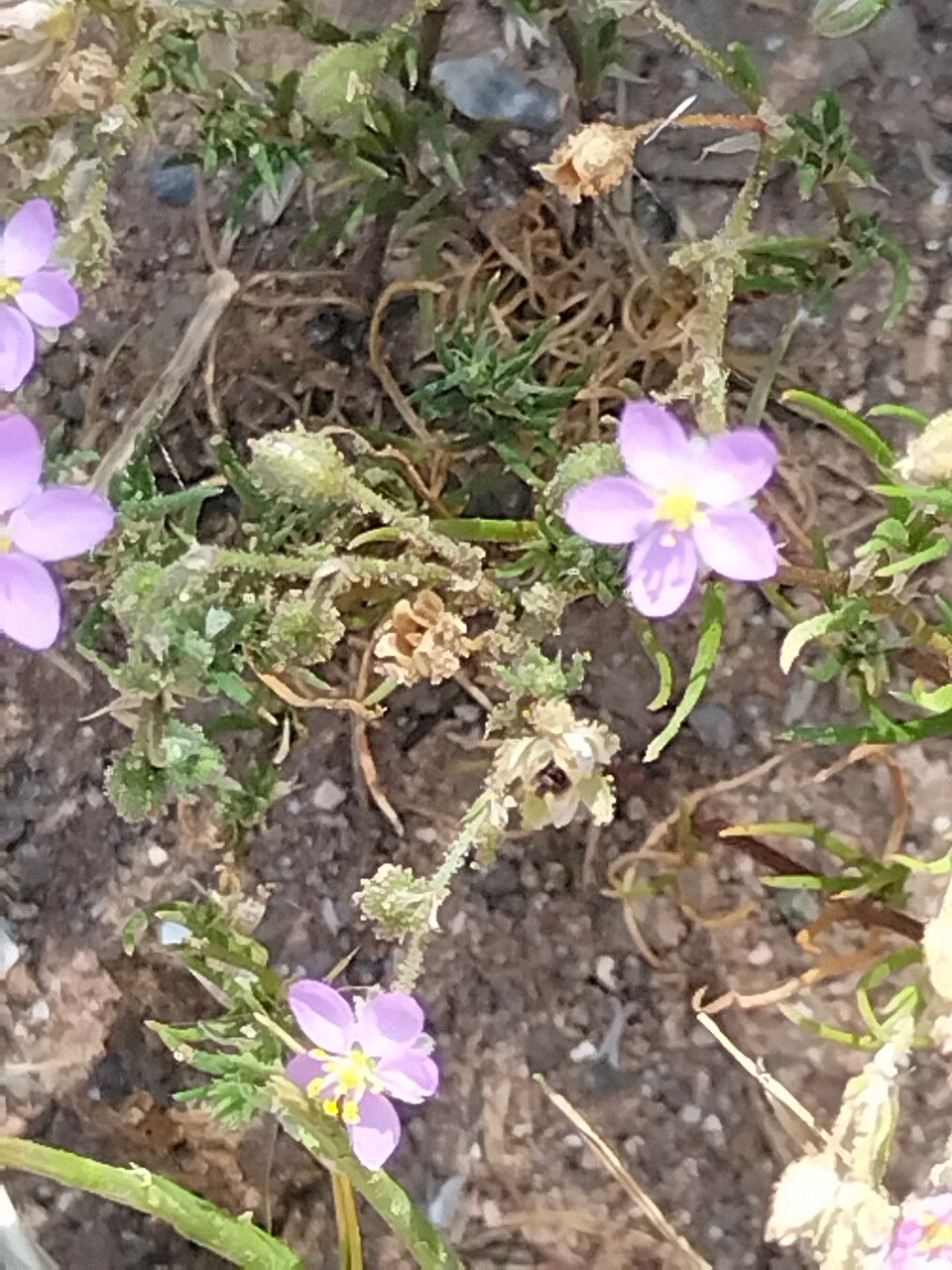
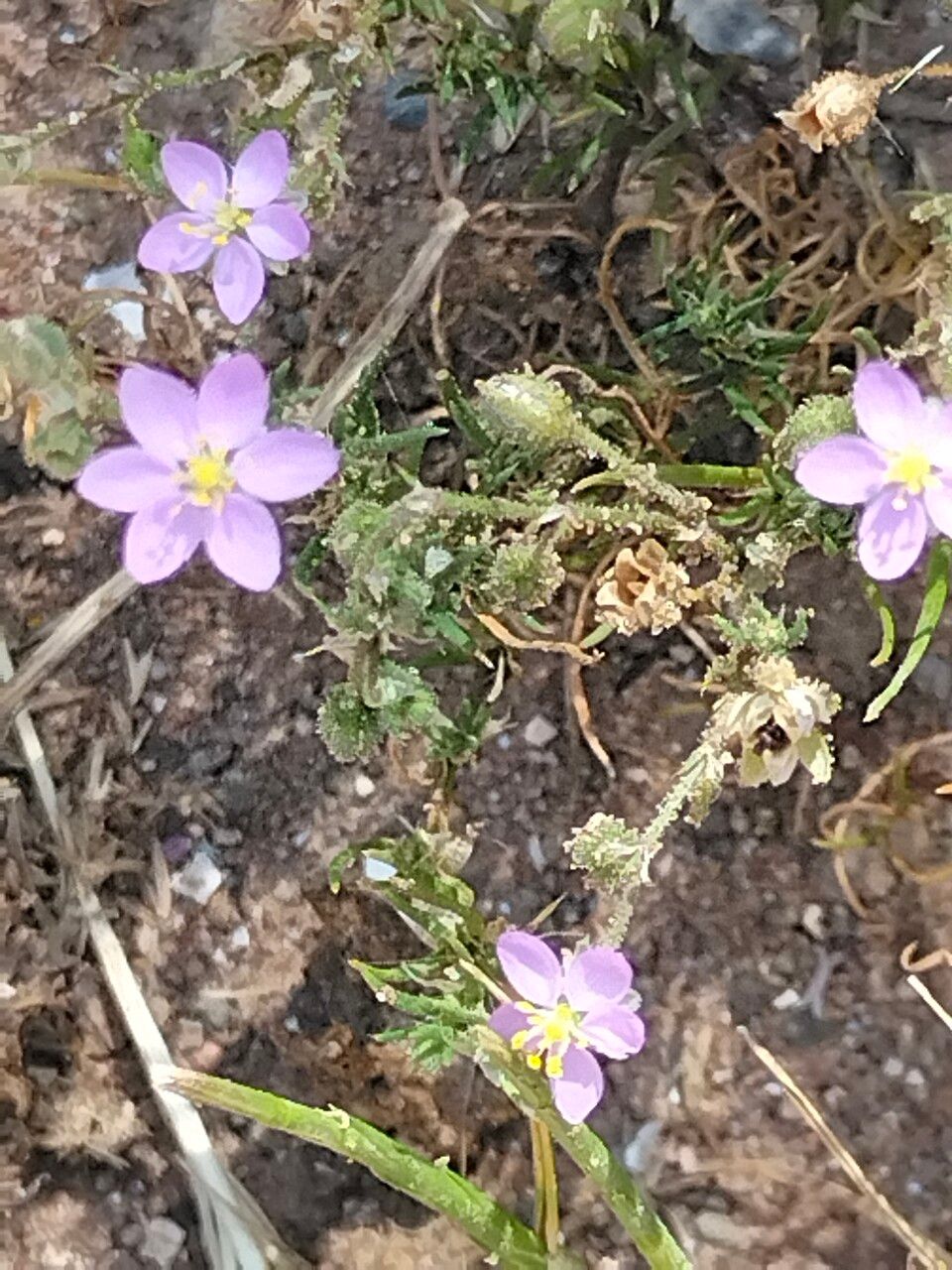
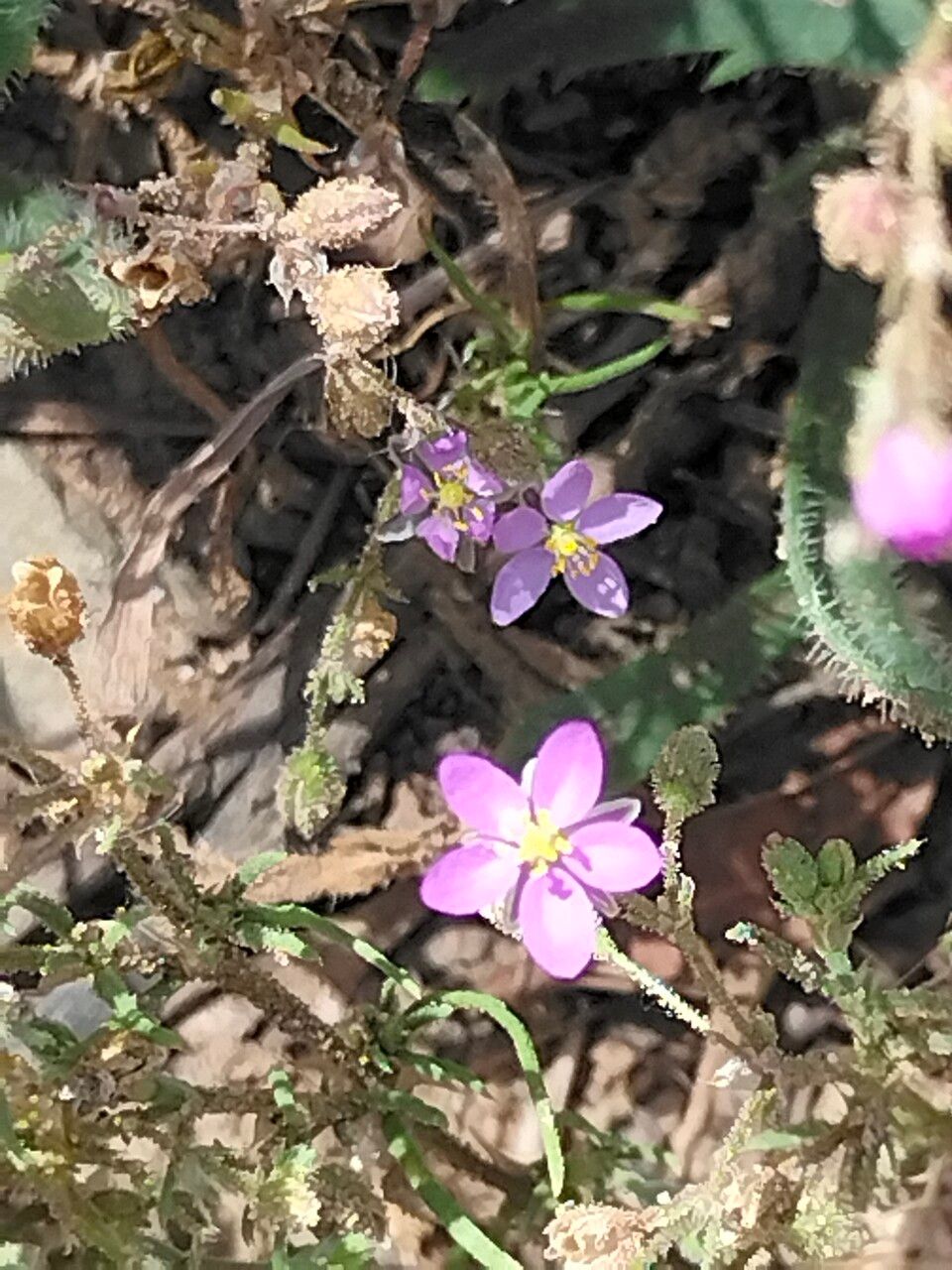
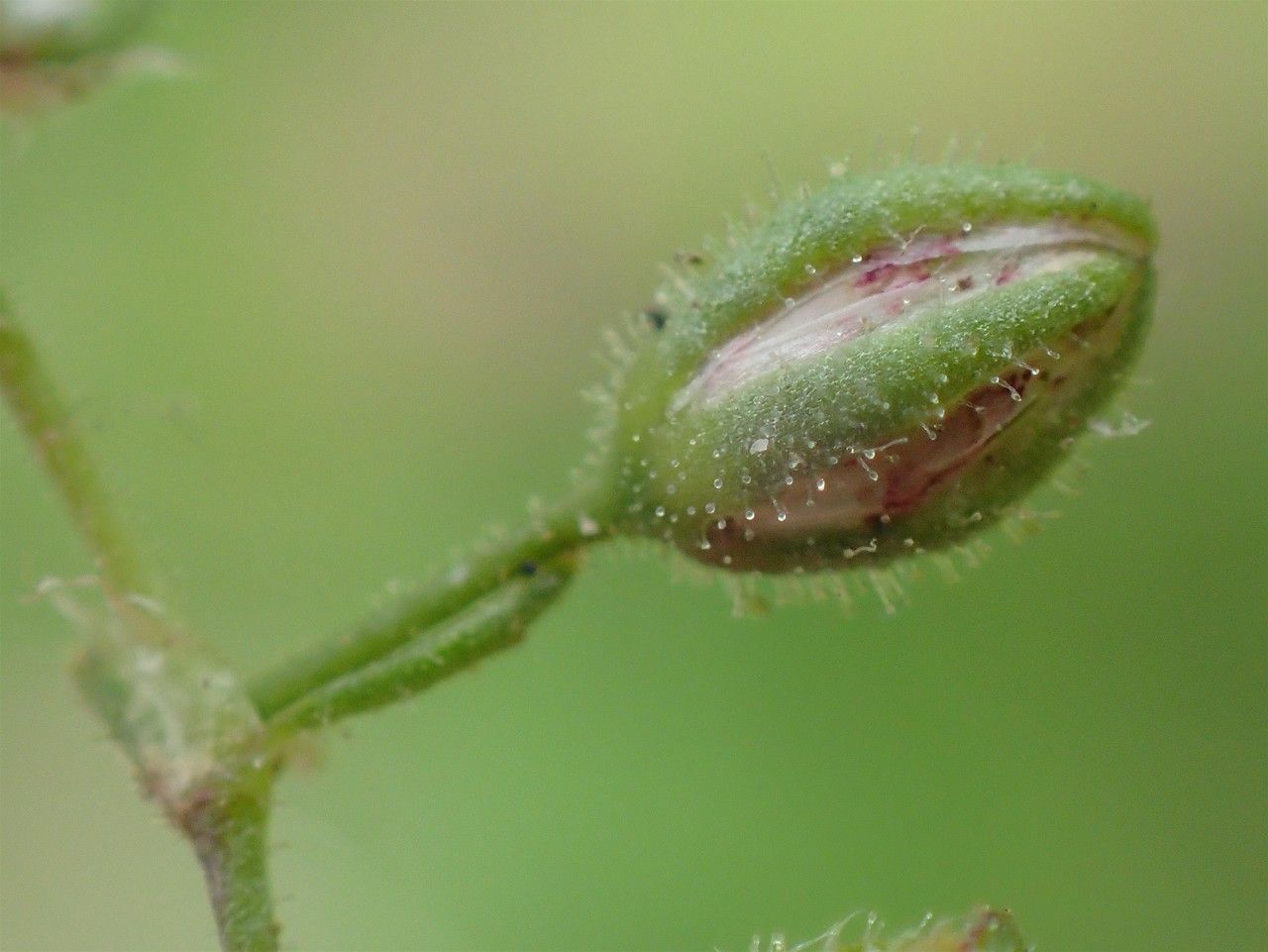
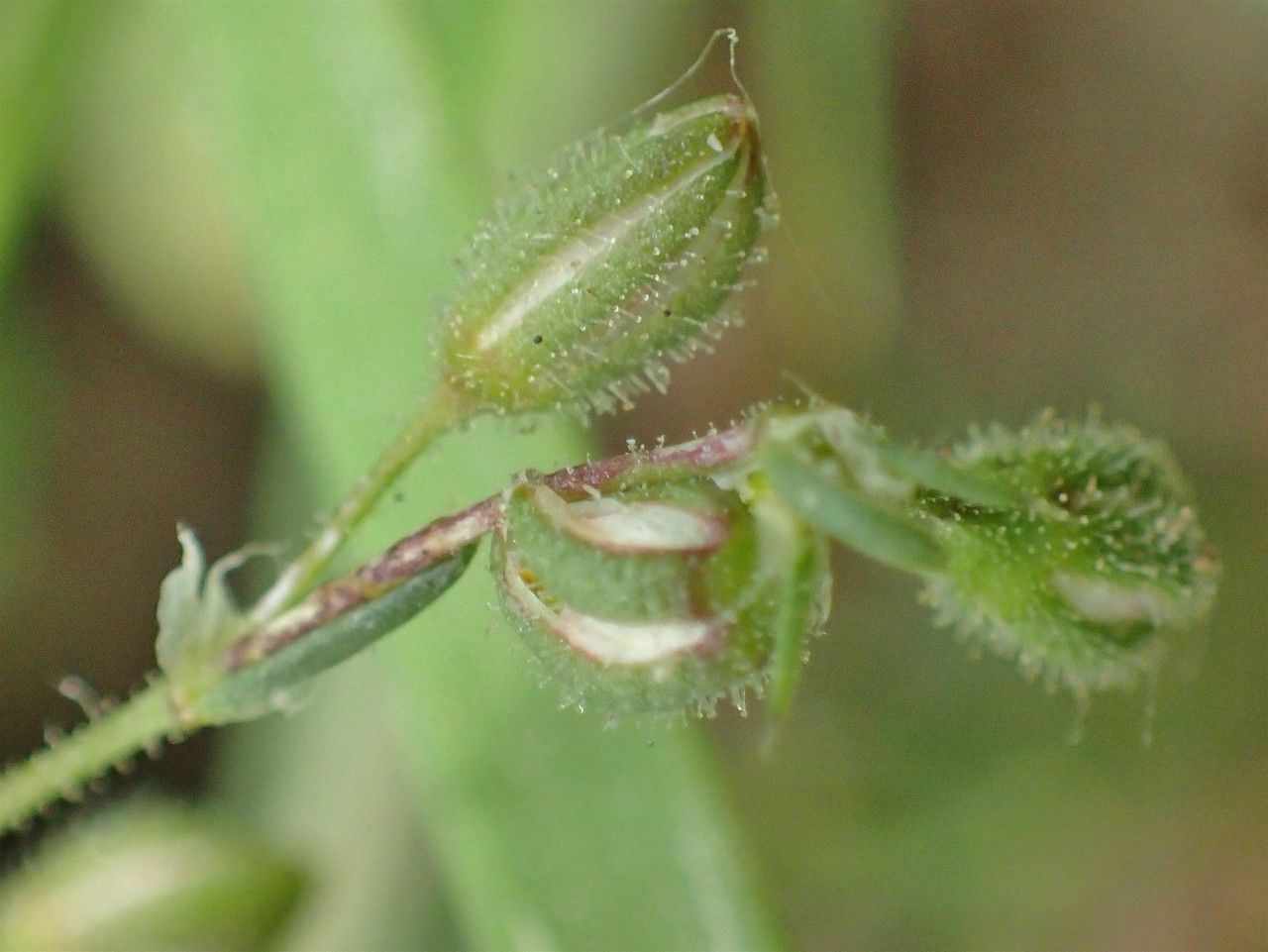
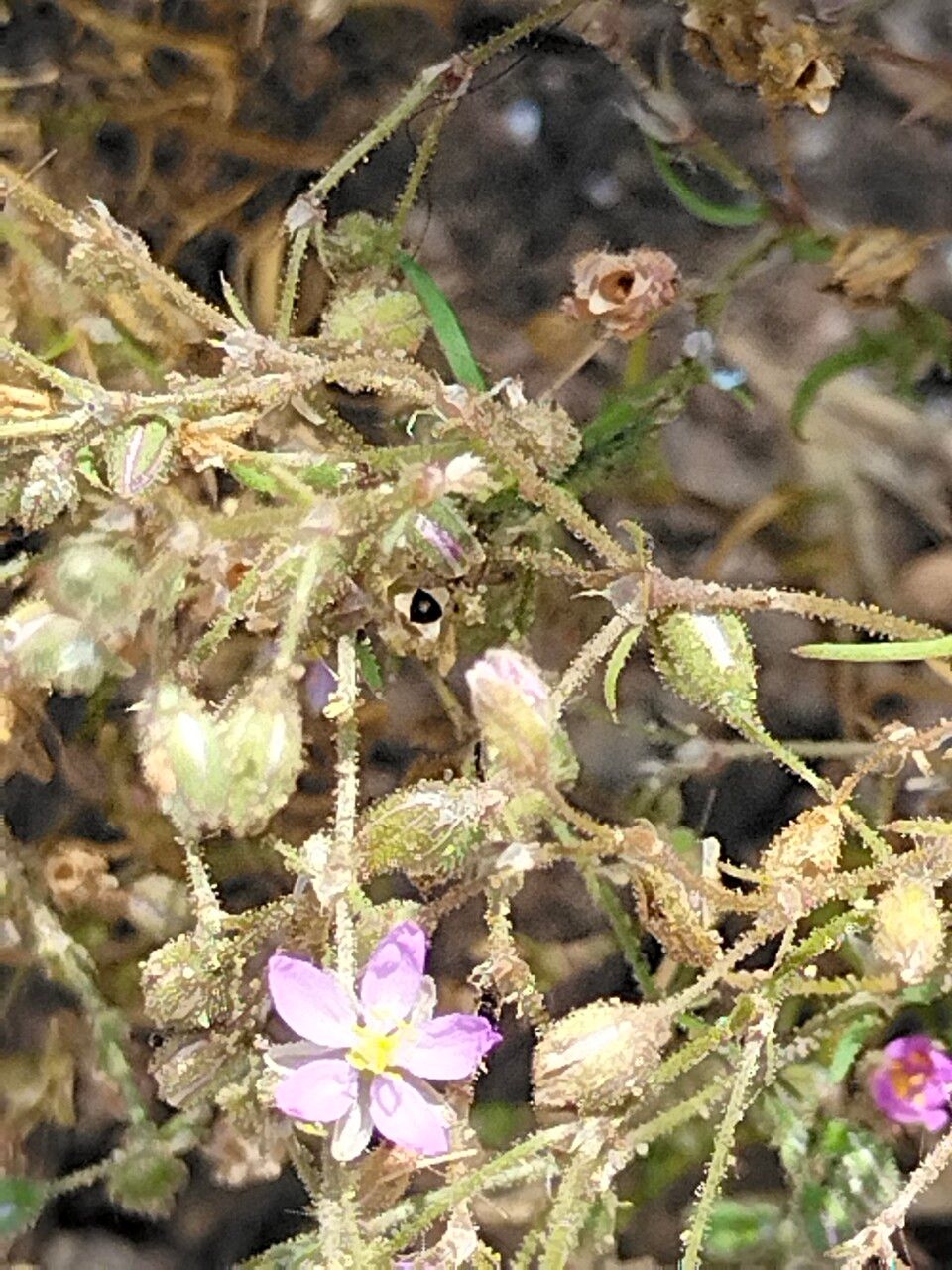
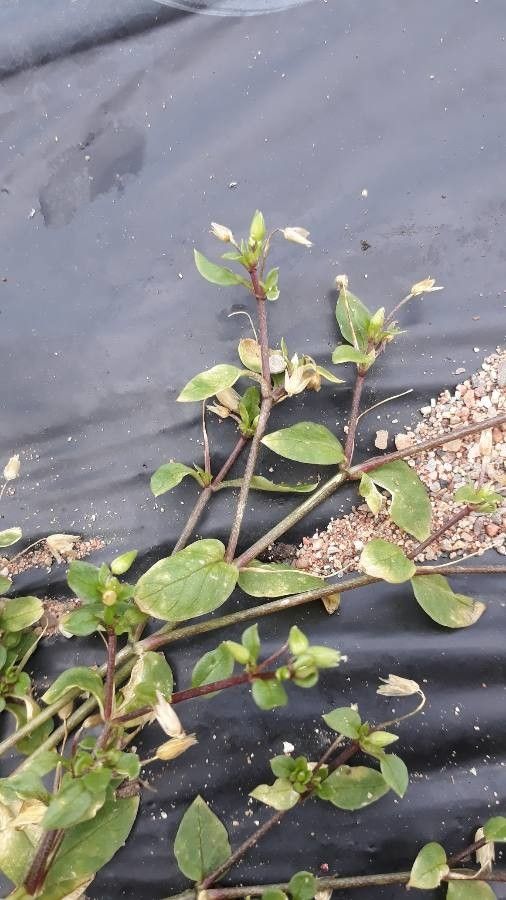
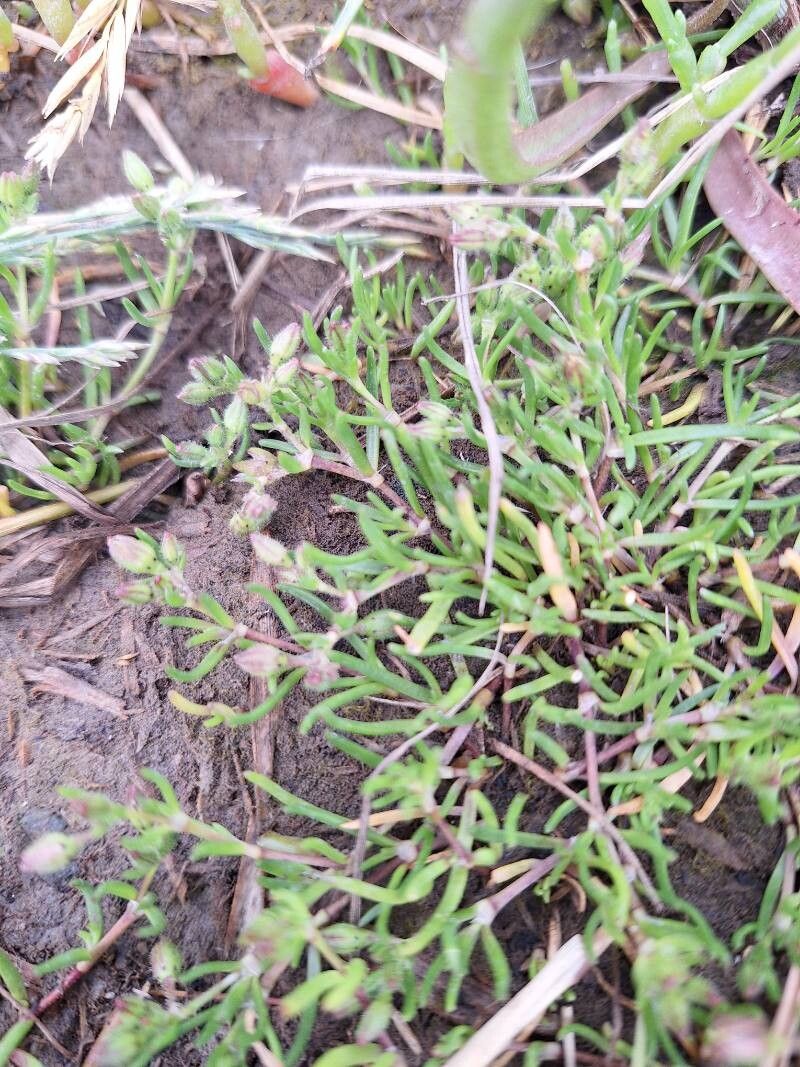
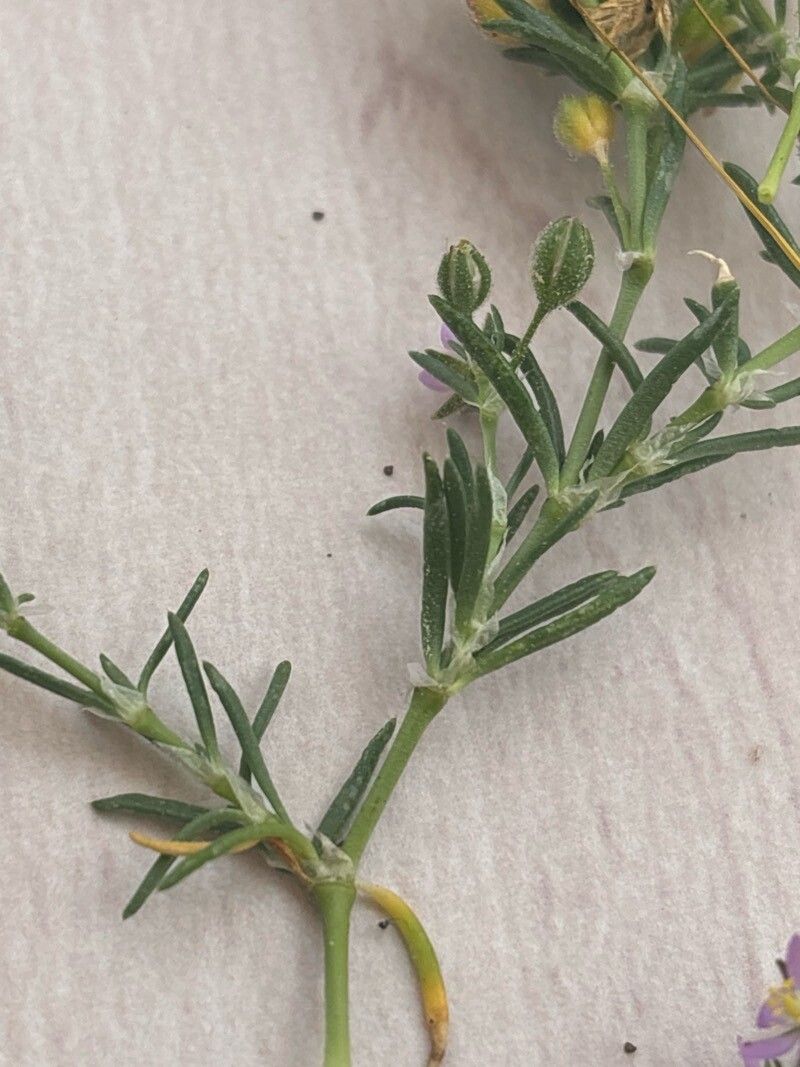
Spergularia rubra, the red sandspurry or red sand-spurrey, is a plant species in the family Caryophyllaceae. It is native to Europe, Asia and North Africa, and it is present on other continents, including North and South America and Australia, as an introduced species and in many areas a common weed. It grows in a wide variety of habitat types. It is an annual or perennial herb producing a slender, glandular stem up to about 25 centimeters long. It is lined with slightly fleshy linear or threadlike leaves each under 2 centimeters long. The leaves may be tipped with hard points or spines, and they are accompanied by shiny white lance-shaped stipules. Flowers occur in the leaf axils and at the tips of the stems. They have hairy, glandular sepals and five round-oval pink petals.
Red sandspurry is fairly disease-resistant and is not often affected by illness. However, it can be vulnerable to pests and diseases present in its surroundings. Such infections tend to be mild. In terms of care, the plant needs moderate maintenance. Regular pruning is necessary to keep a tidy appearance and support healthy growth. Fertilizing can also encourage flowering. Red sandspurry works well for anyone with outdoor space, such as a garden or patio, and does not require extensive care experience. It may need more attention when grown indoors.
How to keep Spergularia Rubra.
Light
Red sandspurry does best with strong sunlight, similar to its native surroundings. Its health and growth largely depend on receiving plenty of sun. Although it can tolerate lower light levels, too little light may inhibit growth, and too much light can scorch the leaves.
Water
Native to temperate regions, red sandspurry thrives with moderate moisture levels. It needs weekly watering to prevent dryness but requires well-draining soil to avoid root rot. Typically found in meadows and along roadsides, this plant benefits from occasional rainfall to help meet its hydration needs.
Humidity
This plant will thrive in moderate humidity, which is probably the level in your home. However, misting it a few times a week can be very beneficial. Make sure the room has good ventilation.
Temperature
Red sandspurry occurs naturally in habitats with temperatures between 68 and 95°F (20 to 35℃). It grows best under those conditions. Take care to adjust the ambient temperature to accommodate seasonal changes, especially during colder periods.
Fertilizer
Red sandspurry benefits from regular, dilute fertilization to encourage healthy foliage. Apply fertilizer about once a month during the summer. Nitrogen is especially important for leaf growth, and providing nitrogen-rich sources helps Red sandspurry thrive.
Pruning
The red sandspurry is characterized by its small, star-like flowers on slender stems. To maintain its health and appearance, it's important to prune effectively. This involves removing spent blooms (deadheading) and trimming any leggy growth. The best time to do this is from early to late spring, as it promotes strong growth and boosts both flower production and the overall appearance of the plant.
Botanical profile.
- Plant Type
- Herb
- Life Cycle
- Annual, Perennial, Biennial
- Genus
- Spergularia
- Family
- Caryophyllaceae
- Hardiness Zone
- 2
- Mature Height
- 10 cm to 30 cm
- Mature Spread
- 10 cm to 30 cm
- Leaf Color
- Green
- Leaf Type
- Semi-evergreen
- Flower Color
- Pink
- Flower Size
- 0.51 cm to 0.76 cm
- Bloom Time
- Mid spring, Late spring, Summer, Fall
- Planting Time
- Spring, Autumn
- Harvest Time
- Late spring, Summer, Fall, Early winter
- Native Area
- Libya, Egypt, India, Turkey, Sweden, Austria, Slovakia, Montenegro, Eritrea, Pakistan, Croatia, Slovenia, Belarus, Russia, Germany, Estonia, Ethiopia, Romania, Latvia, Belgium, Portugal, Netherlands, Saudi Arabia, France, Czech Republic, Sudan, Bulgaria, Armenia, Poland, Greece, Ukraine, Serbia, China, Lithuania, Norway, Kyrgyzstan, Kazakhstan, Italy, Spain, Switzerland, Denmark, Japan, Finland, Iran, Albania, Ireland, United Kingdom, Hungary, Algeria, Azerbaijan, Turkmenistan
Other names.
Reader questions.
How should I water my Red sandspurry?
To water Red sandspurry, you have several options. You can use a garden hose with a spray nozzle, a watering can, or any other common watering tool. This plant is not too particular about the type of water it receives, so rainwater, tap water, or filtered water will all work. It is advisable to avoid watering from above as this can harm the leaves and flowers and potentially lead to disease. Using a drip irrigation system is often the best method for watering Red sandspurry as it provides even and direct water to the soil. If you have a container-grown Red sandspurry, you can use a cup, watering can, or tap water to apply water directly to the soil.
What are the sunlight requirements for Red sandspurry?
Red sandspurry (Spergularia rubra) thrives in conditions where it receives substantial sun exposure, ideally above 6 hours of sunlight daily, imitating its natural habitat's conditions. Ensuring ample sunshine is crucial for its wellness and development. While it can tolerate some shade, too little light may impede its growth, and excessive sunlight can cause leaf scorching. It's recommended to observe the movement of sunlight in your garden to find spots that offer the right balance of light and shade, promoting the plant's health.
What is the native environment of Red Sandspurry?
Red sandspurry, scientifically known as Spergularia rubra, is native to environments with temperatures ranging from 68 to 95°F (20 to 35°C). It thrives best within this temperature range, and those cultivating it should be mindful of adjusting its surrounding temperature to meet these conditions, especially during seasonal changes. Despite its high cold tolerance, ensuring the soil remains moist before the first freeze of autumn can help it withstand winter and early spring conditions.
What should I do if I give my Red sandspurry too much or too little water?
To prevent underwatering, simply water the Red sandspurry plant on a more regular basis when you notice it lacks moisture. Overwatering, on the other hand, can be a serious problem if not caught early. It can lead to diseases and decline, potentially causing the plant's death. To avoid this, choose a suitable growing location with ample sunlight that helps dry the soil and ensures good drainage to prevent waterlogging. If you have overwatered a potted Red sandspurry, consider transferring it to a new pot with better drainage. Use loose soils and an efficient draining pot when repotting.
How do I provide adequate lighting for indoor Red sandspurry plants?
For indoor Red sandspurry plants, artificial lighting is essential when natural sunlight is inadequate, especially in winter or less sunny spaces. LEDs are preferred for their ability to offer specific wavelengths needed for plant growth. For full sun plants, 30-50W/sq ft is recommended, partial sun plants require 20-30W/sq ft, and full shade plants need 10-20W/sq ft. Position the light source 12-36 inches above the plant to mimic natural sunlight and ensure 8-12 hours of light per day, adjusting to mimic natural daylight hours specific to the plant species.
Is Red Sandspurry cold-tolerant?
Yes, Red sandspurry is highly cold-tolerant and does not require additional frost protection measures during winter. However, it's important to adequately water the plant before the first freeze in autumn to ensure the soil stays moist, aiding in its survival through colder periods. It's worth noting that this plant can withstand winter temperatures up to -40°C, a testament to its impressive cold tolerance.
How frequently should I water my Red sandspurry?
Red sandspurry needs regular watering throughout the growing season. In the spring, water once per week. As the season gets warmer, increase watering to two to three times per week. However, exceeding this rate can harm your Red sandspurry. Regardless of watering frequency, make sure the soil remains moist but not wet. Watering Red sandspurry in a pot is different. The soil in a pot can dry out faster, so water container-grown plants a few times per week, compared to just once per week for in-ground plants.
What symptoms indicate a Red sandspurry plant is receiving insufficient sunlight?
When Red sandspurry is deprived of sufficient sunlight, particularly when grown indoors, several symptoms can manifest. These include smaller new leaves, leggy or sparse growth, faster leaf drop, slower or halted growth, and lighter-colored or pale new leaves indicating a lack of chlorophyll and essential nutrients. Addressing these symptoms promptly by adjusting the light exposure can help restore plant health.
What should I do if my Red Sandspurry is exposed to low temperatures below its tolerance?
If the temperature where your Red sandspurry is growing drops below its cold tolerance threshold of -40°C, you might not notice any change during the winter, but there might be a decrease in sprouting or even no sprouting at all come springtime. In this case, it's recommended to remove any parts of the plant that have failed to sprout as a solution to rejuvenate its growth during spring.
How much water does my Red sandspurry plant need?
Determining how much water to give to your Red sandspurry can be approached in a few different ways. Some gardeners rely on testing the moisture level of the soil by feeling it, suggesting that you should water until the first six inches of soil are moist. Alternatively, you can use a fixed measurement, such as giving your Red sandspurry about two gallons of water per week, taking into account temperature and soil dryness. However, it's important to avoid overwatering if your plant needs less than two gallons per week for any reason. When growing Red sandspurry in a container, a different method is needed. You should aim to moisten all layers of dry soil, which can be checked by sticking your finger in the soil or by seeing a slight trickle of water exiting the drainage holes.
What are the symptoms and solutions for Red sandspurry exposed to excessive sunlight?
Excessive sunlight can cause symptoms like chlorosis, sunscald, leaf curling, wilting, and leaf scorching. Chlorosis leads to yellowing leaves, sunscald results in pale or necrotic patches, leaf curling and wilting are defense mechanisms against water loss, and leaf scorching appears as brown, crispy leaf edges. To avoid these issues, ensure your Red sandspurry receives the ideal amount of sunlight and consider gradual adaptation to sunnier locations, alongside using protections like shades or moving plants indoors during extreme weather.
How does Red Sandspurry react to high temperatures?
Red sandspurry is not tolerant of high temperatures. When exposed to temperatures exceeding 35°C, its growth will halt, and the plant becomes more susceptible to rot. To protect and care for the plant under such conditions, trim away any sunburned and dried-up sections. Relocating the plant to a shaded area or utilizing a shade cloth can provide protection from the midday and afternoon sun. Ensuring the plant is watered in the morning and evening will also help keep the soil moist, offering further support for the plant's health.