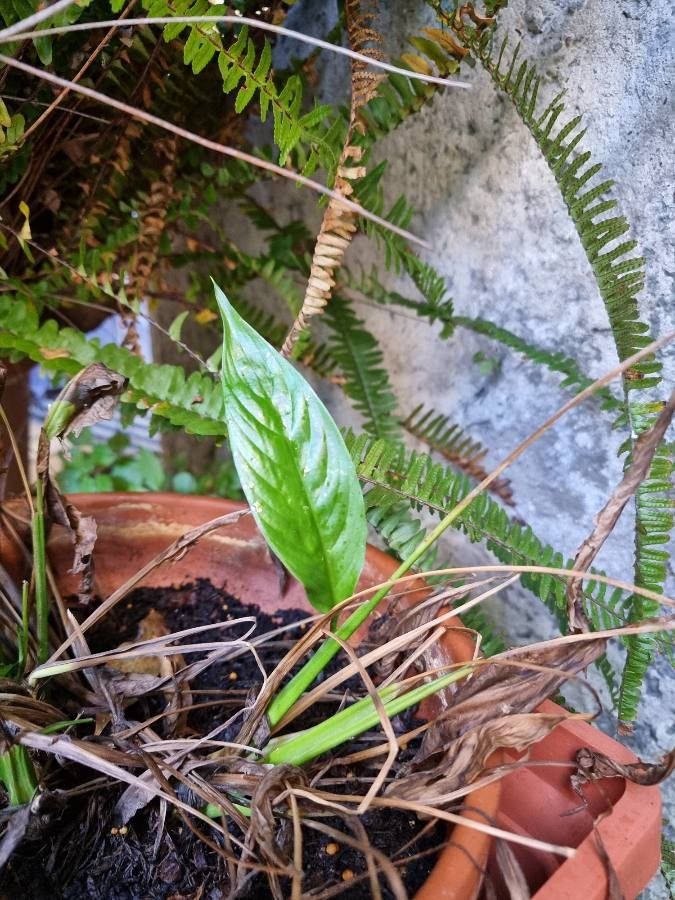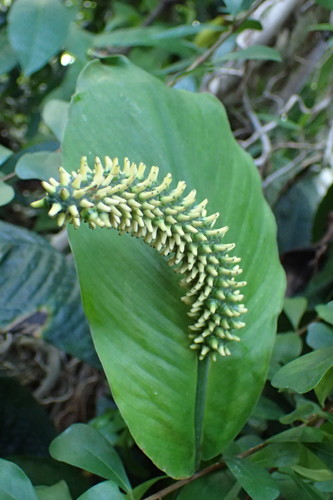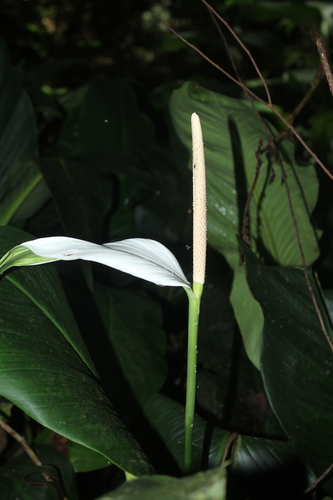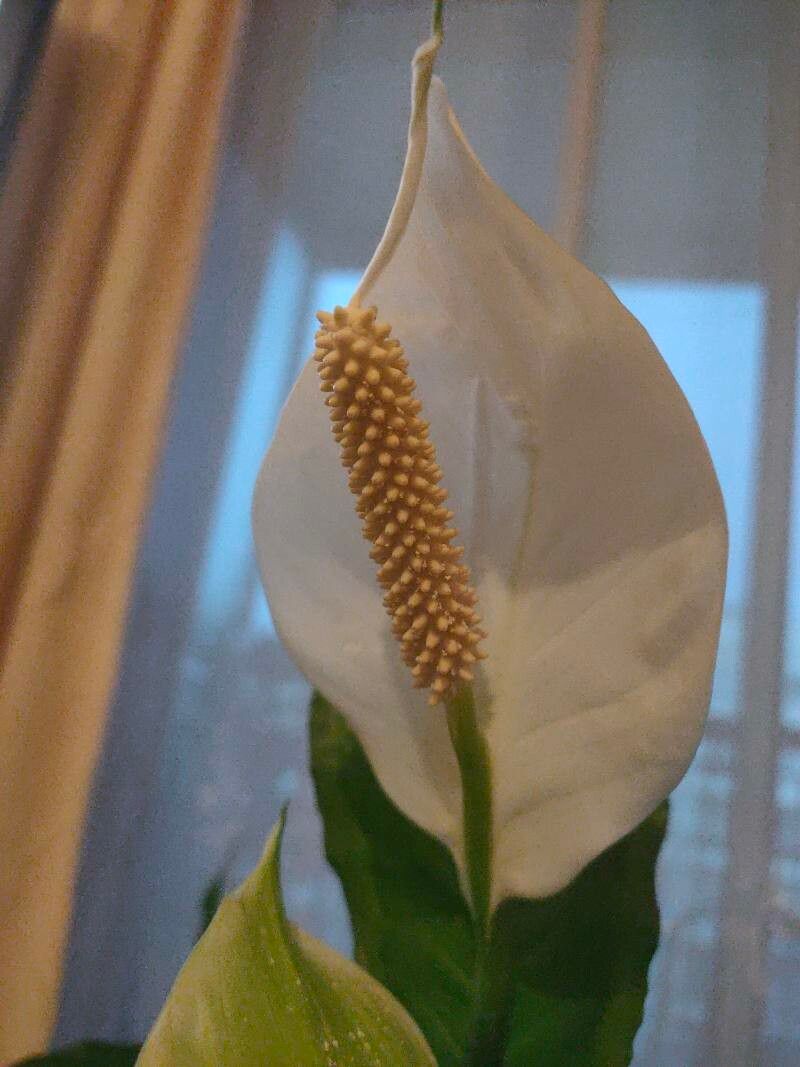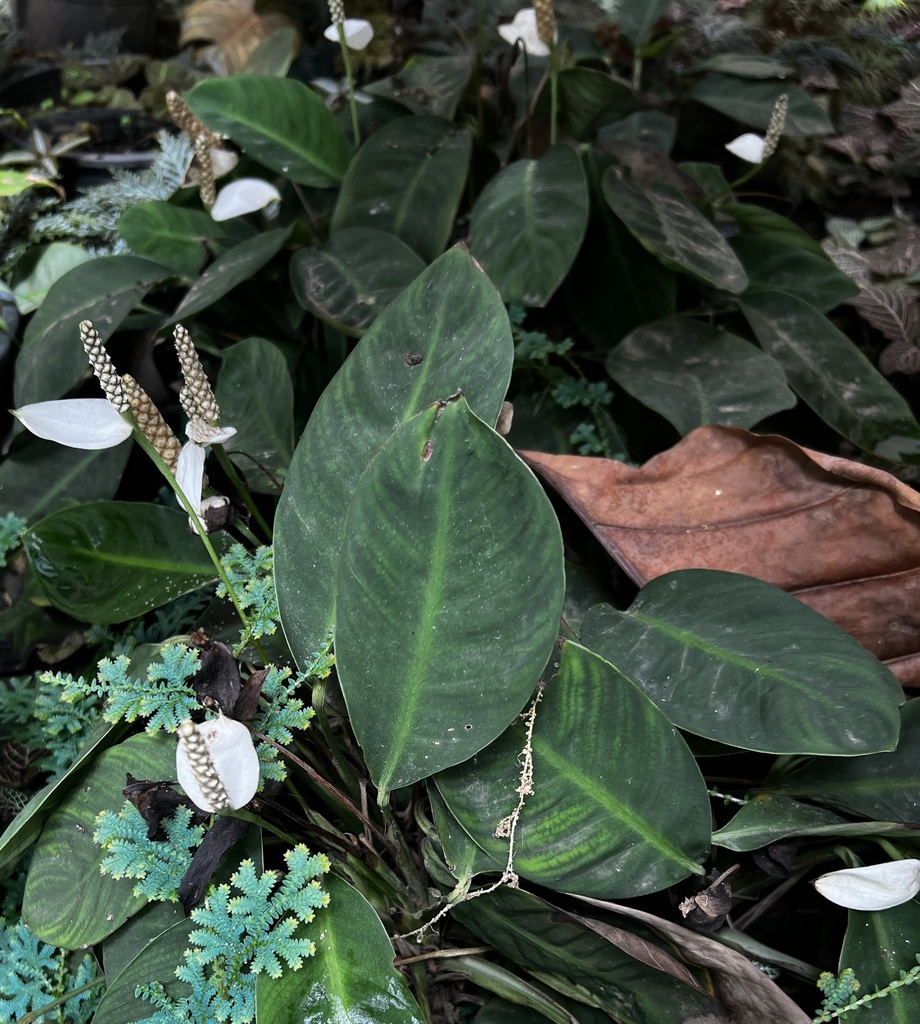
Spathiphyllum floribundum, commonly known as the peace lily, is a tropical plant native to Central and South America. Belonging to the Araceae family, it is celebrated for its attractive foliage and elegant white flowers. The plant features dark green, glossy, oval-shaped leaves with pointed tips that can grow up to 20 inches long. The flowers are white with a yellow spadix in the center.
Peace lilies are popular houseplants due to their low maintenance and ability to thrive in low light conditions. They prefer well-draining soil that remains moist but not waterlogged, as overwatering can cause root rot. These plants also benefit from occasional fertilization during their growing season.
Beyond their aesthetic appeal, peace lilies have been shown by NASA studies to effectively remove toxins such as formaldehyde from indoor air environments.
The leaves of this plant are oblong or nearly lance-shaped, tapering at both ends and wedge-shaped at the base. The flower features a fragrant bud with leaf-like structures but no petals. It consists of a white bract surrounding a yellow-white spadix, similar to those found in palm flowers. FUN FACT · FROM THE LIBRARY
Overall, Spathiphyllum floribundum, or peace lily, makes an excellent addition to any indoor garden or home decor. Its attractive foliage, air-purifying properties, and ease of care make it a desirable plant species for any home.
Snow flower is generally disease-resistant and typically not prone to illnesses. However, it can be vulnerable to leaf spots if light and ventilation are poor and if it is overwatered. Its care level is considered easy, since it only needs regular watering and little else. Snow flower is well suited to people who have limited time and energy for routine care.
How to keep Spathiphyllum Floribundum.
Light
Snow flower prefers spots with moderate sunlight, though it can adapt to areas with fewer sunrays. Its native habitat is the forest understory where light is filtered. Excessive sunlight can cause leaf burn, while too little light may impede its growth and flowering.
Water
The Snow Flower thrives in consistently moist and humid environments, similar to its native tropical rainforest habitat. Watering it twice a week helps to replicate these conditions. Although it can tolerate moderate drought, the plant flourishes best with balanced moisture. As an evergreen indoor plant, providing proper care enhances its air-purifying capabilities, contributing to a healthier indoor climate.
Humidity
This plant needs special care because it loves high humidity levels of 60-80% or more. The best way to achieve this is by placing a humidifier near the plant. Daily misting is also essential! Make sure the room has good ventilation.
Temperature
Snow flower comes from temperate regions. It does best in temperatures of 68 to 100 °F (20 to 38 °C). As the seasons pass, modify indoor temperatures to replicate its natural environment, keeping them within that favored range.
Fertilizer
Correct fertilization is vital for Snow flower's health and appearance. Fertilize the Snow flower in summer, repeating the treatment monthly throughout the season. Nutrients supply the energy for growth and support the maintenance of the plant's parts. Fertilizing the Snow flower improves its floral display and helps ensure the best blooms.
Pruning
To ensure your snow flower thrives, it's important to prune it from early spring to late winter. This practice boosts both growth and flower production. Start by removing yellow or dead leaves to improve air circulation, and trim away spent flowers to extend the blooming period. Pruning helps maintain the plant's shape, prevents disease, and encourages robust growth, contributing to a healthier plant overall.
Pot & Repot
Repot Snow flower in spring or summer once it's warm enough, choosing a slightly larger pot with good drainage. Water thoroughly after repotting, and place it in bright, indirect light. Consider adding a moss pole for support as the plant grows.
Botanical profile.
- Plant Type
- Herb
- Life Cycle
- Perennial
- Genus
- Spathiphyllum
- Family
- Araceae
- Hardiness Zone
- 10-11
- Mature Height
- 30 cm to 91 cm
- Mature Spread
- 30 cm to 61 cm
- Leaf Color
- Green
- Leaf Type
- Evergreen
- Flower Color
- White
- Flower Size
- 5.08 cm to 7.62 cm
- Bloom Time
- Spring, Early summer
- Planting Time
- Spring, Autumn
- Harvest Time
- Early summer, Mid summer
- Native Area
- Colombia, Venezuela, Peru, Ecuador, Panama
Other names.
Reader questions.
How should I water my Snow flower?
To supply water to your Snow flower, there are several options available. If you have your plant in an indoor pot, particularly a smaller one, you can bring it to your kitchen sink. Use the faucet to add water to the pot, holding it in your hands and stopping when the water starts running through the drainage holes. It's important to avoid this method during winter or in cold areas as it can harm the plant's roots. In most cases, watering with your faucet is fine for the Snow flower. However, if your tap water contains high levels of fluorine, chlorine, or salts, it's better to consider using rainwater or lake water. The Snow flower also responds well to overhead watering or watering directly into the soil, for which you can use a watering can, hose, or any watering tool you prefer.
Why should I add fertilizer to my Snow flower?
Fertilizer and soil nutrients are like fuel for your Snow flower, essential for its healthy growth. Plants in general use nutrients in the soil to grow and maintain their existing components. Fertilization is particularly important for Snow flowers to ensure their flowers look their best. Since the flowers are the main attraction of this plant, most gardeners want to do everything possible to ensure they appear in their prime. Fertilization is a reliable method to help your Snow flower produce high-quality blooms.
What are the sunlight requirements for Snow flower?
Snow flower, or Spathiphyllum floribundum, thrives in conditions that replicate its native forest underlayer habitat where sunlight is moderate but filtered. It adapts well to both partial sun, requiring about 3-6 hours of sunlight a day, and full shade, with less than 3 hours of sunlight. Too much direct sunlight can lead to leaf burn, while insufficient light may hinder its growth and flowering capabilities. It's beneficial to observe the movement of sunlight through your garden to find the ideal spot that provides the right balance of light and shade for your Snow flower, ensuring its health and happiness.
What is the native environment of the Snow flower?
The Snow flower, or Spathiphyllum floribundum, is native to temperate environments. It flourishes best in temperatures ranging between 68 to 100°F (20 to 38°C), preferring warm conditions. To ensure optimal growth, it is suggested to adjust room temperatures to mimic its natural habitat, especially as seasons change.
If I give my Snow flower too much or too little water, what should I do?
If you think you haven't watered your Snow flower enough, the first thing you should do is give it some water. Make sure to water it deeply until excess water drains out of the container's hole, or if it's outside, until the soil is completely moist. If you believe the Snow flower is getting too much water, start by reducing how often you water it. Also, consider the soil and container it's in. If either of those cause poor drainage, your plant may become overwatered again. To solve this, transfer your plant to looser soil and/or a container with larger drainage holes or a more porous material. Additionally, check the location of the plant. If it's in a corner, consider moving it to a window or near a door for better ventilation. Ensuring your plants are in well-ventilated areas can help prevent overwatering.
What is the right time to put fertilizer on my Snow flower?
The Snow flower has two main phases during the year. The first phase is the dormant phase, which occurs in winter and involves minimal new growth. The second phase is the active growth phase, taking place in spring and fall, when the Snow flower requires the most fertilization. It's recommended to start fertilizing the Snow flower in spring and continue once a month throughout spring and most of summer. As fall approaches, you can gradually decrease the frequency of fertilization.
How do I manage artificial lighting for Snow flower indoors?
When natural sunlight is inadequate, especially during winter or in less sunny spaces, artificial lighting becomes essential for maintaining healthy growth in Snow flower plants. Opt for LED lights, as they can be customized to emit specific wavelengths needed by the plant. For full sun plants, aim for 30-50W/sq ft, partial sun plants need 20-30W/sq ft, and full shade plants should have 10-20W/sq ft of artificial light. The artificial light source should be placed 12-36 inches above the plant to mimic natural sunlight, and most plants will require 8-12 hours of light per day to thrive.
How should Snow flower be cared for in different seasons?
As the Snow flower is extremely heat-loving, care should be taken to protect it from cold temperatures. During autumn and winter, it is advisable to move outdoor-grown Snow flower indoors near a bright window, while maintaining a safe distance from heaters. Keeping the indoor temperatures above 20°C is beneficial, and it is crucial to avoid exposure to temperatures close to or below 5°C, as such conditions are detrimental to the plant's health.
How frequently should I water my Snow flower?
The Snow flower does not need consistently moist soil. In fact, it is better to let the soil dry out between waterings. If you grow Snow flowers in containers, you can determine when to water by checking the dryness of the soil in the container. If about the top half of the soil is dry, it is time to water. You can check this by inserting your fingers or a stick into the soil, or by using a soil moisture meter. If you grow Snow flowers outdoors, water them about once every other week, unless it has rained recently.
When is the best time to not fertilize my Snow flower?
If you want to support Snow flower growth, you need to be careful not to cause root burn. Your plant is most active and needs extra nutrients in the spring and summer when it is actively growing. However, in the fall and winter, your plant goes into its dormant stage and fertilizing should be stopped.
What are some common symptoms of light deficiency in Snow flower?
Snow flower can exhibit several symptoms when exposed to inadequate light. These include smaller new leaves, leggy or sparse growth, faster leaf drop, halted growth, and lighter-colored or yellowing leaves (chlorosis) due to insufficient chlorophyll and essential nutrients. Excessive sunlight can cause sunscald, leaf curling as a defense mechanism against water loss, wilting from increased transpiration, and leaf scorching, characterized by brown, dry edges on leaves. Such symptoms indicate a need for adjusting the plant's light exposure to foster healthier growth.
What are the signs of low temperature damage in Snow flower?
Snow flower shows distinct signs when exposed to temperatures it cannot tolerate. If the temperature drops below 1°C, the leaves might lighten in color, indicating early signs of distress. Following frost damage, leaves typically turn brown or black, exhibiting wilting and drooping as further symptoms of low temperature exposure.