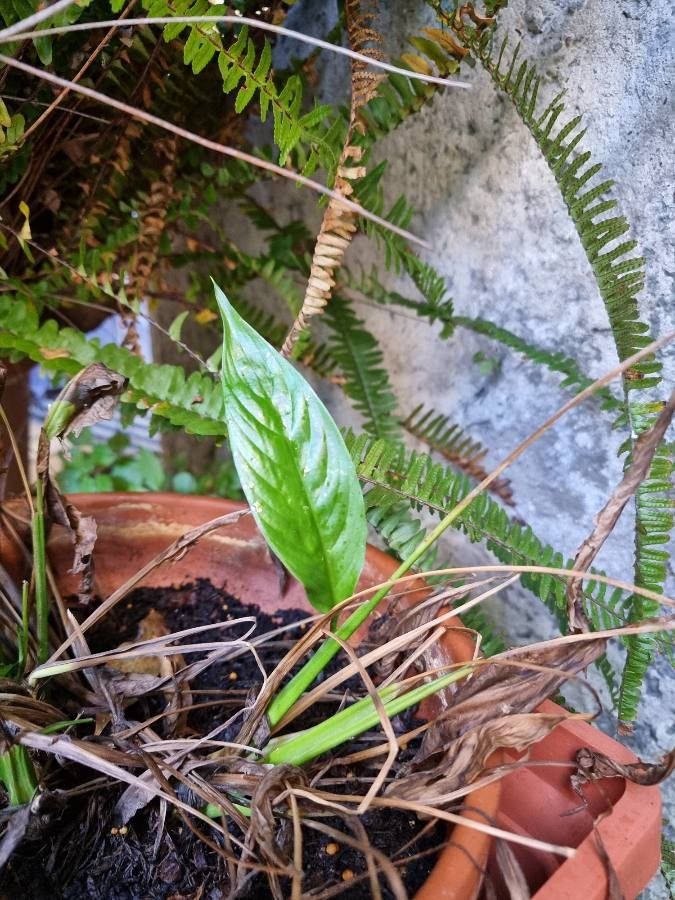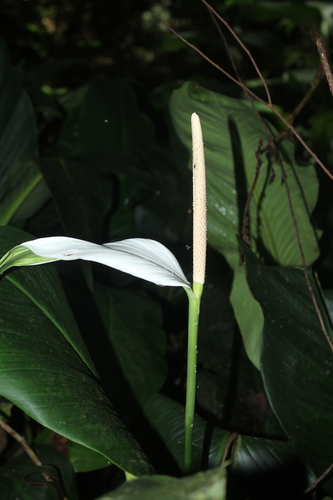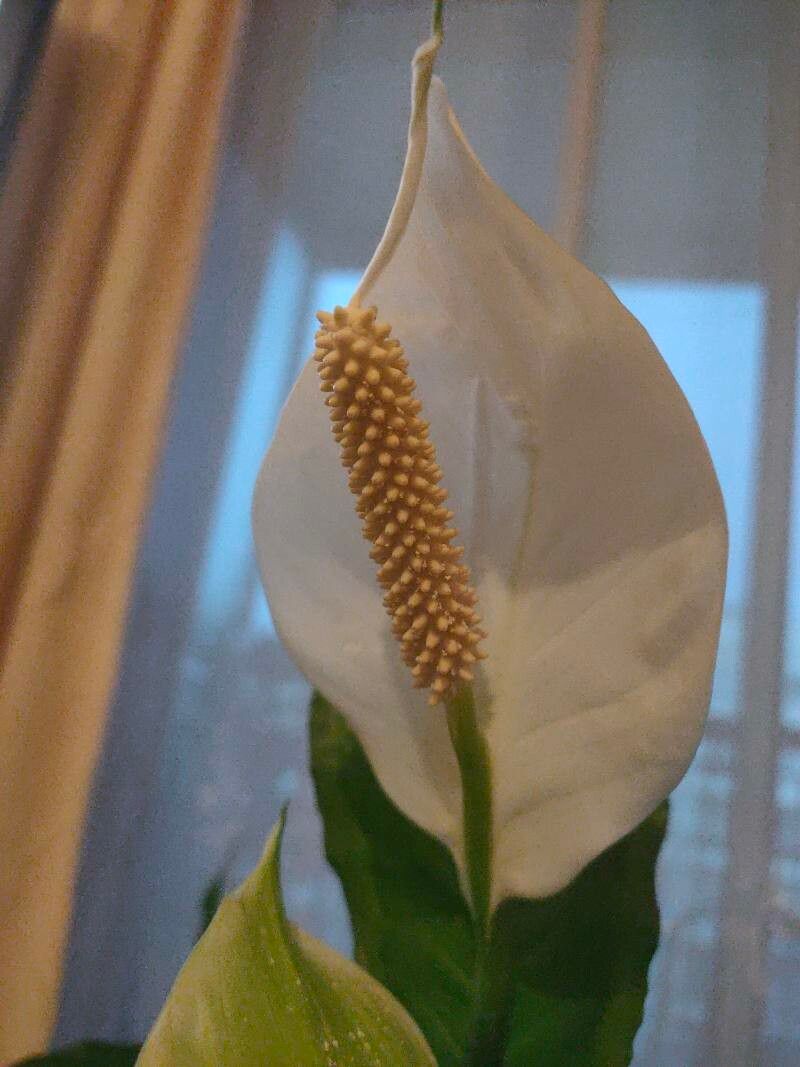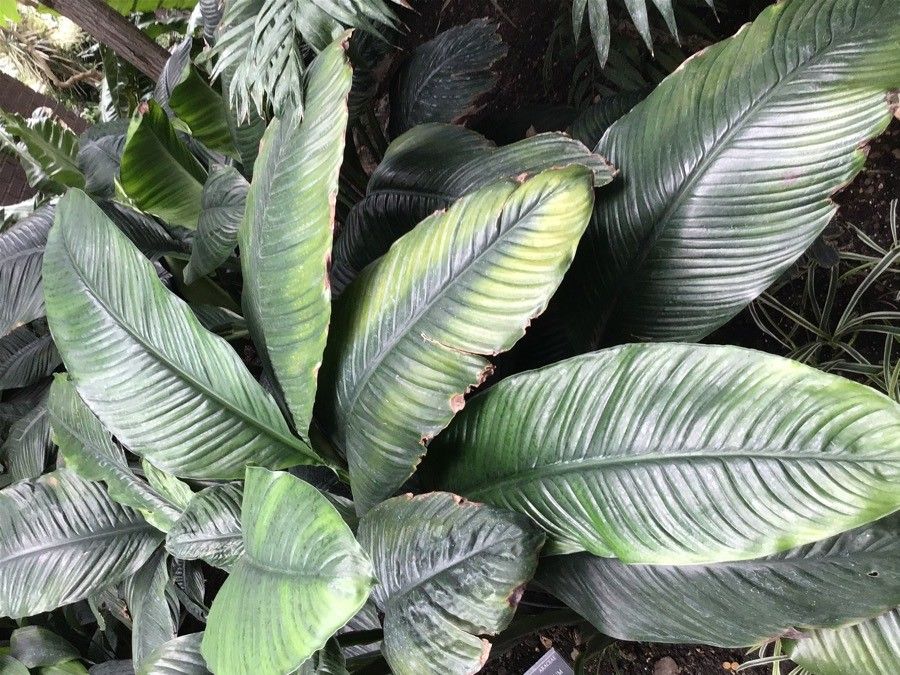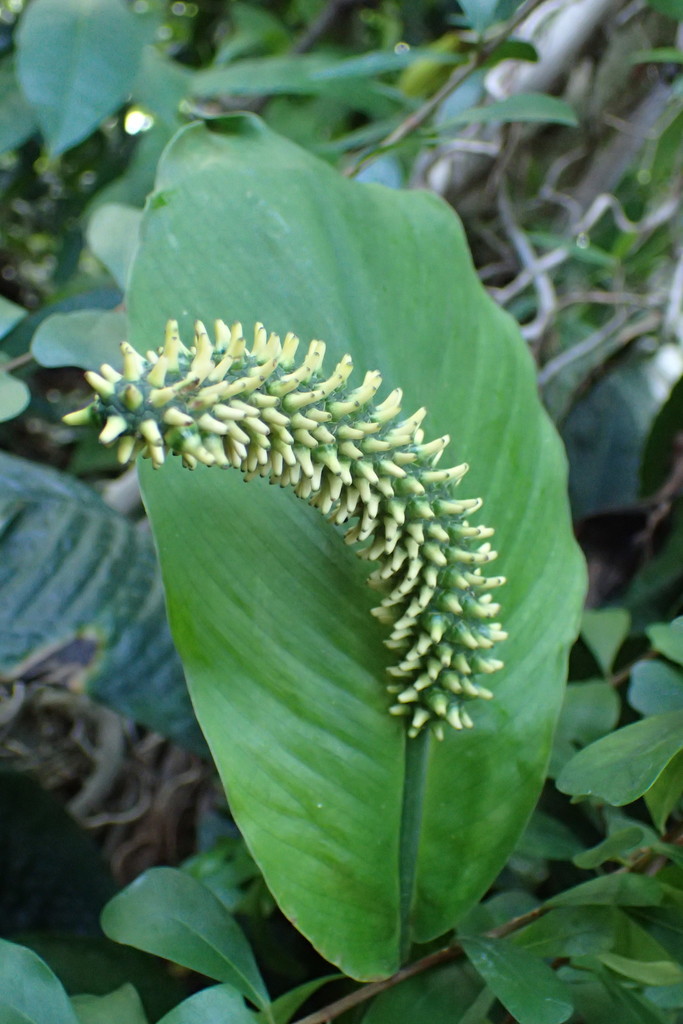
Spathiphyllum blandum, commonly known as the Peace Lily, is a popular indoor plant native to the tropical regions of Central and South America. Belonging to the Araceae family, it is prized for its attractive foliage and striking white flowers.
The Peace Lily features dark green, glossy, oval-shaped leaves and can grow up to 3 feet tall under optimal conditions. Its flowers are white with a distinctive yellow spadix at the center.
This plant thrives in bright, indirect light but can also tolerate low light conditions, making it ideal for homes or offices with limited natural light. It requires moderate watering but must not be overwatered to prevent root rot.
In addition to its aesthetic appeal, the Peace Lily boasts air-purifying properties, effectively removing harmful toxins such as benzene, formaldehyde, and trichloroethylene from the air, thereby improving indoor air quality.
Overall, Spathiphyllum blandum, or Peace Lily, is a low-maintenance houseplant that adds beauty and elegance to any space while offering the added benefit of purifying indoor air.
Spathiphyllum blandum has strong resistance to disease and is typically not vulnerable to illnesses. In terms of upkeep, this plant is fairly low-maintenance. When grown outdoors it needs only light watering, and larger plants usually do not require pruning. Smaller plants, however, should be pruned after they have finished blooming. Spathiphyllum blandumt is suitable for anyone with an outdoor area, such as a garden or deck, and does not demand much gardening experience.
How to keep Spathiphyllum Blandum.
Water
Peace lilies prefer under-watered conditions rather than too much irrigation, so make sure you water it only if it is dry at least an inch below ground. In summer, fog blossoms are a common sight because they thrive in high humidity, as it does in rain forests. In winter, cut back on watering but do not permit the soil to dry completely. If your home water is highly chlorinated, it is a good idea to use filtered water. Alternatively, you can let the tap water stay for a few days until the chlorine evaporates.
Temperature
These plants are very sensitive to wet temperatures. Avoid unpredictable temperatures and temperatures below 55 degrees Fahrenheit — the plant will die if exposed to prolonged exposure to cold. The ideal temperature for your peaceful flower is 65 to 80 degrees Fahrenheit. Spritz the leaves weekly with soft or compacted water during the summer growing season.
Pruning
Pruning of lilies should be done at the bottom of the plant. Cut the stem as close to the bottom as possible. This will make room for new titles. Pruning of a flower of peace is not limited to the species.
Toxicity
Peace lilies generally are not poisonous; however, they contain substances that may elicit toxicity symptoms. The calcium oxalate crystals in the plant are mildly toxic to people and pets when ingested. Contact with the pollen from the spadix may also result in skin and oral irritation.
Further reading →
The toxicity and danger assessments provided are for reference only. We do not assure their accuracy, so it's crucial not to depend on them. Seek professional advice when necessary for accurate guidance.
Botanical profile.
- Plant Type
- Flowering tropical plant
- Life Cycle
- Perennial
- Genus
- Spathiphyllum
- Family
- Araceae
- Hardiness Zone
- 10-12
- Native Area
- Honduras, Mexico, Guatemala, Belize