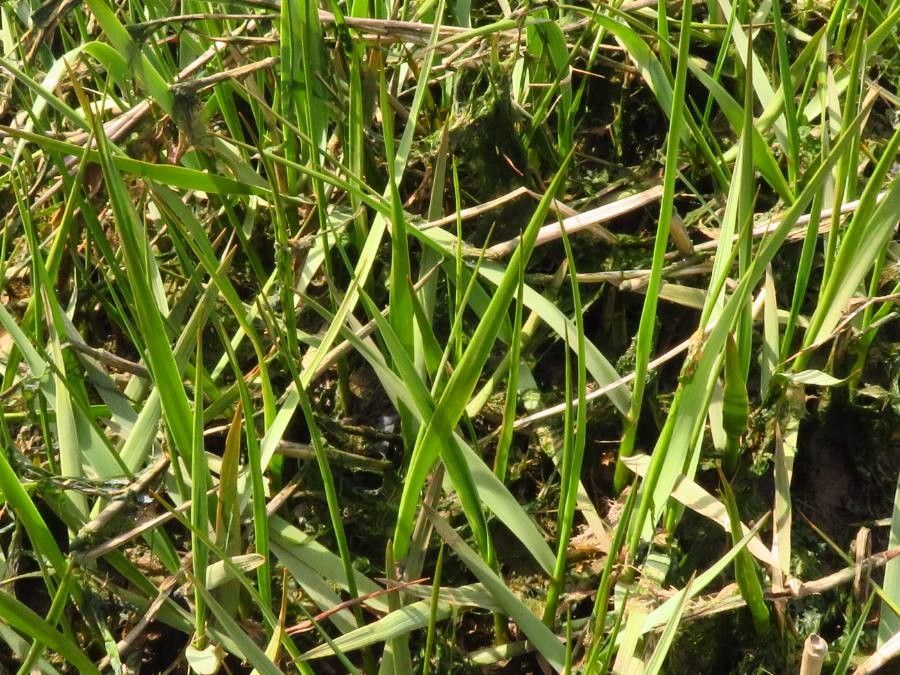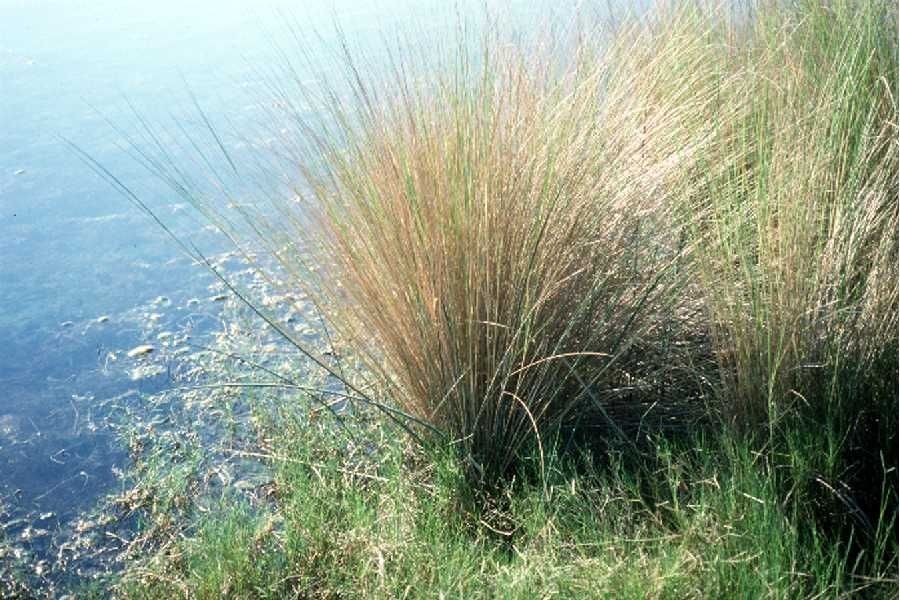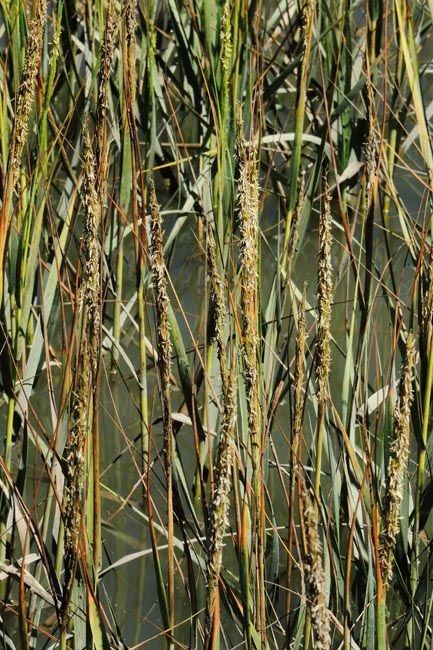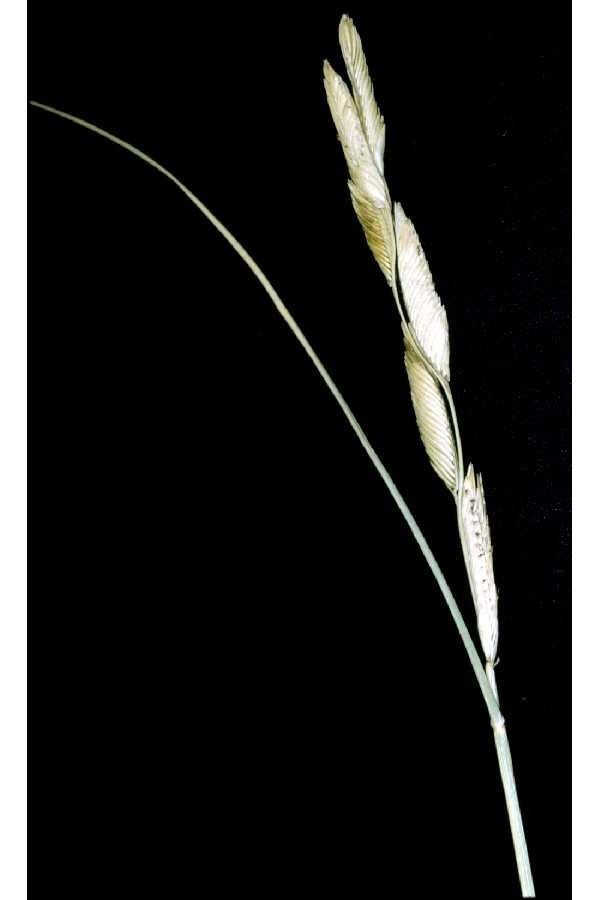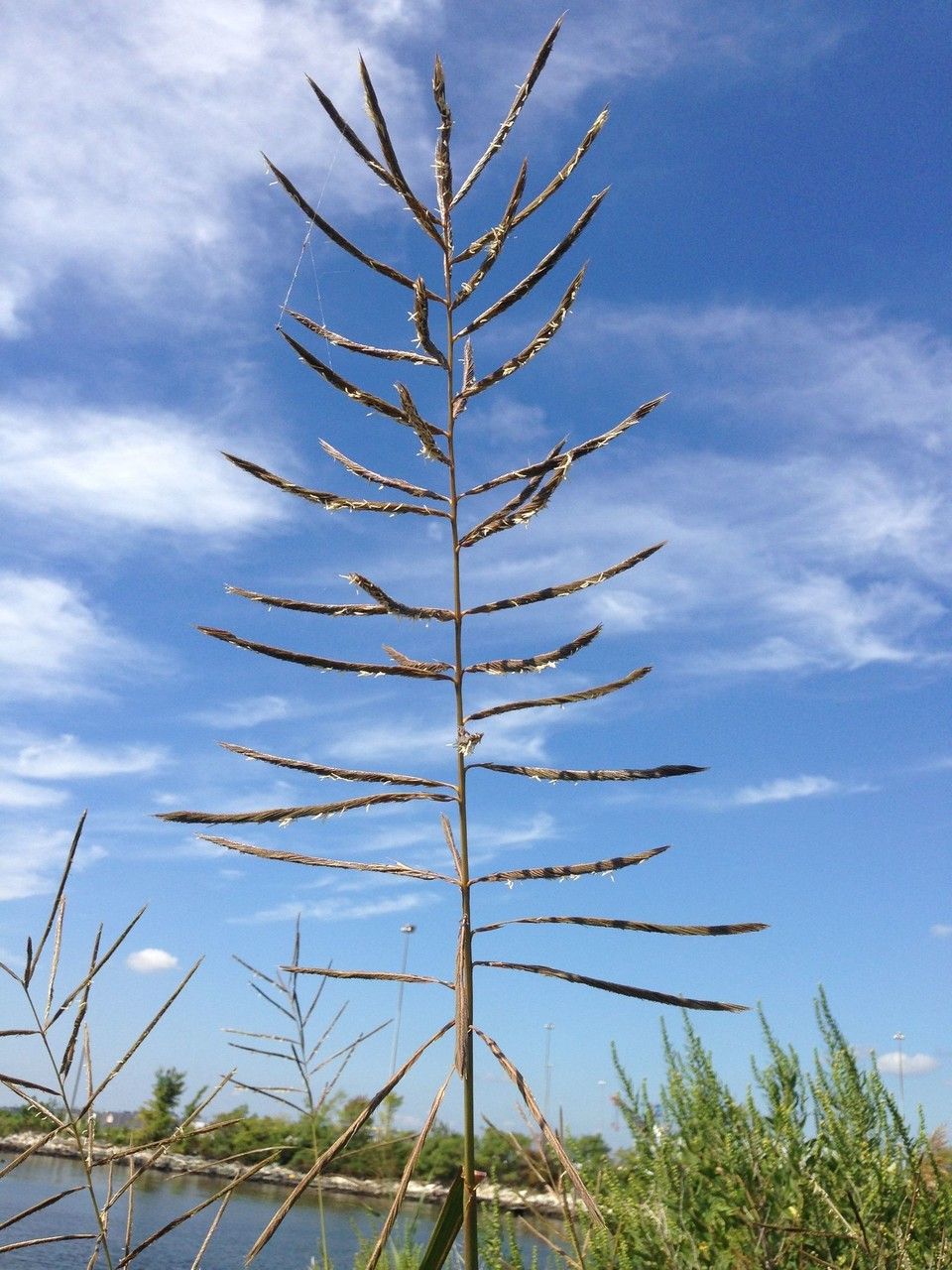
Sporobolus cynosuroides is a species of grass known by the common names big cordgrass and salt reedgrass. It is native to the East Coast and Gulf Coast of the United States, where it grows in coastal habitat such as marshes, lagoons, and bays.This species is a rhizomatous perennial grass which can grow up to 10 feet tall. The leaves are up to 24 inches long and up to an inch wide. The ligule is hairy. The stem can be ¾ of an inch in diameter at the base. The inflorescence contains up to 40 spikes each up to 3 inches long.This grass grows in flooded saline soils such as those in salt marshes. It is associated with marsh-hay cordgrass (Spartina patens) and common reed (Phragmites australis).
Big cordgrass is resistant to disease and, in general, is not susceptible to illnesses. In terms of care, this plant is fairly low-maintenance. When grown outdoors, it needs only occasional watering, and larger specimens typically do not require pruning. Smaller plants, however, should be pruned after they finish blooming. Big cordgrass is suitable for anyone who has an outdoor area, such as a garden or a deck, and it does not demand extensive plant-care experience.
How to keep Spartina Cynosuroides.
Light
Big cordgrass is a sun-loving perennial herbaceous plant native to open habitats, commonly occurring in meadows and grasslands. It prefers full sun but can also tolerate partial sun conditions.
Fertilizer
Big cordgrass needs extra nutrients to encourage healthy new growth. In spring, placing some compost around the base of the plant can effectively supply the nutrition it requires. Fertilizing helps support vigorous growth and enables the plant to resist diseases and pests.