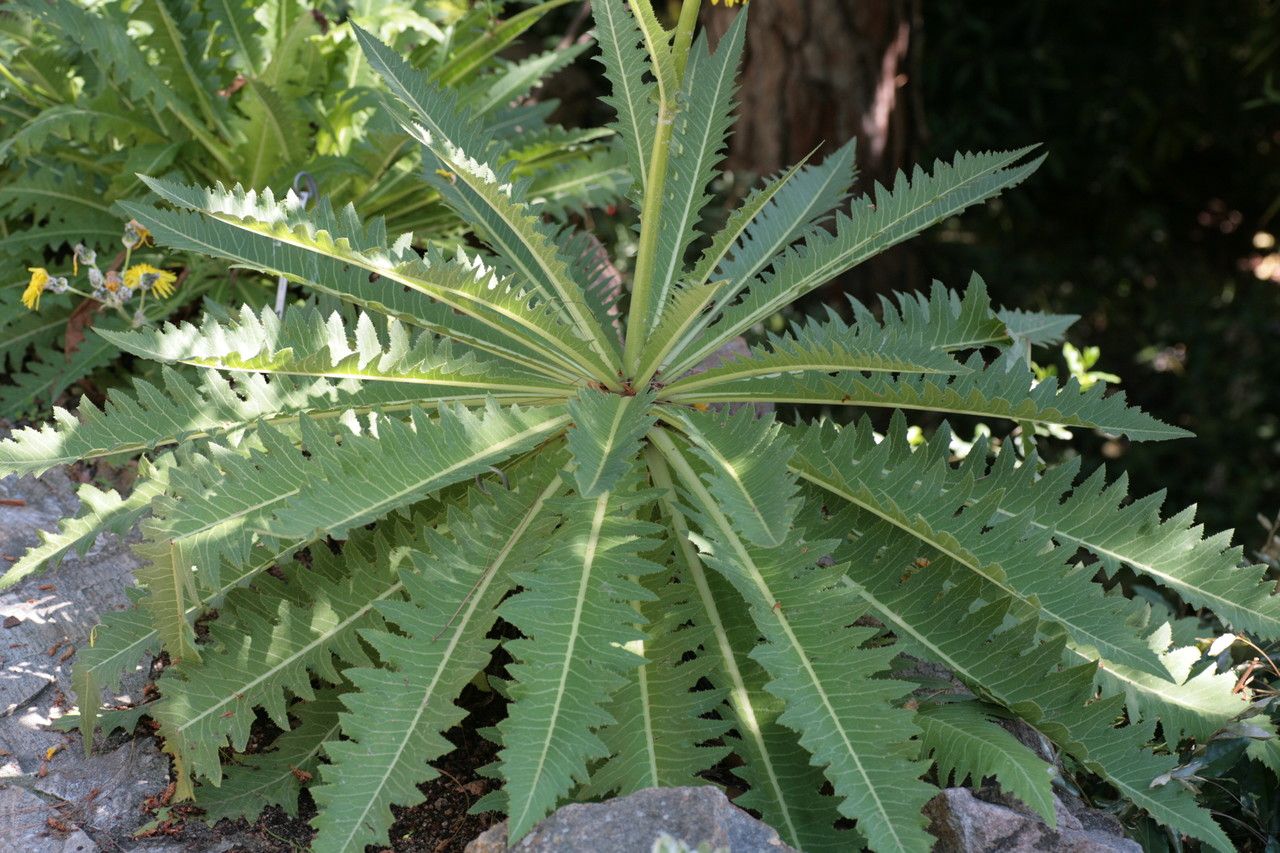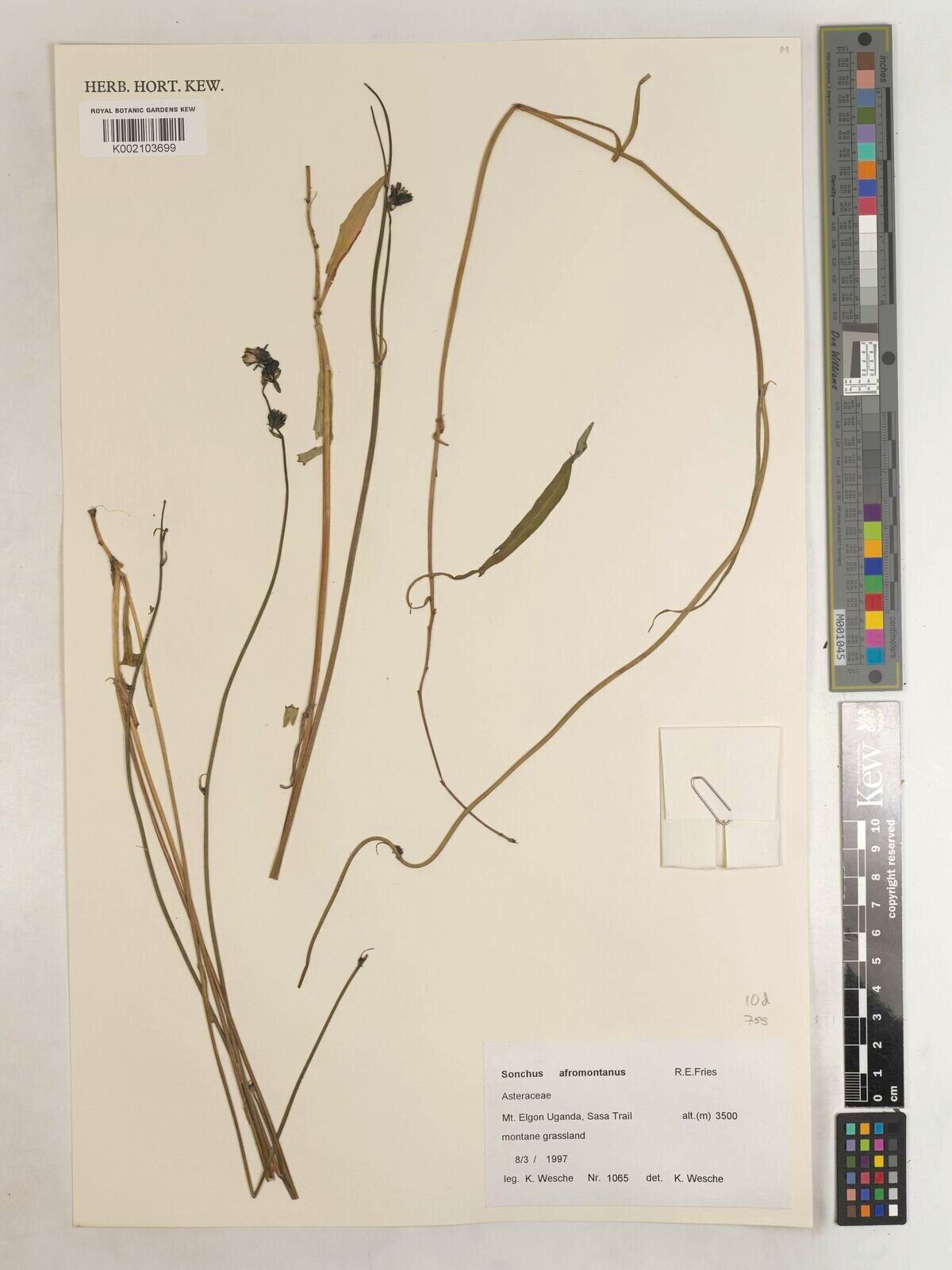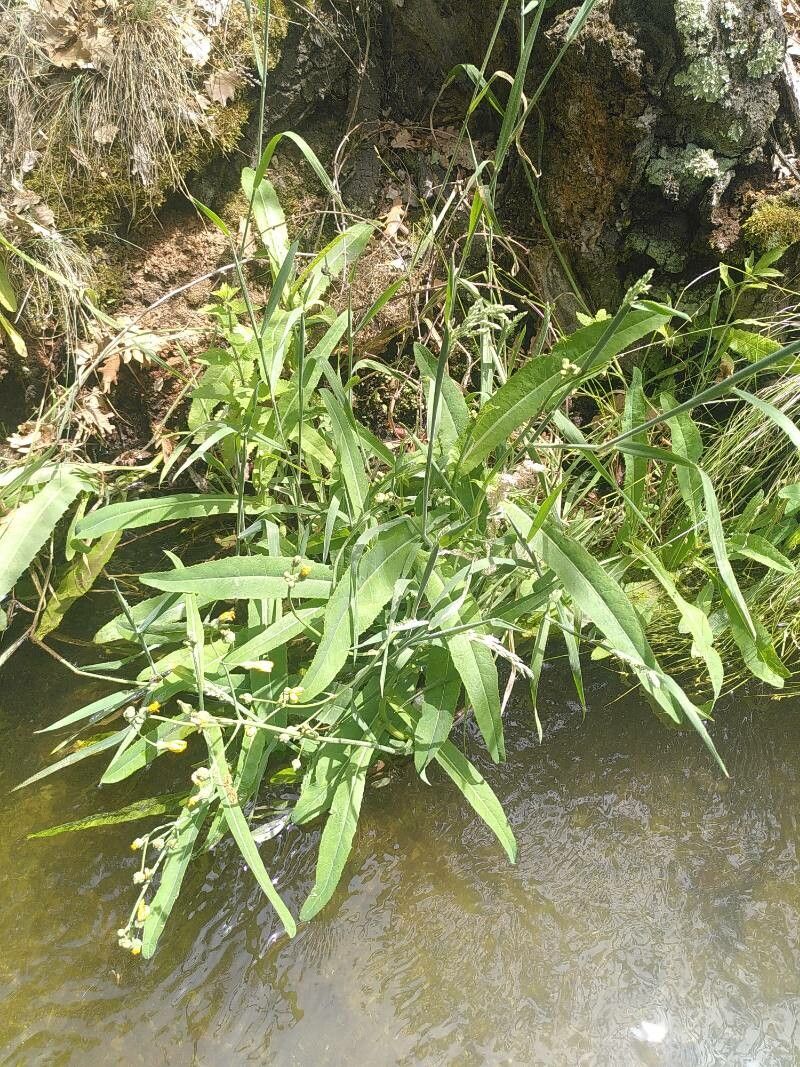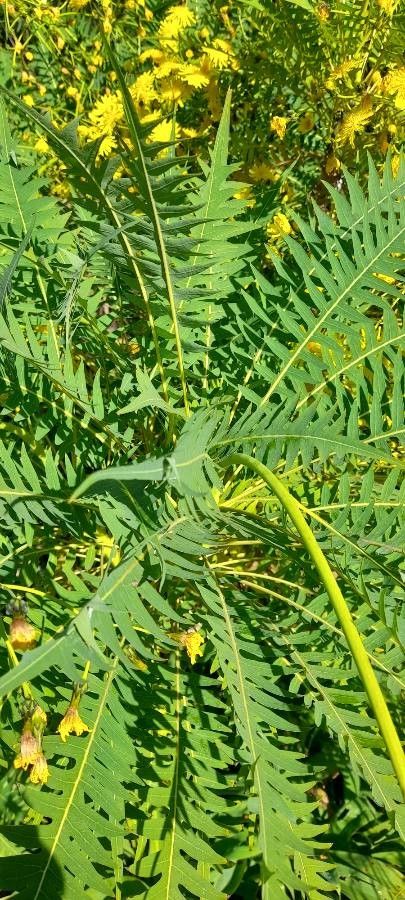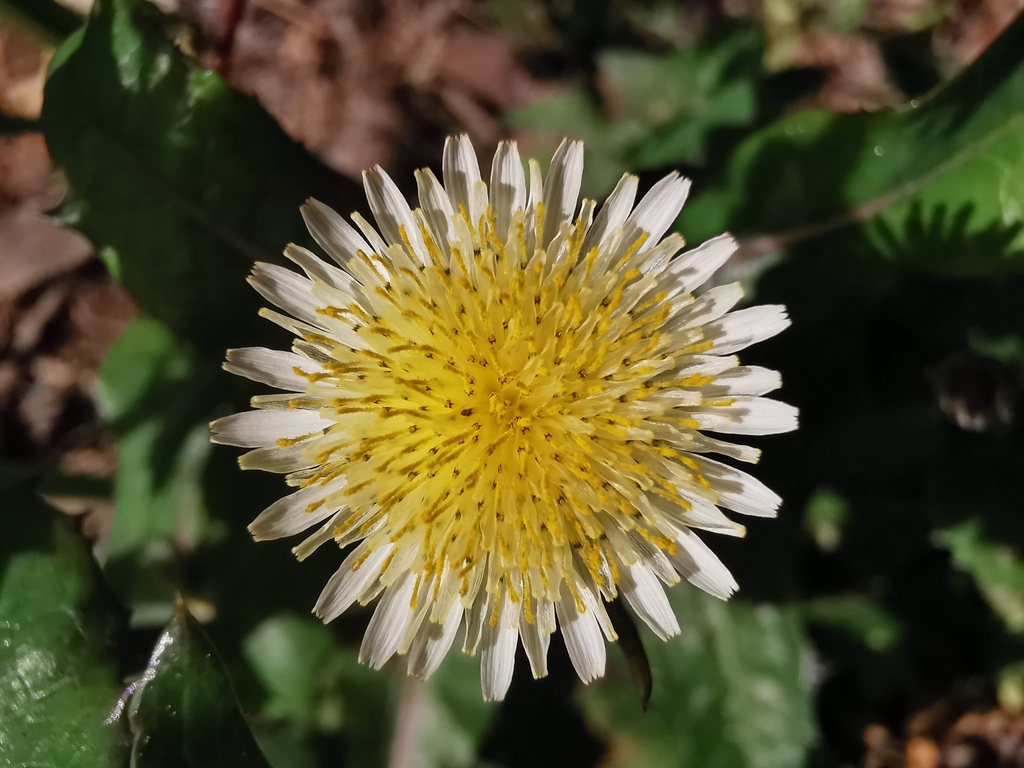
Sonchus oleraceus, commonly known as the common sowthistle, is a herbaceous plant belonging to the Asteraceae family. It is an annual or biennial species that can grow up to 1.5 meters tall, featuring a hollow stem filled with milky sap. The leaves are alternate, deeply lobed, and have spiny margins, reaching up to 30 cm in length. The flowers of Sonchus oleraceus are yellow and arranged in clusters at the ends of branches, blooming from June to October in temperate regions. The plant produces fruit in the form of achenes, each adorned with a pappus of white hairs that facilitate wind dispersal. Sonchus oleraceus has been used for medicinal purposes for centuries due to its anti-inflammatory properties and its ability to treat liver disorders, jaundice, fever, coughs, and colds. This plant is abundant throughout Europe and has also been introduced to other parts of the world, such as Asia and North America, through human activity or natural mechanisms like wind dispersal. Despite being considered a weed by some due to its invasive nature on agricultural land, Sonchus oleraceus also serves important ecological functions. It provides food for pollinators like bees and holds medicinal value, making it an essential part of our natural world.
The common sowthistle is named from its scientific epithet, oleraceus, which suggests it has a pleasing taste. This quality is one reason it's often used to lure pigs. Additionally, its leaves resemble those of a young thistle plant, which is why it is called the common sowthistle.
Common sowthistle has good resistance to disease and usually does not develop illnesses. However, it can be vulnerable to pests and diseases present in its environment. These problems are typically mild. For care, the plant requires a moderate level of maintenance. It should be pruned regularly to preserve a neat appearance and encourage healthy growth. Fertilizing can also help boost flowering. Common sowthistle is suitable for anyone with outdoor space, such as a garden or patio, and does not demand extensive gardening experience. It may need more attention when grown indoors.
How to keep Sonchus Oleraceus.
Light
Common sowthistle flourishes with abundant daily sunlight but also displays notable tolerance for situations with less than full sun. It is native to habitats of plentiful light, which favor its growth and development. Still, extremes of excessive exposure or very low light can impair its health.
Water
Common sowthistle thrives in moist environments and prefers soil that is consistently damp. It needs watering once a week and shows some tolerance to drought. Typically grown outdoors, common sowthistle benefits from rainfall, especially during its active growing season when it requires more moisture for optimal growth.
Humidity
This plant prefers dry conditions, so don't mist it. However, watering it less often can also thrive in higher humidity.
Temperature
Common sowthistle is native to areas where temperatures range from 68 to 95°F (20 to 35 ℃). It needs these warm conditions to prosper, particularly during the growing season. Changes may be required during colder periods.
Fertilizer
Common sowthistle benefits from regular, light applications of fertilizer to encourage healthy leaf growth. You should fertilize Common sowthistle about once a month during the summer months. Nitrogen is important for foliage, and providing nitrogen-rich sources helps Common sowthistle thrive.
Toxicity
Sonchus oleraceus can cause an allergic reaction, including a severe, potentially life-threatening allergic reaction.
Further reading →
The toxicity and danger assessments provided are for reference only. We do not assure their accuracy, so it's crucial not to depend on them. Seek professional advice when necessary for accurate guidance.
Botanical profile.
- Plant Type
- Herb
- Life Cycle
- Annual, Biennial
- Genus
- Sonchus
- Family
- Asteraceae
- Hardiness Zone
- 7-9
- Mature Height
- 0.3 m to 1.52 m
- Mature Spread
- 49 cm
- Leaf Color
- Green, Red, Purple
- Leaf Type
- Deciduous
- Flower Color
- Yellow
- Flower Size
- 0.51 cm to 2.54 cm
- Bloom Time
- Spring, Early summer
- Planting Time
- Spring, Summer, Autumn
- Harvest Time
- Late spring, Early summer, Mid summer
- Native Area
- Burkina Faso, Libya, Pakistan, Thailand, Slovenia, Belarus, Cameroon, Koppen, Ethiopia, Latvia, Moldova, Netherlands, Tunisia, Bulgaria, Bangladesh, Chad, Afghanistan, Kyrgyzstan, Kazakhstan, Mongolia, Finland, Djibouti, Egypt, Austria, Uzbekistan, Russia, Estonia, France, Nepal, Tajikistan, Sudan, Mauritania, Armenia, Poland, Greece, Switzerland, Bhutan, United Kingdom, Algeria, Sri Lanka, Turkey, United Arab Emirates, Slovakia, Montenegro, Croatia, Morocco, Germany, Jordan, Indonesia, Romania, Belgium, Portugal, Saudi Arabia, Cyprus, Ukraine, Lebanon, Syria, Italy, Bosnia and Herzegovina, Côte d'Ivoire, Iran, Azerbaijan, Somalia, Eritrea, Yemen, Mali, Iraq, South Korea, Czech Republic, Guinea, Serbia, Lithuania, Spain, Denmark, Myanmar, Israel, Albania, Ireland, Hungary, Turkmenistan
Other names.
Reader questions.
When Should I Water My Common Sowthistle?
Watering your common sowthistle is essential when the top 1 to 2 inches of soil feel dry to the touch. Use your finger to check soil moisture, and water the plant if it feels dry. Observing the plant’s leaves can also indicate its watering needs; wilted or yellowing leaves suggest under-watering. Be mindful of the plant's growth, as stunted growth can indicate insufficient watering. Water needs may increase during dry weather or when the plant is in its bud formation stage. Avoid watering too early or too late to prevent root diseases or dehydration. It's crucial to recognize these signs for effective water management to ensure the plant's health and longevity.
What are the sunlight requirements for Common Sowthistle?
Common Sowthistle thrives best under full sun conditions, requiring more than 6 hours of direct sunlight daily. It can also adapt to partial sun exposures, about 3-6 hours of sunlight. However, it's essential to observe the movement of sunlight in your garden to ensure the plant receives the optimal balance of light and shade for healthy growth. Inadequate light conditions can lead to several health issues for the plant.
What are the ideal temperature conditions for growing common sowthistle?
Common sowthistle thrives in environments with temperatures ranging from 68 to 95°F (20 to 35°C). These warm conditions are critical during the growing season for the health and growth of the plant. Although common sowthistle has strong cold resistance, special frost protection measures are generally not required during winter. However, if temperatures are forecast to fall below -15°C, providing cold protection by covering the plant with soil or straw is recommended. To prepare for winter, it's also advisable to water the plant abundantly before the first freeze, ensuring the soil is moist and prepared for the freezing conditions. This preparation helps prevent drought and water scarcity for the plant during the winter and early spring.
How Should I Water My Common Sowthistle?
To water your common sowthistle effectively, consider using a bottom-watering technique by placing it in a tray of water, allowing moisture to soak up from the bottom, or use a watering can with a narrow spout for controlled watering. This plant, known scientifically as Sonchus oleraceus, is versatile and can tolerate various moisture conditions, but overwatering and waterlogged soil should be avoided to prevent root decay. A moisture meter can help maintain optimal soil moisture levels. When watering, focus on the base of the plant, avoiding the leaves to prevent diseases. The best time for watering is during cooler parts of the day to minimize evaporation and prevent foliar diseases.
How does insufficient sunlight affect Common Sowthistle and what are the signs?
When Common Sowthistle is grown indoors or under inadequate sunlight, it may display symptoms such as smaller new leaves, leggy or sparse growth, faster leaf drop, slower or halted new growth, lighter-colored new leaves, and chlorosis. Excessive sunlight exposure can lead to sunscald, leaf curling, wilting, and leaf scorching. These symptoms indicate either a deficiency or excess of light, affecting the plant's health and growth significantly.
How does common sowthistle respond to low temperatures?
Common sowthistle is notably cold-tolerant, ideally kept above 0°C during the winter months. Though the plant can generally weather temperatures below -15°C without immediate apparent changes, such cold can lead to a decrease in sprouting or even a complete lack of sprouting come spring. To mitigate this, it is recommended to remove any parts of the plant that have failed to sprout as the weather warms in spring.
How Much Water Does Common Sowthistle Really Need?
Common sowthistle, a resilient plant native to Eurasia and North Africa, requires moderate amounts of water reflecting its natural habitat. The goal is to maintain even soil moisture without waterlogging. Adult plants need enough water to saturate the soil without pooling, while young plants require lesser amounts due to their smaller size and root systems. Firm, bright green leaves indicate proper watering, whereas wilting or yellowing suggests over-watering and curled, brown leaf tips may indicate under-watering. Proper watering is crucial to avoid root rot or dehydration and to minimize pest or disease problems.
What are some solutions for Common Sowthistle receiving insufficient sunlight?
If your Common Sowthistle is receiving insufficient sunlight, consider gradually moving it to a sunnier location, ensuring it receives at least 6 hours of direct sunlight daily. For indoor plants, use a south-facing window or artificial light sources such as desk lamps or professional plant grow lights for at least 8 hours daily. For outdoor plants, slowly transition them to areas with more sunlight to avoid sunburn. Removing obstructions and transplanting to sunnier spots can also improve light exposure. Remember, parts of the plant damaged by insufficient sunlight may not recover, but new growth will be healthier with better light conditions.
How should I care for common sowthistle during high temperatures?
During the summer, it's crucial to ensure that the temperatures surrounding common sowthistle remain below 35°C, as the plant does not fare well in heat exceeding 38°C. High temperatures can cause the leaves to lighten in color, become prone to curling, face the risk of sunburn, and in severe cases, lead to the entire plant wilting and drying out. To protect common sowthistle during hot spells, trim away any sunburned and dry parts of the plant. Relocate the plant to a shaded area or use a shade cloth to protect it from the midday and afternoon sun. Furthermore, watering the plant in the morning and evening can help maintain necessary soil moisture and prevent heat stress.
What Kind of Water is Best for Common Sowthistle?
Common sowthistle thrives best when watered with natural rainwater, as it is free of harmful chemicals. If necessary, tap water can be used, although it may contain chlorine and minerals that could affect the plant's growth. Well water is another option, provided it's not high in contaminants. Filtered water can mitigate the issues associated with tap water. To reduce chlorine levels in tap water, let it sit out for at least 24 hours or use a dechlorinating agent. Moderately sensitive to contaminants, this plant prefers water at room temperature, around 68-72°F or 20-22°C, to avoid temperature shock.
How can artificial lighting benefit Common Sowthistle grown indoors?
Artificial lighting provides a vital solution for Common Sowthistle plants grown indoors, especially when natural sunlight is insufficient. LED lights, which can be customized to provide specific wavelengths, are recommended. The right amount of artificial light—ranging from 10-50W/sq ft based on the plant's sun requirements—mimics natural sunlight conditions, promoting healthier growth. The lights should be placed 12-36 inches above the plant for 8-12 hours daily to ensure optimal growth and development.
How Do Common Sowthistle's Watering Needs Change with the Seasons?
Common sowthistle's watering needs vary with seasons. In spring, during its primary growth phase, ensure the soil is lightly moist. In summer, its water requirements increase; maintain soil moisture without overwatering. By autumn, as the sowthistle begins to die down, reduce watering significantly, only watering if the soil is very dry to avoid fungal diseases. In winter, as common sowthistle completes its lifecycle, no additional watering is typically necessary. Always adjust watering based on weather conditions, soil moisture, and the plant's lifecycle stage.