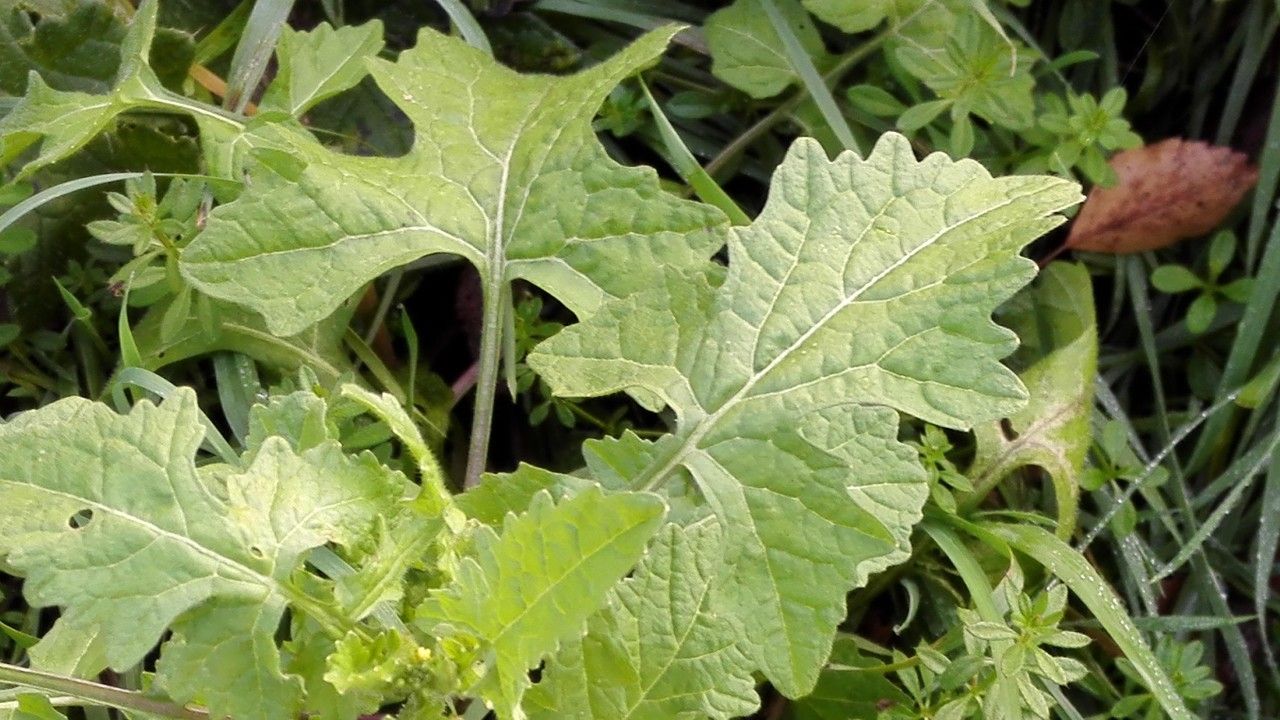
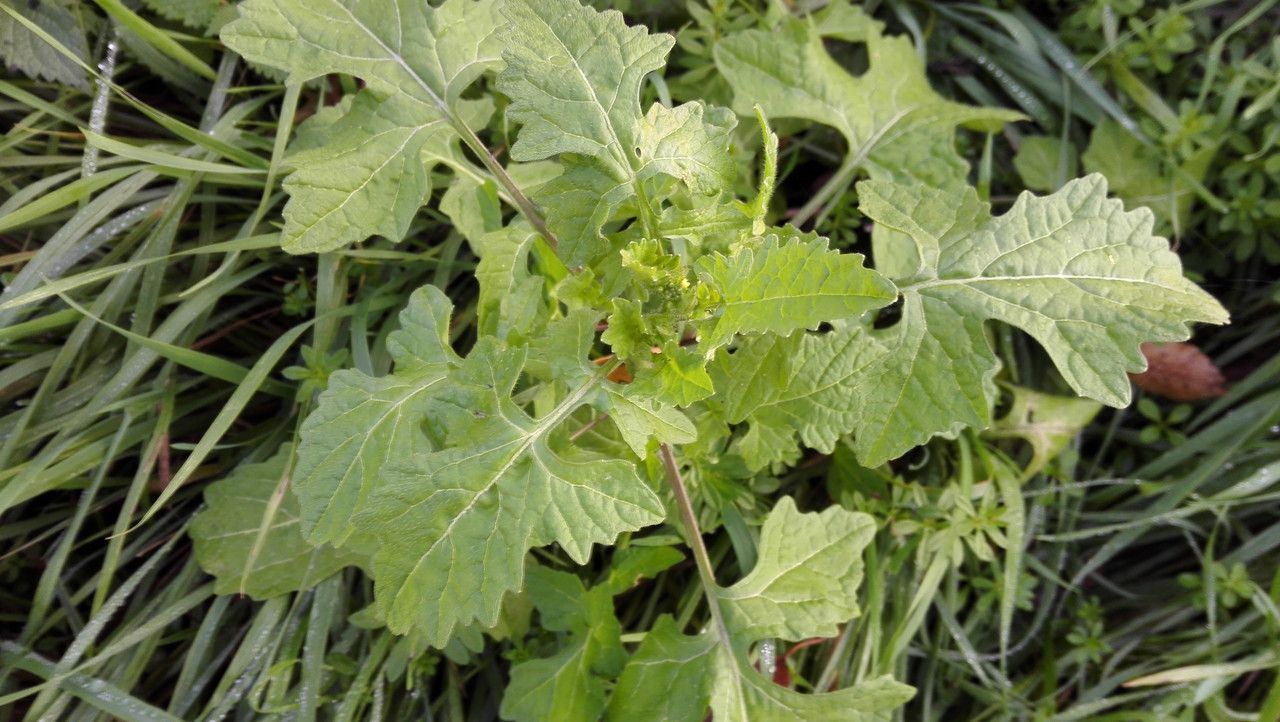
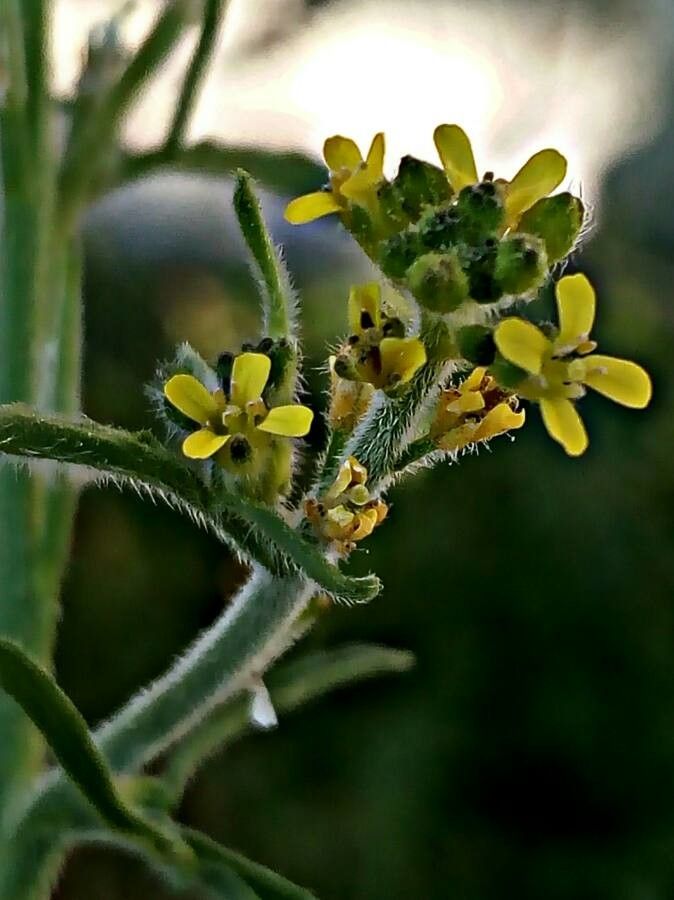
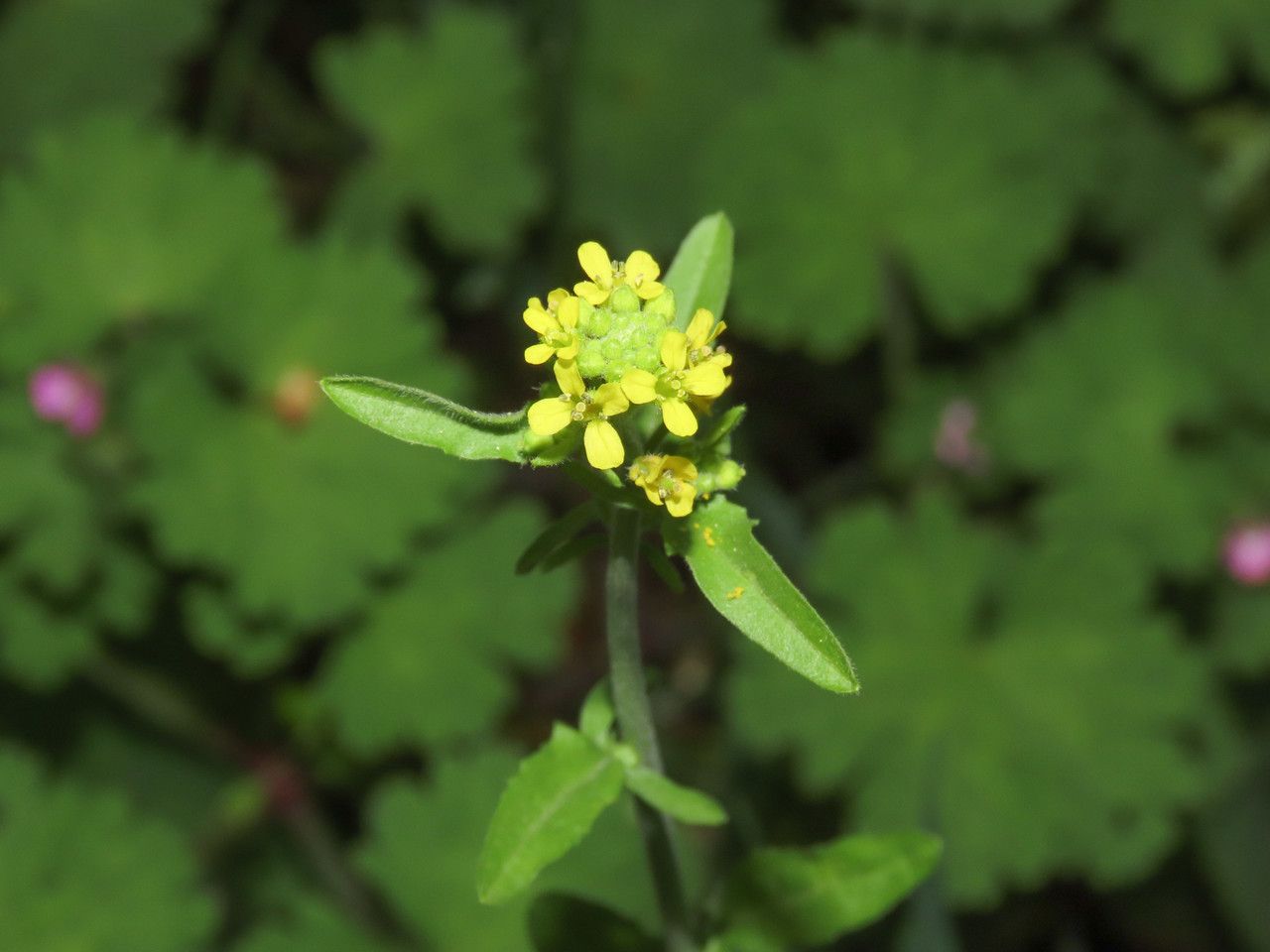
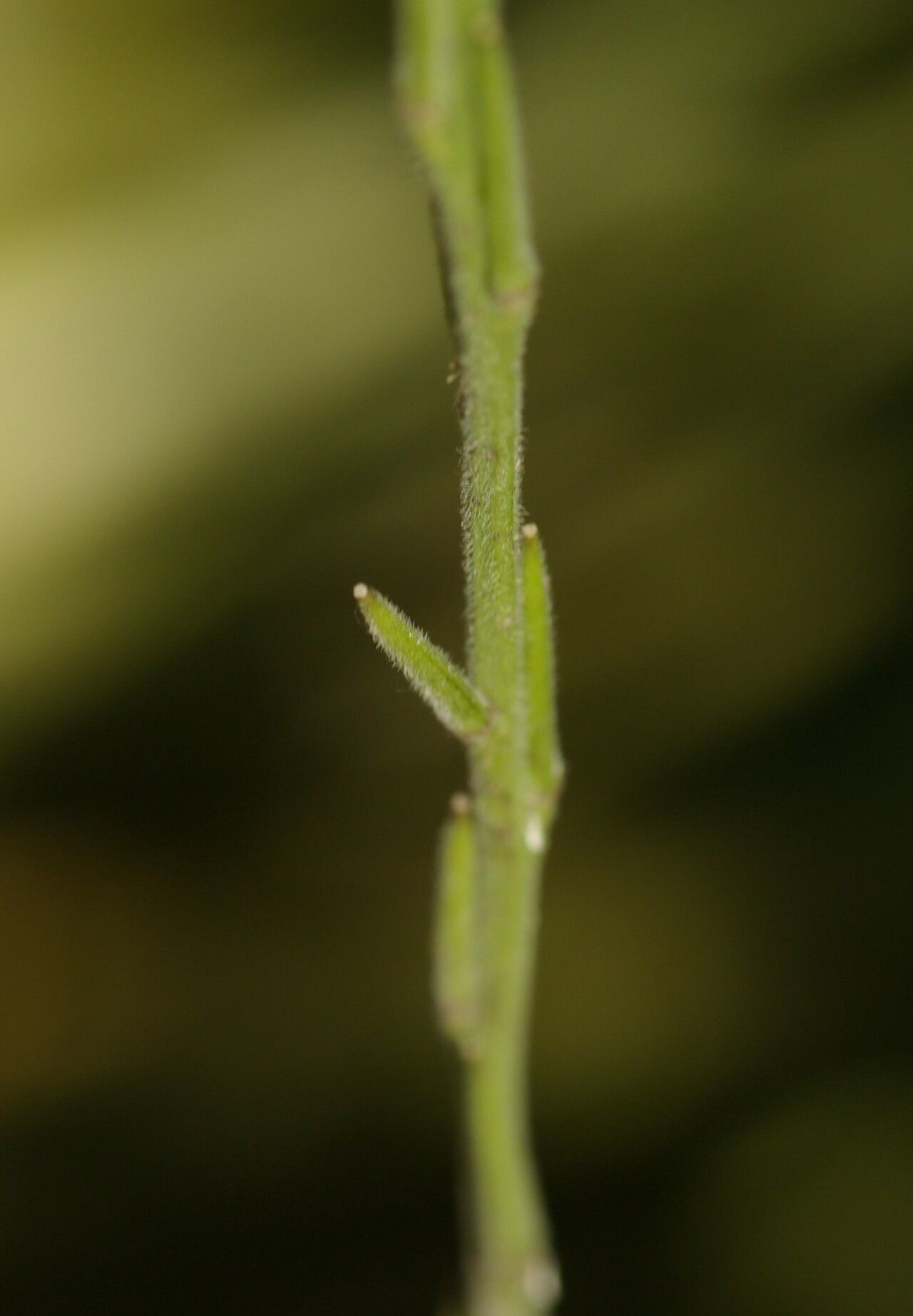
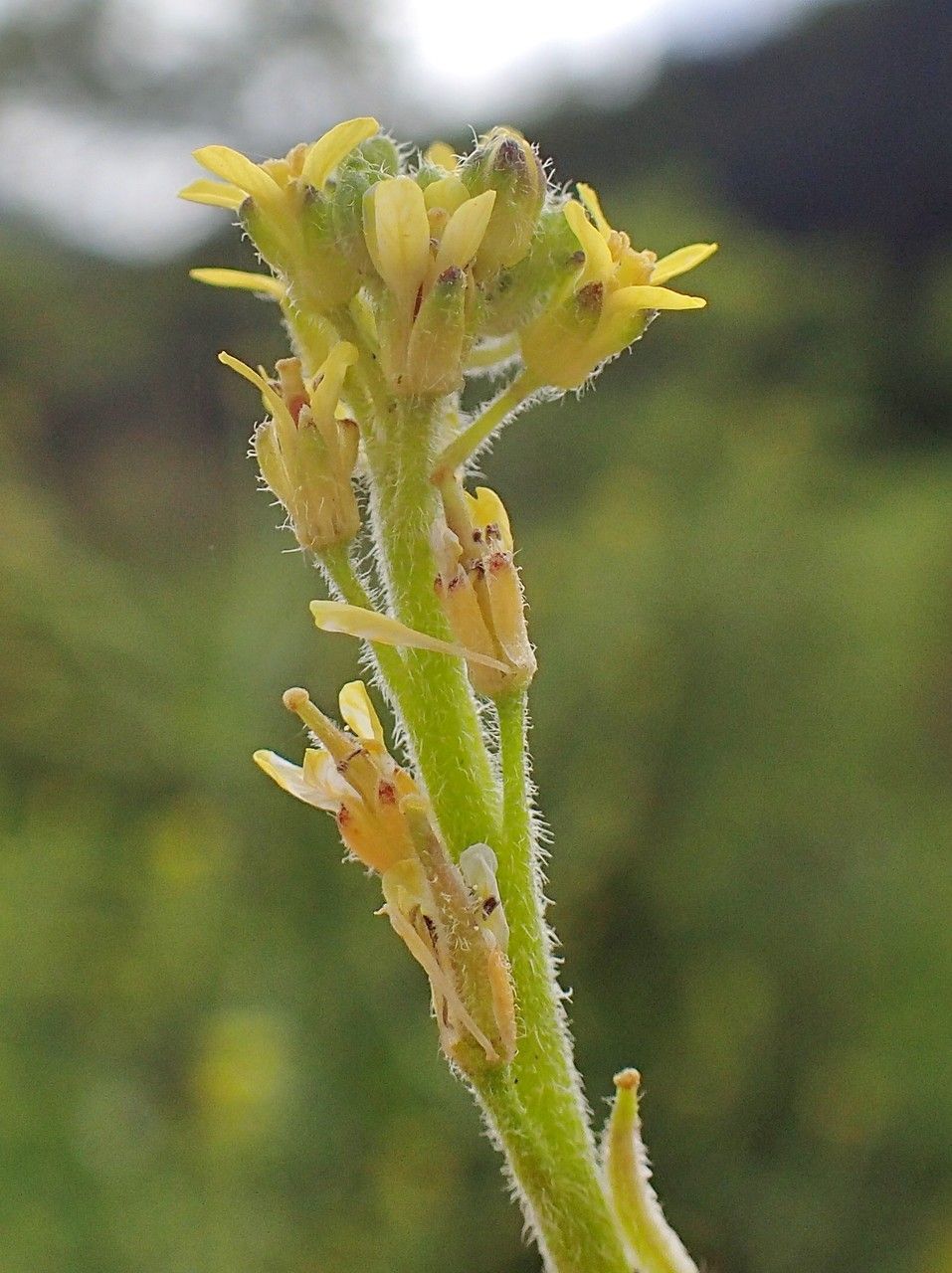
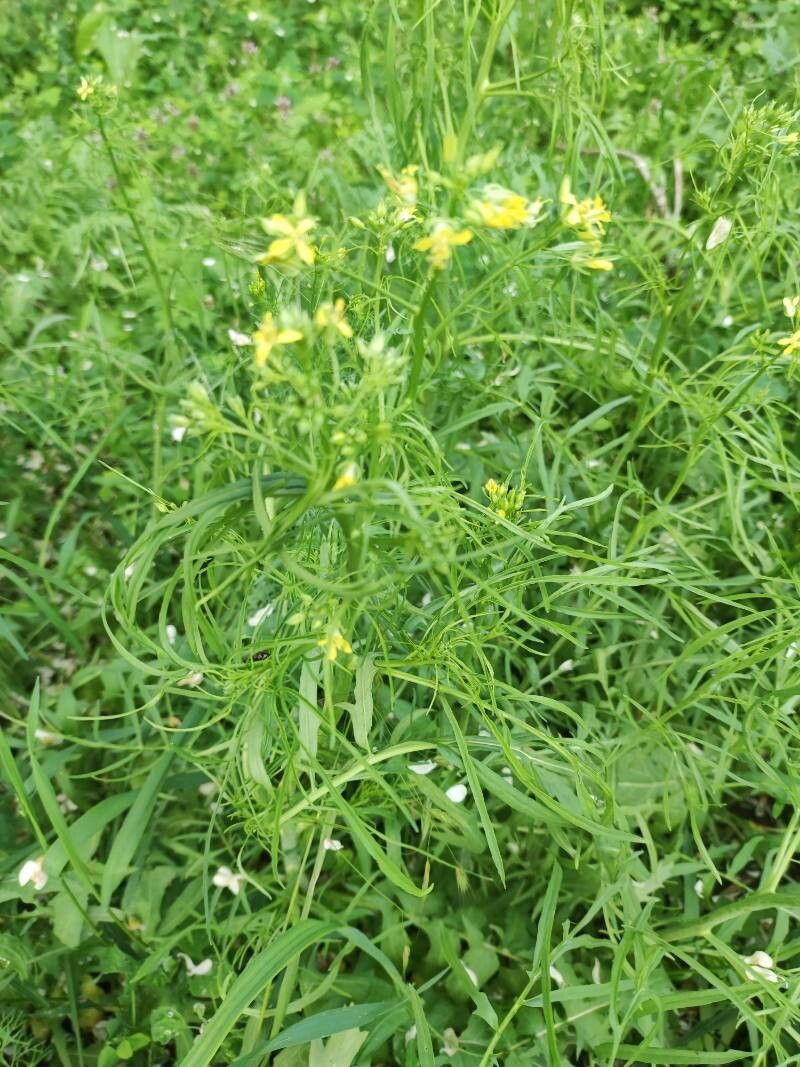
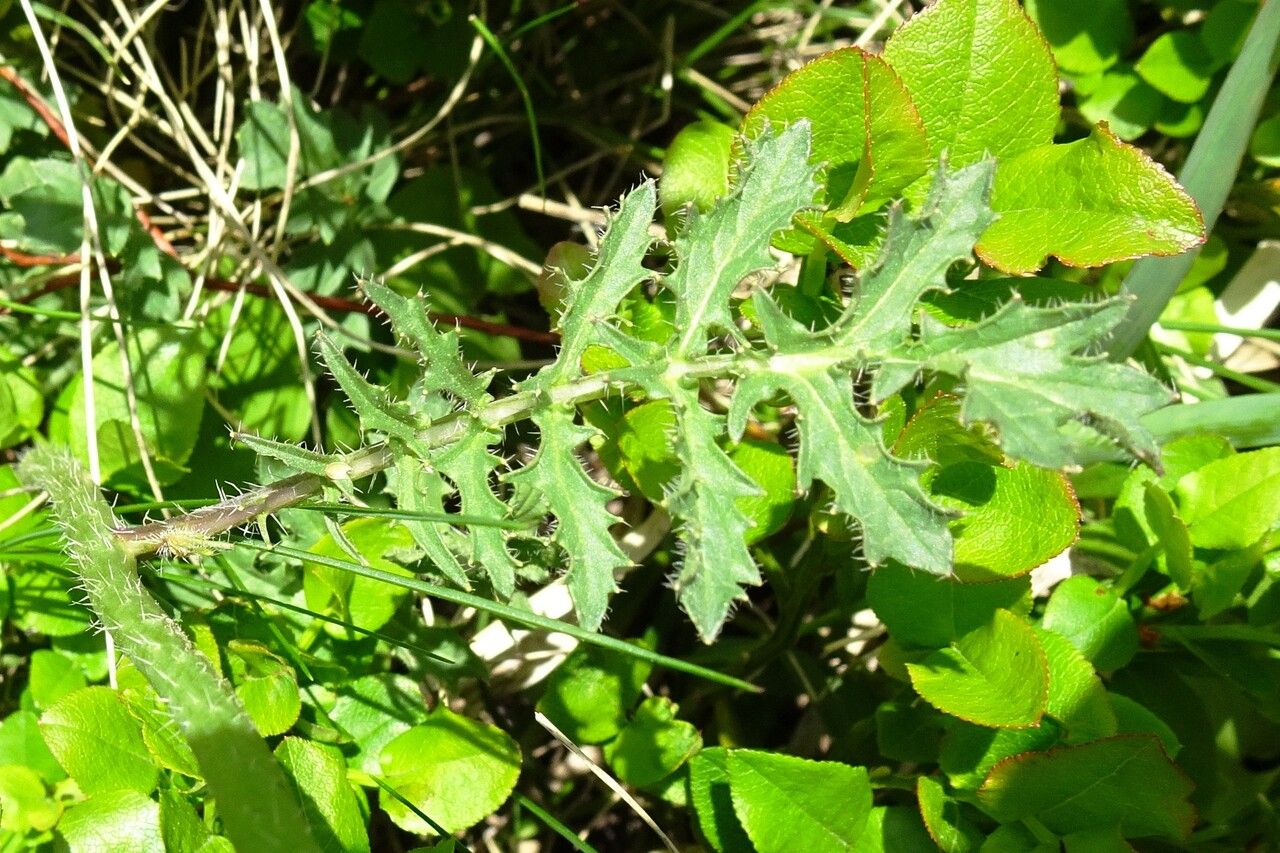
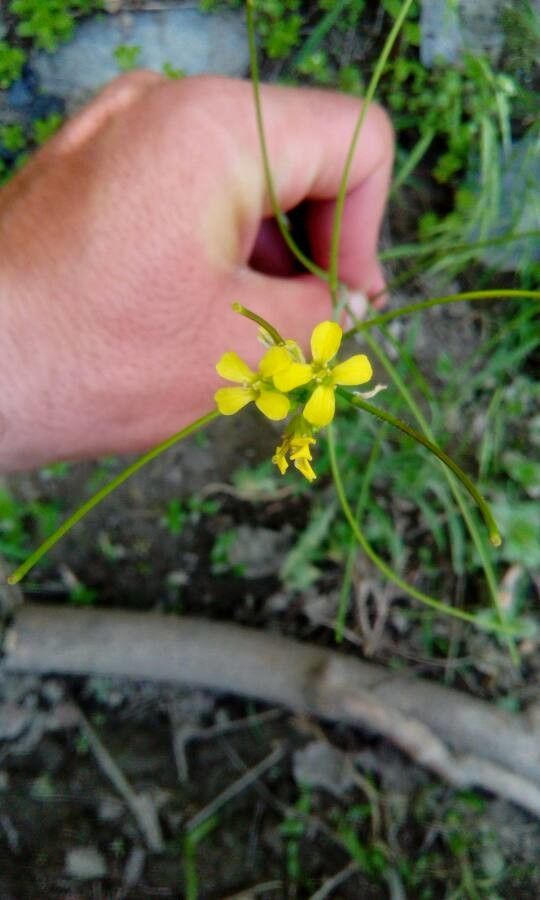
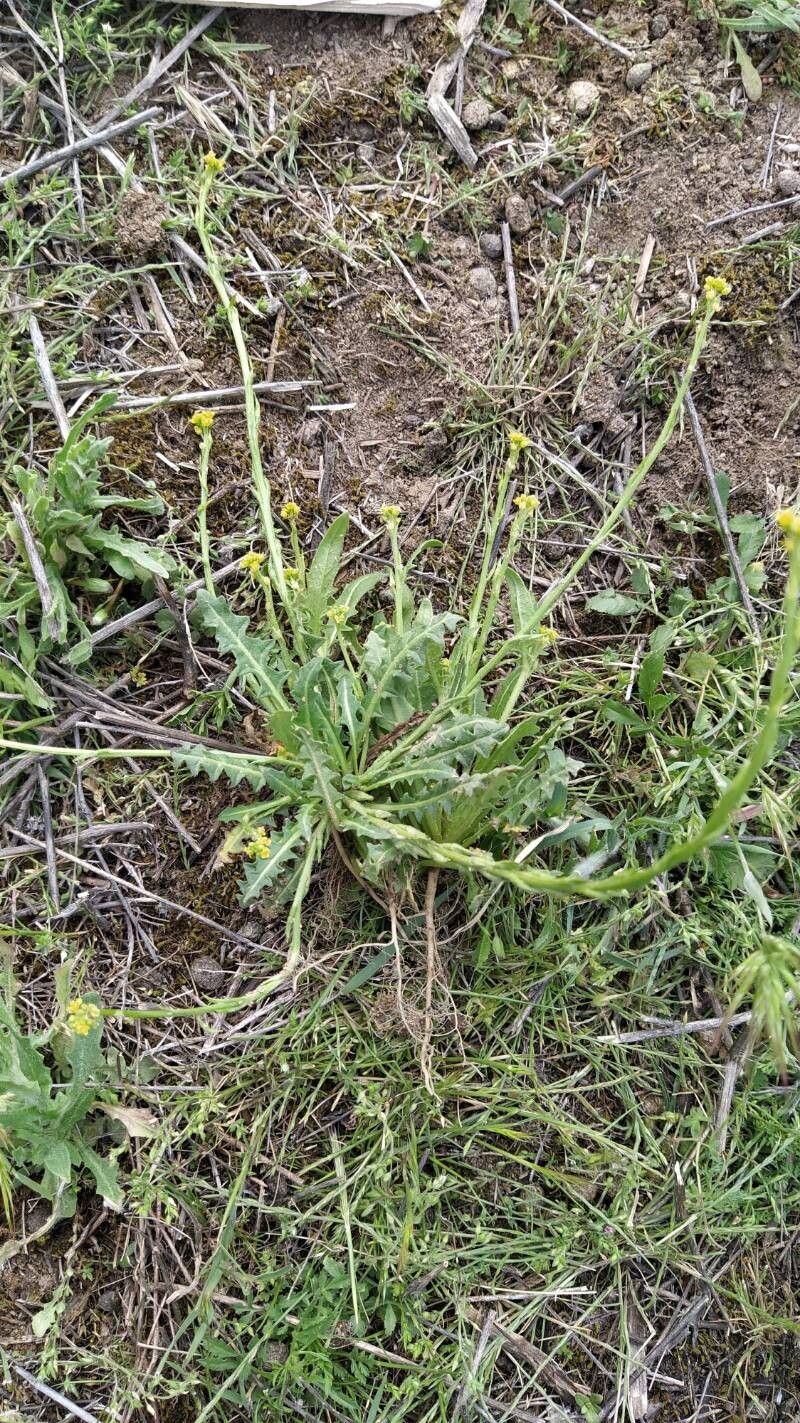
Sisymbrium officinale, commonly known as hedge mustard, is a biennial or annual plant that belongs to the Brassicaceae family. Native to Europe and Asia, it has been introduced and naturalized in many parts of the world. The plant can grow up to 1 meter tall and features a slender stem with small yellow flowers that bloom from May to September.
Hedge mustard thrives in disturbed areas such as roadsides, fields, and waste places. It can tolerate a wide range of soil types but prefers well-drained soils with moderate moisture levels.
Historically, the plant has been valued for its medicinal properties, particularly its anti-inflammatory effects. The leaves are edible and have a slightly bitter taste, suitable for use in salads or cooked as greens.
Additionally, hedge mustard serves as an important food source for many insects, including butterflies, bees, moths, and beetles. Its seeds are also consumed by birds such as finches.
Overall, Sisymbrium officinale is an important ecological component of disturbed habitats. Its medicinal properties and ecological benefits make it an interesting species from both conservation and economic perspectives.
Hedge mustard is fairly resistant to disease and usually not prone to illnesses. However, it can be affected by pests and diseases present in its surroundings. These infections are typically mild. Regarding care, this plant needs moderate maintenance. It should be pruned regularly to keep a neat appearance and support healthy growth. Fertilizing can also help encourage flowering. Hedge mustard is suitable for anyone with outdoor space, such as a garden or patio, and does not demand much care experience. It may need more attention when grown indoors.
How to keep Sisymbrium Officinale.
Light
Hedge mustard grows best when it receives steady, abundant sunlight throughout the day. It is fairly tolerant and can also persist in locations with somewhat reduced sun exposure. However, heavy shading or inadequate light can impede its growth. The habitat it comes from typically provides enough sunlight, supporting its health and vigor.
Water
Hedge mustard grows best with consistent weekly watering, which mimics the periodic rainfall of its native environment. While it has a moderate tolerance for drought, it thrives with steady moisture, especially during its active growing season, as this promotes vigorous growth and optimal nutrient uptake.
Temperature
Hedge mustard is native to temperate regions and does best at temperatures of 68 to 95°F (20 to 35℃). It can tolerate cooler conditions, although growth may be slower. Seasonal adjustments may involve added warmth in winter or cooler conditions in summer.
Fertilizer
Hedge mustard benefits from regular, light applications of fertilizer to encourage healthy leaf growth. You should apply fertilizer about once a month during the summer. Nitrogen is important for foliage, and adding nitrogen-rich sources helps Hedge mustard thrive.
Toxicity
Sisymbrium officinale has no toxic effects reported.
Further reading →
The toxicity and danger assessments provided are for reference only. We do not assure their accuracy, so it's crucial not to depend on them. Seek professional advice when necessary for accurate guidance.
Botanical profile.
- Plant Type
- Herb
- Life Cycle
- Annual
- Genus
- Sisymbrium
- Family
- Brassicaceae
- Hardiness Zone
- 5-9
- Mature Height
- 15 cm to 91 cm
- Mature Spread
- 30 cm
- Leaf Color
- Green
- Leaf Type
- Deciduous
- Flower Color
- Yellow
- Flower Size
- 2.54 cm
- Bloom Time
- Late spring, Early summer, Mid summer
- Planting Time
- Spring, Autumn
- Harvest Time
- Early summer, Mid summer
- Native Area
- Libya, Turkey, Sweden, Austria, United Arab Emirates, Slovakia, Montenegro, Slovenia, Morocco, Croatia, Belarus, Russia, Iraq, Germany, Estonia, Ethiopia, Romania, Latvia, Belgium, Portugal, Netherlands, France, Tunisia, Czech Republic, Cyprus, Bulgaria, Poland, Armenia, Greece, Ukraine, Serbia, Lebanon, Lithuania, Norway, China, Syria, Kyrgyzstan, Kazakhstan, Italy, Spain, Switzerland, Denmark, Finland, Iran, Albania, Ireland, United Kingdom, Hungary, Algeria, Azerbaijan
Other names.
Reader questions.
How should I water my Hedge mustard plant to keep it healthy?
Watering Hedge mustard is quite simple. You have several options when it comes to watering tools, such as a garden hose with a spray nozzle or a watering can. Hedge mustard is not too particular about the type of water it receives – it can thrive with rainwater, tap water, or filtered water. However, it's best to avoid watering from overhead as it can harm the leaves and flowers and potentially cause disease. A drip irrigation system is often the most effective method for watering Hedge mustard. This system evenly and directly waters the soil. If you have a container-grown Hedge mustard, you can use a cup, watering can, or tap to water it directly at the soil.
Why is it necessary to add fertilizer to my Hedge mustard?
Plants require nutrients to grow, but not all plants need additional fertilizers because they can naturally obtain what they need. Hedge mustard is a type of plant that, like others, relies on nutrients to fuel growth and internal processes. The three main nutrients for plants (nitrogen, phosphorus, and potassium) each play a role in one or more vital plant functions. In the case of foliage, nitrogen is especially crucial. However, Hedge mustard can struggle to absorb enough nitrogen from the soil alone, so many gardeners choose to provide supplemental nitrogen through fertilizers.
What are the sunlight requirements for hedge mustard?
Hedge mustard requires constant and generous sunlight throughout the day for optimal growth. It can adapt to areas with slightly less sun exposure but thrives best in full sun conditions, which means above 6 hours of sunlight a day. Partial sun, about 3-6 hours of sunlight, is also acceptable, but inadequate rays can hinder growth. The plant is quite tolerant and originates from an environment that usually provides sufficient sun exposure to promote health and vigor. Additionally, it's important to monitor the movement of sunlight in your garden to ensure plants receive the perfect balance of light and shade.
What is the native environment of Hedge Mustard?
Hedge mustard, scientifically known as Sisymbrium officinale, is native to temperate environments. It thrives in a temperature range of 68 to 95°F (20 to 35°C), but can adapt to cooler temperatures, though its growth might slow down. The plant has strong cold resistance, making special frost protection measures generally unnecessary during winter. However, in extremely cold conditions where temperatures are expected to fall below -25°C, it is important to provide cold protection using materials like soil or straw.
What should I do if I give my Hedge mustard too much or too little water?
Here's how to make sure your Hedge mustard thrives: - If you notice your plant lacks moisture, water it more regularly. - Be cautious of overwatering, as it can lead to disease and death. - Choose a suitable spot for your plant with ample sunlight and good drainage. - If you're growing Hedge mustard in a pot, consider changing it to ensure proper drainage. - When repotting an overwatered Hedge mustard, use loose soils and a pot that drains efficiently.
When should I fertilize my Hedge mustard?
Hedge mustard generally grows well and can benefit from regular fertilization. It is best to fertilize the plant about once a month during the spring and summer months when it is actively growing. However, in the fall and winter when the plant becomes less active, it does not require as many nutrients and should not be fertilized during this time. If you notice new growth on the plant, it is a sign that it is time to start fertilizing. Whether the Hedge mustard is grown outside or indoors in a container, the fertilization schedule remains the same. However, if the plant is in a container, you may not need to fertilize for the first one to two months. Container plants are usually grown in potting soil that already contains sufficient nutrients, so it is best to start fertilizing after the plant has been in the same soil for a while.
How can artificial lighting be used for hedge mustard?
When natural sunlight is insufficient, particularly in winter or in less sunny spaces, artificial lighting becomes vital for hedge mustard's optimal growth indoors. LED lights are a popular choice as they can be customized to provide the specific wavelengths of light needed. Full sun plants require 30-50W/sq ft, partial sun plants need 20-30W/sq ft, and full shade plants need 10-20W/sq ft of artificial light. The light source should be placed 12-36 inches above the plant to mimic natural sunlight, and most plants will need 8-12 hours of light per day to mimic natural daylight hours.
What should be done to protect Hedge Mustard during winter?
To protect Hedge mustard during winter, especially if temperatures are expected to drop below -25°C, it's recommended to cover the plant with protective materials such as soil or straw. Additionally, watering the plant abundantly before the first freeze of autumn is crucial. This ensures the soil around the plant remains moist and enters a frozen state, which helps prevent drought and water scarcity for the plant during the winter and early spring months.
How often do I need to water my Hedge mustard plant?
Hedge mustard requires regular watering throughout its growing season. In the spring, water it once a week. As the season progresses and it gets warmer, you may need to increase watering to two to three times per week. However, be careful not to exceed this rate, as it can harm the plant. Regardless of watering frequency, make sure the soil remains moist but not wet. When it comes to potted hedge mustard, you'll need to water it more often since pot soil can dry out faster than ground soil. Generally, plan to water a potted hedge mustard a few times per week, compared to once per week for an in-ground plant.
When is it not a good idea to use fertilizer on my Hedge mustard?
To ensure the health of your Hedge mustard, avoid fertilizing it if it is already unhealthy due to disease or insect pests. Similarly, do not fertilize plants that are dehydrated, as this can worsen the problem. Only apply fertilizer to plants that are in good health. When watering, be mindful not to splash fertilizer onto the leaves or stem, as it can cause burned spots. Unless you are using a specialized foliage fertilizer, do not allow the fertilizer to directly touch the plant.
What are the signs of inadequate lighting for hedge mustard?
When grown indoors with insufficient light, hedge mustard may exhibit symptoms like smaller new leaves, leggy or sparse growth, faster leaf drop, slower or no new growth, and lighter-colored new leaves. Additionally, chlorosis (leaves losing their green color), sunscald (damage from intense sunlight), leaf curling (to reduce exposure and minimize water loss), wilting (loss of turgor pressure), and leaf scorching (brown, dry edges on leaves) are symptoms related to light exposure. These symptoms indicate the plant's struggle with either too little or too much direct light.
How does Hedge Mustard react to low temperatures?
Hedge mustard is quite cold-tolerant and performs best when temperatures are above 20°C. During winter, it's important to keep it above 0°C. If temperatures fall below -25°C, Hedge mustard may not show immediate damage, but there could be a decrease in sprouting, or it might not sprout at all come springtime. The recommended solution for lack of sprouting in spring is to remove any parts of the plant that fail to sprout.