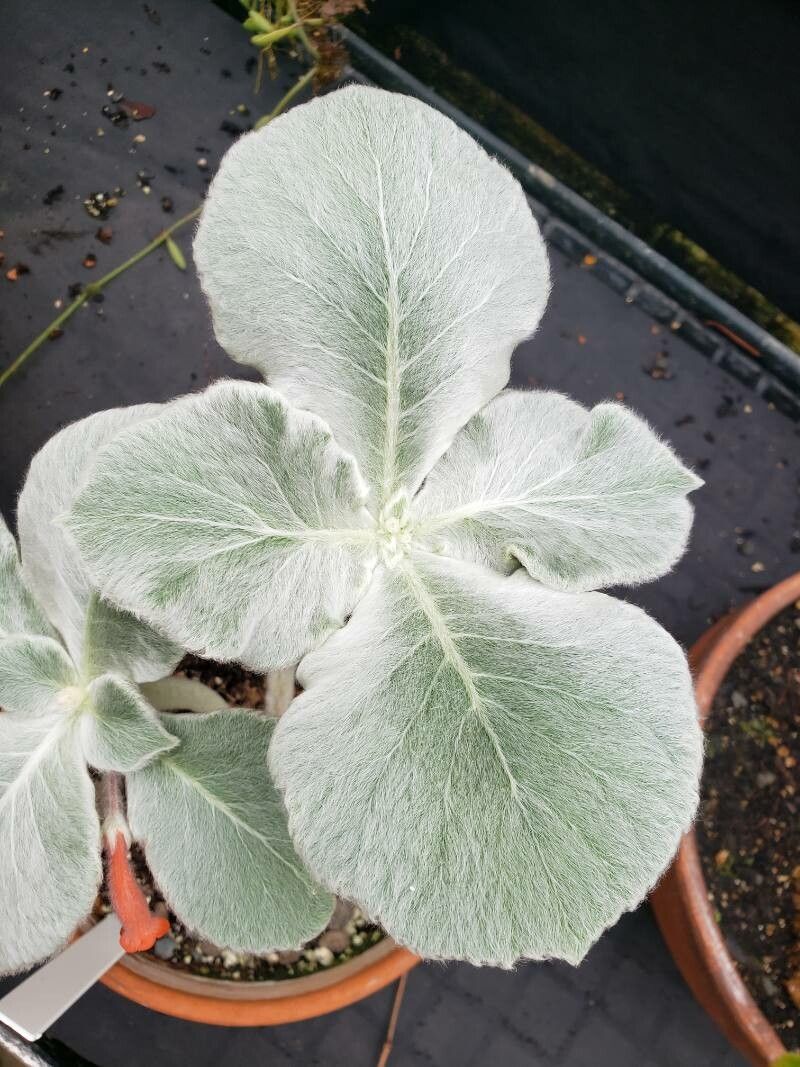
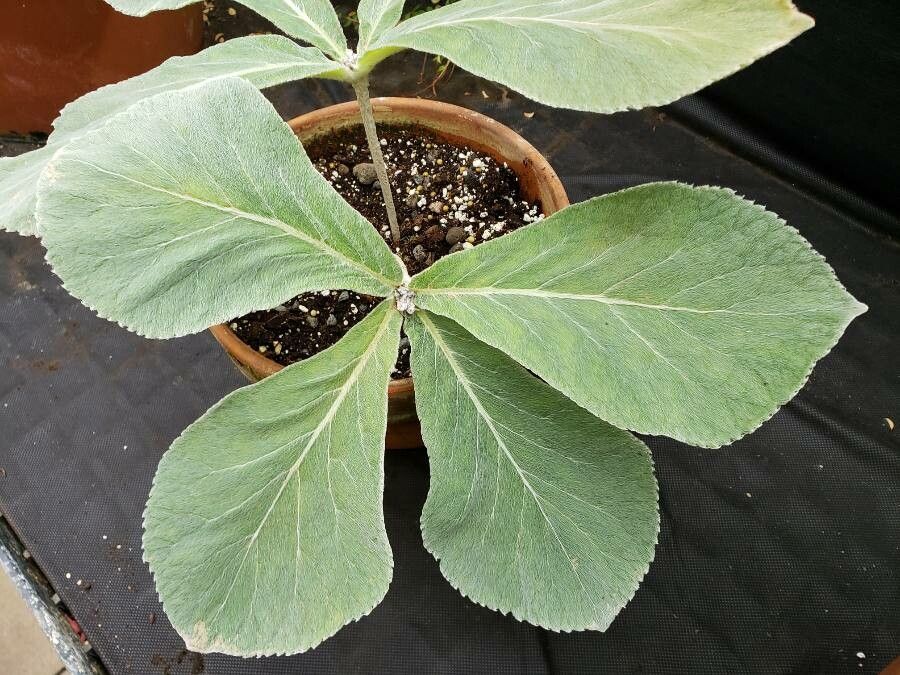
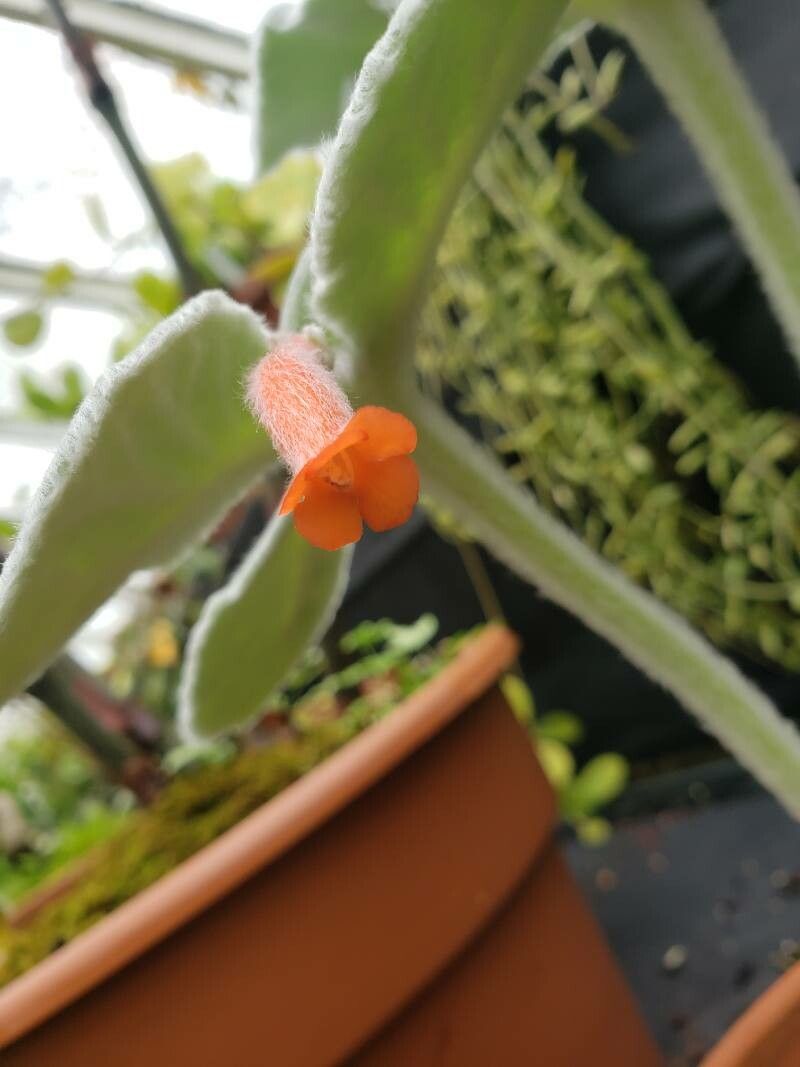
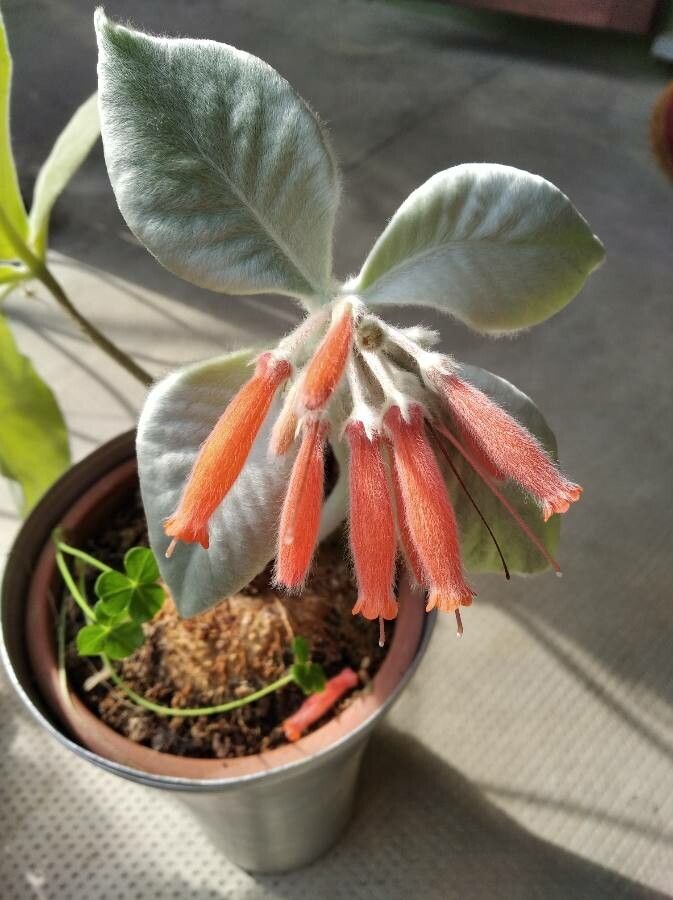
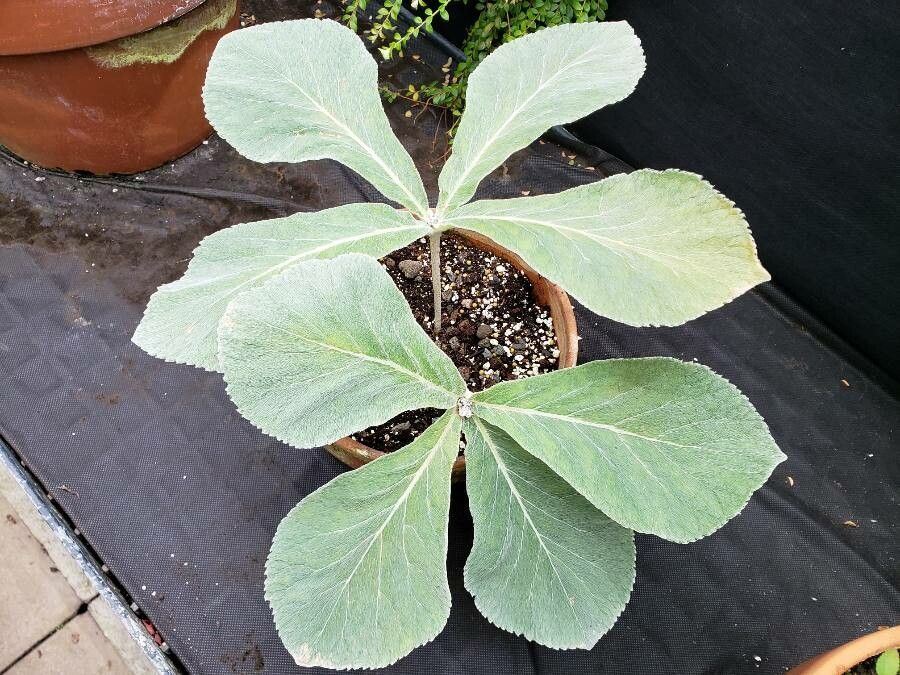
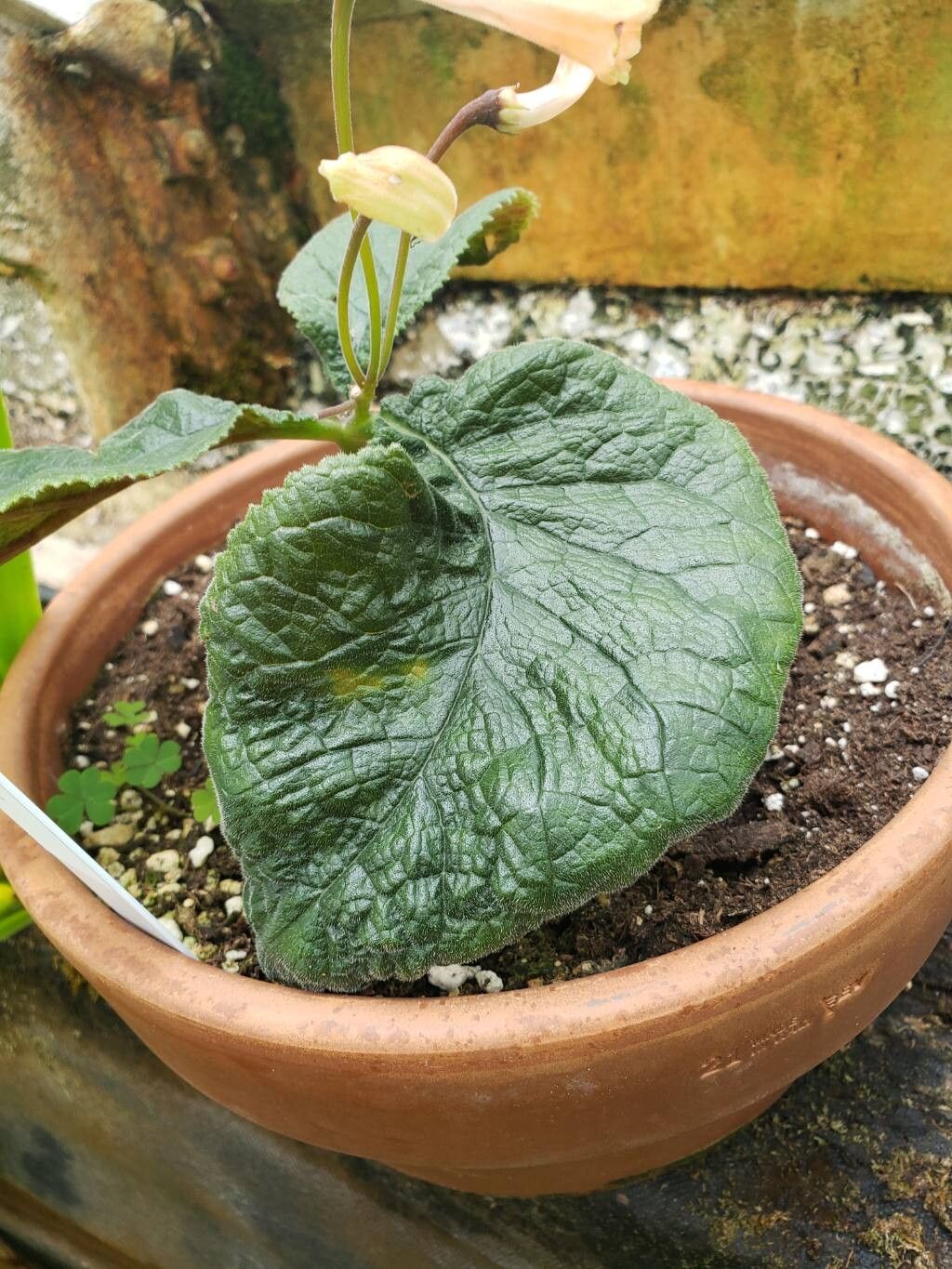
Sinningia leucotricha, commonly known as the Brazilian Edelweiss, is a species of flowering plant in the family Gesneriaceae. Native to Brazil, it thrives in rocky areas and on cliffs. This plant is notable for its distinctive appearance, featuring fuzzy, silver-white leaves covered in fine hairs known as trichomes. These leaves are arranged in a rosette formation at the base of the stem and can reach up to 20 cm in length.
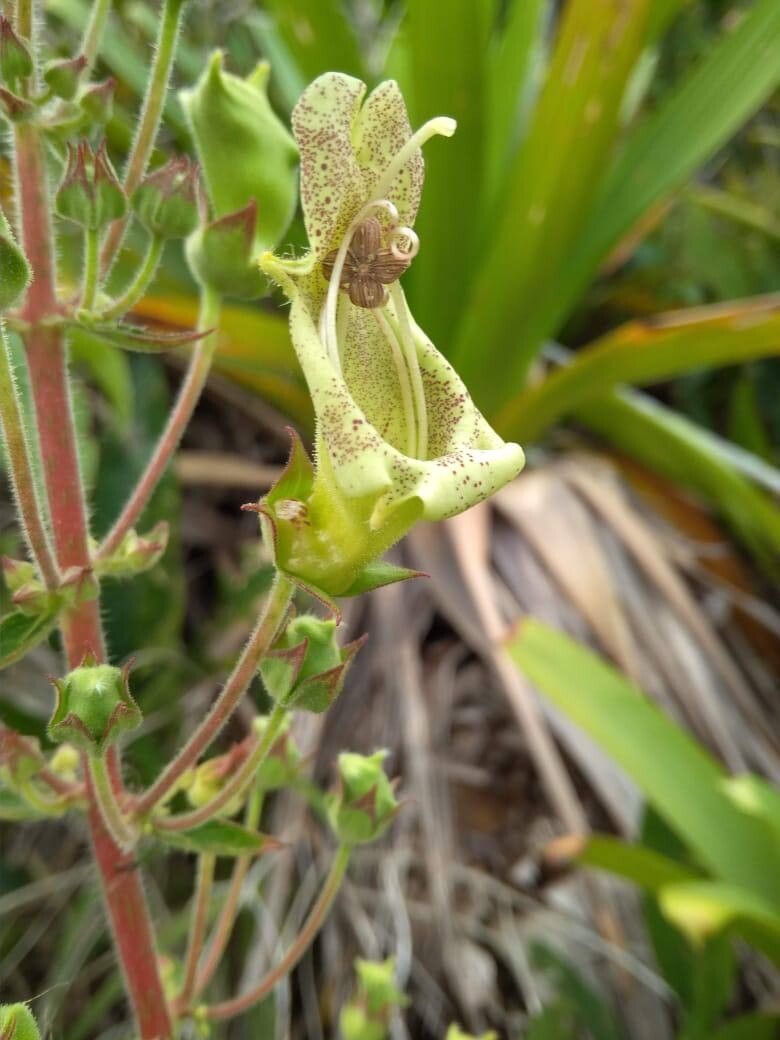
During its blooming season, which lasts from late summer to early fall, Sinningia leucotricha produces tall spikes of tubular flowers that range in color from white to pale pink, with purple spots adorning their throats. The flowers are fragrant and attract pollinators such as hummingbirds.
Sinningia leucotricha is easy to cultivate, preferring well-draining soil and partial shade or filtered sunlight. It can be propagated through leaf cuttings or by dividing its rhizomes during repotting.
Due to its striking appearance and ease of care, this unique plant makes an excellent addition to any indoor or outdoor garden.
Brazilian edelweiss has moderate disease resistance but is more vulnerable to high humidity and overwatering. It also becomes more prone to illness if it receives insufficient light and is kept too wet. Regarding care, Brazilian edelweiss is drought-tolerant and can endure extended periods without watering. It needs little fertilizer and only occasional pruning. For these reasons, it is suitable for people at any skill level, especially those who prefer to spend less time on plant care or who may be away from home for long stretches. It is a good option for anyone who does not want to invest a lot of time in maintenance yet still wants an easy-to-care-for plant.
How to keep Sinningia Leucotricha.
Light
Brazilian edelweiss needs some sunlight, ideally broken up throughout the day, to be healthiest. While it can tolerate full sun, it does best when not exposed continuously. In its native habitat it grows in dappled light. Too little or too much light can hinder its growth.
Water
Brazilian edelweiss flourishes in dry environments with very little moisture, needing to be watered only every 2 to 3 weeks. It thrives in conditions of higher humidity and requires well-draining soil to prevent root rot. During the growing season, the plant benefits from increased water, which supports its vibrant flowering.
Temperature
Brazilian edelweiss is native to Brazil and prefers a temperate climate with temperatures of 68 to 100 °F (20 to 38 ℃). In cooler seasons, consider adjusting room temperature or providing heat sources to maintain plant health.
Fertilizer
For Brazilian edelweiss, apply light amounts of fertilizer 1-2 times a year during the growing season. Do not fertilize in winter or in the summer when the plant is dormant. Cut back on fertilizer for plants that have been repotted, and wait a couple of months after repotting before you resume feeding. Fertilizing helps maintain healthy growth and promotes blooming.
Pot & Repot
When repotting Brazilian edelweiss, choose a pot slightly larger than the current one that has good drainage. Use a gritty, well-draining succulent or cactus potting mix. Gently remove the plant from its old container, brush off excess soil, and set it in at the same depth. Delay watering for a few days to let any root injuries heal. Repot in spring or fall and place it in a brightly lit spot.
Botanical profile.
- Plant Type
- Herb
- Life Cycle
- Perennial
- Genus
- Sinningia
- Family
- Gesneriaceae
- Hardiness Zone
- 10-11
- Mature Height
- 30 cm to 61 cm
- Mature Spread
- 25 cm
- Leaf Color
- Silver, Bronze
- Leaf Type
- Deciduous
- Flower Color
- Red, Orange
- Flower Size
- 2.54 cm to 5.08 cm
- Bloom Time
- Late spring, Summer, Early fall
- Planting Time
- Spring
- Harvest Time
- Late summer, Fall
Other names.
Reader questions.
What should I do if I give my Brazilian edelweiss too much or too little water?
Brazilian edelweiss and other succulents are known for their ability to go without water for long periods of time. However, if you neglected to water your Brazilian edelweiss for a month or more, you may notice that it looks thirsty or damaged. Signs of underwatering include a lackluster and wrinkled appearance, complete drying of the soil, and leaves that may have turned brown and crispy or fallen off. To rehydrate an underwatered Brazilian edelweiss, submerging the pot in water for 5-10 minutes is a good method. When the soil feels moist on the surface, you can consider the watering as properly done. Overwatering is dangerous for Brazilian edelweiss and can lead to root rot, which hinders nutrient and water absorption. This occurs when wet conditions allow fungi and bacteria to thrive in the soil and attack the roots. Symptoms of overwatering include yellow, swollen, and translucent organs that may burst open. If left untreated, the plant may turn brown or black and the leaves may fall off easily. To address overwatering, adjust the growing conditions, provide better air ventilation, and change the water frequency. Saving an overwatered plant is challenging, but catching the problem early can increase the chances of success. If the roots have already rotted, it is likely that the entire plant will die. If you suspect overwatering, remove the plant from its pot and examine the roots and soil. Gently remove wet soil and rinse the roots in room-temperature water to eliminate any lurking fungus and assess their health. If root rot is present, the roots will be dark brown or black, soft, mushy, or slimy. If most of the roots are affected, it may be impossible to save the plant. However, if only a portion of the roots are affected, there is a chance for recovery. Remove unhealthy-looking roots using sterilized cutting tools and dip the remaining healthy roots in a fungicide. Repot the plant in fresh, well-draining soil. Although not always successful, this method often allows the plant to make a full recovery and produce new growth in the next growing season.
Why should I put fertilizer on my Brazilian edelweiss plant?
Applying plant food to the Brazilian edelweiss helps provide nutrients to its growing medium and supports healthy growth. Additionally, fertilizing can stimulate mature specimens to produce blooms during the growing season, even though they already store water and nutrients.
What are the sunlight requirements for Brazilian edelweiss?
Brazilian edelweiss thrives with some degree of sun exposure, ideally receiving fragmented sunlight throughout the day, although it can tolerate being in full sun. In its native environment, it grows under conditions of scattered sunlight. Providing the correct amount of sunlight is crucial; too much or too little can hinder its growth. Partial sun, which is about 3-6 hours of sunlight a day, and full sun, which is more than 6 hours, are vital to consider. It's important to observe the movement of sunlight in your garden to find the ideal spots that offer a balanced environment for your Brazilian edelweiss, ensuring its well-being.
What is the native climate for Brazilian edelweiss?
Brazilian edelweiss, also known as Sinningia leucotricha, thrives in Brazil's temperate climate, preferring temperatures between 68 to 100°F (20 to 38°C). It is a heat-loving plant that requires careful temperature management, especially during the cooler seasons when adjustments may be needed to maintain optimal plant health.
How frequently should I water my Brazilian edelweiss plant?
To determine how often to water Brazilian edelweiss, it is best to check the soil and only water when it is completely dry. You can either use your finger or a moisture meter to check the soil below the surface. If you have planted it in a deep pot, you can use a stick or chopstick to check the moisture. If it feels even slightly moist, wait a few days and check again. In general, most people will need to water Brazilian edelweiss about every two weeks in summer and once a month in winter, but there are factors that can affect the frequency. The section below provides considerations that can help determine how often to water.
When should I fertilize my Brazilian edelweiss?
Brazilian edelweiss only requires a small amount of fertilizer during the growing season, around 1-2 times a year. The best time to fertilize is in spring and autumn, avoiding winter and summer when the plant is dormant. If you have recently repotted the plant, be cautious with the amount of fertilizer used, as it is recommended to reduce it. It is also advisable to wait a couple of months after repotting before applying any fertilizer.
How do you use artificial lighting for indoor Brazilian edelweiss plants?
Indoor Brazilian edelweiss plants require adequate lighting to grow optimally, especially when natural sunlight is insufficient. Artificial lighting serves as an excellent supplement, particularly during winter or in less sunny areas, to promote healthier and faster growth. LED lights are recommended for their ability to provide specific wavelengths needed by plants. The intensity of artificial light should match the plant's sunlight needs: 30-50W/sq ft for full sun plants, 20-30W/sq ft for partial sun plants, and 10-20W/sq ft for full shade plants. Place the lights 12-36 inches above the plant to mimic natural sunlight and keep them on for 8-12 hours daily to simulate the natural daylight hours required by the species.
How should Brazilian edelweiss be cared for during winter?
During winter, when outdoor temperatures drop below 5°C, Brazilian edelweiss should be moved indoors for cultivation to avoid entering a dormant state or risking damage. It is best placed near a south-facing window to ensure it gets as much sunlight as possible. If natural light is insufficient, supplemental lighting is an effective alternative. When temperatures fall below 20°C, its growth slows, necessitating a reduction or complete cessation of watering to prevent root rot. For those grown outdoors, halt watering completely in low temperatures, and if possible, set up temporary insulation measures like a greenhouse or wrapping the plant in plastic film or fabric.
What do I need to think about when watering my Brazilian edelweiss?
To properly water your Brazilian edelweiss, there are a few environmental factors to consider, such as the container size, soil type, temperature, and humidity. The container and soil you choose will determine how often and how much water to use. Make sure the container has drainage holes at the bottom to allow excess water to escape. A smaller container can hold less moisture and needs more frequent watering, while a larger pot retains moisture longer and requires less frequent watering. Avoid using an oversized pot, as this can lead to overwatering. When repotting, move to a container that is only one size larger. A shallow container is ideal for Brazilian edelweiss because it has shallow root systems. The watering frequency also varies with the seasons. During winter, growth slows down, and the plant requires less water because there is less evaporation. In cooler winter air, the soil retains moisture for a longer time than in the summer. Consider the climate in your location as well. If you live in a humid and rainy area, you will need to water your Brazilian edelweiss less frequently than in a dry and arid location. Keep in mind that conditions can change within a geographic location due to seasons and indoor heating or air conditioning. If your Brazilian edelweiss is planted in the ground, it generally does not require supplemental watering once its root system is established. However, during extended dry periods, you may need to water occasionally. In areas where Brazilian edelweiss can only be grown in containers, you can move the plant outside during the spring and summer when the temperature is suitable and bring it back indoors when temperatures begin to drop. Potted Brazilian edelweiss kept outdoors usually needs more water due to increased sun exposure, even if it is on a shaded porch.
When is it not a good idea to fertilize my Brazilian edelweiss?
The Brazilian edelweiss, like other plants, goes into a dormancy period. During this time, it's best to avoid fertilizing. Specifically, in the summer and winter when the plant stops growing, fertilizer should not be applied. It's also recommended to refrain from fertilizing for a few months after repotting in the spring.
What are the signs of light deficiency in Brazilian edelweiss?
Light deficiency in Brazilian edelweiss can manifest as smaller new leaves compared to older ones, leggy or sparse growth, faster leaf drop, slower or no new growth, lighter-colored new leaves, and symptoms of chlorosis, where leaves turn yellow due to a breakdown of chlorophyll. Excessive sunlight can lead to sunscald, leaf curling, wilting, leaf scorching, indicating damage to the plant's tissues. These symptoms highlight the importance of providing the right amount of light, whether through careful placement in natural sunlight or the use of artificial lighting, to maintain the health of Brazilian edelweiss plants.
What are the symptoms of Brazilian edelweiss experiencing low temperature?
Brazilian edelweiss is not tolerant of low temperatures and shows optimal growth when the temperature remains above 20°C. In winter, it must be kept above 5°C to prevent weakening, wilting, and root rot risks. Following mild frost damage, the plant may initially show no symptoms but will gradually wither after a week.