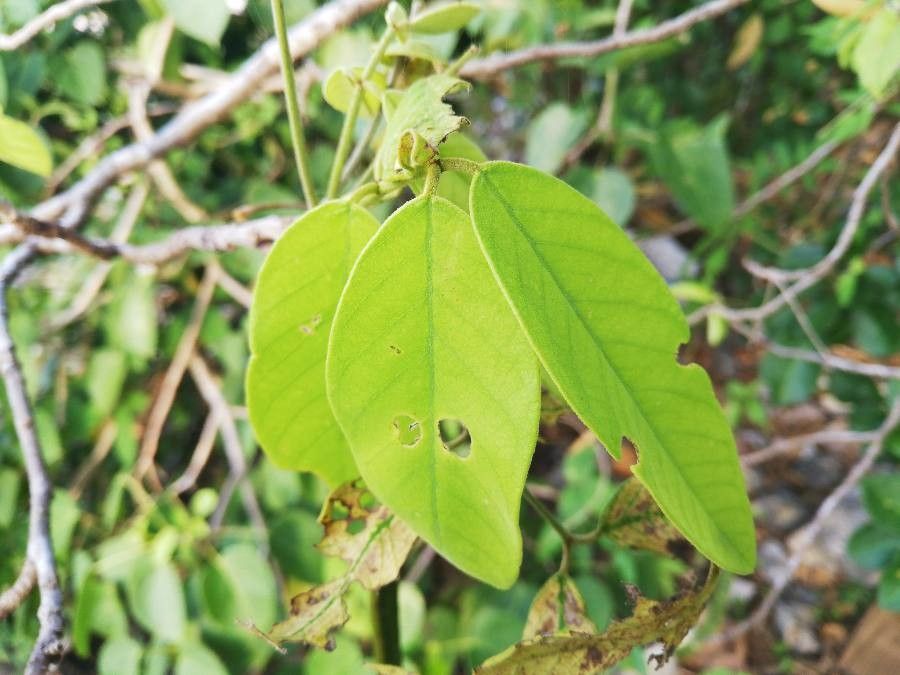
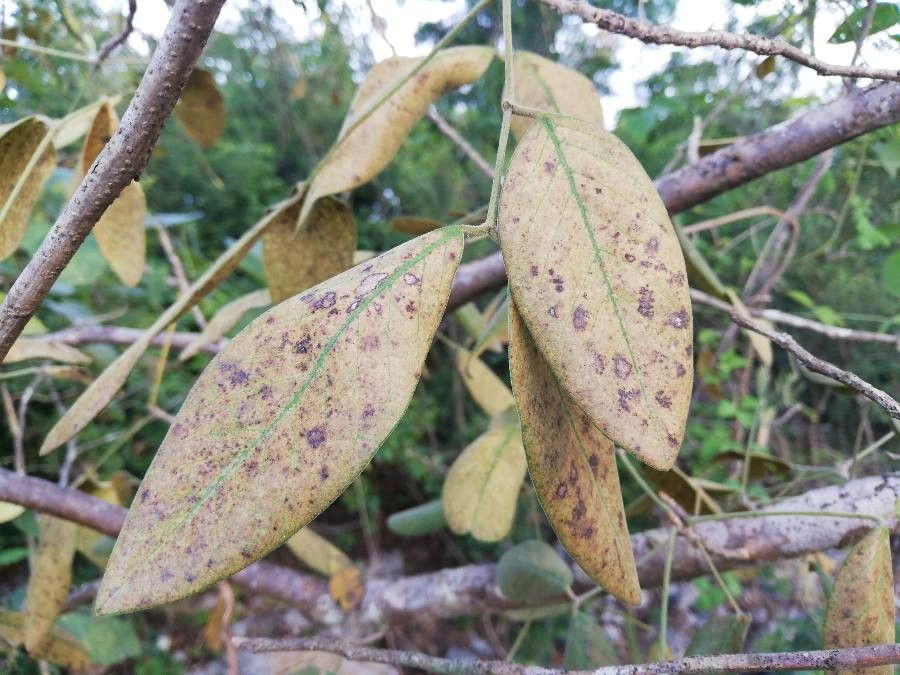
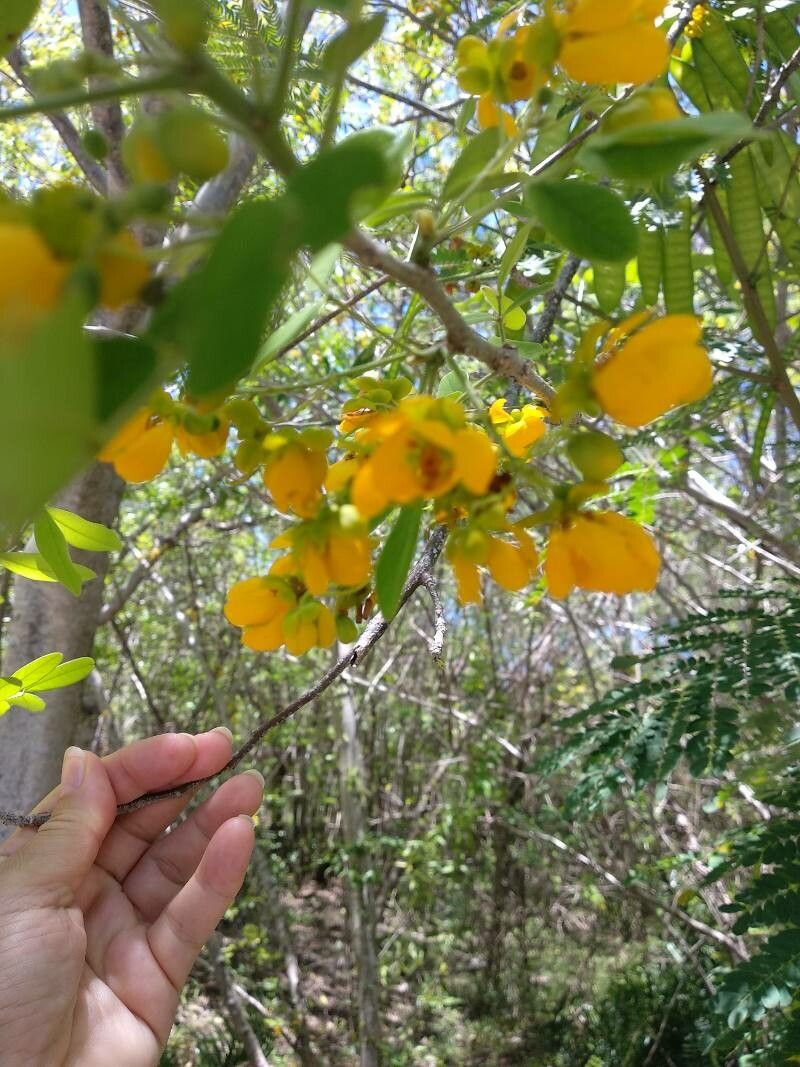
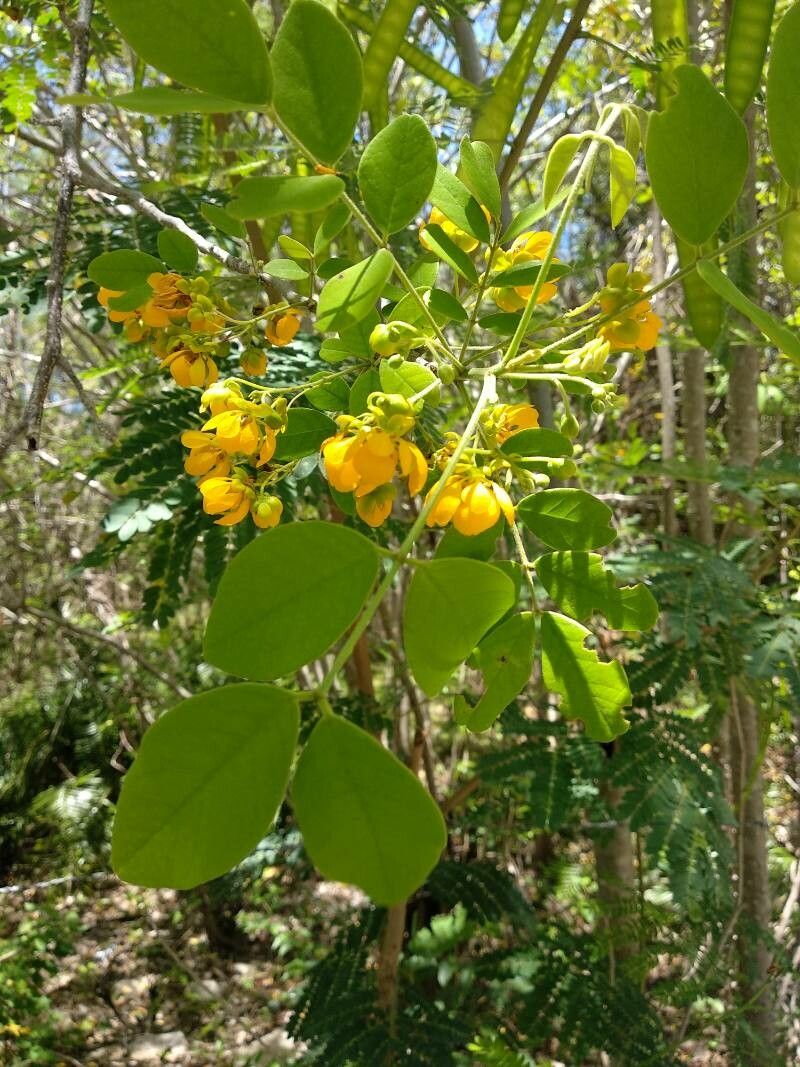
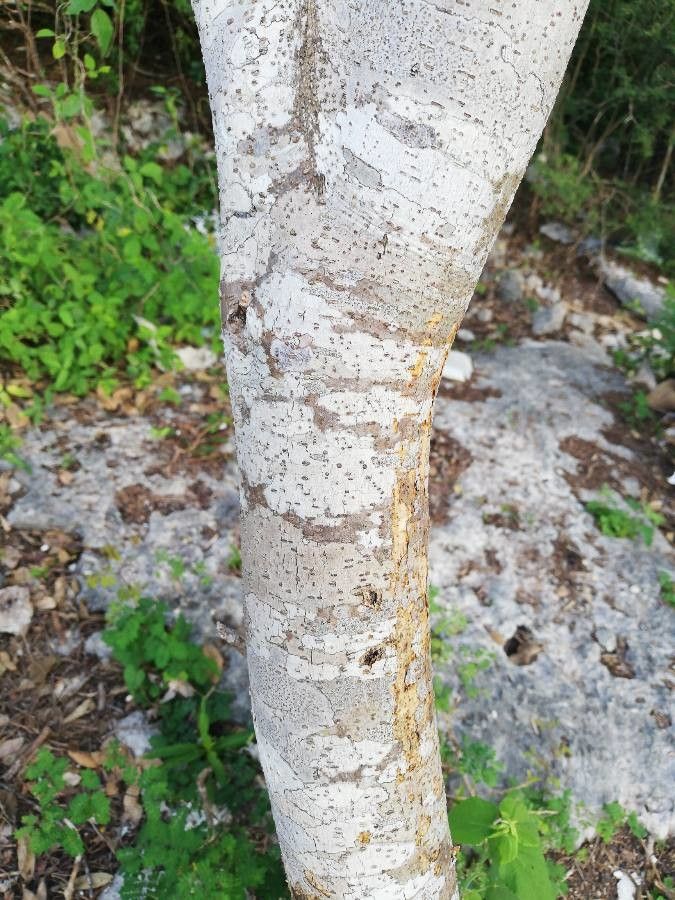
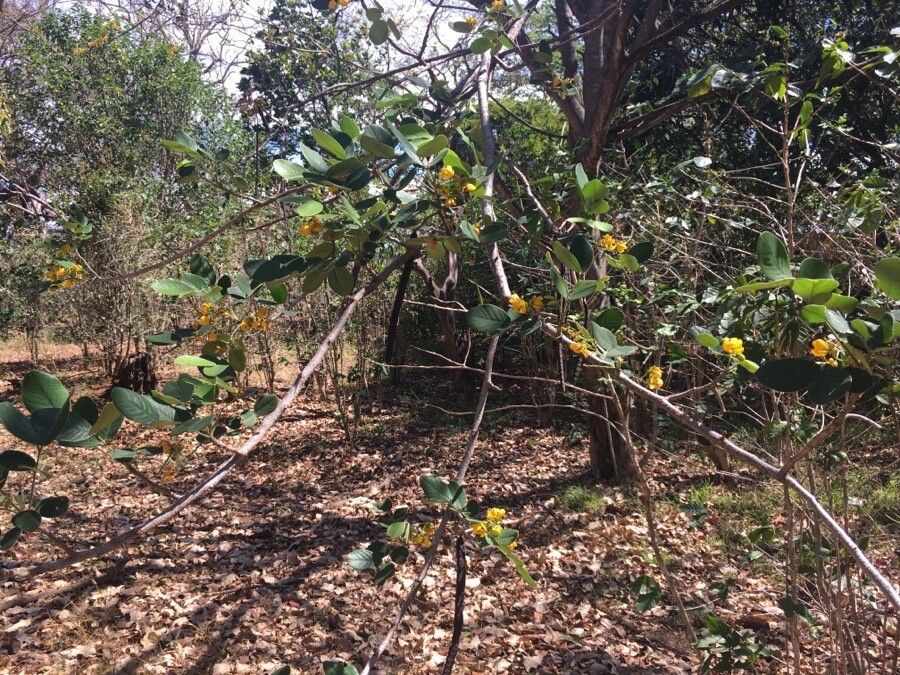
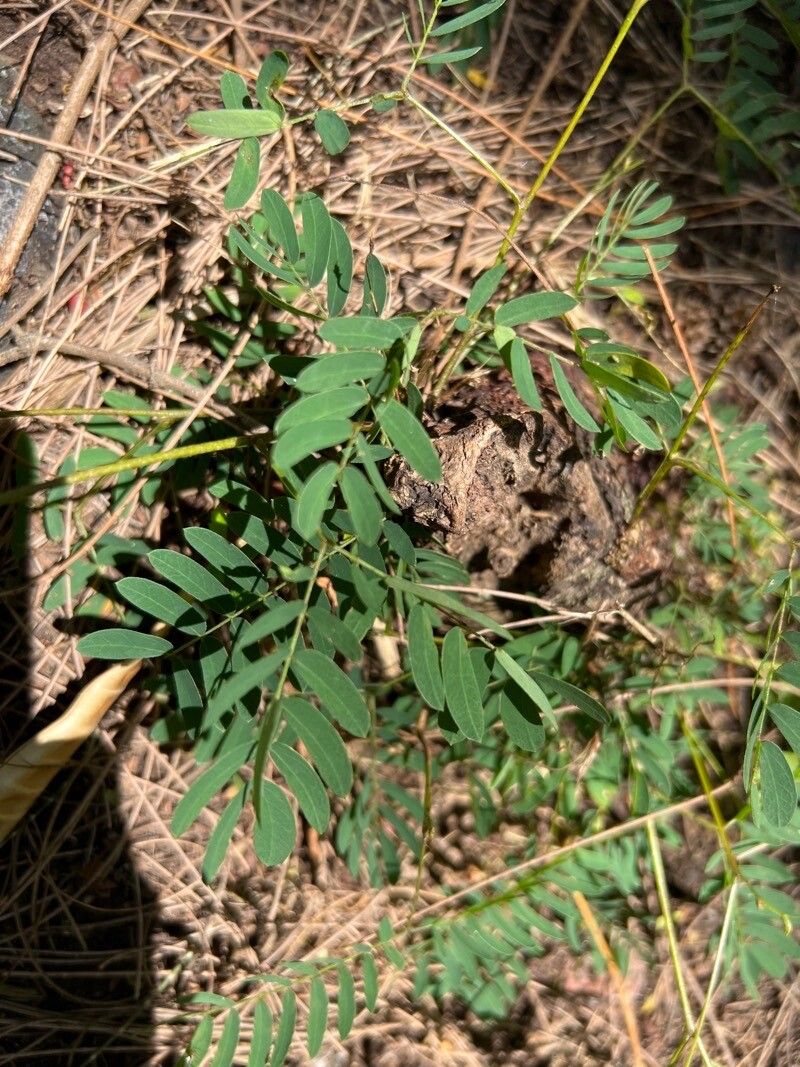
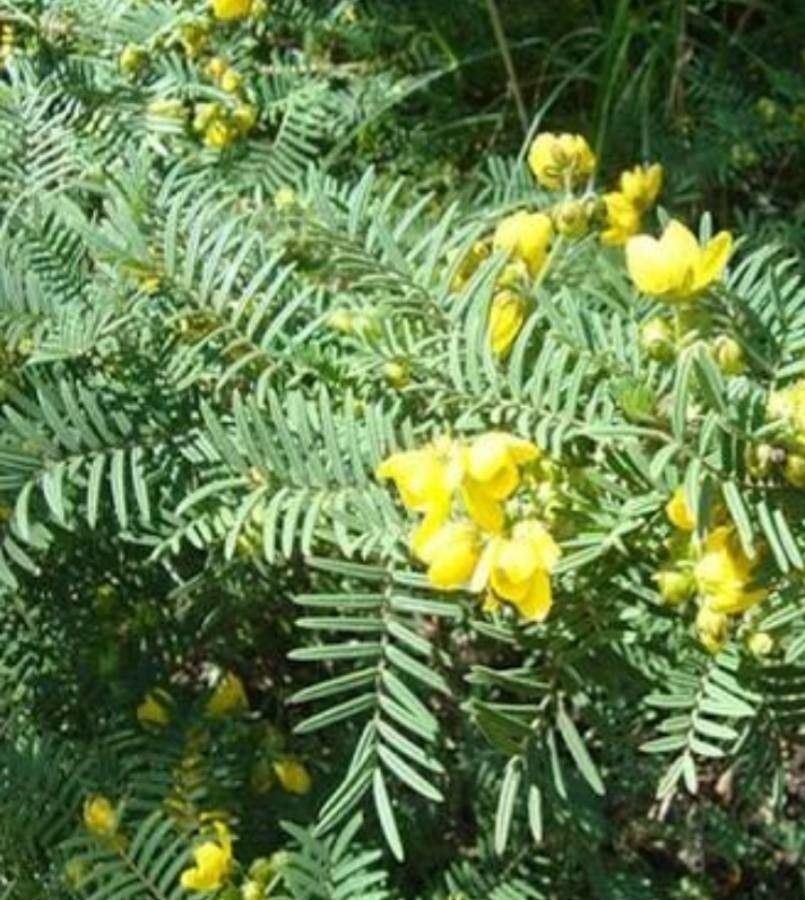
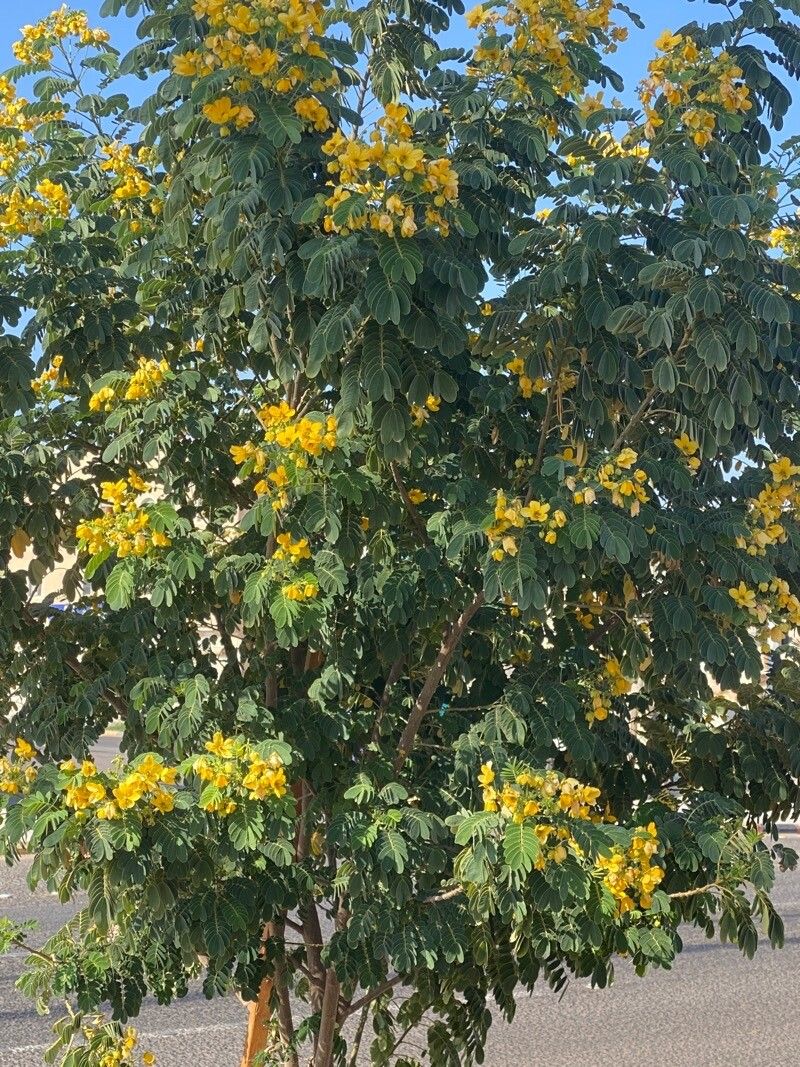
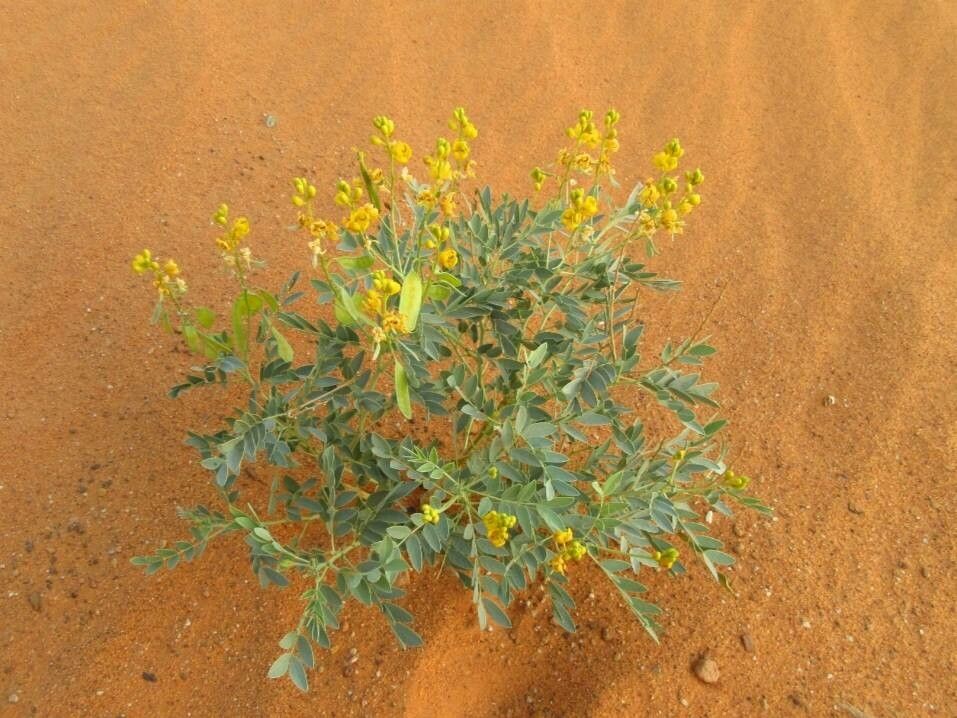
Senna atomaria, commonly known as wild senna or American senna, is a perennial herbaceous plant belonging to the Fabaceae family. Native to North America, it thrives in various habitats such as prairies, meadows, and open woods.
This plant can grow up to 6 feet tall and features a woody stem with bright green pinnate leaves. Each leaf comprises 6-8 pairs of leaflets, with a terminal leaflet at the end. Senna atomaria's bright yellow flowers bloom from June to September.
For centuries, Native Americans have utilized this plant for its medicinal properties. It contains anthraquinones, which possess laxative effects that help relieve constipation. Additionally, it has been used as an herbal remedy for ailments such as fever, coughs, colds, and skin infections.
Senna atomaria also serves as an important host plant for several butterfly species, including the cloudless sulphur butterfly (Phoebis sennae), which lays its eggs on the leaves.
In summary, Senna atomaria is a significant herbaceous perennial with medicinal properties. It plays a vital role in supporting biodiversity by offering habitat for various butterfly species, making it an essential part of North American ecosystems.
San jose flower shows good disease resistance and is generally not prone to illnesses. In terms of care, this plant is relatively low-maintenance. When grown outdoors, it needs only minimal watering, and larger plants typically do not require pruning. Smaller plants, however, should be pruned after they have finished blooming. San jose flower is suitable for anyone with an outdoor space, such as a garden or deck, and does not demand a lot of care experience.
How to keep Senna Atomaria.
Light
San jose flower prefers continuous exposure to the sun throughout the day for optimal growth, though it can tolerate locations with only partial sun. It comes from habitats where sunlight is abundant. Too much or too little solar exposure can adversely affect its health.
Water
The San Jose flower originates from semi-arid regions and is moderately drought-tolerant. It thrives with watering every 2-3 weeks. Thanks to its adaptation to dry conditions and deep root system, it is an excellent choice for xeriscapes and gardens with well-draining soil that experience only occasional rainfall.
Temperature
San jose flower comes from tropical areas, where the climate is generally warm and humid. As a result, it is well suited to high temperatures and humidity. It does not tolerate sudden temperature shifts and prefers a steady temperature, so it is important to prevent indoor temperature fluctuations. It typically cannot withstand cold and needs warmer conditions to grow. If the surrounding temperature falls too low, the plant may stop growing or even die.
Fertilizer
The best time to fertilize a San jose flower is in early spring as it comes out of dormancy. This encourages overall growth and the development of blooms. Fertilizing improves the foliage, stems, and branches, while encouraging flowers that are large, vivid, and long-lasting. It also helps move nutrients from the roots to the flowers and boosts the plant's health and resistance to disease.
Pruning
San Jose flowers are known for their bright yellow blooms and feathery foliage. To keep the plants healthy and thriving, prune them in early spring. This involves removing any dead or diseased branches, which encourages bushier growth and improves air circulation. Such maintenance not only enhances blooming and overall plant health, but it also helps reduce pest problems.
Botanical profile.
- Plant Type
- Tree, Shrub
- Life Cycle
- Perennial
- Genus
- Senna
- Family
- Fabaceae
- Hardiness Zone
- 10-12
- Mature Height
- 4.88 m to 10.06 m
- Mature Spread
- 3.96 m to 7.92 m
- Leaf Color
- Green, Dark Green
- Leaf Type
- Deciduous
- Flower Color
- Yellow
- Flower Size
- 2.03 cm to 3.05 cm
- Bloom Time
- Late spring, Summer
- Planting Time
- Spring, Summer, Autumn
- Harvest Time
- Late summer, Fall
- Native Area
- Colombia, Bahamas, Belize, Cuba, Honduras, Mexico, Venezuela, El Salvador, Nicaragua, Costa Rica, Panama, Jamaica
Other names.
Reader questions.
What are the sunlight requirements for San Jose flower?
The San Jose flower thrives when exposed to full sun for more than 6 hours daily but can also grow in partial sun, approximately 3-6 hours of sunlight. It's important to monitor the movement of sunlight through your garden to find spots that offer an ideal balance of light and shade, ensuring the plants' well-being.
How essentials does sunlight play a role in the growth of San Jose flower?
Sunlight is crucial for the optimal growth of the San Jose flower, a plant native to habitats abundant in sunlight. Continuous exposure throughout the day greatly benefits its growth, though it can survive in partial sun. Insufficient or excessive solar exposure can negatively impact its health. For indoor plants lacking in natural light, especially during winter or in less sunny spaces, artificial lighting can be a significant aid. LED lights are recommended due to their ability to provide specific light wavelengths needed by plants. The amount of artificial light required varies depending on whether the plant needs full sun, partial sun, or is a shade plant, with recommendations ranging from 10-50W/sq ft. Position the light source 12-36 inches above the plant and ensure it receives 8-12 hours of light per day to mimic natural sunlight conditions.
What symptoms indicate insufficient light for San Jose flower?
When a San Jose flower doesn't receive enough sunlight, it may display several symptoms indicating light deficiency. These include smaller new leaves, leggy or sparse growth, premature leaf drop, halted or no new growth, and lighter-colored or chlorotic leaves. Excessive sunlight can cause symptoms like sunscald, leaf curling, wilting, and leaf scorching. These symptoms reveal the plant's struggle to adapt to its lighting conditions, affecting its health and growth.
What solutions can help improve light conditions for San Jose flower?
To address inadequate sunlight for San Jose flowers, gradual relocation to brighter areas is recommended, aiming for at least 6 hours of direct sunlight daily. For indoor plants, utilizing a south-facing window or artificial lighting can ensure sufficient light exposure. Outdoors, careful movement of plants to sunnier spots while avoiding abrupt changes in light intensity is crucial to prevent sunburn. Removing obstacles that block sunlight or transplanting smaller plants to brighter locations can also improve sunlight access. Keep in mind, though, that parts of the plant already affected by insufficient light may not recover, but new growth will be healthy with improved lighting.